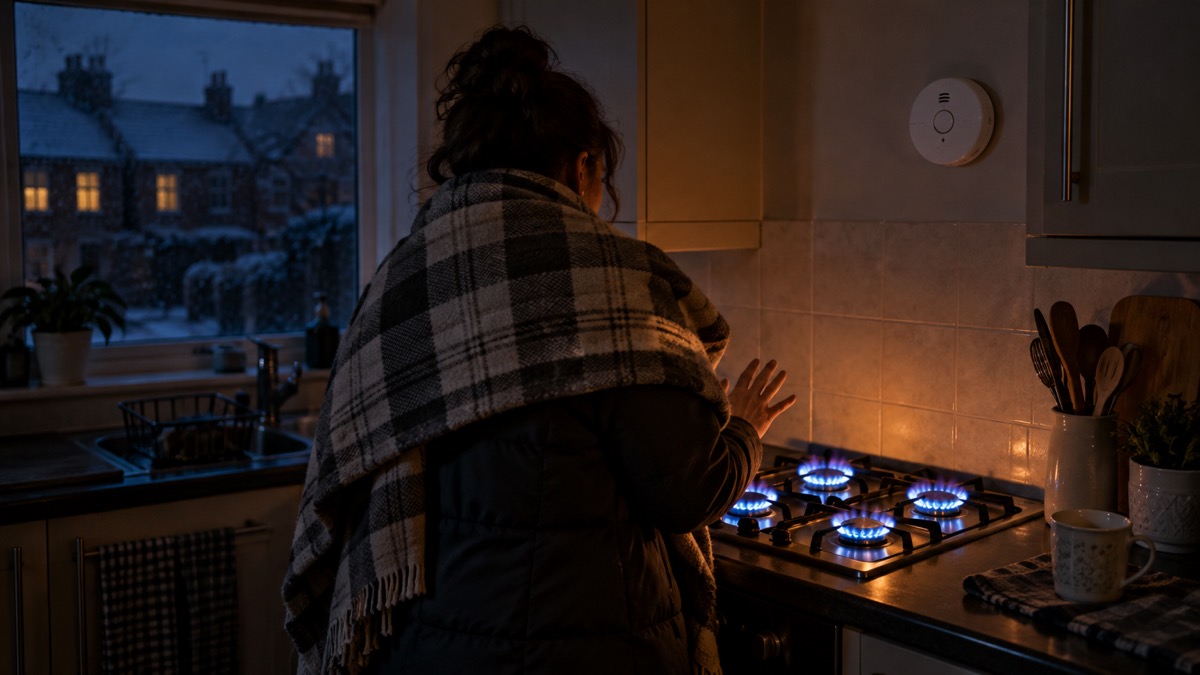
No. A gas hob is a cooker, not a heater, and using one to warm a room is dangerous. The Mayor of London's cold weather guidance is blunt: "Don't heat your home with a gas cooker or oven. It's not only inefficient, it could put you at risk of carbon monoxide poisoning, which can kill"1. The Royal Society for the Prevention of Accidents (RoSPA) gives the same instruction for gas ovens2.
The risk is real in a power cut, when the usual heating has stopped and a lit hob looks like the only warm thing in the house. Firefighters can be called to fires started by candles or portable heaters during a power cut3. The safe answer is to keep the hob for cooking, keep one room warm with blankets and layers, and know the signs of carbon monoxide poisoning.
This page sets out why a hob is the wrong tool for heat, how to spot carbon monoxide and what to do, how to stay warm without flames, and how to cook safely on a gas hob when the electricity is off.
Why a gas hob is dangerous, and why "just a bit of heat" is not safe
A hob is designed to put heat into a pan, not into a room. When a gas burner runs without a pan and without proper ventilation, it produces carbon monoxide, and in a closed kitchen that gas builds up. The Health and Safety Executive (HSE) lists the symptoms of gas-related carbon monoxide poisoning as headaches or dizziness, breathlessness, nausea, loss of consciousness, tiredness, pains in the chest or stomach, erratic behaviour and visual problems9. The Mayor of London's warning is explicit that heating with a gas cooker or oven can kill1.
Fire is the second danger. The London Fire Brigade says: "It's never safe to use any type of outdoor cooking equipment like a BBQ or camping stove indoors. Doing so poses a serious risk of fire and deadly carbon monoxide poisoning"4. North Yorkshire Fire and Rescue Service says outdoor heaters must not be used indoors because they produce a lot of heat, which is a fire risk in a confined space, and produce carbon monoxide which can be fatal10. Devon and Somerset Fire and Rescue Service adds that BBQs, camping stoves and patio heaters are designed for use outdoors in well-ventilated areas and pose a fire risk and a risk of carbon monoxide poisoning5.
The principle that ties this together comes from the Met Office: only equipment designed to be used indoors should be brought inside the home11. A gas hob is designed for cooking indoors, not for heating a room, and a camping stove or patio heater is designed for the outdoors. Neither belongs in the role of a heater.
Signs of carbon monoxide poisoning and what to do at once
Carbon monoxide poisoning can come on quietly. The HSE's list of symptoms covers headaches or dizziness, breathlessness, nausea, loss of consciousness, tiredness, pains in the chest or stomach, erratic behaviour and visual problems9. The NHS in Wales gives a similar picture and warns that a barbecue or camping stove must never be used indoors or inside a tent12. Liquid Gas UK, the trade body for the off-grid gas industry, advises that if you suffer headaches, nausea or dizziness when appliances are in use, turn them off immediately and have them checked by a Gas Safe Registered installer13.
If you suspect carbon monoxide, the Health and Safety Executive for Northern Ireland (HSENI) sets out a simple checklist known as TASK14:
- Turn off or extinguish the heating source or appliance if it is safe to do so.
- Air the home by opening windows and doors, and stay outside in the fresh air.
- Seek medical help if you feel unwell.
- Keep all heating sources and appliances off until they have been serviced, or the chimney or flue cleaned, by a qualified professional.
A carbon monoxide alarm is your early warning. The Met Office says an alarm should be fitted in any room that contains a gas fuel burning appliance, like a boiler and gas fire, and a solid fuel burning appliance, and tested regularly to ensure it is working as effectively as possible6. The Met Office also says any fuel-burning equipment used indoors must have good ventilation and must be used with a carbon monoxide alarm11. For alarms that keep working when the mains power fails, see Smoke and Carbon Monoxide Alarms That Keep Working Without Mains.
Safer ways to stay warm in a power cut
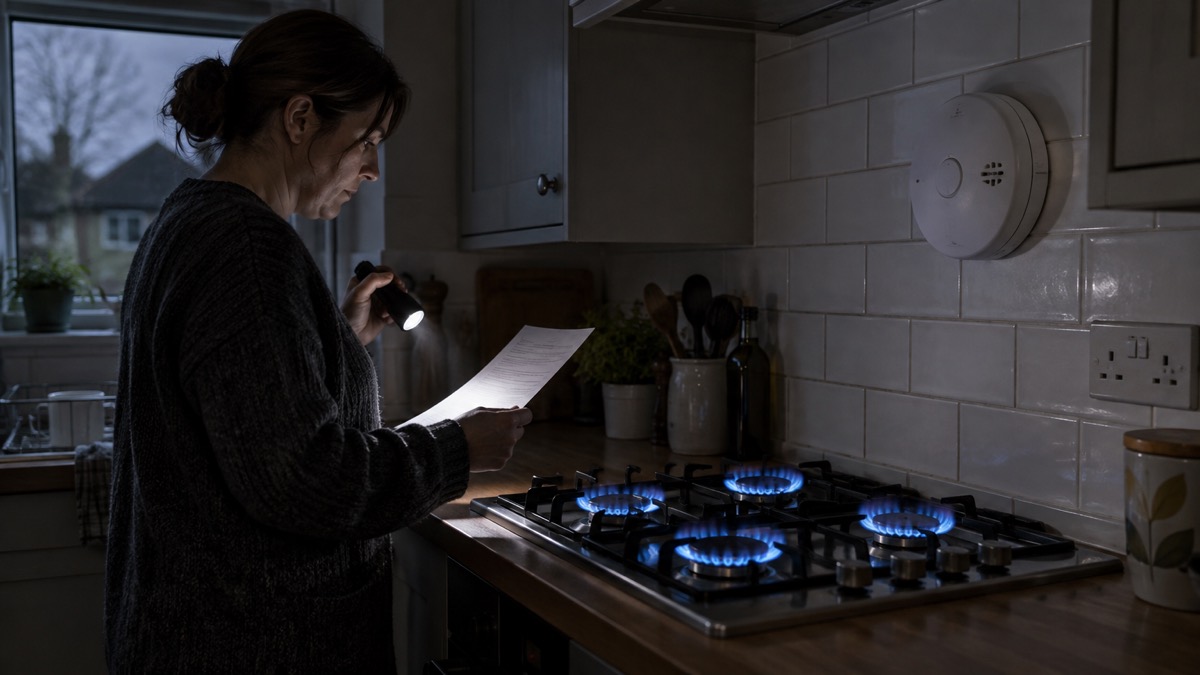
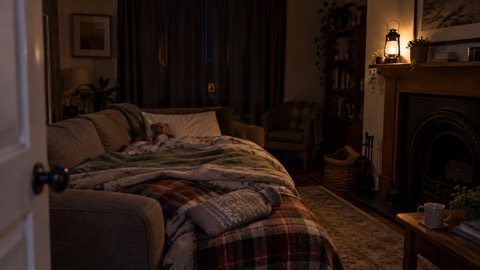
The safe way to keep warm without electricity is to trap heat around people and in one room, not to make heat with a flame. The government's Prepare campaign advises keeping warm by using blankets and layered clothing, keeping doors of unused rooms closed, and closing curtains to keep the heat in15. If it is cold, wrap up warm and close internal doors to keep the heat in6. Anglesey Council adds keeping extra blankets nearby and closing window shutters, blinds or curtains to help keep the heat in16.
Wiltshire and Swindon Prepared, an official local resilience site, suggests thinking about only keeping one room warm rather than trying to heat the whole house, so you stay warm in one room without heating the rest17. That approach is developed in How to Keep Warm in One Room.
| What to do | Why it helps | Source |
|---|---|---|
| Wear layers and use blankets | Traps body heat without a flame | 15 |
| Close doors to unused rooms | Keeps warmth in the room you use | 15 |
| Close curtains, blinds and shutters | Reduces heat loss through windows | 16 |
| Heat one room only | Concentrates warmth where you are | 17 |
| Keep a working carbon monoxide alarm | Warns of danger from any fuel-burning appliance | 6 |
Electric heating will not work during a power cut, and neither will heat pumps or electric storage heaters18. That is why the blanket-and-one-room approach matters: it does not depend on the supply. For the full picture, see Keeping Warm Without Electricity.
Using a gas hob safely for cooking when the power is off
A gas hob can still earn its place in a power cut, as a cooker. Which? notes that most modern gas hobs rely on electricity for the starter light, but you can light the flame by turning the gas onto the lowest setting and holding a long match or gas lighter to the burner18. Do that carefully, keep sleeves and hair clear of the burner, and never leave a lit ring unattended.
Cooking on the hob is a sensible use of the gas. The Food Standards Scotland power cut guidance says you can cook food and heat water using a camping stove, barbecue or bottled gas stove, checking the manufacturer's instructions for safe use22. If you have a camping stove, Which? suggests using it outside to boil water or fill hot water bottles18. Fire and rescue services are clear that a camping stove must not come indoors4, and if you use one outdoors, never change gas cartridges indoors or near ignition sources3.
A few practical points keep hob cooking safe:
- Ventilate the kitchen. Open a window or turn on an extractor fan if it works, so combustion gases have somewhere to go.
- Keep the flame for pans, not for the room. Turn the burner off as soon as cooking is done.
- Check the gas supply. If you use gas heating, check whether it will still function without electricity23. Gas ovens, boilers and heat pumps will not work without power15.
- Keep food safe. If a power cut has affected your home and you have no electricity, it is important to continue to store and prepare food safely11. See Fridge and Freezer Food When the Electricity Is Off.
Where to get help: gas emergencies and power cuts
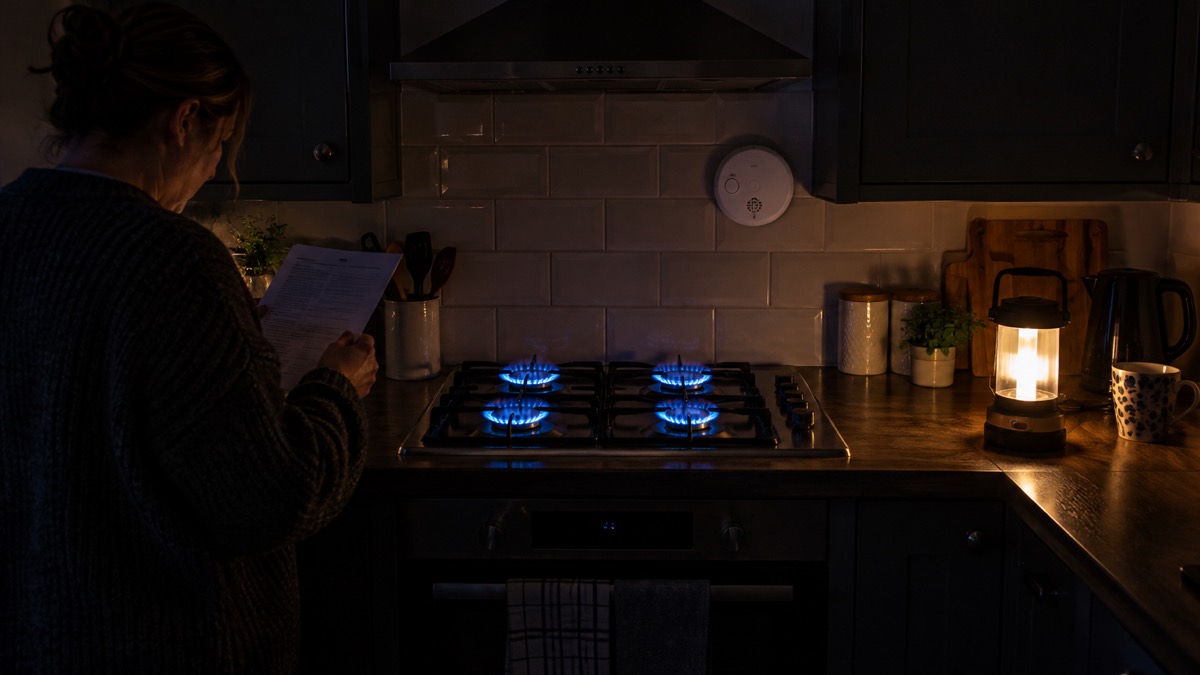
If you smell gas, act at once. nidirect's guidance is to open doors and windows, turn off the gas supply at the meter unless the meter is in the cellar, extinguish all naked flames, and not turn any power or light switches on or off7. Surrey County Council adds that you should not enter the cellar if the smell is coming from there24. Get out, stay out, and call the gas emergency service for your area from a phone away from the property.
For a power cut, Ofgem says you can report it directly to your local network operator using their website, or call 105 for free8. The Scottish Government's Ready Scotland emergency plan lists 105 as the power cut number25. Keep in contact with neighbours who can still use gas, as they may be able to help you get hot food and drinks21. For more on reporting, see How to Report a Loss of Electricity: Ring 105.
Some households need extra help. Government guidance on supporting vulnerable people in cold weather identifies people on a low income and people in lower income households as among those most at risk26. If someone in your home depends on electricity for medical equipment, or is older or unwell, ask the network operator about the Priority Services Register, covered in The Priority Services Register: Who Can Join and What It Gives. Check on neighbours and relatives using the checklist at Checking on Neighbours and Relatives.
Sources (26)
- Keeping warm, healthy and safe in cold weather, London.gov.uk, 2026
- Gas safety, RoSPA, 2026
- Power cuts, Scottish Fire and Rescue Service, 2026
- Cooking safety, London Fire Brigade, 2026
- Stay warm safely in winter, Devon and Somerset Fire and Rescue Service, 2026
- Keeping your home warm in winter, Met Office, 2026
- Energy, power supply and utilities, nidirect, 2025
- Check if you can get payment for a power cut, Ofgem, 2026
- Carbon monoxide, Health and Safety Executive, 2026
- Heating your home, North Yorkshire Fire and Rescue Service, 2026
- Strong winds weather warning: information and advice, nidirect, 2026
- Carbon monoxide poisoning, NHS 111 Wales, 2026
- Safety advice, Liquid Gas UK, 2026
- Carbon monoxide, Health and Safety Executive for Northern Ireland, 2026
- Power cuts, UK Government Prepare campaign, 2026
- Winter ready, Isle of Anglesey County Council, 2026
- What you might need in a gas outage, Wiltshire and Swindon Prepared, 2026
- What to do in a power cut, Which?, 2026
- Prepare for a power cut, Citizens Advice, 2023
- Adverse weather events, Llangattock Community Council, 2026
- Preparing for a power cut (easy read), National Grid, 2026
- Power cuts, Food Standards Scotland, 2026
- Be prepared, Northern Powergrid, 2026
- Power, gas and water: what if they fail, Surrey County Council, 2026
- Emergency plan, Ready Scotland, 2026
- Supporting vulnerable people: guidance for care professionals - GOV.UK, UK Health Security Agency and Centre for Climate and Health Security
 Power Cut Kit Checklist
 What to Keep Charged
 Household Emergency Plan
 Food to Throw Away After a Cut
 Keeping One Room Warm
 Hot Water Bottles and Children
 Unplugging Appliances in a Cut
 Checking Your Trip Switches
 Vehicle Touches Overhead Line
 Reporting a Damaged Substation
 Protected Sites
 Heatwaves and Power Cuts
 Smart Meters and Power Cuts
 Keeping Medicine Cold
 Registering a Relative for Help