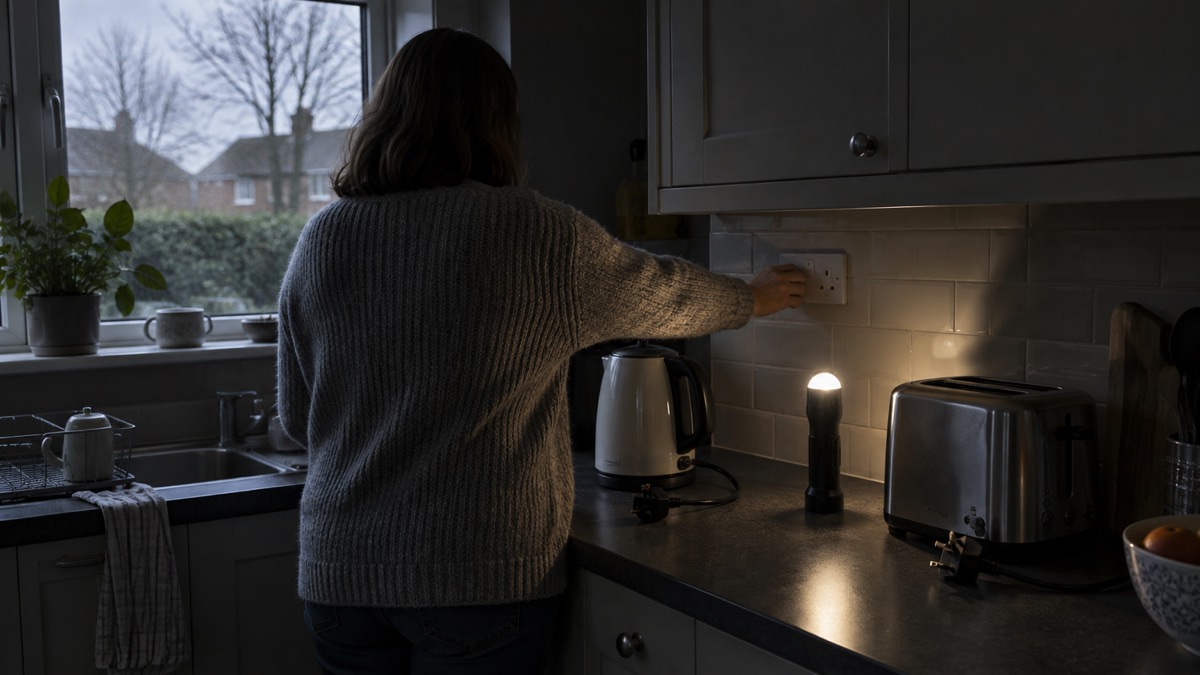
Yes. When the power goes off, switch off and unplug most appliances, and leave only the things designed to run unattended, such as the fridge and freezer, plus one light so you can see when the supply returns. The government's Prepare campaign says to turn off items such as irons, ovens, electric fires and fryers, and to unplug your TV and PC because they can be damaged if there is a surge when power comes back on1. The Met Office gives the same instruction for the same reason: those appliances could pose a hazard if the power comes back on when you are not there2.
The risk is not the darkness itself. It is what happens at the moment the supply returns, possibly hours later, possibly while you are asleep or out. An iron left face down, a hob ring left on, a hair straightener left on the bed: each can come back to life without anyone in the room. SP Energy Networks puts it plainly, advising you to switch off and unplug appliances, especially fires, cookers, irons and hair straighteners, in case you forget they are on when power is restored3.
The rest of this page sets out what to switch off, what to leave alone, why sensitive equipment is worth unplugging, and how to bring everything back safely. If you are in the middle of an outage now, our guide to what to do when the electricity goes off walks through the first hour.
Yes: switch off and unplug most appliances when the power goes
The advice from network operators, fire services and the Met Office is consistent: switch off and unplug anything that is not designed to be left running. Electricity North West recommends switching appliances off at the plug during a power cut to protect them from power surges when electricity is restored4. London Fire Brigade's household guidance is to switch off and unplug all appliances except the ones that should stay on, like the fridge and freezer5.
The reason is partly fire safety and partly the simple fact that you will not be watching. Electrical Safety First advises turning off electrical appliances when they are not being used, particularly at night, when a fire can spread quickly and unnoticed and cause more damage8. A power cut creates exactly that situation in daylight as well as after dark: the appliance is on, nobody is in the room, and the supply may return at any moment.
It helps to think in three groups:
- Things that heat up. Irons, ovens, cookers, grills, chip pans, electric fires, fryers and hair styling tools. Switch these off and unplug them, so they do not come on without you realising once the power is back7.
- Things with a screen or a chip. Televisions, computers, laptops and tablets. Unplug these to protect them from a surge when power returns1.
- Things designed to run unattended. The fridge and freezer. Switch off all electrical appliances at the wall except fridges and freezers9.
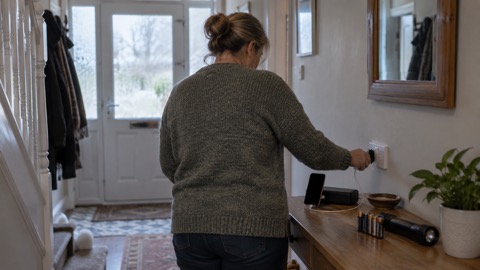
If you are unsure about an appliance, ask whether you would be comfortable with it switching itself on in an empty room. If not, switch it off at the wall and pull the plug.
Anything that heats up: irons, ovens, fires, fryers and straighteners
Heating appliances are the priority because they are the ones that can start a fire. The Prepare campaign's instruction is specific: turn off items such as irons, ovens, electric fires and fryers1. The Met Office adds the reason, that they could pose a hazard if the power comes back on when you are not there2. Northern Powergrid's power cut plan tells households to turn off or unplug any appliances that get hot, such as cookers or irons6.
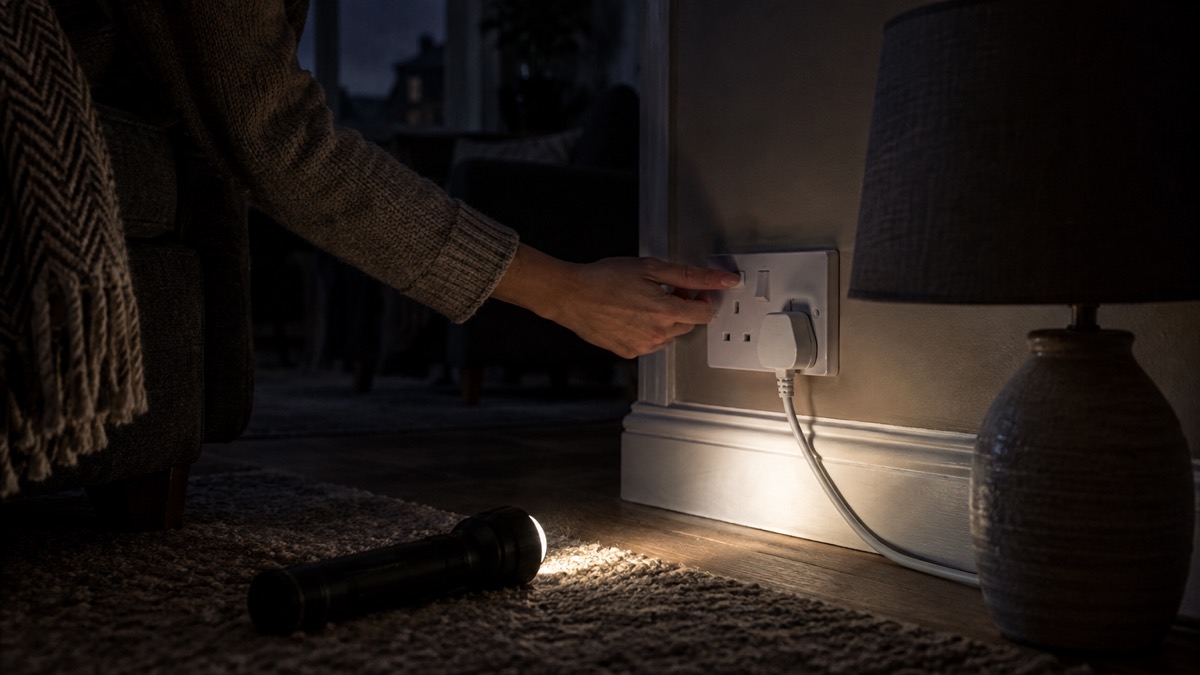
Hair styling tools deserve their own mention because they are so often left on a bedside table or a dressing table. SP Energy Networks lists hair straighteners alongside fires, cookers and irons as things to switch off and unplug in case you forget they are on when power is restored3. The NHS advises always unplugging hair straighteners or curling irons after use and storing them safely while they cool, particularly in homes with children10. North Wales Fire and Rescue Service goes further, suggesting that once you have finished using hand-held appliances you switch them off, unplug them and put them away, preferably storing hair straighteners and similar beauty products in heat-proof pouches11.
Kitchen appliances need a second look beyond the plug. North Yorkshire Fire and Rescue Service advises keeping an air fryer and its power cords away from hot surfaces, such as electric, halogen or induction hobs, even when those hobs are turned off12. During an outage, a hob that is off at the switch may still be hot from earlier use, and an air fryer left beside it is not where you want it.
Sensitive equipment: why TVs and computers can be damaged when power returns
Televisions, computers and other digital devices are not usually a fire risk, but they are vulnerable to the surge that can accompany the return of the supply. The Prepare campaign advises unplugging your TV and PC because they can be damaged if there is a surge when power goes back on1. National Grid's power cut advice makes the same point more broadly, noting that electrical surges during power cuts can damage digital devices such as phones, TVs, laptops and tablets13.
A surge is a brief spike in voltage. It can arrive when the network is re-energised after a fault, or when power returns to your street in stages. Unplugging is the simplest protection: a device with no physical connection to the socket cannot be reached by a spike. Switching off at the wall achieves much the same thing, which is why Electricity North West frames its advice as switching off at the plug4.
There is a second, quieter reason to unplug. A television or computer that switches itself back on in an empty house is a small fire risk and a larger nuisance, and a desktop computer that restarts unexpectedly can lose work. If you have a home office, unplug the lot: computer, monitor, printer and any charging cables.
The Health and Safety Executive's general advice on electrical equipment is worth applying when you plug things back in. Users of electrical equipment should check it each time they use it and take it out of use immediately if the plug or connector is damaged, if the cable has been repaired with tape, is not secure or has internal wires visible, or if there are burn marks or stains suggesting overheating14. A power cut is a good moment to look over the plugs you are about to use again.
Leave the fridge, freezer and one light on
Not everything should be switched off. The fridge and freezer are designed to be left running, and fire services across the country say so in their bedtime safety advice: turn off and unplug electrical appliances unless they are designed to be left on, like your fridge or freezer5. The same wording appears in guidance from Staffordshire Fire and Rescue Service9, Dorset and Wiltshire Fire and Rescue Service16, South Wales Fire and Rescue Service17 and North Yorkshire Fire and Rescue Service18.
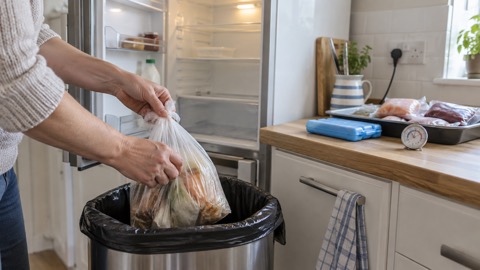
Leaving them plugged in does not mean opening them. Which? advises not opening your fridge or freezer any more than the absolute bare minimum during a power cut: take out essentials as soon as the power is out and then leave it firmly shut19. Our page on fridge and freezer food when the electricity is off explains how long food keeps and what to throw away.
The other thing to leave on is a light. The Met Office's weather ready tips say to switch off all electrical appliances that should not be left unattended, leave a light on so you know when power is restored, and check on neighbours20. Fire Scotland's power cut guidance says to turn off all electrical equipment except a light or a radio15. A single lamp left switched on gives you a clear signal the moment the supply returns, without you having to test sockets in the dark.
| Appliance | What to do | Why |
|---|---|---|
| Iron, oven, cooker, grill, chip pan, electric fire, fryer | Switch off and unplug1 | Can pose a hazard if power returns when you are not there2 |
| Hair straighteners, curling tongs, hair dryer | Switch off, unplug and put away3 | Easy to forget; can burn if they come back on3 |
| TV, computer, laptop, tablet, phone charger | Unplug1 | Surges when power returns can damage digital devices13 |
| Fridge and freezer | Leave on, keep the door shut5 | Designed to be left running; cold is lost every time the door opens19 |
| One lamp or a radio | Leave on20 | Tells you when power is back20 |
Before a planned interruption: switching off ready for the restart
A planned power cut, for engineering work or a scheduled interruption, gives you time to prepare properly. The Met Office's advice for snow and storms applies just as well here: switch off all electrical appliances that should not be left unattended, ready for when the power comes back on21. The same instruction appears in its storm safety guidance22 and in its amber warning advice for further snow in Scotland23.
The Prepare campaign's advice for planned interruptions is to switch off and unplug appliances, especially items such as fires, cookers, irons and hair straighteners, in case you forget they are on when power is restored1. Northern Ireland's nidirect service, in its severe weather advice, tells households to leave one light on so they know when power returns24. Our guide to planned interruptions covers how to read the notice and what the network operator will tell you in advance.
If you have solar panels, a planned interruption needs one extra step. Scottish and Southern Electricity Networks says that if your outage letter says you will be connected to a temporary generator, turn off your solar panels before the planned outage and turn them back on once mains power has been restored, because solar panels left on may feed electricity into the generator and cause it to stop working26. In an unplanned cut, the panels will switch themselves off as a safety feature and usually restart on their own once power returns26.
Switching off at the wall socket, and other practical questions
The mechanics are simple, but a few details catch people out.
At the wall or at the plug? Either, as long as the appliance cannot come back on. Electricity North West recommends switching off at the plug4. The Met Office and the Prepare campaign talk about switching off appliances1. Northern Ireland's nidirect advice, in its severe weather guidance, says to check that other electrical appliances and machinery are switched off at the wall25. The switch is the thing that matters, not which end of the cable you use.
What about solar panels? In an unplanned cut they switch off automatically to prevent electricity being sent back into the network while engineers are working, and usually restart on their own once power returns26. Electricity North West confirms that solar panels stop working during a power cut for safety reasons28. The exception is a system with battery storage and power backup capability: the Prepare campaign says some installations can continue to provide power during a power cut if they are designed and configured to operate independently of the grid, which may help keep essential appliances running1. Scottish and Southern Electricity Networks adds that heat pumps, EV chargers and batteries also switch off automatically during a cut to protect your home and the engineers working on the network26.
What if I forget something? That is the whole reason for the advice. Northern Powergrid's leaflet warns that you may forget an appliance is switched on when power returns, so turn off and unplug anything that gets hot29. A walk round the kitchen, the bedroom and any room with a heater before you settle down covers most of it.
How do I know when power is back? Leave one light on20. When it comes on, you know the supply has returned, and you can start switching things back on deliberately rather than discovering by accident that the oven has been warming up for an hour.
Turning things back on afterwards
When the light comes back on, resist the urge to flick every switch at once. Bring appliances back one at a time and check each as you go. The Health and Safety Executive's guidance is to check electrical equipment each time you use it and remove it from use immediately if the plug or connector is damaged, the cable has been repaired with tape or has internal wires visible, or there are burn marks or stains suggesting overheating14. A power cut is a sensible moment to look over the plugs and cables you are about to rely on again.
The government's fire safety guidance for celebrations includes a simple rule that applies every day: turn appliances off properly after use30. That means the switch, not just the remote control. A television on standby is still connected; a hob with a light on is still live.
If you have a freezer, check the food before you restock it. Our page on what food to throw away after an outage sets out what to keep and what to bin. If the outage was long, our guide to when the supply returns covers the wider checks, from alarms to heating.
Sources (30)
- Power cuts, Prepare campaign (UK Government), 2026-10-21
- What to do in a power cut, Met Office, 2026-10-25
- What to do in a power cut, SP Energy Networks, 2026-10-26
- Advice and support: FAQs, Electricity North West, 2026-10-25
- Bedtime checks, London Fire Brigade, 2026-10-25
- Power cut plan, Northern Powergrid, 2026-10-26
- 12 tips to prepare for a power cut, Horsted Keynes Parish Council, 2026
- Fire prevention tips, Electrical Safety First, 2026-10-25
- Living alone, Staffordshire Fire and Rescue Service, 2026-10-26
- Burns prevention and tips, Mid and South Essex NHS Foundation Trust, 2026-10-25
- Looking after the electrics, North Wales Fire and Rescue Service, 2026-10-25
- Kitchen safety, North Yorkshire Fire and Rescue Service, 2026-03-23
- What to do, National Grid, 2026
- Electricity and electrical equipment, Health and Safety Executive, 2026
- Power cuts, Scottish Fire and Rescue Service, 2026-10-25
- Escape plan, Dorset and Wiltshire Fire and Rescue Service, 2026
- Checklists and escape plans, South Wales Fire and Rescue Service, 2026-07-29
- Bedtime route and escape plan, North Yorkshire Fire and Rescue Service, 2026-03-27
- What to do in a power cut, Which?, 2026-06-04
- Met Office weather ready tips for snow and ice, Met Office, 2025-11-19
- Stay safe in snow, Met Office, 2026-10-25
- Stay safe in a thunderstorm, Met Office, 2026-10-25
- Amber warning for further snow in Scotland, Met Office, 2026-01-10
- Strong winds and heavy rain: warning information and advice, nidirect, 2026-01-27
- Strong winds: weather warning information and advice, nidirect, 2026-10-24
- Planned power cuts, Scottish and Southern Electricity Networks, 2026-10-25
- Be informed about hazards: power cuts, Be Ready campaign (UK Government), 2026-10-21
- Tips to help you during a power cut, Electricity North West, 2026-10-25
- Power cut leaflet, National Grid Electricity Distribution, 2022-08
- Fire safety when celebrating, UK Government, 2021-11
 Power Cut Kit Checklist
 What to Keep Charged
 Household Emergency Plan
 Food to Throw Away After a Cut
 Keeping One Room Warm
 Heating a Room With a Gas Hob
 Hot Water Bottles and Children
 Checking Your Trip Switches
 Vehicle Touches Overhead Line
 Reporting a Damaged Substation
 Protected Sites
 Heatwaves and Power Cuts
 Smart Meters and Power Cuts
 Keeping Medicine Cold
 Registering a Relative for Help