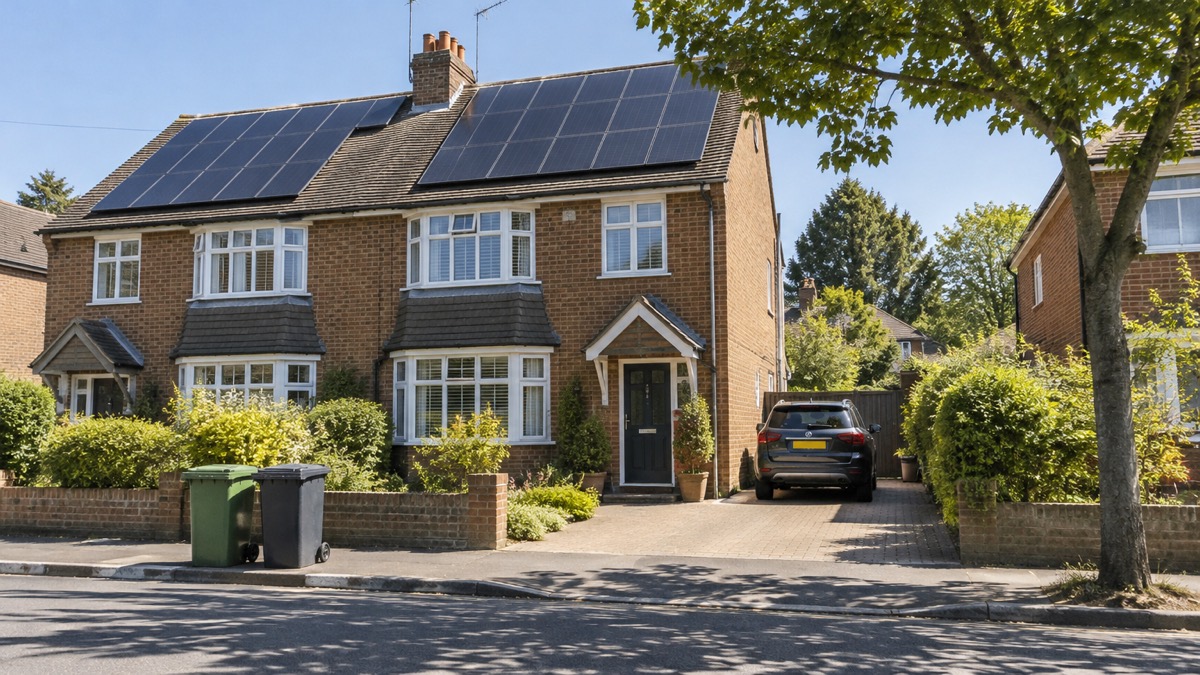
If the power goes off on a sunny afternoon, your rooftop solar panels will not keep the lights on. They are built to switch off the moment the mains fails, and they usually restart on their own once power returns1. This is not a fault. It is a safety feature that stops electricity being sent back into the network while engineers are working on it1.
The one exception is a system with battery storage that has been designed and configured to run independently of the grid. The government's power cut guidance says some of these installations can keep essential appliances running during an outage2. Whether yours can depends on how it was specified and set up, not on how much sun is forecast.
For most households the practical answer is to plan for a power cut as if the panels were not there: torches, a charged phone, and a way to keep warm and fed. This page explains what your system does in a cut, how to keep it safe, how to choose and check an installer, and what maintenance it needs.
What your solar system is built to do when the mains fails
A grid-connected solar system is designed to work in parallel with the electricity network, not instead of it. When the network goes down, the inverter senses the loss and shuts the panels off. Your supplier explains this plainly: your solar panels will automatically switch off during a power cut, a safety feature that prevents electricity being sent back into the network while engineers are working, and they will usually restart on their own once power returns1. The same applies to other low carbon technology: heat pumps, EV chargers and batteries also switch off to protect your home and the engineers on the network1.
The reason is straightforward. A solar system that kept generating into a dead network would put electricity onto lines that engineers believe are safe to touch. The Health and Safety Executive's general principle for electrical equipment is that cables, plugs, sockets and fittings must be robust enough and adequately protected for the working environment, with an accessible switch or isolator to cut the power quickly in an emergency5. The automatic shutdown in a solar inverter is that principle built in.
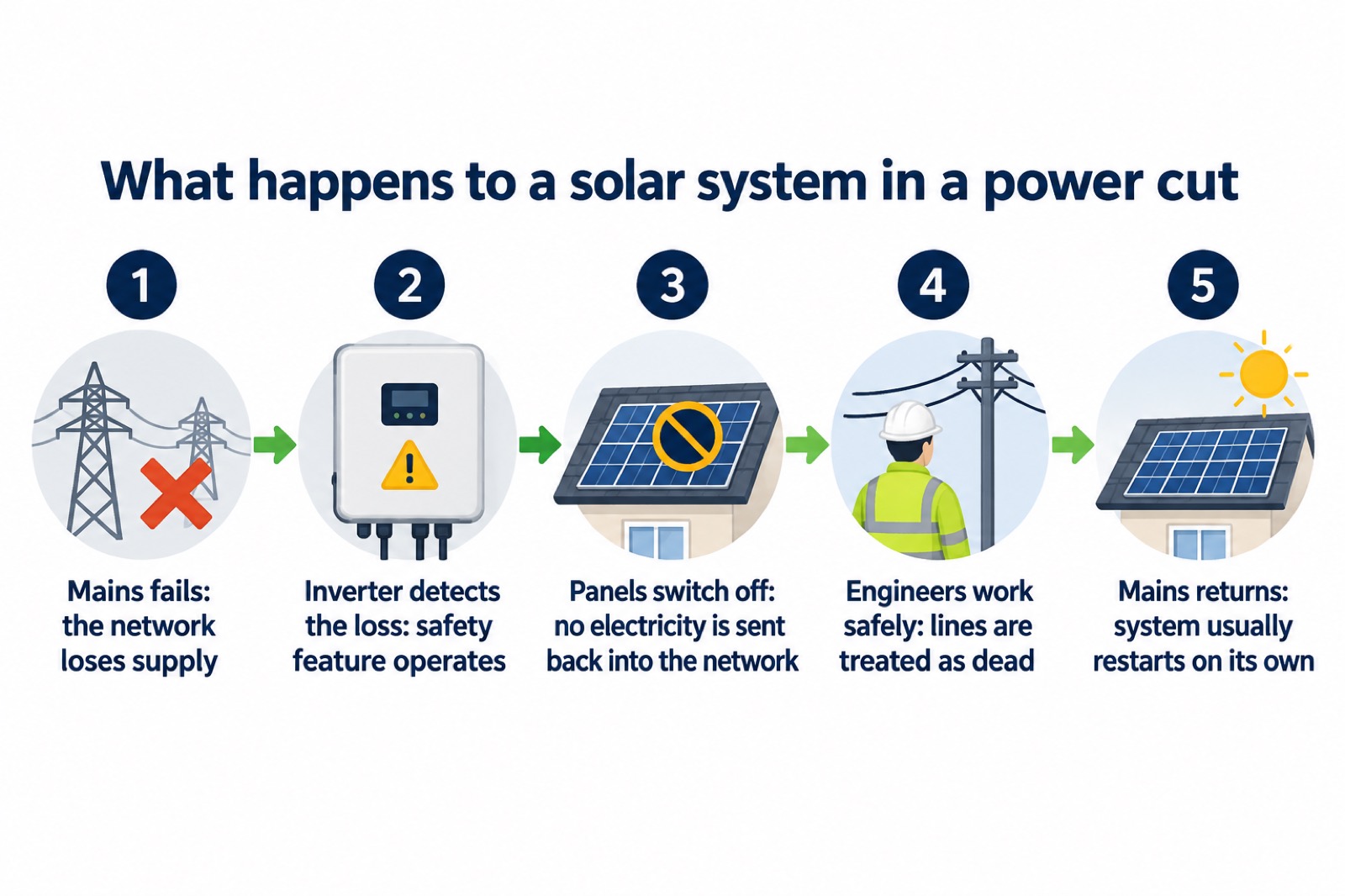
There is one planned situation where you may need to act yourself. If your outage letter says you will be connected to a temporary generator, turn off your solar panels before the planned outage and turn them back on once mains power has been restored. Panels left on may feed electricity into the generator and cause it to stop working1. Read any letter about a planned cut carefully and follow its instructions.
Battery storage: the one way panels can keep working
A battery on its own does not make your panels work in a cut. The system has to be designed and configured to operate independently of the electricity grid, and only some installations with power backup capability can do this2. Where they can, they may help keep essential appliances running during an outage2. That is the government's own wording, and it is deliberately cautious: the capability is a property of the installation, not of the battery box.
If you already have panels and are thinking about adding storage, the question to ask an installer is not whether the battery stores solar electricity, but whether the system will provide backup power to your home when the grid is down. That is a design decision made at the point of installation. Our guide to home battery storage sets out what these systems do and do not keep running.
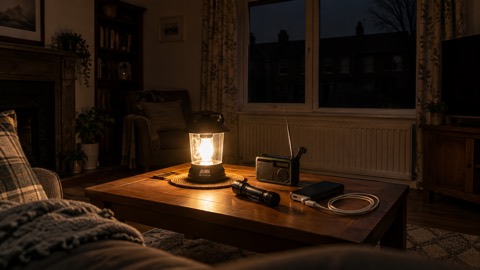
If you do not have a battery, or yours is not configured for backup, plan for the cut as any other household would. Battery-operated lights or torches are the safe alternative light source during a power cut7, and it is worth having multiple torches along with extra batteries8. A small solar garden light can be brought indoors and covered with your hand or a cloth, and the light will switch on instantly, giving a quick, safe source of light9. For a fuller list, see our power cut backup power checklist.
Fire risk is low, but it comes from bad installation and damaged cables
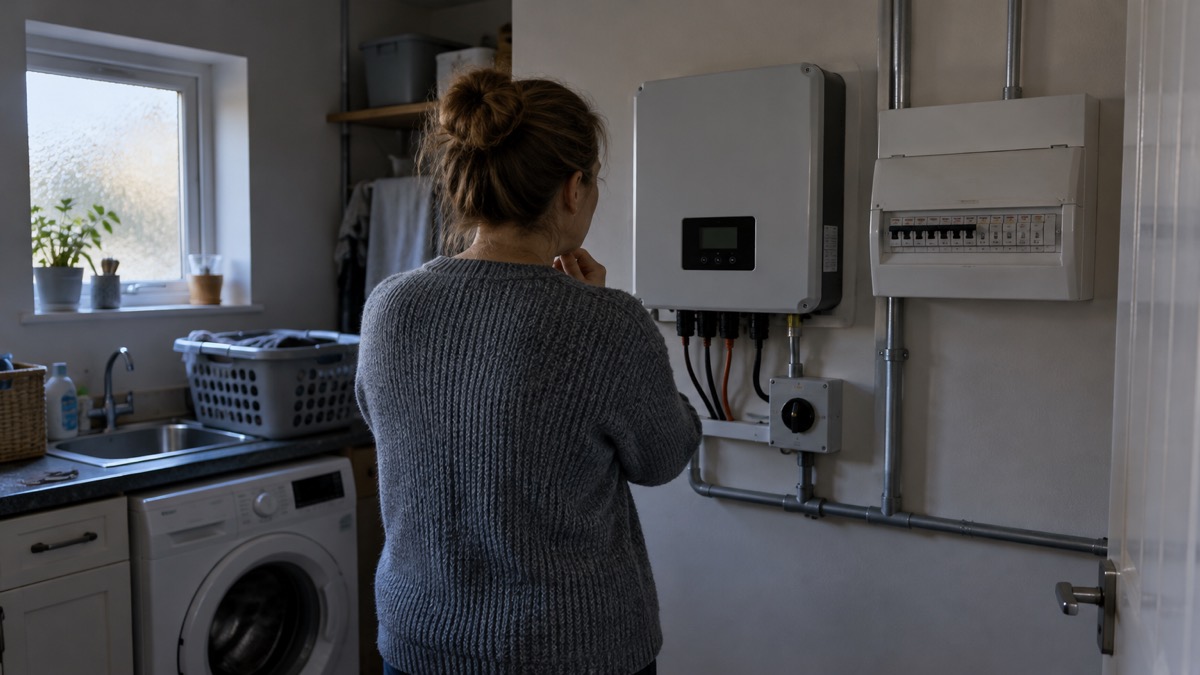
The risk of fire from solar panels is low, but known problems can occur through bad installations, poor quality connections and cable damage through vermin and weathering3. That sentence contains the whole of the practical advice: the danger is not the technology, it is the workmanship and the wear.
Regular visual checks help you catch trouble early. Look for cracks, breaks, loose connections, and any cable damage caused by vermin and weathering3. If you see burn marks, hear arcing (buzzing or crackling) sounds, notice fuses blowing or circuit-breakers tripping, or the equipment feels hot to touch, do not ignore it: unplug it and contact the retailer, manufacturer or a qualified repair technician3.
Fire prevention in the home rests on the basics: working alarms, clear escape routes and electrical equipment that is not overloaded or damaged11. Solar adds one more thing to check, not a reason to worry. If a fire does start, leave the property and call the fire service; do not go back inside for possessions.
Choosing an installer: competent person scheme, MCS and the RECC code
Who installs the system matters more than any other decision you make about solar. Electrical Safety First says it is vitally important to use a skilled, trained and qualified solar PV installer who is registered with a competent person scheme (CPS)4. Companies registered with MCS also offer an additional level of assurance3. Reputable installers should be signed up to a consumer code, such as the RECC, to prevent pressure-selling tactics4.
| What to check | Why it matters | Who says so |
|---|---|---|
| Registered with a competent person scheme | Confirms the installer is skilled, trained and qualified for solar PV work | Electrical Safety First4 |
| MCS registration | Offers an additional level of assurance | Electrical Safety First3 |
| Signed up to a consumer code such as the RECC | Guards against pressure-selling tactics | Electrical Safety First4 |
For any electrical contracting work, the DNOs' own advice is to choose a contractor approved by the National Inspection Council for Electrical Installation Contracting (NICEIC)12. If work has been done by someone who was not registered, you can have an Electrical Installation Condition Report (EICR) carried out by a registered electrician. It will assess the work undertaken and act as sufficient documentation to certify it, at an added cost13.
Inspection, testing and cleaning: what the system needs and how often
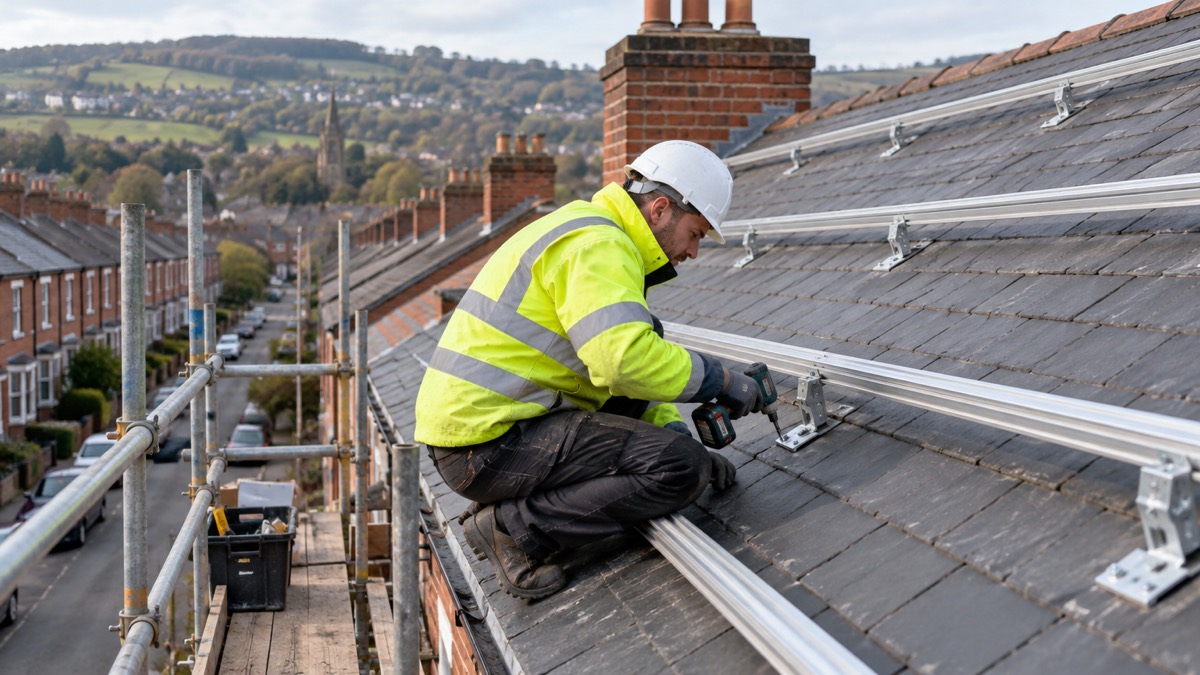
Have your system inspected and tested at least every five years to ensure it remains safe and in good working order3. Put the date in your diary when the system goes in, and keep the paperwork with your other home documents.
Cleaning is mostly a matter of letting the weather do its job. Most panels have a self-cleaning coating which, when installed at a suitable angle, allows rain to clear dirt and debris3. Where dirt, dust and debris accumulate, including lichen and guano, periodic cleaning by a specialist company can help. It improves sunlight absorption, maximises energy production and prevents hotspots which can result in a panel failing3. Keeping panels clean and maintained could increase energy production by up to 15 per cent3.
| Task | How often | Who should do it |
|---|---|---|
| Visual check for cracks, loose connections and cable damage | Regularly | You, from the ground3 |
| Inspection and testing of the system | At least every five years | A qualified installer3 |
| Specialist cleaning where lichen or droppings build up | Periodically, as needed | A specialist company3 |
Do not climb onto the roof to clean panels yourself, and do not hose down electrical equipment. The specialist cleaning route exists because the work involves both height and electricity. If output seems to have dropped, have the system checked rather than trying to fix it from a ladder.
Cold calls and pressure selling: when to walk away
Solar is a long-term purchase fitted to your home, and the sales tactics that surround it are worth knowing before anyone knocks on your door. Electrical Safety First advises against buying solar panels from a cold caller or if you feel under pressure to buy4. Be suspicious if you are contacted by solar panel companies out of the blue or put under pressure to buy quickly, especially with time-limited or one-off discounts3.
Watch the numbers too. Low prices, or high savings, may not include all necessary parts and services, and extremely short payback times should put you on your guard3. A quote that looks too good is usually missing something: scaffolding, an inverter, the electrical work, or proper certification.
If someone does call, the safe response is to take their details and check them at your own pace. Ask for the company's competent person scheme registration, its MCS status and its consumer code membership, and verify each one before you go further4. A legitimate installer will not mind waiting a day for you to check.
Where to get help during a power cut
If your power goes off, call 105, the free national number for power cuts15. Keep a phone you can plug in directly, because digital and cordless phones may not work during a power cut15. Leave a light on so you know when power is restored15. Gas boilers and heating, electrical appliances and your home's internet and landline connections will stop working, and you might also lose mobile phone signal16.
Power cuts have natural causes as well as faults: lightning, flooding, or fallen trees can damage cables and equipment17. Be extra careful around fallen trees, as they often take electricity poles and wires with them as they fall18. If you are on the Priority Services Register, you may be contacted ahead of a planned cut and included in any rota19. For more on preparing, see our guide to power cuts and to backup power at home.
Sources (19)
- Planned power cuts, SSEN, 2026-07-15
- Be informed about hazards: power cuts, UK Government, 2026-10-21
- Solar panels, Electrical Safety First, 2026-10-26
- Solar panels, Electrical Safety First, 2026-10-25
- Electricity and electrical equipment hazards, Health and Safety Executive, 2026
- Planned power cuts, Northern Powergrid
- Power cuts, Scottish Fire and Rescue Service
- What to do in a power cut, Met Office
- Tips to help you during a power cut, Electricity North West
- High-rise living, South Wales Fire and Rescue Service, 2026-07-29
- Fire prevention tips, Electrical Safety First
- What to do in a power cut, SP Energy Networks
- First aid, Electrical Safety First
- Electrical safety after a flood, Electrical Safety First
- Storm advice, Powercut 105
- Storms and bad weather, Energy Networks Association
- Energy outages, NESO, 2026
- Strong winds weather warning information and advice, nidirect, 2026-10-24
- Emergency planning portal: residential, SSEN
 Power Cut Backup Power Checklist
 Backup Power Before Winter
 Safe Battery Charging at Home
 Running a Generator Indoors
 Carbon Monoxide from Generators
 Generator Sizing for a Power Cut
 Generator Run Time on a Tank
 Storing Petrol at Home
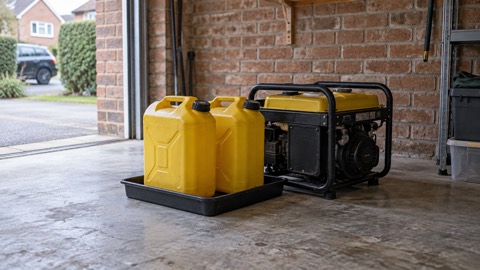 Diesel Storage at Home
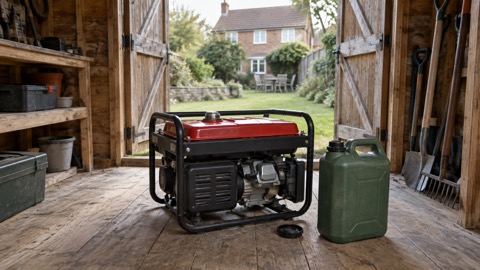 Storing a Generator
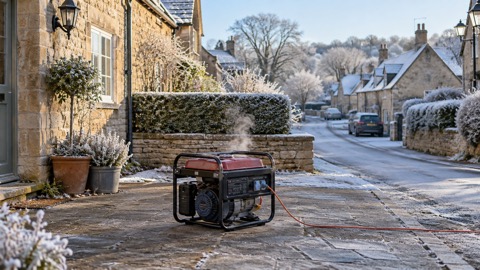 Generators in Cold Weather
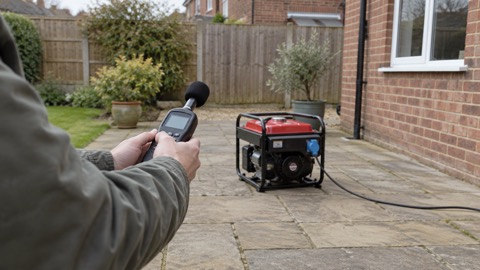 Generator Noise and Neighbours
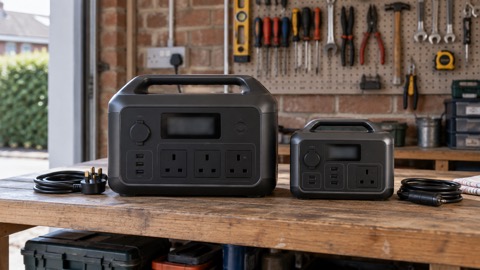 Power Station Capacity Sizing
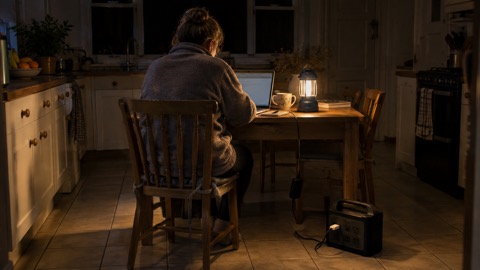 Power Station Run Time
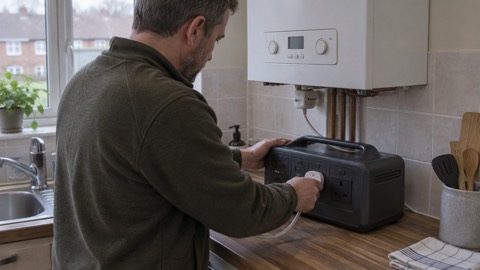 Power Station for a Gas Boiler