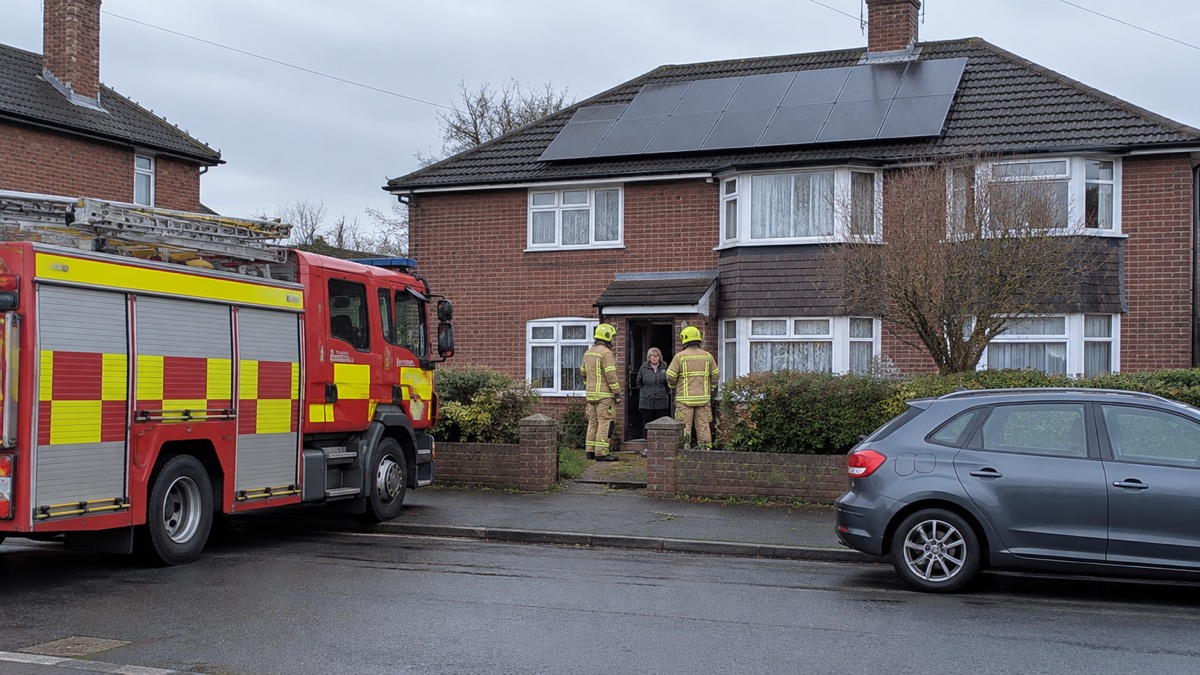
If a fire breaks out in a home with solar panels, the advice is the same as for any other house fire: get out, stay out and call 9991. What changes is what you tell the fire service when you call. Tell the emergency call handler, and the firefighters when they arrive, that solar panels are installed at the property3. That single piece of information helps them plan how to deal with the roof and the electrical system safely.
The reason it matters is that solar panels keep generating electricity in daylight even when the mains supply is switched off3. The system is not made safe simply because the power is out. Firefighters need to know the panels are there, and where the isolator and inverter are, so they can isolate the system as far as it can be isolated and work around the rest.
You do not need to fight the fire, find the isolator or switch anything off before you leave. Your job is to get everyone out, close doors behind you, call 999 and pass on what you know about the system4. Everything else in this guide is about making that easier to do, before anything ever happens.
Get out, stay out and call 999
The core instruction from fire and rescue services across the UK is short and does not change because you have solar panels. Get out, stay out and call 9998. Do not go back inside for possessions, pets or paperwork. Close any doors you pass on the way out, because a closed door slows the spread of fire and smoke4.
When you call, the call handler will ask what is on fire and where you are. Say what is on fire, for example a two-storey house, and give your address clearly9. Then add that solar panels are installed at the property3. If you know where the isolator and inverter are, say so. If you do not, say that too; the firefighters will find them.
If you live in a flat, the same advice applies. Call 999 and get out10. Do not use a lift. If smoke is in the communal corridor, the fire service's advice for flats is to stay put and seal your front door only if your building's specific advice tells you to; follow the instructions you have been given for your building. Report damage to fire doors to your housing provider or managing agent, because a damaged fire door does not do its job11.
Once you are out, stay out. Do not re-enter the building until the fire and rescue service tells you it is safe. If you have a battery storage system, the same instruction applies: get out, stay out and call 99912.
Tell the fire service you have solar panels
The most useful thing you can do in the first minute of a fire is to make sure the fire service knows about the panels. The Surrey Fire and Rescue Service advice is explicit: move to a place of safety, call 999, and inform the emergency call handler and attending firefighters that solar panels are installed at the property3.
Why does it matter so much? Because a solar photovoltaic system is not like a gas boiler or a plug socket. The panels on the roof are generating equipment, and they cannot simply be switched off at the wall in the way other appliances can. Firefighters need to know that before they commit crews to the roof or use water near the array.
There is a second reason. Electrical Safety First notes that many solar installations do not have an automatic fire detection system, so a fire may spread before it is discovered6. If a fire does start near the panels or the inverter, it may have been burning for some time before anyone notices. Telling the fire service about the installation helps them understand what they are dealing with.
Make this easy on yourself before anything happens. Write down that you have solar panels, where the isolator is and where the inverter is, and keep that note somewhere you can grab it on the way out, or memorise it. Make sure everyone in the household knows the same three things. If you are a tenant, tell your landlord or managing agent about the installation so the information is on record.
Panels still make electricity in daylight when the mains is off
This is the fact that catches people out. When the mains power goes off, most household electrical equipment goes dead. Solar panels do not. Light from the sun hits the panels and generates energy, which flows into the electrical circuit for the home5. The panels are a generator, not a load, and they do not need the mains to produce electricity.
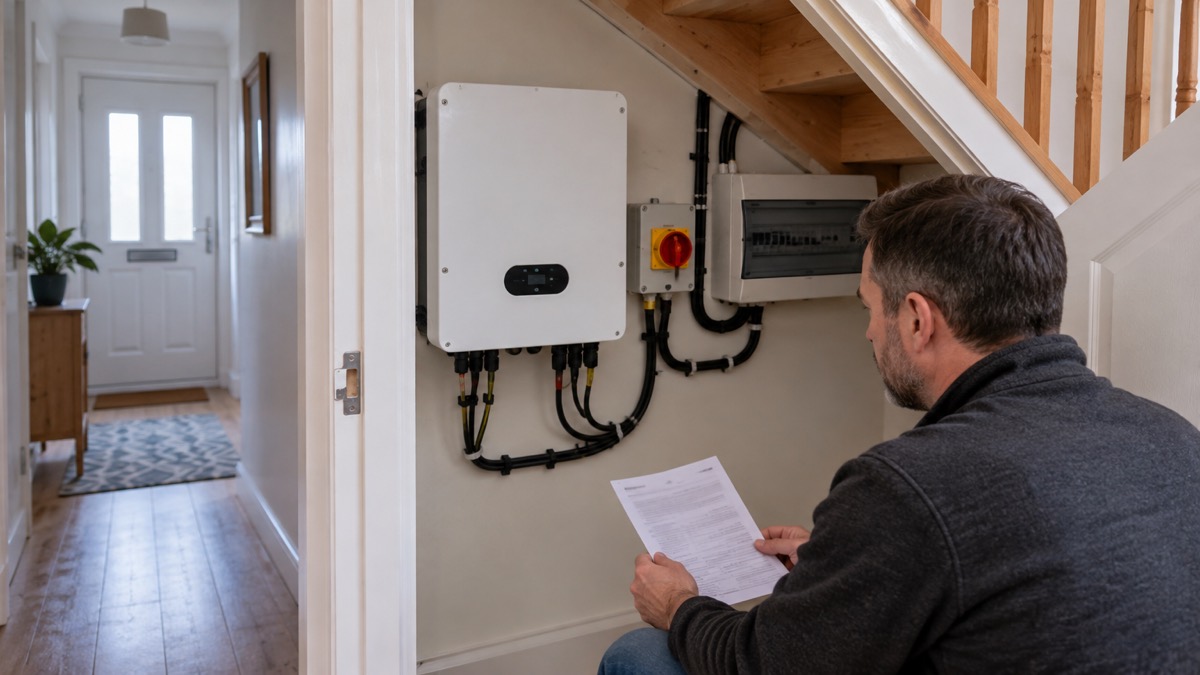
That has two consequences for a fire. First, the wiring between the panels and the inverter may still be live even after the mains supply has been isolated. Second, the panels themselves cannot be turned off by a switch; they keep producing while there is light. Firefighters know this and plan for it, but they need to know the panels are there in the first place3.
There is one exception worth knowing about, and it is a good reason to understand your own system. Some installations with battery storage can continue to provide power during a power cut if they are designed and configured to operate independently of the electricity grid, which may help keep essential appliances running during an outage13. That is a feature for power cuts, not a fire safety measure, but it tells you something important: your system may be designed to keep supplying electricity even when the grid is down. In a fire, assume the system is live until a qualified person tells you otherwise.
Where the isolator and inverter are, and when to switch them off
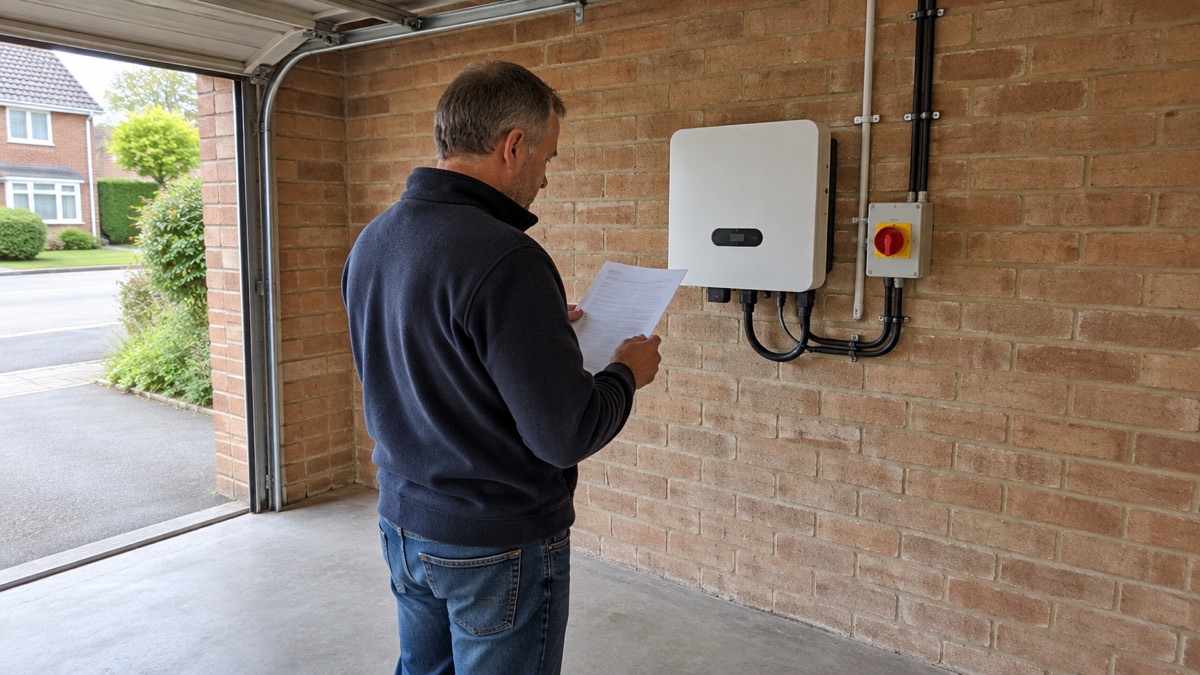
The inverter is the box that converts the direct current (DC) produced by the panels into alternating current (AC) that your home can use6. It is usually mounted on a wall somewhere accessible, often in a garage, loft, utility room or on an outside wall. The isolator is the switch that disconnects the system. Together they are the two pieces of equipment the fire service may ask about.
You should know where both are before a fire happens. Find them now, while everything is calm, and note their locations. If you cannot find them, ask your installer or check your system paperwork. Do not go hunting for them during a fire.
Should you switch them off yourself if there is a fire? The official advice is to get out, stay out and call 9991. It does not ask you to isolate the system first. If the isolator is right beside you on the way out and you can operate it safely without delaying your escape, that is a judgement call, but your priority is to get out and raise the alarm. Firefighters are trained to deal with the electrical risks and will isolate the system as far as it can be isolated when they arrive.
Battery storage and fire: what changes
If your solar system includes a battery, the fire risk picture changes. Lithium-ion batteries can cause fires15, and when they do, those fires spread quickly and are hard to put out, causing a lot of damage7. Battery-related fires are on the rise in Greater Manchester, according to the fire service there, and the same pattern of risk applies wherever lithium-ion batteries are used16.
The good news is that most of the risk comes from poor charging and storage habits, not from the technology itself. Not charging or storing devices with lithium-ion batteries properly can cause fires, so it is important to know how to do it safely17. Keep batteries and devices away from heat sources: store them away from radiators, heaters, direct sunlight and cookers, because extreme temperature, even when not in use, can increase the risk of fire18.
For a home battery system, the practical steps are:
- Keep the battery unit and its surroundings clear of stored items, especially anything flammable.
- Do not stack boxes, coats or paperwork against the battery or inverter.
- Keep the area ventilated and away from direct sunlight and heat sources18.
- Make sure everyone in the household knows the battery is there and knows to mention it when calling 999.
- If you notice any burning smell, overheating, buzzing or visible damage, stop using the system and get advice14.
If a battery fire does start, the instruction is the same as for any fire: get out, stay out and call 99912. Do not try to move the battery or put water on it yourself. Tell the call handler that there is a battery storage system as well as solar panels.
Making your solar system easier for firefighters before a fire
Most of the work of fire safety with solar panels happens long before there is any smoke. A few simple steps make your system safer day to day and easier for the fire service to deal with if the worst happens.
Keep access clear. Solar panels and associated equipment should not block shared balconies, walkways, windows or fire escape routes14. That applies to cables, conduit, isolator boxes and anything else added as part of the installation. If you live in a flat, this matters even more, because shared escape routes are everyone's way out.
Use a proper installer. Electrical Safety First says it is vitally important to use a skilled, trained and qualified solar PV installer who is registered with a competent person scheme6. A bad installation, poor quality connections and cable damage through vermin and weathering are the known problems that can lead to fire, even though the overall risk from solar panels is low6.
Keep the system maintained. Have your system inspected and tested at least every five years to ensure it remains safe6. Most panels have a self-cleaning coating which, when installed at a suitable angle, allows rain to clear dirt and debris, so you do not usually need to climb up and clean them6. Keeping panels clean and maintained could increase energy production by up to 15 per cent, which is a bonus rather than a reason to take risks on the roof6.
Know your escape plan. A home fire escape plan is the foundation of everything else. When calling 999, say what is on fire, for example a two-storey house9. Practise the route with everyone in the household, including children and anyone who needs help getting out.
Book a home fire safety check. Many fire and rescue services offer a home fire safety check, and you can complete the home fire safety check form to request one19. This is a free visit where firefighters or trained staff look at your home and give advice. It is worth doing whether or not you have solar panels.
After the fire: insurance, inspection and what not to do
Once the fire is out and you are safe, the practical questions start. The first is insurance. Contact your insurance company first; they will explain what your insurance policy does and does not cover20. Your policy may cover the cost of a bed and breakfast or hotel accommodation if you cannot stay in your home21. Do not assume anything is covered until your insurer has confirmed it in writing.
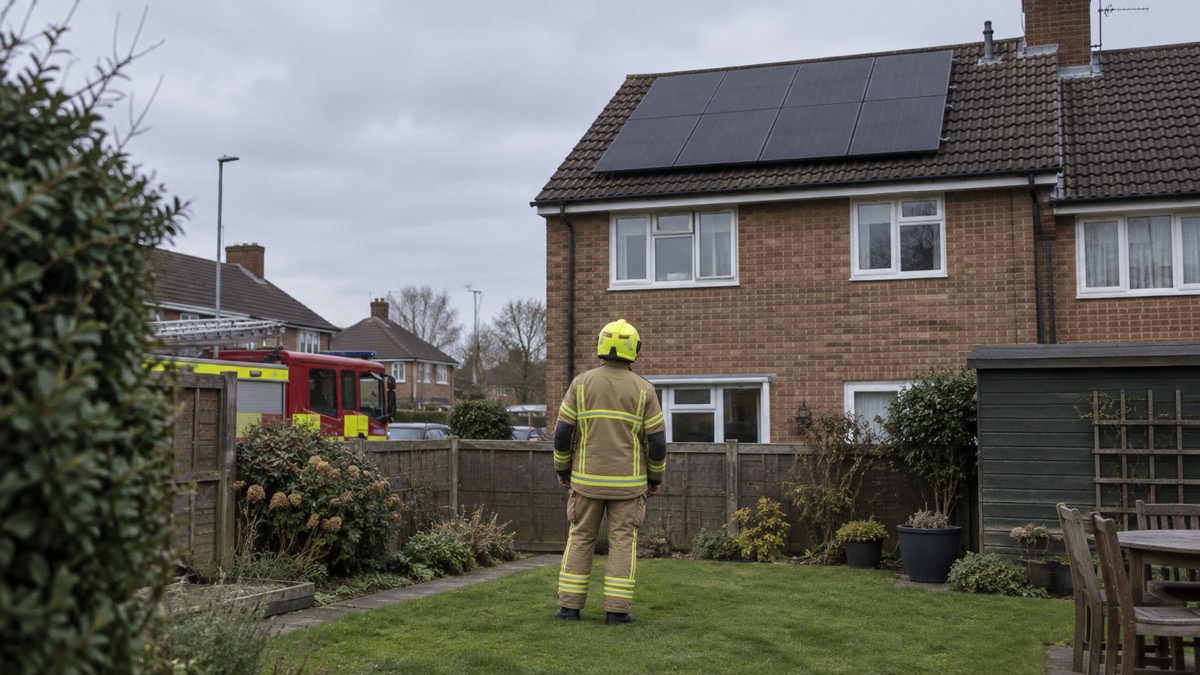
The second question is your solar system. Do not go back inside, onto the roof or near the equipment until the fire and rescue service has told you it is safe. Panels continue to generate electricity in daylight, so the system may still be live even after the fire is out3.
When you do get the system checked, ask the installer to look at the inverter, the isolator, the wiring and the panels themselves. Electrical Safety First recommends having your system inspected and tested at least every five years in normal circumstances, and after a fire or flood the case for a check is stronger6. Keep the paperwork.
If you live in a flat or a shared building, there may be additional steps. Check that the fire alarm panel, if there is one, is working and no faults are showing, and confirm the alarm system is tested regularly22. Report any damage to fire doors to your housing provider or managing agent11.
Sources (22)
- Know your escape plans, Greater Manchester Fire and Rescue Service, 2026-10-29
- Fire Kills, Fire Kills campaign, 2026-03-25
- Fire safety at home, Surrey County Council, 2026-10-15
- Frequently asked questions, North Yorkshire Fire and Rescue Service, 2026-08-18
- Plug-in solar panels, London Fire Brigade, 2026-10-25
- Solar panels, Electrical Safety First, 2026-10-26
- Batteries and charging safety, Essex County Fire and Rescue Service, 2026-10-29
- Fire safety, Greater Manchester Fire and Rescue Service, 2026-10-29
- Making a home escape plan, Warwickshire County Council, 2026-10-29
- High-rise living, South Wales Fire and Rescue Service, 2026-07-29
- What you can do to help keep your building safe, Greater Manchester Fire and Rescue Service, 2026-10-29
- Battery safety, Tower Hamlets Council, 2026-10-29
- Power cuts, Prepare campaign, 2026-10-21
- Plug-in solar panels: safety advice for residents and homeowners, London Fire Brigade, 2026-10-25
- Battery safety flyer, Portsmouth City Council, 2026-01
- Be battery aware, Greater Manchester Fire and Rescue Service, 2026-10-29
- Battery safety, Portsmouth City Council, 2026-10-26
- Battery safety, West Yorkshire Fire and Rescue Service, 2026-10-29
- Home fire safety check, Cheshire Fire and Rescue Service, 2026-10-05
- After a fire, Oxfordshire County Council, 2026
- Steps after a fire, North Yorkshire Fire and Rescue Service, 2026-06-17
- Student fire safety, South Wales Fire and Rescue Service, 2026-09-08
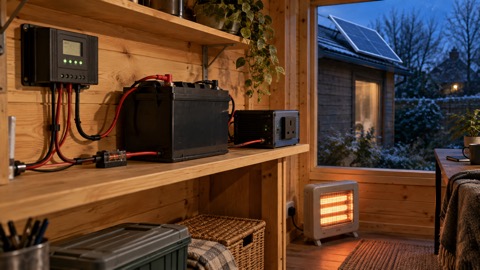 Off-Grid Solar Kit Checklist
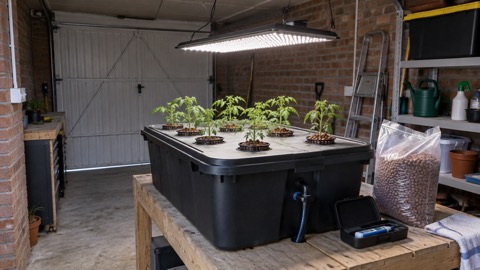 Hydroponic System Parts List
 Year-Round Sowing Calendar
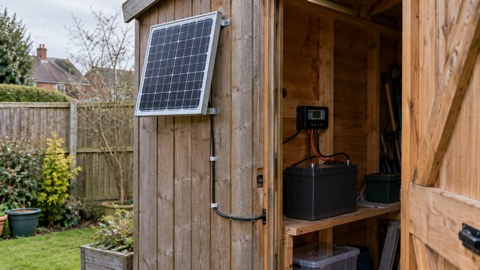 Blocking Diode for Solar Panels
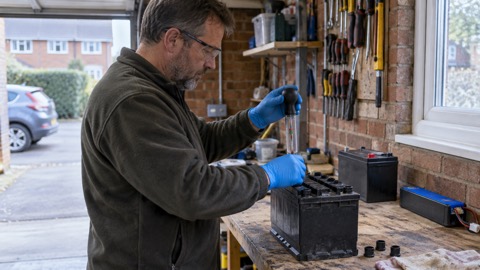 Equalisation Charging
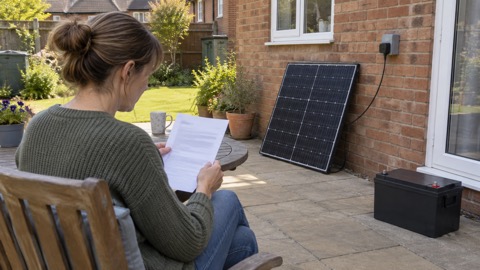 Plug-In Solar to a Battery
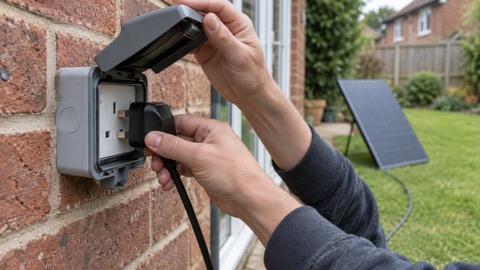 Plug-In Solar Extension Leads
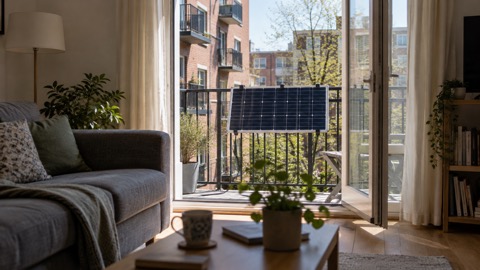 Plug-In Solar and Landlords
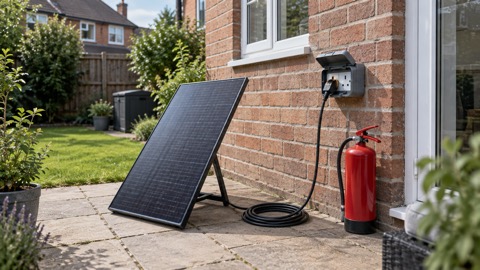 Plug-In Solar Safety
 Solar Panel Burning Smell