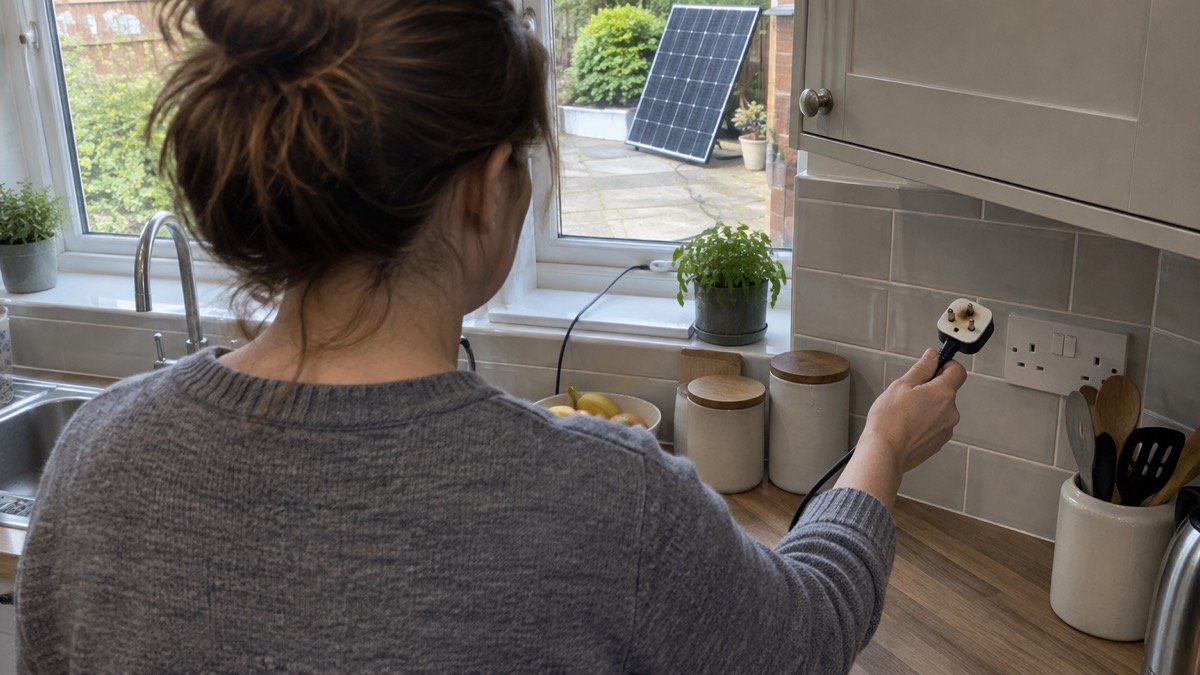
If you can smell burning near a solar panel, its cable or the socket it plugs into, stop using the system straight away. The fire and rescue service advice is blunt: if electrics are giving off a burning smell, turn them off and unplug them immediately1. The London Fire Brigade gives the same instruction for plug-in solar systems, and lists the signs that mean stop: burning smells, overheating, buzzing noises, visible damage and repeated electrical tripping2.
Do not reset the system and carry on. A burning smell is one of the danger signs the Fire Kills campaign lists for electrical appliances, alongside scorch marks, fuses that blow repeatedly, flickering lights and sparks, and its advice is to stop using the appliance, unplug it and have it checked or replace it3. Once the panel is off and unplugged, the next step is to work out where the smell is coming from: the panel, the cable, the plug, or the socket in the wall. That decides who you call.
This page takes you through switching off safely, the warning signs that mean the system stays off, what to check before it goes back into use, and where to get help with a faulty plug-in system. If there is smoke or flame, get everyone out and call 999; our guide to what to do in a fire with solar panels installed covers that situation in full.
Stop using the system as soon as you smell burning
The first action is the same whatever the cause: isolate the panel from the power. Switch it off at the socket if you can reach it safely, then unplug it. The fire and rescue service advice for electrics giving off a burning smell is to turn them off and unplug them immediately6, and the same applies to everyone in the household. If the plug or socket is hot, discoloured or scorched, do not touch the pins; switch off at the consumer unit if you know which circuit it is on, and call an electrician.
Once it is unplugged, keep it that way. Do not move the panel into another room, try a different socket, or test whether the smell has gone by plugging it back in. The London Fire Brigade advises keeping combustible materials away from solar panels, batteries, inverters and electrical connections2, so clear anything flammable from around the panel, its cable and the inverter while it is out of use.
If the smell is strong, open doors and windows to ventilate the room. That is the advice given for a suspected gas escape7, and it is sensible for any strong burning or chemical smell indoors. Then check that everyone in the household knows the panel is out of action, so nobody plugs it back in to see whether it still works.
Warning signs that mean switch off: overheating, buzzing and visible damage
A burning smell rarely arrives on its own. The London Fire Brigade lists the full set of signs that mean a plug-in solar system should be stopped immediately: burning smells, overheating, buzzing noises, visible damage and repeated electrical tripping2. Surrey Fire and Rescue Service gives the same list, adding buzzing or crackling sounds9. Any one of them is enough.
The electrical safety charity Electrical Safety First sets out what to look for at the plug and socket end of a solar system: burn marks, arcing sounds (buzzing or crackling), fuses blowing, circuit-breakers tripping, or a plug that feels hot to touch. Its advice is not to ignore any of them, but to unplug and contact the retailer, the manufacturer or a qualified repair technician5.
| Warning sign | What it can mean | What to do |
|---|---|---|
| Burning or hot plastic smell | Overheating component or connection10 | Switch off and unplug1 |
| Buzzing or crackling | Arcing at a plug, socket or connection5 | Unplug, do not reuse5 |
| Scorch marks, melted plastic | Heat damage at the plug or socket3 | Stop using, have it checked3 |
| Fuse blows again after replacement | A fault that has not gone away4 | Do not try again, call a registered electrician4 |
| Panel or inverter hot to touch | Overheating2 | Stop using the system2 |
The same principle applies across the home. Manchester Fire and Rescue Service says do not use electrical items if you notice exposed coloured wires, melted or damaged plastic, a burning or unusual smell, sparks or smoke, scorch marks on plugs or sockets, or items that feel hot or are overheating10. Age UK's home safety guidance adds fraying or exposed wires, burning smells, buzzing or crackling sounds and fuses blowing to the list of things to check for11.
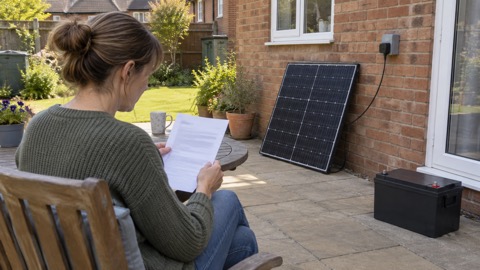
If your plug-in system includes a battery, the battery has its own warning signs. Cheshire Fire and Rescue Service lists a battery that feels unusually hot when charging or in use, swelling, bulging or leaking, a burning or acrid smell, a hissing sound, a device that will not hold its charge, or damage to the casing such as a dent12. The London Fire Brigade's advice for a swelling battery is to contact the manufacturer or a certified technician13. Our guide to connecting plug-in solar panels to a battery explains how a battery should be set up in the first place.
What to check before using the panel again
The panel should only go back into use once the cause of the smell has been found and fixed. That is not a job for a reset and a hopeful retry. Electrical Safety First is clear that if a fuse blows again, or if you notice burning smells, heat, buzzing, scorch marks or any other signs of damage, you should not try again, and should call a registered electrician4. The same guidance applies to a socket that shows a burning or fishy odour, works only on one half of a double outlet, feels loose or hot, or crackles when something is plugged in4.
Before the system goes back into service, work through these checks:
- The plug and socket. Look for scorch marks, discolouration, melted plastic or a loose fit. If anything is wrong, the socket needs an electrician, not a new panel4.
- The cable. Check for fraying, exposed wires, crushing or damage from vermin or weathering. Cable damage is one of the known causes of solar panel problems5.
- The panel surface. Dirt such as dust, leaves or other debris blocks sunlight and reduces efficiency, and without regular cleaning anything sticking to the surface could cause permanent damage5. Clean it only when the system is switched off and unplugged.
- The battery, if you have one. Look for swelling, leaking, a strong smell or a case that is hot to the touch14.
- The smoke alarm. Make sure you have a working smoke alarm on every floor and test it at least monthly; if you cannot test it, ask someone you know and trust to test it for you8.
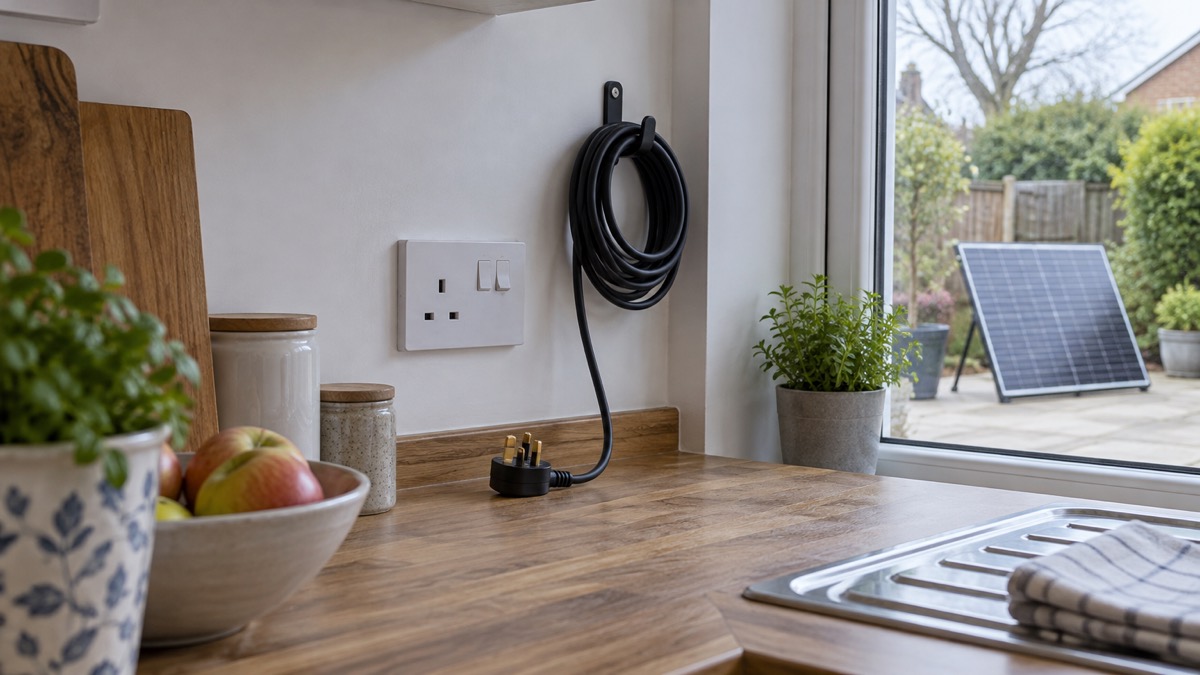
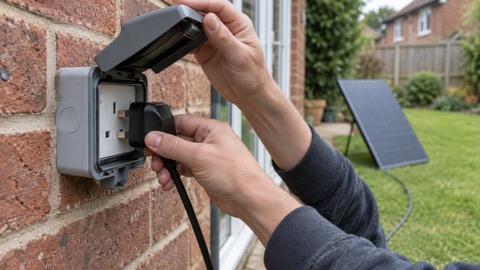
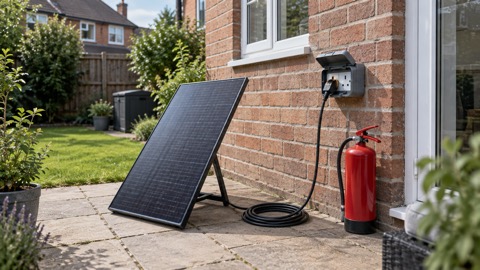
Solar panels carry a low fire risk, but known problems do occur through bad installations, poor quality connections, and cable damage through vermin and weathering5. Many installations do not have automatic fire detection, so a fire may spread before it is discovered5. That is why the recommendation is to have the system inspected and tested at least every five years to ensure it remains safe5. If your panel plugs into an outdoor socket, the London Fire Brigade advises that the socket should be a minimum IP65-rated installation fitted by a competent person2. Our guide to using an extension lead or outdoor socket with plug-in solar covers that set-up.
Where to get help with a faulty plug-in solar system
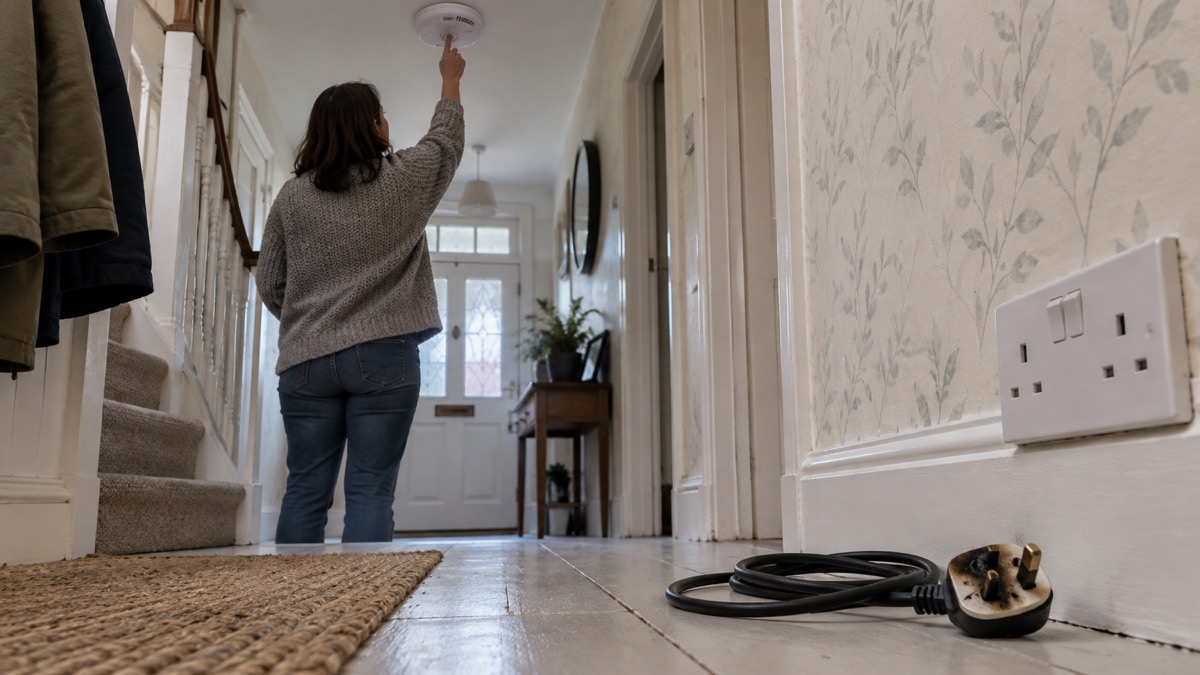
Start with the people who supplied the equipment. Electrical Safety First's advice for an appliance that smells of burning is to unplug it and contact the retailer and/or manufacturer15. The same guidance is given for dehumidifiers16 and air fryers17, and it applies to a plug-in solar kit in the same way: the retailer or maker knows the product and can tell you whether it needs replacing or repairing.
If the fault is in the socket or the fixed wiring rather than the panel, you need a registered electrician. The National Inspection Council for Electrical Installation Contracting (NICEIC) advises calling a registered electrician when a fuse blows again or there are burning smells, heat, buzzing, scorch marks or other signs of damage at a socket4. Do not attempt repairs to the panel, its cable or its plug yourself.
If there has been a fire, however small, get everyone out, stay out and call 999. Do not go back inside for the panel or anything else. Once the fire service has made the property safe, tell your insurer and keep the panel and its cable as they are until you have been advised otherwise.
Smells that are not the panel: check the rest of the house
A burning smell in a room with a solar panel is not always the panel. Before you assume the worst, check the other appliances and heat sources nearby, because several have their own burning-smell warnings and their own correct response.
- Tumble dryers. If you notice burning smells or unusually hot clothes, stop using the appliance and have it checked by a professional18. Do not ignore warning signs: if you can smell burning or clothes feel hotter at the end of the cycle, have the appliance checked18.
- Electric fans. If you notice a burning smell or unusual noises, unplug the fan immediately and contact the retailer and/or manufacturer15.
- Air fryers. Keep an eye on it while in use and turn it off immediately if you notice burning smells or unusual noises, then contact the manufacturer if you believe there is a fault17.
- Wheat bags. Watch for burning smells or smoke20.
- Electric blankets. Buzzing noises or unusual smells from the control are a danger sign21.
- Extension leads. A smell of hot plastic or burning near an appliance or socket is a warning sign22.
If the smell is gassy rather than electrical, treat it as a gas issue. Do not use naked flames, and open doors and windows7. Call your gas supplier immediately if you can smell gas23, and the Gas Safe Register advises calling the national gas emergency number so the supply can be made safe24. A strange smell when a fuel-burning appliance is on is also listed as a possible sign of carbon monoxide25, and faulty, poorly ventilated or incorrectly used appliances can produce dangerous levels of carbon monoxide26. If you suspect carbon monoxide, get fresh air, switch the appliance off and seek medical advice; the NHS lists feeling sick and dizzy among the symptoms27.
Faults that keep coming back
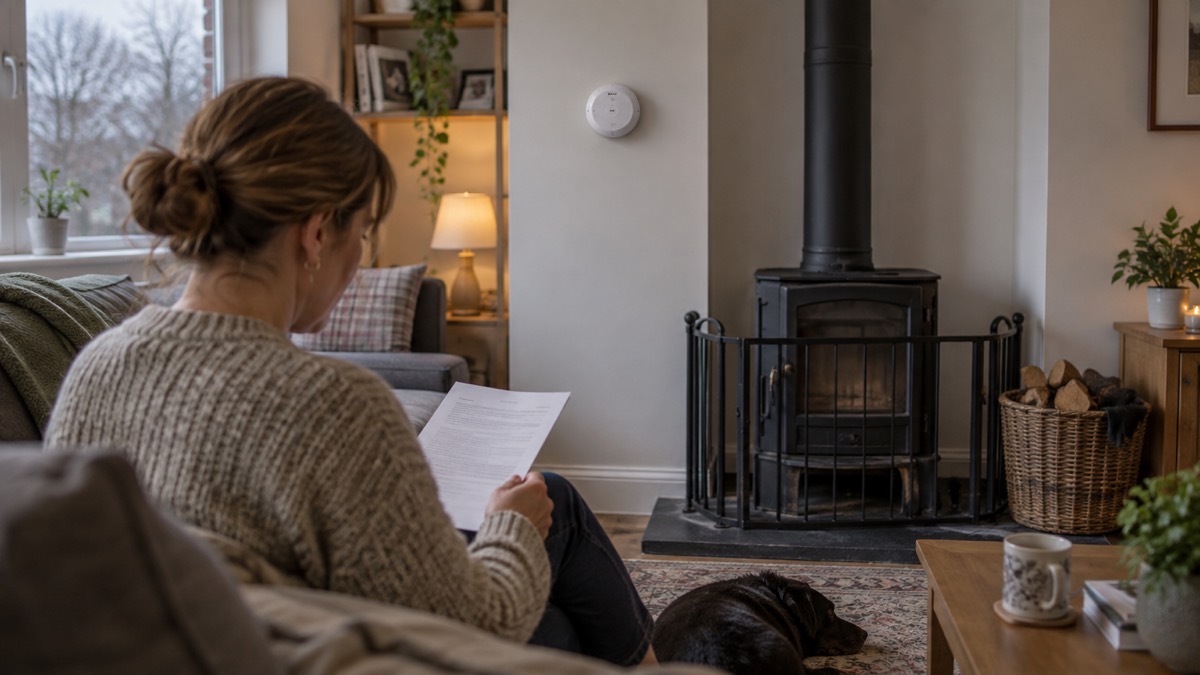
A fault that returns after a reset is telling you something. Repeated electrical tripping is on the London Fire Brigade's list of reasons to stop using a plug-in solar system2, and Electrical Safety First says that if a fuse blows again, do not try again and call a registered electrician4. The pattern matters more than the single event: one trip might be a coincidence, but a fuse that blows twice, a smell that comes back, or a socket that keeps buzzing points to a fault that has not been fixed.
The same logic applies to fuel-burning appliances elsewhere in the home, which is worth knowing if the smell turns out not to be electrical. The Health and Safety Executive lists pilot lights that frequently blow out as a warning sign28, and sooty stains on the walls around fires and water heaters are another29. A fault that keeps coming back is a reason to have the appliance checked, not to keep resetting it.
For a solar system, the answer to a recurring fault is a proper inspection. Have the system inspected and tested at least every five years5, and sooner if anything has gone wrong. Keep a note of what happened and when: the smell, the tripping, the weather, whether the panel was hot. That record helps the retailer, the manufacturer or the electrician find the cause rather than guess at it.
Sources (29)
- Hearing and sight impairments, North Wales Fire and Rescue Service
- Plug-in solar panels: safety advice for residents and homeowners, London Fire Brigade, 2026-10-25
- Fire prevention, Fire Kills, 2026-03-25
- Plug socket not working: these could be the reasons why, NICEIC, 2026-08-19
- Solar panels, Electrical Safety First, 2026-10-26
- For people with disabilities, Tyne and Wear Fire and Rescue Service
- Gas supply issues, Buckinghamshire Council, 2026-10-29
- Emollients, Manchester Fire and Rescue Service, 2026-10-29
- Fire safety at home, Surrey County Council, 2026-10-15
- Electrical safety, Manchester Fire and Rescue Service, 2026-10-29
- Fire prevention, gas safety and electric safety, Age UK, 2026-03-23
- Lithium-ion batteries and chargers | Humberside Fire, Humberside Fire and Rescue Service
- Batteries and chargers, London Fire Brigade, 2026-10-25
- Rechargeable lithium-ion battery safety advice, Cheshire Fire and Rescue Service, 2026-09-30
- Electric fans, Electrical Safety First, 2026-10-25
- Dehumidifiers, Electrical Safety First, 2026-10-25
- Air fryers, Cheshire Fire and Rescue Service, 2026-05-19
- White goods, Cheshire Fire and Rescue Service, 2026-05-20
- Electric fans product safety, Electrical Safety First, 2026-10-26
- Wheat bags, Manchester Fire and Rescue Service, 2026-10-29
- Electric blankets, Cheshire Fire and Rescue Service, 2026-05-20
- Extension leads, cable reels and block adaptors, Electrical Safety First, 2026-10-25
- Support during a storm, British Red Cross, 2026-10-25
- What to do in a gas emergency, Gas Safe Register
- Carbon monoxide awareness, Phoenix Energy, 2026-10-29
- Carbon monoxide, North Wales Fire and Rescue Service
- Carbon monoxide, Devon and Somerset Fire and Rescue Service, 2025-11-18
- Carbon monoxide, Health and Safety Executive, 2026
- Carbon monoxide awareness, Warwickshire County Council, 2026-10-29
 Off-Grid Solar Kit Checklist
 Hydroponic System Parts List
 Year-Round Sowing Calendar
 Blocking Diode for Solar Panels
 Equalisation Charging
 Plug-In Solar to a Battery
 Plug-In Solar Extension Leads
 Plug-In Solar and Landlords
 Plug-In Solar Safety
 Solar Panels in a House Fire