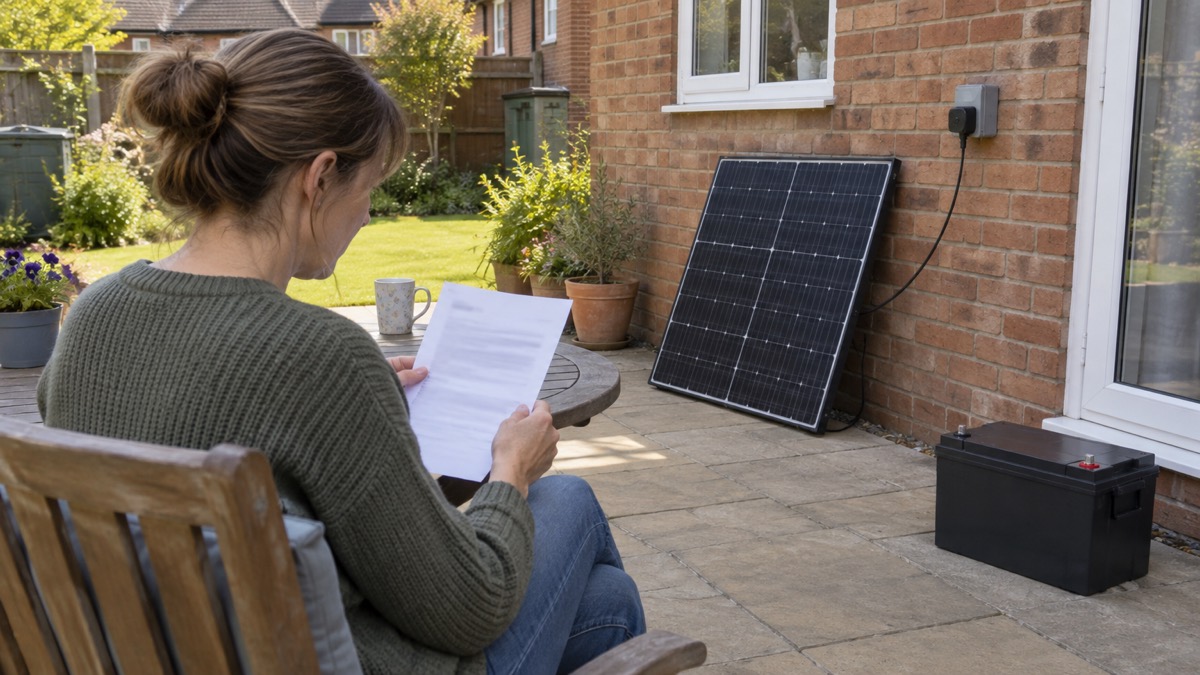
If you have a plug-in solar panel, or are thinking of getting one, the obvious next question is whether you can store the power it makes and use it later, especially in a power cut. The official advice is clear: the London Fire Brigade recommends that you do not connect your plug-in solar panels to batteries to store energy for later use1. Plug-in solar panels are small solar photovoltaic (PV) systems that plug into a standard electrical socket to generate electricity from sunlight2, and they are available to buy in the UK3.
What you can do is use the power as it is generated. Light from the sun hits the panels and generates energy, which flows into the electrical circuit for the home, providing electricity4. The panels do not generate enough energy to power your home entirely, but they could save you some money4. If you want stored solar power for outages, the safe route is a separate, properly designed system, not a battery bolted onto a plug-in panel.
This page explains why storage is not recommended for plug-in systems, how to get the most from the power as it is made, what happens to solar and batteries in a power cut, and who to ask before adding storage of any kind.
The official advice: do not connect plug-in solar panels to a battery
The recommendation comes from the London Fire Brigade's safety advice for residents and homeowners, which states plainly that it is recommended you do not connect your plug-in solar panels to batteries to store energy for later use1. That is the single most important line on this page. It is not a suggestion to weigh against convenience; it is the fire service's advice for ordinary households.
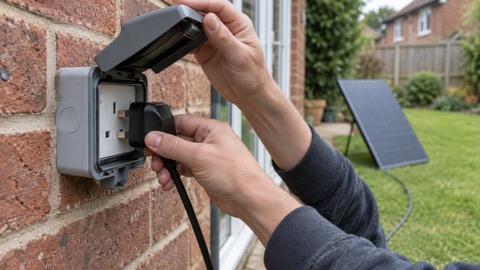
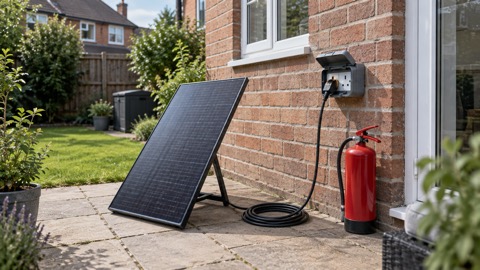
The same guidance sets out other conditions that matter if you have a plug-in system at all. Keep any combustible materials away from your solar panels, batteries, inverters or electrical connections1. If you are plugging your solar panel into an outdoor socket, ensure it is a minimum IP65-rated installation fitted by a competent person1. And if your building is undergoing, or is due to undergo, cladding works or remediation, it is recommended that you do not install plug-in solar panels until the work is complete1.
Electrical Safety First, the independent charity that campaigns on electrical safety, adds a regulatory point. The Government has announced plans to make plug-in solar systems more widely available, but at present these systems supply power to household circuits in a way currently not permitted by regulations7. The same warning appears in its guidance on solar panels8. In other words, the rules around plug-in solar are still catching up with the products on sale, which is one more reason to keep the installation simple and to follow the fire service's advice on batteries.
If you rent your property, contact your landlord, housing provider, freeholder or property management company before buying or installing any plug-in solar equipment1. Our page on whether you need your landlord's permission for plug-in solar covers that in more detail.
Why storing plug-in solar energy for later is not recommended
There are two separate reasons storage is discouraged for plug-in systems, and they pull in the same direction.
The first is safety and regulation. A plug-in panel is designed to push power into a household circuit through a socket. Electrical Safety First notes that plug-in systems supply power to household circuits in a way currently not permitted by regulations7, and that only one plug-in solar panel system is permitted per household, because installing multiple units could reduce the effectiveness of protective devices3. Homes with Type AC RCDs should not use plug-in solar systems without first upgrading to a minimum Type A bidirectional RCD on those circuits7. A battery added to that picture does not simplify anything.
The second is efficiency. Using stored energy is less efficient than using energy directly from the grid or from your solar panels, so you will lose some energy by comparison6. The Centre for Sustainable Energy goes further, noting that using a domestic battery to store solar energy for later use has the potential to save you money but is not likely to have a clear beneficial impact on the environment at the moment9. Storage is about shifting when you use power, not about creating more of it.
| Question | Answer for a plug-in system |
|---|---|
| Can I add a battery to store the power? | The plug-in design is not built for storing energy and managing the flow of electricity, so a battery does not simplify anything7 |
| Is the plug-in setup itself fully provided for in regulations? | At present these systems supply power to household circuits in a way currently not permitted by regulations8 |
| How many plug-in systems can a household have? | One only; multiple units could reduce the effectiveness of protective devices3 |
| Does storage make the energy go further? | No: using stored energy is less efficient than using it directly6 |
Using plug-in solar power as it is generated
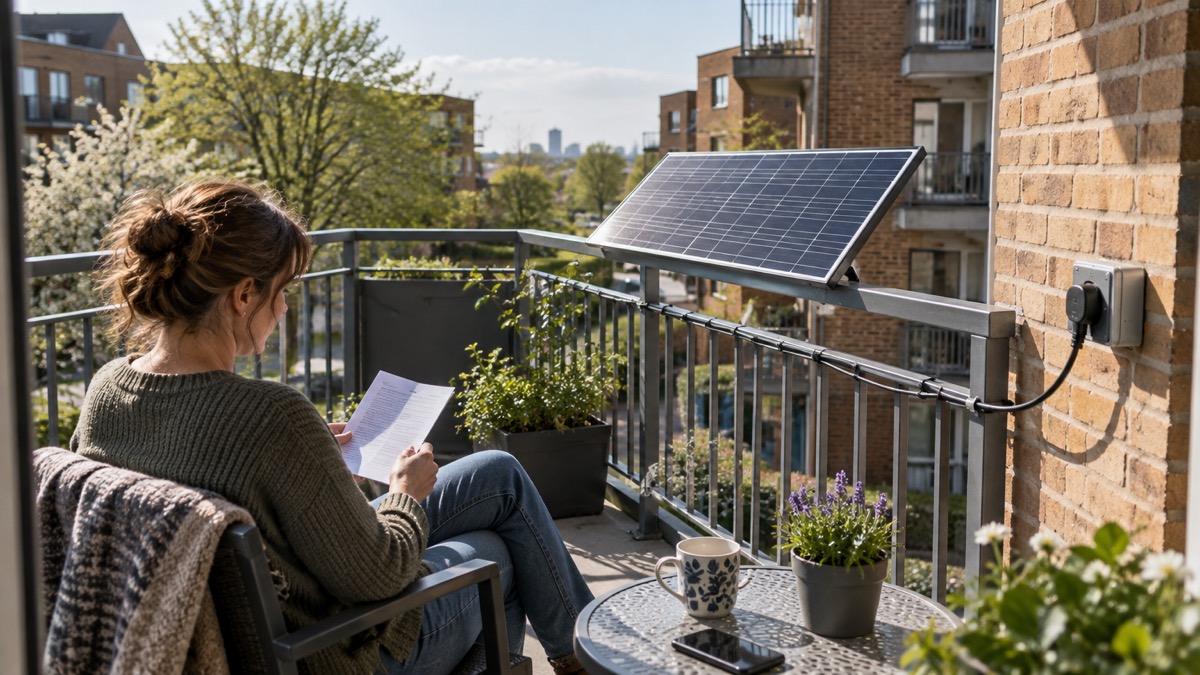
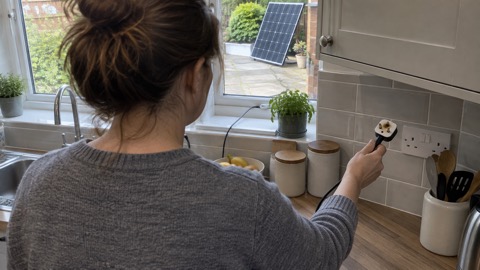
The way a plug-in system is meant to work is simple and immediate. Light from the sun hits the panels and generates energy, which flows into the electrical circuit for the home, providing electricity4. The panel connects by being plugged into a three-prong wall socket4. There is no storage step: whatever the panel makes is used in the home at that moment, and the panels do not generate enough energy to power your home entirely, but they could save you some money4.
Behind the socket, an inverter does the conversion. To use the electricity generated by solar panels, you need an inverter to convert the direct current (DC) into alternating current (AC)8. The same principle applies to any solar setup: the power generated by a solar panel is direct current (DC), so if you want to use it to power something that uses a three-pin 230V socket, an inverter is needed10.
To get the most from a plug-in panel without storage, think about when you use power rather than how you save it:
- Use appliances in daylight. The panel only contributes while the sun is on it, so run washing, charging and similar tasks during the day where you can.
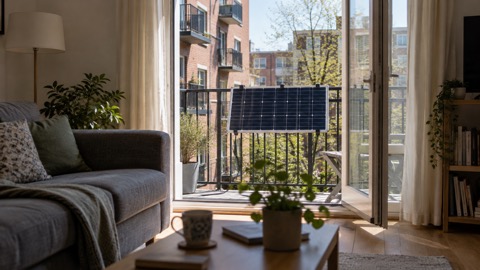
- Place the panel well. Plug-in solar panels can be placed in sunny outdoor spots such as a terrace, shed or outhouse roof, or a balcony4.
- Keep the connection simple. Plug-in solar systems should not be connected via extension leads, cable reels, multiway adaptors, travel adaptors or plug-in RCD adaptors3. Our page on whether plug-in solar can use an extension lead or outdoor socket explains the socket side.
- Check your RCD type first. Homes with Type AC RCDs should not use plug-in solar systems without first upgrading to a minimum Type A bidirectional RCD on those circuits7.
For a wider look at how these systems behave, see are plug-in solar panels safe at home.
What happens in a power cut
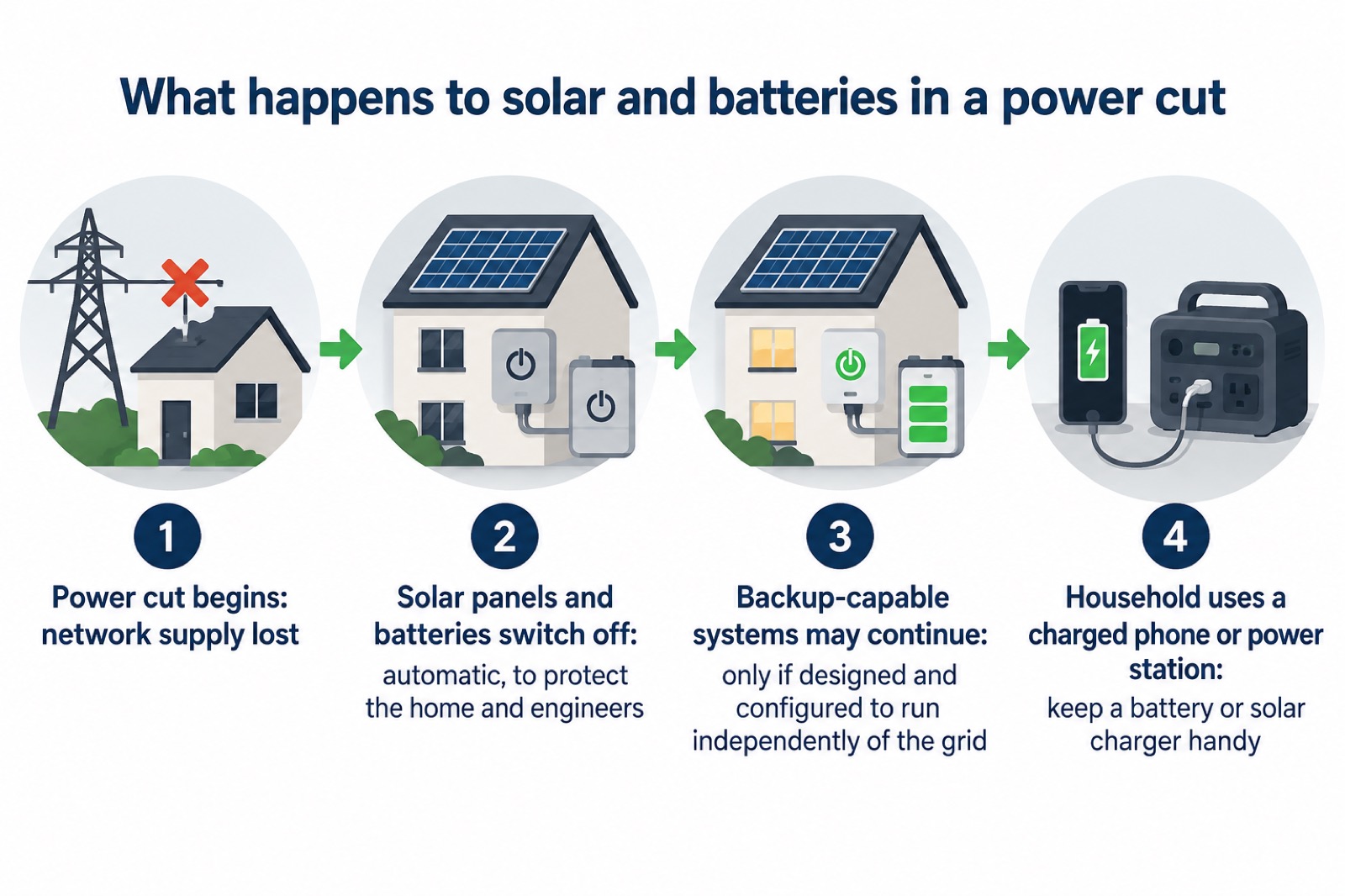
A power cut is the moment people most want stored solar power, so it is worth being clear about what actually happens. During a power cut, systems such as solar panels, heat pumps, EV chargers and batteries will automatically switch off to protect the home and engineers, and should not be damaged5. That automatic shutdown is a safety feature, not a fault.
There is one exception, and it applies to professionally installed systems rather than plug-in panels. If you have solar panels and a battery storage system with power backup capability, some installations can continue to provide power during a power cut if they are designed and configured to operate independently of the electricity grid, which may help keep essential appliances running during an outage11. The words "designed and configured" carry the weight: this is a system built for the purpose, not a plug-in panel with a battery attached.
For an ordinary household in a cut, the practical steps are modest:
- Keep a battery or solar charger handy so you can recharge a smartphone or tablet, and follow updates on social media and the online power cut map12.
- Leave the solar and battery system alone. It has switched itself off to protect the home and the engineers working on the network5.
- Use a portable power station for small loads if you have one, charged before the cut where possible.
Our power cuts guide sets out the wider household routine, and backup power at home covers the options side by side.
Portable power stations: a separate way to store solar
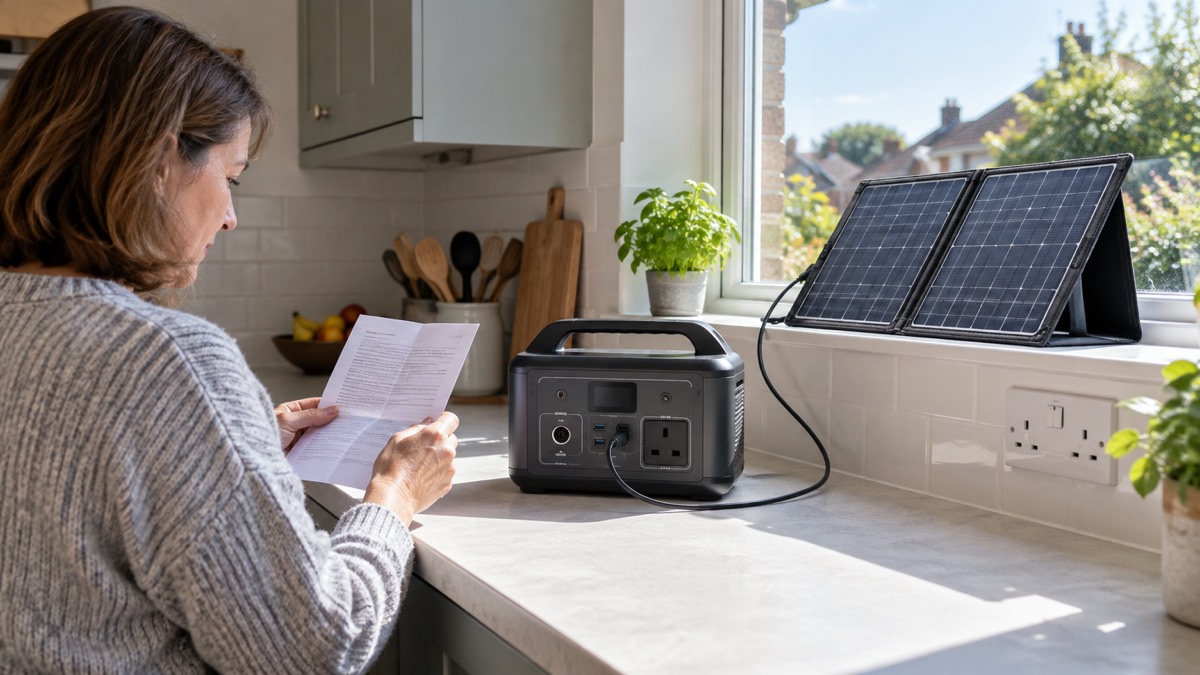
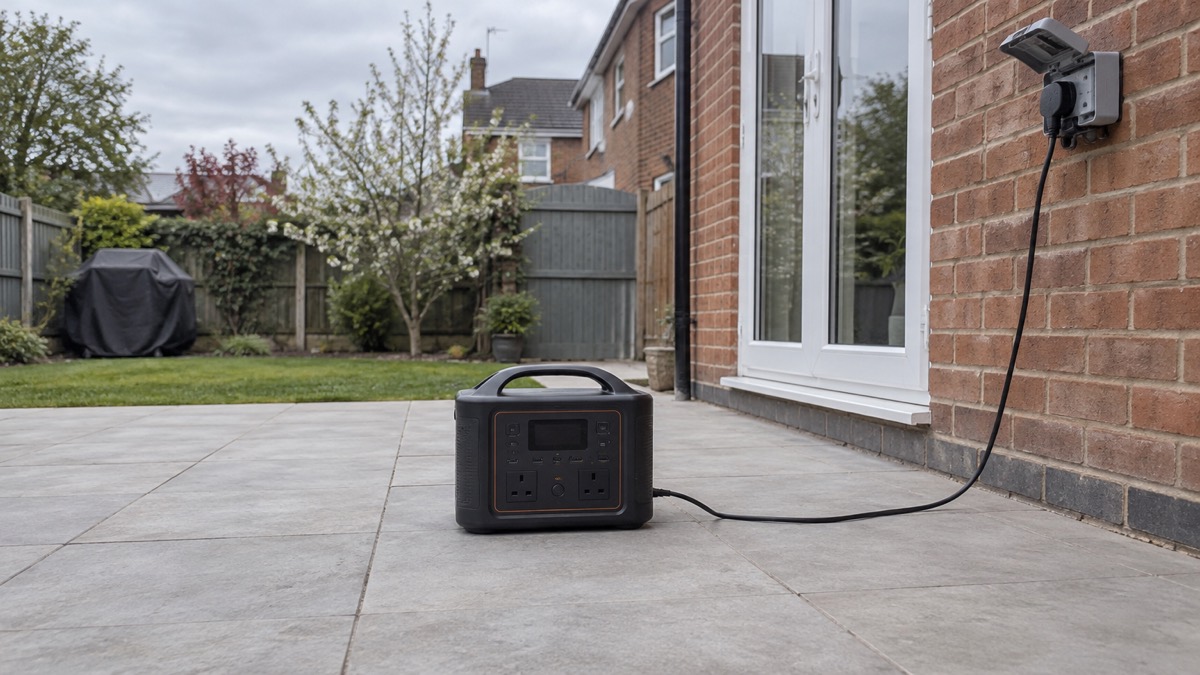
If what you want is stored solar power for small devices and lighting, a portable power station charged from its own solar panel is a different product from a plug-in panel, and it is the route the makers design for. These are smaller and more portable than generators that use a fuel tank, but are only really useful if you have low power demand, and they can sometimes be charged with solar panels13.
The makers' own guidance shows how the pairing works:
| Maker | How it charges from solar | What the maker says |
|---|---|---|
| Jackery | Jackery SolarSaga solar panels, wall outlets or car ports14; 2000W models designed to work with SolarSaga panels15 | All Jackery Portable Power Stations can be charged via SolarSaga panels, wall outlets or car ports14 |
| Anker SOLIX | Solar panels, wall outlet, car or PD 3.1 USB-C port16; the C300 DC model also takes solar panels or a car17 | Pair your portable power station with a solar generator for long-lasting power18 |
| BLUETTI | Solar charging while driving via mounted panels or the alternator19 | You can use solar to charge your power station while driving if it is connected to mounted panels or your alternator19 |
| EcoFlow | Portable power station, Power Kits or third-party PV systems18 | Unfold and prop the panels up with the built-in stand, then charge a power station at home for blackout preparation18 |
A small panel such as the Anker SOLIX PS30, a 30W portable panel with USB-A and USB-C ports, is sized for charging devices rather than running appliances20. Match the panel to the station: a maker's manual for its solar charger advises only using solar panels that are the same brand, type and model on one charger, and not mixing different panel types21.
Charging and storing batteries safely
Any battery in the home, whether in a power station, a torch or a phone, needs the same basic care. The fire and rescue services are consistent on this.
- Use the correct charger and keep devices out of direct sunlight and excessive heat22.
- Do not charge or store batteries in direct sunlight or in hot locations23.
- Never cover chargers or charging devices24.
- Avoid leaving batteries in direct sunlight for long periods in hot weather25.
- If a battery swells, turn off the device26.
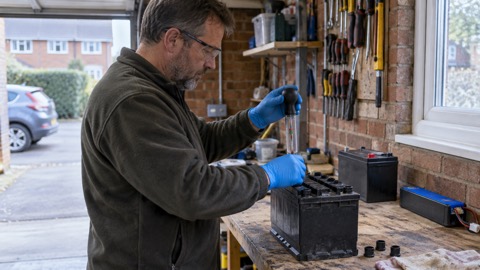
- If you will not use a battery for an extended period, follow the manufacturer's instructions for storage and maintenance23.
Where to get advice before adding storage
If you decide you want solar storage properly, the advice is to have it designed and installed rather than added to a plug-in panel. The Energy Saving Trust recommends getting at least three quotes from installers who are certified with MCS6. Electrical Safety First says it is vitally important to use a skilled, trained and qualified solar PV installer who is registered with a competent person scheme8. For any outdoor electrical work, always have it installed by a registered electrician in accordance with the manufacturer's instructions and BS 7671, the IET Wiring Regulations27.
Two design points are worth knowing when you talk to installers. AC-coupled batteries are probably better if you already have PV, as they are easier to retrofit9. DC might be a better option if you install PV and a battery at the same time, as they can be fully integrated9. Your network operator can also help: Northern Powergrid's partners explain how insulation, solar panels, heat pumps and batteries work and help you make a plan to get them installed28. Our page on telling your network operator about solar or a battery explains the G98 process.
If you are building a system away from the mains, a maker's own installation steps for an off-grid battery are a useful illustration of the care needed: select a safe, dry location for the energy storage battery, away from extreme temperatures, moisture and direct sunlight, then connect the solar panel's DC cable to the DC/PV input port on the battery29. That is a maker's instruction for its own product, not a substitute for a qualified installer on a grid-connected home.
For the wider picture, start with off-grid solar systems and the off-grid solar kit checklist, or see self-reliance at home for the full range of household systems.
Sources (29)
- Plug-in solar panels: safety advice for residents and homeowners, London Fire Brigade, 2026-10-25
- Fire safety at home, Surrey County Council, 2026-10-15
- Responding to the roll-out of plug-in solar panels, Electrical Safety First, 2026-10-25
- Plug-in solar panels, London Fire Brigade, 2026-10-25
- Planned outage, Scottish and Southern Electricity Networks, 2026-10-29
- Battery storage, Energy Saving Trust, 2026-10-06
- Plug-in solar panels, Electrical Safety First, 2026-10-25
- Solar panels, Electrical Safety First, 2026-10-26
- Battery storage, Centre for Sustainable Energy, 2025-10
- Solar power, The Caravan Club, 2026-10-25
- Be informed about hazards: power cuts, UK Government Prepare campaign, 2026-10-21
- Being prepared, National Grid, 2026
- How to buy the best generator, Which?, 2026-01-20
- Jackery buying guide, Jackery, 2026-10-25
- Power station 2000W, Jackery, 2026-10-29
- Choose portable power station, Anker SOLIX, 2026-10-25
- C300 DC, Anker SOLIX, 2026-10-25
- Portable solar panels, EcoFlow, 2026-10-25
- Caravan power station, BLUETTI, 2026-10-29
- 30W portable solar panel, Anker SOLIX, 2026-10-25
- SmartSolar MPPT RS manual, Victron Energy, 2026-10
- How to stay safe during a heatwave, Devon and Somerset Fire and Rescue Service, 2026-06-23
- Lithium-ion batteries, Scottish Fire and Rescue Service, 2025-11-27
- Electrical safety, Lincolnshire County Council, 2026-10-29
- Heat, cold and rain: how weather conditions affect e-bikes and e-scooters, London Fire Brigade, 2026-10-25
- Batteries and chargers, London Fire Brigade, 2026-10-25
- Outdoor lighting, Electrical Safety First, 2026-10-25
- Energy advice, Northern Powergrid, 2026-10-29
- Off-grid solar power, BLUETTI, 2026-10-25
 Off-Grid Solar Kit Checklist
 Hydroponic System Parts List
 Year-Round Sowing Calendar
 Blocking Diode for Solar Panels
 Equalisation Charging
 Plug-In Solar Extension Leads
 Plug-In Solar and Landlords
 Plug-In Solar Safety
 Solar Panel Burning Smell
 Solar Panels in a House Fire