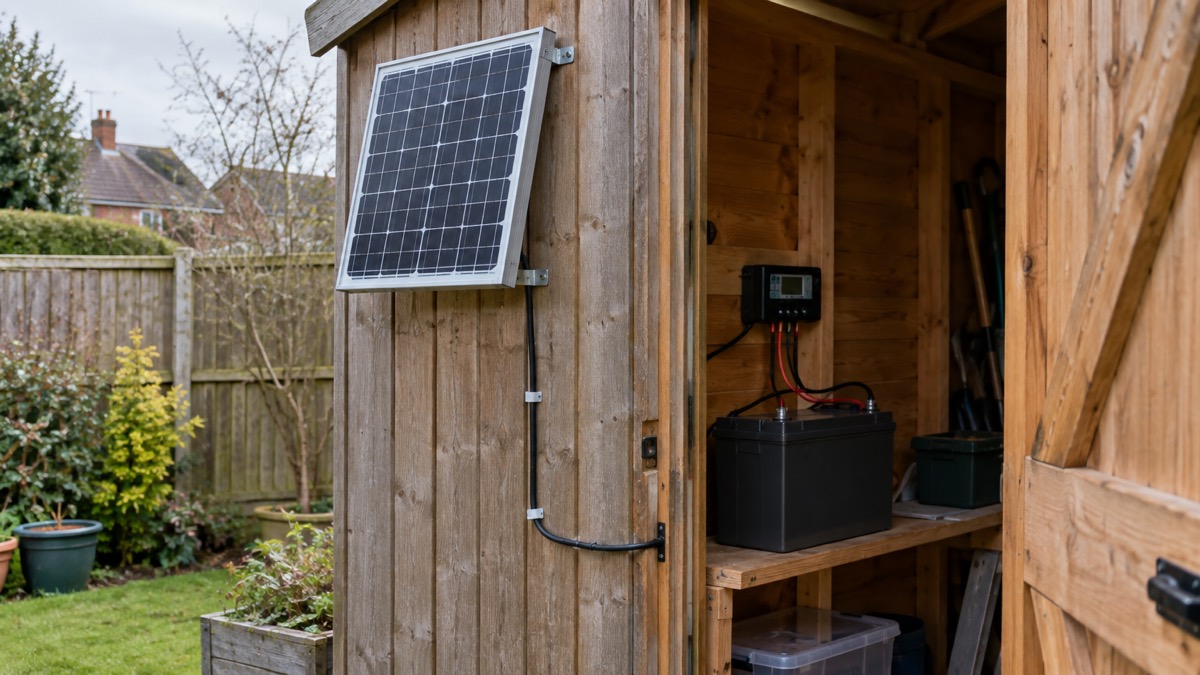
If you are wiring a solar panel to a battery yourself, the short answer is that a blocking diode is needed in two situations: when no regulator is used at all, and when more than one panel is connected in parallel. In every other case the charge controller does the job. Marlec states that all solar controllers are diode protected to prevent reverse current in darkness and to allow other charge sources to the same battery1.
The bigger rule sits above the diode question. Photonic Universe states that a solar charge controller, also called a regulator, is required for all solar panels over 10W, because it controls the voltage and current between the panel and the battery, preventing overcharging and reverse current flow2. So for anything but the smallest trickle panel, the controller is not optional, and once it is fitted the diode is usually already inside it.
This page sets out when a diode is still needed, how to match a controller to your panel size, how the four connections go together, and what to watch for on cable size and voltage drop. If you are building a wider system, the off-grid solar overview and the charge controllers guide go further.
When a blocking diode is needed, and when the controller already has one
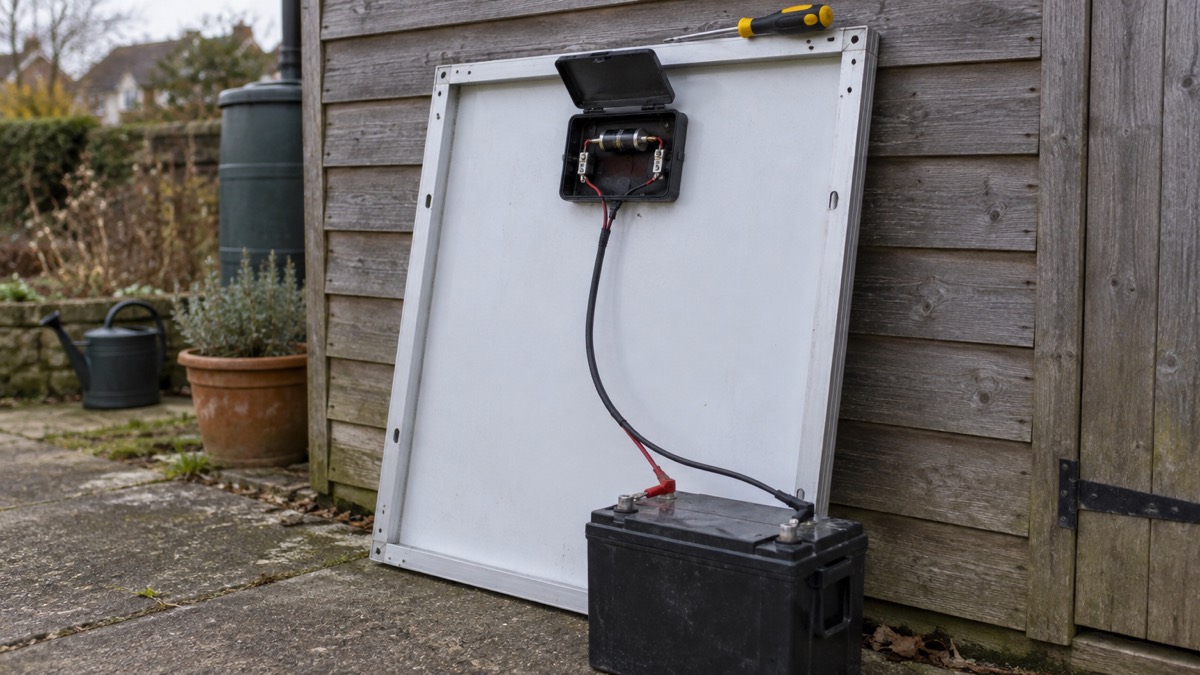
A blocking diode is a one-way valve for current. Marlec states that a blocking diode is fitted to ensure the correct flow of current, and should be fitted when either no regulator is used or more than one solar panel is connected in parallel. It fits directly into the junction box of framed solar panels1.
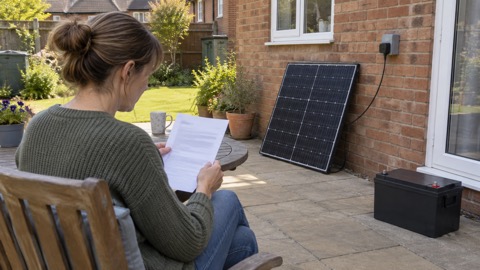
That gives you two clear cases. The first is a bare panel charging a battery with nothing in between. Without a diode, current can flow back from the battery into the panel when light fades. The second is parallel panels, where one panel in shade can draw current from the others unless each is protected.
In every other arrangement, check the controller first. Marlec states that all solar controllers are diode protected to prevent reverse current in darkness and to allow other charge sources to the same battery1. The Rutland charge controller has a built-in blocking diode that avoids conflict with other charging sources to the same battery, such as engine charging, and Marlec notes that solar panels must be fitted with appropriately rated diodes to prevent reverse current when shaded5.
Some controller makers go further and require panel diodes regardless. The installation notes for the Marlec HRDi Charge Controller state that solar panels must be fitted with diodes6, and the same instruction appears for the HRSi Regulator 12/24V7. If you are using one of those units, follow its instructions.
A charge controller is required on any panel over 10W
The 10W line is the one to remember. Photonic Universe states that a solar charge controller is required for all solar panels over 10W, because it controls the voltage and current between the panel and the battery, preventing overcharging and reverse current flow2. Below that, a panel is small enough that a diode alone is the usual protection.
The Caravan and Motorhome Club gives a practical example of what small panels do. To keep a caravan or motorhome battery topped up while on-site, you would need at least a 40W panel to achieve this8. Photonic Universe puts trickle charging, to compensate for a battery's self-discharge in a caravan, at a 5W to 10W panel or charging kit3. Those two figures describe different jobs: holding a charge against self-discharge, and actually topping a battery up while you are using it.
Output also varies with the season. Photonic Universe gives a 10W panel as producing 60-70Wh in summer, and a 20W panel as 120-140Wh in summer but 16Wh in winter8. A 50W panel gives 300-350Wh in summer and 40Wh in winter8. A trickle panel that keeps a battery healthy in July may do very little in December, which is worth knowing before you rely on it.
Choosing a controller by panel size
Photonic Universe sets out controller sizes against panel wattage, and the pattern is simple: match the controller's current rating to the panel's output. For panels up to 60W, use a 5A controller (standard), a waterproof 10A controller, a 10A dual battery controller, or a 10A MPPT controller for maximum efficiency. For panels up to 130W, use a 10A controller (standard), a waterproof 10A controller, a 10A dual battery controller, or a 10A MPPT controller. For panels up to 160W, use a 20A controller (standard), a waterproof 10A controller, a 10A dual battery controller, or a 20A MPPT controller2.
| Panel size | Standard controller | Alternatives listed |
|---|---|---|
| Up to 60W | 5A | Waterproof 10A, 10A dual battery, 10A MPPT2 |
| Up to 130W | 10A | Waterproof 10A, 10A dual battery, 10A MPPT2 |
| Up to 160W | 20A | Waterproof 10A, 10A dual battery, 20A MPPT2 |
The controller type matters too. Photonic Universe describes 5A to 60A PWM solar charge controllers as perfect for connecting solar panels to one leisure battery2. Dual battery controllers are needed for multiple batteries in a solar power system2. Morningstar's SunSaver Duo is a two battery solar controller with an optional remote meter for caravans and boats9.
MPPT controllers are the efficiency option. Sterling lists an MPPT30 with an LCD display and information panel, and an MPPT50 with a 50A maximum load output10. Victron's SmartSolar MPPT RS is intended to operate with a PV voltage of between 65-450V11. Those are larger-system units; for a single leisure battery and a panel under 160W, the standard controller in the table is the straightforward match.
Wiring the panel, controller and battery: four connections
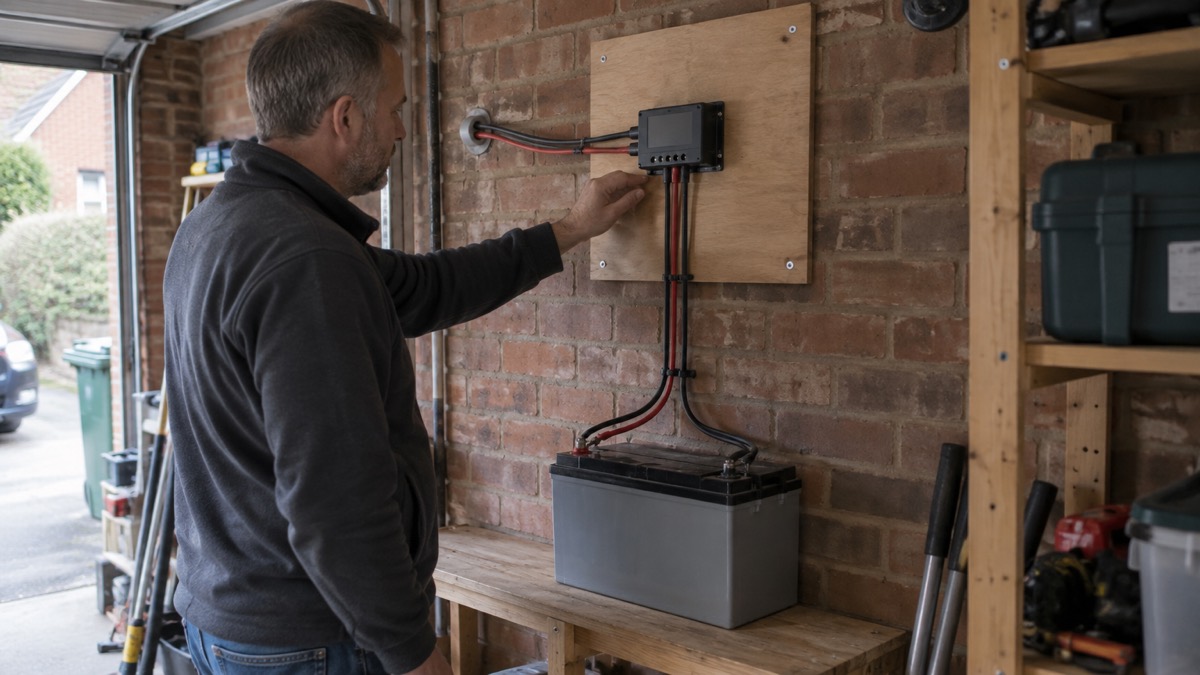
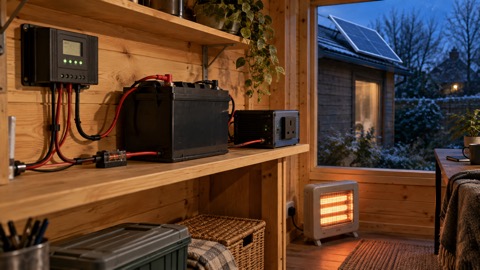
A basic system has four connections to get right: panel positive and negative into the controller's PV input, and battery positive and negative from the controller's battery output. Work with the battery disconnected first, connect the controller to the battery, then the panel to the controller, and check the controller's own instructions for the order it requires.
The connectors you use depend on the kit. Marlec's Battery Link Cable for Foldable PV is supplied with an Anderson plug to connect to the solar panel and ring terminals to fit the battery, or the ring terminals can be removed for connection into the controller12. That is a useful pattern to copy: a plug at the panel end and a secure terminal at the battery end.
If you are combining panels, do it with the right adapter rather than twisting cables together. BioLite's 4x1 Solar Chaining Adapter enables up to 4 BioLite SolarPanel 100s to connect13. Remember that parallel panels are exactly the case where Marlec advises a blocking diode1.
Cable size and voltage drop
Voltage drop is the loss that builds up along a cable run, and it grows with length and with current. The practical response is to keep cable runs short and use cable rated for the current the panel can deliver. The panel's own figures tell you what that current is: EcoFlow lists a 100W rigid panel with an open circuit voltage of 37.10V and a short circuit current of 13.79A15, and a 400W portable panel with an open circuit voltage of 48V and Vmp 41V16.
Long extension runs need care. Jackery notes that with the Jackery 1000 v2 and 100 watt solar panel, an additional adapter part is needed to use the 16ft extension cable [not cited here]. The lesson is to check the maker's compatibility note before adding length, because the connector, not just the cable, may change.
For larger panels feeding a portable power station, EcoFlow's PV Voltage Step Down Module steps down the voltage of rigid panels from 550V to 120V for charging portable power stations and battery packs [not cited here]. That is a job for equipment designed for it, not for improvised wiring.
Small trickle panels and portable power stations
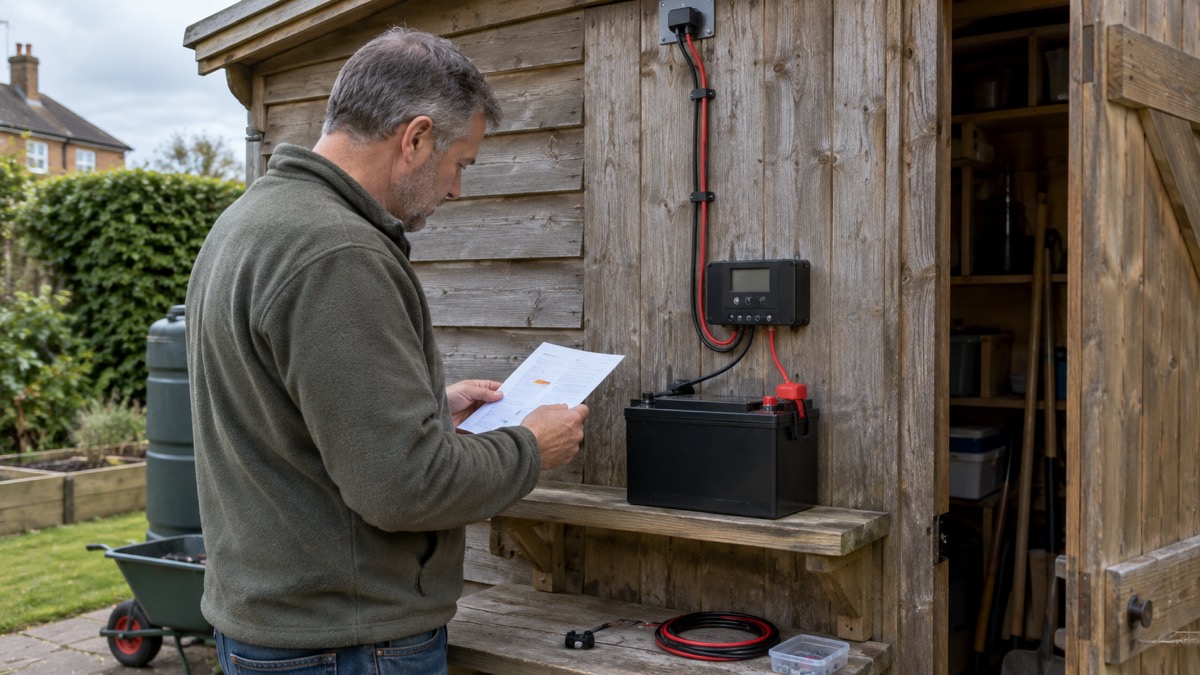
Small panels are where the diode question most often comes up, because they are often used without a controller. Photonic Universe's 5W to 10W figure for trickle charging a caravan battery3 sits below the 10W line at which a controller becomes required3. If you are using a panel in that range with no regulator, a blocking diode is the protection Marlec describes1.
Portable power stations are different. They are sealed units with their own charging inputs, so you connect the panel with the maker's cable and there is no battery circuit to wire a diode into. Jackery's Solar Generator 300 Plus with the 40W mini Solar Panel comes with a wall charging cable17, and the SolarSaga 40 Mini panel includes a 1.8m multifunctional solar charging cable with a detachable adapter, a DC8020 to USB-C adapter, carabiners, an accessories bag and a user manual18. The Jackery Explorer 240 v2 needs an additional 8020 to USB-C adapter to connect a solar panel20.
Some panels have no battery of their own. EcoFlow states that its Portable Solar Panel does not have a built-in battery, and that to store power you need an external mobile battery separately21. Which? describes battery generators as smaller and more portable than fuel-tank generators, but only really useful if you have low power demand, and notes they can sometimes be charged with solar panels22.
Where to get help and what to check before you buy
Before you buy a controller, check whether it will live outdoors. London Fire Brigade advises that a solar panel plugged into an outdoor socket should use a minimum IP65-rated installation fitted by a competent person4. Anker SOLIX lists IP67 for its PS200 and PS400 panels23, which tells you the panel can take weather, but you still need to check the controller's own rating.
If you want the system to keep working in a power cut, the government's Prepare guidance notes that some solar installations with battery storage can continue to provide power during a power cut if they are designed and configured to operate independently of the electricity grid, which may help keep essential appliances running during an outage25. That is a design decision, not something a diode or controller adds on its own.
For a wider view of what a small system can do, the solar sizing guide works from your daily watt-hours, and the off-grid solar kit checklist lists what to gather before you start. If you are weighing panel types, rigid or flexible panels sets them side by side.
Sources (23)
- Solar controllers, Marlec, 2024-05-30
- Caravans and motorhomes :: 12V solar panels charging kits for caravans, motorhomes, boats, yachts, marine, Photonic Universe Ltd
- How to choose a 12V solar panel, Photonic Universe, 2026-10-25
- Plug-in solar panels safety advice, London Fire Brigade, 2026-10-25
- Controllers, Marlec, 2025-01-07
- HRDi Charge Controller, Marlec, 2026-10-29
- HRSi Regulator 12/24V, Marlec, 2026-09-22
- Solar power, Caravan and Motorhome Club, 2026-10-25
- Morningstar PV controllers, Marlec, 2026-08-26
- SmartSolar MPPT RS manual, Victron Energy, 2026-10
- Spectra Foldable Solar Panel, Marlec, 2026-03-30
- Solar panels, Electrical Safety First, 2026-10-25
- Portable solar panels, EcoFlow, 2026-10-25
- Glacier Delta 2 Max 400W, EcoFlow, 2026-10-25
- Solar Generator 300 Plus, Jackery, 2026-10-29
- SolarSaga 40W Mini Solar Panel, Jackery, 2026-10-25
- SolarSaga 40 Mini, Jackery, 2026-10-29
- Explorer 240 v2, Jackery, 2026-10-25
- EcoFlow 28W Portable Solar Panel, EcoFlow, 2026-10-25
- How to buy the best generator, Which?, 2026-01-20
- PS200 Portable Solar Panel 200W, Anker SOLIX, 2026-10-25
- C1000 Gen 2 with PS400 bifacial panel, Anker SOLIX, 2026-10-25
- Power cuts, UK Government Prepare, 2026-10-21
 Off-Grid Solar Kit Checklist
 Hydroponic System Parts List
 Year-Round Sowing Calendar
 Equalisation Charging
 Plug-In Solar to a Battery
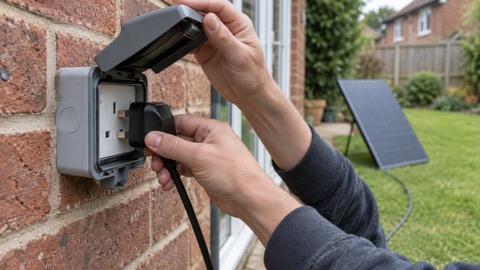 Plug-In Solar Extension Leads
 Plug-In Solar and Landlords
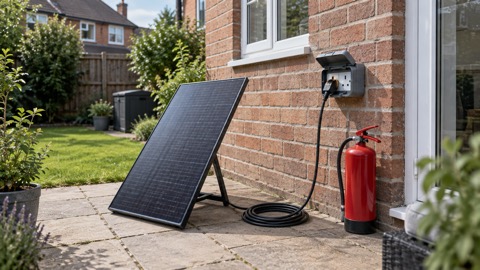 Plug-In Solar Safety
 Solar Panel Burning Smell
 Solar Panels in a House Fire