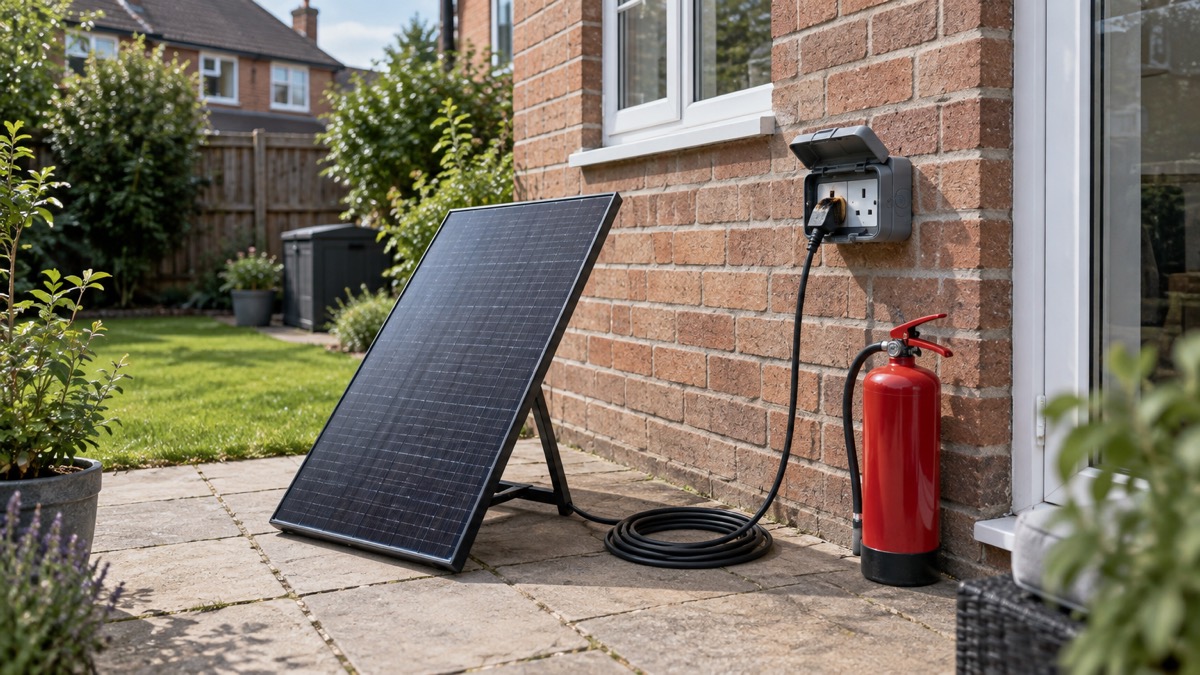
Plug-in solar panels are small solar photovoltaic (PV) systems that plug into a standard electrical socket to make electricity from sunlight1. They are available to buy in the UK2. The safety question has a clear answer. Used as the maker instructs, with one unit per household and no improvised leads, they can be safe. The risks come from bad installation, poor connections, damaged cables and tampering, and those are the things you control.
The single most important point is that plug-in solar is not yet fully provided for in UK wiring rules. Electrical Safety First states plainly that "at present, these systems supply power to household circuits in a way currently not permitted by regulations"3. One maker describes plug-in solar as fully legal subject to safety and regulatory compliance4. Those positions sit alongside each other, and the practical upshot for a household is the same: follow the maker's instructions exactly, keep the installation simple, and treat anything unusual as a reason to stop and get advice.
This page sets out what the kit is, what the wiring rules say, how to set it up safely, why most systems stop in a power cut, and where to go for help with installers, your network operator and product recalls.
What plug-in solar panels are and how they connect
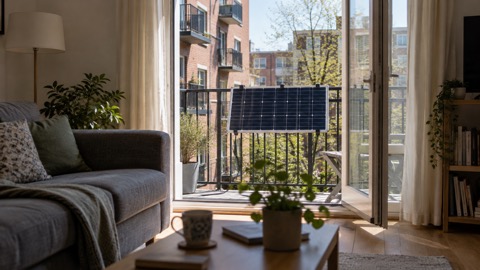
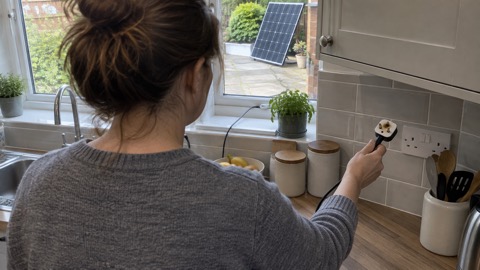
A plug-in system is a panel, or a small set of panels, wired to a micro-inverter and fitted with a plug that goes into an ordinary wall socket. Light from the sun hits the panels and generates energy, which flows into the electrical circuit for the home, providing electricity2. The connection is made at a three-pin wall socket2, and the panels themselves sit in sunny outdoor spots such as a terrace, a shed or outhouse roof, or a balcony2.
That simplicity is the appeal, and it is also where the caution lies. A conventional rooftop system is designed, installed and certified by a qualified person. A plug-in kit is bought and set up by the householder, so the quality of the installation depends on how carefully the maker's instructions are followed. The London Fire Brigade's advice is direct: always install, operate and maintain the system following the manufacturer's guidance, because incorrect installation or misuse can increase the risk of fire and electric shock6.
Two features of the technology matter for safety in every home. First, solar panels may continue generating electricity during daylight hours, even when switched off indoors6. Switching off at the socket does not make the panel side of the system dead while the sun is on it. Second, the equipment includes an inverter, the component that turns the panel's direct current into the alternating current your sockets use; a caravan guide makes the same point about needing an inverter to power anything that uses a three-pin 230V socket8. Never tamper with cables, plugs, inverters, batteries or any other part of the system, as altering equipment can expose live electrical components, cause faults and significantly increase fire and shock risks6.
What UK wiring rules say about plugging panels into a socket
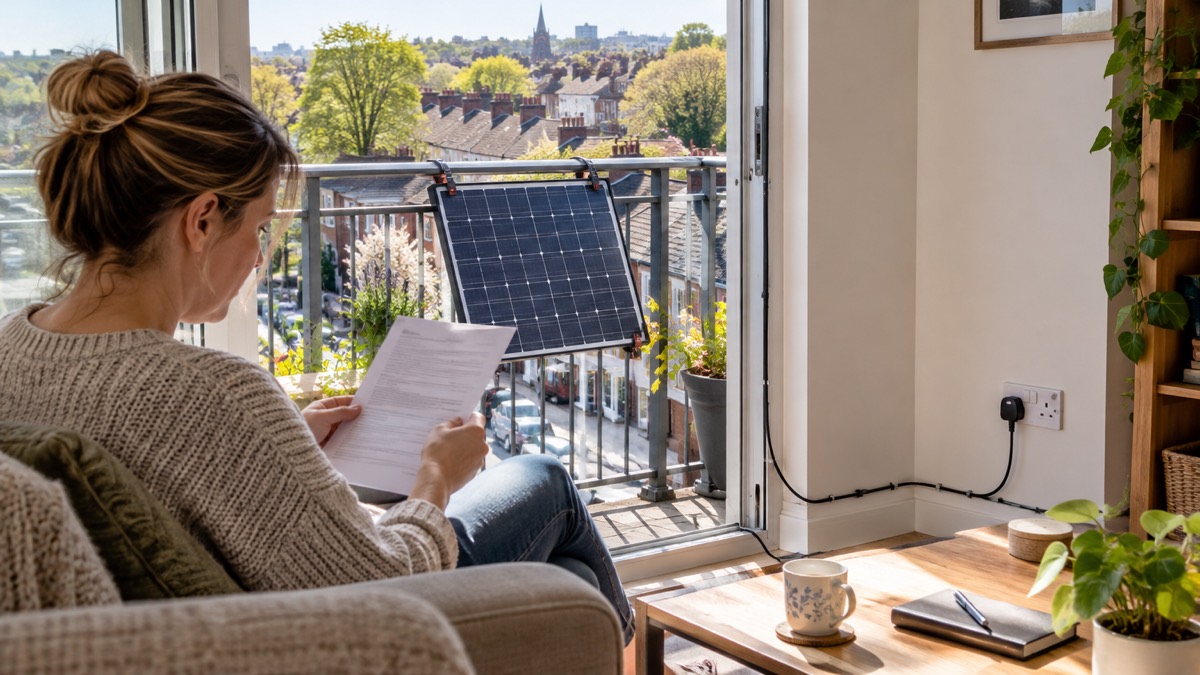
The regulatory position is the part most households find confusing, so it is worth stating carefully. Plug-in photovoltaic panels, also known as balcony solar, are available to buy in the UK3. At the same time, Electrical Safety First warns that at present these systems supply power to household circuits in a way currently not permitted by regulations9. The government has announced plans to make plug-in solar systems more widely available3. A maker's guide describes installing plug-in solar in the UK as fully legal, subject to safety and regulatory compliance4.
Where documents take different positions, the safe course for a household is the cautious one: install to the maker's instructions, keep to one unit, and do not modify anything. The rules that do exist are there to stop a solar system feeding power back into the network when it should not. Connection standards currently require that micro-generators are fitted with a controller which automatically disconnects from the local network in the event of isolation from the main grid, to protect network staff from risk of accidental electrocution10. That single requirement explains most of what follows about power cuts.
There is also a practical limit on what the kit can do. Plug-in panels do not generate enough energy to power your home entirely, though they could save you some money2. If you are weighing up a plug-in kit against a larger off-grid arrangement, our guide to off-grid solar systems sets out how the bigger systems are put together, and sizing an off-grid solar system explains how output is matched to what a household uses.
Safe setup: sockets, cables and extension leads
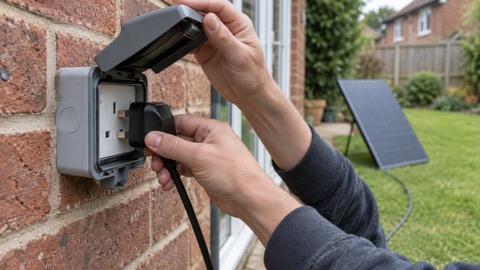
Most of the safety advice for plug-in solar comes down to the route the power takes from panel to socket. The temptation is to run a lead out to the garden or across a balcony, and that is exactly what the guidance rules out. Plug-in solar systems should not be connected via extension leads, cable reels, multiway adaptors, travel adaptors or plug-in RCD adaptors, because these accessories can overheat, become overloaded and create additional safety risks5. The same warning appears in Electrical Safety First's consumer guidance3.
The alternative is a dedicated outdoor socket. If you are plugging your solar panel into an outdoor socket, ensure it is a minimum IP65-rated installation fitted by a competent person6. IP65 denotes protection against dust and water jets, which is the standard you want for something mounted outside and exposed to British weather. Our page on whether plug-in solar can use an extension lead or outdoor socket goes into the options in more detail.
A few more rules keep the setup sound:
- One plug per socket. Use one plug per socket, as general electrical safety advice for the home recommends11.
- Keep cables tidy and inspected. Do regular visual checks to identify any cracks, breaks, loose connections, and any cable damage caused by vermin and weathering12.
- Watch for the warning signs. Overheating, burning smells, buzzing or crackling sounds, visible damage and repeated electrical tripping are all reasons to stop1.
- Do not install during cladding work. If your building is undergoing, or is due to undergo, cladding works or remediation, it is recommended that you do not install plug-in solar panels until the work is complete6.
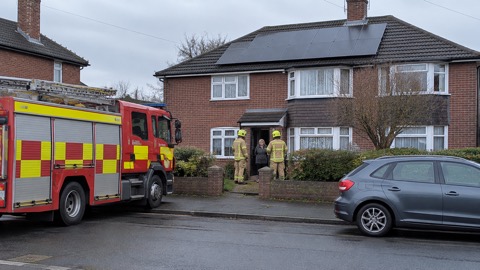
The overall fire risk from solar panels is low, but known problems can occur through bad installations, poor quality connections and cable damage through vermin and weathering12. That is a reassuring picture as long as the installation is done properly. If you ever smell burning from the system, our page on what to do if a solar panel smells of burning sets out the steps, and what to do in a fire with solar panels installed covers the emergency itself.
Power cuts: why most plug-in panels stop working
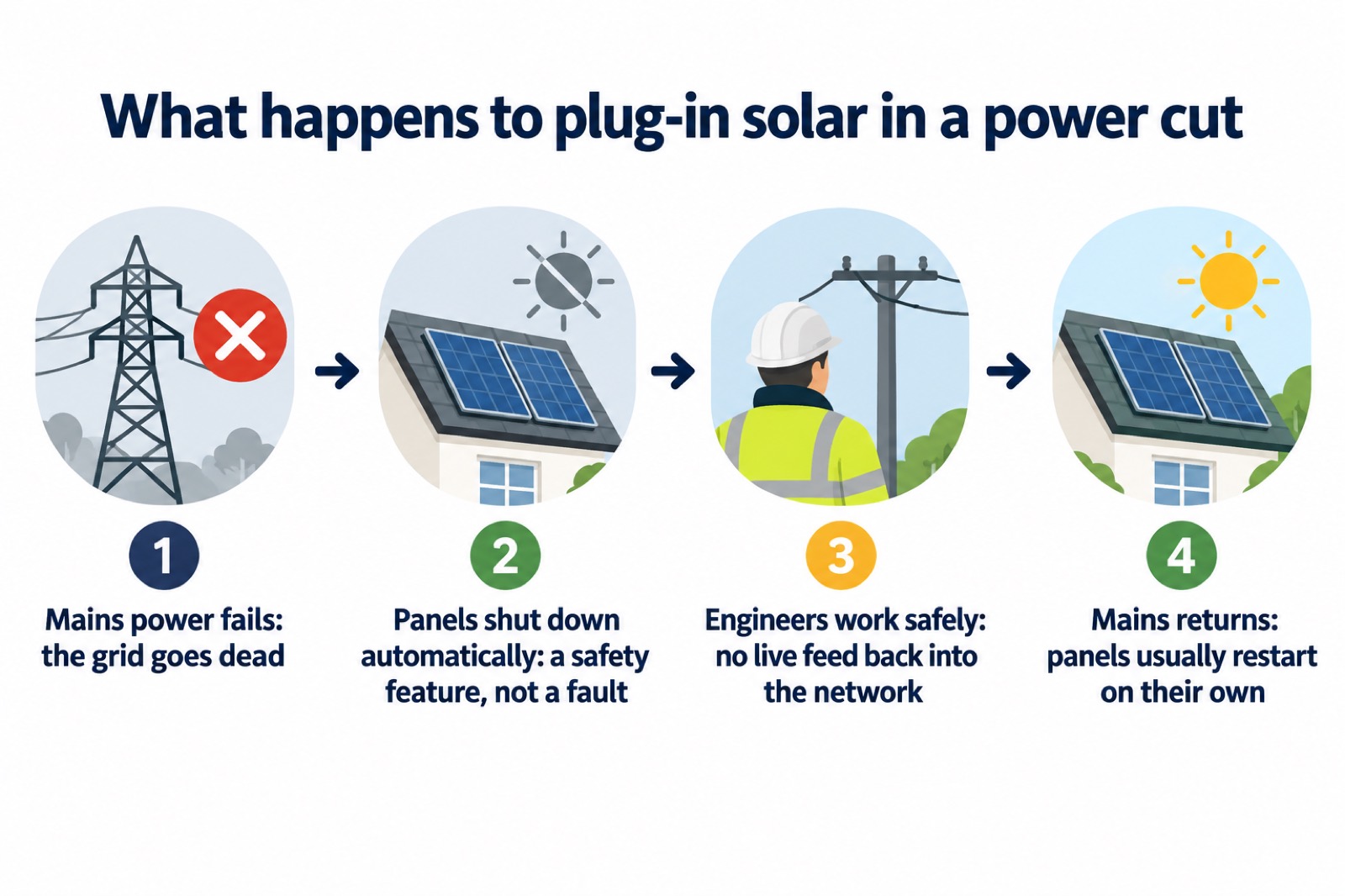
If the mains goes off, your plug-in panels will almost certainly stop too, and that is by design rather than a fault. Your solar panels will stop working during a power cut for safety reasons7. The reason is the same one behind the connection standard described above: grid-tied solar panels shut down during a power outage for the safety of utility workers, who can get electrocuted by downed power lines13. A system that kept pushing power into a dead network would put the people repairing it at risk.
The behaviour is automatic. Solar panels automatically switch off during a power cut as a safety feature and usually restart on their own once power returns14. There is one exception worth knowing about if your area is having planned work. If your outage letter says you will be connected to a temporary generator, turn off your solar panels before the planned outage and turn them back on once mains power has been restored, because solar panels left on may feed electricity into the generator and cause it to stop working15.
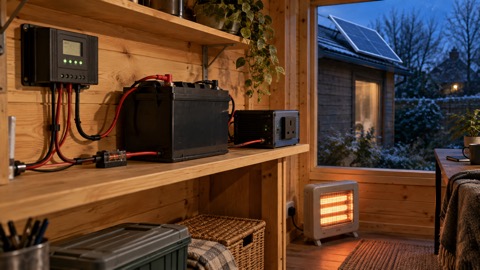
A battery changes the picture, but only if it is designed to. If you have solar panels and a battery storage system with power backup capability, some installations can continue to provide power during a power cut if they are designed and configured to operate independently of the electricity grid, which may help keep essential appliances running during an outage16. That capability has to be built in and set up correctly; it is not something a basic plug-in kit does by itself. Our guide to connecting plug-in solar panels to a battery covers what a battery can and cannot do.
For the outage itself, the usual household preparations apply. Our power cuts guide covers what to have ready, and backup power at home sets out the alternatives to solar for keeping a few things running.
Getting help: installers, your electricity network and recalls
Knowing when to stop and call someone is part of using the kit safely. If you notice any of the fault signs, stop using the system immediately and seek advice from a competent person before further use1. Do not ignore burn marks, arcing (buzzing or crackling) sounds, fuses blowing, circuit-breakers tripping, or a plug or socket that feels hot to touch; unplug and contact the retailer, manufacturer, or a qualified repair technician12. For anything involving the fixed wiring of the house, a competent person means a qualified electrician, not a general handyman.
Solar panels should also be inspected and tested at least every five years to ensure the system remains safe and working as it should12. Most panels have a self-cleaning coating which, when installed at a suitable angle, allows rain to clear dirt and debris12, so routine cleaning is rarely needed, but the visual checks above are worth doing regularly.
On recalls, the check is quick and free. Check any products you have bought are not subject to a product recall, using Electrical Safety First's website or the government website17. If an appliance is not listed as recalled it should be safe to use; if you have concerns about its safety, contact the retailer or manufacturer17. Registering a product when you buy it makes it far more likely you will hear about a recall directly.
Be wary of anyone selling solar at the door or over the phone. Be suspicious if you are contacted by solar panel companies out of the blue or put under pressure to buy quickly, especially with time-limited or one-off discounts9. Low prices or high savings may not include all necessary parts and services, and extremely short payback times are a warning sign9. If you are considering a larger installation, our guide to telling your network operator about solar panels or a battery explains the notification process for installed systems.
Sources (18)
- Fire safety at home, Surrey County Council, 2026-10-15
- Plug-in solar panels, London Fire Brigade, 2026-10-25
- Plug-in solar panels, Electrical Safety First, 2026-10-25
- Plug-in solar guide, Jackery, 2026
- Responding to the roll-out of plug-in solar panels, Electrical Safety First, 2026-10-25
- Plug-in solar panels: safety advice for residents and homeowners, London Fire Brigade, 2026-10-25
- Tips to help you during a power cut, Electricity North West, 2026-10-25
- Solar power, The Caravan Club, 2026-10-25
- Solar panels, Electrical Safety First, 2026-10-26
- Written evidence, UK Parliament, 2022-01-13
- Cut the risk of fire in your home, Wiltshire and Swindon Prepared, 2026-10-25
- Solar panels, Electrical Safety First, 2026-10-26
- How to use solar panels during a power outage, Jackery, 2026-09-28
- Planned outage, Scottish and Southern Electricity Networks, 2026-10-29
- Planned power cuts, Scottish and Southern Electricity Networks, 2026-10-25
- Power cuts, UK Government Prepare campaign, 2026-10-21
- Checking your electrical products, Gloucestershire Fire and Rescue Service, 2025-01-21
- How to rent a safe home, GOV.UK, 2020-12-10
 Off-Grid Solar Kit Checklist
 Hydroponic System Parts List
 Year-Round Sowing Calendar
 Blocking Diode for Solar Panels
 Equalisation Charging
 Plug-In Solar to a Battery
 Plug-In Solar Extension Leads
 Plug-In Solar and Landlords
 Solar Panel Burning Smell
 Solar Panels in a House Fire