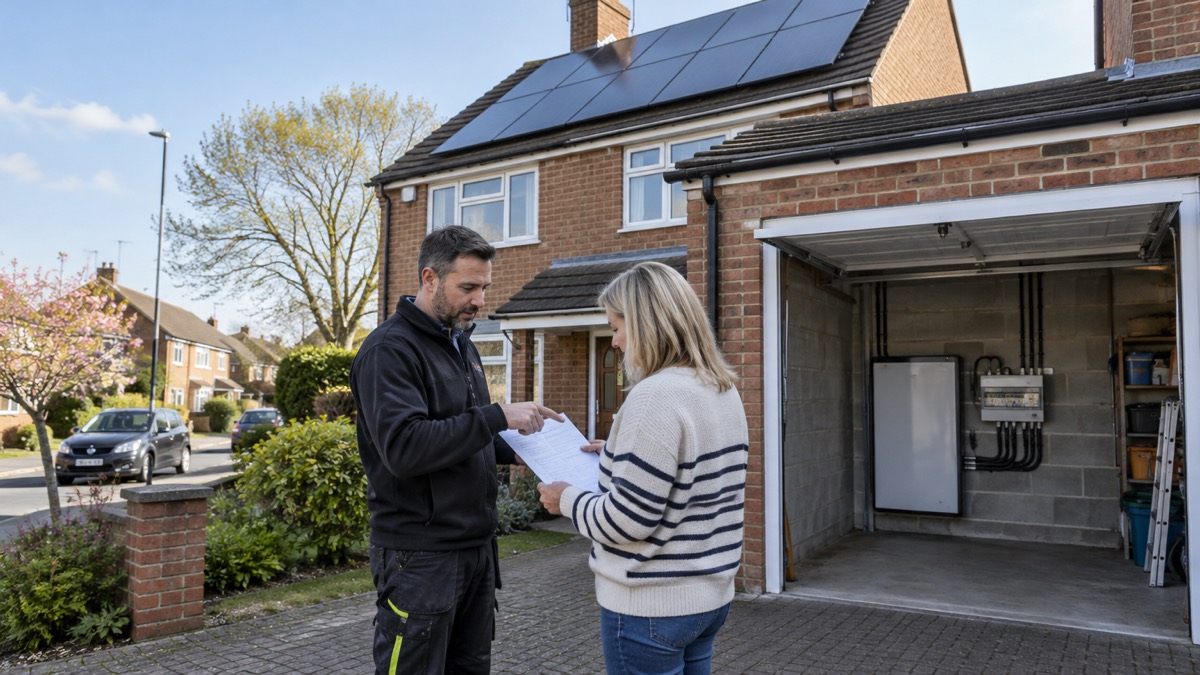
Yes, you do need to tell your regional electricity network operator about solar panels fitted to your home, and in most cases you need to do it within 28 days of the system being installed. The official fire safety guidance on plug-in solar equipment is blunt about it: "Following installation, inform your local Distribution Network Operator (DNO) within 28 days."1 The company you need to contact is not the energy supplier whose name appears on your bill. It is the Distribution Network Operator, the firm that owns and runs the towers and cables delivering electricity to your street2.
For most ordinary households the process is a notification, not an application. Independent safety guidance from Electrical Safety First explains that systems with the ability to export up to 3.68kWp can be notified to the DNO within 28 days of being installed under the "connect and notify" arrangement, using a form called G983. Your installer should normally handle the paperwork for you, but the responsibility for making sure it happens rests with you as the building owner3.
Who qualifies for G98: single-unit systems up to 3.68kW
The G98 route exists so that small, standard household generation can be connected without waiting for permission. The threshold is the system's ability to export: up to 3.68kWp (kiloWatt peak)3. A typical rooftop array on an ordinary house falls under this limit, which is why most domestic installations go down this path. Single-unit installations with inverter output within 3.68kW typically fall under G98, and the local Distribution Network Operator must be notified within 28 days of installation.
The practical effect of "connect and notify" is that your installer can finish the job and switch the system on without a wait, then submit the G98 form to the DNO afterwards, inside the 28-day window3. The DNO keeps a record of what is connected in its area, which matters because it needs an accurate picture of local generation to run the network safely.
Two things are worth checking with your installer before the work starts. First, ask them to confirm the export capacity of the planned system, because that single figure decides whether G98 applies at all. Second, ask them to confirm in writing that they will submit the G98 form on your behalf and give you a copy. Independent guidance is clear that a credible installer should be able to take care of this for you by submitting G98 or G99 forms on your behalf3, so an installer who shrugs at the question is a warning sign.
The responsibility does not transfer with the paperwork. The building owner is responsible for registering a solar PV system with the Distribution Network Operator3. If you own the house, that is you, even if the installer does the form-filling. If you are unsure whether a previous owner ever notified an older system, contact your DNO and ask what it has on record.
Balcony solar under 800W: connect and notify
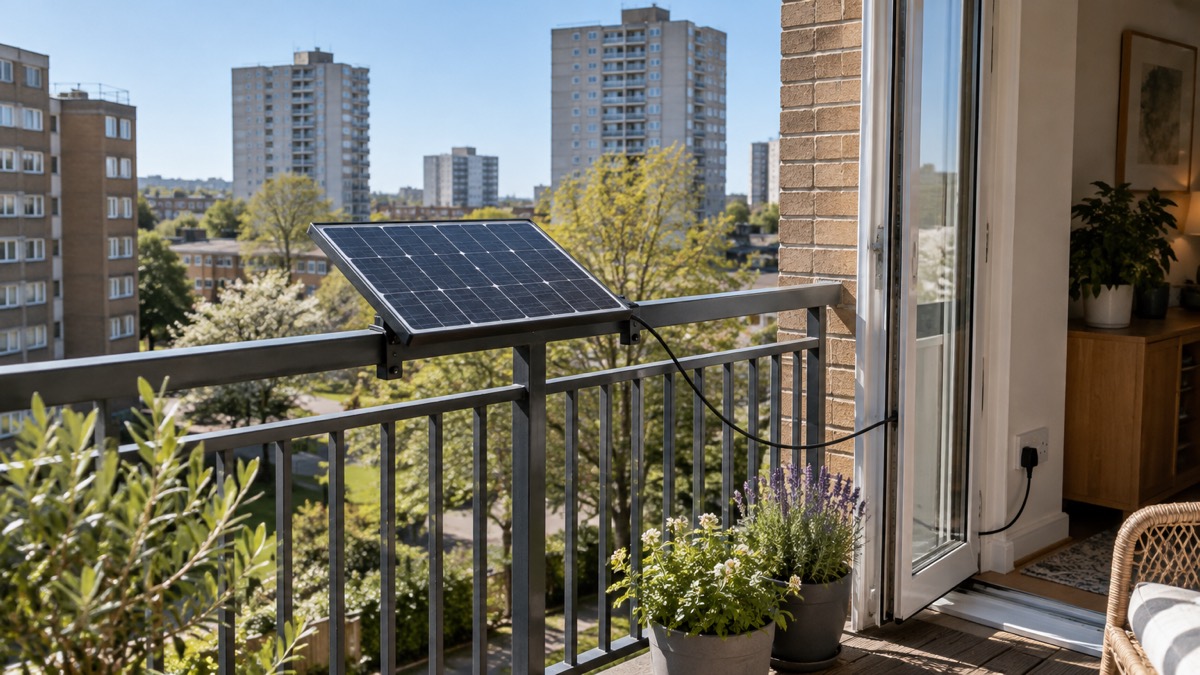
Plug-in solar panels, the kind you stand on a balcony or terrace and plug into an ordinary socket, sit at the small end of all this. They can be placed in sunny outdoor spots such as a terrace, shed or outhouse roof, or a balcony4. Balcony PV systems are typically under 800W, far below the 3.68kWp threshold, so they fall inside the G98 notification arrangement rather than needing any pre-approval.
The 28-day rule still applies. London Fire Brigade's safety advice for residents and homeowners says to inform your local Distribution Network Operator within 28 days following installation1. The sums of electricity involved are small, but the principle is the same: the network operator wants to know what is connected to its network, at any size.
If you rent, there is a step before any of this. Contact your landlord, housing provider, freeholder or property management company before buying or installing any plug-in solar equipment1. We cover the permissions question in more detail on Do You Need Your Landlord's Permission for Plug-In Solar?.
Safety points from the fire and rescue service that apply to any plug-in set-up:
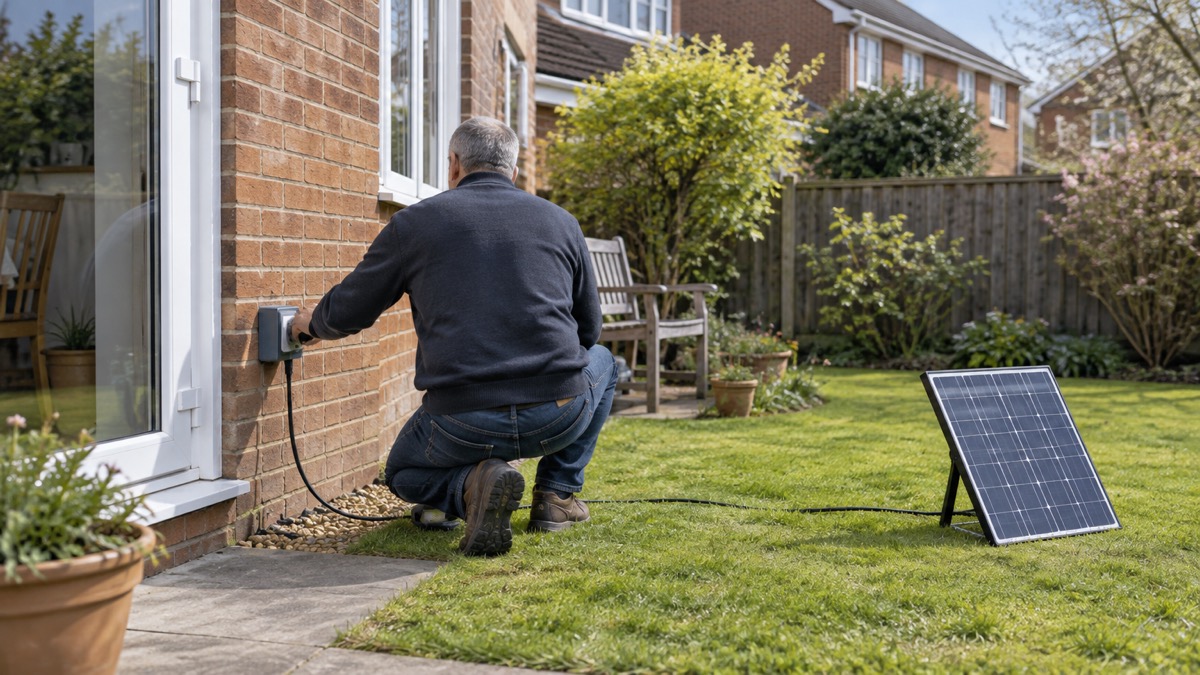
- If you plug your solar panel into an outdoor socket, make sure it is a minimum IP65-rated installation fitted by a competent person1
- Do not trap cables in doors or windows, run cables under carpets, or expose cables to sharp edges1
- Do not install plug-in solar panels if your building is undergoing, or is due to undergo, cladding works or remediation, until the work is complete1
We go through the socket and cable questions in Can Plug-In Solar Use an Extension Lead or Outdoor Socket? and the wider safety picture in Are Plug-In Solar Panels Safe at Home?.
How the G98 notification is made and who submits it
The G98 notification is a form submitted to your regional DNO. In the normal run of things, your installer completes and sends it, because a credible installer should be able to take care of this for you by submitting G98 or G99 forms on your behalf3. Ask for a copy of the completed form and, if possible, confirmation that the DNO received it. That copy is your evidence if questions arise years later, for example when you sell the house.
If you installed the system yourself, or your installer has left you to it, you submit the form yourself. The building owner is responsible for registering a solar PV system with the Distribution Network Operator3, so the duty is yours either way.
Finding your local DNO
Your DNO is the company responsible for maintaining the physical electricity supply to your home or business2. DNOs own and operate the distribution network of towers and cables that bring electricity from the national transmission network to homes and businesses; they do not sell electricity to consumers, which is done by electricity retailers whose name appears on your bill2. There are 14 licensed DNOs carrying electricity from the transmission network through their regional distribution networks to customers5.
To find yours, use the Energy Networks Association postcode lookup tool, which lists the details for all the electricity Distribution Network Operator companies2. Your DNO's website will have a section for generation connections, including G98 notifications, with the current form and where to send it.
| What you need to know | The answer |
|---|---|
| Who to notify | Your regional Distribution Network Operator2 |
| Who not to notify | Your electricity supplier, who only sells you energy2 |
| How many DNOs there are | 14 licensed DNOs across Great Britain5 |
| How to find yours | Energy Networks Association postcode lookup2 |
| Who submits the form | Usually your installer; the owner is responsible3 |
Keep in mind that the DNO is also the organisation to contact in a power cut, so once you have looked yours up for the notification, it is worth noting their emergency number for future reference2. We cover that side of things in Power Cuts: A Household Guide.
Systems above 3.68kW: when G98 no longer applies
Not every household system fits under the G98 limit. Systems with an export capacity greater than 3.68kWp need pre-approval via the "apply to connect" process, known as G99, before being able to be connected to the network3. The difference is fundamental: with G98 you connect first and notify afterwards, but with G99 you must apply and receive approval before the system is connected.
This matters most for larger rooftop arrays, smallholdings with bigger installations, and anyone planning to generate a meaningful share of their own electricity. If your planned system is above the threshold, the sequence of your project changes: the G99 application becomes part of the timeline, and your installer should build the waiting time into the schedule. Ask them directly how long the DNO in your region typically takes and what information the application needs.
The same division of labour applies. A credible installer should be able to take care of this for you by submitting G98 or G99 forms on your behalf3, and for a G99 application, with more riding on getting it right, professional handling matters even more. As with G98, the building owner is responsible for registering the system with the DNO3, so stay engaged: ask for a copy of the application and the DNO's response, and keep both with your household documents.
A practical warning about choosing who does the work: be suspicious if you are contacted by solar panel companies out of the blue or put under pressure to buy quickly, especially with time-limited or "one-off" discounts3. A firm that rushes you at the sales stage is unlikely to be careful at the paperwork stage, and the notification is the part that protects you.
Home batteries and backup power: what the notification rules cover
Households adding solar often add a battery at the same time, or later, and the same notification principle runs through it: the DNO needs an accurate record of what is connected in its area. Single-unit installations with inverter output within 3.68kW typically fall under G98, and the local Distribution Network Operator must be notified within 28 days of installation3. Ask your installer to confirm whether the change is covered by the original G98 notification or needs fresh paperwork, and keep copies of whatever is submitted. If you are pairing plug-in panels with storage, see Connecting Plug-In Solar Panels to a Battery.
One point about backup power catches many households out. A report to Parliament notes that householders might expect rooftop solar to provide them with electricity during a power cut, but this would not normally be possible without the installation of costly supplemental equipment such as batteries6. Even with a battery, the standard set-up may not carry your home through an outage, so if continuity of supply matters to you, ask specifically what happens when the grid goes down. We cover the options in Backup Power at Home: A Household Guide.
There is also a safety reason behind the rules. Connection standards currently require that micro-generators are fitted with a controller which automatically disconnects from the local network in the event of isolation from the main grid, to protect network staff from risk of accidental electrocution6. This is why a normal solar system shuts itself down in a power cut rather than feeding your house: it is protecting the engineers working on the lines outside. Any notification or approval process is partly about the DNO knowing these protections are in place.
Connection standards currently require that micro-generators are fitted with a controller which automatically disconnects from the local network in the event of isolation from the main grid, to protect network staff from risk of accidental electrocution, according to evidence given to a House of Commons committee6. This is why rooftop solar on its own will not keep your lights on in a power cut: householders might expect rooftop solar to provide electricity during an outage, but this would not normally be possible without the installation of costly supplemental equipment such as batteries6.
Choosing an installer who will do the paperwork properly
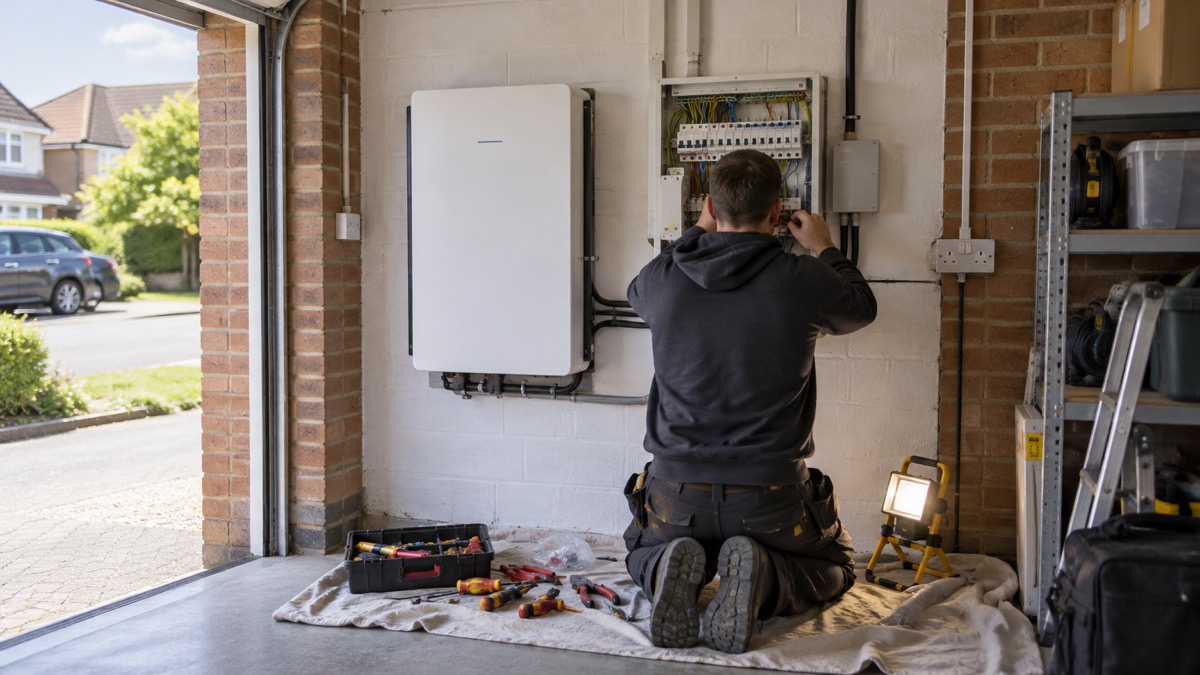
Because the notification usually travels through your installer, their credentials matter twice over: once for the safety of the electrical work and once for the correctness of the G98 or G99 submission. Independent guidance states it plainly: it is vitally important to use a skilled, trained and qualified solar PV installer who is registered with a competent person scheme (CPS)3.
If you do not use someone registered with a competent person scheme, you will have to get a Building Control Notice from your local council and arrange and pay for an inspection yourself7. That is extra cost and delay that a registered installer spares you, and it applies to the building work side of a panel installation. The government's guidance on home safety standards makes the same point for related work around the home7.
Reputable solar panel installers should be signed up to a consumer code, such as the RECC, to prevent pressure-selling tactics3. Membership of a code gives you a complaints route if the firm fails to submit the notification or does the work badly. For gas work, the Health and Safety Executive adds a warning worth remembering whenever tradespeople offer to "sort the paperwork" for each other: it is not acceptable for a Gas Safe registered engineer to knowingly sign off gas work carried out by a person who is not registered, and where this occurs, both the registered and unregistered installer may face prosecution8. The same instinct applies to electrical work: never accept a friend-of-a-friend arrangement where a registered tradesperson signs off someone else's installation.
Once the system is in, keep it maintained. Independent guidance recommends having your system inspected and tested at least every five years to ensure it remains safe3, and if you spot any problems, contact a professional to check and repair immediately3. For planning and building rules around panels generally, see Planning Permission and Building Regulations for Tanks, Turbines, Toilets and Panels.
Faults, fires and what to do if something goes wrong
Solar equipment on your home carries a small but real fire and electrical risk, and knowing the immediate responses before you need them is part of being prepared. Solar panels can continue producing electricity during daylight hours, even when power is isolated inside the building9. That means you cannot assume a panel is dead because the mains is off, and neither can firefighters. If a fault appears with plug-in panels, stop using the system immediately and seek advice from a competent person before further use9.
If you ever smell burning from a panel or its wiring, treat it seriously: our page What to Do if a Solar Panel Smells of Burning sets out the steps, and What to Do in a Fire With Solar Panels Installed covers the fire itself. Registering your appliances means you receive notification of safety alerts or product recalls10, which is worth doing for any electrical equipment in the house, solar or otherwise.
Where to get help: complaints, power cuts and extra support
If something goes wrong with the notification itself, or with your supplier or network operator, there is a defined escalation path. Complain to the Energy Ombudsman if a supplier exhausts all options to resolve, what is called deadlock, or if the complaint reaches 8 weeks old, whichever is earlier11. So give the firm a chance to fix it first, keep your correspondence, and escalate if it stalls.
For supply problems, remember who does what. DNOs deal with the supply of gas and electricity, so you will need to contact them directly about power cuts or gas supply issues12. If you experience a power cut you should contact the electricity Distribution Network Operator that covers your area2. After major storms, Ofgem's reviews have pushed DNOs to improve how they estimate restoration times, work with local resilience partners and make clear to customers what support, such as hot meals or accommodation, is available13, and affected customers expect DNOs to consider upgrading the support available to vulnerable customers, those affected by lengthy outages of 5 days plus, or those who have no water supply, including offering pre-paid hotel accommodation or portable generators14. Households that need extra help can find the routes in Extra Help in an Emergency: Older, Disabled and Medically Dependent Households.
For the wider picture of generating and storing your own power, our Self-Reliance at Home section covers off-grid solar, batteries and everything around them.
Sources (14)
- Plug-in solar panels: safety advice for residents and homeowners, London Fire Brigade
- What to do in a power cut, Met Office
- Solar panels safety advice, Electrical Safety First
- Plug-in solar panels, London Fire Brigade
- E3C final report on the GB power disruption of 9 August 2019, HM Government
- Written evidence to Parliament on micro-generation and power cuts, UK Parliament
- Oil storage regulations and safety at home, GOV.UK
- Gas safety checks: who can carry them out, Health and Safety Executive
- Fire safety at home, Surrey County Council
- Electrical safety: causes of fires, Dorset and Wiltshire Fire and Rescue Service
- Energy domestic consumer advice, England and Wales, Ofgem
- Help from your energy supplier, Buckinghamshire Council
- Storm Arwen report, Ofgem
- Customer experiences of Storm Arwen, Ofgem
 Off-Grid Solar Kit Checklist
 Hydroponic System Parts List
 Year-Round Sowing Calendar
 Off-Grid Battery Banks
 Off-Grid Battery Care
 Solar Charge Controllers
 Off-Grid Inverters
 Mounting and Wiring Solar Panels
 Solar Panel Types
 Sizing an Off-Grid Solar System
 Solar Water Pumping
 Off-Grid System Types
 Small Wind Turbines