Emergency Kit: What a UK Household Should Keep Ready
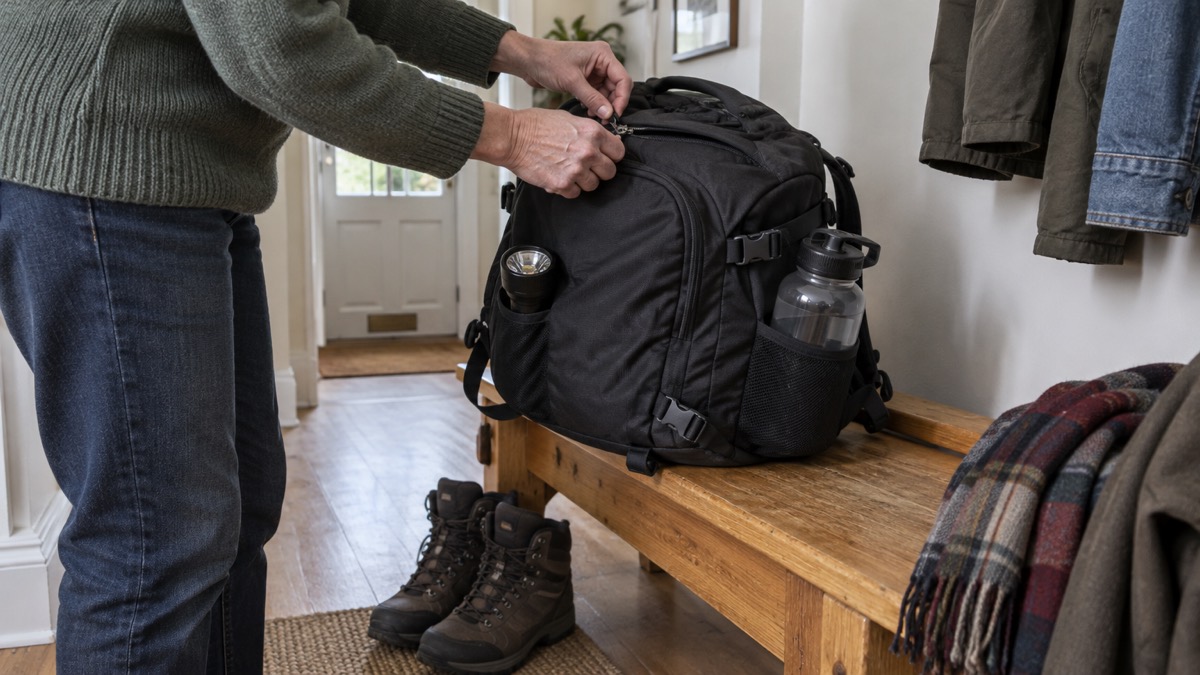
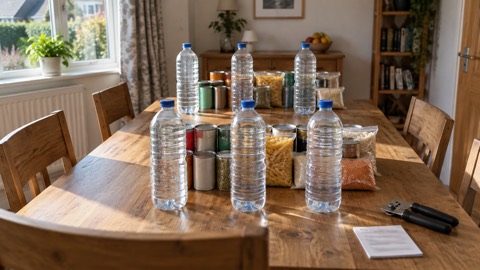
An emergency kit is easiest to manage as three sets of supplies: a home pack for staying put, a small grab bag for leaving, and a car kit suited to the season. Begin with at least 3 days of essentials. The UK government's Be Ready campaign explains that being ready for 3 days helps a household manage while support reaches those in need.1
Ready Scotland likewise recommends 3 days' supply of bottled water and food that does not need cooking and will not go off.2 Some local guidance goes further: Central Bedfordshire Council recommends a home emergency kit that can look after the household for at least 7 days of disruption.3 Build the basic three-day supply first, then extend the home store if your circumstances and storage space allow.
The bag never comes before safety. North Devon Council instructs: if there is a fire or another immediate danger, leave straight away, follow the emergency services' instructions and do not delay to collect a bag. Call 999 if someone is in immediate danger.4
Supplies at home, at work and in the car
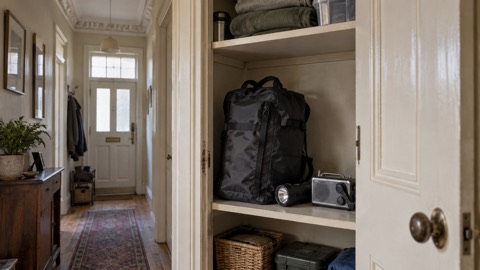
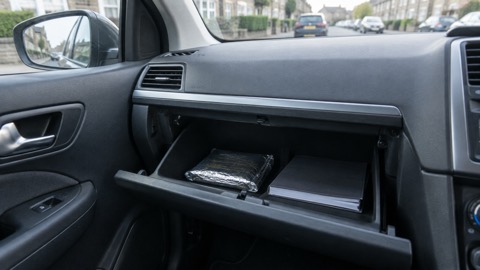
Each set solves a different problem. The home pack is the main store; the grab bag contains what you can carry; the car kit helps during a breakdown or winter journey. Nottinghamshire County Council says you may keep an emergency kit in your car and your home, or simply keep a list showing where the items can be found.7 Somerset Council recommends a home emergency pack, an evacuation checklist and, depending on the time of year, a basic vehicle kit.8
| Set | What it is for | Essential starting contents |
|---|---|---|
| Household emergency pack | Staying at home through disruption | Water, long-life food, tin opener, lighting, radio, first aid, medicines, warmth, hygiene supplies and documents9 |
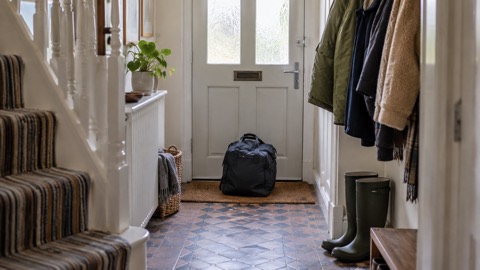
| Grab bag | Leaving home at short notice | Medication, identity and insurance documents, plus essential personal supplies in an easy-to-carry bag6 |
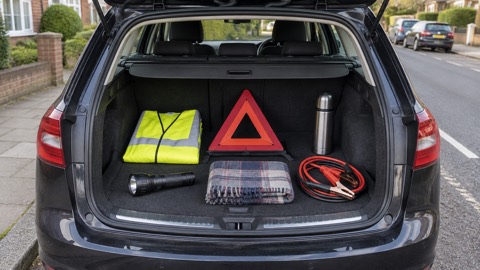
| Car emergency kit | Breakdowns and seasonal travel problems | First aid, warmth, water, food, phone charging and winter equipment7 |
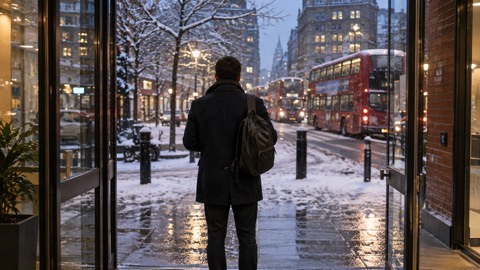
| Work supplies | Being away from home when disruption starts | NHS winter guidance advises keeping a stocked first aid kit at work as well as at home or in your vehicle10 |
Birmingham City Council's home list also includes a sleeping bag or warm blanket for each person, pet supplies, routine medication, toiletries, rubbish sacks, toilet rolls and a copy of the household emergency plan. It includes duct tape to seal doors, windows and vents if advised to do so.9
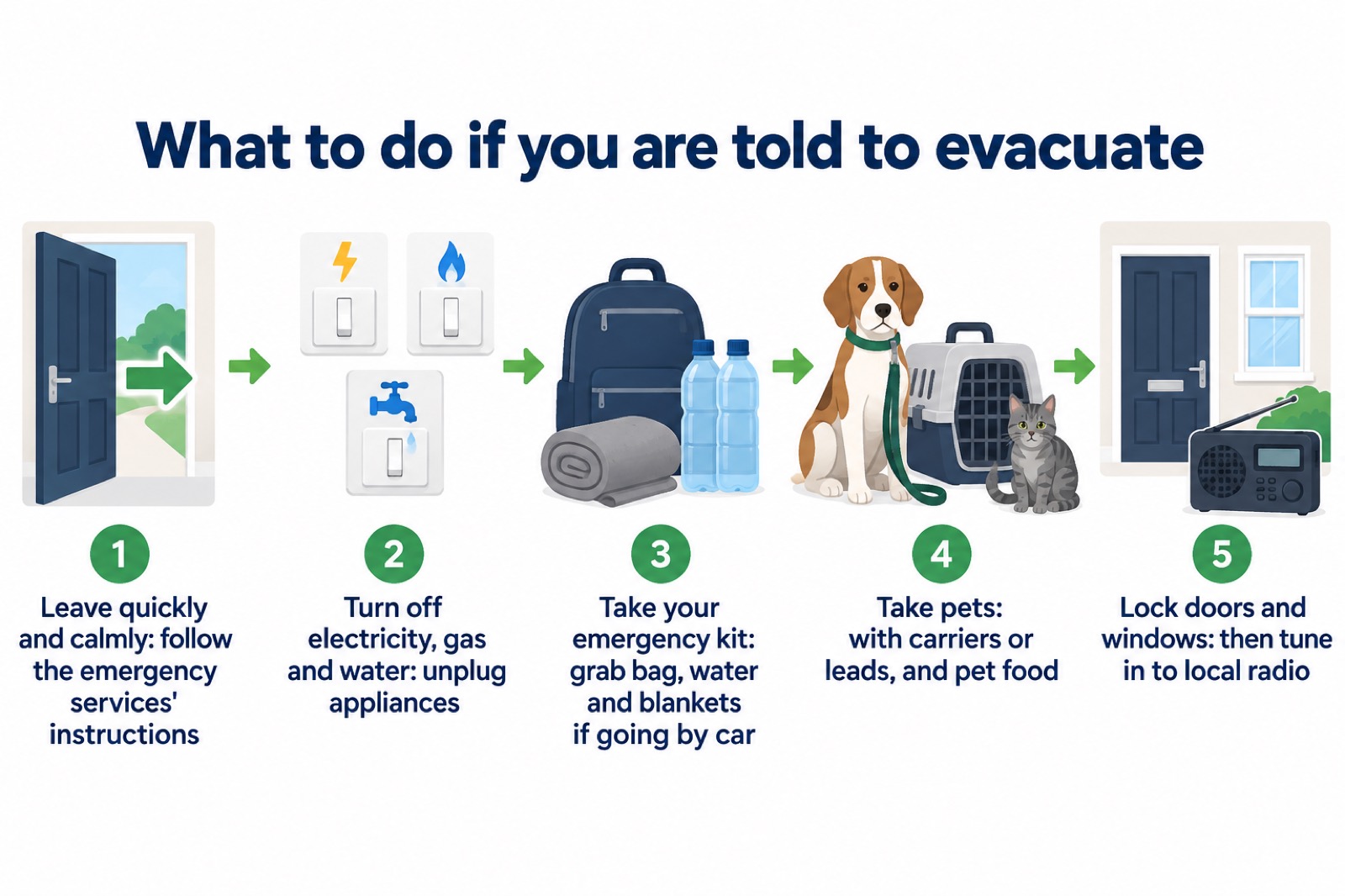
Put these supplies within a wider household emergency plan, rather than treating the bag as the whole plan. The household preparedness checklist brings the home, grab-bag and car checks together.
Your location changes the emphasis. Ready Scotland notes that rural areas are more likely to be cut off from shops during snow, while households in flood-risk areas may wish to be ready to leave at short notice.2 For a flood-prone home, Somerset Council suggests a flood kit containing documents, warm clothing and waterproofs, a torch, drinking water and food, medicine, phones and chargers, and children's toys and nappies.11
How many days to plan for
Use 3 days as the practical baseline for water, food and other essentials. The government's preparedness guidance includes having 3 days' worth of supplies, and its Be Ready checklist provides a downloadable list to work through.12 Denbighshire's emergency supplies guidance explains that in a major emergency covering a widespread area, a household may have to survive on its own for up to three days or more.13
| Supply or arrangement | Official planning period |
|---|---|
| General household supplies | 3 days under the Be Ready campaign1 |
| Bottled water and suitable food in Scotland | 3 days under Ready Scotland guidance2 |
| Central Bedfordshire home emergency kit | At least 7 days of disruption3 |
| Essential medication or medical supplies | Enough to last several days14 |
The longer Central Bedfordshire figure is a reason to extend a home store, not a requirement to buy everything at once. NHS winter guidance is explicit: you do not need to stockpile food or medicines, but it is sensible to have enough essential items to manage comfortably.15
The detailed guide to how many days your supplies should last helps apply this to your household. Recommendations come from different public bodies, so check the official advice for Scotland, Wales and Northern Ireland as well as the UK-wide campaign.
Allow for people who rely on regular medicines, medical devices, baby formula or care support when deciding what several days means in practice. The guide to extra help in an emergency covers older, disabled and medically dependent households.
Water for drinking, cooking and washing
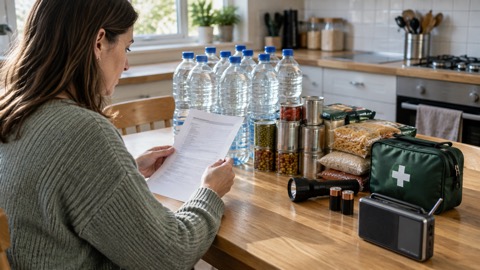
The Be Ready checklist recommends bottled water for 3 days, using 3 litres per person per day for drinking. It states clearly that more would be needed for tasks such as cooking and washing.5 Treat three litres as the drinking-water planning figure, not the household's total water requirement.
North Devon Council also quotes a World Health Organisation survival recommendation of a minimum of 2.5 to 3 litres of drinking water per person per day.4 For household preparation, the Be Ready three-litre figure gives the clearer basis for a three-day bottled-water store.
Build the store around these needs:
- Drinking: bottled water for every person, using the three-litre daily figure.5
- Cooking and washing: additional water beyond the drinking allowance.5
- Sanitation: Lincolnshire County Council includes water for drinking and sanitation in its emergency-kit guidance.16
- Pets: drinkable water in plastic bottles, plus pet food.16
- Babies and medical devices: North Herts Council notes that additional water may be needed for pets, making baby formula and medical devices.17
Keep some water with the grab-bag supplies and dried or bottled provisions in the car, rather than assuming the home store will always be reachable. The household water guide explains the wider water store and how it fits drinking, cooking and washing needs.
Food that needs no cooking or fridge
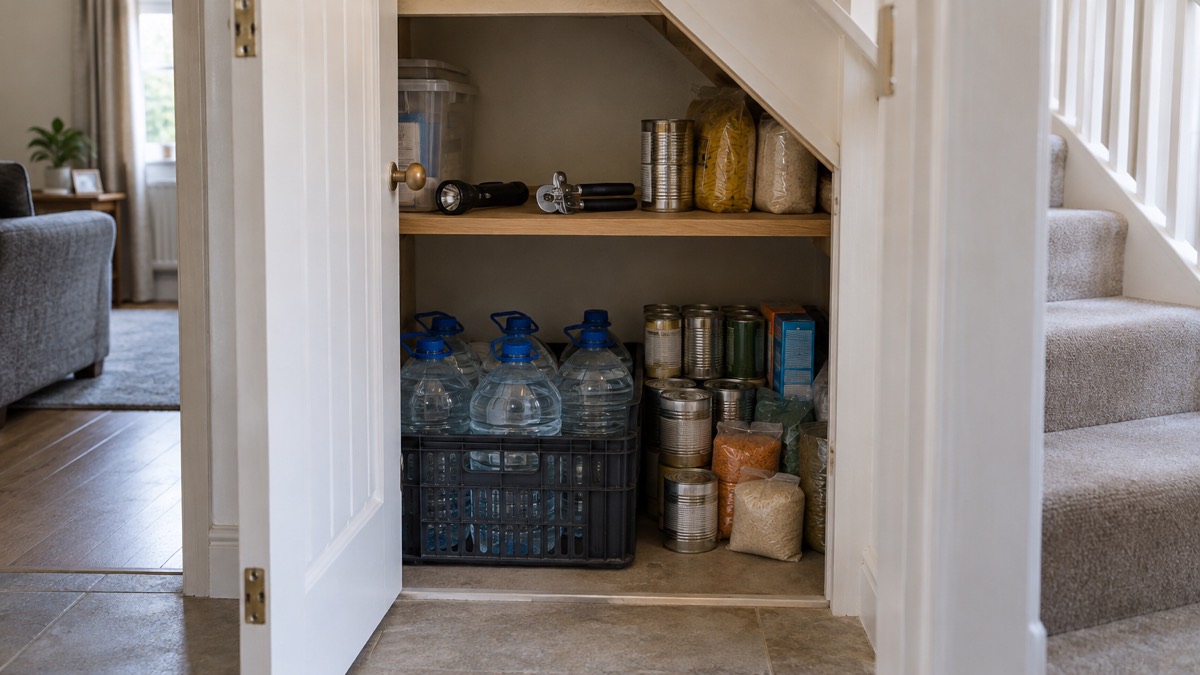
Choose food with a long shelf life that needs no refrigeration or cooking. The Be Ready checklist gives tinned meat, fish or vegetables, dried fruit and nuts as examples, and advises buying food you would usually eat.14 Greater Manchester's guidance adds ready-to-eat tinned meat, fruit or vegetables, with a tin opener kept alongside them.18
| Where the food is kept | What to choose |
|---|---|
| Home store | Tinned and dried food, energy bars and other long-life food that stores safely without electricity9 |
| Grab bag or flood pack | Compact, lightweight food requiring no refrigeration, preparation or cooking, and little or no water19 |
| Power-cut supply | Food items that do not require electricity to prepare20 |
| Babies and pets | Ready-made baby formula and pet food where needed21 |
Denbighshire's list includes ready-to-eat meats or tuna, fruits, vegetables, canned or boxed juices, UHT milk, soup, crackers, cereal bars, biscuits and food for infants or people on special diets.13 You do not need every item on that list: select suitable foods your household will actually eat.
Dumfries and Galloway Council recommends enough emergency food for three days and a can opener.22 Keep a manual opener with the food so the supply does not depend on an electric appliance.
The emergency food guide covers the home store in more detail. If you are considering ways to heat food, keep that separate from the basic no-cook store and read the safety guidance on heating and cooking without mains power.
Light, a radio and a power bank
Put a torch and spare batteries in every set of supplies. Bristol City Council recommends torches and batteries, a battery-operated or wind-up radio, a portable mobile phone charger, bottled water, spare blankets and bedding, and a first aid kit.23 The Be Ready checklist specifies an FM radio that is battery-powered or wind-up, plus a charged power bank.14
- Lighting: a battery or wind-up torch, with spare batteries where applicable; see emergency lighting.
- Information: a battery or wind-up FM radio and a paper list of emergency contact numbers; see staying informed and in touch.
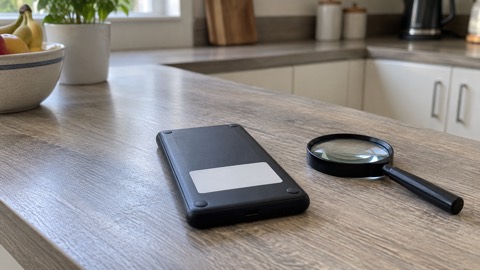
- Phone power: a charged power bank and the cables your devices need, with an in-car charger in the vehicle kit; see backup power.24
- Contacts: Neath Port Talbot Council advises keeping a list of emergency contact numbers at home.25
The government's Be Ready campaign gives a firm lighting safety instruction:
"Torches are safer than candles."
Dorset and Wiltshire Fire and Rescue Service includes a torch, portable radio, replacement batteries, matches and bottled water in its suggested emergency kit.26 Denbighshire's guidance says matches should be in a waterproof, childproof container and kept away from children.13
A Scottish Borders community plan also includes spare spectacles or contact lenses, prescription-medication details, pencil and paper, and spare home and vehicle keys alongside the radio and torch.27 These small items matter when normal charging, records or online access are unavailable. For the wider household response, see the power-cut guide.
First aid, medicines and a fire blanket
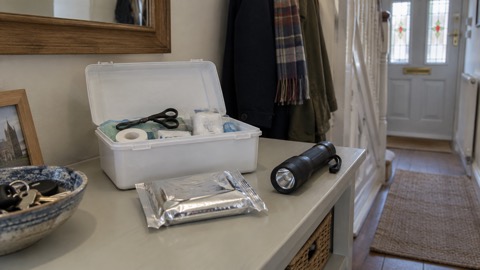
Keep a first aid kit at home and in the car, and consider one at work. NHS winter guidance explicitly recommends a stocked first aid kit at home, in your vehicle or at work.10 The first aid guide explains the wider household provision.
The Be Ready checklist gives a useful contents list:28
- waterproof plasters and bandages;
- sterile dressings and medical tape for dressings;
- antiseptic and eyewash solution;
- gloves and tweezers;
- a thermometer.
Denbighshire also recommends including a first aid manual, cleansing agents and soap.13 Keep the kit together and check that everyone knows where it is, rather than distributing essential items through unrelated cupboards.
For regular treatment, the national household emergency plan advises keeping essential medication or medical supplies to last several days.14 Include details of prescription medication and important information such as regular medication and doses with the document copies.27 Keep spare regular medicines and a copy of prescriptions where your household needs them, without stockpiling; the health emergencies guide covers medicine supplies further.
Keep a fire blanket with the home supplies, and see the guide to fire and other home emergencies. Separately, Denbighshire's official kit guidance includes a fire extinguisher that every family member knows how to use.13 A kit does not change the immediate-danger rule: leave straight away when instructed by conditions or the emergency services.4
Hygiene, warmth and useful tools
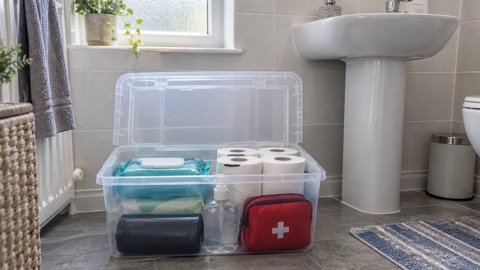
Hygiene supplies let the household manage when normal washing, waste collection or toilet arrangements are disrupted. Denbighshire's official list includes moistened towelettes, soap, hand sanitiser, liquid detergent, toothpaste and toothbrushes, shampoo, deodorants, feminine supplies, toilet paper, heavy-duty plastic rubbish bags and ties, disinfectant and household chlorine bleach. It also lists a medium-sized plastic bucket with a tight lid.13
For warmth, the Be Ready checklist includes blankets, sleeping bags and warm clothing.14 Birmingham recommends a sleeping bag or warm blanket for each person.9 North Herts adds a change of clothes, waterproof clothing and boots.17
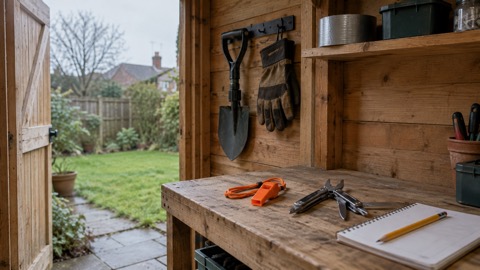
Useful small items include:
- a whistle, notepad and pencil;
- heavy-duty gloves and a manual can opener;
- rubbish bags with plastic ties;
- a dust mask, plastic sheeting and duct tape;
- tools to turn off utility supplies;
- local maps.17
The hygiene and sanitation guide develops the toilet, wipes and waste-bag provision, while the tools guide covers items such as whistles, tape and gloves.
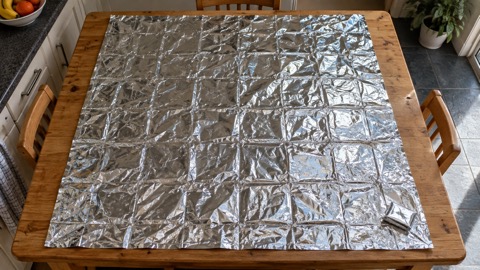
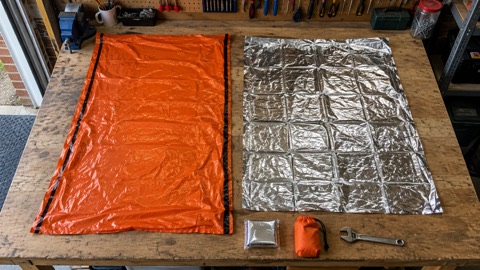
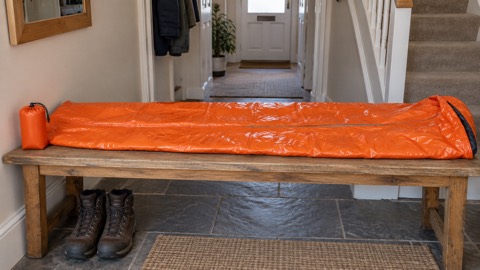
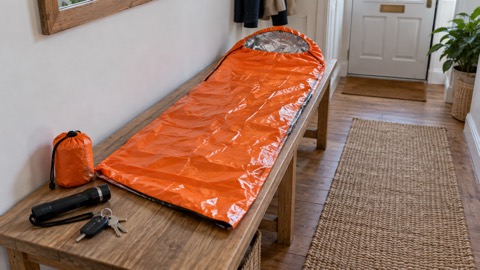
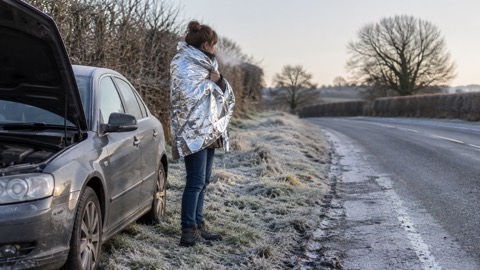
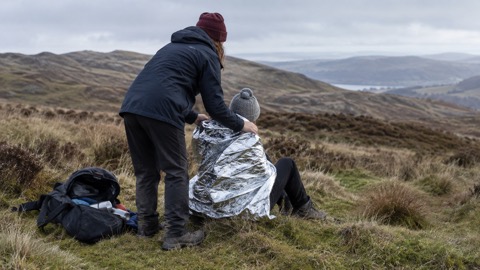
For additional warmth options, read about foil blankets and the choice between a survival bag or foil blanket. Keep these with the relevant home, grab-bag or car supplies so they are available with the rest of your warm clothing.
Babies, children and pets
Add the supplies that depend on the people and animals in your household. Ready-made formula is particularly useful in the no-cook food store because official power-cut guidance specifically includes it where needed.21
| Who | Supplies to include |
|---|---|
| Babies | Ready-made formula, food and drink, disposable nappies, nappy sacks and a change of clothing6 |
| Children | Toys, books, games and activities, plus suitable food, drink and clothing6 |
| Pets | Pet food, bottled water and routine medication9 |
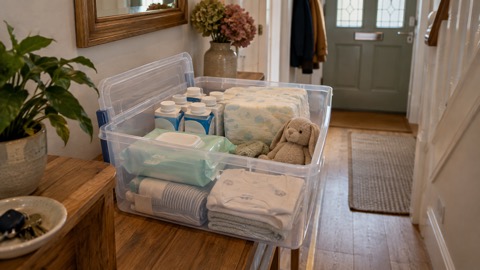
Lincolnshire County Council includes infant formula milk, disposable nappies and nappy sacks where required.16 Essex Prepared recommends food, formula and drink, clothing, nappies, toys, books and activities in the grab-bag supplies for babies and children.6 Somerset's flood-kit advice likewise includes toys and nappies.11
Remember the extra water: North Herts notes that water may be needed to make baby formula, and Lincolnshire includes drinkable water in plastic bottles for pets.17 The Be Ready checklist simply lists pet food and bottled water in the household kit.14
The guide to supplies for babies and young children sets out the family additions in more detail. For animal food, water, medication and wider planning, see pets in an emergency.
Documents, cash and copies
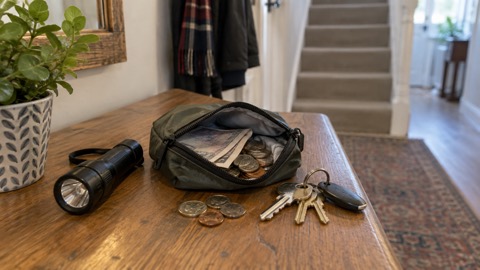
Keep document copies and financial essentials with the supplies, protected from water. The Be Ready checklist calls for cash in a mix of coins and notes, cards, copies of identity documents, important phone numbers and information such as regular medication and doses.14
| Item | What official guidance includes |
|---|---|
| Identity and records | Personal identification and copies of birth certificates, marriage certificates, wills, deeds, insurance papers and immunisation records13 |
| Access and contacts | An emergency contacts list and an extra set of house and car keys13 |
| Money | Cash, credit cards and other cards14 |
| Additional records | Bank account details, passport, benefit and pension details, and printed copies of guidance17 |
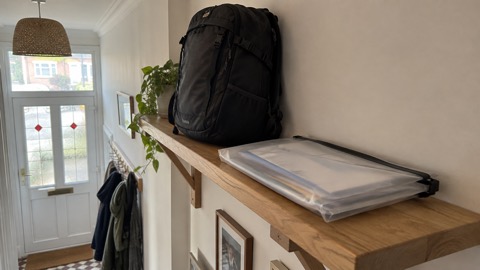
Denbighshire instructs households to store these items in watertight containers.13 North Herts likewise recommends documentation in a waterproof container.17 For leaving home, Essex Prepared prioritises medication, insurance documents and identity documents in the grab bag.6
The important documents guide explains which records to keep ready and how to handle copies. The emergency cash guide deals specifically with cash at home; no single cash amount is prescribed in the official kit lists above.
Use waterproof bags, pouches and cases where appropriate so that paper records, medication details and contact numbers remain usable. Keep the paper contact list with the documents rather than relying solely on numbers stored in a phone.
A winter car kit
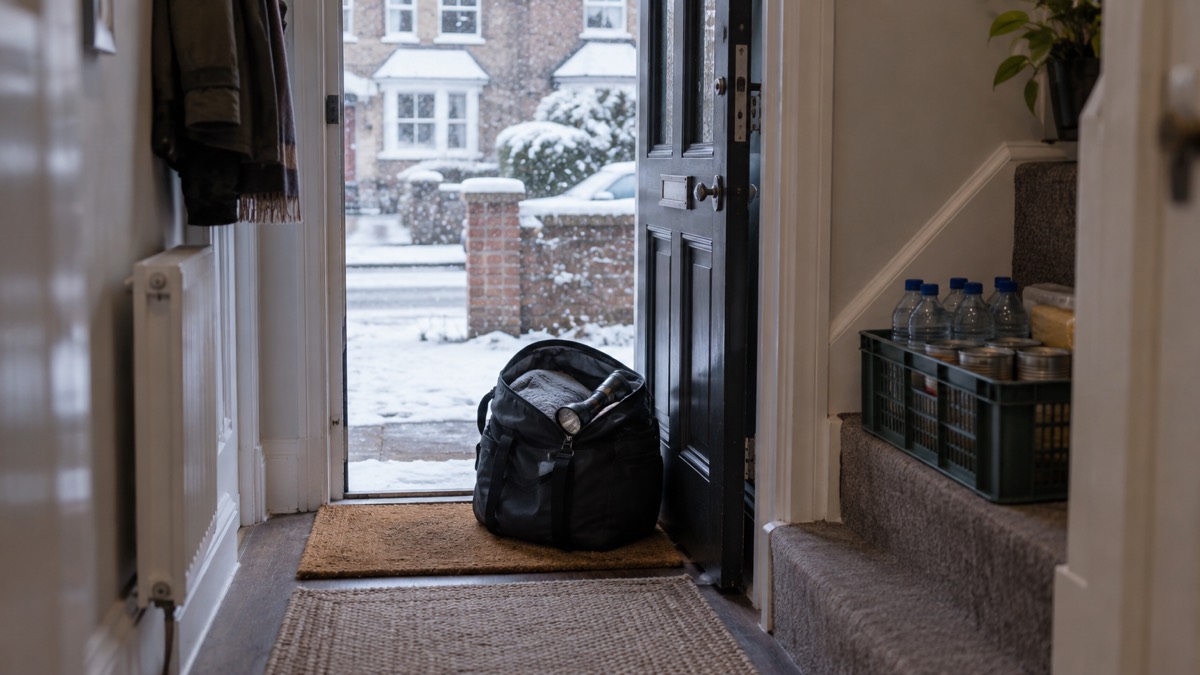
Prepare the car kit before winter journeys. Nottinghamshire County Council's official winter list contains an ice scraper, de-icer, torch and spare batteries, warm clothes and a blanket, boots or sturdy footwear, a first aid kit, sunglasses, a road atlas or sat nav, and personal medication.29
| Car-kit group | Items |
|---|---|
| Ice and visibility | Ice scraper, de-icer and sunglasses29 |
| Light and information | Torch, spare batteries, road atlas or sat nav29 |
| Warmth and footing | Warm clothes, blanket, boots or sturdy footwear29 |
| Health | First aid kit and personal medication29 |
| Power and supplies | Bottled water, dried food and an in-car phone charger24 |
| Vehicle battery | Battery jump leads30 |
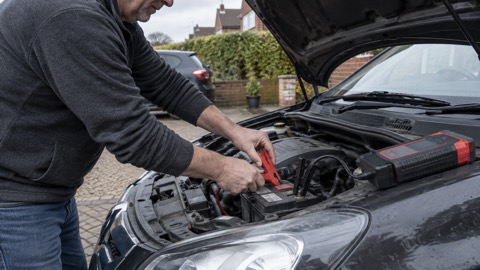
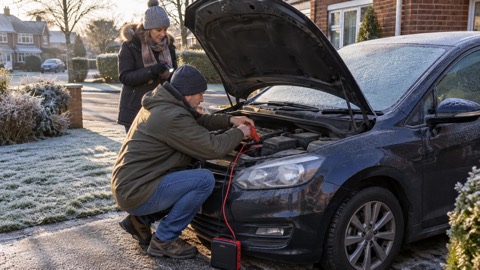
NHS Lanarkshire recommends keeping jump leads, a blanket and a first aid kit in the car.30 Wiltshire Council adds bottled water, dried food and an in-car charger.24 These complement, rather than replace, the winter clothing and ice-clearing equipment.
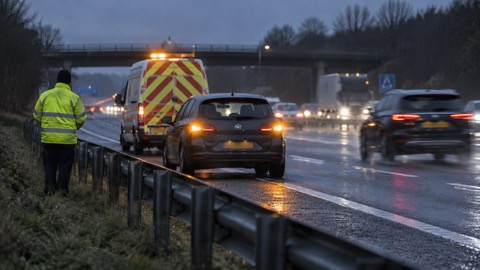
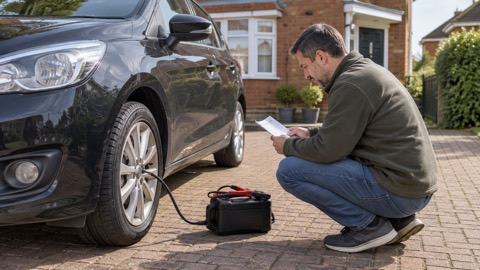
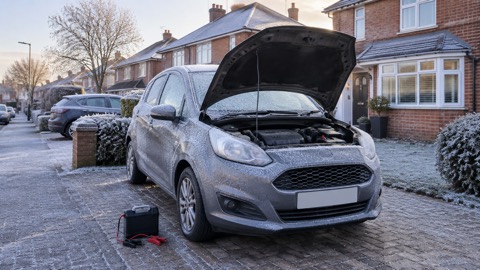
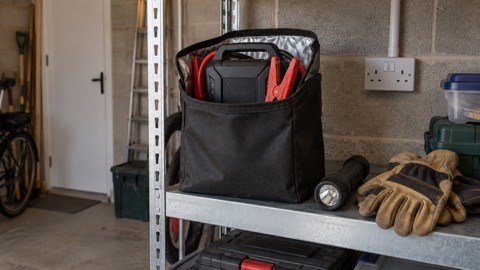
The full car emergency kit guide organises these supplies for breakdowns and storms. If you are considering equipment for a flat battery, read the guide to portable jump starters. The guide to carrying a hi-vis jacket and blanket covers those additional car items.
Keep the kit in the vehicle rather than with the home store, and check that personal medication and seasonal clothing are present when winter begins. The wider snow and ice guide covers household preparation for winter conditions.
Storing, checking and restocking
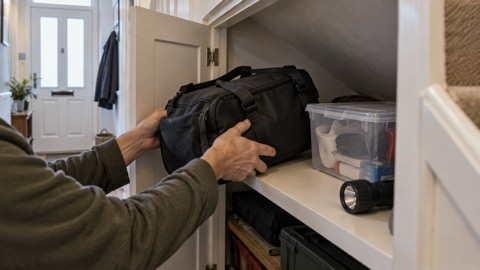
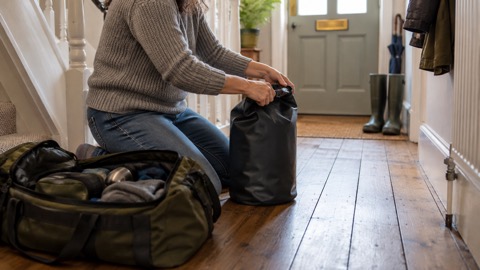
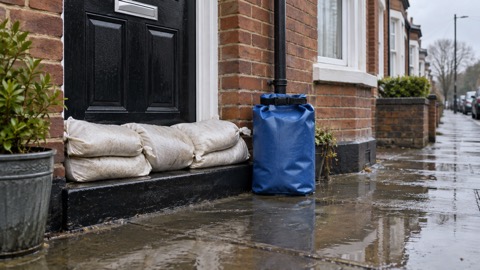
Storage should make the supplies easy to reach and protect them from water. Dumfries and Galloway Council recommends a waterproof container or bag kept in an easily accessible place.22 Argyll and Bute's guidance similarly calls for a sturdy waterproof bag in a safe place that can be reached quickly.2
- Choose the containers. Use a waterproof container for the home pack and a small, easy-to-carry bag for evacuation.6
- Separate the sets. Keep the home supplies, grab bag and car kit in their intended locations so one does not strip another of essential items.7
- Make the grab bag accessible. Essex Prepared says to store it ready to go; at the very least, maintain an up-to-date checklist of what to put into it.6
- Tell the household. North Herts advises making sure everyone knows where the household and personal kits are kept.17
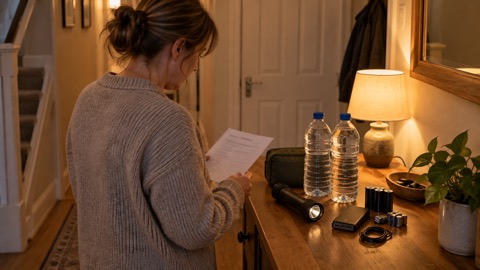
- Check the paperwork. Central Bedfordshire advises checking occasionally that details such as emergency phone numbers for family and medical providers are still up to date.3
- Check food and replace dated items. North Herts says canned food, cereal and fruit bars should be kept up to date.17
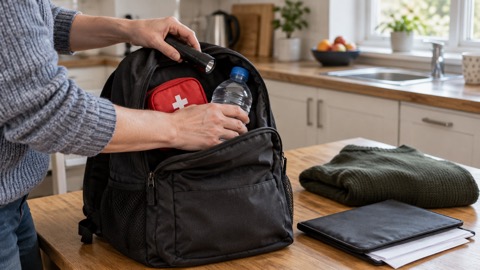
The guide to choosing a rucksack or holdall covers the carrying container, while safe storage looks at where the supplies belong. Use the checking and restocking guide to work through expiry dates and replacement items.
Finally, keep the written emergency contacts with the kit and review them alongside the food and personal details. Neath Port Talbot Council recommends a list of emergency contact numbers at home.25 A kit is ready only when its contents are present, suitable and usable by the people who may need them.
Sources (32)
- Prepare for an emergency, UK Government, 2026-10-19
- Emergency kit, Ready Scotland, 2026-10-29
- Emergency kits and grab bags, Central Bedfordshire Council, 2026
- Be prepared for emergencies, North Devon Council, 2026-10-29
- Be ready for emergencies, UK Government, 2026-10-21
- Preparing your family, Essex Prepared, 2026-10-29
- Preparing for an emergency, Nottinghamshire County Council, 2026-10-29
- Preparing for emergencies, Somerset Council, 2026-09-17
- Are you ready?, Birmingham City Council, 2026-05-06
- Avoiding slips, trips and falls in winter, NHS Scotland, 2026-10-29
- Preparing for flooding, Somerset Council, 2026-10-28
- Preparing for emergencies, UK Government, 2026-11-03
- Emergency supplies kit, Denbighshire County Council, 2020
- Be Ready household checklist, UK Government, 2026
- Be prepared for winter emergencies, Norfolk and Suffolk Integrated Care Board, 2026-10-01
- Emergency kit and pet preparedness, Lincolnshire County Council, 2026-10-29
- Preparing for emergencies, North Herts Council, 2015-01-12
- Loss of essential services, Greater Manchester Combined Authority, 2026-10-29
- Create a flood pack, Bradford Council, 2026-10-29
- How you can prepare for a power cut, Lancashire Prepared, 2026-10-29
- Power cuts, UK Government, 2026-10-21
- Create a household emergency plan, Dumfries and Galloway Council, 2026
- Preparing for an emergency, Bristol City Council, 2026
- Planning for an emergency kit, Wiltshire Council, 2026-10-29
- Emergency kit checklist, Neath Port Talbot Council, 2026-10-29
- Storms and power cuts, Dorset and Wiltshire Fire and Rescue Service, 2022-08-03
- Gavinton, Fogo and Polwarth resilient community plan, Scottish Borders Council, 2018
- Get prepared for emergencies, UK Government, 2026-10-21
- Winter car checks, Nottinghamshire County Council, 2026-10-29
- Winter preparedness, NHS Lanarkshire, 2023-11-23
- Failure of water infrastructure or loss of drinking water, Wiltshire and Swindon Prepared, 2026-10-25
- Preparing for an emergency: what you need to know, Anglesey Council, 2020
 Home Emergency Pack
 Grab Bags
 What to Keep in Your Car
 Important Documents
 Cash to Keep at Home
 How Many Days Supplies Last
 Storing Your Supplies Safely
 Checking and Restocking Supplies
 Rucksacks and Holdalls
 Keeping Supplies Dry
 Foil Blankets
 Portable Jump Starters
 Supplies for Babies and Children
 Useful Tools to Keep Ready
 Hygiene and Sanitation Supplies
 Scotland, Wales and NI Advice
 Hi-Vis Jacket and Blanket
 What to Keep at Work
 Survival Bag vs Foil Blanket
 Be Ready Checklist Explained
 Lifesystems Survival Bag
 Blizzard 3 Layer Survival Bag
 Blizzard EMS Survival Blanket
 Heatshield Thermal Blanket
 Steroplast Foil Blanket
 NEBO Assist Air Jump Starter
 Ring Ultraboost 500
 Ring Ultraboost 1000
 Ring Ultraboost 1500
 Ring RPPL260 Jump Starter
 Ring RTC6000 Tyre Inflator
 Aquapac Heavyweight Drybag
 ESR HaloLock Power Bank
 Lomo Emergency Foil Blanket