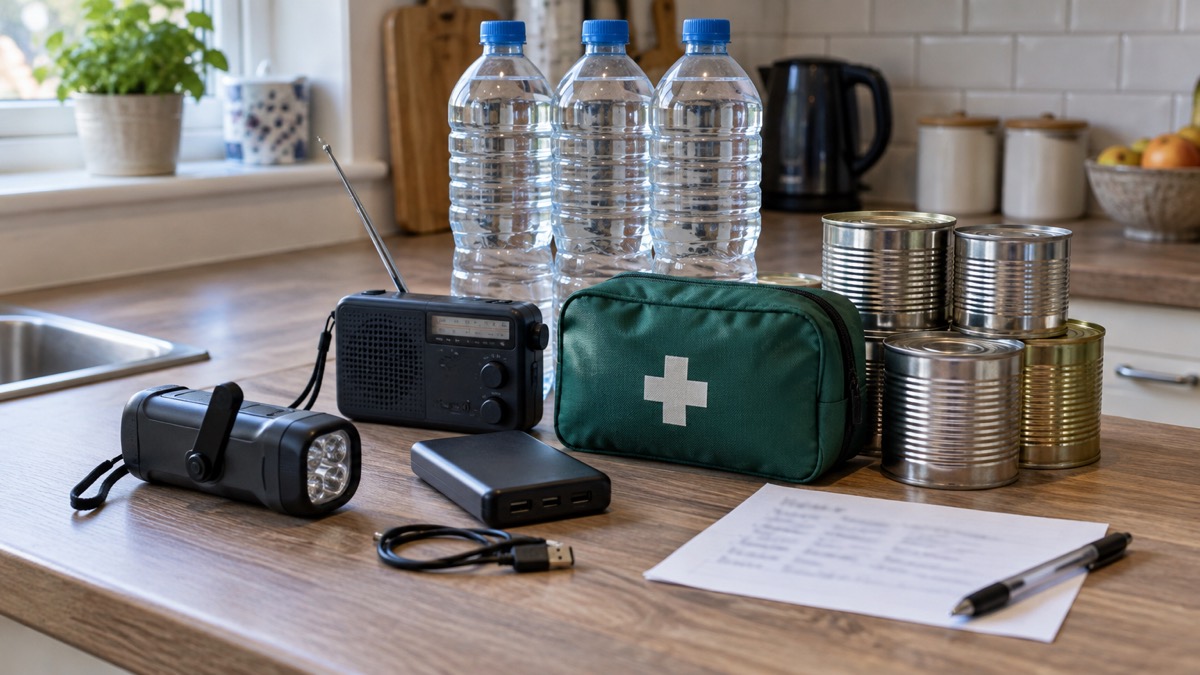
The government's Be Ready campaign launched on 22 October 2026 with a deliberately short list of things to do. Households are being encouraged to take a few simple steps to stay prepared if everyday services are temporarily disrupted, and the advice is the first stage of a three-year campaign to help households across the UK feel better prepared for events such as severe weather, which can occasionally affect services including power, water, phones and the internet1.
The steps themselves are modest. Have 3 days' worth of supplies in the house, including food that keeps and does not need cooking2. Write important phone numbers on paper and keep them somewhere easy to find in a power cut3. Know that you should call 999 if you or someone else is in immediate danger2. The campaign is not asking anyone to build a bunker; it is asking for a few hours of shopping and a pen.
What makes it worth reading about is the machinery behind it. More than five hundred organisations across the UK, from charities to businesses, had already signed up to share the messages when it launched, and the government worked with charities and campaigners representing groups often under-represented, including people with insecure housing and people who use foodbanks1. That reach is the point: the same small steps, delivered through the places people already trust.
What the Be Ready campaign asks every household to do
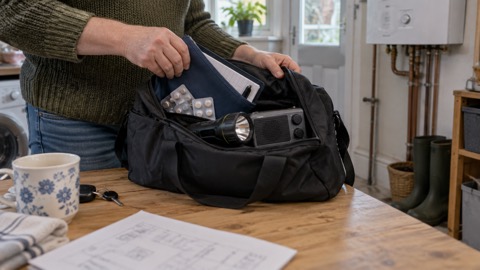
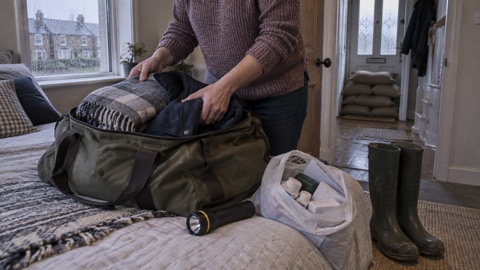
The campaign's ask is a short list, and it is worth taking in the order a household would actually do it. First, supplies: 3 days' worth, with the emphasis on food with a long shelf life that doesn't need refrigeration or cooking, such as tinned meat, fish or vegetables, dried fruit and nuts4. The guidance is explicit that it is best to buy food you'd usually eat, so the store rotates through normal meals rather than sitting untouched until it expires3. Councils make the same point in their own words: Renfrewshire Council advises keeping a range of supplies that can meet essential household needs for at least 3 days5.
Second, information. The campaign asks households to write down important phone numbers on paper and store them somewhere easy to find in a power cut, including emergency contacts, a medication list, radio frequencies and insurance policy details3. That list is longer than most people expect, and it is the part of the campaign that pays off fastest in a real outage.
Third, a plan. The campaign sits alongside long-standing local advice to prepare a simple household emergency plan, involve everyone in the house in developing it, keep it in a safe and memorable place and review it regularly6. Oxfordshire County Council points households to its Are you ready booklet as a comprehensive resource for further information on household preparedness7. And because fire is the emergency a household is most likely to face at home, the fire and rescue service advises that everyone in your home knows what to do if a fire should occur, and that you practise your escape route8.
None of this requires special equipment or spending a lot. The campaign's own framing is small, simple steps, and the three items above are the whole of the core ask. The rest of this page takes each in turn, then covers when to call 999, where local advice differs, and who is behind the campaign.
Store 3 days' worth of supplies
Three days is the figure the campaign repeats, and it is a floor rather than a target. The Be Ready checklist asks for non-perishable food for 3 days, meaning food with a long shelf life that doesn't need refrigeration or cooking3. The reasoning is practical: in a power cut or a water interruption, the food that helps is the food you can open and eat without heat, and the food you already like enough to eat cold.
What to keep, and why each item earns its space:
- Tinned meat, fish and vegetables: the checklist gives these as examples of food with a long shelf life that doesn't need refrigeration or cooking3.
- Dried fruit and nuts: also given by the checklist as an example of the same kind of food3.
- Food you would usually eat: so the store gets used and replaced rather than wasted3.
- A small first aid kit, kept to hand: Scottish Borders Council's 30-day resilience series makes this its day three task9.
The campaign does not specify quantities per person, and no official figure for that is given here. The sensible reading of "3 days' worth" is three days of the food your household actually eats, which is a judgement each household makes for itself. What the guidance does settle is the type: shelf-stable, edible cold, and familiar.
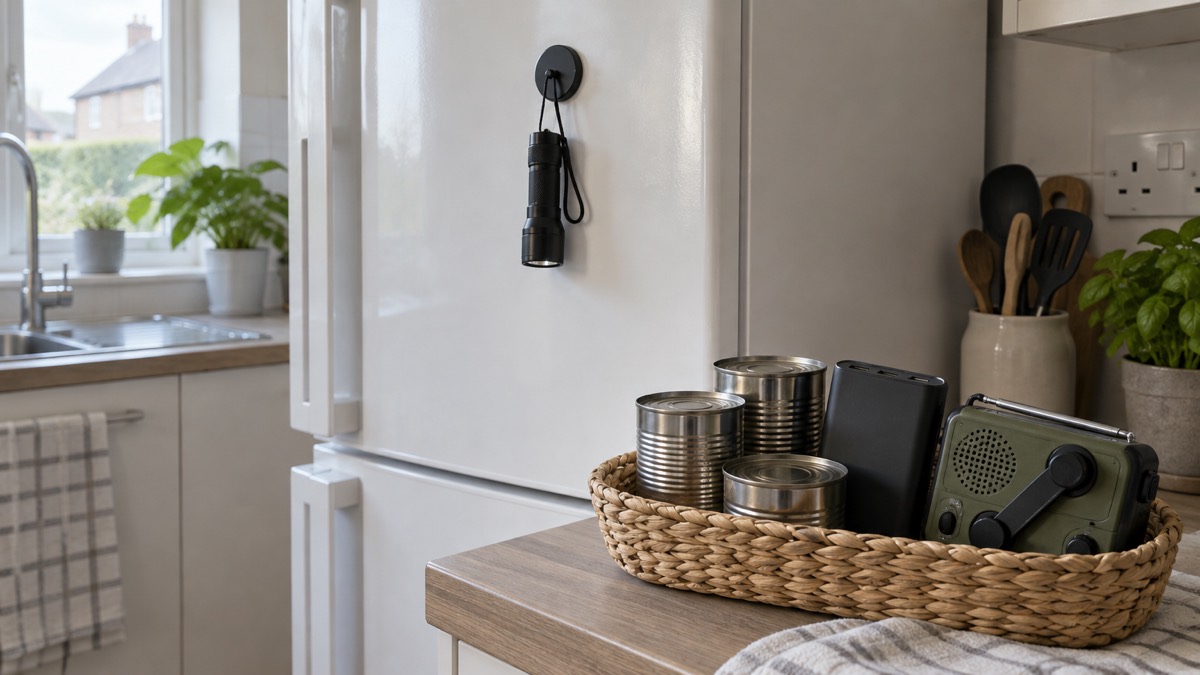
Water belongs in the same shop. The household water guidance on this site covers how much to keep and how to store it safely. The same applies to food safety once the fridge goes off: the emergency food guide sets out what keeps and for how long without power.
The mistake to avoid is treating the three days as a one-off purchase. A store that is never opened is a store that is out of date when it is needed. The campaign's own framing, buying food you would usually eat, is designed to prevent exactly that3.
Keep important phone numbers on paper for a power cut
This is the step people skip, and the one that matters most in the first hour of an outage. The campaign asks you to write down important phone numbers on paper and store them somewhere easy to find in a power cut, including emergency contacts, a medication list, radio frequencies and insurance policy details3. The reason is simple: the phone that holds all your contacts is the phone that runs out of battery.
Other official advice fills in the detail. The government's guidance on phone and broadband outages says to keep a paper copy of important phone numbers, family, neighbours, doctor and utilities, and other essential information in case your mobile phone loses power or you cannot access your contacts10. Public Health Wales puts it in one line: keep your mobile phone charged and make sure it has all your important phone numbers in it, and have a list on paper too11.
Northern Ireland's nidirect service adds a detail worth knowing: as well as mobile phones, a non-mains powered landline telephone will help you stay in touch during any disruptions to your power supply12. That matters because a cordless handset in the hall is useless in a power cut, while an old corded phone plugged straight into the socket may still work.
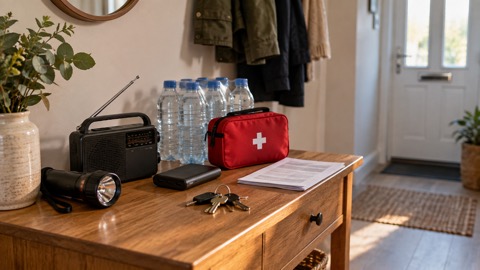
The kit that supports this step is small:
- A charged power bank, a torch and spare batteries at home, which NHS Norfolk and Suffolk says can provide reassurance13.
- A separate battery charger, and the power cut helpline number, 105, stored on your phone, as the Met Office advises14.
- A paper list in a drawer everyone knows, with the numbers above plus your insurer's claims line3.
When to call 999, and why the campaign site has no live updates
The campaign is clear about the one number that overrides everything else: call 999 if you or someone else is in immediate danger2. That is the test, immediate danger to life, and it is the same test the fire and rescue services teach. Their message is get out, stay out and call 999: leave the building, find somewhere safe to wait, and call from there15. Greater Manchester Fire and Rescue Service's student safety advice puts it as phone 999 and ask for fire16, and its summer safety campaign simply says dial 99917. If you are trapped by fire, Essex's guidance is to call 999 and find somewhere safe to wait18.
"This site will not be updated with live information during an emergency."
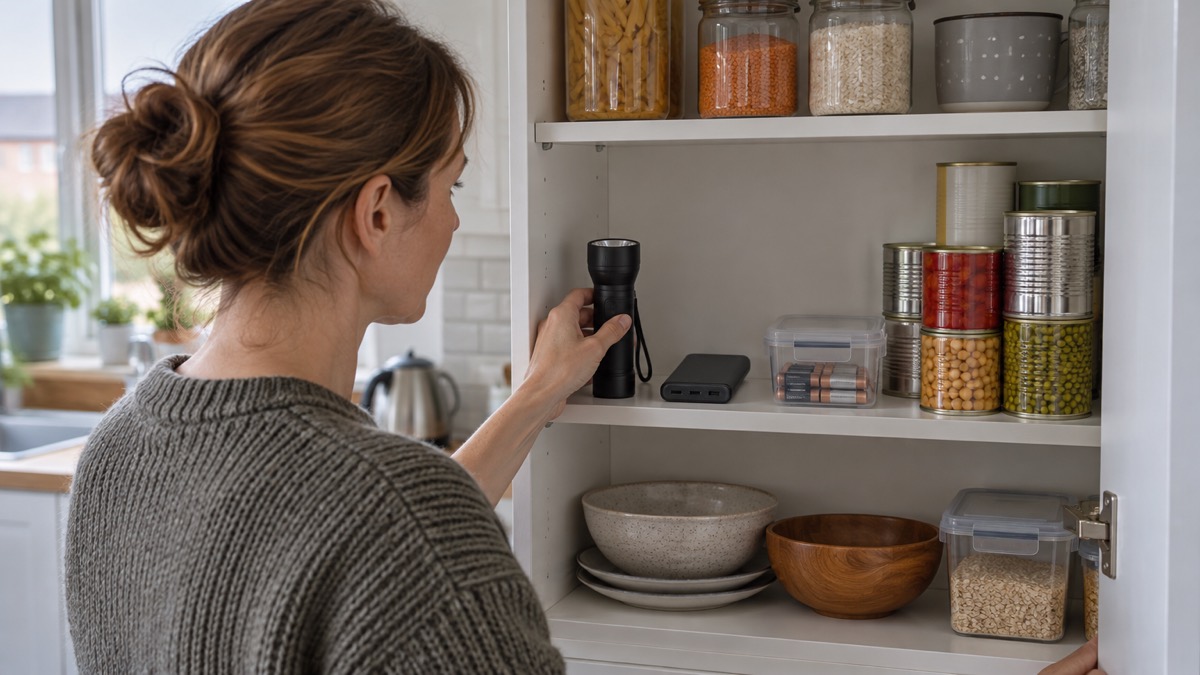
That sentence is the most important thing to understand about the campaign's website. It is a preparedness resource, not a news service. In an actual emergency, the site will not tell you what is happening, where the incident is or which roads are closed. For live information you need the organisations that issue it: the emergency services, your council, the Met Office for weather warnings, and the alerts and warnings you can sign up to for your area. Greater Manchester Combined Authority advises community groups to sign up to alerts and warnings covering their area, with a list of trusted sources on the government's Prepare website20.
The practical consequence is that the paper list and the charged power bank are not just for comfort. They are how you reach people and information when the website you read today is silent. The staying informed guide covers which sources to trust and how to set up alerts before you need them.
Advice for Scotland and Northern Ireland
The Be Ready campaign is UK-wide, but the day-to-day preparedness advice in Scotland and Northern Ireland is delivered by devolved bodies, and the campaign site says so directly: for local advice tailored to people living in Scotland or Northern Ireland, visit the Ready Scotland and NI Direct websites19.
| Nation | Where the local advice sits | What it covers |
|---|---|---|
| England | Be Ready campaign and local resilience forums | Household steps, local risk information, council emergency planning1 |
| Scotland | Ready Scotland, the official Scottish Government campaign and information website | Preparing for, responding to and recovering from emergencies and disruptive events, all year round21 |
| Northern Ireland | NI Direct | Weather warnings, power cut preparation, phone numbers to hand12 |
| Wales | Be Ready campaign plus Natural Resources Wales and Welsh Government advice | Flood awareness campaigns and winter weather advice23 |
Ready Scotland is an official Scottish Government campaign and information website that helps individuals, households and communities prepare for, respond to and recover from emergencies and disruptive events25. The Ready Scotland campaign encourages individuals, families, communities and businesses to think about what they can do to prepare for unexpected events, all year round26. For local advice tailored to people living in Scotland or Northern Ireland, the government's Be Ready campaign points households to the Ready Scotland and NI Direct websites19.
Wales runs its own seasonal work alongside the UK campaign. Natural Resources Wales delivered its annual #BeFloodReady awareness campaign from 6 to 10 October 202523, and the Welsh Government publishes winter weather advice24. The Met Office's WeatherReady campaign, which is year-round and covers the whole UK, has lots of advice on how to get ready for winter24, and its winter campaign launched on Thursday 22 October27.
Who is behind the campaign, and how it reaches people
The campaign is a government public awareness campaign, announced in a press release on 22 October 20261. A written statement to Parliament in July 2026 described the purpose of the national resilience public awareness campaign as informing the public of the small but important steps they can take to be prepared in case of emergencies and disruption28. That is the policy intent in one sentence.
Delivery runs through three routes. The first is paid advertising: social media and radio advertising will help reach audiences who may be particularly at-risk in everyday emergencies, including families with young children and older people1. The second is the voluntary sector: more than five hundred organisations across the UK, from charities to businesses, have already signed up to share messages, and the campaign was built in collaboration with charities and campaigners that work with groups that are often under-represented, including people with insecure housing and people who use foodbanks1. The third is local government and resilience partnerships: the government has also worked closely with local resilience forums across the UK to root the advice in what works for local communities1.
The campaign also replaced something. The Be Ready campaign has seen the previous Prepare website updated with new messaging and branding1. The address prepare.campaign.gov.uk still carries the government's household advice, and councils still point to it: Cumberland Council says the government's Prepare website contains lots of advice on how to be prepared for many emergency situations29. Treat the two names as one body of official advice, with Be Ready the newer presentation.
The campaign does not stand alone. The National Risk Register 2025 lists other public campaigns alongside it, including WeatherReady for severe weather and Cyber Aware for online security30. The National Risk Register guide explains how those risks are assessed, and the official government advice page traces where household guidance comes from.
Local resilience forums and the campaign
Local Resilience Forums are the bodies that turn national advice into local plans, and the campaign leans on them. They are tasked with ensuring preparedness and response at a local level31. They identify potential risks and produce emergency plans to either prevent or lessen the impact of any incident on their local communities32. And they play a role in raising public awareness about potential risks and encouraging community resilience, including providing information to the public on how to prepare for emergencies and what actions to take during specific incidents32.
There are 38 Local Resilience Forums in England and four Local Resilience Forums in Wales32. The campaign's local delivery ran through them: the government worked closely with local resilience forums across the UK to root the advice in what works for local communities1. For a household, that means the generic steps on this page are supplemented locally, by the forum and council covering your area, with information about the risks that actually apply where you live. The Local Resilience Forums guide explains how to find yours.
The campaign's own risk-checking page points households to local risk information, and the check the risks where you are material explains how likelihood and impact are scored. Reading your local risk picture is the step that turns a generic three-day store into a plan for the hazards your household is actually likely to meet.
Sources (32)
- Households encouraged to take small, simple steps to stay prepared in an emergency, GOV.UK, 22 October 2026
- Prepare for emergencies, Prepare campaign, 19 October 2026
- Get prepared for emergencies, Prepare campaign, 21 October 2026
- Be ready for emergencies, Be Ready campaign, 21 October 2026
- Prepare your home for emergencies, Renfrewshire Council, 9 October 2025
- Advice for households, West Yorkshire Prepared, 29 October 2026
- Community resilience, Oxfordshire County Council, 2026
- Candle safety, Mid and West Wales Fire and Rescue Service, 29 October 2026
- Prepared personal resilience, Scottish Borders Council, 29 October 2026
- Phone and broadband outages, Prepare campaign, 12 October 2026
- Weather and health - Public Health Wales, Public Health Wales
- Strong winds and heavy rain warning information and advice, nidirect, 27 January 2026
- What to do in a power cut, Met Office, 25 October 2026
- Top tips to be WeatherReady, Met Office, 25 October 2026
- Get out, stay out and call 999, North Wales Fire and Rescue Service, 29 October 2026
- Student safety, Greater Manchester Fire and Rescue Service, 29 October 2026
- Staying safe, Greater Manchester Fire and Rescue Service, 29 October 2026
- Get out, Stay out, Call 999 - At home - Keeping You Safe - North Wales Fire And Rescue Service, North Wales Fire And Rescue Service
- Be Ready, Be Ready campaign, 19 October 2026
- Prepare your community, Greater Manchester Combined Authority, 29 October 2026
- Check the risks where you are, Prepare campaign, 20 October 2026
- Strong winds weather warning information and advice, nidirect, 24 October 2026
- Flood risk management annual report 2025 to 2026, Natural Resources Wales, October 2025
- Winter weather advice, Welsh Government, 2026
- Helping communities - Emergency planning team - Highland Council, Highland Council
- About WeatherReady - Met Office, Met Office
- WeatherReady Winter Partner Toolkit, Met Office, 28 October 2026
- Written statement: national resilience public awareness campaign, UK Parliament, 14 July 2026
- Snow, ice and winter ready advice, Cumberland Council, 2026
- National Risk Register 2025, Cabinet Office, 2025
- Pandemic, Essex Prepared, 29 October 2026
- What is a Local Resilience Forum, Essex Prepared, 29 October 2026
 30-Day Household Checklist
 Emergency Plan Template
 Supply Interruption Checklist
 Housing After an Emergency
 Humanitarian Assistance Centre
 School Emergency for Parents