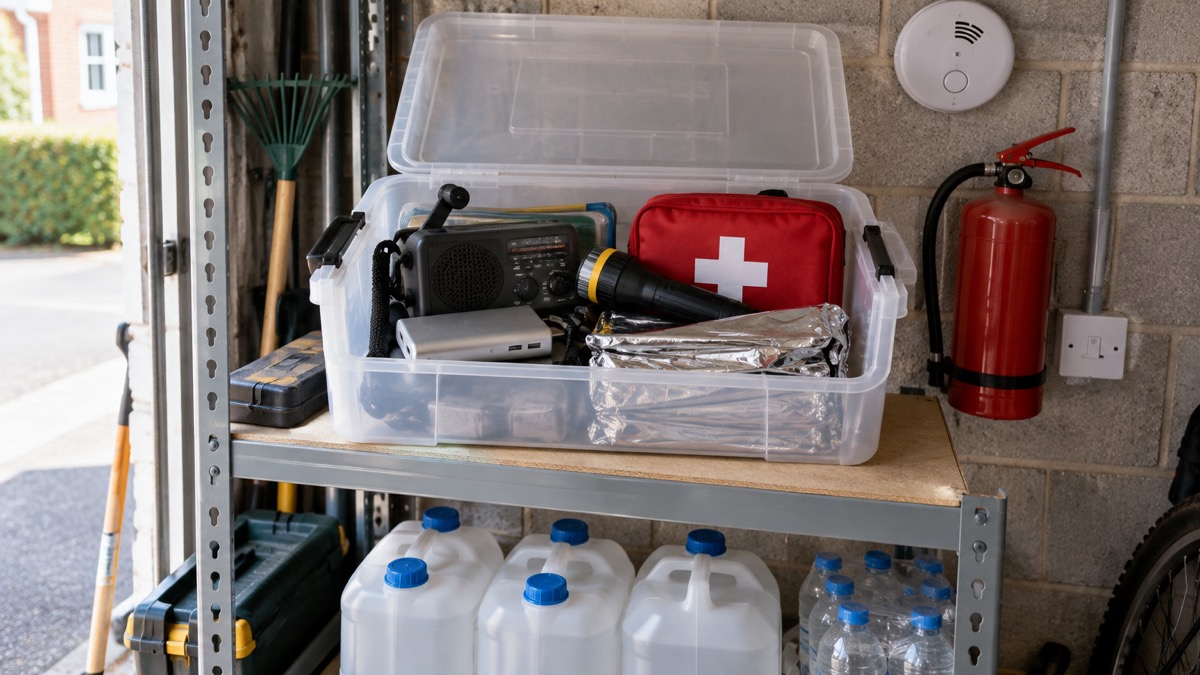
The UK Government Resilience Framework, published in December 2022, and the UK Government Resilience Action Plan, published on 8 July 2025, together set out how the government intends to prepare the country for emergencies1. For an ordinary household, the practical message is straightforward: the government expects you to be ready to look after yourself for a short period, because in a widespread emergency the authorities may not reach everyone immediately.
The single most useful thing to take from these documents is the government's headline advice to be prepared for three days of disruption3. That means some bottled water, a torch, a plan for your family, and an eye on vulnerable neighbours. Everything else in the Framework and the Action Plan, from flood defence investment to a new Resilience Academy, is the machinery that sits behind that expectation.
This page explains what the Framework and the Action Plan actually say, how they treat households and communities as part of the system, what is happening in each of the four nations, and where to find the official documents and local help. If you want to get straight to practical preparation, start with our guide to getting started and the emergency kit your household should keep ready.
What the Resilience Framework means for your household
The Resilience Framework, published in December 2022, set out the core principle that developing a shared understanding of risk across society is central to resilience1. Its follow-up implementation update, published in December 2023, reported progress on the Framework's commitments, including the establishment of a UK Resilience Forum that brings together national, regional and local government, the private and voluntary sectors, and bodies such as charities and critical infrastructure operators6.
For your household, the Framework matters in three ways. First, it reframes preparedness as something everyone shares in, not something done to you by emergency services. Second, it created new structures for working across society: the UK Resilience Forum provides a formal forum for communication and collaboration on risk and emergency preparedness across national, regional and local government, the private and voluntary sectors1, and the UK Resilience Academy will set the standards and provide leadership across emergency planning, crisis management and citizen preparedness1. Third, it led directly to public-facing advice: the government has published resilience advice for households since May 20243.
The Resilience Action Plan, published in July 2025, defines resilience as "the ability to anticipate, assess, prevent, mitigate, respond to, and recover from natural hazards, deliberate attacks, geopolitical instability, disease outbreaks, and other disruptive events, civil emergencies or threats to our way of life"4. That definition covers everything from flooding to cyber attacks, and the plan is explicit that individuals, households and communities are within its reach5.
The plan also states plainly why households matter. In scenarios such as widespread power and water outages, urgent support may not reach everyone who needs it in the first few hours or days5. That is the reasoning behind the three-day preparedness message, and it is why the government's advice focuses on simple steps: stocking up on some basics like bottled water and a torch, and looking out for vulnerable neighbours4.
"the advice to be prepared for three days of disruption that is at the heart of the UK campaign is also used by France"
If you want to act on this now, our sections on water, food and backup power set out what three days of self-sufficiency at home actually involves.
Resilience is a whole-of-society job, and households are part of it
The 2022 Framework states that resilience is a "whole of society" endeavour7. The Action Plan repeats this and names the sectors it intends to reach: central and devolved government, local government, Local Resilience Forums, the NHS, emergency responders, and individuals, households and communities5. Wales has adopted the same language, with the Wales Resilience Framework bringing together government, emergency responders, the wider public sector, businesses, the voluntary sector and communities8.
What does this mean in practice for a household? The Scottish Government's definition is the clearest: resilience means communities and individuals using their own resources and knowledge to prepare for, respond to, and recover from emergencies, working alongside the emergency responders9. At household level, that means combining skills and planning together, with friends and extended family networks supporting one another when needed9. At neighbourhood level, it means individuals, households and families working together to create stronger neighbourhoods, able to support vulnerable people, share resources, and support the work of emergency responders9.
The structures that make this work locally are Local Resilience Forums. These are multi-agency partnerships that bring together Category 1 and Category 2 responders under the Civil Contingencies Act 2004 to coordinate planning, preparation and response for emergencies within a specific geographical area7. In practice they are made up of local authorities, the emergency services, the NHS and health bodies, environment-related government agencies, and organisations such as utilities providers10. Their job includes identifying potential risks and producing emergency plans to either prevent or lessen the impact of any incident on their local communities10.
The government's public preparedness campaigns have been built with these forums in mind. The government has worked closely with Local Resilience Forums across the UK to root the advice in what works for local communities3. Community responders and the voluntary sector, including groups like the British Red Cross, play a crucial role in the resilience of the UK6, and communities that are prepared and working with health organisations, local councils, local businesses and voluntary organisations can be as resilient as possible11.
If this appeals to you, our community resilience guide explains how neighbours and existing local groups can organise together.
The Resilience Action Plan: three areas of focus
The Resilience Action Plan, published on 8 July 2025, delivers against three objectives in this Parliament4. As set out in Parliament on the day of launch, the plan focuses on three areas: continuous assessment of UK resilience, enabling the whole of society to take action, and improving core public sector resilience12.
1. Continuously assess how resilient the UK is. The plan commits to ongoing assessment rather than one-off reviews. This includes publishing a version of the Chronic Risks Analysis alongside the action plan, and running the first annual public survey of risk perception, resilience and preparedness, with results to be made publicly available4. The government had already begun preparing this survey as early as its December 2023 implementation update6.
2. Enable the whole of society to take action. This is the objective that reaches households directly. It includes the public advice described above, and a consultation published alongside the action plan on strengthening the legal requirement for emergency responders to engage with the voluntary, community and faith sectors5.
3. Strengthen the core public sector resilience system. This covers investment and new institutions, described in more detail in the national capability section below.
Alongside the three objectives, the plan makes a series of specific commitments:
| Commitment | Detail | Source |
|---|---|---|
| Flood and coastal erosion investment | £4.2 billion over the first three years of a new 10-year programme launching in April 2026, protecting communities across England | 5 |
| UK Resilience Academy | Launched April 2025; will equip over 4,000 individuals in its first year | 4 |
| National Exercising Programme | Annual national exercises on a wide range of risks, involving actors from across society | 4 |
| Four Nations Ministerial group | Established to address and align resilience issues across the UK | 4 |
| Home Defence Programme | Led by the Cabinet Office, to coordinate departments and agencies in the event of major conflict impacting the UK | 4 |
| Energy Resilience Strategy | To be published later in 2026, strengthening the resilience of the UK energy system | 2 |
The plan also notes the changing nature of risk, including that 50% of crime now takes place online5, a reminder that resilience covers cyber attacks and IT failures as much as floods and storms.
Where the plan applies: England first, with devolved areas included
The action plan focuses on actions primarily for England, UK government departments, and areas where responsibilities in Scotland, Wales and Northern Ireland are reserved to the UK government5. This matters because much of the machinery of emergency preparedness is devolved, so the arrangements where you live depend on which nation you live in.
England has 38 Local Resilience Forums7. Many of the supporting documents that sit under the national framework apply to England only: the community flood plan and personal flood plan guidance13, the Adverse Weather and Health Plan14, the guidance on identifying and supporting people who are vulnerable in an emergency15, and the residential personal emergency evacuation plans guidance all state that they apply to England. The gov.uk/prepare website is designed for residents in England16.
Wales has four Local Resilience Forums7, whose details and Community Risk Registers are published online10. The Welsh Government has published the Wales Resilience Framework and a supporting Delivery Plan4, and its preparedness advice for households sits within the Wales resilience programme17.
Scotland has three Regional Resilience Partnerships, whose details can be found on the Scottish Government's Ready Scotland website18. The Scottish Government defines resilience in terms of communities and individuals using their own resources and knowledge, working alongside emergency responders9.
Northern Ireland completed its review of resilience arrangements and published the new NI Civil Contingencies Framework in 20215.
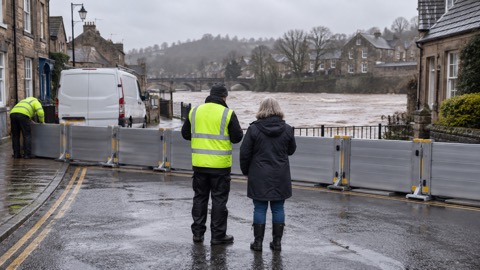
The devolved governments in Scotland, Wales and Northern Ireland also provide advice for their residents16, so if you live outside England, check your own government's preparedness pages as well as UK-wide advice. Where flooding is concerned, the National Audit Office notes that managing flooding and coastal erosion in Scotland, Wales and Northern Ireland is devolved and outside the scope of its England-focused reporting13. Our flooding guide covers what households should do wherever they live.
A Four Nations Ministerial group has been established to address and align resilience issues across the UK4, so the four administrations are not working in isolation.
Annual statement to Parliament on risk and resilience
The government has committed to continue making an annual statement to Parliament on risk and resilience, and the 2025 action plan itself serves as that annual statement5. Alongside it, the government has published the results of the first annual public survey of risk perception, resilience and preparedness2.
For households, the annual statement matters because it is the moment each year when the government publicly accounts for the state of the country's preparedness and the risks it is watching. The 2025 action plan, serving as that statement, was published alongside a version of the Chronic Risks Analysis2 and a consultation on strengthening the legal requirement for emergency responders to engage with the voluntary, community and faith sectors5.
The annual cycle also includes the first annual public survey of risk perception, resilience and preparedness, which collected data in 20254. This is the first time the government has systematically measured how the public perceives risk, which should in time make public advice better matched to what households actually understand and do.
Alongside the statement, the Cabinet Office will instruct the UK Resilience Academy, by the end of 2025, to convene a number of panels per year of relevant experts to scrutinise plans and preparedness for whole-system civil emergencies across the UK4. The government is also considering further plans to share information and advice with the public on risks and emergencies, building on existing resources such as the UK National Risk Register8. The National Risk Register is the external version of the National Security Risk Assessment, and the government regularly assesses the natural hazards and man-made threats that could affect the UK19. Our page on how the UK prepares for emergencies explains how these pieces fit together.
How communities fit in: the six steps for local action
The Community Resilience Development Framework, published by the UK Government in 201920, is the reference tool for delivering strategic approaches to community resilience development at the Local Resilience Forum level, in collaboration with non-statutory partners such as voluntary, community and faith organisations, and businesses21. It sets out roles and responsibilities, together with six steps for strategic action22:
- Identify the community networks, their characteristics, the risks, and prioritise support.
- Align responder and community networks' understanding of risk and capabilities.
- Enable resilient behaviours.
- Enable community-led social action.
- Partner with voluntary capabilities.
- Review community preparedness and the impact of activities.22
The Framework advises including representatives of community and voluntary organisations in LRF structures and decision making where appropriate21, and HM Government's role includes establishing and championing the vision for community resilience as an integrated part of emergency management policy21.
If you are involved in a local group, you do not need to start from scratch. Existing groups that can fit resilience into their agenda include parish councils, faith organisations, Neighbourhood Watch groups, Scout Groups, residents associations and youth groups23. A community emergency plan involves liaising with your local emergency planning officer, setting up a community planning group, identifying local skills and resources, working with others in your community, and reviewing your plan on an annual basis24.
Real examples exist. Emergency Contact Hubs, developed in Wiltshire and Swindon, are now being adopted in other regions across the UK to strengthen local resilience and build whole-society preparedness25. The government has also invested in place-based resilience: £200 million over six years to help over 25 local areas in England take forward wider resilience work24.
For a household, the entry point is usually your own street. Our community resilience guide walks through how to start a conversation with neighbours, and the government's community emergency plan toolkit provides contact details for Local Resilience Forums throughout England and Wales, so you can find out who is coordinating planning where you live26.
Building national capability to respond and recover
The third objective of the Action Plan, strengthening the core public sector resilience system, is where most of the new institutions and money sit.
The UK Resilience Academy (UKRA) was launched in April 2025 to improve the resilience learning offer and build skills4. In its first year it will equip over 4,000 individuals with the resources, skills, knowledge and behaviours required5. The Framework had proposed seven pillars for the UKRA: emergency planning, crisis management, exercising, personal resilience, strategic prevention, organisational resilience, and citizen preparedness6. The citizen preparedness pillar is the one that connects to household advice.
The National Exercising Programme will deliver annual national exercises on a wide range of risks, involving actors from across society4. Exercises are how government tests its plans before a real emergency; our page on emergency exercises explains how they work.
The Home Defence Programme, led by the Cabinet Office, will be the means through which the UK Government ensures coordination across departments and agencies in the event of major conflict impacting the UK2. The government has also committed to a new National Exercising Programme that will deliver annual national exercises on a wide range of risks, involving actors from across society2.
Flood and coastal resilience receives the largest single investment: £4.2 billion over the first three years of a new 10-year programme launching in April 20265. Earlier investment under the 2020 programme committed £200 million over six years to help over 25 local areas in England, and was intended to better protect 336,000 properties from flooding and coastal erosion24. The National Audit Office has examined resilience to flooding in England13, and households in flood-prone areas should still prepare personally; see our flooding guide.
Other capability commitments include up to £520 million for the Life Sciences Innovative Manufacturing Fund4, and the Adverse Weather and Health Plan for England, which addresses nine action areas from service delivery and communication to early warning systems and research, and which local organisations and partnerships can use to develop local health and resilience plans14.
Behind all of this sits the Lead Government Department model, which the UK Government uses to cover all phases of emergency planning, response, recovery and risk assessment7. Our page on how central government responds explains what that means when an emergency actually happens.
Where to find the official documents and local help
The official documents are all published and free to read:
- The UK Government Resilience Framework and its 2023 implementation update, on gov.uk6
- The UK Government Resilience Action Plan, published July 2025, on gov.uk and as a deposited paper in Parliament4
- The National Risk Register, the government's public assessment of risks, regularly updated19
- The Community Resilience Development Framework (2019) and the community emergency plan toolkit21
For local help, start with your Local Resilience Forum. There are 38 in England and four in Wales7; the community emergency plan toolkit's contact page covers Local Resilience Forums throughout England and Wales26. In Scotland, details for the Regional Resilience Partnerships are on the Ready Scotland website18. Welsh Local Resilience Forum details and Community Risk Registers are published online10.
To check the risks where you actually live, use the government's online risk checkers, which let you look up the risks in your local area10. The government's household preparedness advice has been published since May 20243, and the current campaign encourages small, simple steps rather than dramatic measures. Our page on the national resilience campaign covers what it advises.
If you or someone in your household needs extra support in an emergency, guidance exists for emergency planners on identifying and supporting people who are vulnerable, updated 28 April 202515, and our extra help guide sets out the practical steps, including signing up to priority services where you are eligible.
Finally, if an emergency is happening now, go to our getting started page for the immediate steps, and follow the advice of your local emergency services and your Local Resilience Forum, whose role includes warning, informing and advising the public in the event of an emergency27.
Sources (27)
- 2023 National Risk Register (PDF), HM Government, 2023
- Written statement on the Resilience Action Plan, UK Parliament, 2026-07-14
- Households encouraged to take small, simple steps to stay prepared, HM Government, 2026-10-22
- UK Government Resilience Action Plan (HTML), HM Government, 2025
- The UK Government Resilience Action Plan (PDF), HM Government, 2025-07
- The UK Government Resilience Framework: 2023 implementation update, HM Government, 2023-12-04
- What is a Local Resilience Forum?, Essex Prepared, 2026-10-29
- Statement on resilience and emergency preparedness, Welsh Government, 2026-10-13
- Prepared: personal resilience, Scottish Borders Council, 2026-10-29
- Check the risks where you are, HM Government, 2026-10-20
- Pandemic flu and infectious diseases, Dorset Prepared, 2024-04-16
- Government Resilience Action Plan debate, UK Parliament, 2025-07-08
- Resilience to flooding, National Audit Office, 2023-11-15
- Adverse Weather and Health Plan, UK Health Security Agency, 2024-12-19
- Identifying and supporting persons who are vulnerable in an emergency, HM Government, 2025-04-28
- How would you prepare for an emergency?, NHS Cheshire and Merseyside, 2024-07-10
- How to prepare for emergencies, Welsh Government, 2025-06-20
- Be Ready: check the risks where you are, HM Government, 2026-10-20
- National emergencies, HM Government, 2026-10-29
- National Risk Register extract (PDF), City of York Council, 2023
- Community Resilience Development Framework (PDF), HM Government, 2019-06
- How to prepare for flooding, HM Government, 2023-12-19
- Microsoft Word - pfe_guide_for_communities.doc, Cabinet Office
- 2020 National Risk Register (PDF), HM Government, 2020
- Spotlight on Emergency Contact Hubs, Wiltshire and Swindon Prepared, 2026-10-25
- Community emergency plan toolkit (PDF), HM Government, 2016-09
- Emergency Alerts | Denbighshire County Council, Denbighshire County Council
 30-Day Household Checklist
 Emergency Plan Template
 Supply Interruption Checklist
 National Risk Register
 How Emergency Risks Are Scored
 Civil Contingencies Act 2004
 What Counts as an Emergency
 Category 1 and 2 Responders
 Local Resilience Forums
 Strengthening Local Resilience
 What Your Council Does
 Central Government Response
 Gold, Silver and Bronze Command
 Major Incident Declared
 Emergency Powers