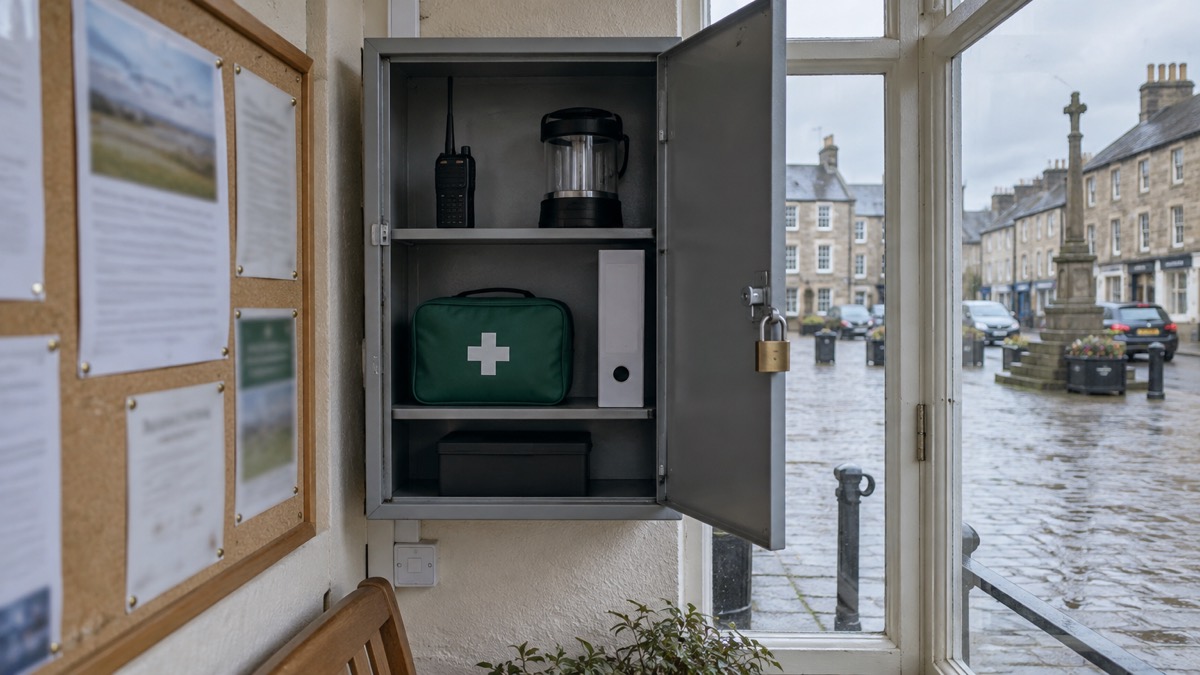
If you have ever wondered whether your parish or town council will step in when a storm, flood or power cut hits your village, the short answer is: it may, but it does not have to. Town and parish councils are not emergency services and have no statutory responsibility to plan for, respond to, or recover from emergencies1. They are not trained, equipped, empowered or resourced to carry out the functions of an emergency service2. The legal duty to plan sits instead with your local authority and the other Category 1 responders under the Civil Contingencies Act 20043.
That does not make a parish plan pointless. Many councils prepare one anyway, because being prepared enables a community to respond and recover from incidents much more quickly, and makes it less reliant on the local authority and emergency services4. A parish emergency plan gives the community personnel and resources that can be used to deal with emergencies, and may be activated if the emergency services are overwhelmed5. This page explains what councils can and cannot do, how to find out whether your parish has a plan, and how you can help.
No legal duty, but a plan still helps
The starting point for any conversation about parish councils and emergencies is a clear one, repeated by councils across England and Wales: town and parish councils are not an emergency service and have no statutory responsibility to plan for, respond to, or recover from emergencies1. Buckinghamshire Council makes the same point about community groups more broadly: there is no statutory responsibility for these groups to plan for, respond to, or recover from emergencies8. The reason councils state this so plainly is to manage expectations. In a real emergency, the police, fire and ambulance services lead, and nobody should wait for the parish council to arrive in place of a 999 response.
So why do so many parishes write a plan anyway? Because the practical case is strong. West Yorkshire Prepared puts it directly: being prepared will enable your community to respond and recover from these incidents much quicker and make you less reliant on the local authority and emergency services4. A community emergency plan should focus on the welfare of people and help to maintain the local infrastructure, such as roads2. In Scotland, where the equivalent body is the community council, the national community emergency planning guide published in March 2026 says a plan helps communities prepare for, respond to, and recover from emergencies using their own strengths, skills, knowledge and resources, while complementing official efforts, and that plans can make a big difference in reducing harm and speeding recovery9.
The kind of help a plan provides is deliberately modest and practical. Surrey County Council describes the role of community emergency plan volunteers as helping to keep the community safe where the incident does not pose an immediate threat to life, which can involve helping out in a power cut or storm, or informing neighbours of a flood warning10. That is the realistic scope: neighbours looking after neighbours in the first hours, until the statutory responders can take over. If you are thinking about what a group of volunteers can safely take on, see what volunteers can safely do, and where to stop.
One caution is worth recording. Anglesey's home emergency plan template carries a disclaimer that the councils will not be held responsible for any damage, loss or injury to persons or property as a result of use of the template11. The same principle applies to community plans generally: a plan is a voluntary aid, not a guarantee, and it should say so plainly.
Who does have a legal duty to plan: the Civil Contingencies Act
The Civil Contingencies Act 2004 is the law that divides the emergency planning world into those who must plan and those who may. Scottish Borders Council summarises the position: the introduction of the Civil Contingencies Act 2004 requires local authorities, as Category 1 responders, to prepare contingency plans and develop response arrangements for a wide range of emergencies3. Local authorities have a key role to play in planning for an emergency, responding to an emergency and supporting the local community, and Argyll and Bute Council confirms its status as a Category 1 responder under the Act12. Local authorities also carry an additional statutory duty to promote business continuity to local businesses and the voluntary sector12.
The Act's duties reach further than generic emergencies. GB law places a legal duty on the relevant local authority to produce plans to deal with off-site emergencies at nuclear sites13. Should a radiation emergency be declared, the local authority will activate its off-site emergency plan to protect the public within a pre-determined area known as the Detailed Emergency Planning Zone13. If you live near such a site, your community plan should be written with the local authority's arrangements in mind rather than in ignorance of them.
Category 1 responders must also assess risk. The Civil Contingencies Act 2004 places a statutory obligation on all Category 1 responders to carry out risk assessments and maintain a Community Risk Register14. Essex Resilience Forum, for example, has a duty under the Act to produce a Community Risk Register15, and the register is the result of professional judgement from a range of contributors, historical evidence, scientific input and expert analysis in evaluating the key risks facing the county15. Warwickshire describes the generation of its register through a six-stage process as recommended in the document Emergency preparedness14. For households, the wider picture of how the UK prepares is covered in how the UK prepares for emergencies.
In Wales, the same duties are delivered through shared arrangements. Emergency planning for Isle of Anglesey County Council now sits within a Regional Emergency Planning Service covering six councils in North Wales, which assists the council in fulfilling statutory duties under the Civil Contingencies Act 200416. So if you ask your local authority about emergency planning in North Wales, the answer may come from a regional team rather than a single council officer.
What your local authority actually does in an emergency
Understanding the local authority's role helps a parish plan target the gaps rather than duplicate the response. Powys County Council, whose arrangements are described publicly by Llangattock Community Council, sets out the principal concerns of the local authority in the early stages of an emergency: support for the emergency services, support and care for the local and wider community, and co-ordination of the response by organisations other than the emergency responders, such as the voluntary sector17. The council's response to an emergency is outlined in its Major Incident Plan, and its Emergency Planning Department is responsible for the co-ordination of the council's emergency response, planning, preparation, training and exercises for emergencies, and for managing minor emergencies17. That department works in close collaboration with the emergency services, health, other government agencies, neighbouring authorities, volunteer groups and others17.
Flooding shows the division of labour clearly. During severe flooding, local authorities will work with the emergency services and co-ordinate shelter for people evacuated from their homes18. In Scotland, local authorities are responsible for producing Scotland's first Local Flood Risk Management Plans, in partnership with SEPA, Scottish Water and other responsible authorities18. A parish plan supports this by identifying a local rest centre and the volunteers who can open it, not by replacing the council's shelter arrangements.
Preparation is continuous. Your local council, fire, police and ambulance services and other organisations take part in regular training exercises to prepare for emergencies19. There are also government plans to make sure essential services, like food, water, transport, health and financial services, keep working in the event of an emergency19. A community plan that knows this will not try to feed a whole village from day one; it will focus on the first hours and the people who need help most. For more on how statutory bodies work with local groups, see how councils and emergency services work with local groups.
What a community emergency plan is for
A community emergency plan is a short document, written in advance, that sets out who does what when an emergency affects the area. An emergency could be anything from severe weather, flooding or fire to a major incident involving transport20. The Scottish guide, published in March 2026, is addressed to groups that want to help their communities cope better in an emergency and become more resilient by making a Community Emergency Plan together9, and it describes resilient communities as those that use their existing skills, knowledge and resources to prepare for, and deal with, the consequences of emergencies9.
Every plan is different because every community is different. Argyll and Bute Council, which has created templates and step by step guidance on how to put together a community emergency plan20, makes the point that your Community Emergency Plan will be unique to your community, as different communities face different issues and have different strengths7. A coastal village's risks are not an inner town's risks; a parish with a river through it will plan differently from one on a hill.
The core content is consistent, though. Herefordshire Council advises that community groups can help by being aware of local risks, keeping an emergency contacts list, identifying vulnerable members and developing an emergency plan1. A widely used template from North Yorkshire, published in February 2025, is split into 11 sections21:
| Section | What it covers |
|---|---|
| Emergency Action Group | who coordinates the response |
| Liaison roles | who links with the emergency services and council |
| Local risks | what the area actually faces |
| Local rest centre | where people can shelter |
| Vulnerabilities and assets | who needs help, and what the community has |
| Local resources | halls, equipment, skills |
| Communication | how the community is told what is happening |
| Emergency contact details | who to call, in order |
| Training and exercises | how the plan is kept alive |
| Useful information | anything specific to the area |
| Plan updates and data protection | keeping the plan current and lawful |
Templates are meant to be adapted. Argyll and Bute's templates can be changed in whatever way suits you and your community, including adding your community name and logo7, and the Scottish guide says you can use or adapt the guide and templates to suit your community best9. Somerset Council provides templates for personal, parish and business emergency plans5. If flooding is your main risk, a dedicated community flood plan may serve you better than a generic one.
Getting your community behind the plan
The Scottish guide is blunt about the precondition for any plan: you need to have support from your community for a plan to work, and people need to be prepared to sign up and offer to help if an emergency happens22. A plan written by two people and unknown to everyone else is a document, not a capability. Belfast City Council notes that some communities have started to develop their own community emergency plan for their area23, and Greater Manchester Combined Authority advises that when an emergency happens it is best to have a plan in place so you know who to contact and how your group will support your community24.
Raising awareness is ordinary community work. The Scottish guide suggests a range of methods22:
- talking about the idea at meetings of your community groups, and with other community groups in the area
- delivering leaflets to local households
- putting leaflets in local shops, pubs or other services, and using community websites, newsletters, papers and social networking
- including information in letters sent home with school children
- making use of social contacts to spread the word
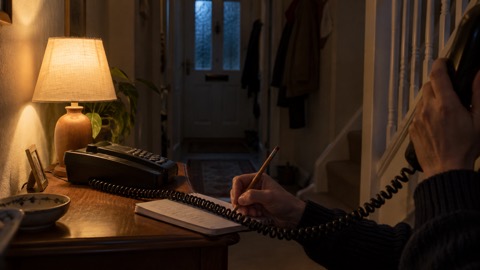
Greater Manchester also encourages residents to speak with their family, friends and neighbours about preparing for an emergency and to understand what support they and their neighbours might need24. That conversation is the foundation of everything else: a good neighbour scheme or a neighbourhood phone tree built now becomes the communication network the plan relies on later. If you are starting a group from scratch, setting up a local emergency group covers members, roles and first steps.
Writing the plan: risks, skills and resources
Argyll and Bute's guidance walks planners through deciding who the plan is for, getting advice, thinking about the risks to your community and your local skills, knowledge and resources, involving people who can help, and writing and testing the plan7. Start with risk. Read your local Community Risk Register: the Scottish Fire and Rescue Service advises that you should use this information in conjunction with local knowledge and advice from the emergency services agencies, local health boards and your local authority25. The register tells you what the professionals rate as likely; local knowledge tells you which field floods first and which lane becomes impassable in snow.
Then inventory what the community has. Skills: who holds a first aid certificate, who can drive a 4x4, who has keys to the hall. Resources: defibrillators, generators, tractors, kitchens. People: who is vulnerable, who lives alone, who depends on electricity for medical equipment. Nottinghamshire County Council, which provides guidance to Parish Councils and other community groups to help communities prepare for emergencies26, also writes and reviews emergency plans as part of its own role26, and can usually advise on what a parish plan should contain.
Two practical points on scope. First, a plan is normally specific to your community council area, but it can be split into local areas if required7, which suits large or scattered parishes where each hamlet has its own hall and volunteers. Second, keep the plan's focus on the welfare of people and on helping to maintain local infrastructure, such as roads2, rather than drifting into tasks that belong to the emergency services. For the specific jobs volunteers can take on, severe weather tasks for community groups and volunteering in emergencies list what is realistic.
Activating the plan when an emergency starts
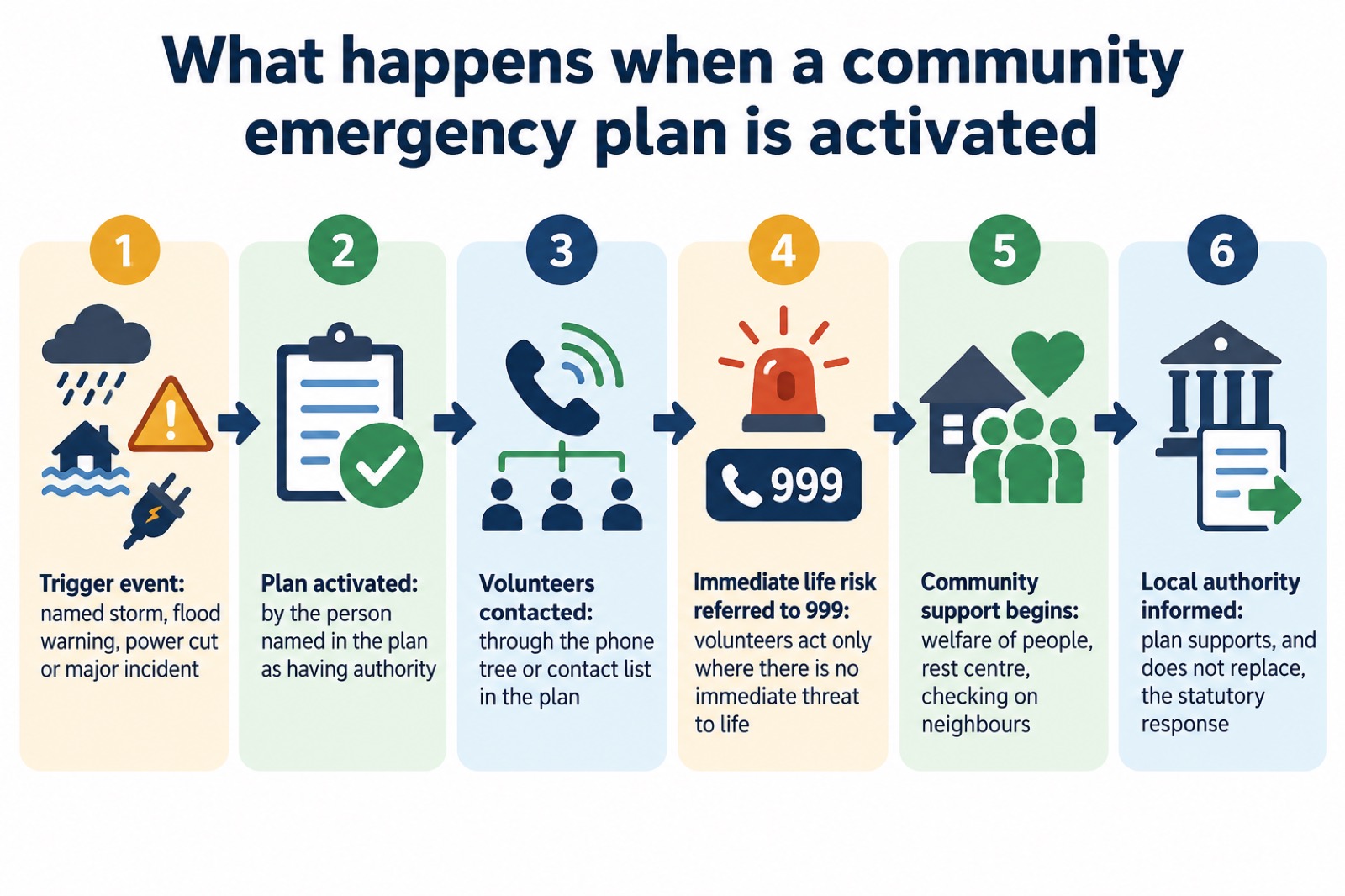
A plan that nobody knows how to trigger is useless. Argyll and Bute's guidance covers helping you decide how and when to activate your plan and manage communications, and points to consider when the plan is activated7. Decide in advance: who has the authority to activate it, what events trigger activation (a named storm warning, a flood warning, a prolonged power cut), and how volunteers are contacted. The narrow question of triggers is covered in detail in when to activate a community emergency plan.
Keep the plan's role in proportion. Volunteers help where the incident does not pose an immediate threat to life10; anything that does pose such a threat is a matter for the 999 services, and the plan should say so in its first lines. A parish emergency plan may be activated if emergency services are overwhelmed5, which means the plan's most valuable work is often in the hours before statutory help can reach everyone, or in the aftermath when the emergency services have moved on.
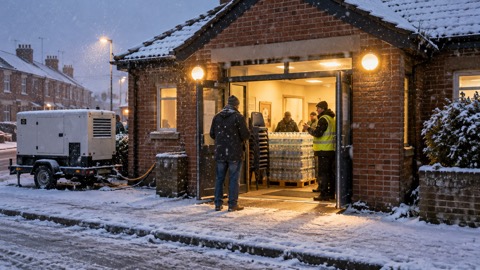
Communication is the other half of activation. The North Yorkshire template includes a Communication section and emergency contact details among its 11 sections21, and the plan should name both the internal network (who calls whom) and the external one (the local authority's emergency planning duty officer, the flood warning line, local radio). A community emergency hub, a known physical point where information is shared, is one way to give residents a single place to go when phones and internet are unreliable.
Testing, reviewing and learning
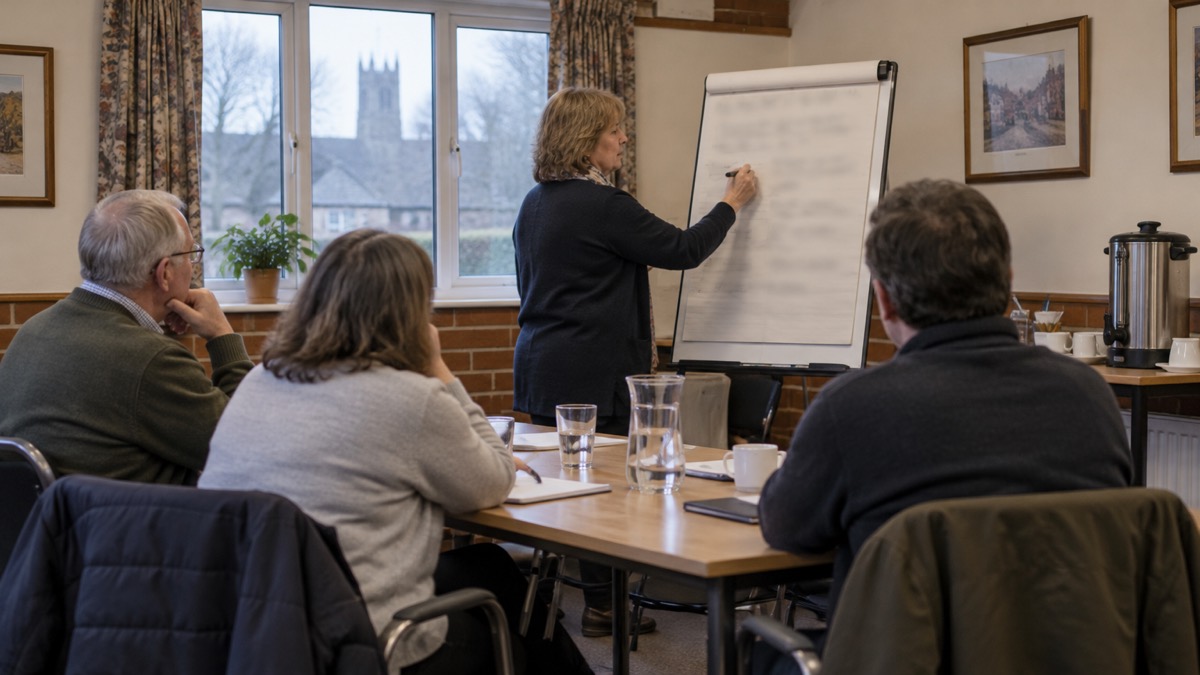
A plan written once and filed away decays quickly: people move, phone numbers change, the hall gets a new keyholder. Argyll and Bute's guidance advises on how to practise and check your plan, and who to keep in touch with when you are doing this7, and on deciding on your actions after your plan is used in an emergency situation, and how to learn from the experience7. The North Yorkshire template is explicit that an annual exercise is a great way to test your plan, as a tabletop discussion or live run through, with the aims of testing assumptions, keeping people familiar with their role and seeing if updates are needed21.
A tabletop exercise costs nothing but an evening: the group sits down with a scenario, perhaps a three day power cut in winter, and talks through who does what. A live run through might involve opening the rest centre for an hour or walking the phone tree to time how long a warning takes to reach every household. After any real activation, hold a review while memories are fresh, record what worked and what did not, and update the plan. The template's final section covers plan updates and data protection21, which matters because a community plan holds personal information about vulnerable residents and must be stored and shared lawfully. The full testing cycle is set out in how to test and review a community emergency plan.
Sharing the plan with the emergency services
A plan the statutory responders do not know about is a plan they cannot use. The Scottish guide advises who to talk to when making a plan: as well as your local authority, you may want to talk to your Community Council or local councillors, as well as local organisations like the Police, Fire and Rescue Service, Ambulance Service, and voluntary organisations active in your area such as mountain rescue teams, St Andrews First Aid, the Royal Voluntary Service or the British Red Cross22. Sharing the finished plan with the local authority's emergency planning team means it can be referenced during a real incident, and the liaison roles named in the plan have someone to liaise with21.
This is a two way relationship. The local authority's emergency planning department works in close collaboration with the emergency services, health, other government agencies, neighbouring authorities, volunteer groups and others17, and community plans are part of that wider network. In Ceredigion, residents can contact the council's community cohesion unit at ccu@ceredigion.gov.uk to complete their own community or family emergency plans27, and a resilient community there is described as one that has a community emergency plan27. Ask your own authority whether a similar contact point exists; most do.
Funding, support and where to get help
You do not have to write a plan alone, and you do not have to pay for a template. Local authorities across the UK provide free support: Nottinghamshire County Council provides guidance to Parish Councils and other community groups to help communities prepare for emergencies26; Argyll and Bute Council has created templates and step by step guidance20; Somerset Council provides templates for personal, parish and business emergency plans5 and asks residents who can offer help during emergencies to contact their parish or town council6. Somerset Council will also give talks on emergency planning and community self help on request6. In Belfast, email the council's community safety team for more information if you are thinking about starting a community emergency plan in your area23.
One specialist area where support and money both exist is private water supplies, a real risk for rural parishes. The Scottish Government provides funding to local councils to deliver the private water supply grant scheme, offering up to £800 to eligible people improving their existing private water supply28. Every supply owner and user should have a contingency plan for an alternative supply in cases of emergency29, because Somerset Council and mains water companies are not responsible for providing an emergency supply of water to private supply owners29, and Cornwall Council cannot provide emergency water supplies for private water sources30. The Drinking Water Inspectorate advises that where a contingency plan is not in place there is no obligation on the local authority or water company to provide an alternative supply, except where the local authority considers the circumstances pose a danger to life or human health26. For shared and community supplies, the relevant persons should establish agreements, preferably written and legally binding, setting out clear accountabilities and responsibilities for running the supply, including costs and contingency arrangements26.
For community groups seeking money for equipment or engagement, funding for local resilience groups sets out the grants available and how to apply. And for the individual household that wants to be ready before the parish plan exists, getting started: preparing your household for an emergency is the place to begin.
Sources (31)
- Community resilience in Herefordshire, Herefordshire Council, 2026
- Community resilience: Parish and Town Councils, Nottinghamshire County Council, 2026
- Emergency planning and the Civil Contingencies Act, Scottish Borders Council, 2026
- Community response planning, West Yorkshire Prepared, 2026
- Preparing for emergencies: parish plans, Somerset Council, 2026
- Preparing for emergencies, Somerset Council, 2026
- How to make a community emergency plan, Argyll and Bute Council, 2026
- Community resilience, Buckinghamshire Council, 2026
- Community emergency planning guide: why, Ready Scotland, 2026
- How emergency services can help, Surrey County Council, 2016
- Home Emergency Plan template, Isle of Anglesey County Council, 2020
- Civil contingencies, Argyll and Bute Council, 2026
- Local emergency arrangements, Office for Nuclear Regulation, 2026
- Warwickshire Resilience Forum, Warwickshire County Council, 2026
- The Essex Community Risk Register, Essex Resilience Forum, 2026
- Civil emergencies and emergency plans, Isle of Anglesey County Council, 2026
- Emergencies: role of the local authority, Llangattock Community Council, 2023
- Flooding: developing our knowledge, SEPA, 2026
- National emergencies, GOV.UK, 2026
- Community resilience, Argyll and Bute Council, 2026
- Community Emergency Plan template, North Yorkshire Local Resilience Forum, 2025
- Community emergency planning guide: who to work with, Ready Scotland, 2026
- Emergency planning, Belfast City Council, 2026
- Prepare your community, Greater Manchester Combined Authority, 2026
- Community risk register, Scottish Fire and Rescue Service, 2024
- Managing insufficiency of private water supplies, Drinking Water Inspectorate, 2025
- Community resilience, Ceredigion County Council, 2026
- Private water supplies policy, Scottish Government, 2026
- Private water supplies, Somerset Council, 2026
- Private water supplies, Cornwall Council, 2026
- Managing insufficiency of private water supplies, Drinking Water Inspectorate, 2025
 Emergency Hub Kit Checklist
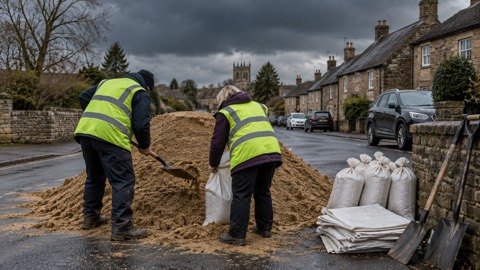 Severe Weather Tasks for Groups
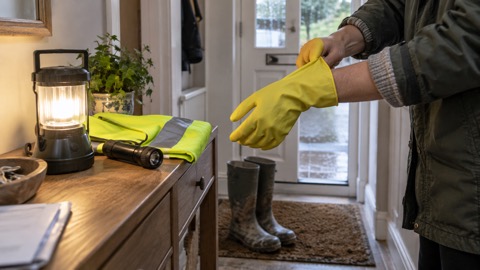 Flood Warden Checklist
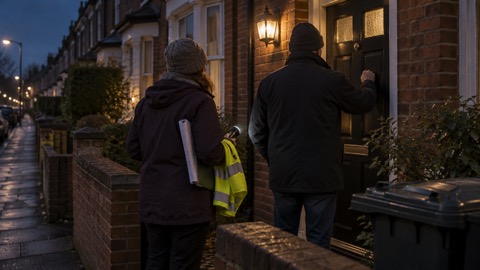 Setting Up an Emergency Group
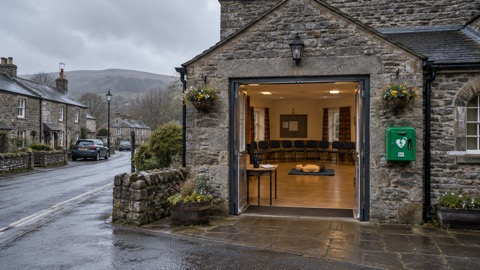 Volunteering in Emergencies
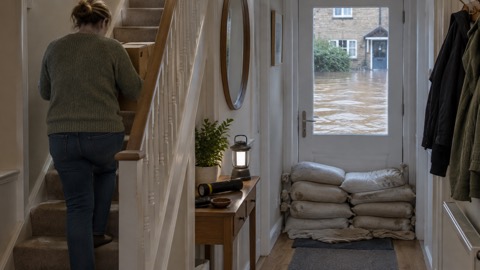 What Volunteers Can Safely Do
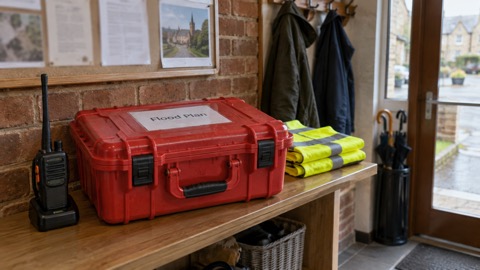 Community Flood Plans
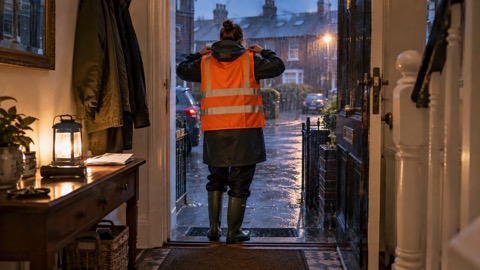 Flood Wardens
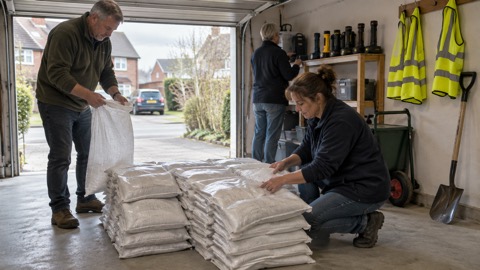 Starting a Flood Action Group
 Clearing Snow and Ice
 Community Emergency Hubs
 Checking Vulnerable Neighbours
 Neighbourhood Phone Trees
 Registering and Looking After a Village Defibrillator on The Circuit
 Funding Resilience Groups