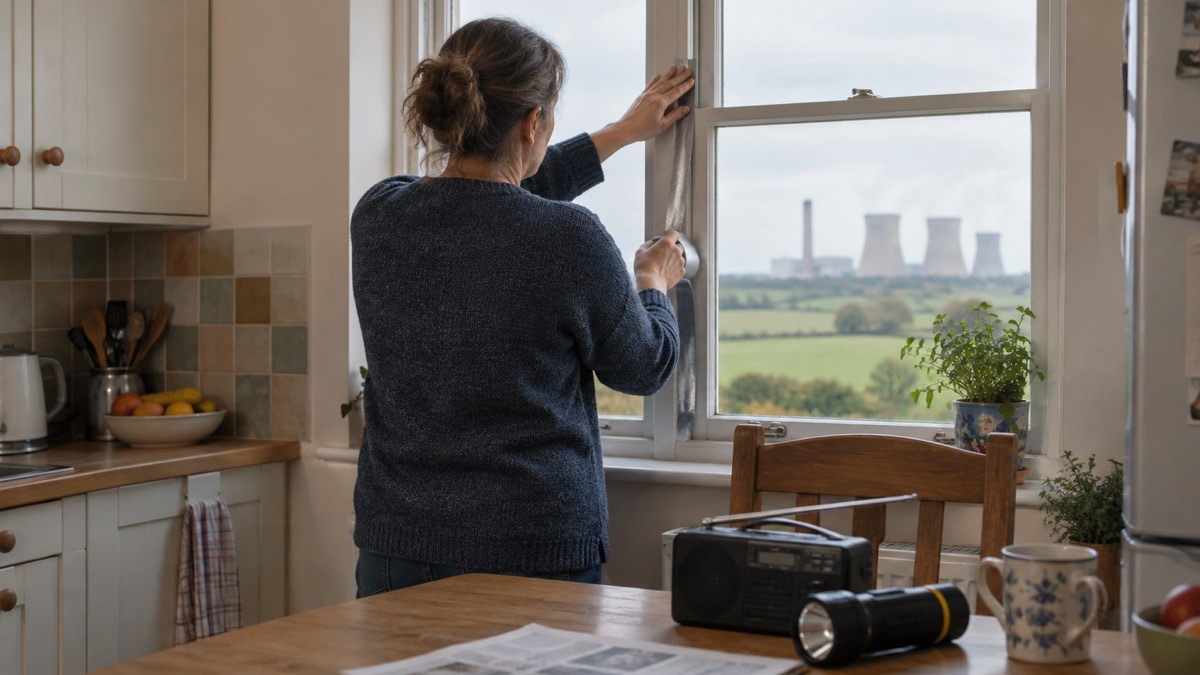
If you are near a radiation emergency, the first thing to do is go indoors and stay there. Close the doors and windows, keep away from external walls, and wait for the emergency services to tell you what happens next. The decision to shelter or to evacuate is not yours to make: it is taken by the agencies responding to the incident, based on a risk assessment of the emergency and the environment at the time1.
That matters because radiation cannot be seen, heard, smelt, tasted or felt. Everything will look normal and you will not see, smell or feel anything different, so waiting for a sign before acting wastes the time that matters most3. Follow the advice you are given even if you cannot tell that anything has happened3.
The national drill is simple: go in, stay in, tune in. Go indoors as soon as you can, close the doors and windows, and stay as far away from external walls as possible3. You may need to stay indoors for one to two days3. If you are later advised to leave, you will be told where to go and what to take, and the council will make special arrangements for anyone who has nowhere to stay5.
Stay indoors unless you are told to leave
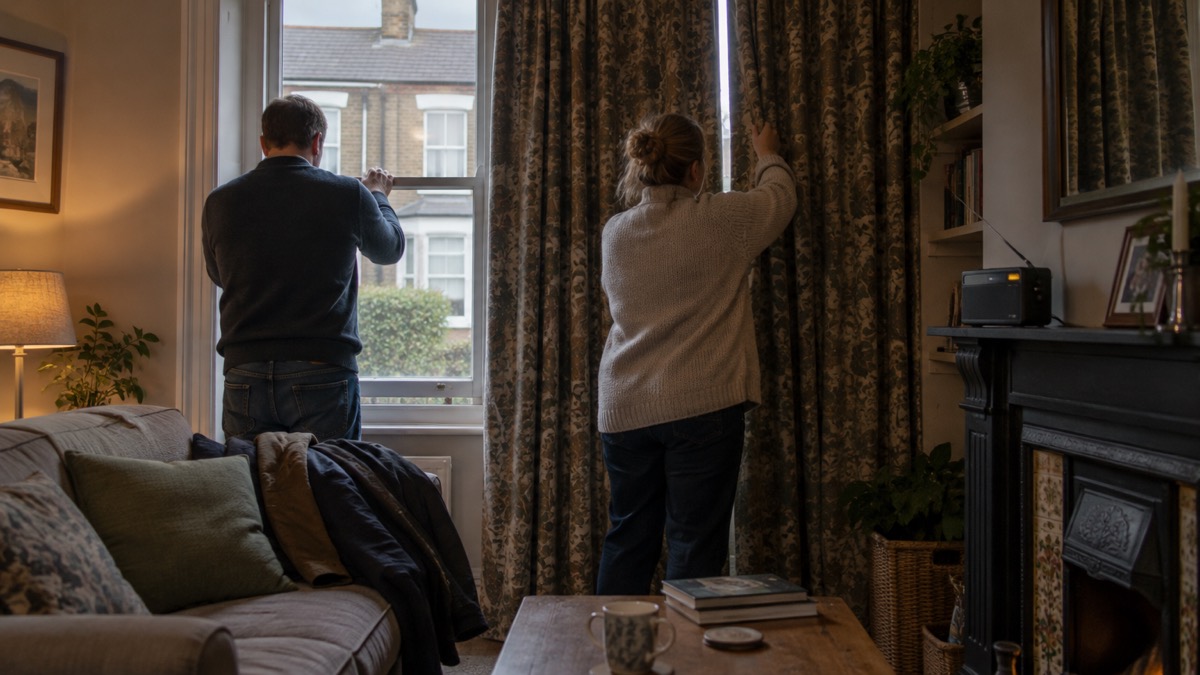
The core instruction for a radiation release is to go indoors unless you are asked to leave by the emergency services6. Once inside, close all doors, windows and vents, put out all naked flames such as pilot lights, switch off gas supplies, and put away or cover all fresh food6. Have your emergency provisions ready, use the phone only if you need to, and stay indoors until you know more6. Tune in to a local radio or TV station6.
The same pattern appears across the UK. In Southampton the drill is "GO IN, STAY IN, TUNE IN": go indoors, stay there, and follow instructions on local radio, TV or social media8. West Midlands guidance says to go inside a safe building, stay inside until you are advised to leave, and tune into local radio, TV or social media for the latest updates9. Warwickshire's advice is to stay in until you are told otherwise by the emergency services or local radio11. Shropshire's emergency planners say the decision to shelter in place or to evacuate will be made by the agencies responding to the emergency, based on a risk assessment of the nature of the emergency and the environment at the time2.
"Radiation cannot be seen, heard, smelt, tasted or felt, so it is important that you follow the advice given to you, even if you can't tell that anything has happened."
A few practical points decide how well sheltering works. Choose a room with as few windows and external walls as possible, and take pets, medication and your phone with you. Keep the radio on and your phone charged. Do not go outside to investigate, to fetch children from school, or to check on neighbours: the emergency services will tell you when it is safe. If you are outside and are alerted to a chemical emergency nearby, shelter where you are: go in, stay in, tune in2.
Sheltering at home: usually one to two days
You may need to stay indoors for one to two days3. Some local guidance plans for longer: Birmingham's advice says that in rare but serious situations you may need to stay indoors for up to 3 days12. The two figures are not in conflict so much as a range: plan for a couple of days, and be ready for up to three.
That is why the household supplies you keep matter. Central Bedfordshire recommends a Home Emergency Kit so you can look after yourself and your family for at least 7 days of disruption13. Birmingham advises keeping enough supplies to meet your household's needs for at least 72 hours12. A sensible reading is to hold at least three days of food, water and medicines, and to build towards a week if you can.
What you need indoors for a sheltering period:
- Water and food for every person and pet, with a manual can opener and food that needs no cooking13
- Medicines you take regularly, plus a first aid kit
- A battery or wind-up radio, torches and spare batteries, since you will be relying on broadcasts6
- Phone charger and power bank, so you can receive alerts and updates
- Baby food, nappies, toys and books if you have young children5
- Pet supplies, since pets stay with you indoors
If you have a gas supply, the advice to switch it off and put out pilot lights is about naked flames, not about heating your home during the incident6. The Health and Safety Executive's gas safety guidance is the reference for anything involving gas appliances, and you should not attempt to relight appliances until you are told it is safe14.
If you are advised to evacuate: where to go and what to pack
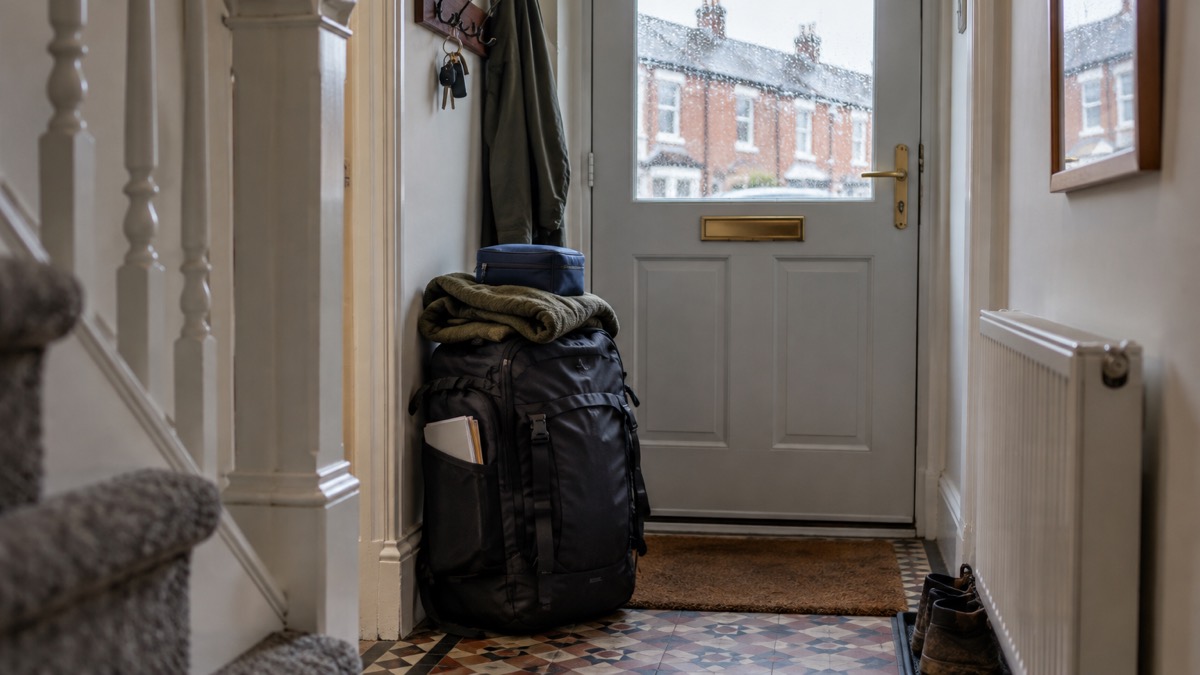
Evacuation is the exception, not the default. Portsmouth's residents' booklet is blunt: the best thing to do is stay at home, and you will be much safer indoors with your windows and doors shut5. If you are advised to leave, stay with friends or relatives outside the affected area, or the council will make special arrangements; use your own transport or transport will be provided; and entry to evacuated areas will be carefully controlled until the emergency has ended5.
If you are asked to evacuate your home, you can go to relatives, friends, a community place of safety or a local authority Rest Centre15. Take your pets with you16. If there is time, take any medication, warm clothes, any special foods, personal documents and valuables with you; before you leave, make sure fires are off or out, switch off gas and electricity, and lock up doors and windows17. Tell a family member or friend where you are going and how you can be contacted18.
Portsmouth's booklet sets out a packing list for a large bag or suitcase5:
- Warm clothing and bedding
- Medicines or special food
- Baby food, clothes, nappies, toys and books
- Private documents and valuables
- Fires out, appliances switched off and unplugged, doors and windows locked
Evacuation may last some time, ranging from a few hours to several months, so take your emergency pack rather than a single overnight bag17. In a large scale or pre-planned evacuation, a Strategic Rest Centre may be used to support people who have left their homes19.
Where official instructions come from: TV, radio and social media
You will be informed of what you need to do through a number of channels that may include local radio, social media, public address systems, or someone knocking on your door2. Local radio stations, TV and internet news sources are used by emergency responders to issue specific advice20. Check official sources including the websites and social media accounts of the emergency services, government agencies and local councils, plus local radio, TV and the internet7. Watch TV, listen to the radio or check the internet often for official news and instructions as they become available21.
| Channel | What it is good for | What to watch for |
|---|---|---|
| Local radio | Fast, works on a battery set when power is out | Repeated official announcements and the all clear20 |
| Local TV | Pictures and press conferences | Advice from local emergency partners22 |
| Council and emergency service websites and social media | Detailed instructions, helpline numbers, rest centre locations | Updates as the incident develops7 |
| Public address systems and door knocking | Immediate warning in the affected area | Instructions to shelter or leave2 |
The Scottish Government's Ready Scotland guidance makes the same point for households north of the border: check local radio stations, local TV broadcasts and trusted news sources such as your local emergency services website for specific advice from local emergency partners22. In Northern Ireland, Belfast City Council's advice is to follow the advice of the emergency services23. The channels differ in name, not in principle.
Living near Portsmouth naval base: the 1.5km zone
If you live near Portsmouth naval base, you may already have received a radiation emergency booklet through your door. The booklet was distributed to all households within a 1.5-kilometre radius of the nuclear berths, in accordance with emergency regulations5. The Detailed Emergency Planning Zone is 1.5km from the berth24. Legislation requires people living up to 1.5km away from an operational berth to be given prior information about a nuclear emergency8.
Around that sits a wider area. The Outline Planning Zone runs within 5km (3 miles) of the naval base's operational berths, including anchorages in the Solent24. Protective actions for people in the Outline Planning Zone would only be activated if it was determined the risk from the event extended beyond the 1.5km area for which detailed emergency plans already exist24. The zones are shown as circles on maps, but the actual zone goes out to the nearest natural or landscape boundary24.
| Zone | Distance | What it means for you |
|---|---|---|
| Detailed Emergency Planning Zone | 1.5km from the berth | You receive prior information and detailed plans cover you8 |
| Outline Planning Zone | 5km (3 miles) of the operational berths, including Solent anchorages | Protective actions only if the risk extends beyond the 1.5km area24 |
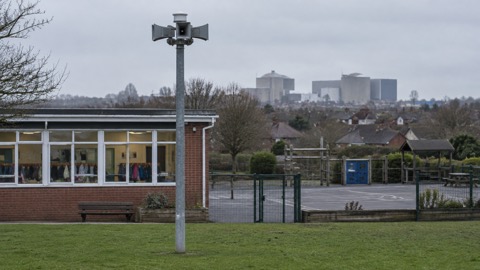
Schools have their own arrangements. Schools more than 1.5km from the naval base will be told about any incident by the council and will look after any pupils living within the 1.5km zone whose parents cannot collect them5. St George's Primary School, Portsmouth Grammar School and Top Tots Day Nursery in the John Pounds Centre hold information for all children and staff and will look after children in an incident5. Portsmouth's guidance is explicit: going to collect your children may expose you and them to radiation, and the school will contact you when it is safe for children to leave24. For the wider picture of how these zones work at other sites, see Living Near a Nuclear Site: Emergency Planning Zones and Information Booklets and Radiation Emergency Plans at Portsmouth, Devonport and Southampton.
After the emergency: keep following the news
The emergency does not end when the release stops. Keep listening and looking for announcements and updates on the news, watch for long-term safety information in the news and in leaflets, and wait for the all clear announcement5. Follow the advice of the emergency services23. The UK Health Security Agency's guidance on what to do in a radiation emergency also covers evacuations, pets, use of stable iodine, and safety advice on food and water3.
Radiation emergencies are rare events, and the areas most immediately affected will generally be those within a few miles of where the emergency happened1. That is why the response is local and why your local radio and council are the channels that matter. If you are outside and are alerted to a chemical emergency nearby, shelter where you are: go in, stay in, tune in25.
If you need extra help, tell your council's emergency planning team in advance, and ask about accessible formats such as large print. For households with additional needs, see Extra Help in an Emergency: Older, Disabled and Medically Dependent Households. For the first hour at home, the Radiation Emergency Checklist: The First Hour at Home sets out the steps in order, and Go In, Stay In, Tune In: Sheltering From a Chemical or Radiation Release explains the drill in full.
Sources (25)
- What to do in a radiation emergency, GOV.UK, 2024-09-10
- What happens in an emergency, Shropshire Council, 2026-10-29
- Hazardous materials incident, Prepare (Cabinet Office), 2026-10-13
- Major accident hazards and emergencies, Merthyr Tydfil County Borough Council, 2026-10-29
- REPPIR Residents booklet 2024, Portsmouth City Council, 2024-08
- Release of gas, toxic chemical or radiation, City of Edinburgh Council, 2026-10-29
- Find and share information in an emergency, Ready Scotland, 2026-03-24
- Radiation emergency leaflet 2024 residents, Southampton City Council, 2024-07
- Community Risk Register March 2024, West Midlands Local Resilience Forum, 2024-03
- Community Risk Register December 2023, West Midlands Local Resilience Forum, 2023-12
- Emergency advice for residents: Go in, stay in, tune in - Warwickshire County Council, Warwickshire County Council
- Are you ready, Birmingham City Council, 2026-05-06
- Emergency kits and grab bags, Central Bedfordshire Council, 2026
- Gas safety FAQs, Health and Safety Executive, 2026
- Preparing for emergencies, Somerset Council, 2026-09-17
- Get help and advice in an emergency, Create an evacuation plan - Lincolnshire County Council, Lincolnshire County Council
- Emergency preparations you can do, Moray Council, 2026-10-29
- Home emergency plan, Royal Borough of Windsor and Maidenhead, 2025-10
- Humanitarian assistance and evacuations, Cornwall Council, 2026-04-01
- Emergency advice, London Assembly, 2026-10-26
- Get help and advice in an emergency, Lincolnshire County Council, 2026-10-29
- Be informed about hazards, Prepare (Cabinet Office), 2026-10-22
- Emergency advice, Belfast City Council, 2026-10-29
- Radiation emergency guide resident leaflet November 2023, Portsmouth City Council, 2023-11
- Community Risk Register 2026, Surrey County Council, 2026
 Bomb Threat Calls
 Radiation Checklist First Hour
 Power Cut Kit Checklist
 Where to Hide in an Attack
 When Armed Police Arrive
 Young People in a Terror Attack
 Family Caught in an Attack
 Suspicious Letters and Parcels
 Reporting Terrorist Content
 Corrosive Attack First Aid
 Tap Water Safety
 Collecting Children at School
 Food After a Nuclear Accident
 Martyn's Law at Venues
 Sellafield Emergency Advice