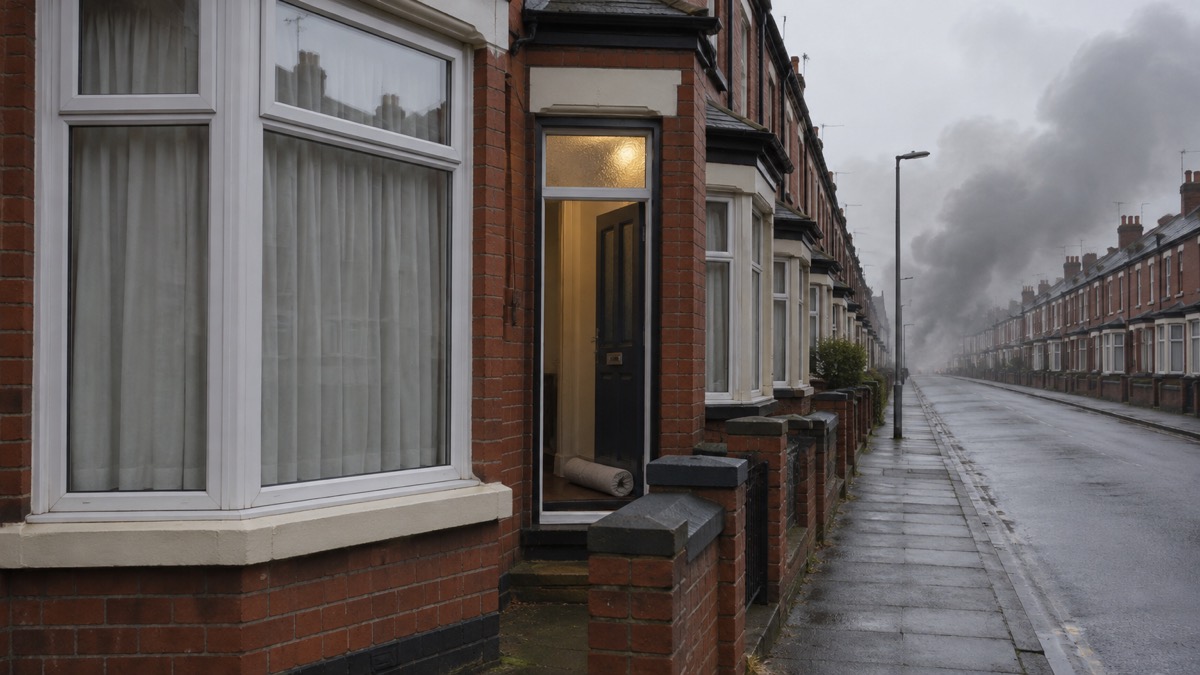
If a chemical leak, a fire giving off toxic smoke, or a radiation emergency happens near your home, the official advice across the UK is the same three words: go in, stay in, tune in. If you are not involved in the incident but are close by, or you believe you may be in danger, go indoors as soon as you can, close all windows and doors, stay there until the emergency services tell you otherwise, and listen to local radio, TV or official sources online for public information and advice1.
The advice is deliberately simple, because in the first minutes of a release the emergency services will not yet know exactly which streets are affected or how far the plume has travelled. Going indoors immediately, rather than trying to drive away or watch from the street, is the fastest way to put walls between you and whatever is in the air. For a chemical emergency, official guidance says you may be advised to stay inside for a number of hours2. For a radiation emergency, official guidance says you may need to stay indoors for one to two days3.
This page explains each step in order: what to do the moment you hear a warning, how long sheltering may last, how to stay informed, what to do about children at school, why radiation gives you no visible warning, and the important exceptions where you should not go indoors at all, above all fire.
Go in: get indoors and close everything
The first step is the most important one. If you are told you are near a radiation emergency, official guidance says the most important thing to do is go indoors as soon as you can and stay there, close the doors and windows, and stay as far away from external walls as possible3. The same instruction appears in local guidance across the country: go indoors and close all windows and doors10.
Closing the building up is what makes sheltering work. Windows, doors and any vents that draw in outside air are the routes by which a chemical plume or radioactive material in the air reaches you indoors. Shut them all as soon as you are inside. If you have pets outdoors, bring them in with you if you can do so quickly and safely.
Where you sit inside matters less than getting inside quickly, but the guidance for radiation emergencies adds one detail: stay as far away from external walls as possible3. An inner room, or a room on the far side of the building from the incident, puts more of the building between you and material that has settled outside. Choose a room you can stay in comfortably, with your phone, a radio and some water if you can.
If you are outside and are alerted to a chemical emergency nearby, you should shelter: go in, stay in, tune in2. Do not delay to collect things, and do not travel towards or past the incident. The nearest safe building is the right one, whether that is your home, a shop, an office or a public building.
Stay in until the emergency services say otherwise
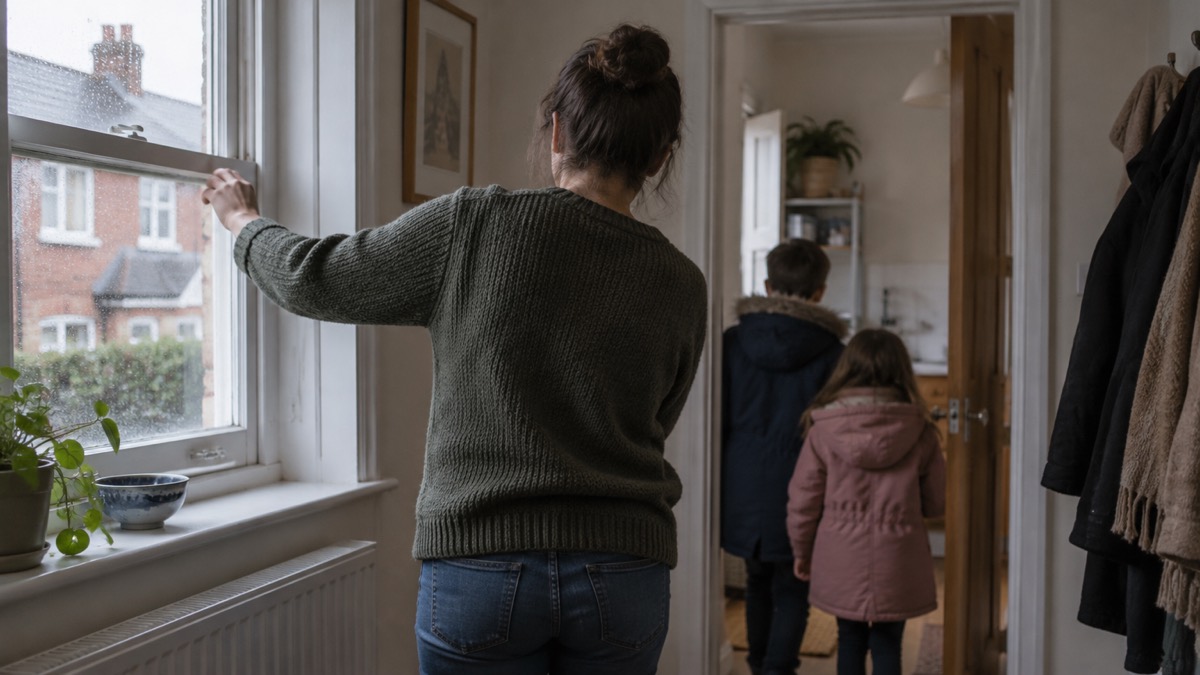
The second step is patience. Stay in means remain indoors as long as it is safe to do so and wait until the emergency has passed6. Councils and resilience forums across England, Scotland and Wales phrase it the same way: stay in until you are advised to do otherwise6, stay indoors until you know more12, stay indoors until you are advised to leave by the emergency services9. In emergency incidents you may be instructed to go in, stay in and tune in until it is safe to leave13.
How long that turns out to be depends on what has been released and on the weather, because the distance from the release and the direction affected may change over time4. The emergency services will update which areas should shelter and for what duration as the picture becomes clearer4. Until they name your area as clear, assume the advice still applies to you.
| Type of emergency | How long you may be told to stay in | Who says it |
|---|---|---|
| Chemical emergency | A number of hours | Official public guidance on chemical emergencies2 |
| Radiation emergency | One to two days | Official public guidance on radiation emergencies4 |
| Any major emergency | Until the emergency services advise you to leave | Local resilience guidance6 |
Prepare for that wait before anything happens. A household that can feed itself, light itself and stay warm indoors for a day or two without leaving is a household that can follow this advice comfortably. Our pages on emergency kit, water, food and staying informed set out what to have ready, and getting started pulls it together into a first plan.
One thing not to do during the wait: do not go out to collect family or friends at school, nursery or hospital if you have been advised to stay indoors. They will be told to stay where they are until it is safe to move2.
Tune in: local media carry the instructions
Tune in means listen to local radio stations and TV channels, and check the emergency services' social media channels, for the latest information6. Local radio stations, TV and internet news sources are used by emergency responders to issue specific advice14. During an emergency, tune in to your local radio or TV and monitor social media15, and keep updated via local radio stations16.
The reason local radio matters so much is that it is the channel the responders themselves use. When public information and advice from the emergency responders is broadcast, it goes out on local radio, TV or the internet10. In a major incident, listen for updates and weather reports on your local radio stations17. Local radio and press also carry more information and advice as an incident develops18.
| Where to tune in | What it gives you |
|---|---|
| Local radio | The responders' own public information and advice10 |
| Local and national TV | Updates and specific advice for affected areas6 |
| Emergency services' social media | Latest updates and information6 |
| Official sources online, such as GOV.UK | National advice in a radiation emergency4 |
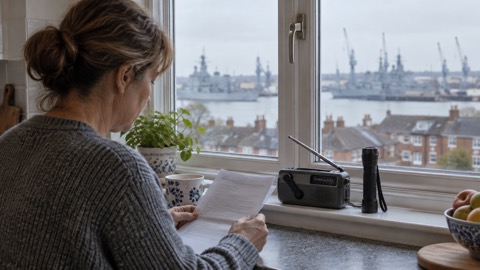
In a radiation emergency, follow the go in, stay in, tune in advice from the UK Health Security Agency: go indoors as soon as you can, stay there, and monitor the news and follow official advice on GOV.UK4. Households may be asked to go in, stay in and tune in to local or national radio stations, or check official sources of information online20. Keep a battery or wind-up radio in the house so you can receive this even if the power is out, and see our staying informed page for what to keep ready.
Stay alert and report concerns while you follow the news21. If people are injured or in danger, contact 99922.
Leave children at school unless you are told to collect them
This is the instruction parents find hardest, and it is stated firmly in official guidance across the UK: do not collect children from school unless you have been told to do so, because they will be properly cared for1. The same advice is given for chemical accidents: do not collect your children from school unless instructed to do so, as they will be looked after9. More generally, do not go out to collect family or friends at school, nursery or hospital if you have been advised to stay indoors; they will be told to stay where they are until it is safe to move2.
The reason is arithmetic as much as care. A school is a large building that can be closed up quickly, with staff already responsible for the children. Every parent who drives towards the school adds traffic to roads the emergency services need, and adds people to the outside air at exactly the moment sheltering matters most. The children are safer inside the school than in a car queue.
In an emergency around a nuclear site such as Sellafield, the arrangements are explicit. It may not be safe to collect children from school, and they will be looked after as a priority group, either at the school or evacuated to a safe place where they will be looked after by the school's staff and those responding to the emergency23. Our page on children at school in a radiation emergency covers this in more detail.
What you can usefully do is make sure the school has up-to-date contact details for you, and that you know how the school would tell you about an emergency. Then, if an incident ever happens, you tune in and wait for the school's or the emergency services' instruction rather than setting out.
With radiation, everything looks normal
A radiation emergency is unusual in one respect that changes how you must behave: you will get no warning from your own senses. Everything can look and feel completely normal, because you cannot see, smell or taste radioactive material in the air. That is why the official advice rests entirely on heeding warnings: sirens, phone alerts, radio and TV, rather than on judging for yourself whether the air is safe. Our pages on site warnings and how radiation is monitored explain how you would be alerted near a nuclear site and how readings are tracked afterwards.
Sheltering works, and works well. Official guidance on nuclear emergencies states plainly what going indoors achieves:
"This provides a high degree of protection from breathing in radioactive material in the air. It also gives protection from direct radiation from radioactive material on the ground."
That is the UK Government's public guidance on nuclear emergencies5. Sheltering reduces the effects of a radioactive or chemical release, which is why, in an emergency around a site such as Sellafield, the best thing to do is go indoors and stay there23.
Because you cannot sense the danger, the discipline of the three words matters more, not less. Go in at the first warning, close everything, stay away from external walls3, and stay in for as long as you are told, which may be one to two days4. Do not step outside to look, and do not open windows to check. If you want to understand the wider picture, our pages on what to do in a radiation emergency, stable iodine tablets and whether to shelter or evacuate go into each question in depth.
When you should not go in: fires and other exceptions
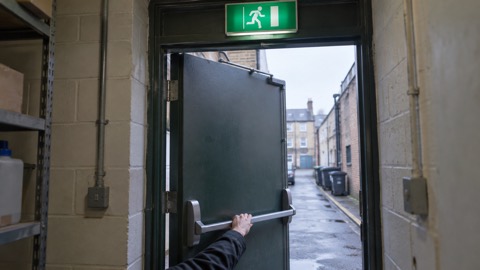
Go in, stay in, tune in is advice for when the danger is outside. It is not universal, and official guidance says so directly: there are always going to be particular occasions when you should not go into a building, for example if there is a fire1.
The clearest exception is fire in the building you are in or thinking of entering. The fire and rescue services' advice is the opposite three words: get out, stay out and call 999. Once you are out, stay out24, and do not go back into the property until the fire service tells you it is safe to do so25. If there is someone still inside, wait for the fire and rescue service to arrive; you can tell them about the person and they will be able to find them quicker than you26.
| Situation | The right advice | Who gives it |
|---|---|---|
| Danger outside, such as a chemical or radiation release | Go in, stay in, tune in1 | |
| Fire in your home | Get out, stay out, call 99924 | |
| Someone still inside a burning building | Wait for the fire and rescue service and tell them about the person26 | |
| Fire elsewhere in your block of flats | Stay in your flat unless directly affected by heat, smoke or fire, or told to get out27 |
In a high-rise or purpose-built block, the advice has its own logic. Only leave your flat if you are directly affected by heat, smoke or fire, or if the Fire and Rescue Service or Police tells you to get out27. If there is a fire but not in your flat, go to a window and wait for help27. If you are trapped by fire at home, the Scottish Fire and Rescue Service advises: try to get everyone into one room, pack clothes, cushions, pillows or towels around the door to keep smoke out, open a window and shout "Fire" until someone phones the Fire and Rescue Service, and keep leaning out of the open window for fresh air until the firefighters arrive28. A safe room should have a window and a phone24.
If your own clothing catches fire, the fire and rescue services teach one drill: stop what you are doing and stay very still, drop to the floor, and roll backwards and forwards until the flames are out29. Running feeds the flames. Our home emergencies page covers fire prevention and escape planning for the household in ordinary times.
The judgement in the moment is simple: is the danger outside, or is my building itself unsafe? Outside danger, go in. Building on fire, get out. When in doubt, follow the emergency services' instruction rather than improvising.
Sheltering in place for any danger outside
Although this page is written around chemical and radiation releases, the same three words are the standard UK response whenever the danger is outside and it is not safe to go out. Local guidance across the four nations states it in almost identical terms: if the danger is outside, go in, stay in, tune in30. In the case of most major emergencies, the simple advice is to go inside, stay inside, and tune into local radio22. The advice for most emergencies is normally go in, stay in and tune in12.
That means the same household preparations serve many different incidents. A chemical leak from a hazardous industrial site, toxic smoke from a large fire, a radiation emergency, or severe weather that makes travel dangerous: in each case the safest place may be your own closed-up home, with local radio on. Pollution incidents follow the same pattern: follow the advice given by the organisations responding, for example stay indoors, close windows, and tune in to local radio or trusted social media33.
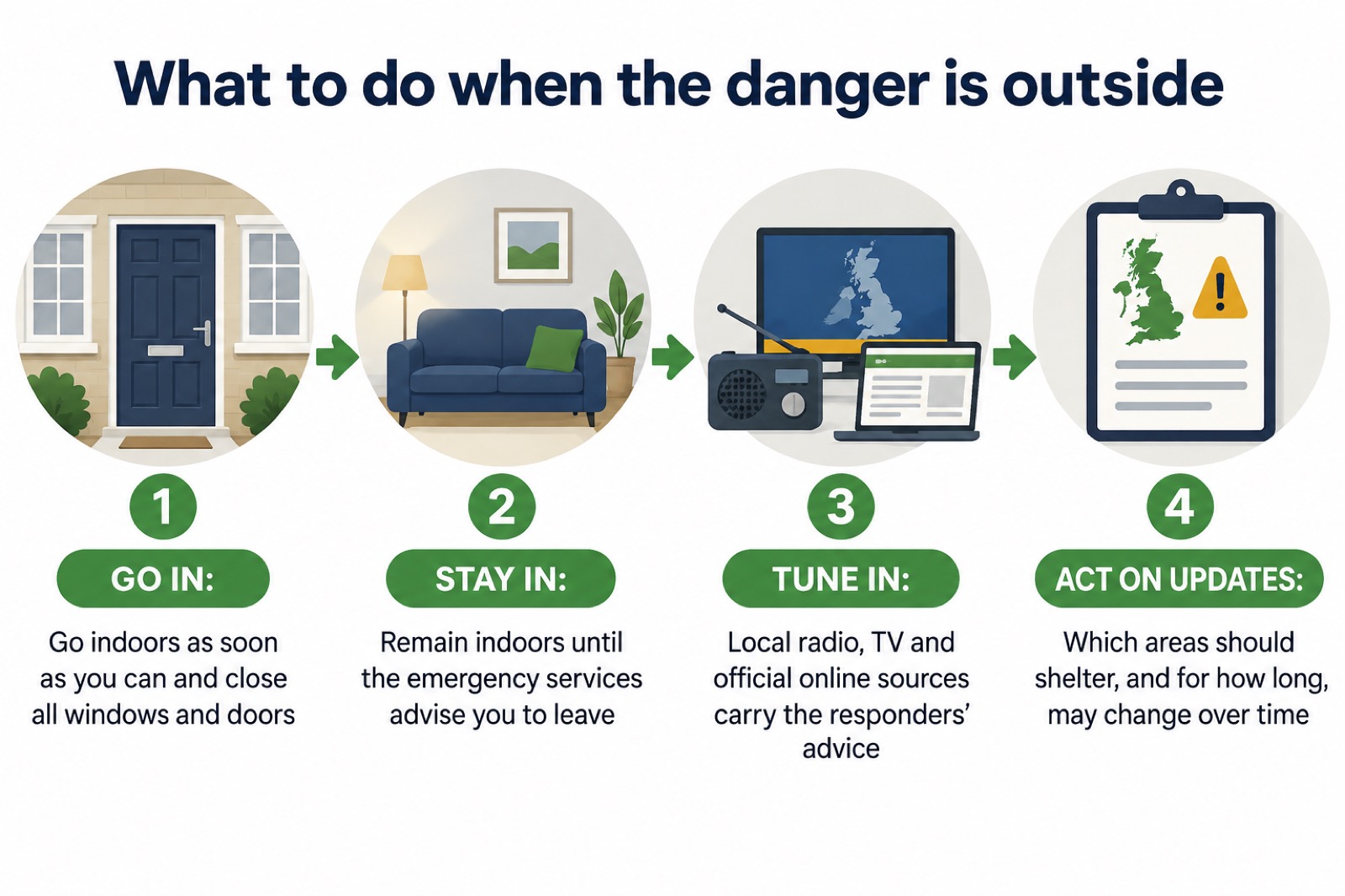
One habit worth building now is knowing, before any emergency, which local radio station serves your area and how to find it on a battery radio. Households that have done that once tune in within seconds rather than minutes. See getting started for the wider household plan, and staying informed for radios, phone alerts and keeping devices charged.
Guide, Shelter, Report: the principles for a terrorist incident
For a terrorist incident, the official response principles have their own name: Guide, Shelter, Report. GSR provides simple dynamic response principles to help people and organisations respond effectively during a terrorist incident, and being aware of these principles can help individuals make informed decisions and support others in an emergency21.
The link to this page's subject is shelter. In a terrorist incident, as in a chemical release, a locked indoor space can be the safest place to be, and the decision to move or stay is made on the responders' information, not on guesswork. If you have had contact with a harmful substance, the official drill is remove, remove, remove: remove yourself from the area, remove affected clothing, and remove the substance from your skin. Our page on chemical, biological and radiological attacks explains the signs to know.
If you see something that worries you, report it. Staying alert and reporting concerns is part of the public's role in an emergency21.
Looking out for others while you shelter
Sheltering does not mean losing touch. Keep in contact with relatives and neighbours by phone or by visiting them once it is safe34. During the hours or days you are advised to stay indoors, a phone call or message is the right way to check on an older relative, a neighbour who lives alone, or someone who depends on medical equipment at home. Our extra help page sets out what households with additional needs should arrange in advance, including registering for priority services with utility companies.
If someone in another household needs help and you are both under sheltering advice, do not travel to them. Call them, and if they are injured or in danger, call 999 and say exactly where they are22. The emergency services can reach people through conditions that would harm you.
Being aware of the official response principles, including Guide, Shelter, Report, helps you make informed decisions and support others in an emergency21. That might mean talking an anxious relative through the three words on the phone, or passing on the local radio frequency to a neighbour by message. Small acts of information-sharing are how communities hold together during the hours that sheltering lasts. Our community resilience page covers what neighbours and local groups can agree in advance, and support for victims explains the help available after a terrorist incident.
Sources (34)
- Emergency advice for residents, Warwickshire County Council
- What to do in a chemical emergency, GOV.UK, 2024-10-10
- Hazardous substance exposure, Essex Prepared, 2026-10-29
- Hazardous materials incident, Prepare Campaign, 2026-10-13
- Nuclear emergencies: information for the public, GOV.UK
- Prepare yourself, Greater Manchester Combined Authority, 2026-10-29
- Preparing for emergencies, Somerset County Council, 2026-09-17
- In case of emergency template, Surrey County Council, 2026-10-29
- Emergency planning: chemicals, Fareham Borough Council, 2026-10-29
- Get prepared, Carmarthenshire County Council, 2026-10-25
- Emergency kit checklist, Carmarthenshire County Council, 2026-10-28
- Northumbria Local Resilience Forum, Northumberland County Council, 2026-10-28
- Emergency kits and grab bags, Central Bedfordshire Council, 2026
- London Prepared, Greater London Authority, 2026-10-26
- Step 2: during an emergency, Essex Prepared, 2026-10-29
- Getting back into your home following flooding, Surrey County Council, 2026-10-28
- Equipment services: what to do in a power cut, Mersey Care NHS Foundation Trust, 2026-10-25
- Preparing for winter, Scottish Borders Council, 2026-10-29
- West Midlands Local Resilience Forum Community Risk Register, West Midlands Local Resilience Forum, 2024-03
- Be informed about hazards, Prepare Campaign, 2026-10-22
- Protect and prepare, Coventry City Council, 2026-10-29
- Are You Ready booklet, Culham Parish Council, 2025-09
- Sellafield emergency information for residents, Cumbria County Council, 2023-09
- In an emergency, Scottish Fire and Rescue Service, 2026-10-25
- In the event of a fire, Cheshire Fire and Rescue Service, 2026-10-13
- Get out, stay out and call 999, North Wales Fire and Rescue Service, 2026-10-26
- Fire safety in high-rise buildings, Scottish Fire and Rescue Service, 2026-03-09
- Your guide to fire safety, Scottish Fire and Rescue Service, 2023-11-03
- Halloween safety: bang out of order, Manchester Fire and Rescue Service, 2026-10-29
- Household emergency plan, City of York Council, 2019
- Gavinton, Fogo and Polwarth resilient community plan, Scottish Borders Council, 2018
- North Yorkshire Community Risk Register, North Yorkshire Local Resilience Forum, 2025-02
- Preparing for an emergency: what you need to know, Isle of Anglesey County Council, 2020
- Hot weather advice, Ready Scotland, 2026-03-24
 Run, Hide, Tell
 ACT Awareness Training
 Living Near a COMAH Site
 Air Quality After a Release
 Remove, Remove, Remove
 Nuclear Site Planning Zones
 Naval Base Radiation Plans
 UK Radiation Monitoring