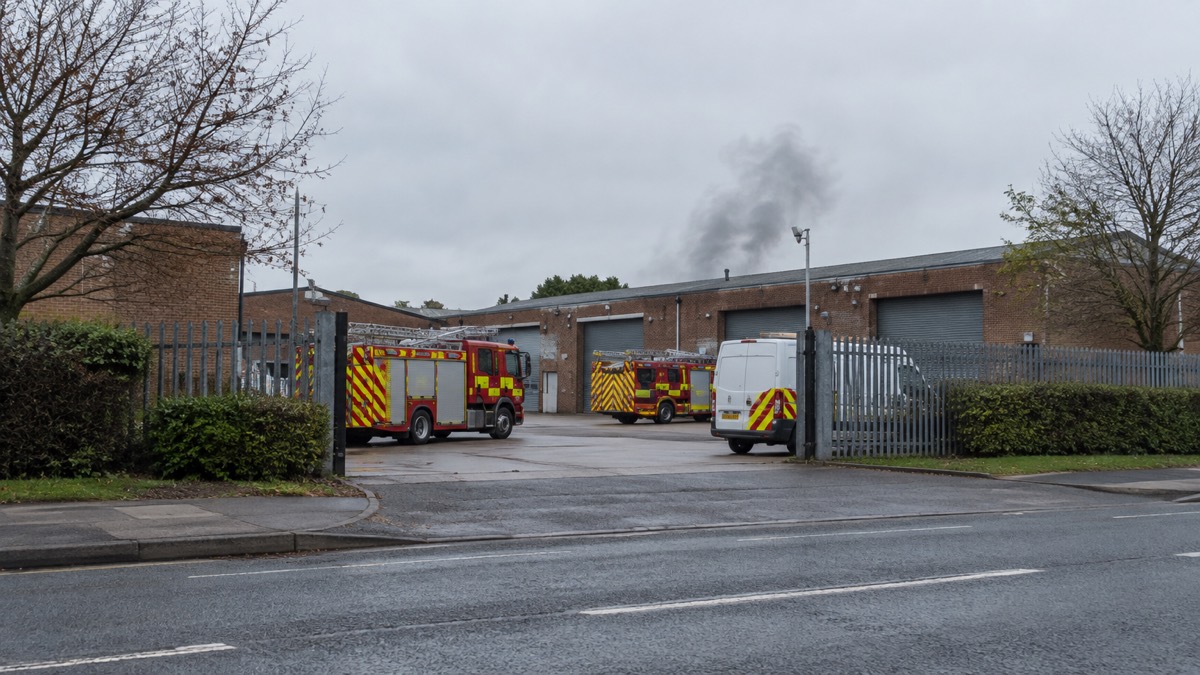
If a chemical leak, industrial fire or cloud of toxic smoke is affecting your area, the single most important instruction is this: go indoors, stay indoors and tune in to local radio or television until the emergency services tell you otherwise1. If you are outside when you are alerted to a chemical emergency nearby, you should shelter immediately rather than try to drive or walk away, because moving through a plume of smoke or gas can expose you far more than shutting yourself away from it would1. Call 999 only if you or someone else is in immediate danger2.
This advice, often shortened to "go in, stay in, tune in", means going indoors, staying indoors and keeping up to date with local information1. While you wait for instructions, do not collect your children from school unless instructed to do so, as they will be looked after1. If you think someone has been exposed to a hazardous substance, use caution and keep a safe distance to avoid exposure yourself4.
This page sets out what to do in order: how to shelter properly, when to call 999, how to help anyone who has been exposed, what to do about children at school, and where to turn afterwards, including NHS 111 for health concerns that are urgent but not life-threatening.
Go in, stay in, tune in: sheltering from smoke or fumes
The most important thing to do when you are told you are near a chemical or similar release is to go indoors as soon as you can and stay there4. Sheltering works because most homes, once closed up, keep out much of the outside air, and because the emergency services can then account for where people are instead of having roads jammed with evacuees driving through the affected area. Stay in until you are told otherwise by the emergency services or local radio8.
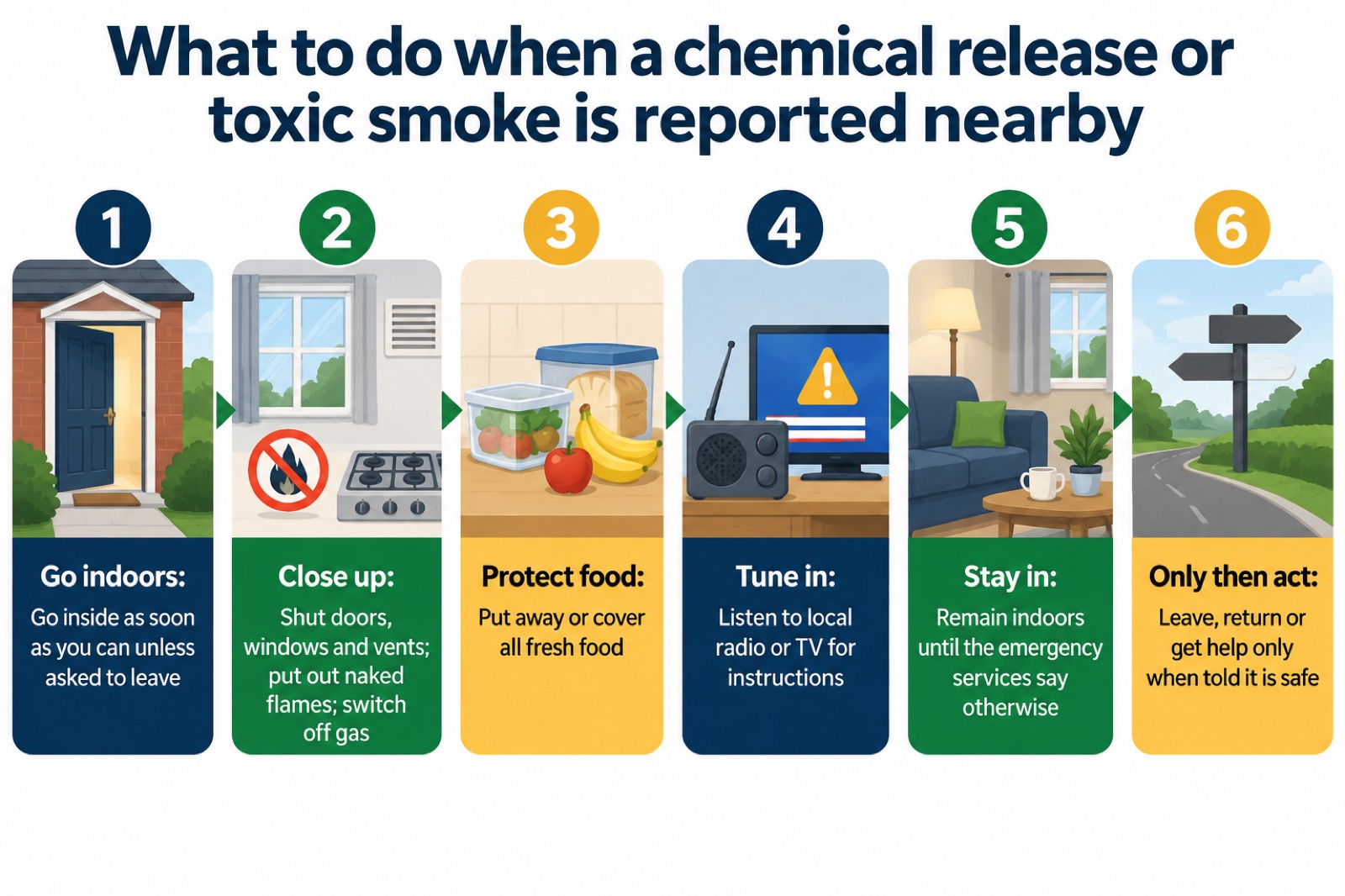
Once you are inside, there is a short list of things to do that turns an ordinary room into a better shelter. The City of Edinburgh Council gives the fullest version of this checklist for a release of gas, a toxic chemical or radiation5:
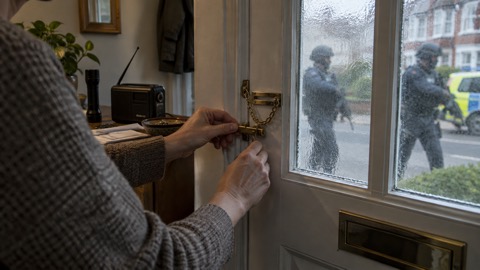
- Go indoors unless you are asked to leave by the emergency services.
- Close all doors, windows and vents.
- Put out all naked flames such as pilot lights.
- Switch off gas supplies.
- Put away or cover all fresh food.
- Have your emergency provisions ready.
- Use the phone only if you need to.
- Stay indoors until you know more.
- Tune in to a local radio or TV station.
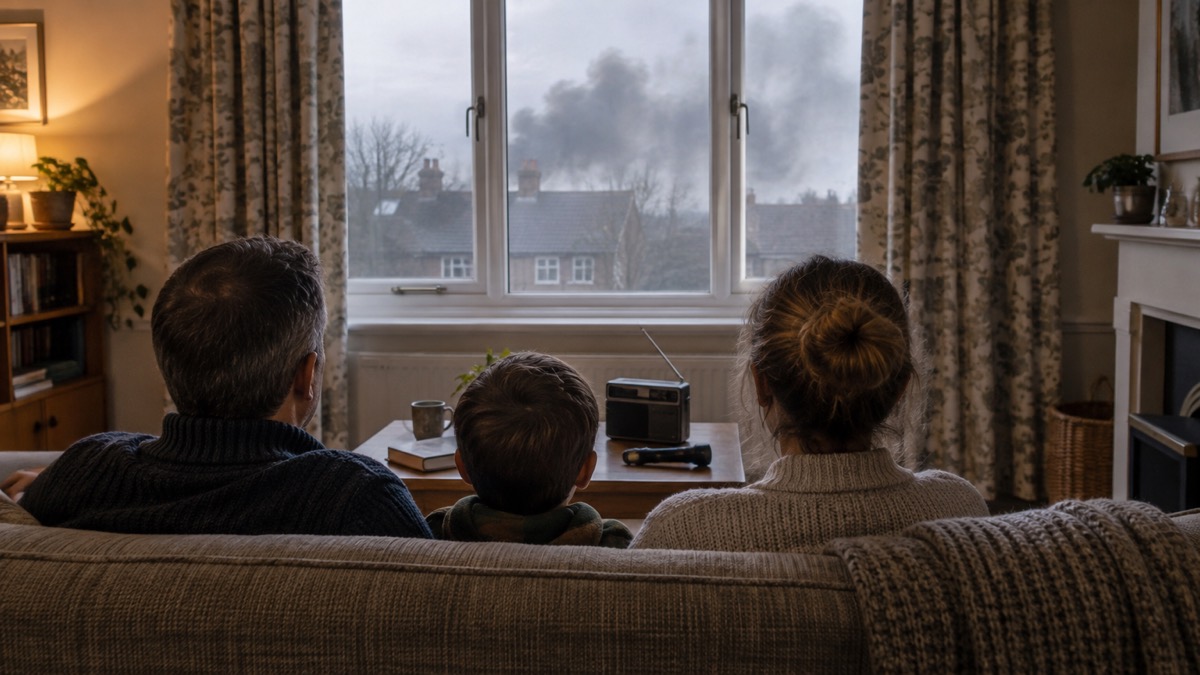
Closing doors and windows matters because it cuts the flow of outside air into the house, and putting out naked flames and switching off gas matters because some released gases are flammable5. Covering fresh food protects it from any particles settling out of the air5. If you can, stay as far away from external walls as possible, which is the advice given for a radiation emergency and is sensible for any airborne hazard4. Keep the phone line free for the emergency services to reach you, and use it only when you need to5.
Stay inside until the emergency is over or you are instructed by the emergency services9. Do not go out to look at the smoke, to film it or to check on neighbours unless you are asked to. When the incident is over, avoid entering any dangerous area until the emergency services tell you it is safe to do so10. If you cannot go home, the best option is to stay with friends or relatives, but the local authority may open a rest centre for people who have nowhere else to go10. Do not try to return to your home or street before the emergency services say it is safe7.
If you live in a block of flats
If the incident is a fire elsewhere in your building and your building's procedure is to stay put, remain in your flat unless smoke or flames are entering it. If you need to escape, call 999 and wait for directions11. If you are already outside the building, move away, go to the assembly point and wait for the fire service to arrive; do not leave before they arrive and do not re-enter until a firefighter tells you it is safe12.
Call 999 if someone is in danger
Call 999 if you or someone else is in immediate danger2. That is the rule whatever the emergency, and it applies here in two situations in particular. The first is danger from the incident itself: someone trapped, overcome by fumes, or badly hurt. The second is contamination. If you think you may have become contaminated by the substance, contact the emergency services for help on 9995. They can arrange decontamination, which is far safer than trying to wash yourself down without knowing what the substance is.
When an ambulance is on its way, stay calm13. Keep the line free after you have made the call, and be ready to tell the crew what you saw: what the person was exposed to, if you know, and how long ago.
Anyone exposed: REMOVE, REMOVE, REMOVE
The national guidance for a person who has been exposed to a hazardous substance is known as REMOVE, REMOVE, REMOVE15. The first REMOVE is the most important: remove yourself from the immediate area to avoid further exposure to the substance, because fresh air is important15. The same point is made in the UK Health Security Agency's guidance on hazardous materials incidents: remove yourself from the immediate area, and if the skin is itchy or painful, find a water source, then report to the emergency services4.
The full sequence, in plain terms:
- Remove yourself from the immediate area to avoid further exposure; fresh air is important15.
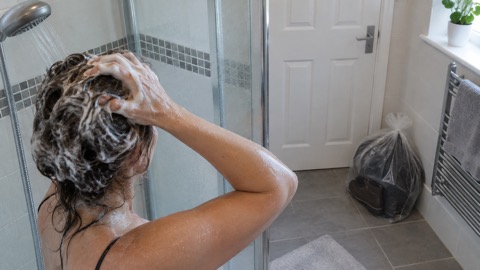
- Remove contaminated clothing where you can do so without dragging it over your face.
- Remove the substance from the skin by rinsing with plenty of water.
- Report to the emergency services so you can be assessed and decontaminated if needed4.
If someone else has been exposed, keep a safe distance and do not touch them or their clothing with bare hands, because the substance may still be on them14. Call 999, tell the call handler what has happened and wait for help. Our page on Remove, Remove, Remove covers this in more detail, and our page on acid or corrosive attacks deals with the specific case of a person attacked with a corrosive liquid.
Leave your children at school: they will be looked after
This is the instruction parents find hardest, and it is given firmly by every authority that publishes this advice: do not collect your children from school unless instructed to do so, as they will be looked after3. All schools have plans to deal with local emergencies such as fire and flooding7, and if a school needs to be evacuated, children will be taken to a safe place nearby and the school will contact you to let you know what to do16.
The reason is arithmetic as much as planning. Setting off to collect children means driving or walking towards or through the affected area, and in a radiation emergency the advice is explicit: going to collect your children may expose you and them17. In Southampton's radiation emergency planning, students in schools well outside the 1.5km detailed emergency planning zone will be told about any incident by the council, and the council will look after any pupils whose parents live inside the zone and may not be able to collect them17.
If you are worried during a school emergency, contact your emergency contact at the school and look at the school's website16. Keep your phone with you rather than making repeated calls to the school, which ties up lines the school needs. Our page on children at school during a radiation emergency goes into this in more depth.
Solids, liquids and gases: what a hazardous substance can be
You do not need to know chemistry to follow the advice, but it helps to know that incidents may involve hazardous substances in different forms, including solids, liquids and gases4. A solid might be a powder spilled from a container or deliberately left somewhere; a liquid might be a tanker load of acid or fuel; a gas might escape from a cylinder, a pipe or a burning building. The form affects how the substance behaves, a gas drifting on the wind, a liquid pooling and giving off vapour, a powder settling on surfaces, but your response is the same in every case: go in, stay in, tune in.
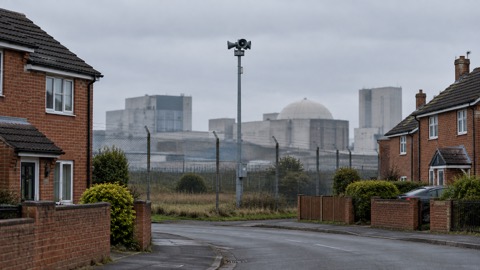
The source of a chemical or environmental hazard may be a fixed industrial site such as a large chemical works, a vehicle or container in transit, or abandoned material on public or private land18. A wide range of chemical leakages, fires and incidents involving radioactive materials may require action by the emergency services18. If you live near such a site, it is worth knowing in advance what the local warnings sound like; our pages on COMAH sites and site warnings explain those arrangements.
| Form | Examples of how it reaches people | What it may do |
|---|---|---|
| Solid | Powder spilled or left in place; particles settling from smoke | Settles on skin, food and surfaces4 |
| Liquid | Tanker spill, spray, corrosive attack | Splashes skin and eyes; gives off vapour4 |
| Gas | Cylinder or pipe release, fire by-products | Drifts on the wind; breathed in4 |
Chemical attacks are rare, but the same rules apply
Deliberate attacks using hazardous substances are rare. ProtectUK, the police counter-terrorism advice service, states that such incidents are rare14, and that CBR (chemical, biological and radiological) attacks can be difficult to conduct, often requiring expertise and resources15. More broadly, the chances of being caught up in any major emergency are low, but you need to be ready19.
Perpetrators of crime or terrorism may utilise hazardous substances including corrosive or flammable chemicals, toxic materials or radioactive sources to conduct attacks, such as acid attacks14. ProtectUK lists the ways a substance may be dispersed: spraying of liquids or powders, gas release such as from gas cylinders, contamination of food or drink, and materials left in situ15.
The key point for a household is that the response does not change. Whether the release is an accident at a factory or a deliberate act, the advice is the same: go in, stay in, tune in, keep your distance from anyone exposed, and call 999 if someone is in danger. If you want to understand the warning signs of a deliberate release, our page on chemical, biological and radiological attacks covers them, and the wider major incidents guide puts this page in context.
NHS 111: help when it is urgent but not life-threatening

Once the immediate danger has passed, health questions often follow: a cough that will not settle, eyes that sting, a burn from a chemical splash, a child who seems unwell. NHS 111 is the service for exactly this. It helps you when you need medical help or advice, but it is not an emergency20. It is a free service that provides urgent medical advice and support21, available 24 hours a day, 7 days a week6, and in the words of one ambulance service, 24 hours a day, 365 days a year22. It exists to make it easier and quicker for patients to get the right advice or treatment they need, be that for their physical or mental health6.
NHS 111 should be used by all patients who have an urgent medical need, rather than calling 999 or going to your local A&E23. For immediate, life-threatening emergencies, continue to call 99922. If you or someone is poorly but it is not an emergency, you can call 111, and if you need an ambulance, they will send one24.
There are two ways to reach it:
- Online: go to 111.nhs.uk, for people aged 5 and over only6.
- By phone: call 111, free from a landline or mobile6.
Whether you use the online assessment or the telephone, you just need to answer the same few questions about your main symptoms to get the right information and advice23. Calls to 111 are answered by health advisors, supported by experienced clinicians, who will assess your needs25. Sometimes, if appropriate, your call may be referred to a clinician, a trained nurse or paramedic, for further assessment of your condition or for medical advice25. Calls to 111 are recorded, and records are maintained securely and only shared with others directly involved with your care26.
If you are deaf, hard of hearing or need another format
NHS 111 has routes in for people who cannot use the standard phone service. If you have difficulty hearing, you can access NHS 111 using the British Sign Language interpreter service6. If you're deaf and want to use the phone service, you can use the NHS 111 BSL interpreter service27. If you have difficulties communicating or hearing, you can call 18001 111 on a text phone28. A large print guide to NHS 111 and an easy read guide to NHS 111 are both available to download28.
What NHS 111 will ask and where it may send you
The questions are the same online and by phone: a few questions about your main symptoms23. Based on your answers, the service can direct you onwards. NHS 111 will help you right away and make sure you speak to a healthcare professional, or book you an appointment at an urgent treatment centre, an emergency dental service or a GP. They can even book you an appointment at A&E if necessary29. The online service can also direct people to urgent treatment centres or walk-in centres, GPs, pharmacies, emergency dental services or other more appropriate local services29. If you do need urgent care, NHS 111 can now book you in to be seen quickly and safely in your local A&E30. Contacting 111 first also helps the NHS keep you and your family safe by ensuring you receive the right care in the right place, in a more timely and safe way30.
| What you need | Where NHS 111 can send you |
|---|---|
| To speak to a clinician | A trained nurse or paramedic for further assessment25 |
| Same-day care | Urgent treatment centre or walk-in centre29 |
| A doctor | Your GP, or a booked appointment29 |
| A pharmacist or dentist | Pharmacy or emergency dental service29 |
| Hospital care | A booked A&E appointment if necessary29 |
| An ambulance | One will be sent if you need it24 |
When your GP surgery is closed
If your GP surgery is shut, you can call 111 to speak to someone regarding your health needs20. Because 111 runs around the clock, every day of the year22, it fills the gap outside surgery hours, including evenings, weekends and bank holidays. For anything immediately life-threatening, call 999 instead22.
Using 111 with children
The online assessment at 111.nhs.uk is for people aged 5 and over only6, so for a child under 5 you need to call 111. Whichever route you use, the questions about symptoms are the same23. Separately, it is worth teaching children how and when to call 999 and what they should do if there is an emergency, such as a fire, at home10. If a child has breathed in or touched a medication or poisonous plant, or has a rash, vomiting, headache or mild abdominal pain, or is getting worse, ring your GP surgery or call 111 the same day; if the child has red-flag symptoms such as choking, severe breathing difficulty, pale or blue skin, a seizure, severe tummy pain or difficulty swallowing, go to the nearest A&E or phone 999 and bring the substance with you31.
Chemical burns: what to do straight away
A chemical burn needs rinsing before anything else. Rinse the affected area thoroughly with cool water to remove the chemical, or brush off any powder first32. Carefully try to remove the chemical and any contaminated clothing, and rinse the affected area using as much clean water as possible33. The volume of water matters more than its temperature: keep rinsing for longer than feels necessary, because chemicals keep damaging skin for as long as they remain on it.
How you get help depends on the severity: consult a pharmacist, your GP, call 111, or dial 999 in severe cases32. Call 999 for emergency assistance immediately if the burn is severe32. If you simply need advice about a burn or scald, you can get help from NHS 11133. Our first aid at home guide covers burns alongside other household injuries.
Afterwards: worry, mental health and getting back to normal
Emergencies of this kind leave marks that are not physical. NHS 111 is explicitly there for mental as well as physical health6, and it can be accessed online at www.111.nhs.uk34. For a mental health emergency when someone is in immediate danger or at risk of serious self-harm, they must call 99934. If you or a family member is struggling after an incident, calling 111 or using the online assessment is the right first step, and it can direct you to the right local service rather than leaving you to guess29.
For the practical aftermath, the UK Health Security Agency guidance on what to do in a chemical emergency also provides information related to evacuations, pets, food and water, and information on specific hazardous chemicals1, and its radiation emergency guidance covers evacuations, pets, use of stable iodine and safety advice related to food and water1. If you were evacuated, do not try to return until the emergency services tell you it is safe to do so7, and if you cannot stay with friends or relatives, ask about the local authority's rest centre10. Our page on tap water safety after a release and our food guide cover the food and water questions in detail.
Large print and easy read guides
Not everyone can use a standard website or phone line, and there are versions of this advice built for that. The NHS publishes a large print guide to NHS 111 and an easy read guide to NHS 11128. Nottinghamshire County Council publishes an easy read document, "Help in an emergency", which tells you about support in an emergency and planning for an emergency; it is part of a set of 19 easy read documents that make up the easy read version of its Carers Booklet35. If someone in your household needs these formats, download them in advance rather than trying to find them during an incident, and keep a printed copy with your emergency provisions.
Getting ready in advance
The chances of being caught up in a major emergency are low, but just in case this happens, you need to be ready19. The practical steps for this kind of incident are small ones:
- Know how you would close every door, window and vent in your home quickly, including any vents you normally leave open5.
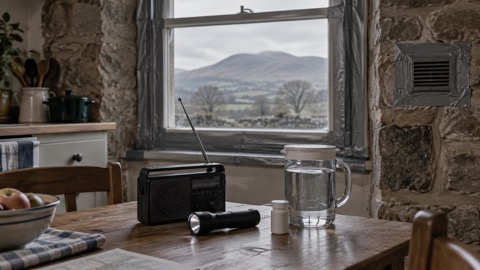
- Keep a battery or wind-up radio so you can tune in to local stations during a power cut1.
- Keep emergency provisions ready, including water and food you can eat without cooking5.
- Teach children how and when to call 999 and what to do in an emergency at home10.
- Know your children's school emergency contact arrangements and check the school's website during an incident16.
- If you live near an industrial site, find out what its warnings sound like before you need them18.
Our getting started guide and emergency kit guide cover the provisions in full, and staying informed explains how to keep a radio, phone and other information sources working when the mains fails.
Sources (35)
- Hazardous substance exposure, Essex Prepared
- Be ready for emergencies, UK Government Prepare campaign, 2026-10-21
- Chemical accidents: advice for residents, Fareham Borough Council, 2026-10-29
- Hazardous materials incident, UK Health Security Agency, 2026-10-13
- Release of gas, toxic chemical or radiation, City of Edinburgh Council, 2026-10-29
- NHS 111, NHS England, 2026-10-29
- Emergency planning, Belfast City Council, 2026-10-29
- Emergency advice for residents, Warwickshire County Council, 2026-10-29
- What to do in an emergency, Nottinghamshire County Council, 2026-10-29
- Prepare yourself, Greater Manchester Combined Authority, 2026-10-29
- In the event of a fire, South Wales Fire and Rescue Service, 2026-10-25
- Fire safety information for residents living in flats, Manchester Fire and Rescue Service, 2026-10-29
- What to do when the ambulance is coming, South Western Ambulance Service NHS Foundation Trust, 2026-10-29
- Hazardous substances, ProtectUK, 2024-08-22
- Chemical, biological and radiological incidents, ProtectUK, 2024-03-26
- Emergencies at school, London Borough of Lewisham, 2026-09-14
- Radiation emergency information for residents, 2024, Southampton City Council, 2024-07
- Major accident hazards emergencies, Merthyr Tydfil County Borough Council, 2026-10-29
- Be prepared, West Yorkshire Prepared, 2026-10-29
- Your local 999 and 111 services, London Ambulance Service NHS Trust, 2026-08-10
- NHS 111, NHS Essex Integrated Care Board, 2026-08-19
- NHS 111, South Western Ambulance Service NHS Foundation Trust, 2026-10-29
- Alternatives to 999, South Central Ambulance Service NHS Foundation Trust, 2026-10-29
- 111 non-emergency service, South Western Ambulance Service NHS Foundation Trust, 2026-10-29
- NHS 111, Yorkshire Ambulance Service NHS Trust, 2026-10-29
- NHS 111, NHS Lancashire and South Cumbria Integrated Care Board, 2026-10-29
- When you should contact 111, North West Ambulance Service NHS Trust, 2025-03-13
- Alternative access to NHS 111, North West Ambulance Service NHS Trust, 2024-08-01
- Urgent care, NHS North East London Integrated Care Board, 2026-04-14
- What care services can NHS 111 put you in touch with, North West Ambulance Service NHS Trust, 2024-08-01
- Poisoning :: Healthier Together, NHS Wales (Healthier Together, Aneurin Bevan University Health Board area)
- Burns prevention and tips, Mid and South Essex NHS Foundation Trust, 2026-10-25
- Burns and scalds, Andaman Surgery, 2026
- Urgent help, South West London and St George's Mental Health NHS Trust, 2026-10-29
- Help in an emergency: easy read, Nottinghamshire County Council, 2026-04-15
 Bomb Threat Calls
 Radiation Checklist First Hour
 Power Cut Kit Checklist
 UK Terrorism Threat
 Terrorism Threat Levels
 Reporting Suspicious Activity
 Unattended or Suspicious Items
 Radicalisation Concerns
 Support for Attack Victims
 CBR Attack Signs
 Radiation Emergency
 Site Sirens and Warnings
 Stable Iodine Tablets
 Radiation Dose Levels