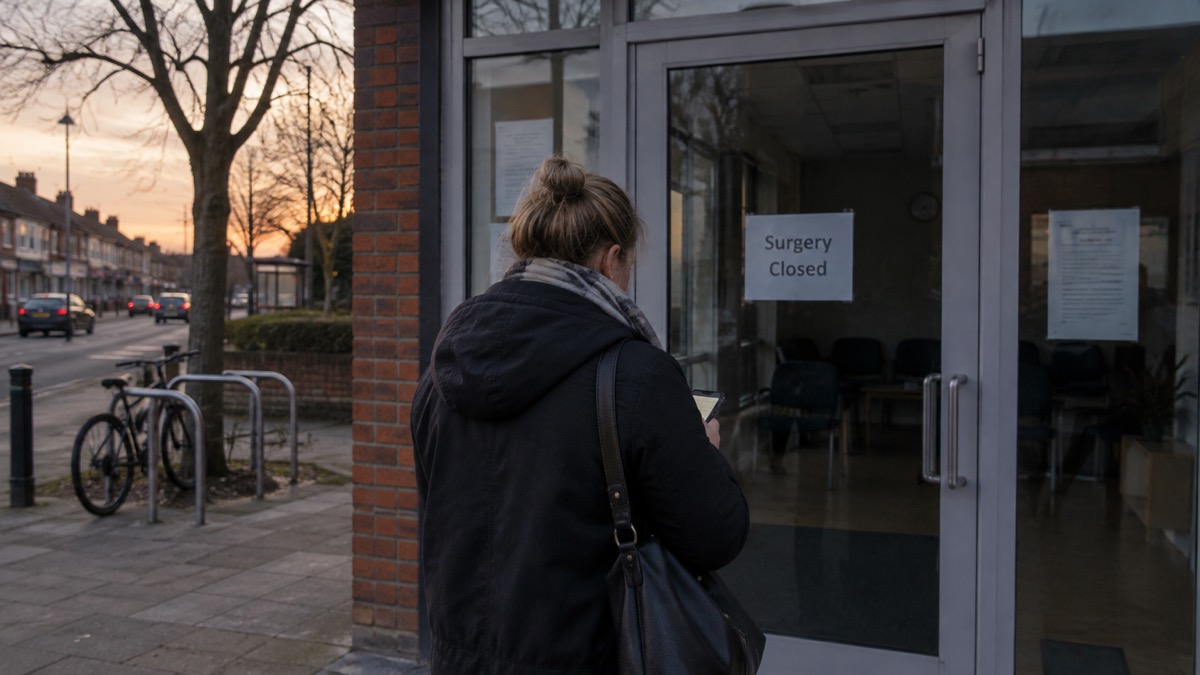
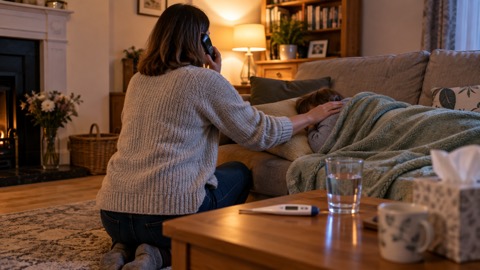
If your GP surgery is shut and you need help, call 111. That is the single instruction that runs through the official guidance for all four nations: if your surgery is closed, call 111 and you will be directed to the out-of-hours care services1. The same advice appears wherever the NHS writes about being unwell outside surgery hours, from sepsis to a child's fever: if your GP is closed, phone 1113.
NHS 111 is for urgent but not life-threatening health advice, or when your GP surgery is closed and you cannot contact them6. It is not a replacement for 999. If someone is seriously ill or injured, or their life is at risk, you call 999, and the ambulance services are clear that 111 is for the cases that are urgent but not an emergency7.
What follows is how to use that route well: what 111 can do, what to have ready when you ring, the small number of situations that mean 999 instead, and the things worth sorting out before the surgery doors close for a weekend or a bank holiday.
Call 111 when your GP surgery is shut
A GP surgery is typically open Monday to Friday1. Outside those hours, and on bank holidays, the surgery's own out-of-hours arrangements take over, and the way in is NHS 111. The ambulance services describe it plainly: 111 can direct you to the best place to get help if you cannot contact your GP during the day, or when your GP is closed7. If your surgery is closed, a call to 111 will direct you to the out-of-hours care services2.
That out-of-hours care is not a walk-in service. You contact NHS 111 online or by calling 111, and all patients are assessed by a clinician over the phone9. That assessment may result in telephone advice only, an invitation to a face-to-face consultation, or a home visit from one of the service GPs, and any face-to-face service is by appointment only9. So the call is not a formality before you get seen: it is how you get seen.
Many surgeries also offer urgent on-the-day appointments, and all will have details of their out-of-hours service on their website and phone lines when the surgery is closed11. If you ring outside their usual opening hours, the answering machine should have the out-of-hours details recorded12. It is worth knowing where that information sits before you need it at ten at night.
The four nations run this slightly differently, though the first step is the same everywhere.
| Nation | Out of hours route | Notes |
|---|---|---|
| England | NHS 111 by phone or online, leading to out-of-hours GP care7 | Out-of-hours appointments can be offered in the evening, at weekends and on bank holidays13 |
| Scotland | NHS 24 on 11114 | Use it for urgent care when your GP, pharmacy or dental practice is closed14 |
| Wales | NHS 11115 | If you are not well, call your GP or NHS 111; dial 999 if it is an emergency15 |
| Northern Ireland | GP Out of Hours service, for urgent medical care when your GP surgery is closed16 | Reached through the same urgent care route16 |
What to tell 111 when you call
The call works best when you treat it as a structured handover. The assessor needs to know what is wrong, how long it has been going on, who the patient is and what they are already taking, because the outcome may be advice, an appointment or a visit, and each depends on those details9.
Have these ready before you dial:
- The symptoms, and when they started, including anything that is getting worse.
- The patient's GP surgery and its details, if you know them.
- Every medicine they take, gathered together so you can read the labels.
- Any allergies, which the ambulance service also asks to be told about8.
- Their age, and for a child, their temperature if you have taken it.
If you are ringing about someone else, that is a normal use of the service: 111 is there when you do not have a GP to call or a GP is not available17. Carers ringing on behalf of a relative should say so at the start and have the relative's details to hand.
There is one specific trap with the online service. NHS 111 online can handle an emergency prescription request, but if you need medicine and also have any symptoms, you should call 111 and speak to an adviser instead18. Symptoms need a conversation; a repeat prescription that has run out does not.
When to call 999 instead
The dividing line is simple and the ambulance services repeat it: 111 is for urgent but not life-threatening problems, and 999 is for emergencies7. If someone's life is at risk, or they are seriously ill or injured, you ring 999 and you do not wait to see whether 111 can help.
Some presentations are named explicitly in official guidance as 999 calls:
- A child who loses consciousness or has a fit: phone 999 immediately21.
- A child who is seriously unwell: call 999 for an ambulance or go to your nearest A&E22.
- A suspected stroke: the stroke guidance sets out its own urgent pathway, and where a GP is closed the 111 route applies to a transient ischaemic attack23.
- Any new or worsening symptom you are worried about: phone 111 or speak to your GP practice, but always phone 999 in an emergency24.
When you do call 999, the call handler may decide an ambulance is not needed and advise you to seek other medical help, such as a minor injury unit, a walk-in centre or your GP surgery25. That is not a refusal of care; it is a redirection to the right one.
While you wait, the ambulance services ask you to do a few practical things: check that your house number or name is clearly visible from the roadside, ask someone to open the doors and signal where the crew is needed, turn on lights if it is dark, shut pets in another room, write down the patient's GP details, gather their medication and tell the service about any allergies8. Stay with the patient until help arrives, and call back if their condition or location changes25.
Getting ready before your GP closes
Most of the difficulty of a closed surgery is avoidable with a little planning, and the official winter guidance is consistent about what to do.
Order repeat prescriptions early. Order repeat prescriptions in early, because your pharmacy or GP practice may be closed for the holidays10. Plan ahead, only order what you need, and pick up your prescription before any holiday closures26. If you are likely to run short, the emergency prescription route through 111 exists, but it is a fallback, not a plan18.
Know your surgery's out-of-hours details. They are on the surgery's website and phone lines when it is closed, and on the answering machine outside usual hours11. Note them down once and keep them with your medicines.
Check appointments during bad weather. If you have a hospital or GP appointment and the weather is bad, ring to check whether it is still going ahead or to cancel it, and do not cancel any medical appointment until you have spoken to your GP or specialist27.
Keep the home safe while someone is ill. If you are caring for someone at home, the accident prevention guidance is worth a glance: it covers the everyday risks that become more likely when a household is tired and distracted22.
Know where to go for less urgent needs. For less urgent health needs, contact your GP or visit your local pharmacy in the usual way17. Your GP surgery should usually be the first place you contact if you have a particular concern about your health13, and many offer appointments out of hours and at weekends and on bank holidays13.
Sources (27)
- Your local 999 and 111 services, London Ambulance Service, 2026-08-10
- In an emergency, Medway NHS, 2026-10-29
- Identifying sepsis, Scottish Ambulance Service, 2026-10-29
- Sepsis, NHS Inform, 2026-09-28
- Your Health Guide Winter 2025, NHS Western Isles, 2025-12
- Storm advice, Cornwall Council, 2026-10-29
- When to use 111, London Ambulance Service, 2026-08-12
- 999 emergency, Scottish Ambulance Service, 2026-10-29
- When you need urgent healthcare, NHS North Cheshire and Mersey, 2026-08-11
- Winter Wellness 2025-26 leaflet, NHS North East London ICB, 2025-11
- Alternatives to 999, Scottish Ambulance Service, 2026-10-29
- Emergency prescriptions, NHS, 2024-01-15
- Urgent care, NHS North East London ICB, 2026-04-14
- NHS 24 111, NHS 24, 2026-02-09
- Weather and health, Public Health Wales, 2026-07-16
- Health care services during industrial action, HSC Northern Ireland, 2024-06
- NHS 111, Yorkshire Ambulance Service, 2026-10-29
- Emergency prescriptions, NHS 111, 2026-10-29
- NHS 111 online, NHS Digital, 2026-10-29
- 111 online, North East Ambulance Service, 2026-10-29
- Stay cool and safe in hot weather, Somerset Council, 2026-07-08
- Preventing accidents, Just One Norfolk, 2026-10-28
- Stroke, NHS Inform, 2026-09-30
- Outdoor air pollution, NHS Inform, 2026-10-14
- Using 999, North East Ambulance Service, 2026-10-29
- Prepare for winter, King Street Surgery, 2026-01-20
- How adult social care can help in severe winter weather, Surrey County Council, 2026-10-28
 Medicine Cabinet Checklist
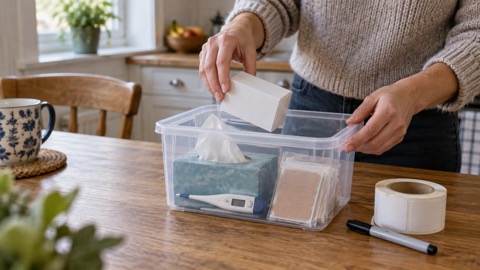 Sick at Home Supplies Kit
 Caring for Someone Ill at Home
 How Long to Stay Home With COVID
 Time Off After Sickness
 Stopping Flu Spreading at Home
 How Long to Wash Your Hands
 When to Call 111 or 999
 Disposing of Unused Medicines
 Medicines in a Heatwave
 Taking Someone Else's Medicine
 Ordering Repeat Prescriptions
 Treating Dehydration at Home
 Cold-Health Alerts Explained
 The Glass Test for Meningitis