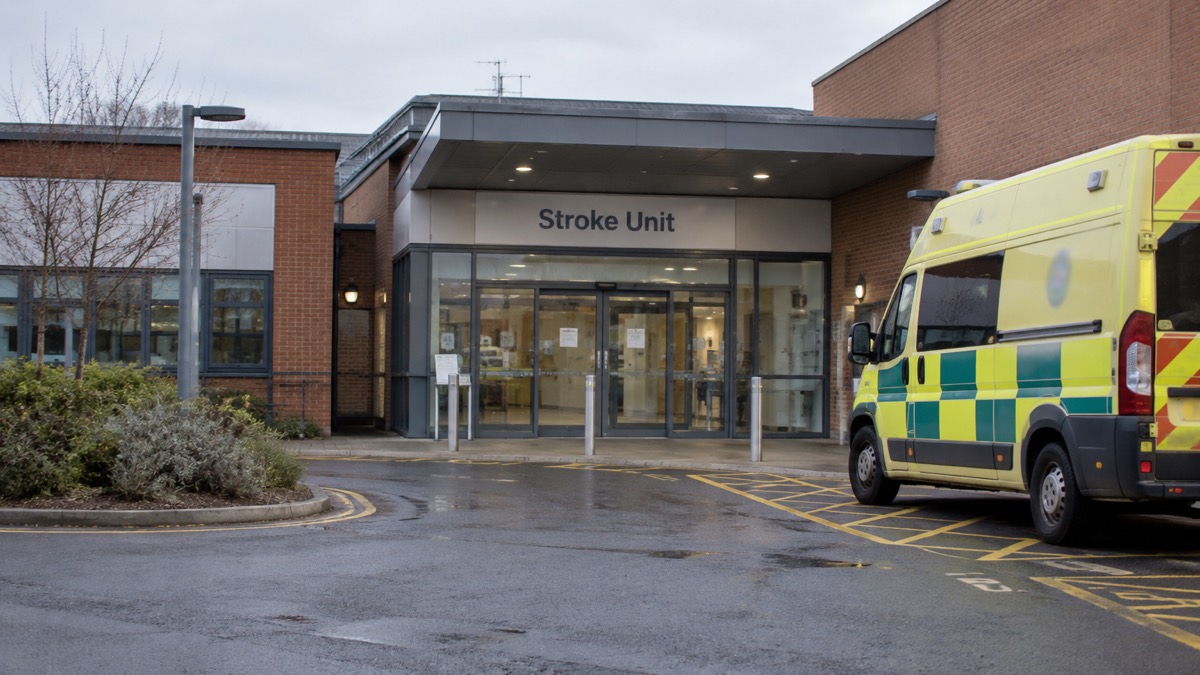
A stroke happens when the blood supply to part of the brain is cut off, and it is a serious, life-threatening medical condition1. The signs can be easy to miss or to explain away, which is why ambulance services and NHS guidance use one short test to help ordinary households recognise what is happening. It is called FAST: Face, Arms, Speech, Time2.
You run it in under a minute. Look at the person's face for drooping on one side. Ask them to raise both arms and see whether one drops. Listen to their speech for slurring or garbled words. If any of these is wrong, ring 999 straight away and ask for an ambulance3. Do not drive them to hospital yourself and do not wait to see whether it settles.
The test exists to shorten the gap between something going wrong and help being called. Resuscitation Council UK's 2025 first aid guidelines say to use a stroke assessment scale such as FAST to decrease the time to recognition and to call 999 for help5. The sections below take each letter in turn, then cover the situations the letters do not quite fit: symptoms that pass, someone who cannot be woken, and what to say on the phone.
What FAST stands for, and why four letters are enough
FAST is a memory aid, not a diagnosis. Each letter stands for one check that a bystander can make without equipment: face, arms, speech, and time to call 9992. The checks were chosen because they pick up the most common outward signs of a stroke, and because anyone can carry them out on a neighbour, a partner or a stranger in the street.
The test is used at every stage of the response. A 999 call-taker may ask you to carry out a FAST test and will talk you through how to do it4. When the ambulance crew arrives, they will carry out a FAST test just like the one the call-taker asked for, and the Scottish Ambulance Service says this does not delay transfer time to the hospital, because it is important that FAST is reassessed by the crew4. The same four checks therefore follow the patient from the phone call to the hospital door.
It helps to know what a stroke is, because it explains why speed matters so much. A stroke is a serious, life-threatening medical condition that happens when the blood supply to part of the brain is cut off1. The signs usually begin suddenly and vary from person to person depending on the part of the brain affected3. That variation is exactly why a fixed checklist is used: it catches the common signs even when the presentation is not what you expected.
FAST does not cover everything. NHS inform lists other possible signs, including sudden weakness or numbness, loss of vision or blurred vision, difficulty with speech or understanding, confusion, a severe headache with no obvious cause, dizziness, unsteadiness or a sudden fall1. The Stroke Association lists numbness, blurred vision, confusion, dizziness, headaches, and feeling or being sick among other symptoms8. If any of these appear suddenly, treat it as seriously as a failed FAST check and ring 999.
Face: has it dropped on one side?
The face check is the first thing to look at, because facial weakness is often the most visible sign. The face may have dropped on one side, the person may not be able to smile, or their mouth or eye may have drooped3. The London Ambulance Service describes the same thing as facial weakness on one side, with visible drooping on one side of the face9.
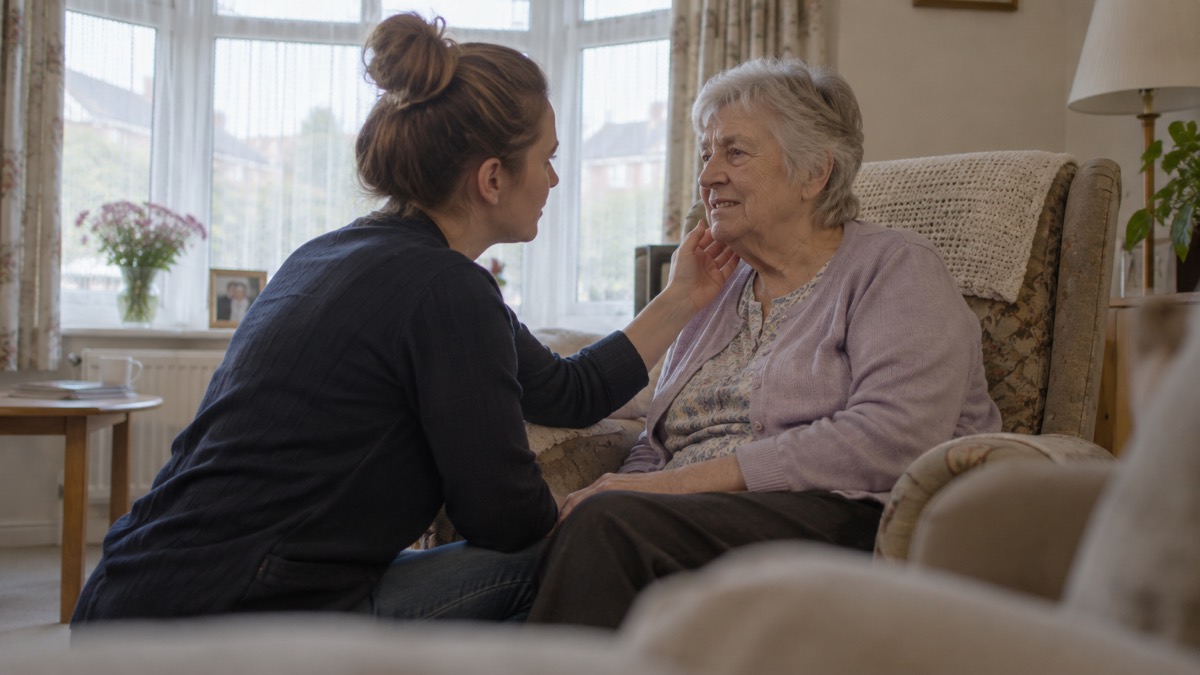
To check it, look at the person's face and ask them to smile1. If they have had a stroke, they may only be able to smile on one side, and the other side of the mouth may droop1. The Stroke Association describes the sign as an uneven smile, a droopy mouth, or a droopy eye8. You do not need to decide whether it is mild or severe. Any new one-sided drooping counts.
A few practical points help you judge what you are seeing:
- Compare the two sides. Look at the mouth and eyes together, not just one feature.
- Ask, do not just look. A smile makes the asymmetry easier to see than a resting face.
- Note when you first noticed it. You will be asked this on the phone.
- Do not test anything else first. If the face has dropped, go straight to ringing 999.
The face check also appears in the wider emergency advice given to the public. The Confederation, Hillingdon lists the signs of a stroke as face dropping on one side, not being able to hold both arms up, and difficulty speaking10. The London Ambulance Service leaflet on the 999 and 111 services lists face dropping on one side, not being able to hold both arms up and difficulty speaking among the reasons to go to an emergency department11. In other words, the same three signs that make up FAST are the ones the NHS uses to tell people when A&E is the right place to be.
One caution: a droopy face has other causes, and you are not being asked to work out which. The instruction is to check, and if the check fails, to ring 999. The call-taker and the crew will sort out what is behind it.
Arms: can they lift both arms and keep them there?
The arm check looks for weakness or numbness down one side. Ask the casualty to raise both arms; if they have had a stroke, they may only be able to lift one arm fully1. The Northern Ireland stroke checklist puts it slightly differently: the person may not be able to lift both arms and keep them there because of weakness or numbness in one arm6. The Stroke Association's version is simply to ask whether they can raise both arms8.
The difference between "lift" and "keep them there" matters. A person may manage to raise an arm and then find it drifts down, or they may not be able to hold it up at all. Watch for either. Ask them to close their eyes and hold both arms out if they can, and see whether one side stays up.
If the arms are unequal, that is a failed check. Ring 999 and say what you saw. Do not ask the person to try again and again to see whether it improves; repeated attempts do not change the advice, and they use up time.
The arm check is also part of the broader first aid assessment taught to the public. St John Ambulance's primary survey includes a disability step, looking for signs of neurological problems including confusion, signs of a stroke (FAST), a head injury, or low blood sugar12. That is the context in which the arm check sits: it is one part of working out what is wrong with someone who has become unwell suddenly. If you want the wider sequence, our guide to the primary survey sets out danger, response, airway and breathing in order.
Speech: slurred, garbled or no words at all
The speech check is the one people most often misread, because slurred speech has many causes and because a person who is confused may still produce words. The Northern Ireland checklist says their speech may be slurred or garbled, or the person may not be able to talk at all despite appearing to be awake6. NHS inform's guidance is to find out whether the person can speak clearly and whether they understand what you are saying, and whether they respond appropriately to a question1.
That gives you two things to test: whether the words come out clearly, and whether the person understands you. Ask a simple question and listen to the answer. A person having a stroke may slur their words, may produce garbled speech, or may not speak at all. They may also give an answer that does not fit the question, which points to a problem with understanding rather than with the voice.
Speech changes are not unique to stroke, and it is worth knowing the other common causes so you do not dismiss a stroke as something else. Sepsis can cause slurred speech or confusion in adults, and the UK Sepsis Trust lists it among the signs, alongside extreme shivering or muscle pain, passing no urine in a day, severe breathlessness, a feeling that you are going to die, and mottled or discoloured skin13. The NHS in Wales lists acting confused, slurred speech or not making sense among the symptoms of sepsis in adults and older children15. Cold can do it too: the Met Office lists slow or slurred speech among the signs of hypothermia, with uncontrollable shivering, memory lapse and drowsiness16.
None of that changes what you do. If speech has become slurred or garbled suddenly, ring 999. If you are unsure whether it is a stroke or sepsis, say what you have noticed and let the call-taker decide. Our page on sepsis covers the signs in more detail.
Time: ring 999 straight away
Time is the letter that turns the other three into an action. It is time to dial 999 immediately if you see any of these signs or symptoms6. The South Western Ambulance Service says to call 999 immediately if you or someone else is having a heart attack or stroke, and that every second counts with these conditions17. The Scottish Ambulance Service says that if you suspect you are having a stroke, or someone else may be, phone 999 immediately and ask for an ambulance4.
"Time, it's time to dial 999 immediately if you see any of these signs or symptoms."
The call itself is part of the first aid. Tell the call-taker that you think it is a stroke, which of the FAST checks failed, and when the symptoms started. They may ask you to carry out the FAST test again while they stay on the line4. Do not end the call until you are told to.
While you wait, keep the person comfortable and still. Do not give them anything to eat or drink, because swallowing may be affected. Stay with them, and unlock the door or send someone to watch for the ambulance if you can. If the person becomes unresponsive, the call-taker will guide you; our guide to CPR covers what to do if they stop breathing normally.
The advice is the same across the UK. The Scottish Ambulance Service lists stroke among the conditions for which you should ring 99918. The London Ambulance Service lists face dropping on one side, not being able to hold both arms up and difficulty speaking among the reasons to go to an emergency department11. The South Western Ambulance Service lists suspected stroke among the reasons to call 99917. Wherever you are, the number is 999.
When the symptoms pass: TIA and why it still matters
A transient ischaemic attack, or TIA, has the same main symptoms as a stroke, spotted with the FAST test7. The symptoms come and then go, which is exactly what makes them easy to dismiss. Do not.
If the face, arm or speech changes resolve while you are watching, the person may still have had a TIA, and that needs urgent assessment. Ring 999 and describe what you saw, when it started and when it stopped. The fact that the person now seems well does not undo the episode.
The same principle applies to other symptoms that come and go. Sudden dizziness, a brief loss of vision, or a few minutes of confusion are all on the list of possible stroke signs1. If they appeared suddenly, treat them as a reason to call.
If the person is asleep or cannot be woken
You cannot run the FAST checks on someone who is not responding, and you should not wait for them to wake up. Try to rouse them by speaking to them normally and gently touching their shoulder. If they do not respond, that is an emergency in its own right: ring 999 and tell the call-taker what you have found.
If they are drowsy but can be woken, run the checks as soon as they are awake enough to cooperate. Note the time you first noticed anything unusual, including the time you found them. That time is what the hospital will want.
For households where someone has a condition that can cause collapses or seizures, monitoring equipment may already be in place. The Isle of Anglesey telecare service describes an epilepsy sensor that monitors vital signs including heart rate and breathing patterns to detect a range of epileptic seizures, and eliminates the need for carers to make physical checks19. That is a specific product for a specific need, not a substitute for ringing 999 when someone cannot be woken.
Stroke signs in children, and other conditions that look similar
Stroke signs usually begin suddenly and vary from person to person depending on the part of the brain affected3. That is true of children as well as adults. The FAST checks are about spotting sudden face, arm or speech changes in anyone, and the advice to ring 999 does not change with age.
Children become unwell suddenly for many reasons, and some of them look like a stroke at first glance. Sepsis in children can cause fast breathing, a fit or convulsion, mottled, bluish or pale skin, a rash that does not fade when you press it, being very lethargic or difficult to wake, and feeling abnormally cold to touch13. The NHS in Wales lists the same signs15. A child with a fever who is vomiting repeatedly should be seen by a GP, according to winter health guidance21.
If a child has a sudden fit, or becomes floppy or difficult to wake, ring 999. Describe what you saw and how long it lasted. Our pages on seizures and febrile seizures cover what to do while help comes.
What to say when you call, and what happens next
The call is short, and a few details make it count. Have these ready:
- The address, including the postcode and any access details.
- Which FAST checks failed, and what you saw.
- The time symptoms started, or when the person was last known to be well.
- The person's age, and whether they are awake and breathing normally.
- Any medicines they take, if you know them without delay.
The call-taker may ask you to repeat the FAST test while you are on the line4. Do it. When the crew arrives, they will carry out their own FAST test, and the Scottish Ambulance Service says this does not delay transfer to hospital4. The crew will also want to know what you observed, so stay with the person until they arrive if you can.
If you are unsure whether it is an emergency, the NHS 111 service can advise, but for suspected stroke the advice is not to use it as a first step. Ring 999. The London Ambulance Service leaflet separates the two: 999 for the emergencies it lists, including face dropping on one side, not being able to hold both arms up and difficulty speaking, and 111 for things that are urgent but not life-threatening11. The South Western Ambulance Service makes the same distinction22.
Afterwards, note what happened and when. If the person is admitted, the hospital team will ask about the onset time, and your note may be the most accurate record. Our page on information to have ready for the ambulance crew lists what else helps.
Sources (22)
- Stroke first aid, NHS inform, 2026
- Stroke, NHS inform, 2026
- Identifying a stroke, Scottish Ambulance Service, 2026
- Stroke, Scottish Ambulance Service, 2026
- 2025 First Aid Guidelines, Resuscitation Council UK, 2025
- What to do in the event of a stroke, Northern Ireland Stroke Network, 2026
- TIA, Stroke Association, 2026
- Stroke, St John Ambulance, 2026
- Emergency stroke care, London Ambulance Service, 2026
- Urgent help, The Confederation, Hillingdon CIC, 2026
- Your local 999 and 111 services, London Ambulance Service, 2026
- Primary survey, St John Ambulance, 2026
- About sepsis, UK Sepsis Trust, 2026
- Spotting the signs of sepsis, UK Sepsis Trust, 2026
- Sepsis, NHS 111 Wales, 2026
- Travelling in heavy snow and ice, Met Office, 2026
- When to call 999, South Western Ambulance Service, 2026
- When should you call 999?, Scottish Ambulance Service, 2026
- What's available from the Telecare service, Isle of Anglesey County Council, 2026
- Sepsis, Mid and South Essex NHS Foundation Trust, 2026
- Your Health Guide Winter 2025, NHS Western Isles, 2025
- Get the right help and support, South Western Ambulance Service, 2026
 Baby and Child Kit Checklist
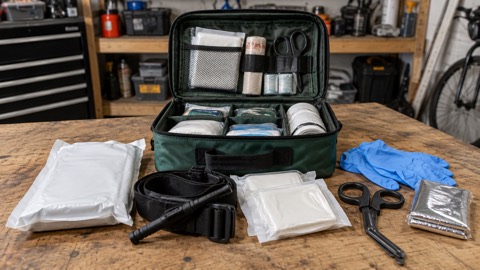 Bleeding Control Kit Checklist
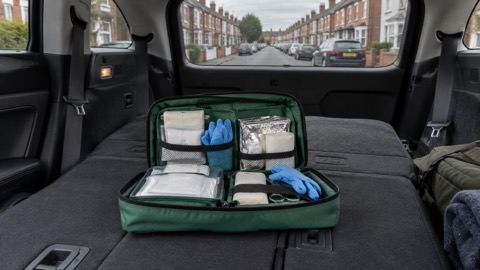 Car Kit Checklist
 CPR on a Baby
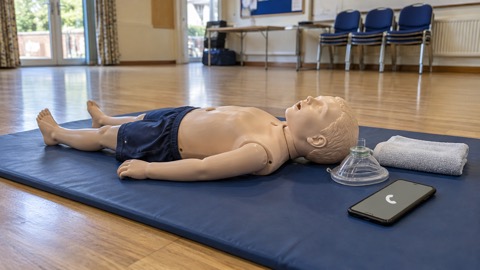 CPR on a Child
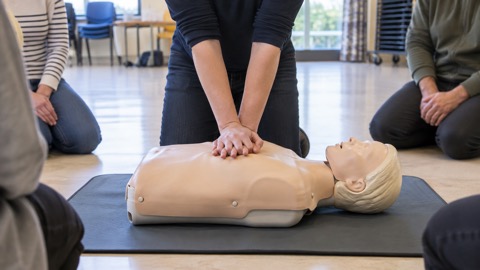 Chest Compression Rate and Depth
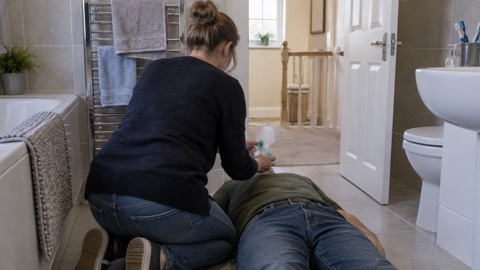 Rescue Breaths or Hands-Only CPR
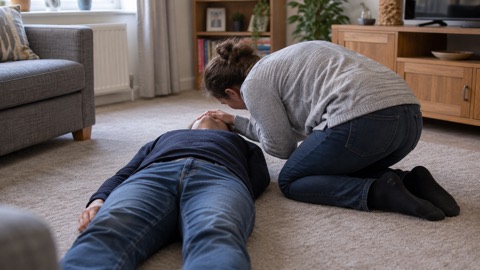 Checking Breathing
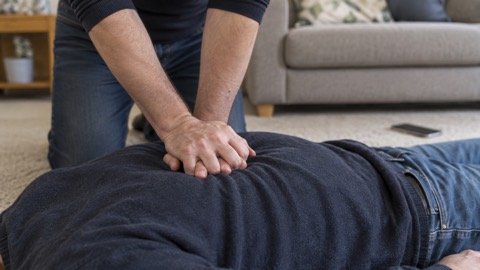 Agonal Breathing and CPR
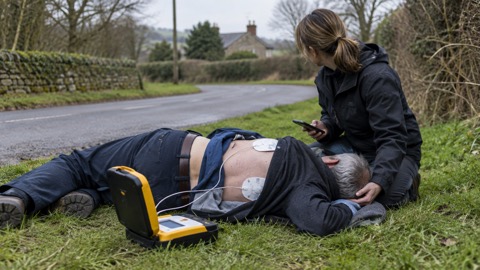 Breathing During CPR
 Recovery Position and Spine
 Cardiac Arrest vs Heart Attack
 Heart Attack First Aid
 Defibrillator Pad Placement
 Defibrillator on a Child