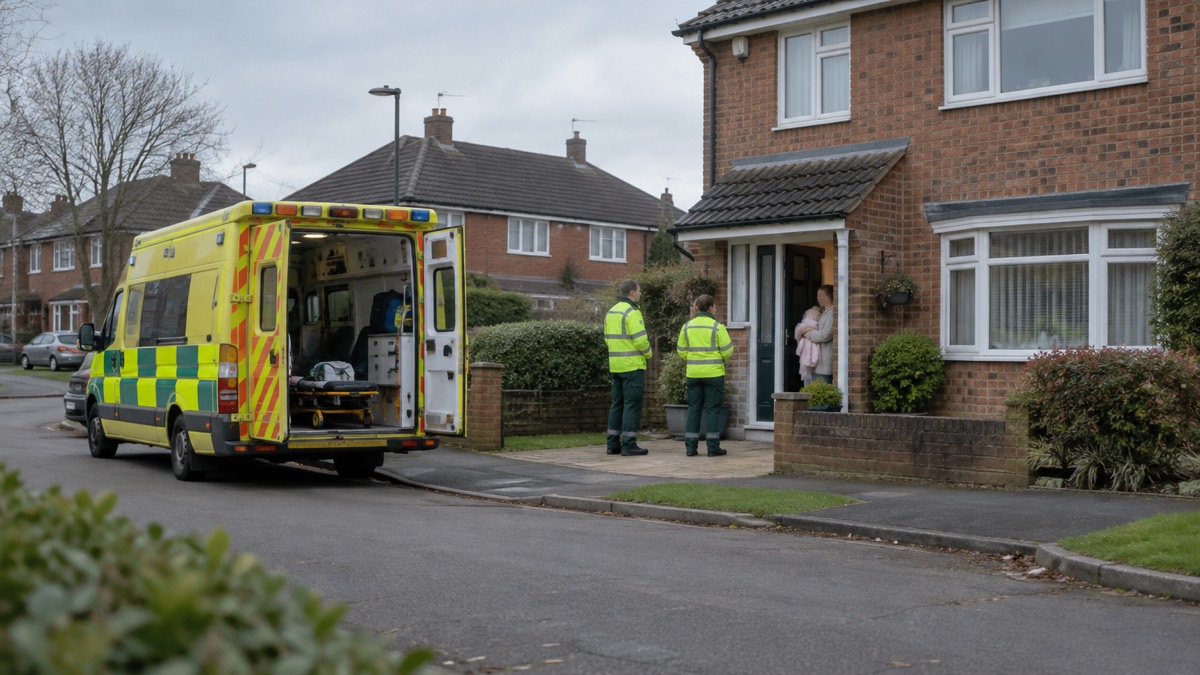
A febrile seizure is a fit brought on by a fever or high temperature, and it is most common in babies and young children, who cannot properly regulate their temperature yet1. Seeing it happen is frightening, but the first aid is simple: keep your child safe, do not hold them down, and let the seizure run its normal course. Seizures are usually a few minutes long, though the length varies1.
Call 999 for an ambulance unless your child has had a febrile seizure before and you have been given specific advice on how to manage it at home1. That is the single most important rule. A first fit, one lasting longer than five minutes, or repeated seizures without recovering in between all need emergency help3.
Once the seizure stops, cool your child gently, never with a cold shower or bath, and place them in the recovery position to keep their airway clear1. It may take 15 to 30 minutes for them to recover completely4. This page sets out what to do during the seizure, how to cool a feverish child, when to call 999, what to do if they stop responding, and what recovery looks like.
What to do during a febrile seizure: keep them safe and do not hold them down
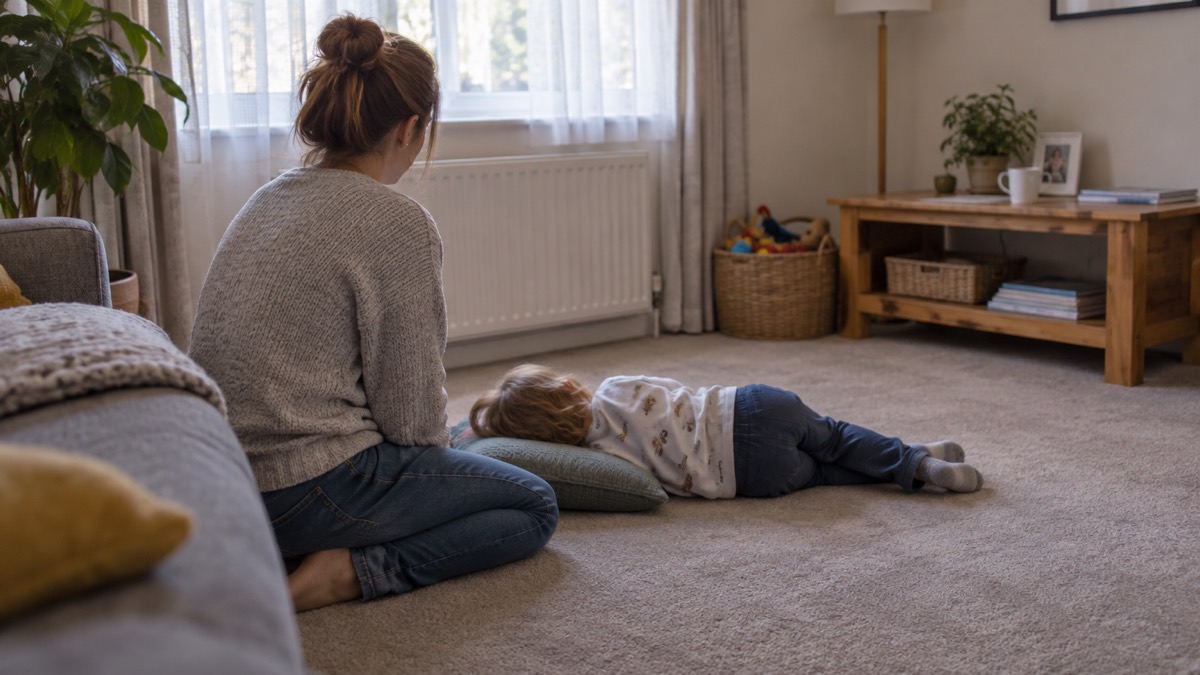
Your job during the seizure is to stop your child hurting themselves and to let the fit take its course. The British Red Cross advises you to make them safe and prevent injury, use a blanket or cushion to protect their head, do not restrain them, remove objects that may injure them, and let the seizure run its normal course7. Restraining them may cause injury to you or to them7.
NHS inform, Scotland's official health information service, gives the same instruction: do not restrain them or attempt to move them unless they are in immediate danger3. St John Ambulance adds that you can surround small children with padding for safety4. For a baby, do not restrain them or move them unless they are in immediate danger8. If a seizure happens during heatstroke, official guidance is to move nearby objects out of the way to prevent injury9.
What you may see can look alarming. The baby or child may be less responsive or unresponsive, arch their back, clench their fists, stiffen their body and shake vigorously; they may be red-faced, hot to the touch and sweating; their eyes may roll upwards and they may hold their breath1. St John Ambulance lists jerking with clenched fists and an arched back, hot flushed skin, twitching of the face, squinting or rolled back eyes, drooling, vomiting and loss of bladder or bowel control8. None of this means you should intervene physically. Keep your hands off, keep the space clear, and watch the clock.
Time the seizure if you can. A seizure lasting longer than five minutes is one of the reasons to call 9993. Knowing how long it has gone on helps the ambulance crew and the doctors who follow.
Cooling a feverish child during and after a seizure
A fever is the trigger, so bringing the temperature down gently is part of the aftercare. The British Red Cross advises that to reduce their temperature you remove their outer layers of clothing and any blankets, give fluids such as water and juice, give the recommended amount of paracetamol or ibuprofen syrup, and keep them in a cool environment by opening windows and turning down central heating1. For a feverish child more generally, remove excess clothes and give them fluids such as water or diluted juice to cool them and keep them hydrated2.
During the seizure itself, St John Ambulance's baby guidance is to try to cool the baby down, take off any bedding and strip them to a single layer of clothing to help cool them, and make sure they do not get cold8. Its general seizure guidance is to cool them by taking off bedding and stripping a single layer of clothing without letting them get cold4. The British Red Cross baby and child booklet says to cool the child and remove any bedding or clothing once the seizure stops, ensure a good supply of fresh air without over-cooling the child, and once the seizure has passed place the child in the recovery position and call for help6.
| Stage | What to do | Why |
|---|---|---|
| During the seizure | Strip to a single layer, remove bedding, keep the room airy but do not let them get cold8 | Helps cool them without shock |
| Once it stops | Remove bedding or clothing, ensure fresh air, do not over-cool6 | Gentle cooling after the fit |
| After recovery | Remove outer layers and blankets, offer water or juice, paracetamol or ibuprofen syrup in the recommended amount, open windows, turn down heating1 | Brings the temperature down and keeps them hydrated |
Two things are firmly out. Do not give a cold shower or bath: the cold water would be distressing and may cause hypothermia1. And do not over-cool: the aim is a comfortable child, not a cold one6. If your child has persistent vomiting, contact your GP10.
When to call 999: first seizure, over five minutes or repeated seizures
Call 999 for an ambulance unless your child has had a febrile seizure before and you have been given specific advice on how to manage it at home1. That covers the common case: a first fit means an ambulance. The Scottish winter health guide is blunt about it: phone 999 or attend the Emergency Department if your child has a fit (febrile seizure) for the first time and they cannot stop shaking10.
The wider seizure guidance sets out the red flags. NHS inform says to call 999 if someone has a seizure that lasts longer than 5 minutes, more than 1 seizure without recovering in between, a seizure for the first time, is injured or has breathing problems, is violent, agitated or confused after a seizure, or has 3 or more seizures which stop on their own within 24 hours and this is unusual for them3. St John Ambulance says to call 999 or 112 if it is the casualty's first seizure, they are having repeated seizures, the cause is unknown, the seizure continues for more than five minutes, the casualty is unresponsive for more than 10 minutes after the seizure, or they have an injury on another part of the body or are not breathing normally4.
Epilepsy Action's care guidance says to call 999 if the seizure continues for more than 5 minutes, the person is not regaining consciousness, the person goes straight into another seizure, the person has trouble breathing after the seizure, or the person has never had a seizure before11. The NHS seizure page, last reviewed on 19 December 2023, says to call 999 and ask for an ambulance if it is the first time someone has had a seizure, the seizure lasts longer than is usual for them, it lasts more than 5 minutes if you do not know how long their seizures usually last, the person does not regain full consciousness or has several seizures without regaining consciousness, the person is seriously injured during the seizure, or the person has difficulty breathing after the seizure5.
If your child has a known diagnosis and you have rescue medication, NHS inform says to phone 999 immediately if you do not have access to rescue medication or you have given the medication and seizures are continuing3. For a pregnant woman, call 999 if you have a seizure, are unable to speak, have a sudden onset of the worst headache ever, suffer loss of consciousness, or are confused or not alert [not used]. While you wait, stay calm12.
If your child stops responding: prepare to give CPR
If your child is unresponsive and not breathing normally, call 999 and start CPR straight away13. The NHS is clear that this is the moment to act, not to wait. St John Ambulance says that if a child is not responding to you, you will need to call 999 or 112 for emergency help and follow the instructions of the call handler14. The Royal Wolverhampton NHS child health service says to dial 999 immediately for an ambulance and start child CPR if your child is unresponsive and not breathing normally15.
If your child shows signs of becoming responsive, such as coughing, opening their eyes, speaking, and starts to breathe normally, St John Ambulance says to put them in the recovery position, monitor their level of response and prepare to give CPR again if necessary14. The NHS says that if there are definite signs of life, continue rescue breathing until the child breathes normally for themselves, put them in the recovery position with the head slightly tilted back, send for help, and keep checking breathing13. For a baby under one, continue chest compressions until emergency help arrives, the baby shows signs of becoming responsive, the baby starts breathing normally, or you are too exhausted to continue16.
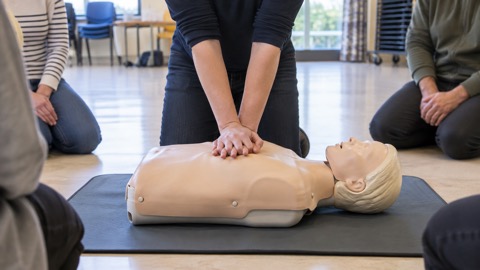
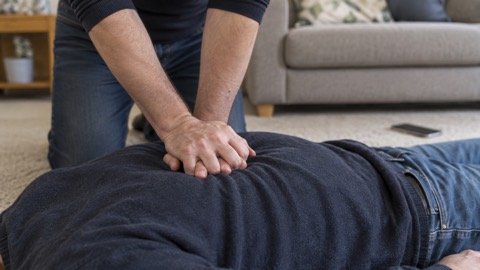
The detail of compressions, rescue breaths and the recovery position is covered on our pages on how to do CPR on a child, how to do CPR on a baby under one and the recovery position. If you have never done CPR, the call handler will talk you through it14.
Recovery: 15 to 30 minutes to come round fully
It may take 15 to 30 minutes for the casualty to recover completely from a seizure4. Do not expect your child to be themselves straight away. Once the seizure has passed, place the child in the recovery position and call for help6. Keep them comfortable, keep the room cool and let them rest.
For comparison, someone who has fainted will usually wake up within 30 seconds17, and most people with heat exhaustion should start to recover within 30 minutes9. A seizure recovery is slower than a faint, which is one reason it needs watching. If your child is unresponsive for more than 10 minutes after the seizure, that is a reason to call 9994.
After a febrile seizure, the priority is the fever behind it. Remove outer layers and blankets, offer fluids such as water or juice, give the recommended amount of paracetamol or ibuprofen syrup, and keep the room cool1. If your child has persistent vomiting, contact your GP10. If you are worried about symptoms that are not settling, contact NHS 11118.
Signs, causes and telling a febrile seizure from epilepsy
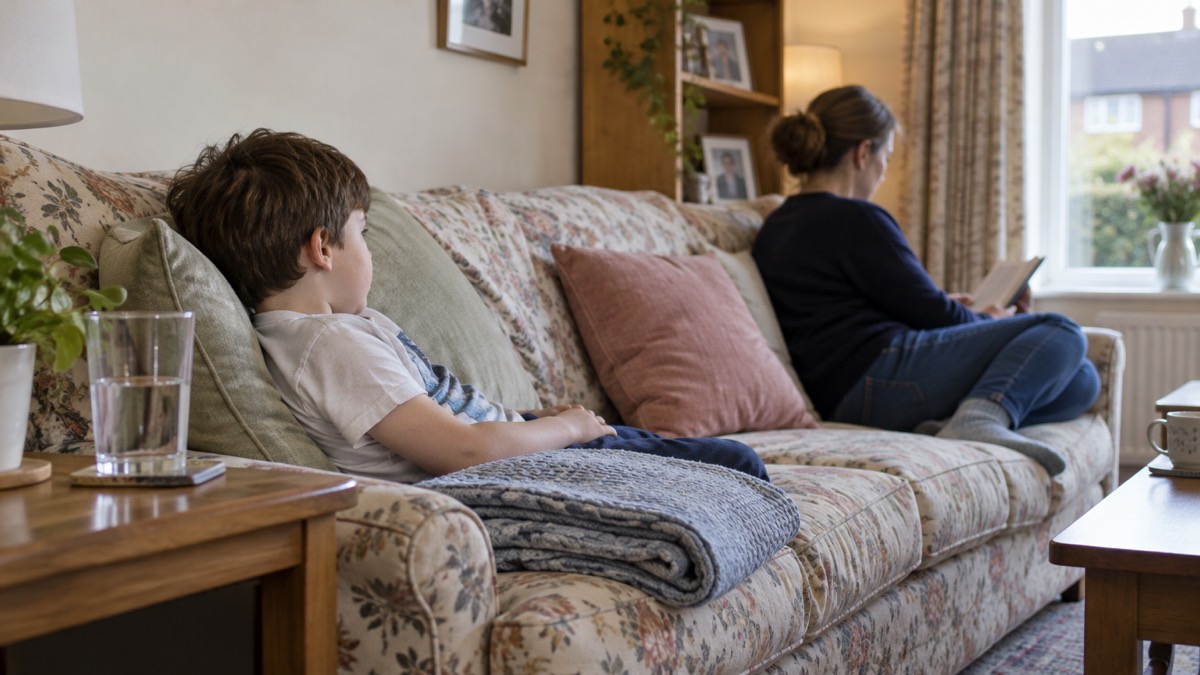
A febrile seizure is caused by a fever or high temperature1. A baby or child can have one because of a high temperature because they cannot properly regulate their temperature yet2. That is different from epilepsy. A seizure can happen when there is a disturbance in the brain's electrical activity, and the most common cause is epilepsy7. Other causes include lack of sleep, stress, head injuries, alcohol poisoning, lack of oxygen, certain drugs, extreme temperatures, flashing lights and a diabetic hypo with blood glucose too low4.
Epilepsy itself covers focal (or partial) seizures, where only a small part of the brain is affected, generalised seizures and unclassified seizures3. If your child has a seizure for the first time, call 9991. A doctor can then work out whether it was a febrile seizure or something that needs investigating.
Some people with epilepsy wear a special bracelet or carry a card to let medical professionals and anyone witnessing a seizure know they have epilepsy5. If you find identification on someone having a seizure, such as a card, bracelet or necklace, it tells you about their condition; if you cannot find anything and are unsure, call 9997. People with diabetes may also carry a card, bracelet or necklace, or an insulin pen, glucose gel or glucose tablets19.
You can prepare your own family's information. Add emergency contacts or medical information to your mobile phone, often called ICE or Medical ID, so emergency services can access it without unlocking your phone, and let your chosen emergency contact know20. Our page on Message in a Bottle explains keeping medical details where responders look.
Where to get help and what to have ready
For a first febrile seizure, the help you need is an ambulance: call 9991. If your child is unwell but not in an emergency, contact your GP, and for persistent vomiting after a fever, contact your GP10. If you are concerned about symptoms that are not settling, contact NHS 11118. The arrangements are the same across the UK: 999 and 112 both reach the emergency services4, and NHS 111 is the non-emergency line in England, Scotland and Wales.
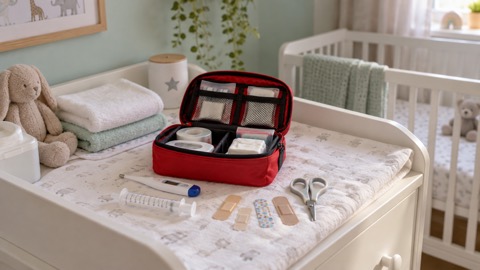
A few things make the next seizure easier to handle. Keep a thermometer, children's paracetamol or ibuprofen syrup in the recommended amount, and a cushion or blanket to hand1. Know your child's normal temperature and how they behave when feverish. Have your phone charged with ICE or Medical ID set up20. Our Baby and Child Kit Checklist sets out what to keep ready, and First Aid at Home covers the wider household kit.
If you want to feel more confident, a first aid course teaches seizure first aid and child CPR. Our page on first aid courses explains the types and lengths. For the general approach to any emergency, start with What to Do First: Danger, Response, Airway and Breathing.
Sources (20)
- Febrile seizure, British Red Cross, 2026-10-29
- Fever, British Red Cross, 2026-10-28
- Epilepsy, NHS inform, 2026-10-28
- Seizure, St John Ambulance, 2026-10-28
- What to do if someone has a seizure (fit), NHS, 2023-12-19
- Baby and Child First Aid Booklet, First Aid Training, 2025-08
- Seizures, British Red Cross, 2026-10-29
- Febrile seizure, St John Ambulance, 2026-10-28
- Heat exhaustion and heatstroke, nidirect, 2025-12-02
- Your Health Guide Winter 2025, NHS Western Isles, 2025-12
- When someone has a seizure: care, Epilepsy Action, 2025-11-20
- What to do when the ambulance is coming, South Western Ambulance Service, 2026-10-29
- How to resuscitate a child, NHS, 2026-05-21
- Child CPR, St John Ambulance, 2026-10-28
- Basic first aid, Royal Wolverhampton NHS Trust, 2026-10-29
- How to give a baby CPR, NHS inform, 2026-07-24
- Fainting, NHS, 2026-08-17
- Staying well in hot weather, Berkshire Healthcare NHS Foundation Trust, 2026-10-29
- Diabetic emergency, British Red Cross, 2026-10-29
- Be ready for emergencies, UK Government, 2026-10-21
 Baby and Child Kit Checklist
 Bleeding Control Kit Checklist
 Car Kit Checklist
 CPR on a Baby
 CPR on a Child
 Chest Compression Rate and Depth
 Rescue Breaths or Hands-Only CPR
 Checking Breathing
 Agonal Breathing and CPR
 Breathing During CPR
 Recovery Position and Spine
 Cardiac Arrest vs Heart Attack
 Heart Attack First Aid
 Defibrillator Pad Placement
 Defibrillator on a Child