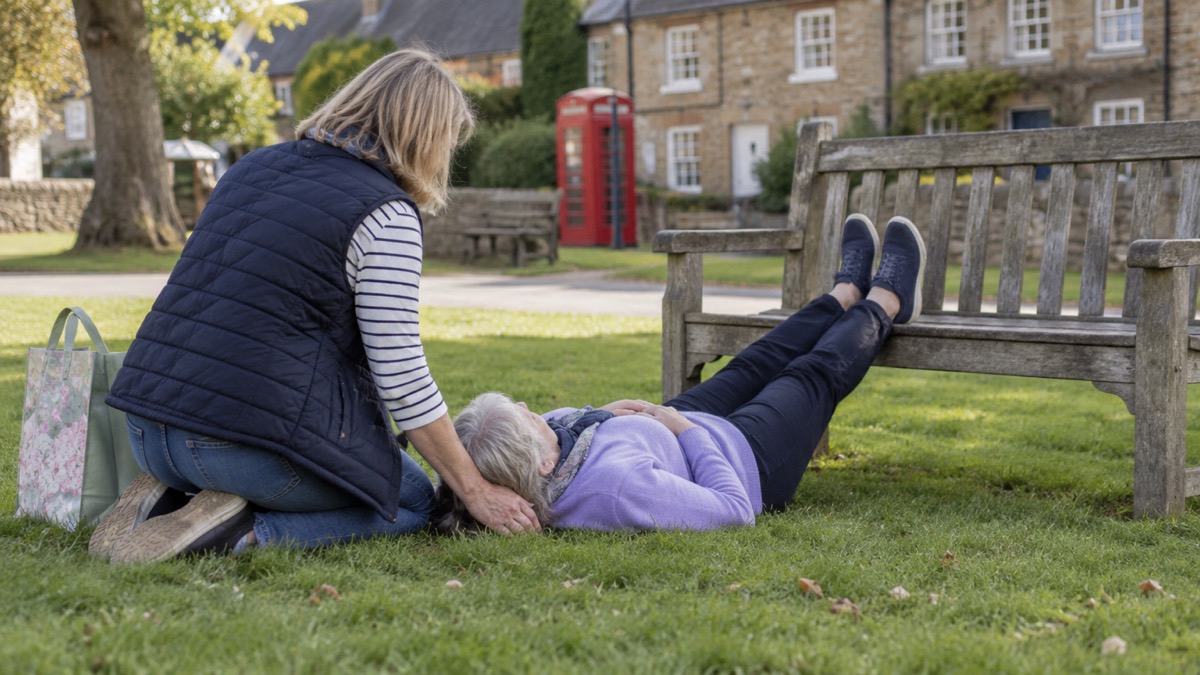
Fainting is when you pass out for a short time1. It happens when the blood supply to the brain drops briefly, and usually the person who has fainted will wake up within 30 seconds1. In most cases it is not serious, but there are moments when it is, and knowing the difference is what this page is for.
If someone has fainted, the immediate priorities are simple: check that they are breathing, check that they wake up, and check that they have not hurt themselves in falling. If they are not breathing, or they cannot be woken within 1 minute, call 999 immediately1. If they wake up quickly and are otherwise well, let them stay lying down until the faint feeling has passed, then help them up slowly. Afterwards, the NHS advises seeing a GP to find out what might have caused it, because it is probably nothing serious but it is important to get checked1.
What to do when someone faints
Work through these steps in order. They follow the NHS guidance on fainting and the standard first aid approach to an unresponsive person1.
- Check for danger to yourself first. Before you help, make sure whatever caused the faint, or the surroundings, is not a hazard to you.
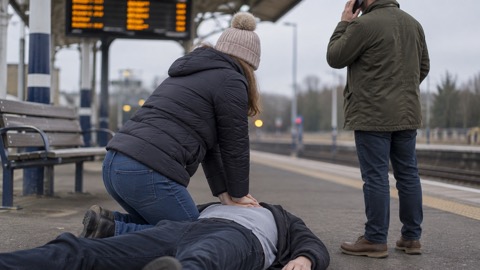
- Check whether they are breathing. If they are not breathing normally, phone 999 and start CPR immediately, and ask someone nearby to get a defibrillator2. If you are on your own, do not leave the casualty to look for a defibrillator yourself; the ambulance controller can tell your helper where the nearest one is3. Our pages on how to check if someone is breathing and how to do CPR take you through this step by step.
- Check whether they wake up. Usually the person who has fainted will wake up within 30 seconds1. If they cannot be woken up within 1 minute, call 9991.
- Look for injuries. Someone who faints can hurt themselves falling. If they have seriously hurt themselves before or after fainting, call 9991. If a fall looks serious, do not try to move them or give them anything to eat or drink; keep them warm and call for an ambulance, which is the advice given for serious falls4.
- Reassure them and assess together. If someone else falls or faints, it is important to reassure them and assess the situation together before you act, as it can take a few minutes to feel pain from injuries5. What you notice may also be useful for the person or their doctor to know later, so take note of what happened6.
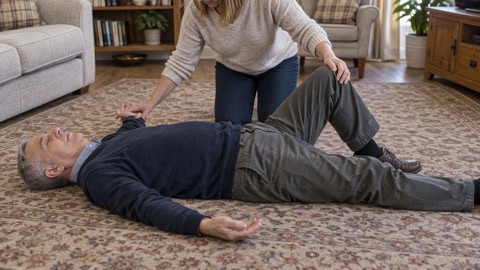
- Let them stay down until it passes. Keep them lying down, covered and warm but not too hot, until the faint feeling has worn off7. Then help them up slowly and gradually.
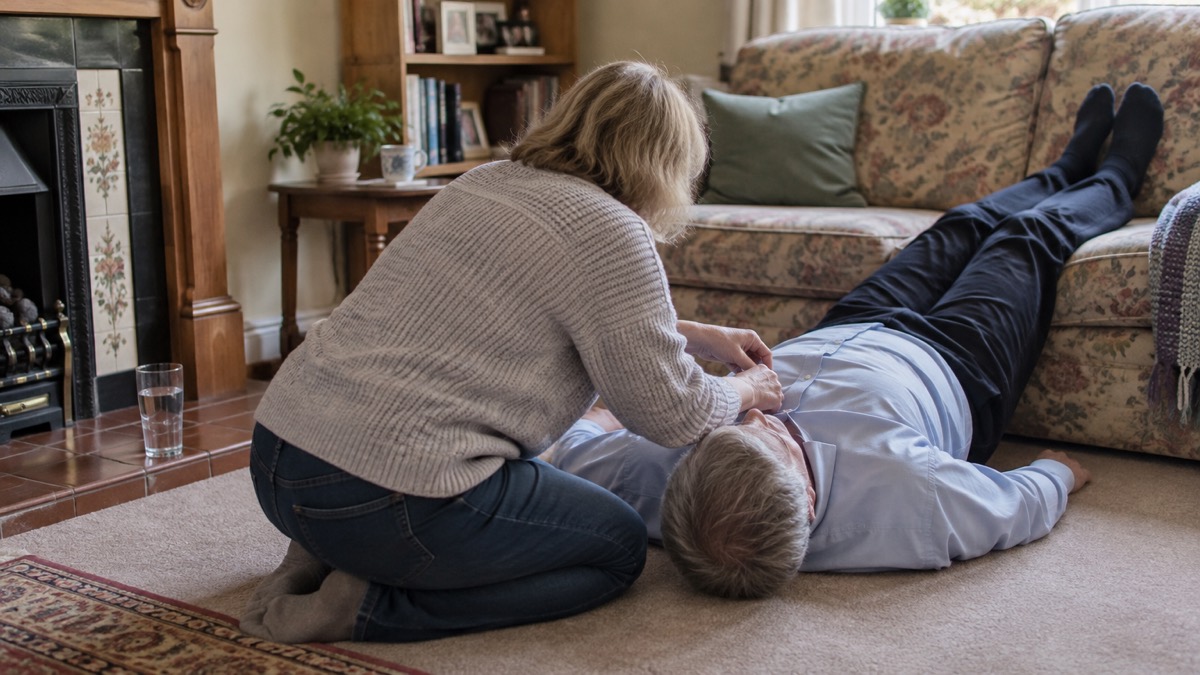
If the person is breathing and wakes up within a minute, most faints need no more than this. Stay with them while they recover, offer reassurance, and do not rush them back on their feet. Getting up too quickly after a faint can bring on another one, so take it slowly and sit for a while before standing.
When to call 999
The NHS gives a clear list of situations in which fainting needs an ambulance immediately. Call 999 if someone who has fainted1:
- is not breathing
- cannot be woken up within 1 minute
- has not fully recovered, or has difficulty with speech or movement
- has chest pain, or a pounding, fluttering or irregular heartbeat (heart palpitations)
- has seriously hurt themselves before or after fainting
- is shaking or jerking, which means they are having a seizure or fit
- fainted while exercising
- fainted while lying down
The last two matter because they point away from an ordinary faint. Fainting while lying down, or during exertion, suggests the cause may lie with the heart rather than a simple drop in blood pressure, and that needs urgent assessment. Chest pain and palpitations alongside a faint fall into the same category and need urgent assessment too.
The wider 999 system backs this up. Ambulance services describe 999 emergencies as including someone who is unconscious or not breathing8, and loss of consciousness is listed among the reasons an ambulance response is needed9. If you are unsure, it is always better to call: the ambulance service would rather assess a call that turns out to be a simple faint than miss one that is not.
If the person is shaking or jerking, treat it as a seizure. For a seizure, call 999 and ask for an ambulance if it is the first time someone has had a seizure, if it lasts more than 5 minutes when you do not know how long their seizures usually last, if they do not regain full consciousness, if they are seriously injured, or if they have difficulty breathing afterwards6. Our page on what to do if someone has a seizure covers this in full.
Lie down and raise the legs if someone feels faint
The best faint is the one that never happens. If someone says they feel faint, get them to lie down, and raise their legs. This is the same principle used in treating shock: help the casualty to lie down on a blanket or rug to protect them from the cold, and raise and support their legs above the level of the heart to improve blood supply to the vital organs5. Raising the legs returns blood from the legs towards the brain, which is exactly what a fainting brain is short of.
The NHS advice for children who feel faint after an accident is the same in shape: get them to keep their head down or, ideally, lie down, and the faint feeling should wear off in a minute or two7. If a child looks pale or feels unwell, lie them down, keep them covered up and warm, but not too hot7.
A few practical points while waiting for it to pass:
- Keep them lying down until the feeling wears off, then get up slowly, in stages: sitting first, then standing.
- Loosen anything tight around the neck if you can do so without moving them unnecessarily.
- Keep them warm with a coat or blanket, but not too hot7.
- If you are the one who feels faint, do not try to walk it off. Lie down where you are, or at minimum put your head down between your knees while seated, and tell someone nearby how you feel.
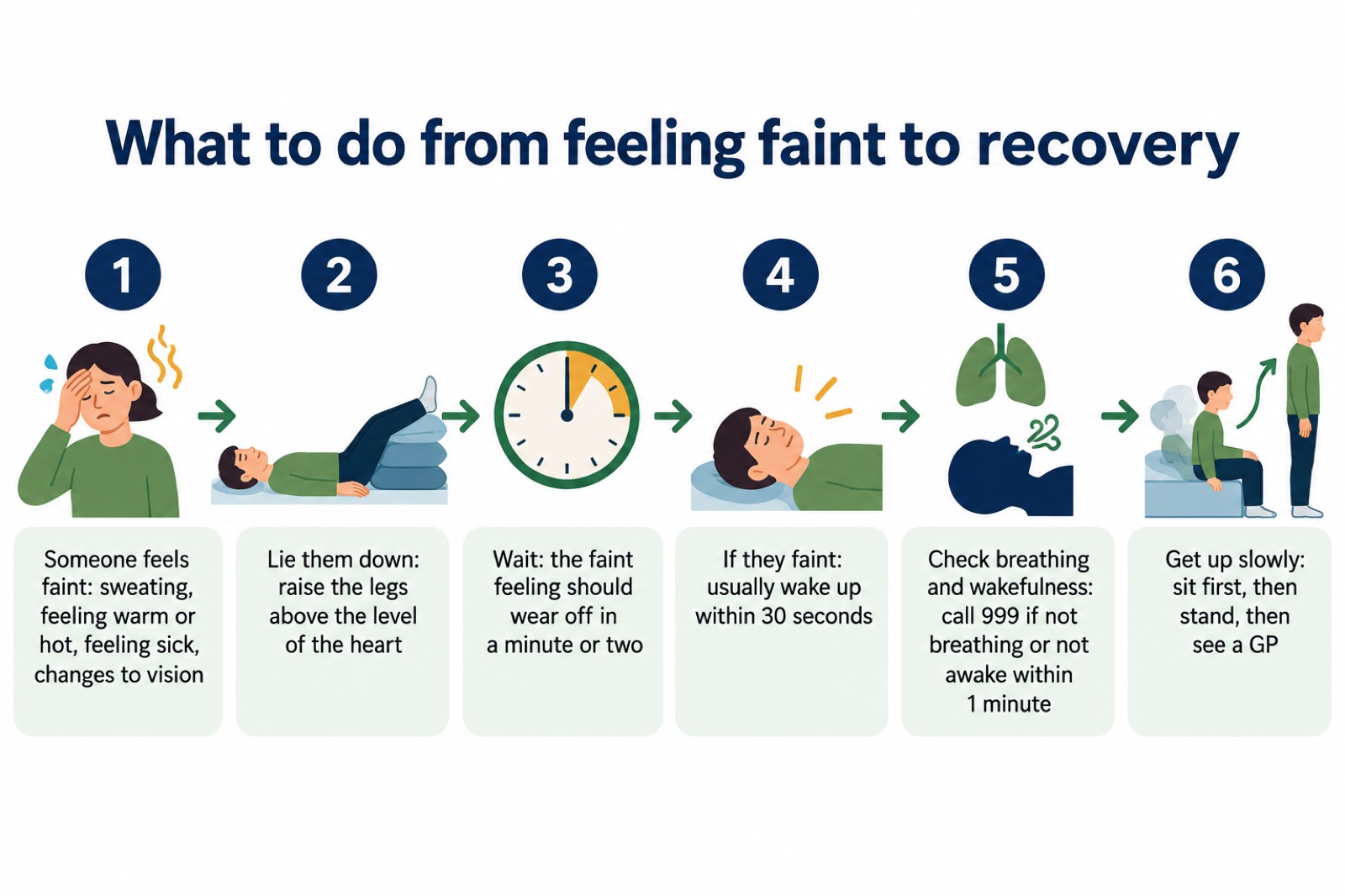
If the feeling does not pass, or the person actually faints, move into the steps in the first section. And if they have fainted and not fully recovered, or have difficulty with speech or movement afterwards, that is a 999 call, not a wait-and-see1.
Signs that someone is about to faint
Fainting usually gives warning. The NHS lists the feelings that commonly come before a faint: sweating, feeling warm or hot, feeling sick, and changes to your vision1. Someone about to faint often looks pale and clammy, and may say the room is closing in, sounds are fading, or their vision is greying at the edges.
If you notice these signs in someone else, act before they go down:
- Get them to sit or, better, lie down immediately.
- Raise the legs if they are lying down10.
- Stay with them and talk calmly; reassurance itself helps.
- If they do faint, you are already in position to protect their head and check their breathing.
If you notice these signs in yourself, the same applies, with one addition: tell someone. A faint you announce is far safer than one you have alone, because someone can catch you, check you and call for help if needed. This matters doubly in situations where falling is dangerous, such as at the top of stairs, on a platform edge or in the bath.
Common triggers: pain, hunger, thirst, exhaustion and stress
Most faints have an identifiable trigger, and many of them are things a household can do something about. The NHS lists standing up too quickly as a cause, and says it could be a sign of low blood pressure1. Falls prevention advice from the NHS adds that not eating and drinking enough can make you feel lightheaded or faint, and advises eating well and staying hydrated11. Heat is another: heat exhaustion symptoms include dizziness, a headache, excessive sweating and pale clammy skin, fast breathing or pulse, and being very thirsty12, and heatwave guidance lists feeling very thirsty alongside a high temperature of 38C or above as signs to act on13.
| Trigger | What it looks like | What to do about it |
|---|---|---|
| Standing up too quickly | Dizziness or faint on rising, possibly low blood pressure1 | Rise slowly, pause before walking; see a GP if it keeps happening1 |
| Not eating or drinking enough | Lightheaded or faint feeling11 | Eat well and stay hydrated11 |
| Heat | Dizziness, sweating, pale clammy skin, thirst, fast pulse12 | Cool down, rest, drink water; most people recover within 30 minutes12 |
| Pain, exhaustion and stress | Feeling faint during or after an ordeal | Lie down, raise the legs, head down until it passes7 |
The heat point deserves emphasis in summer. If someone shows signs of heat exhaustion, get them to a cool place, give them water to drink and cool their skin; most people should start to recover within 30 minutes12. Call 999 for an ambulance if they do not respond to that treatment within 30 minutes, or have severe symptoms such as loss of consciousness, confusion or seizures12. Our page on heatstroke covers the full progression.
Dehydration is worth watching in its own right. Signs of dehydration alongside pale or blotchy skin, cold skin, difficulty breathing, confusion or unusual sleepiness are among the reasons to seek urgent help, and that advice comes with the same instruction not to drive to A&E but to ask someone to drive you or call 99914.
Why people faint
Fainting is when you pass out for a short time1. The mechanism is a brief drop in the blood supply to the brain: for a few seconds the brain does not get enough blood, consciousness switches off, the person falls, and lying flat restores the flow. That is why the recovery position for a faint is flat on the back with legs raised, and why most people come round quickly, usually within 30 seconds1.
The triggers in the previous section explain most of the rest. Standing up quickly can drop blood pressure momentarily1. Hunger, thirst and exhaustion reduce the body's reserves11. Pain and strong emotion can trigger a sudden slowdown in heart rate and a drop in blood pressure. Heat dilates blood vessels and adds fluid loss through sweat12.
Some faints have a more serious cause, and this is what the 999 list is designed to catch. Fainting while exercising, fainting while lying down, chest pain and palpitations all point to possible heart problems, which is why the NHS routes them straight to 9991, and why heart emergency guidance says to phone 999 immediately if someone loses consciousness or does not respond15. A faint with shaking or jerking is a seizure, which has its own pathway6.
There are also conditions that look like fainting but are not. Anaphylaxis, a severe allergic reaction, can cause someone to collapse; the advice for someone with anaphylaxis is to lie them down, raise the legs, and if they are struggling to breathe, raise their shoulders or sit up slowly, or lie on the left side if pregnant16. Shock, where blood supply to the organs fails after injury or illness, also causes pale cold skin and a weak pulse, and is treated by lying the person down and raising the legs17. If any of these is on the cards, follow the specific guidance: our pages on anaphylaxis, shock and hypothermia take each in turn.
See a GP after fainting
Even after a straightforward faint with a full recovery, the NHS advice is to see a GP to find out what might have caused it. The wording is worth keeping in mind: it is probably nothing serious, but it is important to get checked by a GP to find out what might have caused it1.
Before the appointment, write down what you can remember:
- What you were doing just before, and whether you stood up quickly1
- Any warning feelings: sweating, warmth, nausea, vision changes1
- How long you were out, and whether you hurt yourself
- Any medicines you take, as medicines can affect balance and how you feel; a GP or pharmacist can advise11
If you have had a fall as well as a faint, the same advice applies from the falls guidance: see a GP if you have had a fall or you are worried about your balance or mobility11. For children, monitor them closely over the next 24 to 48 hours after a fall for signs of vomiting, unusual sleepiness, worsening headache, confusion, seizures or changes in behaviour, and seek urgent medical advice if any of these occur18.
Do not drive yourself to A&E
If a faint needs hospital attention, how you get there matters. The NHS advice on fainting is blunt: do not drive yourself to A&E1. The same instruction appears across NHS guidance for other emergencies: do not drive to A&E, ask someone to drive you or call 999 and ask for an ambulance, and bring any medicines you take with you14.
The reason is simple. Someone who has just fainted may faint again, and a second faint behind the wheel endangers the driver, any passengers and everyone on the road. An ambulance also means treatment can start on the way and the crew can assess the cause.
For children, the advice differs slightly: you should take your child to A&E yourself if possible, but if your child is too unwell, dial 999 for an ambulance19. Use your judgement on how unwell they are, and when in doubt, call.
Fainting regularly, driving and the DVLA
If fainting becomes a pattern rather than a one-off, two obligations follow.
First, see a GP, as above, and keep a record of each episode. Regular fainting points to a cause that needs identifying, whether that is low blood pressure on standing1, medicines affecting balance11, or something that needs a heart assessment.
Second, you must tell the Driver and Vehicle Licensing Agency (DVLA) if you are fainting regularly, as it could affect your ability to drive1. This is not optional and it applies whatever the cause turns out to be. Fainting without warning is one of the most dangerous things that can happen to a driver, and the DVLA needs to know so it can decide what conditions, if any, apply to your licence. Tell them before you next drive.
Between episodes, the everyday measures from falls prevention advice all reduce the background risk: eat well and stay hydrated, since not eating and drinking enough can make you feel lightheaded or faint, and speak to a GP or pharmacist if medicines could be affecting your balance11.
Where to get help
The routes to help after a faint, in order of urgency:
| Situation | Where to go |
|---|---|
| Not breathing, or not awake within 1 minute | Call 999 immediately1 |
| Chest pain, palpitations, seizure, fainted while exercising or lying down, serious injury | Call 9991 |
| A first seizure, or a seizure over 5 minutes | Call 999 and ask for an ambulance6 |
| Fainted but fully recovered | See a GP to find out the cause1 |
| Fainting regularly | See a GP, and tell the DVLA1 |
| Unwell after heat, not recovering in 30 minutes | Call 999 for an ambulance12 |
| Not sure whether it is urgent | Call 111, or 999 if in doubt3 |
If you want to be better prepared for the moment itself, a first aid course builds the confidence to act, and free online CPR training takes under an hour: see our pages on first aid courses and learning CPR free online. The primary survey, the structured check of danger, response, airway and breathing, is the framework behind steps 1 and 2 above, and is worth knowing before you need it. For the household more broadly, our first aid at home guide pulls together the emergencies an ordinary family is most likely to meet.
Sources (19)
- Fainting, NHS, 2026-08-17
- How to do a primary survey, NHS inform, 2026-07-24
- CPR, NHS, 2026-10-29
- What to do if you fall, NHS inform, 2026-04-30
- Shock first aid, NHS inform, 2026-07-24
- What to do if someone has a seizure (fit), NHS, 2023-12-19
- What to do if your child has an accident, NHS, 2025-12-18
- Accident and emergency, South Western Ambulance NHS Foundation Trust, 2026-10-29
- Get the right help and support, South Western Ambulance NHS Foundation Trust, 2026-10-29
- Anaphylaxis, NHS, 2023-06-21
- Falls, NHS, 2025-03-06
- Heat exhaustion and heatstroke, nidirect, 2025-12-02
- Heatwave advice booklet, Leicestershire Partnership NHS Trust, 2022-07
- Dehydration, NHS, 2026-05-01
- What to do in a heart emergency, NHS inform, 2026-07-15
- Adrenaline Auto-Injectors (AAIs) Safety Campaign - AAI Safety Campaign, AAI Safety Campaign (aaisafety.campaign.gov.uk)
- Shock Symptoms and First Aid | St John Ambulance, St John Ambulance
- Child safety | Berkshire Healthcare NHS Foundation Trust, Berkshire Healthcare NHS Foundation Trust
- What to do if your child is unwell, NHS North East London, 2024-10
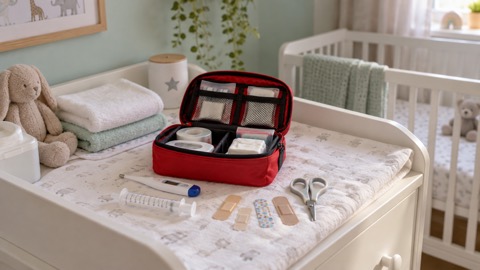 Baby and Child Kit Checklist
 Bleeding Control Kit Checklist
 Car Kit Checklist
 Danger, Response, Airway
 CPR Steps for Adults
 2025 Resuscitation Guidelines
 Defibrillators (AEDs)
 Public Access Defibrillators
 Choosing a Defibrillator
 The Recovery Position
 Choking First Aid
 Cuts, Grazes and Wounds
 Burns and Scalds
 Adrenaline Auto-Injectors
 Sepsis Signs to Act On