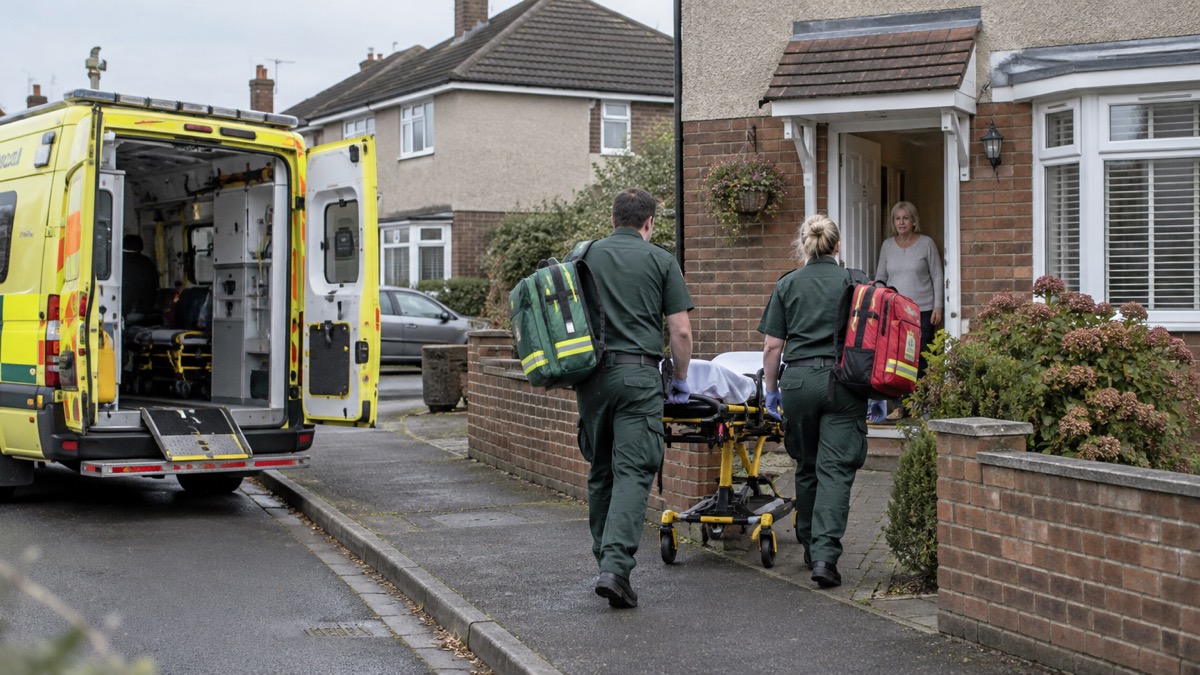
When you ring 999 for an ambulance, the speed of the response is decided by how your call is categorised, and that depends on the answers you give the call handler. In England, calls are prioritised into four categories: the most serious, Category 1, carries a response time of 7 minutes, while Category 4 calls have a target of reaching 90% of incidents within 3 hours1. In Wales there are five categories, from Purple Arrest, which gets an emergency response as quickly as possible, down to Green Planned3.
The questions the call handler asks will not delay the ambulance. Yorkshire Ambulance Service states plainly that "asking these questions will not delay our response", because key words indicating a life-threatening emergency are identified in the background while you are still talking1. Answer them as fully as you can, stay calm, and keep the line clear in case the service needs to ring you back.
This page explains what happens on the call, what each category means and how long the targets are, why a clinician may call you back instead of sending an ambulance straight away, and what to do while you wait for help.
What happens when you ring 999
When you dial 999, an operator answers and asks which emergency service you need. In a medical emergency, ask for the ambulance service and you will be put through to a call taker4. The same process is described by ambulance services across the UK: the operator asks whether you need the ambulance service, police or fire service, and in a life-threatening medical emergency you should ask for the ambulance service7.
Once you are through to the ambulance call handler, you will be asked five initial questions1:
- Is the patient breathing?
- Is the patient awake?
- Tell me exactly what has happened.
- What is the address of the emergency?
- What number are you calling from, so the service can call you back if you get cut off?
The address matters most for getting help to you. If you are at home, give the house number and street name; the East of England Ambulance Service asks callers to check that the house number or name is clearly visible from the roadside so the crew can find you quickly10. If you are somewhere unfamiliar, use a landmark, a shop name or anything that pins down the location.
Answering the questions will not slow the ambulance down. Yorkshire Ambulance Service explains that key words indicating a life-threatening emergency are picked up in the background while you speak, so help can already be moving while the assessment continues1. The North West Ambulance Service makes the same point: "these questions will not delay the help you need. They simply allow us to make sure you'll receive the most appropriate care" and let the service keep advising you over the phone11. East of England puts it just as directly: "Answering these questions will not impact how quickly we'll arrive"10.
If the patient's condition is immediately life threatening, with breathing absent or severely compromised, the call handler will give you simple, effective instructions on how to assist until the crew arrives, which might include CPR, dealing with choking or helping with childbirth3. If it is an emergency, the call handler will send an ambulance and will ask for your name before ending the call; if you do not need an ambulance, they will tell you what to do instead12.
If English is not your first language, say so in English. Confidential interpreters can be provided within minutes of taking your 999 call: state in English the language you would prefer to use and wait on the line to be connected1. The Welsh ambulance service confirms that language interpreters are available if required3.
If you cannot use the phone at all, for example because you are deaf or the situation makes speaking unsafe, the Emergency SMS service lets registered users text for help. It usually takes about two minutes to get a reply; if you do not get a reply within three minutes, try again or find another way of getting help13.
What to do while you wait for the ambulance
The single most useful thing you can do is stay calm. The Northern Ireland Ambulance Service explains why: "The most important thing you can do before help arrives is to stay calm; we may need you to help with treatment until the response gets to you"14. Listen carefully to the call handler and follow the instructions given to you, whether the problem is a suspected heatstroke or anything else15.
What you do while waiting depends on where you are and what has happened, but the same practical steps come up across every ambulance service's advice:
- Stay with the patient until help arrives, especially if you are on the street7.
- If you are in your car, turn your hazard lights on10.
- Check that your house number or name is clearly visible from the roadside10.
- Get someone to open the doors or stand outside to signal to the crew when help arrives7.
- Write down the patient's GP details if you know them, and collect any medication they may need7.
- Tell the service about any allergies the patient has7.
- Lock away any family pets10.
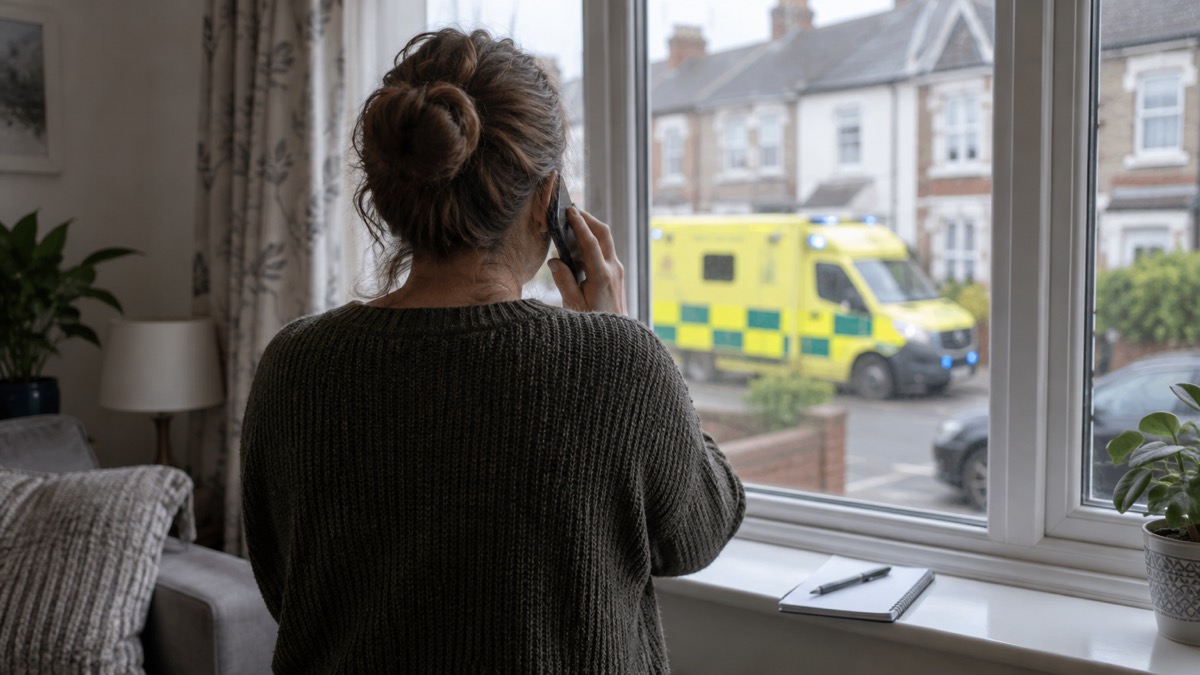
For specific conditions, follow the first aid advice for that condition and keep the patient as comfortable as you can. NHS inform advises that after phoning 999 for a suspected heart attack, you should ask the patient to sit and rest until the ambulance arrives6. For a stroke, keep the casualty comfortable and supported while you wait; if they are responding, you could help them lie down and reassure them that help is on the way16. London Ambulance Service's stroke advice adds that when the crew arrive they will perform an initial assessment, and you may have a video call with a stroke specialist17.
If you are waiting because of a fire, the fire and rescue services' rule is simple: get out, stay out and call 999, and find somewhere safe to wait18. Never go back inside for anything.
Keep the line you called from free. The call handler may need to ring back, and if your call is later passed to a clinical hub, an unknown or withheld number may be the clinician trying to reach you19. Our page on information to have ready for the ambulance crew lists what to gather while you wait, and the first aid at home guide covers what to do for specific injuries and illnesses.
How your call is categorised
After the initial questions, your call is triaged. Two systems sit behind this. In Wales, calls are processed via the computerised Medical Priority Dispatch System, known as MPDS8. In England, ambulance services use NHS Pathways, described by North East Ambulance Service as "an advanced clinical triage system that provides us with the ability to identify the medical needs of 999 calls" so patients can be directed to the right care7. In either case, the call handler works through the questions with you and the system supports the decisions about what response to send.
The categorisation then determines two things: the type of help the service provides, and how quickly an ambulance will get to you if one is necessary20. In England, the Ambulance Response Programme introduced a set of pre-triage questions to help identify patients who need the fastest response, and calls were then divided into categories2. For calls that are not immediately life-threatening, control room staff now have more time to understand the patient's condition and send the most appropriate response2.
The number of categories differs between nations, and this is where the two systems diverge.
| Nation | Categories | Most serious | Least serious |
|---|---|---|---|
| England | Four, one being the most serious11 | Category 1 | Category 4 |
| Wales | Five5 | Purple Arrest | Green Planned |
In England, your call will be prioritised into one of four categories, one being the most serious, which determines the type of service provided and how quickly an ambulance will get to you11. In Wales, there are five response categories: Purple Arrest, Red Emergency, Orange Now, Yellow Soon and Green Planned5.
The fastest responses: cardiac arrest and Red emergencies
The most serious calls get an emergency response as quickly as possible. In Wales, patients in the Purple Arrest category, those in cardiac or respiratory arrest, and patients in the Red Emergency category, those at high risk of cardiac and respiratory arrest, are sent an emergency response as quickly as possible5. The Welsh Ambulance Service aims to respond to all calls within the minimal amount of time, aiming to achieve an eight minute response if the patient's condition is immediately life threatening3.
In England, Category 1 is an immediate response to a life-threatening condition, such as cardiac or respiratory arrest, with a response time of 7 minutes1. Category 2 covers a serious condition, such as stroke or chest pain, which may require rapid assessment or urgent transport, with a target of reaching 90% of incidents within 40 minutes2.
What arrives may not be a double-crewed ambulance. For life-threatening and potentially serious emergencies, an ambulance with two crew members is often expected, but it is possible you could be treated by a rapid response paramedic in a rapid response vehicle21. The East of England Ambulance Service lists the range of resources that may be sent: help may arrive in a rapid response vehicle, a cycle response unit in city centres and on beaches in the summer, or the responder's own car, and the service may also send a single-crewed response vehicle with an emergency care practitioner, paramedic or emergency medical technician, the air ambulance, or an emergency doctor10. Yorkshire Ambulance Service adds that a volunteer community first responder may be sent to get to the scene before the ambulance to provide immediate care1.
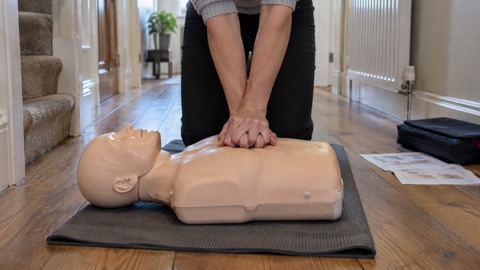
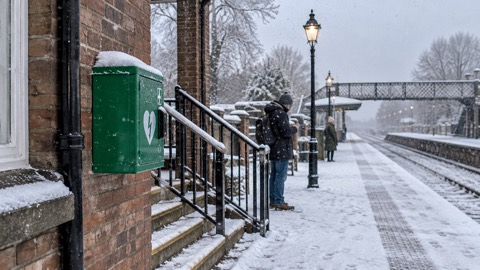
If someone is in cardiac arrest, the call handler will talk you through what to do. Our pages on how to do CPR and how to check if someone is breathing explain the steps, and a public access defibrillator may be closer than you think.
Slower categories: urgent and non-urgent responses
Not every 999 call needs an ambulance within minutes, and the lower categories exist so that the fastest resources go to the patients who need them most. An ambulance for a Category 3 call may take a little longer to arrive so that the service can give help to people who are in emergency situations; the aim is still to get to you within two hours20. For Category 4, if ambulance staff need to be sent, the aim is to get to you within three hours20.
The national targets for England, set out under the Ambulance Response Programme, are:
| Category | What it means | Response time target |
|---|---|---|
| Category 1 | An immediate response to a life-threatening condition, such as cardiac or respiratory arrest2 | 7 minutes1; 15 minutes to 90% of incidents2 |
| Category 2 | A serious condition, such as stroke or chest pain, which may require rapid assessment or urgent transport2 | 40 minutes to 90% of incidents2 |
| Category 3 | An urgent problem, such as an uncomplicated diabetic issue, which requires treatment and transport to an acute setting2 | 2 hours to 90% of incidents2; 90% within 120 minutes1 |
| Category 4 | A non-urgent problem, such as stable clinical cases, which requires transportation to a hospital ward or clinic2 | 3 hours to 90% of incidents2; 90% within 180 minutes1 |
In Wales, the equivalent lower categories work differently. Orange Now is time sensitive, for conditions needing a fast response and care from ambulance clinicians before transport to hospital for specialist care, such as a stroke or heart attack3. Yellow Soon means assess and respond, for conditions which require further clinical assessment to determine the best pathway of care, such as a person suffering from abdominal pain who may be suitable to stay at home or may need further investigations3. Green Planned is a planned response for conditions which may require community care or planned transport to urgent care services, such as a blocked catheter, chest infection, palliative care, mental health or a urinary tract infection3.
A slower category does not mean your call has been forgotten. It means the control room has judged that another patient's need is more time-critical, and for calls where there does not appear to be an immediate threat to life, a Clinical Navigator, who is a paramedic or nurse, will review your call to ensure you receive the most appropriate care3.
Why a clinician may call you back instead of sending an ambulance
For calls that do not need an emergency response, the ambulance service may arrange a clinical call-back rather than dispatching a vehicle. North East Ambulance Service explains that if the patient does not need emergency care, the control room team can arrange for a paramedic or triage nurse to call you back, assess the patient's condition and recommend the best course of action7. If an ambulance is not dispatched, you may be advised to seek other medical help, such as visiting your local minor injury unit, walk-in centre or GP surgery7.
In London this function is carried out by the Clinical Hub. If your call is passed there, it will be an experienced clinician who calls you: a paramedic, nurse, doctor or other clinician with experience in urgent and emergency care19. The purpose of the call is to make sure you get the safest and most appropriate care, in the right place, at the right time19. The clinician will ask further questions about what has happened, your current symptoms, whether the symptoms are getting better, worse or staying the same, your medical history, any medicines taken, whether you are alone or have someone with you, and what help you may already have tried19.
After speaking with you, the clinician may give you advice on managing your symptoms at home, advise you to contact a GP, pharmacist or another NHS service, refer you to a more appropriate urgent care service, arrange support from a local community or specialist service, advise you to attend an emergency department or urgent treatment centre, or arrange an ambulance response if needed19.
A call-back is not a refusal of help, and it does not rule out an ambulance. A clinician can still arrange an ambulance if, after assessment, they believe that is the right response for your condition19. Equally, arriving by ambulance does not get you through the hospital queue any quicker: the Northern Ireland Ambulance Service asks callers to "listen to our staff and follow their advice. Arriving by ambulance does not get you through to the Emergency Department queue any quicker"21, and the Welsh service adds that you will not be seen any sooner at hospital if you arrive by ambulance, unless your condition is life-threatening8. South Central Ambulance Service makes the same point from the other direction: if you are able to make your own way to hospital, please do so22.
If you are told to see a GP, pharmacist or another service, that is a clinical judgement about where you will get the right care fastest. NHS 111 can also direct you: the service can assess you online in as little as 90 seconds and direct you to the right local service, and if you need to go to A&E it will arrange an arrival time so you are seen via an express lane, usually within 30 minutes of arrival, though this can be longer if A&E is extremely busy23.
If you miss the call-back or the patient gets worse
While waiting for a clinical call-back, keep your phone nearby, make sure it is not on silent, and answer calls from withheld or unknown numbers, because the clinician may ring from one19. Stay with the patient if you are calling on someone else's behalf19.
If you miss the call, the service may try to contact you again. London Ambulance Service's advice is: "If you miss the call, we may try to contact you again. If the patient's condition has changed or you remain seriously concerned, call 999 again"19. Ring 999 again as well if the patient has recovered and you wish to cancel19.
The same rule applies while an ambulance is on its way. NHS inform's heart emergency advice is to phone 999 again if the patient's condition worsens6, and North East Ambulance Service asks you to call back if the patient's condition or location changes7. South Western Ambulance Service's guidance on when to seek urgent help lists loss of consciousness among the reasons to call 999, and states: "Call 999 immediately if you or someone else is having a heart attack or stroke. Every second counts with these conditions"24.
Do not wait politely for the call-back if things are deteriorating. Ringing 999 again is expected, and the service would rather hear from you twice than too late.
Falls at home and help for older people living alone
Falls are one of the commonest reasons an older person living alone needs help, and they show how the ambulance service's wider response works. A fall without injury may not need a double-crewed ambulance at all: it may be handled through the slower categories or a clinical call-back, with a clinician assessing over the phone whether the person can be helped to stand, needs a specialist falls response, or needs transport for assessment.
Prevention matters more than any response target. Staffordshire County Council's falls prevention service offers an NHS-approved self-assessment and advice through its Falls Assistant, which lets an older person or their family work through the risks in the home and get guidance on reducing them25. Our page on preventing accidents at home covers the household side of this, and extra help in an emergency sets out the support available to older and disabled households, including how to be flagged with your utility suppliers and ambulance service so responders know there is someone vulnerable at the address.
If someone has fallen and you are with them, the ordinary rules of this page apply: ring 999 if you think they are seriously hurt or their life is in danger26, answer the call handler's questions, and stay with them until help arrives. If they have hit their head, lost consciousness or you cannot get them up safely, treat it as an emergency rather than trying to manage alone.
Sources (26)
- What happens when you call 999, Yorkshire Ambulance Service, 2026
- Ambulance Response Programme, North East Ambulance Service, 2026
- Calling 999, NHS 111 Wales, 2021
- Phoning 999, Scottish Ambulance Service, 2026
- Welsh Ambulance Service FAQ, NHS 111 Wales, 2021
- What to do in a heart emergency, NHS inform, 2026
- Calling 999, North East Ambulance Service, 2026
- Calling 999, Welsh Ambulance Service, 2026
- What happens when you call 999, London Ambulance Service, 2026
- Using 999, East of England Ambulance Service, 2026
- Using our 999 service: an A to Z guide, North West Ambulance Service, 2024
- untitled, Welsh Ambulance Services NHS Trust
- Emergency SMS, South Tees Hospitals NHS Foundation Trust, 2022
- What to do before help arrives, Northern Ireland Ambulance Service, 2026
- What to do when the ambulance is coming, South Western Ambulance Service, 2026
- Stroke first aid, NHS inform, 2026
- Emergency stroke care, London Ambulance Service, 2026
- Get out, stay out and call 999, North Wales Fire and Rescue Service, 2026
- Clinical Hub telephone advisors, London Ambulance Service, 2026
- What happens when you call 999, North West Ambulance Service, 2025
- Emergency response, Northern Ireland Ambulance Service, 2026
- Alternatives to 999, South Central Ambulance Service, 2026
- LSC Integrated Care Board :: NHS 111, Lancashire and South Cumbria Integrated Care Board
- Get the right help and support, South Western Ambulance Service, 2026
- Falls prevention, Staffordshire County Council, 2026
- When to call 999, North West Ambulance Service, 2024
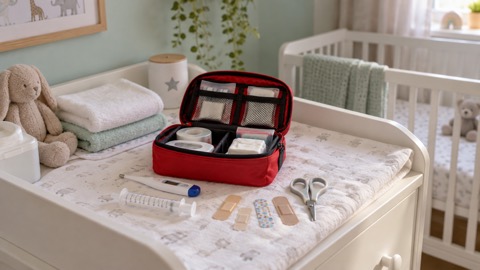 Baby and Child Kit Checklist
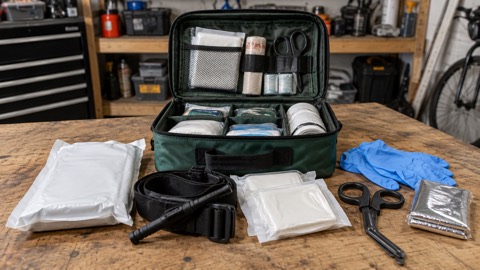 Bleeding Control Kit Checklist
 Car Kit Checklist
 Danger, Response, Airway
 CPR Steps for Adults
 2025 Resuscitation Guidelines
 Defibrillators (AEDs)
 Public Access Defibrillators
 Choosing a Defibrillator
 The Recovery Position
 Choking First Aid
 Cuts, Grazes and Wounds
 Burns and Scalds
 Adrenaline Auto-Injectors
 Sepsis Signs to Act On