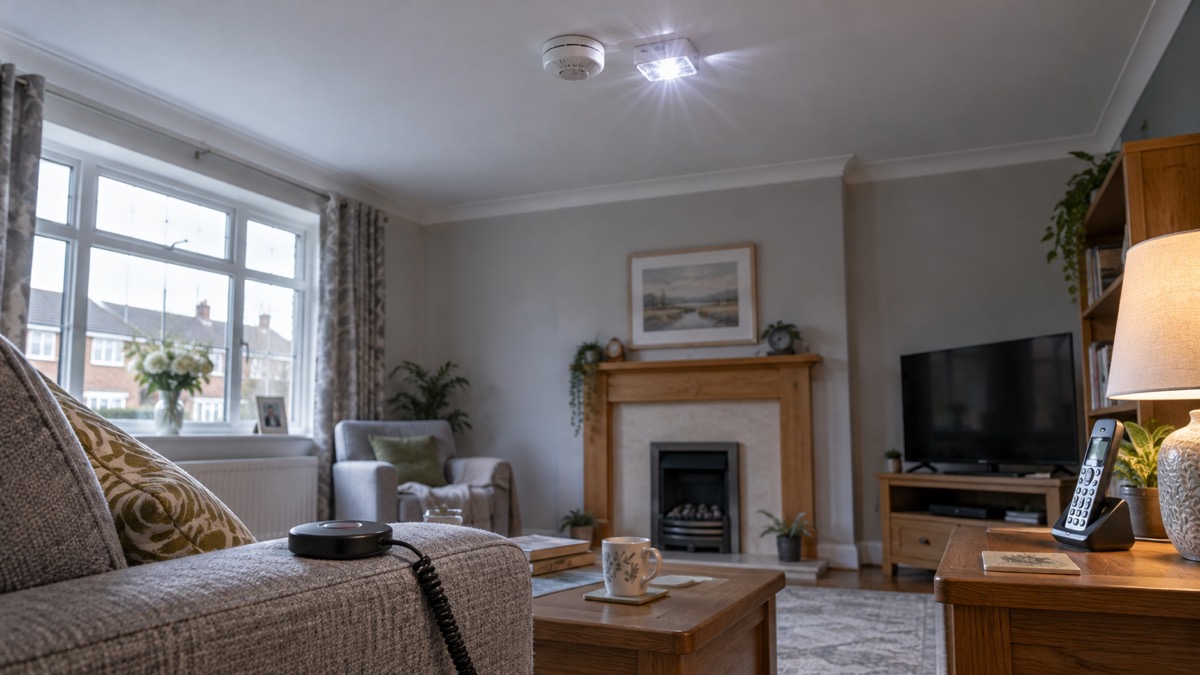
If you are deaf or hard of hearing, two things decide whether an emergency goes well: whether you can raise the alarm without using your voice, and whether a fire alarm in your home can reach you while you sleep. Both are solvable, and both are best solved in advance.
The first step takes minutes. Text the word "register" to 999 to sign up to the emergencySMS service, which allows you to text 9991. You need to register in advance, and ambulance services are explicit about this: register now, do not wait for an emergency2. The second step takes a phone call. Ask your local fire and rescue service about a home fire safety visit, and about a smoke alarm system with a strobe light and a vibrating pad that goes under your pillow, so you receive a vibrating and visual alert if any alarm in your home activates3.
This page sets out the three routes to the emergency services without voice, how the specialist alarm systems work, how to get one fitted, and what to arrange with neighbours, carers and your energy supplier so that help can reach you. It sits alongside our wider guidance on extra help in an emergency and on staying informed and in touch.
Three ways to reach 999 without hearing or speaking
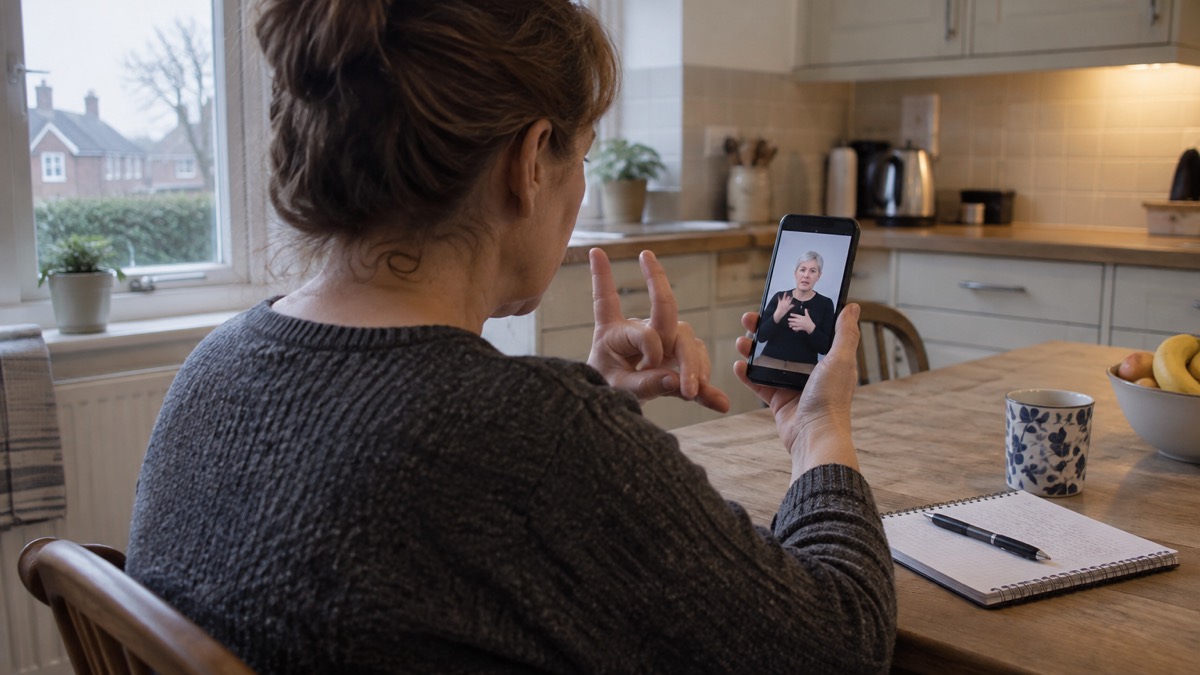
There are three established routes, and you should know all three, because any one of them may be unavailable on the day.
Relay UK is provided for people who are deaf, hard of hearing or speech impaired as an alternative way to contact the emergency services8. It works through the Relay UK app, textphones and text messages from a mobile phone9. In an emergency, dial 18000 instead of 999, or use the app4. A relay assistant types out what the emergency operator says and speaks what you type back to them. The service is part of the Next Generation Text Service, which lets deaf, hard of hearing or speech-impaired people in the UK alert the police, ambulance, fire or coastguard services10.
emergencySMS lets you text 999. It is part of the standard 999 service, designed specifically for people with hearing loss or difficulty with speech11. You text the service you need, what is happening and where you are, and the emergency services reply by text. It only works if you have registered first, which is why the registration step comes first on this page.
999 BSL is the emergency video relay service for British Sign Language users. It enables a deaf person to use an app on a smartphone, tablet or laptop to call an emergency service, including the ambulance, police, fire or coastguard services5. A remote BSL interpreter appears on your screen and relays the conversation with the emergency service operator in both directions5. Ofcom now requires telephone and broadband companies to offer a free, 24/7 video relay service for deaf BSL users to contact the emergency services, introduced to ensure equivalent access12.
One limit worth planning around: during a widespread phone or broadband outage, these accessibility services may themselves be affected. The government's advice for such outages is to continue using established accessibility services where available, and if they are not, to seek help directly from emergency responders or go to your nearest police station, fire station, ambulance station or hospital13. Know where your nearest one is.
Register for emergencySMS now, before you need it
Registration is a one-off and takes a few minutes. Text the word "register" to 999. You will get a reply, and you then follow the instructions you are sent14. You must register your mobile phone on the emergency-SMS website to be able to use the text service8. Ambulance services across England make the same point: register your mobile phone now and do not wait until you need the emergency-SMS service8, and please register now, do not wait for an emergency2.
The Highway Code adds a travel dimension: if you are deaf, hard of hearing or speech impaired, it is recommended that you register for the 999 text service before making a journey15. A breakdown on a motorway hard shoulder is exactly the situation where you may not be able to hear a call handler or speak safely, so registration belongs on your pre-journey checklist, not just your at-home one.
Register every phone in the household that might be used, and check occasionally that the registration still works, for example by confirming the confirmation text is still in your messages. If you change your mobile number, register again.
Strobe and vibrating pad smoke and CO alarms
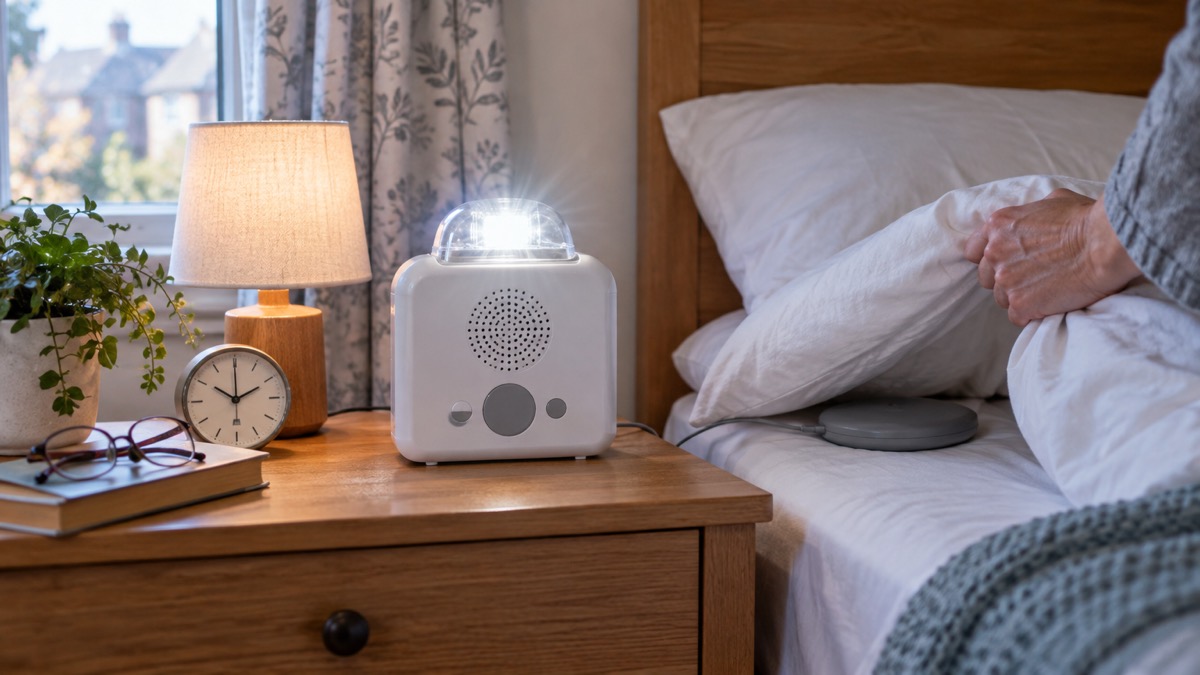
A standard smoke alarm is of limited use if you cannot hear it, particularly at night with hearing aids removed. The fire and rescue services' answer is a specialist system: interlinked smoke and heat alarms, plus an interlinked strobe light and vibrating pad, so that you receive a vibrating and visual alert if any alarm in the home activates3. The pad is placed under your pillow when you go to bed6. These alarms can save lives: they alert the user to a fire in the home even if they have removed their hearing aid at night7.
The system works like this. The smoke and heat alarms sense fire exactly as ordinary alarms do. Because they are interlinked, when one alarm senses smoke, every alarm goes off16. The interlinked strobe light flashes and the vibrating pad shakes, waking you or drawing your attention wherever you are in the home. When the alarm goes off, a pad below the pillow vibrates if you are asleep, and a strobe light flashes, alerting you17.
Some alarms also come with an emergency light, which comes on when the alarm is triggered. If you are deaf or hard of hearing, consider installing a smoke alarm with a strobe light and vibrating pads to alert you in case of fire16.
When choosing a product, look for the British Standard. British Standard BS5446-3:2015 covers smoke alarm kits for deaf and hard of hearing people, and choosing products that meet it gives you assurance of quality alarms designed to meet your needs18. In Scotland, the Scottish Government has published guidance on the fire alarm standard for deaf and deafblind people, intended for deaf and deafblind people themselves as well as Health and Social Care Partnerships and providers19, and the Scottish Fire and Rescue Service publishes advice and educational videos in BSL for people who are deaf or have hearing loss7.
Getting specialist alarms fitted free: the home fire safety visit
You do not have to buy and fit these systems yourself. Fire and rescue services across the UK run home fire safety visits and can assess what you need. Smoke alarms using a strobe light and vibrating pads are available following an assessment6. In Scotland, the advice is to contact your local community fire station in the first instance; local organisations, or arrangements with local authorities, can assist with providing specialist alarms7. Strobe lights and vibrating pad alarms are likewise available for people who are deaf or hearing impaired6.
The process is straightforward:
- Contact your local fire and rescue service and ask for a home fire safety visit, saying that someone in the household is deaf or hard of hearing.
- At the visit, firefighters assess the home and the household's needs, including whether the person can hear a sounding alarm from the place where they usually sleep20.
- If not, they arrange interlinked smoke and heat alarms and an interlinked strobe light and vibrating pad, providing a vibrating and visual alert if any alarm in the home activates20.
- Ask at the same visit about maintenance, testing and what happens if a fault develops.
If you are arranging this for someone else, the same check applies: for someone with a hearing impairment, check whether they can hear a sounding alarm from the place where they usually sleep, and if they cannot, arrange the interlinked system for them20. Our page on how to refer a vulnerable person for a fire safety check walks through the referral.
Where to put the vibrating pad, and the pacemaker warning
The fire service advice is consistent: place vibrating pads under a pillow or mattress to wake you in an emergency21, and specifically under your pillow when you go to bed6. The pillow placement matters because a pad under a thick mattress may lose much of its force by the time it reaches you. Test it from your own bed: press the test button and check you can feel the pad from where you actually sleep. If you cannot, move the pad closer to you, or ask about alternatives.
Vibrating pagers are a further option. They can alert hearing impaired and deaf people that there is an emergency and they need to leave the building, and they can be used to communicate with other people who are part of the assisted escape system and tell them which direction to travel in22. In a larger household, or where a carer sleeps in a different room, pagers mean everyone gets the alert at once.
One more piece of the alert chain that is easy to overlook: the front doorbell. Make sure your front doorbell is working and is an amplified, flashing or vibrating doorbell, so that a neighbour or firefighter can alert you22. If the fire service needs to tell you to evacuate, or a neighbour is raising the alarm, the doorbell is how they reach you.
Linked alarms, testing and what happens in a power cut
Interconnecting alarms are useful in larger properties and for people who are D/deaf or hard of hearing: when one alarm senses smoke, every alarm goes off16. If you live in a large house or one with more than one floor, you could ask a qualified electrician to fit linked alarms, so that when one detects a fire they all sound23. For a deaf household, the same linking extends to the strobe and pad: the aim is that any alarm activating anywhere in the home triggers the visual and vibrating alert where you are.
Because these systems are mains powered, ask about battery backup when the alarm is fitted, and check what the maker's instructions say about standby and alarm duration in a power cut. The fire and rescue service pages gathered here do not state a single figure for how long a specialist alarm's backup must last, so treat the maker's stated figures as the specification to check before buying or accepting an alarm, and confirm at your home fire safety visit that the system will keep working overnight if the power fails.
Two related points about power:
- If you use power-dependent medical or assistive equipment, the Scottish Government's advice for disabled people is to include in your emergency plan backup power arrangements, instructions for operating the equipment, maintenance information, and what you would do during a long power outage24.
- If you rely on a landline that works over the broadband network, be aware that the backup battery in these landline phones must last for at least one hour in a power cut, though some providers have backups that last up to seven hours25. A deaf household that relies on a landline-based textphone should check with its provider which figure applies, and keep a charged mobile registered for emergencySMS as the fallback.
Our page on whether a telecare or personal alarm works in a power cut covers the same question for monitored alarms.
What the flashes and vibration mean
When the alarm goes off, a pad below the pillow vibrates if you are asleep, and a strobe light flashes, alerting you17. The strobe and pad fire when any alarm in the interlinked system activates, whether it is the smoke alarm in the hallway or the heat alarm in the kitchen3. Treat any flash or vibration as a real fire until you have confirmed otherwise: check for smoke, get out if there is any doubt, and call 999 by your registered route.
Learn the difference between your system's signals before an emergency: read the maker's instructions for what a slow flash, a fast flash or an intermittent chirp means on your specific model, because fault signals differ between products. Test the system weekly if the maker's instructions say so, from the bedroom, so you know the pad and strobe are both working.
If you live in a flat, the building's evacuation strategy matters too. Our page on personal evacuation plans for disabled residents in flats goes through this in detail.
Non-emergency calls: NHS 111, utilities and crisis lines by text relay
The relay system is not only for 999. For non-emergency calls, dial 18001 followed by the full number you want, and the relay assistant joins the call. For example, Norfolk's carer's emergency plan service publishes its text relay contact as 18001 0344 800 8020 for people with hearing or speech impairments26. Many NHS services, councils and utilities publish a 18001 number on their contact pages: look for it, and save the ones you would need.
For NHS 111, Deaf BSL users can access the service via the national 111 BSL relay service at signvideo.co.uk/nhs11127, and the same national relay route reaches 999 at 999bsl.co.uk27. Mental health crisis lines are also reachable without voice: one NHS trust's urgent help page directs Deaf users to its crisis line via the Convo Now app for iOS or Android, previously known as Sign Live28.
For your energy and water suppliers, register your communication needs on their Priority Services Register at the same time. Registered customers can ask for communications in alternative formats, and the registers are the mechanism by which utilities know a household cannot hear a phone call or a doorbell. Our pages on signing up to Priority Services Registers and what registered customers get from water companies explain what to ask for.
Support for deaf households in Wales
In Wales, the arrangements are broadly the same, with services delivered through Welsh fire and ambulance services. The Welsh Ambulance Service publishes the same alternative routes: dial 18000 instead of 999, or use the Relay UK app, with more information at www.relayuk.bt.com4. Mid and West Wales Fire and Rescue Service describes the Next Generation Text Service, which lets deaf, hard of hearing or speech-impaired people alert the police, ambulance, fire or coastguard services, either by calling via a relay assistant or by texting 999 using the emergencySMS service10.
Strobe lighting and vibrating pad alarms are available for those who are deaf or hard of hearing22:
- A smoke alarm which uses a strobe light and vibrating pads, for anyone with a hearing difficulty.
- A strobe light and vibrating pad system, which activates in the same way as other smoke alarms, with the light and vibration aiding the alert.
- Vibrating pagers, which can alert hearing impaired and deaf people to leave the building and tell them which direction to travel in.
- An amplified, flashing or vibrating front doorbell, so a neighbour or firefighter can alert you.
Contact your local Welsh fire service for a home safety visit, as you would in England, and ask what specialist equipment it can supply.
Planning with the people around you
Equipment and services cover most of the risk, but the people around you close the gaps. The government's advice on phone and broadband outages is to plan with your neighbours or community about who could assist you during an outage, for example identifying someone who could drive you to get help in an emergency13. For a deaf household, that conversation should cover how a neighbour would alert you at night, and how you would alert them.
If someone in the household cannot mobilise or evacuate in response to a sounding alarm, the fire service advises making sure they have a suitable plan in place to aid escape, including the introduction of assistive technology if required20. A carer's emergency plan should include your details, details about the person you care for and how you support them including any conditions they have, and details of two or more people who can be contacted in an emergency and what support they will provide26. Our carer's emergency plan checklist sets out what to write down, and our page on fire risk for older and disabled people at home covers the wider safety picture.
Sources (28)
- Prepare for emergencies: write an emergency plan, Ready Scotland
- Using 999 with speech or hearing impairment, Yorkshire Ambulance Service NHS Trust
- Additional advice for people who are deaf or have hearing loss, Greater Manchester Fire and Rescue Service
- Additional support when accessing 999, Welsh Ambulance Services NHS Trust
- 999 British Sign Language (BSL) emergency video relay service, North West Ambulance Service NHS Trust, 2024
- Additional advice for people with a hearing impairment, Greater Manchester Fire and Rescue Service
- Deaf awareness, Scottish Fire and Rescue Service
- Contacting 999 with speech or hearing impairment, East of England Ambulance Service NHS Trust
- 999 emergency, South Central Ambulance Service NHS Foundation Trust
- Home safety advice for people with disabilities, Mid and West Wales Fire and Rescue Service
- Medicines and tablet safety, Just One Norfolk (NHS)
- Emergency video relay service for deaf British Sign Language users, Ofcom, 2025
- Phone and broadband outages, Prepare (UK government campaign)
- Fire safety in the home, Westminster City Council, 2017
- Breakdowns and incidents, rules 274 to 287, The Highway Code (gov.uk)
- Smoke alarms, Devon and Wiltshire Fire and Rescue Service, 2026
- Smoke alarms, Staffordshire Fire and Rescue Service
- Stay safe at home: smoke alarms, Cheshire Fire and Rescue Service, 2026
- Fire alarm standard: alarms for deaf and deafblind people, Scottish Government, 2023
- Additional advice for carers, Greater Manchester Fire and Rescue Service
- Smoke alarms, Cheshire Fire and Rescue Service, 2026
- Hearing and sight impairments, North Wales Fire and Rescue Service
- Fire safety for people with hearing difficulties, Devon and Somerset Fire and Rescue Service, 2026
- Disabled people and carers, Readiness action for disabled people and carers (Scottish Government campaign)
- Future of landline calls, Ofcom, 2026
- Carer's emergency plan, Norfolk County Council
- 999, North East Ambulance Service NHS Foundation Trust
- Urgent help, South West London and St George's Mental Health NHS Trust
 Carer's Emergency Plan
 Herbert Protocol Form
 In Case of Emergency Card
 Energy and Water Company Duties
 Personal Alarms
 What Happens When Alarm Pressed
 How Fall Detectors Work
 Home Oxygen Therapy Safety
 Airflow Mattress Fire Risk
 Fire Risk at Home
 Dementia and Emergencies
 Falls at Home
 Living Alone Safely
 Sight Loss and Emergencies