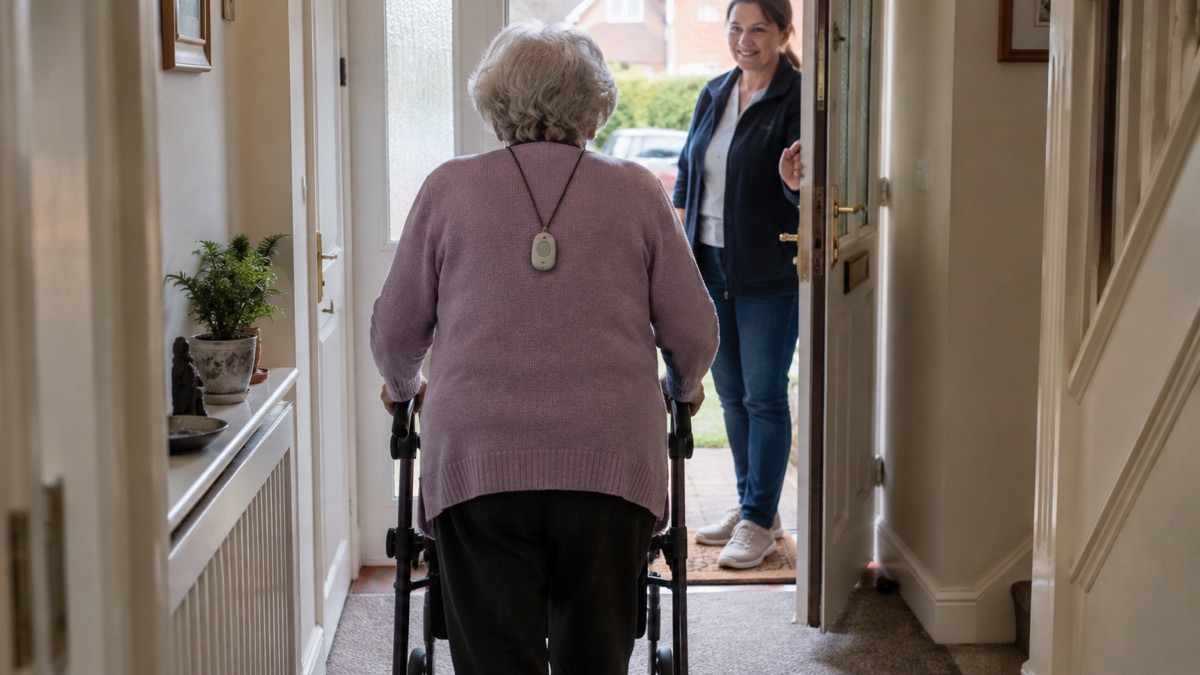
If you have a pacemaker and you are thinking about a personal alarm, the short answer is that a wearable alarm is a sensible thing to have, and the question is not whether you can wear one but how to choose it and where to wear it. Pendant alarms are commonly worn around the neck or as a wristband, and you press a button to call for help if you fall or need assistance1. Most telecare services include a personal alarm, usually worn discreetly as a pendant or wristband, with a button that can be easily reached in an accident or emergency2.
The practical steps are straightforward. Ask your cardiologist or pacemaker clinic before you start wearing one, and mention it at your routine checks. Choose between a pendant and a wristband by which you can reach most easily, keep it on in the bathroom if it is waterproof, and check the battery arrangement before you rely on it. Most personal alarms are waterproof so you can take them in the bathroom3, and pendant alarms are often described as water resistant so they can be worn where the risk of falling or slipping is highest2.
Battery life varies more than people expect. One independent guide says a personal alarm you wear usually has a battery life of 12 months, but advises checking with the manufacturer4. A maker of pendant alarms describes a long 5-year battery life2, and one of its products lists a 5-year battery life in its technical specifications5. Check your own alarm's instructions rather than assuming.
Pacemaker owners can use a wearable personal alarm
A personal alarm is a wearable device with a button you press to call for help. The best-known example lets you press a button if you need it, for example after a fall7. A pendant alarm is something you wear on your wrist or hang around your neck; if you fall or need help, you press the button to trigger a call to the response centre1. Using a pendant button, brooch, watch or mobile phone app, you can press for help and reach a response centre or a carer directly8.
That matters for anyone with a heart condition, because the point of the alarm is to get help quickly when you cannot get to a phone. The NHS in Scotland advises carrying a mobile phone or wearing a pendant alarm9. The same principle applies across the UK: a wearable alarm is a way of calling for help that stays with you.
What the alarm does when you press it is also reassuring. If you press your personal alarm, or one of the sensors detects a problem, the lifeline calls the control centre, where a trained member of staff assesses the situation, checks if you are okay and takes appropriate action, which could include calling a family member, a friend or the emergency services10. You can read more about that process on our page on what happens when you press a personal alarm.
Some systems now also include GPS tracking for when you go out, for extra peace of mind11. If you are choosing between an alarm that works at home and one that works when you are out, our comparison of a home personal alarm or GPS alarm sets out the difference.
Pendant or wristband: where to wear the alarm
The choice between a pendant and a wristband is mostly about reach. A pendant alarm is worn on your wrist or hung around your neck, and you press the button to trigger a call1. Most telecare services include a personal alarm, usually worn discreetly as a pendant around the neck or as a wristband, with the button easily reached in an accident or emergency2. Pendant alarms are water resistant so they can be worn where the risk of falling or slipping is highest, such as the bath or shower2.
| Option | How it is worn | What suits it |
|---|---|---|
| Pendant | Around the neck on a cord or chain1 | People who prefer not to wear something on the wrist, or who want the alarm out of the way of sleeves and handwashing2 |
| Wristband | On the wrist like a watch1 | People who find a wrist easier to reach after a fall, or who take a pendant off and forget it2 |
| Watch or app | As a watch or on a mobile phone app8 | People who already wear a watch or carry a phone and want the alarm in a familiar form8 |
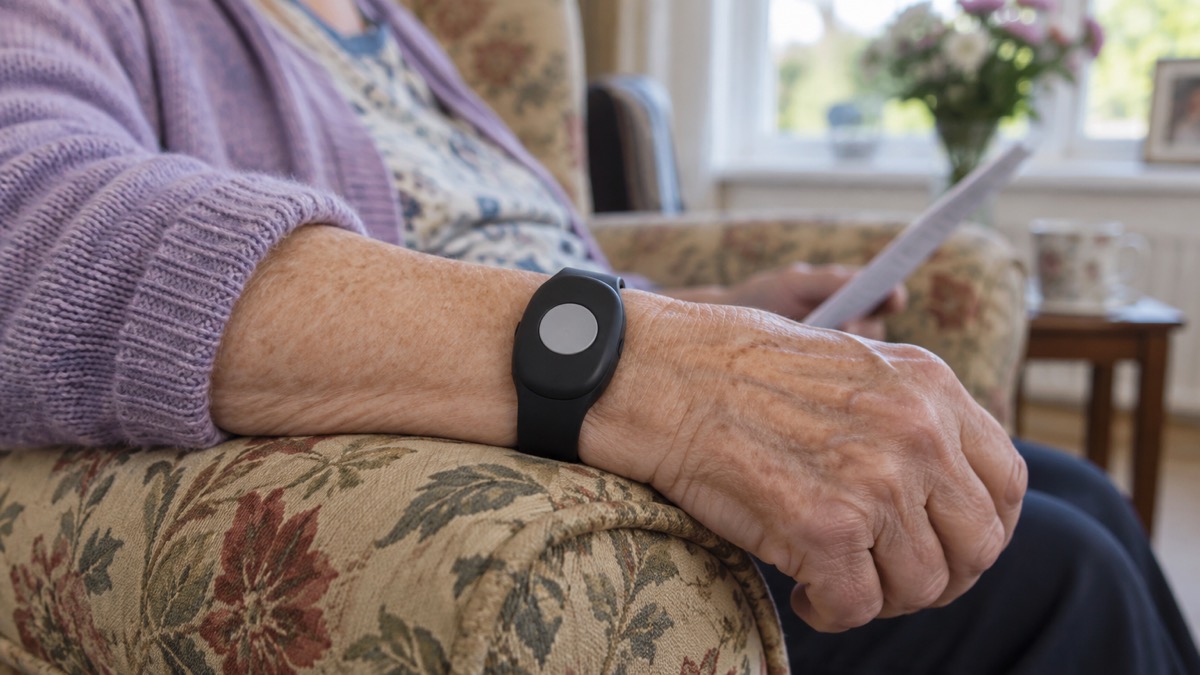
If you have reduced movement in your arms or hands, think about which hand you would use to press the button and whether a wristband on that wrist would be easier than reaching to your chest. A lifeline pendant or wrist-worn alarm can be used to alert a family member, carer or call centre following a fall10. The important thing is that you keep it on and can reach it.
If you want to change from a pendant to a wristband, ask your provider. The same alarm is often available in either form, and the change is usually a matter of how you wear it rather than a new device2. Our page on personal alarms: types and how to choose one goes through the wider range.
Wearing it in the bath or shower
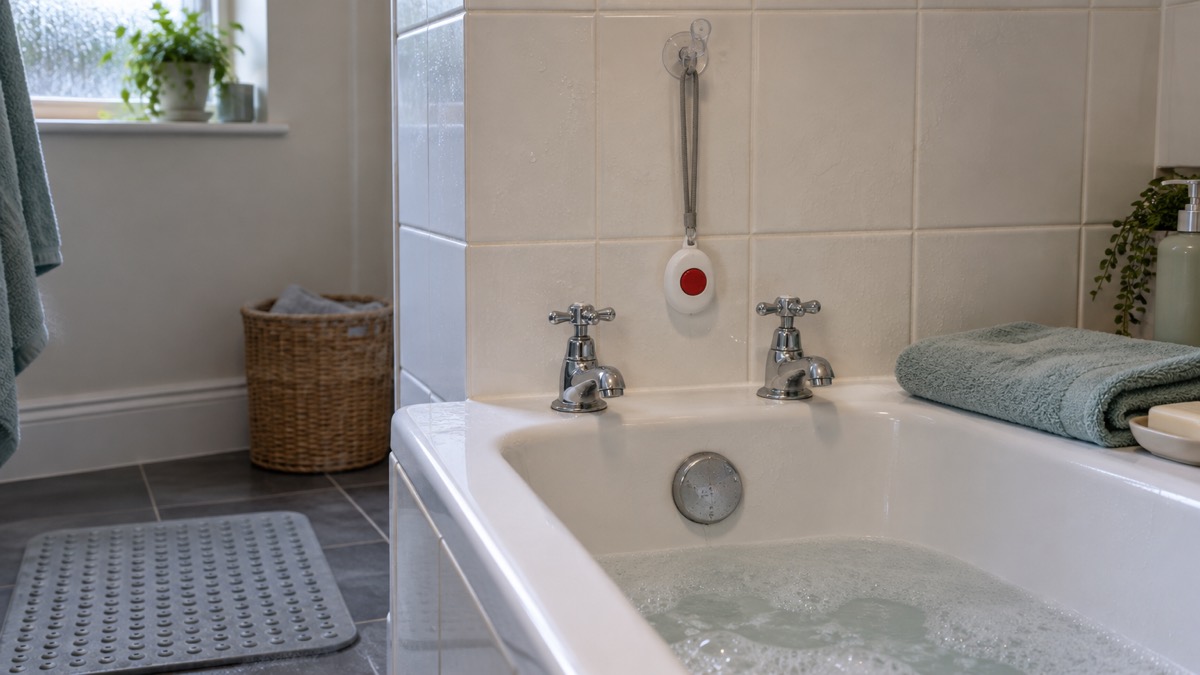
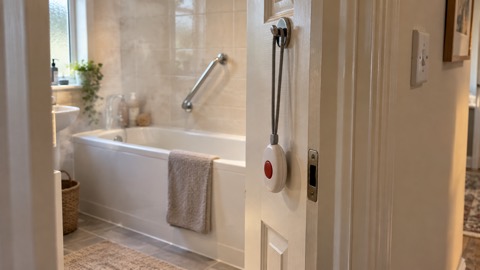
The bathroom is where falls are most likely, so it is exactly where you want the alarm to stay on. Most personal alarms are waterproof so you can take them in the bathroom3. Pendant alarms are described as water resistant so they can be worn where the risk of falling or slipping is highest, such as the bath or shower2. A council lifeline service describes its personal trigger as waterproof and wearable around the neck or wrist12.
There is a separate point about alarms in the bathroom that catches people out. Do not fit a smoke alarm in the bathroom, as steam may trigger the alarm13. That is about smoke alarms, not personal alarms, but it is worth knowing if you are fitting safety equipment around the home. For more on making the bathroom safer, see our page on how to make a bathroom safer against falls.
Battery life: up to 5 years, or 12 months?
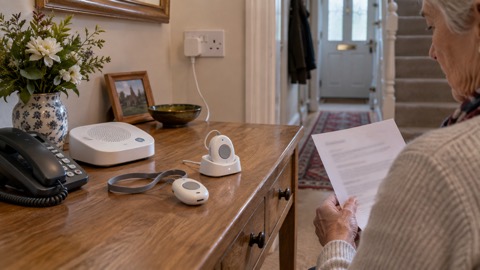
Battery life is the detail most likely to let you down, because it varies widely between alarms and between the figures different organisations quote. One independent guide says that if you have a personal alarm you wear, these usually have a battery life of 12 months, but you should check with the manufacturer4. A maker of pendant alarms describes a long 5-year battery life and says the pendant can be worn comfortably around the neck or wrist2. One of its products lists a 5-year battery life in its technical specifications5.
The lesson is not to assume. Ask the supplier what battery your alarm uses, whether it is replaceable or sealed, and what warning you get before it runs out. A sealed battery that lasts years is convenient, but you need to know how the alarm tells you it is failing. Our page on how long a personal alarm pendant battery lasts looks at this in more detail.
For comparison, other household alarms have their own battery conventions. A carbon monoxide alarm typically lasts between five and seven years, with some lasting as long as 10 years14. A smoke alarm may be available with a long-life lithium battery or a sealed power pack that lasts for 10 years15. These are different devices with different jobs, but the pattern is the same: check the maker's figure for your own unit rather than relying on a general rule.
Test it monthly and keep it charged
Whatever alarm you choose, it only helps if it works when you press it. Test your alarms at least monthly by pressing the test button until the alarm sounds16. If you care for someone else, advise the person you care for to test their alarms at least monthly, or test them for the person or identify somebody else who can do this at least monthly17.
- Put a reminder in the diary for the same day each month, and test the alarm then16.
- Check the battery warning and act on it before it fails, rather than waiting for the alarm to stop working4.
- Keep the charging cable where you can find it. One digital personal alarm comes with a power adapter and a 3-metre cable5.
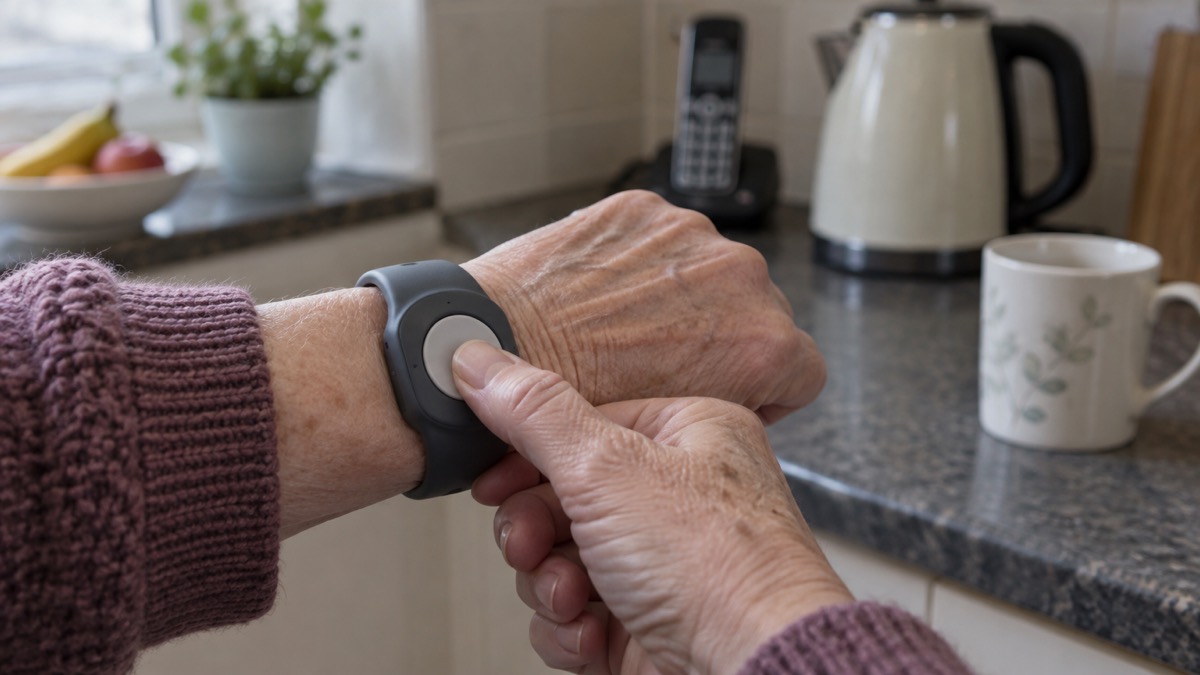
- Tell your provider if the alarm stops responding, and ask how to test it if you are unsure8.
If your alarm clock or charging setup has its own power supply, only use the one provided with the device or, if it is USB powered, use a USB charger from a reputable source18. That is general electrical safety advice, and it applies to any charging cable you keep by the bed.
The digital phone switchover and the 3G shutdown
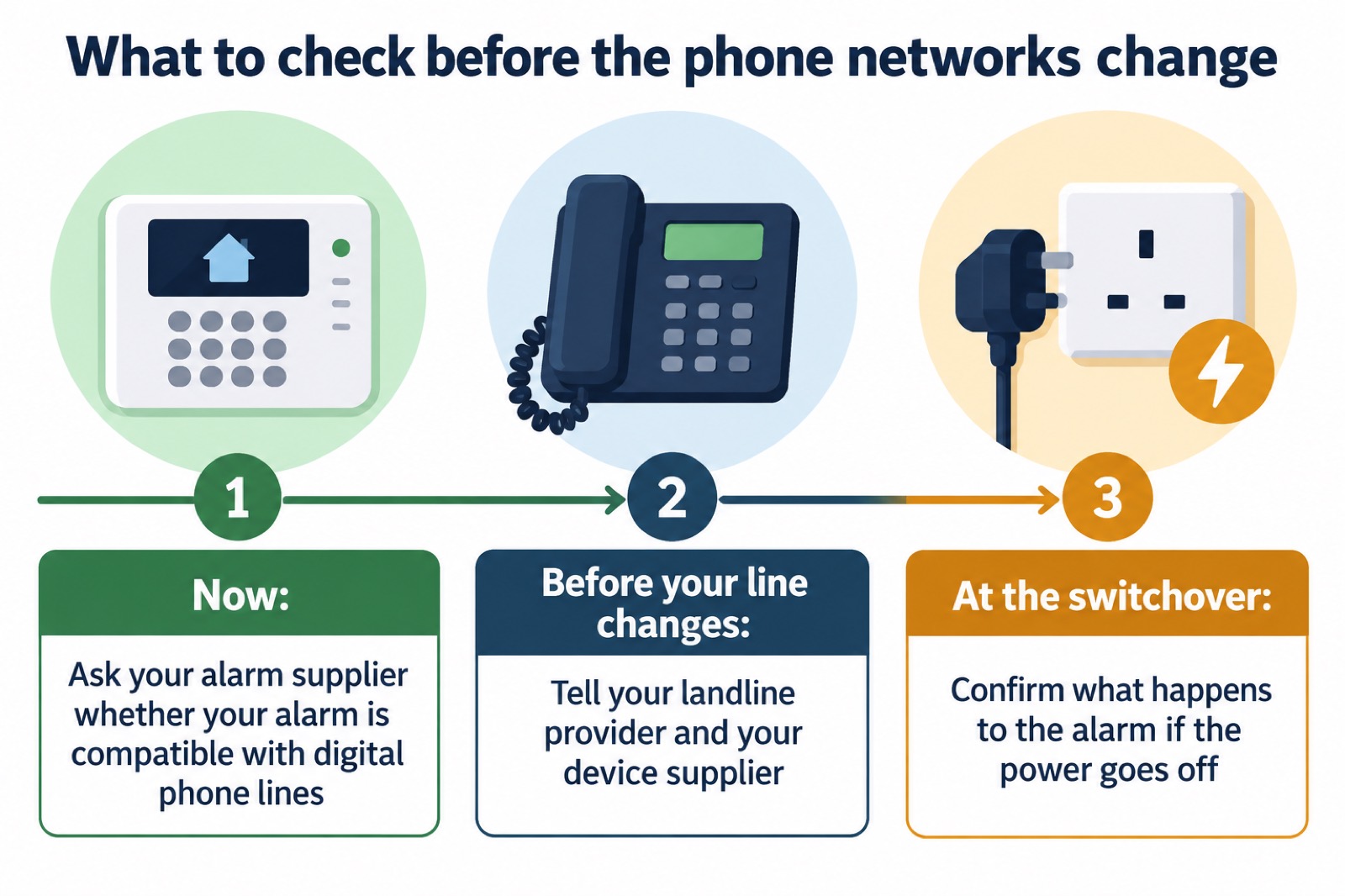
Two changes to the phone networks affect personal alarms, and both are worth checking before they reach you. The UK is in the process of transitioning landlines to a new digital system, which could impact telecare devices and personal alarms19. Devices such as fall monitors and personal alarms may require checks or upgrades before the switchover20. Most telecare alarm providers will have upgrade plans, and you should let your communication provider know if your phone line has or is due to be upgraded21.
The advice is consistent across organisations. Tell your landline provider and your device supplier before your landline is changed to digital if you, or someone in your household, has a telecare alarm, health pendant, personal alarm or any other device that uses your phone line6. Contact the company that supplies your alarm and ask them to confirm that it is compatible with the new digital phone network and what happens if the power goes off22. Do not assume it will keep working after the switch to digital phone lines, or during a power cut22. A mobile phone is recommended as an emergency backup20.
If you already have a personal alarm service, check with your provider that they are making arrangements to upgrade to a digital phone service if yours still runs over a traditional phone line8. The same advice appears in Scotland23.
The 3G shutdown is a separate change. If you use an alarm watch or GPS pendant that works away from home, ask the supplier what network it uses and what happens when 3G is withdrawn. Tell your landline provider and your device supplier before your landline is changed to digital if you, or someone in your household, has a telecare alarm, health pendant, personal alarm or any other device that uses your phone line24. Our page on whether a telecare or personal alarm will work in a power cut covers the power side.
Where to get help and advice
If you are not sure where to start, several organisations can help. Age UK explains that some systems now include GPS tracking for when you go out11, and its telecare pages set out the options. Independent Age describes the wearable personal alarm as the best-known example of telecare, letting you press a button to call for help7.
Your council may provide a lifeline or telecare service. One council describes a waterproof personal trigger that can be worn around the neck or wrist12, and another explains that a lifeline call goes to a control centre where staff assess the situation and can call a family member, a friend or the emergency services10. If you have a community alarm and you are overheating, Age UK advises pressing the button on your pendant to call for help25.
For the wider picture, our section on extra help in an emergency for older, disabled and medically dependent households brings together the services and schemes that make a difference. If you are living alone, our page on living alone: staying safe when no one is nearby is a good next read, and if you are caring for someone, see carers: planning for when you cannot be there.
Sources (25)
- Telecare, NHS Inform, 2024-08-13
- What is telecare, Taking Care, 2026-10-29
- Home safety quiz, Independent Age, 2026
- Prepare for a power cut, Citizens Advice, 2023-11-14
- Digital Personal Alarm, Taking Care, 2026-10-29
- Future of landline calls, Ofcom, 2026-08-26
- Technology to keep you safe at home, Independent Age, 2026
- Smart tech and handy devices for the home, Carers UK, 2026-10-25
- Some of the reasons people call 999, Welsh Ambulance Service, 2026-10-29
- Assistive technology, Warwickshire County Council, 2026-10-29
- Telecare and assistive technology, Age UK, 2026-08-11
- What's available from the Telecare service, Isle of Anglesey County Council, 2026-10-29
- Smoke alarms, Cheshire Fire and Rescue Service, 2026-10-29
- Carbon monoxide leaflet, Bedfordshire Fire and Rescue Service, 2026-01
- Smoke alarms, Oxfordshire County Council, 2026
- Celebrating safely, Greater Manchester Fire and Rescue Service, 2026-10-29
- Emollients, Greater Manchester Fire and Rescue Service, 2026-10-29
- Alarm clocks, Electrical Safety First, 2026-10-25
- Emergencies, adaptations and telecare, Carers UK, 2026-10-29
- Switchover to digital landlines, South Gloucestershire Council, 2026
- Digital phone switchover, Argyll and Bute Council, 2026
- The landline switchover, National Grid, 2026-10-25
- Technologies to make life easier, Carers Scotland, 2026-10-25
- FAQs, Taking Care, 2033
- Staying cool in a heatwave, Age UK, 2026-06-25
 Carer's Emergency Plan
 Herbert Protocol Form
 In Case of Emergency Card
 PSR After Moving House
 Telecare Alarm in a Power Cut
 Pressing Alarm but Cannot Speak
 Falls a Fall Detector May Miss
 Alarm Pendant in Bath or Shower
 Pendant Battery Life
 Free Locking Cooker Valves
 Herbert Protocol
 Cared-For Person Missing
 Refer for a Fire Safety Check
 Testing Alarms With Mobility
 Electric Blankets and Dementia