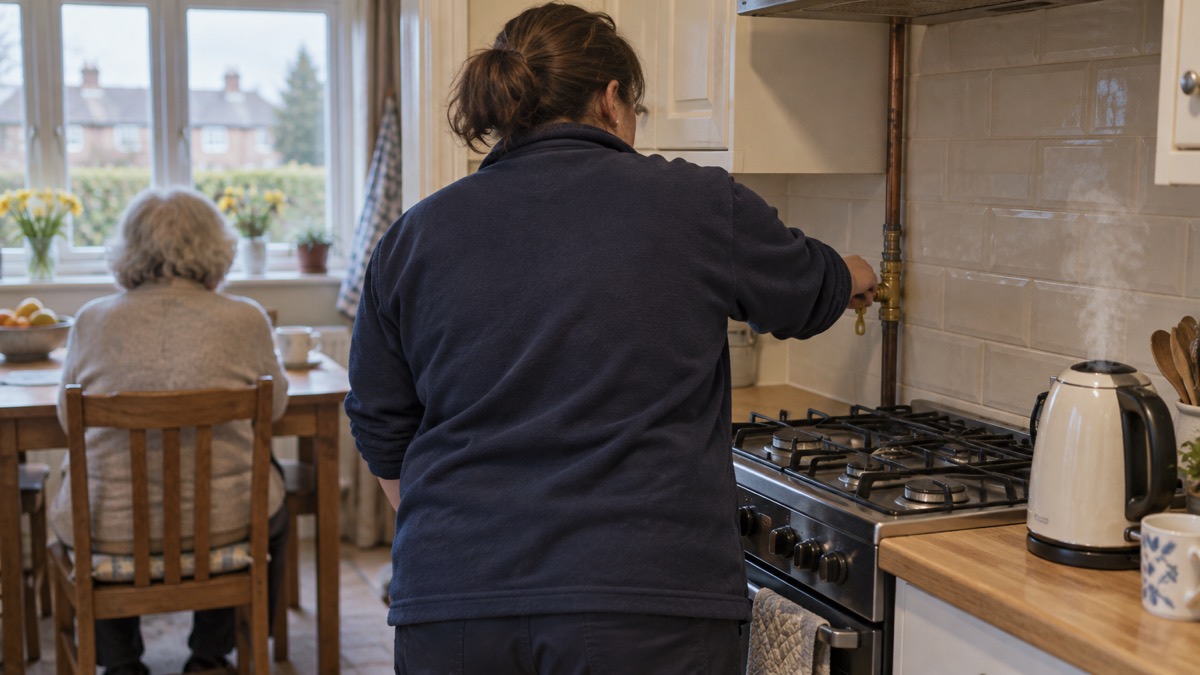
If someone in your household has dementia and has left the gas hob on, or turned a ring on without lighting it, a locking cooker valve is the practical answer. It is a small safety device fitted to the existing gas cooker pipework. When it is locked, the gas supply to the cooker is stopped; a carer or relative turns it on with a key when the cooker is needed1.
The fitting is free where the household qualifies. Your gas distributor, the company that owns the pipes rather than the firm you pay for gas, will fit one for free if you request it3. Northern Gas Networks states plainly that it offers a free locking cooker valve fitting service to its customers4. Wales and West Utilities takes requests through its website, and the service is provided regardless of your gas supplier, so you do not need to change supplier or tell them about the device1.
The valve is designed around a responsible keyholder. A carer or relative can turn the valve on using the key when the cooker is required, which lets the person with dementia keep using their own gas cooker safely2. Only the gas hob is isolated, not the whole gas supply to the house, so the boiler and other gas appliances carry on working1.
Who can get a free locking cooker valve
The valve is offered to households where cooking has become genuinely risky, not as a general upgrade. The clearest official description of who it suits comes from Dorset and Wiltshire Fire and Rescue Service: locking cooker valves are suitable for people who can no longer operate their gas cooker safely, such as people living with memory loss, who may be at risk of harming themselves and their home by leaving gas un-ignited or forgetting to turn the hob off1. Greater Manchester Fire and Rescue Service puts it more broadly, saying the valves are useful in homes where cooking becomes high risk due to conditions such as Alzheimer's and dementia, disabilities or learning difficulties5.
That is the test to apply at home. It is not a diagnosis that matters, but whether the person can use the hob safely without someone watching. If they forget to turn it off, turn it on without lighting it, or put something on the ring and walk away, the valve addresses exactly that risk.
To get one, approach the gas distributor for your area. North Wales Fire and Rescue Service advises that your gas distributor will fit one for free if you request it3. In the Wales and West Utilities area, valves can be requested on the company's website, and you will need to provide the details of the property and a responsible keyholder's details1. Northern Gas Networks customers can use the company's own free fitting service4. Cadent publishes a guide to safety valves covering what they do, how to test them and how to apply for a free locking cooker valve6.
A few practical points decide whether an application goes smoothly:
- Have the keyholder ready. The application asks for a responsible keyholder, so agree who will hold the key and be available to turn the cooker on before you apply1.
- Know your distributor, not just your supplier. The fitting is done by the network that owns the pipes, and the service does not depend on who bills you for gas1.
- Ask your fire and rescue service if you are unsure. Several services publish dementia fire safety advice and can point you towards the right local route3.
If the person is in a rented home, the property side has to be settled first, which the next section covers.
What a locking cooker valve does, and what it does not
A locking cooker valve is a simple safety device fitted to existing gas cooker pipework2. When the valve is locked, the gas supply to the cooker is stopped5. A care giver can easily control, with a key, when gas can and cannot be used safely once a locking cooker valve is fitted5.
The design detail that matters most to a household is its scope. The valve is installed with a key to lock it, so that only the gas hob is isolated rather than the whole gas supply to the house1. That means the central heating boiler, a gas fire or a gas water heater are unaffected. You are not turning the house cold to make the kitchen safe.
The second detail is who holds the key. The carer or relative can turn the valve on using the key when the cooker is required, enabling the vulnerable person to continue to use their gas cooker safely2. The point is not to stop the person cooking for good. It is to make sure that when they cook, someone has deliberately opened the gas and is around while it is in use.
North Wales Fire and Rescue Service describes the same arrangement in its dementia fire safety guidance, and is candid about the trade-off: you can have a special gas tap fitted that friends and family can turn off when they leave your home, known as a "lockable cooker valve". This does mean that you won't be able to cook unless someone is with you3.
That is the honest limit of the device. It does not supervise the hob, detect smoke, or remind anyone to turn anything off. It removes the gas when the responsible adult leaves. If the household needs the person to be able to cook alone, the valve is the wrong tool: the gas safety advice is that with a lockable cooker valve fitted you will not be able to cook unless someone is with you1. A stove guard is a different device, and Greater Manchester Fire and Rescue Service says stove guards can be particularly useful in homes where using the hob becomes high risk due to conditions such as Alzheimer's and dementia, disabilities or learning difficulties5.
Living safely with a gas cooker when someone has dementia
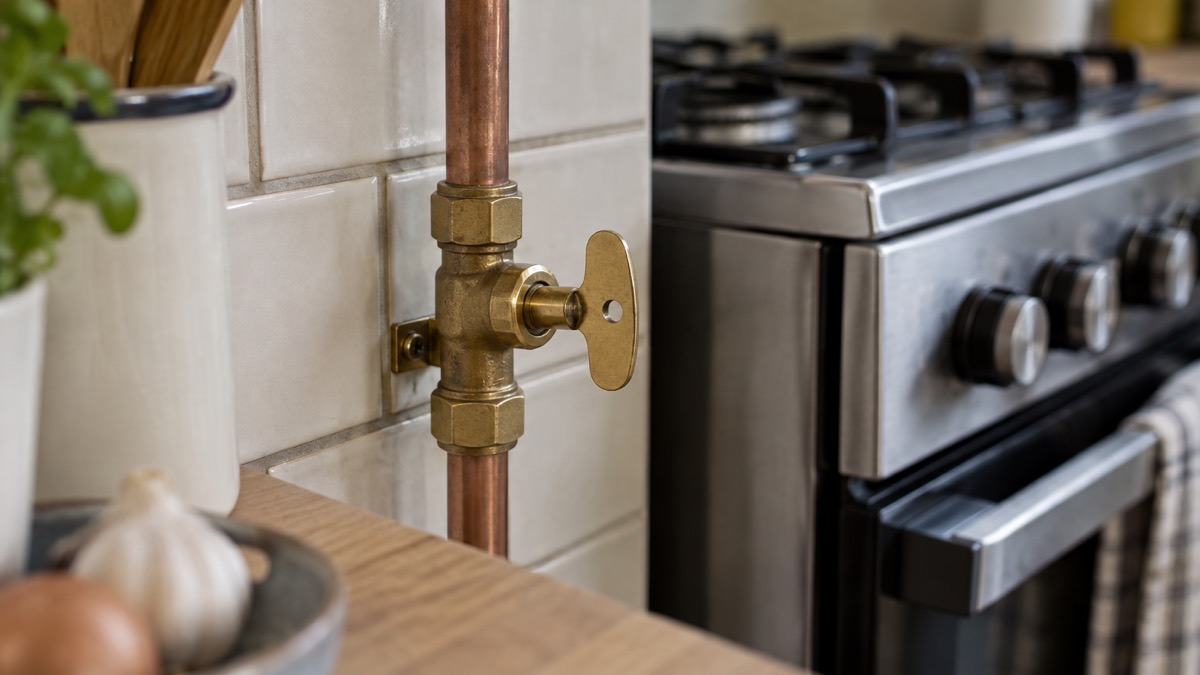
The valve is one measure among several, and the fire services treat it that way. North Wales Fire and Rescue Service's dementia guidance is direct: if necessary, consider fitting an isolation valve to a gas cooker, so that the cooker cannot be turned on and left on if the person is at home alone3. The phrase "if necessary" is doing work. The valve is for the household where the risk is real, and it should sit alongside the other changes that make a kitchen safer.
Independent Age points to the smaller aids that help in the kitchen, such as kettle tippers, tap turners and reaching tools, along with special equipment for sight or hearing loss and information from Living made easy7. Carers UK covers the wider category of smart tech and handy devices for the home, which is where remote monitoring and reminder equipment sit8. These do different jobs from the valve: they reduce the chance of a scald or a fall, or prompt the person, rather than cutting the gas.
For anyone living with dementia, the fire risk is broader than the hob. The dementia and emergencies guide covers safety at home and what to do if the person goes missing, and the fire risk page for older and disabled people sets out the wider hazards. If you want a fire service visit to look at the home, the guide to referring someone for a fire safety check explains how that works.
Two safety points belong with any gas cooking arrangement:
- Know where the emergency control valve is before you need it, and check that everyone who might have to use it can reach it.
- Keep the keyholder's visits reliable. The valve only helps if someone is there to open it, so build it into the care routine rather than treating it as an occasional favour.
- Tell the fire service about the valve if the person has a home fire safety visit, so the plan reflects how the kitchen actually works.
Scotland has its own fire service and its own home safety advice. The valve itself is a gas network product, so the route to one still runs through the gas distributor for the property.
Renting, electric cookers and asking on someone else's behalf
Three situations come up again and again, and each has a clear answer.
If the property is rented, you will need to seek the permission of the landlord to have the work done2. The valve is fitted to the pipework, so it is a change to the property, and permission should come before the application. Put the request in writing, explain why it is needed, and keep the reply with the paperwork.
If the cooker is electric, the valve has nothing to act on. A locking cooker valve isolates the gas supply to a gas cooker5. The published guidance on cooker isolation valves is written for gas, and no equivalent free electric device appears in the material available here. If the risk is with an electric hob, ask the fire and rescue service or the person's care team what local equipment or advice exists.
If you are asking on someone else's behalf, you can. The valve is built around a responsible keyholder, and the application asks for that person's details1. The carer or relative can turn the valve on using the key when the cooker is required, enabling the vulnerable person to continue to use their gas cooker safely2. The same principle applies to other paperwork: the Message in a Bottle scheme, for example, lets a relative, neighbour or carer help complete the form10. The carers' planning guide covers what to arrange for the times you cannot be there.
| Situation | What to do |
|---|---|
| Rented home | Get the landlord's permission before the work is done2 |
| All-electric kitchen | The valve does not apply; ask the fire service or care team about alternatives5 |
| Carer applying for someone else | Apply as the responsible keyholder and hold the key1 |
| Unsure who your distributor is | Ask your fire and rescue service or check your gas network's own pages3 |
The Priority Services Register and other help
The Priority Services Register is a free support service that vulnerable people can sign up to in advance of emergencies11. It gives extra advice and support from your energy or water supplier, and you can check whether you can join at thepsr.co.uk12. For a household already dealing with dementia, it is worth doing alongside the valve application, because the two cover different moments: the valve covers everyday cooking, the register covers the day the power or the gas supply fails.
The register brings practical help during an outage, including priority fault repairs11. It is free to join, and water companies run their own versions with extra care and support for those who need it most12. The guide to signing up to Priority Services Registers walks through the routes, and the page on what registered customers actually get sets out what companies must do. If you want to know how the water side differs, the water priority services page covers it.
Gas networks group the valve with this wider family of support. Cadent describes welfare and safeguarding products including the Priority Services Register, locking cooker valves and the EasyAssist emergency control valve13. That is a useful way to think about it: the valve is one of a set of free or low-cost arrangements for households that need a bit more from their utility companies.
For the wider picture of support for older, disabled and medically dependent households, start with the extra help section. It covers personal alarms, key safes, evacuation planning and the other arrangements that sit around a dementia-friendly home.
Sources (13)
- Equipment for carers, Dorset and Wiltshire Fire and Rescue Service, 2026
- Locking cooker valve, Northern Gas Networks, 2026
- Dementia fire safety, North Wales Fire and Rescue Service, 2026
- Gas safety advice, Northern Gas Networks, 2026
- Cooking fire safety devices, Greater Manchester Fire and Rescue Service, 2026
- Support, Cadent, 2026
- How to avoid accidents at home, Independent Age, 2026
- Smart tech and handy devices for the home, Carers UK, 2026
- Your home emergency guide, Cadent, 2026
- Message in a bottle scheme, Torbay and South Devon NHS Foundation Trust / Lions Club of Paignton
- Help from your energy supplier, Buckinghamshire Council, 2026
- Safe and well booklet, Cheshire Fire and Rescue Service, 2026
- Services beyond the meter, Cadent, 2026
 Carer's Emergency Plan
 Herbert Protocol Form
 In Case of Emergency Card
 PSR After Moving House
 Telecare Alarm in a Power Cut
 Pressing Alarm but Cannot Speak
 Falls a Fall Detector May Miss
 Alarm Pendant in Bath or Shower
 Pendant Battery Life
 Herbert Protocol
 Cared-For Person Missing
 Refer for a Fire Safety Check
 Testing Alarms With Mobility
 Electric Blankets and Dementia
 Bathroom Falls Prevention