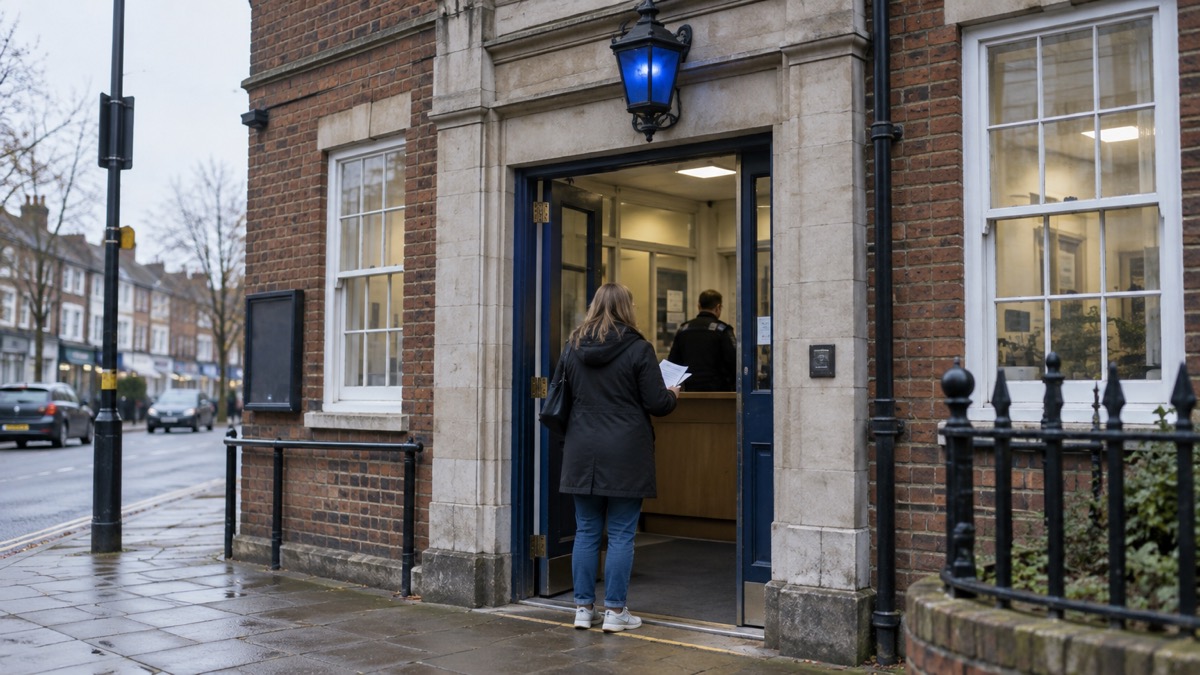
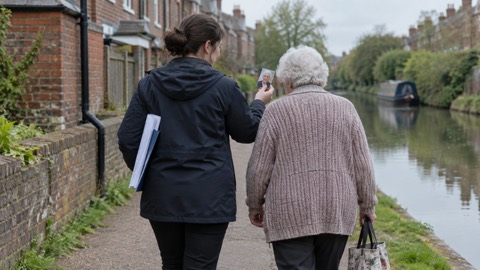
If someone you care for has dementia and there is a chance they may go missing, the Herbert Protocol is a form you fill in before that happens. It records the details police need to start a search quickly: the person's description, their medical needs, their habits, the places they have been found before, and a photograph1. You keep it safe, and hand it over, or activate it, only if the person is reported missing1.
The scheme is run by police forces across the UK, force by force, so the way you register varies. Some forces ask you to complete the form through an online system called Safe and Found, and no longer need you to keep a paper copy to pass over4. Others offer a printable form you store yourself3. In Northern Ireland the Herbert Protocol was launched by the Police Service of Northern Ireland in partnership with Dementia NI, local Health and Social Care Boards and Policing and Community Safety Partnerships2.
If the person goes missing, search your home, grounds and outbuildings first, then call 999 if you believe they are at high risk of harm, and tell the operator you have a Herbert Protocol profile1. You will not be criticised for calling the police if you are worried about someone's safety5.
What the Herbert Protocol is and who it is for
The Herbert Protocol is a national scheme introduced by the police in partnership with other agencies to encourage carers to compile useful information which could be used to help locate a vulnerable person if they go missing1. It is intended to speed up and simplify the response of the police and other agencies when an individual is reported missing, and it has been used many times to help police and other agencies quickly and safely locate missing people3.
The form is for people living with dementia, or for anyone supporting someone with a dementia diagnosis who is worried about the possible risk of going missing6. It also applies more broadly to an adult with care and support needs going missing1. It is named after George Herbert, a war veteran of the Normandy landings, who lived with dementia and died while missing, trying to find his childhood home1.
What goes on the form is the practical detail that saves time at the start of a search: details about the person, their past, their habits and the places they go5. West Yorkshire Police describe it as recording key information in advance such as medication required, mobile numbers, places previously located and a photograph3. The information helps the police and other agencies locate the missing person as quickly as possible and return them to safety2.
It is a risk reduction tool, not a guarantee. The Herbert Protocol is not intended to replace existing safeguarding and security measures1. Think of it as one layer alongside the other things you do to keep someone safe at home, which we cover in Dementia and Emergencies: Safety at Home and Going Missing.
How to register with your local police force
Registration is not a single national process. Each police force runs the scheme in its own area, so the first step is to find out what your force asks for. The table below sets out the arrangements described by different forces and agencies.
| Force or agency | How the scheme is handled |
|---|---|
| Surrey Police | All Herbert Protocol forms must now be completed at Safe and Found online; you no longer need to store a paper or electronic version to pass to the police4 |
| West Yorkshire Police | The force has signed up to the Herbert Protocol, and the form is also available in a printable paper format3 |
| Police Service of Northern Ireland | Share information by downloading the Herbert Protocol leaflet; police will only ask for the form, or the information in it, if the person is reported missing2 |
| Greater Manchester Police | A national scheme; the police only need the form at the point the person is reported missing1 |
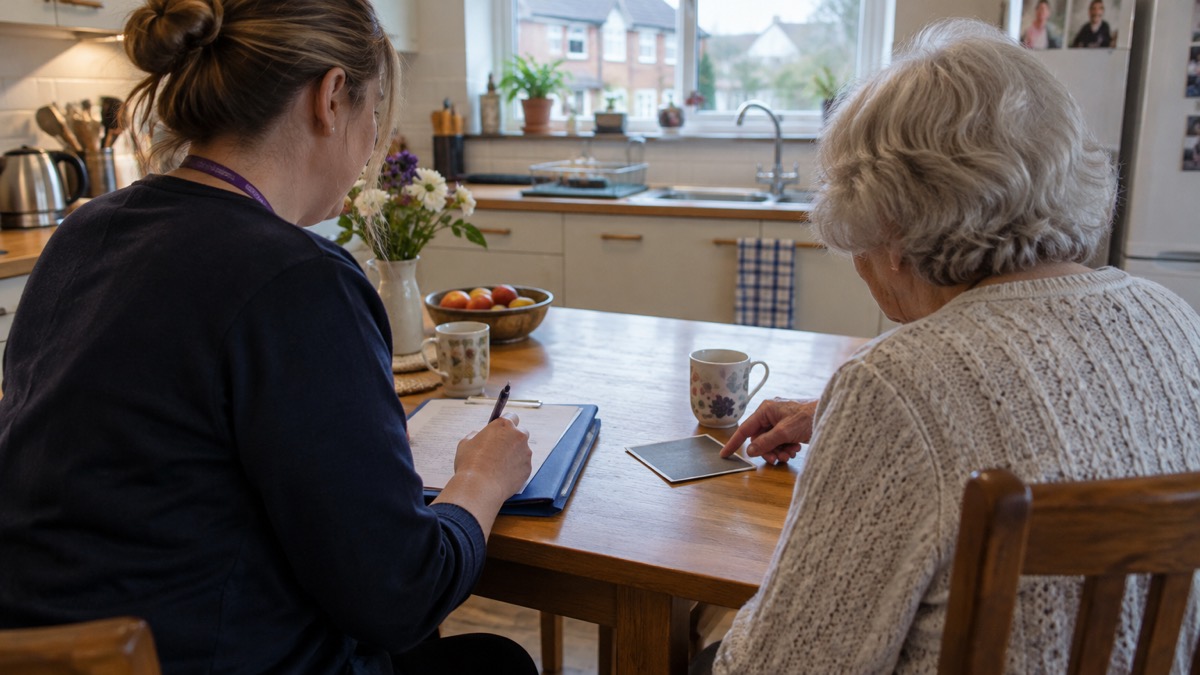
To register, start on your local force's website and search for the Herbert Protocol, or call the non-emergency number and ask. Where a force uses Safe and Found, all forms must be completed online and you no longer need to store a paper or electronic version to pass to the police4; where it offers a printable form, the form is available in a printable paper format3. In a care setting, the care provider, the person at risk or their family can fill in the form, seeking permission from the person at risk or their next of kin; if neither is possible, the care provider should make a best interests assessment1.
The judgement about whether someone is at risk should be based on your professional opinion or your knowledge of your family member1. You do not need a diagnosis in hand to start the conversation with your force, but the scheme is designed around dementia and similar care needs6.
What the form records and where to keep it
The form captures the things a search team would otherwise have to ask you in the middle of a crisis. West Yorkshire Police list medication required, mobile numbers, places previously located and a photograph3. The Guernsey page, describing the same scheme, adds details about the person, their past, their habits and the places they go5. Together these give police a picture of who they are looking for and where they are likely to head.
Where you keep it depends on how your force runs the scheme:
- Online systems: where the force uses Safe and Found, the details are held by the police and you no longer need to store a paper or electronic version to pass over4.
- Printable forms: where a paper form is used, store it safely, either electronically on a computer or as a printed version, somewhere it can be found quickly at any time of day or night by the person who begins the initial searches2.
- Care homes: store it securely in the care setting in accordance with data protection laws, but where you can find it quickly, and make sure other relatives, carers or staff know where it is1.
A printed copy kept in a known drawer, with a second copy photographed on a phone, covers the common failure: the person who knows where the form is is not the person at home when the call comes. Our checklist Herbert Protocol Form: Information to Gather sets out what to have ready before you sit down to complete it.
What to do if the person goes missing
The first minutes matter. Greater Manchester Police set out the order plainly: after an open door search of the address, grounds and outbuildings, alert the police at the earliest opportunity; call 999 if the person is believed to be at high risk of harm, and tell the police operator that you have the Herbert Protocol person profile1.
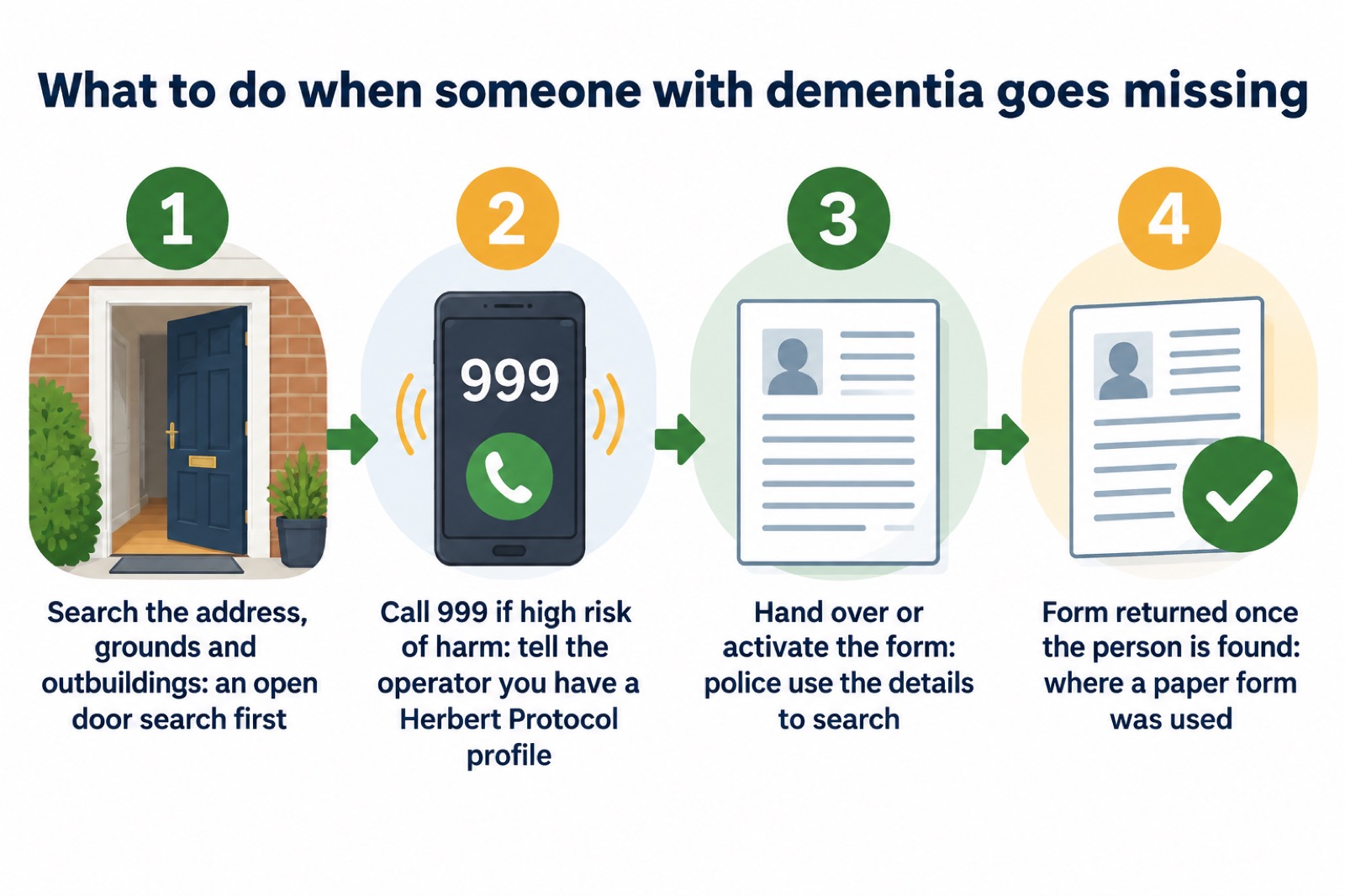
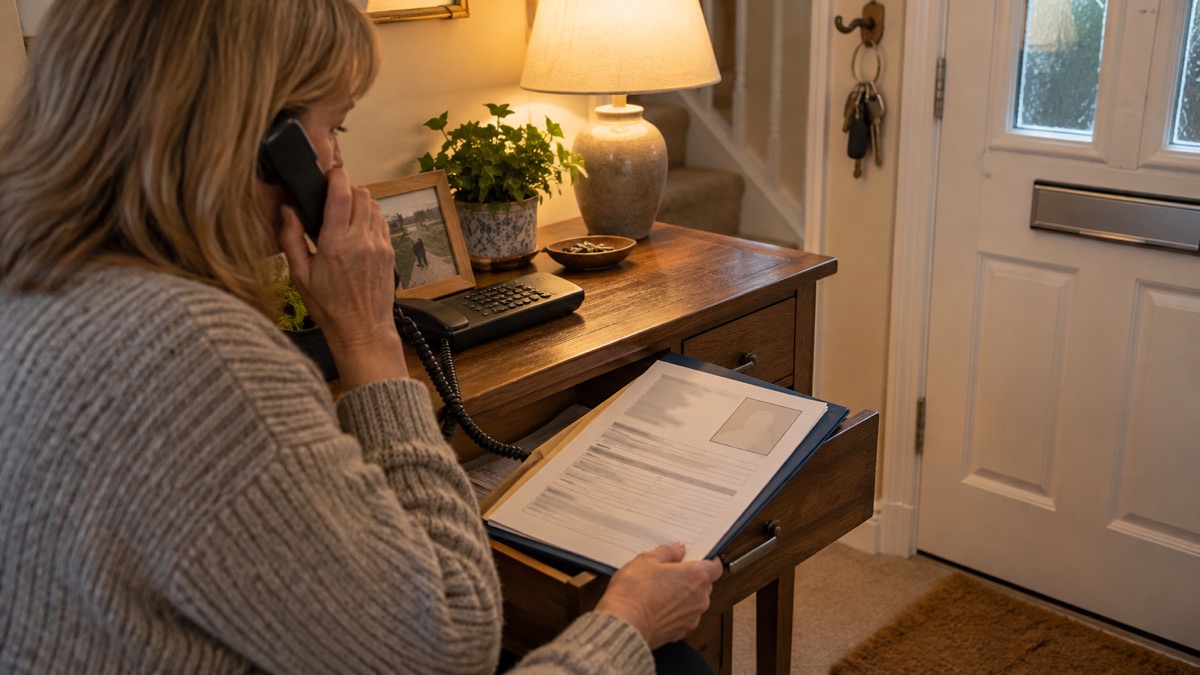
Do not delay the call while you look for paperwork. The police only need the form at the point the person is reported missing, and where a paper form is used it will be returned once the person is found1. If your force holds the details online, the operator can access them; if you hold a paper form, have it in your hand when you call.
You will not be criticised for calling the police if you are worried about a person's safety5. That reassurance is worth repeating to yourself, because carers often hesitate, wondering whether they are overreacting. The scheme exists precisely because a fast, well-informed search is better than a delayed one.
For the wider steps, including what to have ready and who else to call, see What to Do If the Person You Care For Goes Missing. Carers UK also advises that for carers of people who may be at risk of going missing, such as due to a mental health problem, a learning disability or dementia, you should collate key information in advance to give to the police immediately if they go missing7.
GPS trackers and other technology alongside the form
Technology can shorten the gap between someone wandering off and someone finding them, but it works best as a supplement to the Herbert Protocol, not a replacement. Carers UK describes GPS trackers as a guidance device that the person wears all the time, enabling you to track their movements on an app8. That can tell you where someone is while they are still nearby, which the form cannot do.
The limits are practical. A tracker depends on a battery, a signal and the person keeping it on. The Herbert Protocol works when none of those hold, because it gives police the background to search: habits, places previously visited, a photograph and medical needs3. The scheme is not intended to replace existing safeguarding and security measures, and a tracker is one of those measures rather than a substitute for the form1.
If you are weighing up technology, our guides to Personal Alarms: Types and How to Choose One and Home Personal Alarm or GPS Alarm: Which Suits Your Household? set out what each device does. For the wider picture of planning ahead as a carer, see Carers: Planning for When You Cannot Be There.
Herbert Protocol in Scotland, Wales and Northern Ireland
The Herbert Protocol is a UK-wide police scheme, but the surrounding support differs between nations. In Scotland, Ready Scotland advises that if you know someone with dementia, you can fill in a Herbert Protocol form, which can help police find them if they go missing6. The Scottish Ambulance Service also points people living with dementia, or supporting someone with a dementia diagnosis and worried about the possible risk of going missing, towards the scheme9.
In Northern Ireland, the Herbert Protocol was launched by the Police Service of Northern Ireland in partnership with Dementia NI, local Health and Social Care Boards and Policing and Community Safety Partnerships2. The PSNI route is to download the Herbert Protocol leaflet to share information, and the police will only ask for the form, or the information in it, if the person is reported missing2.
In Wales, the scheme is run by the individual police forces in the same way as in England, so the route is your local force's page. Wherever you live, the emergency number for a missing person believed to be at high risk of harm is 9991.
Our section on Extra Help in an Emergency: Older, Disabled and Medically Dependent Households covers the wider support available across the UK.
Consent, care homes and what the scheme cannot do
Consent is handled with care. Where possible, seek permission from the person at risk or their next of kin; if neither is possible, a care provider should make a best interests assessment1. The judgement about risk should be based on your professional opinion or your knowledge of your family member1. That means a family member can act on what they know, and a care home can act on what it knows, without waiting for a formal capacity decision in every case.
Care homes have a clear route. In a care setting, the care provider, the person at risk or their family can fill in the form, and the completed form should be stored securely in the care setting in accordance with data protection laws, but where you can find it quickly, with other relatives, carers or staff knowing where it is1.
What the scheme cannot do is prevent someone from going missing, or replace the other safeguards around them. It is not intended to replace existing safeguarding and security measures1. It also does not transfer automatically if you move: because each force runs its own scheme, contact the force for your new area and ask how they want the information recorded. Our guide to Signing Up to Priority Services Registers for Energy and Water covers the equivalent step for utility registers, which also need updating when you move.
"Don't worry - you won't be criticised for calling the police if you are worried about a person's safety."
Sources (9)
- Herbert Protocol, Greater Manchester Police, 2026-10-29
- Herbert Protocol, Police Service of Northern Ireland, 2026-10-29
- Dementia Awareness: Herbert Protocol, West Yorkshire Police, 2024-10
- Herbert Protocol, Surrey Police, 2026-10-29
- Herbert Protocol, Dorset Police, 2026-10-29
- Emergency Plan, Ready Scotland, 2026-10-29
- Family Carers Emergency Plan, Suffolk County Council, 2026-10-29
- Smart Tech and Handy Devices for the Home, Carers UK, 2026-10-25
- Dementia, Scottish Ambulance Service, 2026-10-29
 Carer's Emergency Plan
 Herbert Protocol Form
 In Case of Emergency Card
 PSR After Moving House
 Telecare Alarm in a Power Cut
 Pressing Alarm but Cannot Speak
 Falls a Fall Detector May Miss
 Alarm Pendant in Bath or Shower
 Pendant Battery Life
 Free Locking Cooker Valves
 Cared-For Person Missing
 Refer for a Fire Safety Check
 Testing Alarms With Mobility
 Electric Blankets and Dementia
 Bathroom Falls Prevention