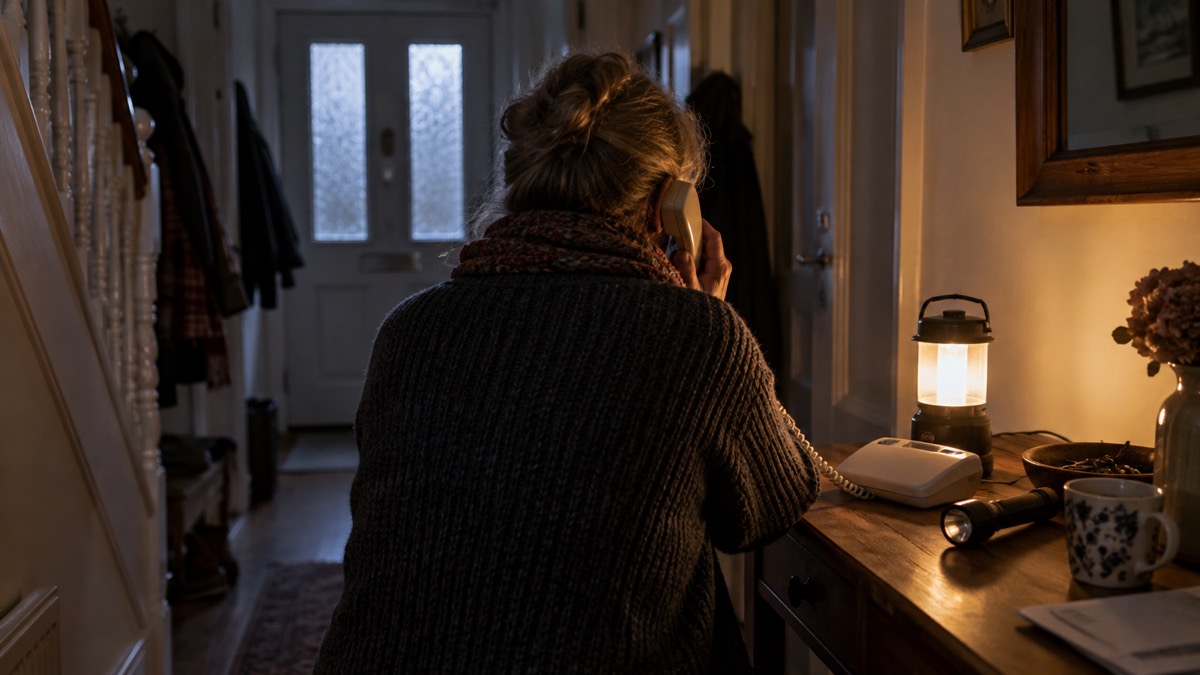
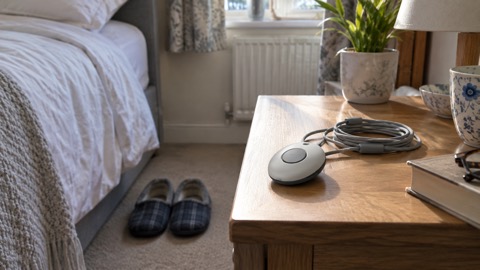
A telecare alarm, also called a community alarm, is usually made up of an alarm base unit and a peripheral device such as an alarm that you wear, connected through radio waves and linked to an Alarm Receiving Centre through a phone connection1. It is a lifeline for many households, and it depends on things outside your home that you cannot see: electricity, a phone or internet connection, and a charged battery.
That is why the answer to whether it will work in a power cut is: it depends on your equipment, and you need to ask. The government's own guidance warns that telecare devices and other personal alarms may not work without electricity or internet2. The national telecare plan lists three common reasons an alarm fails in an outage: the alarm has no internal battery, the battery has run out of power, or the alarm is connected through a router that has no battery back-up3.
The good news is that this is fixable with a phone call and a short plan. Ask your provider how your alarm behaves in a power cut, tell your phone company that you rely on it, and know what you will do if it goes silent. This page sets out what to ask, why the digital phone switchover has changed the answer, and how to prepare.
A telecare alarm might not work without electricity or internet
Telecare is usually made up of an alarm base unit and one or more peripheral devices, such as a pendant you wear. These connect to each other by radio waves, and the base unit connects to the Alarm Receiving Centre through a phone connection7. Every link in that chain needs power or a network, and a power cut can break any of them.
The official advice is blunt about this. Guidance for disabled people and carers says users of telecare devices or other alerting services should be aware that their devices might not work without electricity or internet2. It is a reason to check before you need it, and to know why it happens: the telecare alarm may not have an internal battery, its battery may run out of power, or it may be connected through a router that has no battery back-up3.
There are three distinct failure points to understand:
- The base unit's own battery. Some units have an internal battery and some do not. If yours does, it may be old or flat. The national plan names both as causes of failure3.
- The connection to the monitoring centre. If your alarm uses a phone line or a broadband router, that link needs power. A router without a battery back-up will drop the connection the moment the mains goes off3.
- The wider network. Even a working alarm depends on the phone network or mobile signal being available. Digital phone lines will not work in a power cut without a source of backup, which can leave vulnerable people without a working telecare device8.
The practical lesson is that "it worked last time" is not proof. Batteries degrade, routers get replaced, and phone lines are changing. The only reliable answer comes from your provider, for your equipment, in your home.
Ask your provider how your alarm will work in a power cut
This is the single most useful thing you can do, and it costs nothing. Independent guidance from Energy Networks says to speak to your device provider or manufacturer to understand how your personal alarm, diabetes sensor or other connected health equipment will function during a power cut9. The same advice appears in official power cut guidance: speak to your device provider or manufacturer to understand how they will function during a power cut10.
When you call, ask specific questions rather than a general "will it work?". The answers decide what you do next.
| Question to ask | Why it matters |
|---|---|
| Does my base unit have an internal battery? | Some do not, and those fail immediately in a cut3 |
| How long does the battery last, and how do I know it is charged? | A battery that has run out is a listed cause of failure3 |
| Does my alarm connect through a router, and does the router have battery back-up? | A router without back-up breaks the link to the monitoring centre3 |
| Does my alarm use a mobile SIM? | Many digital alarms have an in-built roaming SIM and can use a mobile mast in a cut3 |
| What should I do if the alarm does not work? | You need a fallback before you need it |
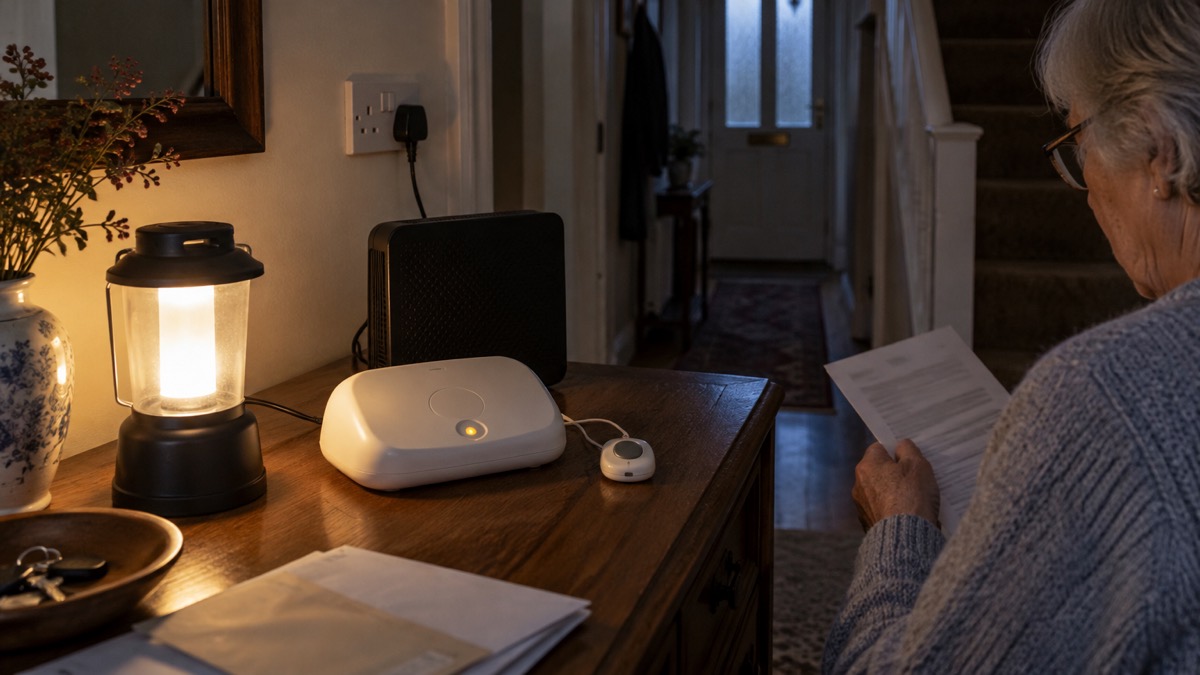
There is also help available in some areas. In Scotland, your telecare provider will assess your needs and may provide a free battery backup and have engineers test it, so care alarms and other important devices continue to work during a power cut11. Ask your provider in England, Wales and Northern Ireland whether any similar support exists; the national plan and local council pages are the place to start12.
If you are choosing an alarm or reviewing one, our guide to personal alarm types and how to choose one sets out the options, and what happens when you press a personal alarm explains the response step by step.
Digital phone lines: why an alarm that worked before may now need power
The old analogue phone network is being retired. Openreach says that by 31 January 2027 all traditional phone lines in the UK will move to digital, and service providers need to move landline users to a digital phone service before then4. Digital landlines need mains electricity and will not work in a power cut unless there is a battery back-up7.
This matters enormously for telecare, because digital landlines behave differently in a power cut. Ofcom's guidance is clear: digital landlines need mains electricity and will not work in a power cut unless there is a battery back-up5. Argyll and Bute Council puts it plainly: digital landlines cannot carry an electrical power connection, so in the event of a power cut they will not work13. The national plan adds that digital phone lines will not work in a power cut without a source of backup, meaning vulnerable individuals may be left without a working telecare device8.
An analogue alarm that worked for years on a copper line may therefore stop working once your line is digital, even before any power cut. The government's guidance for finding a telecare provider warns that some analogue telecare devices are not digitally compatible or do not perform as reliably on digital networks and may need to be upgraded12. Ofcom warns that your care alarm or telecare device might not work properly on a digital landline5.
What should you do?
- Tell your landline provider and your device supplier before your line is changed if you or someone in your household has a telecare alarm, health pendant, personal alarm or any other device that uses your phone line5.
- Contact your provider to check compatibility if you or a relative uses a telecare alarm, also known as a community alarm13.
- Do not assume it will keep working after the switch to digital phone lines, or during a power cut14.
- Tell your phone company about your circumstances, including if you live in an area with poor mobile signal or frequent power cuts15.
Many digital telecare alarms have an in-built roaming SIM, meaning they will connect to a mobile phone mast in the event of a mains power cut3. That is a genuine improvement, but it depends on mobile coverage where you live, and the mobile network may only still work temporarily in specific regions with backup power10. Ask your provider whether your alarm has this feature and test it if they offer a test.
Diabetes sensors and other connected health equipment
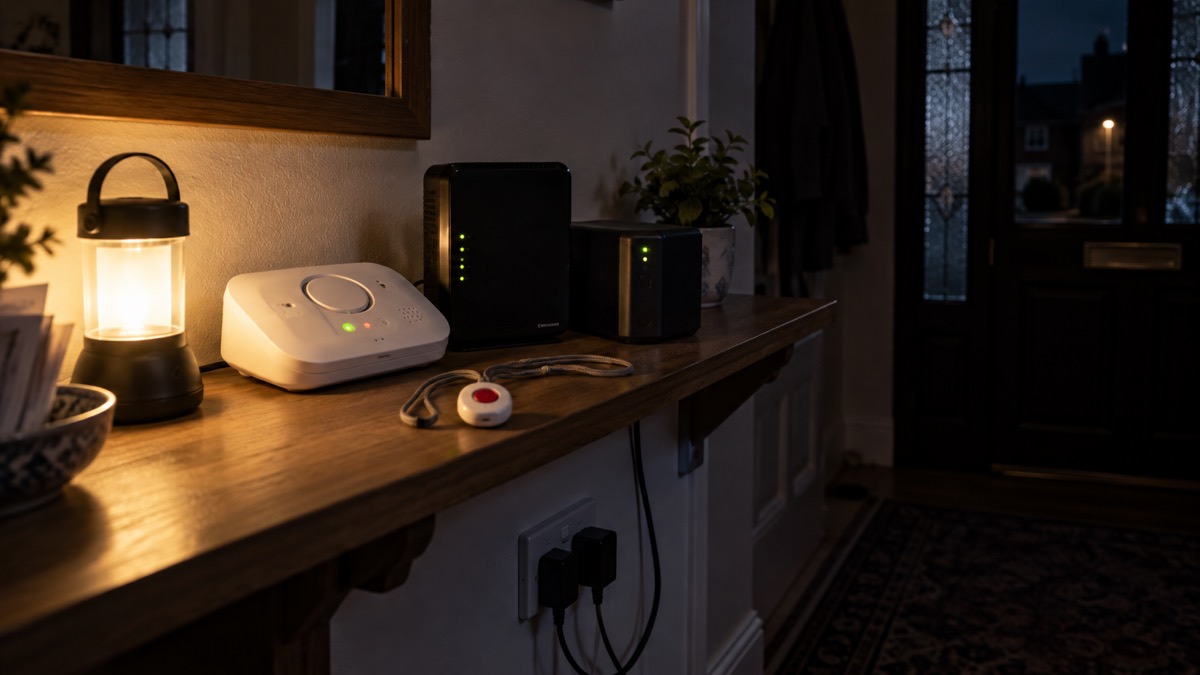
Telecare is not the only health equipment that depends on power and a network. Diabetes sensors and other connected equipment monitoring your health can also be affected. Official power cut guidance advises that if you have a personal alarm or diabetes sensor or other connected equipment monitoring your health, you should speak to your device provider or manufacturer to understand how they will function during a power cut10.
The same advice appears in local resilience guidance: speak to your device provider or manufacturer to understand how personal alarms and connected health equipment such as diabetes sensors will function during a power cut16. If your equipment uses phone or internet connections, check with the provider or manufacturer how it works if the network is down, for example how your personal alarm or diabetes sensor would function if mobile or broadband service is lost17.
For anyone relying on powered medical equipment at home, the Met Office advises speaking to your care team to put a plan in place for what action to take and who you or they can ring 24/7 if there is a device-related problem during a power outage18. That plan should be written down and kept somewhere you can find it in the dark.
If you have home oxygen or a pressure-relieving mattress, these bring their own power cut considerations. Our guides to home oxygen therapy and airflow pressure-relieving mattresses cover the fire safety and supply questions separately.
Making a plan for when the power goes off
A plan turns a frightening situation into a set of steps you have already thought through. Start with the alarm, then build outwards to the rest of the household.
Before the power goes off:
- Ask your provider the battery and connection questions above, and write down the answers8.
- Tell your phone provider and alarm supplier about your circumstances and any poor mobile signal or frequent power cuts9.
- Register with your energy and water companies' Priority Services Register, which flags your needs to suppliers. Our guide to signing up to Priority Services Registers explains how.
- Test your smoke alarms regularly10. If you have mains powered smoke alarms, check that the battery back-up is working after a power cut11.
- If the person you care for has telecare fitted, check it is linked to smoke alarms12. In Scotland, the Tolerable Standard says interlinked smoke and heat alarms should be compatible with any telecare alarms and connected to the telecare system, so everything works as one19.
- If you would be unable to escape without help in a fire, talk to your care provider or the fire service about linking your smoke alarms to a telecare system13.
When the power goes off:
- Check whether your neighbours are safe and whether they have a power cut too. If they have power, your trip switch may have activated14.
- Call 105 from your mobile or landline to report the power cut6.
- Check your alarm's indicator lights or test it as your provider instructed.
- If the alarm is not working, use your fallback: a charged mobile phone, a neighbour, or the number your care team gave you15.
A fallback does not need to be complicated. An analogue phone that can be connected in your house will still work if a power cut affects the mobile network20. Keep a torch where you can find it, and know how to report the outage. Our power cuts guide covers the wider household preparations, and staying informed and in touch covers keeping communications going.
If you are choosing between alarm types, our comparison of a home personal alarm or GPS alarm and our guide to personal alarm or mobile phone for an older person living alone may help. For the wider picture on support for older, disabled and medically dependent households, start with Extra Help in an Emergency.
Sources (20)
- Fire Safety at Home: Tips, Surrey County Council, 24 August 2026
- Easy Read: Disabled Persons and Carers, Be Ready, July 2024
- Telecare National Action Plan: Protecting Telecare Users Through the Digital Phone Switchover, GOV.UK, 11 February 2025
- Digital Phoneline, Openreach
- Future of Landline Calls, Ofcom, 26 August 2026
- Emergency, Basingstoke and Deane Borough Council, 29 October 2026
- Telecare, NHS Inform, 13 August 2024
- Identifying and Supporting Persons Who Are Vulnerable in an Emergency, GOV.UK, 28 April 2025
- Storms and Bad Weather, Energy Networks, 25 October 2026
- Power Cuts, Prepare, 21 October 2026
- Disabled People and Carers, Ready Scotland, 25 October 2026
- Find a Telecare Provider, GOV.UK, 13 May 2025
- Digital Phone Switchover, Argyll and Bute Council, 2026
- Don't Assume It Will Keep Working, National Grid, 26 October 2026
- The Digital Switchover, Suffolk County Council, 29 October 2026
- Loss of Essential Services, Greater Manchester Combined Authority, 29 October 2026
- Phone and Broadband Outages, Prepare, 12 October 2026
- Advice for Disabled Persons and Carers, Be Ready, 20 October 2026
- Connected Together, BT, 20 October 2026
- Power Cuts, West Yorkshire Prepared, 29 October 2026
 Carer's Emergency Plan
 Herbert Protocol Form
 In Case of Emergency Card
 PSR After Moving House
 Pressing Alarm but Cannot Speak
 Falls a Fall Detector May Miss
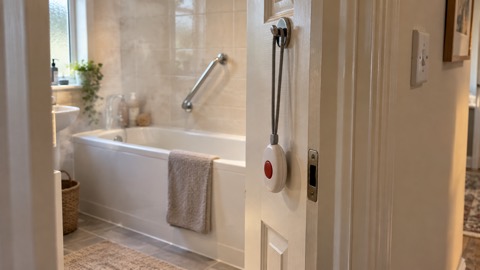 Alarm Pendant in Bath or Shower
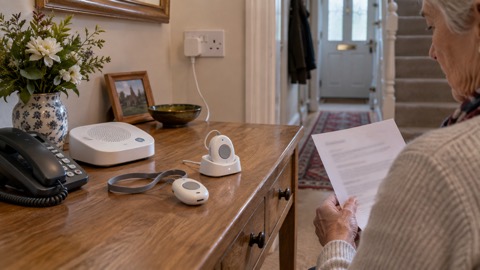 Pendant Battery Life
 Free Locking Cooker Valves
 Herbert Protocol
 Cared-For Person Missing
 Refer for a Fire Safety Check
 Testing Alarms With Mobility
 Electric Blankets and Dementia
 Bathroom Falls Prevention