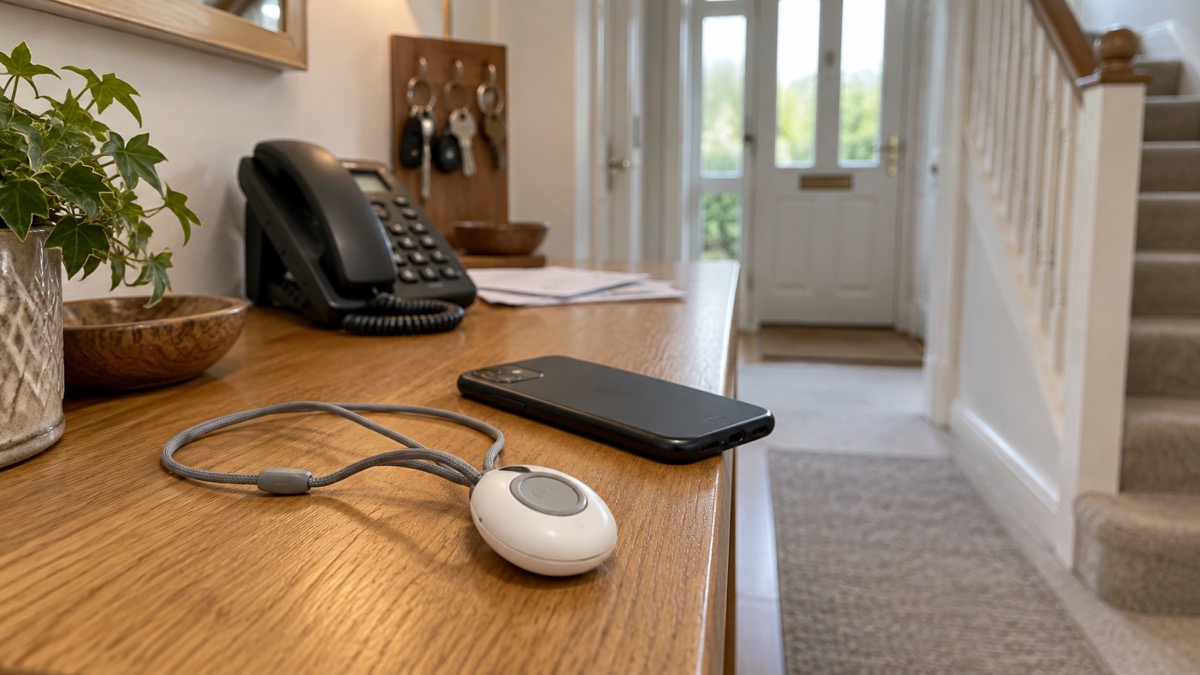
If you live alone and have a mobile phone, you may wonder whether you need a personal alarm at all. A phone is useful, but only if you can reach it when something goes wrong. NHS Inform's advice for someone who has fallen is to carry a mobile phone or wear a pendant alarm, and it is clear that a phone has to be charged and switched on all the time, with an emergency number programmed into it1. A pendant worn on a cord or wrist stays with you when a phone left on a table does not.
A telecare alarm, previously called a community alarm, is a button worn on a pendant or bracelet that you press if you need help urgently, backed by a base unit that connects to an alarm receiving centre2. It is not simply a second phone. It is a monitored service with a named response, and it can be linked to other sensors in the home.
The catch is that alarms and phone lines are changing. The UK is moving from analogue to digital landlines, and some older telecare alarms may stop working if they are not updated3. If you have an alarm, or are thinking of getting one, you need to tell your phone provider and check compatibility before your line changes4.
Do I need a telecare alarm if I have a mobile phone?
A mobile phone can call for help, and for many people it is enough some of the time. The question is what happens when you cannot reach it. A fall often happens in the bathroom, on the stairs or in the garden, away from wherever the phone was left charging. NHS Inform's falls plan says that calling out or banging on a wall or floor could be difficult if you are unwell or hurt, and that using a phone or alarm is more reliable7. The Welsh Ambulance Service's own list of reasons people call 999 includes carrying a mobile phone or wearing a pendant alarm as the advice for a fall8.
So the honest answer is that a phone is a reasonable backup and a poor sole plan. It depends on three things:
- Whether it is with you. A phone on a charger in another room cannot help you on the floor. A pendant worn all the time can.
- Whether it is charged and on. NHS Inform is explicit that the phone must be charged and switched on all the time1.
- Whether you can use it. If you are hurt, confused or cannot speak, pressing one button on a pendant is simpler than unlocking a phone and finding a number.
A telecare alarm also brings a response. A council service says that if you sound the alarm, it will contact a family member, carer or the emergency services9. That is the difference between owning a phone and having someone who knows to check on you.
If you are weighing up the options, our guide to personal alarms and how to choose one sets out the types side by side, and what happens when you press a personal alarm explains the response step by step.
What a telecare alarm does that a phone cannot
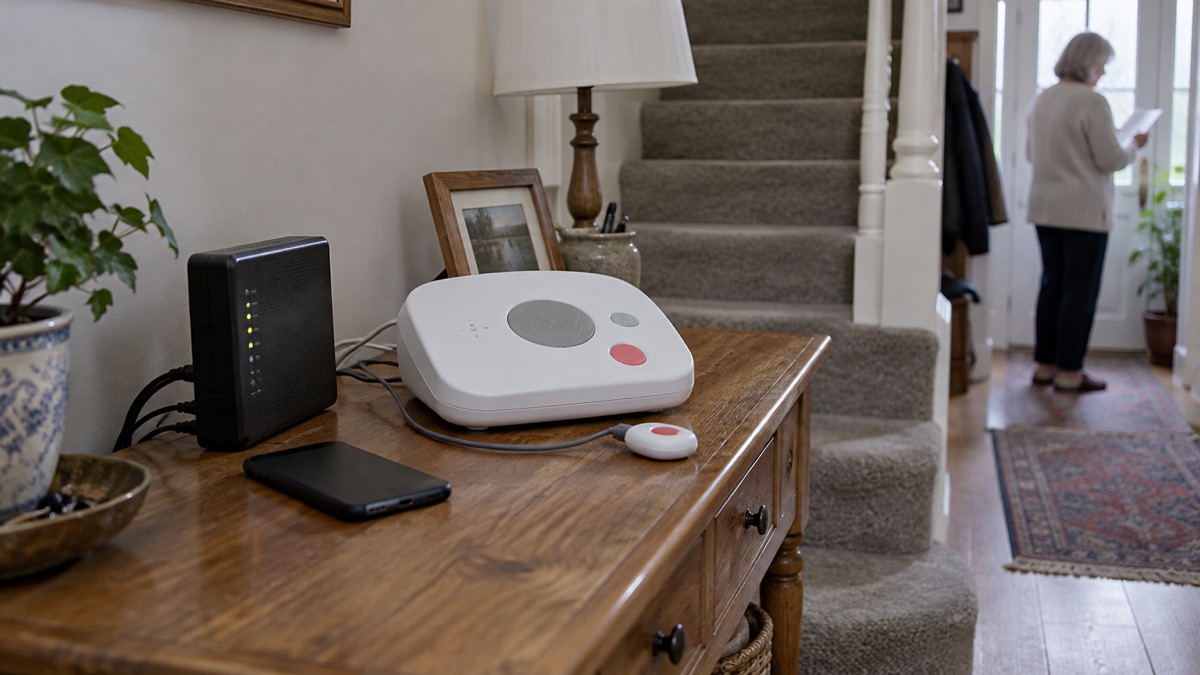
A telecare system is usually made up of an alarm base unit and one or more peripheral devices, such as the pendant you wear, connected by radio waves and linked to an alarm receiving centre through a phone connection2. The button is the part you use; the base unit and the monitoring centre are what turn a press into a response.
That gives it several jobs a phone does not do on its own:
- It stays on you. A pendant or bracelet is worn rather than carried, so it is there when you fall10.
- It reaches someone who knows what to do. The monitoring centre contacts your named family member, carer or the emergency services11.
- It can watch other things. Telecare can include sensors beyond the pendant, and fire services advise checking whether a telecare system is linked to smoke alarms12. Linking fire alarms to telecare as standard limits delays in calling the fire brigade13.
- It supports independence. Telecare is described as helping you stay independent at home, with someone else, typically a call centre or a relative who lives elsewhere, able to make sure you are safe13.
"Telecare helps to keep you independent in your home. You have a button worn on a pendant or bracelet that you can press if you need help urgently."
What it cannot do is work without power or a connection. Official easy-read guidance warns that telecare devices and other personal alarm devices may not work without electricity or internet14. Some newer devices use mobile (GSM) connectivity, which gives some resilience to power outages at home, but they still rely on the mobile network and may not work in a regional power outage15. Our page on whether a telecare or personal alarm works in a power cut goes into this in more detail.
Tell your home phone provider you have a personal alarm
This is the single most important thing to do if you have an alarm, and it is easy to forget. Ofcom advises telling your landline provider and your device supplier before your landline is changed to digital if you, or someone in your household, has a telecare alarm, health pendant, personal alarm or any other device that uses your phone line4. The same warning appears in Ofcom's own guidance: your care alarm or telecare device might not work properly on a digital landline4.
Councils repeat the message. Argyll and Bute asks anyone who uses a telecare alarm, also known as a community alarm, to contact their provider to check that it is compatible16. Suffolk goes further and asks telecare users to tell their phone company about their devices in advance, make them aware of their circumstances and additional needs, and let them know if they live in an area with poor mobile signal or frequent power cuts17. The Scottish Government's ready campaign gives the same advice: tell your phone and broadband provider if you use a telecare system or any device that relies on your phone line18.
It helps to have a short list ready when you call:
- The make and model of your alarm, if you know it.
- Whether it plugs into the phone line, a router, or works on its own mobile connection.
- Whether you have a pendant only or other sensors, such as a smoke alarm link.
- Whether your mobile signal at home is poor, and whether you get frequent power cuts17.
Tell your landline provider and your device supplier before your landline is changed to digital if you, or someone in your household, has a telecare alarm, health pendant, personal alarm or any other device that uses your phone line19. For the wider picture on registering for extra help from utilities, see signing up to Priority Services Registers.
Older analogue alarms must be upgraded for the digital switchover
The old landline system is being replaced, and services that rely on it, including home phones, telecare and health devices, will need to be updated16. Some analogue telecare devices are not digitally compatible, or do not perform as reliably on digital networks, and may need to be upgraded19. Staffordshire's council puts it plainly: some older telecare alarms may stop working if they are not updated3.
The national plan for protecting telecare users through the switchover carries a specific warning for anyone whose home has already changed. An analogue telecare alarm system may not work properly if you have an internet connection, or if you have a digital landline instead of an analogue one, and the guidance suggests considering a digital alarm if you are unsure20. Which? updated its telecare guide in August 2024 to remind consumers of the same point20.
| Your situation | What to do |
|---|---|
| You have an analogue alarm and a traditional phone line | Tell your provider and supplier before the line changes4 |
| Your line has already gone digital | Ask your provider to check compatibility; consider a digital alarm if unsure20 |
| You have an internet connection at home | An analogue alarm may not work properly; check with your provider20 |
| You are not sure what you have | Contact your provider to check it is compatible16 |
Do not take an old alarm out yourself. Scottish Government guidance on fire and smoke alarms in Scottish homes says: do not remove any existing telecare alarms6. If your provider tells you an alarm needs replacing, ask them how the new one will be fitted and tested, and what happens to your monitoring contract in between.
When the 3G switch-off affects a mobile phone or alarm
Alongside the landline change, mobile networks are changing too. Mobile providers began switching off 3G networks in 2025, which may affect personal alarms that only use 2G or 3G21. If your alarm connects over the mobile network rather than a phone line, this matters as much as the landline switchover.
Ofcom does not have a formal role in the 3G switch-off, but it expects mobile providers to give adequate notice, keep communications simple and clear, use a range of methods and formats, give extra help to customers who need it, particularly people struggling financially, and provide information about roaming abroad22. In practice, that means you should expect to hear from your mobile provider by text message or email, see information on their website, and get more reminders as the switch-off gets closer22.
If you use a mobile phone as your main way of calling for help, ask your provider whether the 3G switch-off affects it and what you need to do. If you use a personal alarm that relies on a mobile connection, ask the alarm provider which networks it uses and whether the 3G switch-off affects it. The same question applies to a fall detector or a GPS pendant, which our guide to fall detectors and how automatic fall alerts work covers.
Where to get help choosing and setting up an alarm
Start with your council. A council service will assess your needs, and may provide a free battery backup and have engineers test it, so care alarms and other important devices keep working during a power cut18. That assessment is also the moment to say if you have no family member or carer nearby: a council service may let you use a wellbeing response service instead9.
Fire and rescue services can help too. A Safe and Well visit may suggest extra help, such as fire retardant bedding or linking a smoke alarm to your telecare system23. If you would be unable to escape without help in a fire, talk to your care provider or the fire service about linking your smoke alarms to a telecare system24. Our guide to personal evacuation plans for disabled residents in flats explains what a plan should contain.
For the alarm itself, think about what you need it to do rather than which brand to buy:
- At home only, with a phone line or router: a base unit and pendant, monitored by a centre2.
- At home with a carer on site: a pager system that vibrates, beeps and lights up to show which sensor activated, which room, and the time and date, avoiding the need for a phone line or monitoring centre when full-time care is being given11.
- Out and about: a GPS pendant or alarm watch, which our comparison of a home alarm or a GPS alarm sets out.
Keep a charged mobile phone with you as well, and keep a charger in your emergency kit25. If you have a pacemaker, check with the alarm provider before wearing a pendant, and see our page on personal alarms and pacemakers. For more on staying safe when no one is nearby, read living alone: staying safe when no one is nearby.
Sources (26)
- What to do if you fall, NHS Inform
- Telecare, NHS Inform
- Telecare, Staffordshire County Council, 2025-07-20
- Future of landline calls, Ofcom
- Loss of essential services, Greater Manchester Combined Authority
- Fire and smoke alarms in Scottish homes, Scottish Government
- Creating a falls plan, NHS Inform, 2024-06-18
- Some of the reasons people call 999, Welsh Ambulance Service
- Technology enabled care, Lincolnshire County Council, Lincolnshire County Council
- Digital easy read fire safety booklet, London Fire Brigade
- What's available from the Telecare service, Isle of Anglesey County Council
- Caring for smokers, London Fire Brigade
- Alarms, London Fire Brigade
- Easy Read: Disabled persons and carers, Prepare campaign, 2024-07
- Identifying and supporting persons who are vulnerable in an emergency, GOV.UK, 2025-04-28
- Digital phone switchover, Argyll and Bute Council
- The digital switchover, Suffolk County Council
- Disabled people and carers, Ready Scotland
- Find a telecare provider, GOV.UK
- Telecare national action plan, GOV.UK, 2025-02-11
- 2G and 3G mobile network FAQs, Taking Care
- Emergency video relay, Ofcom, 2023-03-31
- Smoke alarms, Surrey County Council
- Emollients, Greater Manchester Fire and Rescue Service
- Celebrate safely, Humberside Fire and Rescue Service
- Emergency kit, Ready Scotland
 Home Alarm or GPS Alarm
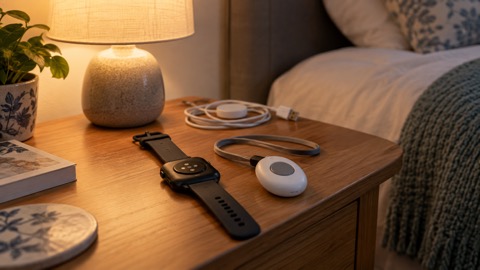 Smartwatch or Fall Alarm