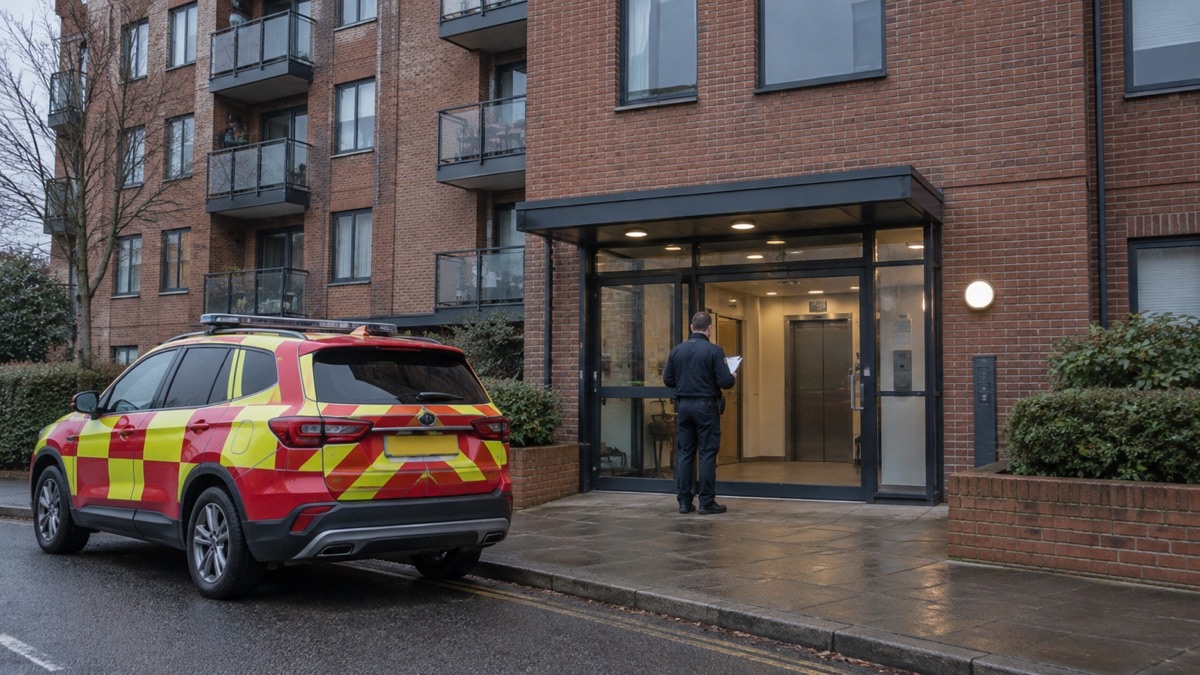
If you live in a flat and a fire broke out elsewhere in your block tonight, would you be able to get out unaided? For many disabled residents, the honest answer is no, and since 6 April 2026 the law in England recognises that. From that date, the Responsible Person for certain residential buildings, usually your landlord, managing agent or building owner, must use reasonable endeavours to identify residents who may be unable to leave the building without help, and make reasonable arrangements to plan for their safe evacuation1.
The scheme is called Residential PEEPs, short for Residential Personal Emergency Evacuation Plans. It applies to residential buildings in England that contain two or more domestic premises and are 18 metres or more in height, or have 7 or more storeys, or that are more than 11 metres in height and operate a simultaneous evacuation strategy, meaning everyone leaves at once when the alarm sounds1. If you think you may need help to evacuate safely, contact the Responsible Person for your building and ask to be assessed1.
This page explains what to do if fire breaks out in your block, when you can safely stay in your flat, how to ask for a personal evacuation plan, what the assessment covers, and your rights around consent, medical information and your flat front door.
What to do if fire breaks out in your block
The right action depends on where the fire is. Fire and rescue services give different advice for a fire inside your own flat, a fire elsewhere in the building, and a fire in the communal areas, and following the right one matters.
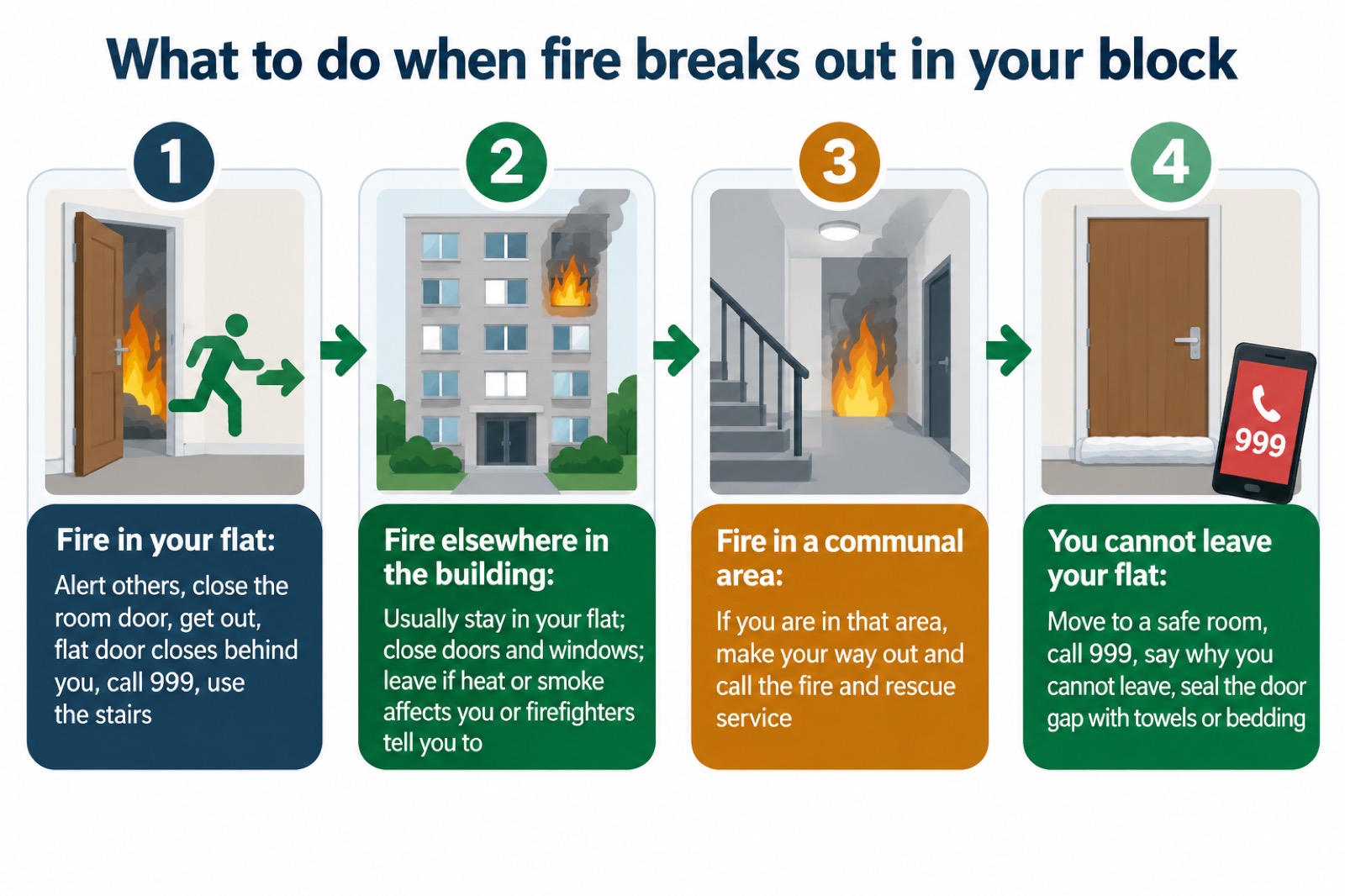
If there is fire or smoke in your flat, the fire and rescue service advice is to get everyone out as quickly as possible: alert anyone else in your flat, close the door to the room where the fire is, and get out making sure the flat door closes behind you8. Do not stop to collect belongings or investigate, and do not go back inside8. Once you are safely outside, call 999 and ask for Fire, never assuming someone else has called8. Leave the building using the stairs if you can. The national Fire Kills campaign puts it simply: get out, stay out, call 9998.
If you discover a fire in a communal area, such as a corridor, stairwell or bin store, anyone in those areas should make their way out of the building and call the fire and rescue service9. If you are in your flat at the time, the advice for your building's evacuation strategy applies, which is covered in the next section.
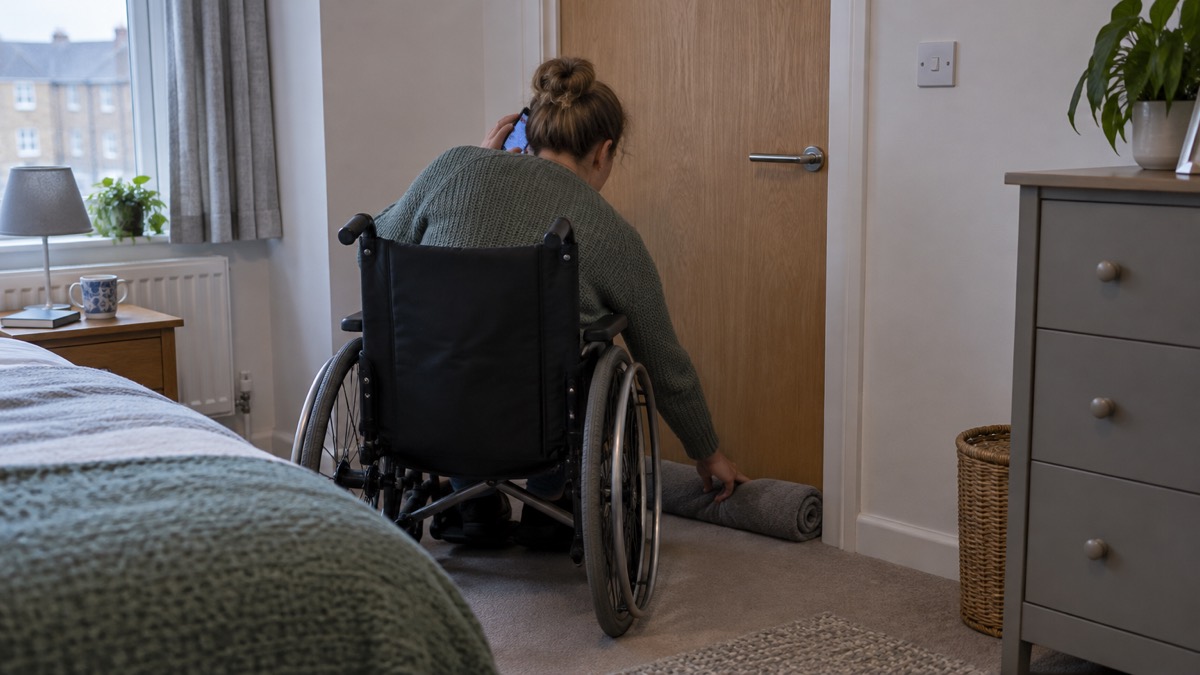
If you cannot leave your flat, move to a room where you think you will be safe and call 999. Tell the control operator you cannot leave your flat and the reason why. Keep the door closed and use towels or bedding at the bottom of the door to stop smoke getting in5. An NHS home fire safety guide gives the same advice for purpose-built flats and maisonettes: if your escape route is not clear, it may be safer to stay until the fire brigade arrives, so find a safe room, close the door, block gaps with soft materials, go to a window, shout "HELP, FIRE" and call 99910.
Devon and Somerset Fire and Rescue Service adds a general point worth remembering: if you live in a block of flats or a high-rise building, there will be specific advice about what to do in the event of a fire, so learn your building's evacuation strategy before you need it11. Your building management team or housing association should have told you what it is; if they have not, ask. Cheshire Fire and Rescue Service advises residents to follow the fire safety advice provided by their building management team or housing association to know how best to protect themselves and escape safely12.
If a neighbour consistently blocks your escape route, for example by storing items in a corridor or stairwell, first talk to the neighbour. If that does not help, the next step is contacting your local authority, or the fire and rescue service13.
Stay Safe: when you can remain in your flat
Most purpose-built blocks of flats in the UK operate a Stay Safe policy, sometimes called "stay put". Greater Manchester Fire and Rescue Service explains what it means: if there is a fire in your flat you should leave the flat and the building; if there is a fire somewhere else in the building, you can remain in your flat and do not need to leave the building14.
This is not a casual suggestion. It rests on how these buildings are constructed. London Fire Brigade's guide for purpose-built flats and maisonettes states that walls, floors and doors will hold back flames and smoke for a minimum of 30 to 60 minutes15. Your flat is designed to be a protective box while firefighters deal with a fire elsewhere in the block.
If there is a fire somewhere else in the building, you can usually remain in your flat unless heat or smoke affects you, or you are told to leave by firefighters14. North Yorkshire Fire and Rescue Service advises residents to close their doors and windows and stay in their flat unless advised otherwise by the fire service6. An easy-read fire safety booklet from London Fire Brigade puts it plainly: stay where you are if your building advises you to do so, and do what the fire brigade or people who provide you with support say16.
There is one practical consequence to weigh before deciding to leave when you do not have to. If you choose to leave the building, you may not be able to re-enter until firefighters have dealt with the fire, meaning you may not be able to go back to your flat for a few hours14. For a resident who uses a wheelchair or cannot manage stairs unaided, that could mean hours outside with nowhere to go. This is exactly the kind of decision a personal evacuation plan is meant to think through in advance with your Responsible Person.
Never use the lift or go back for belongings
Two rules apply in every evacuation, whatever the building's strategy.
First, use the stairs, never the lift. Devon and Somerset Fire and Rescue Service's advice for full evacuation is to use the stairs to make your way out of the building, never use the lift7, and North Yorkshire Fire and Rescue Service says the same for a fire in your flat: exit using the stairs, do not use the lift6. London Fire Brigade's flats guide adds that in buildings operating full or temporary simultaneous evacuation, you should use the stairs and not the lift15. Lifts can fail, lose power, or open onto a smoke-filled floor.
Second, once out, stay out. Never go back inside for possessions, pets or people, and tell the fire service immediately if anyone is missing8. Never re-enter the building until instructed by the fire service6. Westminster City Council's household emergency guidance states the same rule: if you have to leave your flat in an emergency, never re-enter your home until the fire and rescue service have made it safe17.
For residents who use mobility equipment, London Fire Brigade's easy-read booklet has three preparation rules worth acting on now: keep all walking frames, crutches, wheelchairs and walking sticks near to the person who uses them; keep hallways, landings and stairs clear of anything that might block or slow down your escape; and keep door and window keys nearby so you can get out quickly16.
Residential PEEPs: who can ask for one in England
The Fire Safety (Residential Evacuation Plans) (England) Regulations 2025 came into force on 6 April 2026, and from that date the Responsible Person for certain residential buildings must make reasonable arrangements to plan for the safe evacuation of residents who may not be able to self-evacuate1. Cheshire Fire and Rescue Service notes that these changes are known as the Fire Safety (Residential Evacuation Plans) (England) Regulations 2025, and that the new regulations came into force in England18.
The regulations apply to residential buildings in England that contain two or more domestic premises and are 18 metres or more in height, or have 7 or more storeys, or that are more than 11 metres in height and have a simultaneous evacuation strategy1. Suffolk Fire and Rescue Service sets out the same thresholds4. Only residents who live in these buildings as their only or main home are in scope1.
A "relevant resident" is someone who lives in the building as their only or main home and has a physical or cognitive impairment or condition that means they may be unable to leave the building without help during a fire3. This is deliberately broad. London Fire Brigade's guidance describes a Residential Personal Emergency Evacuation Plan as a bespoke plan for anyone who may need assistance to evacuate a building or reach a place of safety, and its flats guide gives examples including physical disabilities, hearing and sight loss, limited mobility, and temporary conditions such as an injury19. The easy-read booklet adds that PEEPs are special plans for anyone who may need help to leave the building safely if there is an emergency16.
| Building type | In scope for Residential PEEPs? |
|---|---|
| 18 metres or more in height, or 7 or more storeys, with two or more flats | Yes1 |
| More than 11 metres with a simultaneous evacuation strategy | Yes1 |
| Blocks below these thresholds in England | Not covered by the regulations |
| Scotland, Wales and Northern Ireland | The regulations apply to England only1 |
The scheme traces back to the Grenfell Tower Inquiry. The Inquiry's Phase 1 report recommended that the owner and manager of every high-rise residential building be required by law to prepare personal emergency evacuation plans for all residents whose ability to self-evacuate may be compromised, such as persons with reduced mobility or cognition, and to include up-to-date information about persons with reduced mobility and their associated PEEPs in the premises information box20. The Government consultation that followed opened on 8 June 2021 and closed on 19 July 2021, receiving 382 responses20.
How to ask. London Fire Brigade's step-by-step guide is: contact your landlord, managing agent or building owner; tell them you would like to be assessed for a Residential PEEP; they will offer to do a person-centred fire risk assessment; they will talk with you about your needs and agree an evacuation plan with you in case of fire; and if you agree to the plan, they will give you a copy of it19. If you are unsure who the Responsible Person is, speak to your landlord, managing agent or building owner, who assess residents, record and store the plans, and are the contact for eligibility questions, updates and payment discussions19. London Fire Brigade also suggests talking to your landlord or housing officer, who can help you with this21.
What a person-centred fire risk assessment covers
The heart of Residential PEEPs is the person-centred fire risk assessment, often shortened to PCFRA. The Government's statutory guidance defines it as an assessment of the risks relating to the relevant resident and the premises, in light of that resident's impairment or condition, and consideration of the resident's ability to evacuate the building without assistance in the event of a fire22. In plain terms, it looks at you and your home together: what makes fire more likely for you, what would make escape harder, and what could be done about both.
Under the arrangements for residential evacuation plans, the process runs through several stages. Your housing provider or managing agent must identify you, offer a person-centred fire risk assessment, discuss reasonable and proportionate mitigation measures with you, agree who pays, implement the agreed measures, produce an Emergency Evacuation Statement, and carry out an annual review of your PCFRA and Emergency Evacuation Statement22. If your circumstances change, you can request a review before the annual one is due22. The Government's factsheet adds that a review is also required if there is reason to believe the assessment or statement requires amending or updating, or at the reasonable request of a relevant resident22.
The Emergency Evacuation Statement is the written outcome: a personal plan that explains what assistance you may need in an emergency, what arrangements are in place to support you, and what you should do if there is a fire in your building1. London Fire Brigade describes it as a simple, written plan that explains how you would leave your home in an emergency, what help you may need, and important information firefighters should know about you19.
Who actually carries out the assessment may vary. Lincolnshire Fire and Rescue's person-centred fire risk assessment guidance and checklist states it may be carried out by specialised housing scheme managers, care providers, responsible persons or any other party who regularly engages with the resident, and that it can also be used by family members, carers, and representatives of housing providers, care providers, local authorities, utility companies and businesses23. The same guidance provides a checklist form for an initial quick and easy check of vulnerable residents, which aids completion of a full person-centred fire risk assessment where one is required, and notes that if a care plan exists, actions taken to mitigate risks should be noted in that plan23. It can also be used for specialised housing premises such as care homes, sheltered housing, extra care and supported living23.
One point the fire and rescue services are keen to correct: they do not run the scheme. North Yorkshire Fire and Rescue Service states that fire and rescue services do not carry out the resident assessments, create evacuation statements, hold medical details, decide what mitigation measures are reasonable, or mediate disputes between residents and Responsible Persons3. Your plan is made with your building's Responsible Person, not the fire service.
Taking part is your choice, and your information stays yours
Nobody can force you to have an evacuation plan. The Government's factsheet states that the decision as to whether to participate in Residential PEEPs lies with the resident, and they cannot be compelled to participate22. Cornwall Fire and Rescue Service puts it the same way: participation is voluntary, you cannot be forced to have one, and your information cannot be shared without your consent1. Suffolk Fire and Rescue Service adds that participation is entirely voluntary and based on your explicit consent, and that consent can be withdrawn at any time4. London Fire Brigade is equally clear: you do not have to get one, and one can only be created and shared with your consent19.
You also control how much you share. You do not have to share detailed medical information; the focus is on what help you may need, not on diagnoses or conditions1. North Yorkshire Fire and Rescue Service states flatly that no medical or personal information should be shared3. If a request for detail goes beyond what you are comfortable with, you can say so: the plan needs to record what assistance you would need to leave the building, not your medical history.
If you own your flat, the scheme does not ride roughshod over your lease. The Government's factsheet states that Residential PEEPs does not override existing leaseholder rights, and that a proposed mitigation would not be reasonable and proportionate if it impinges on another leaseholder's rights without that leaseholder agreeing22. On the question of costs, the consultation response records that 72 responses said costs should not be passed to those residents who need a PEEP, or to leaseholders via the service charge20. If payment for a measure is raised with you, that is a discussion to have with your Responsible Person, who is the contact for payment discussions19.
Your flat front door: checked once a year
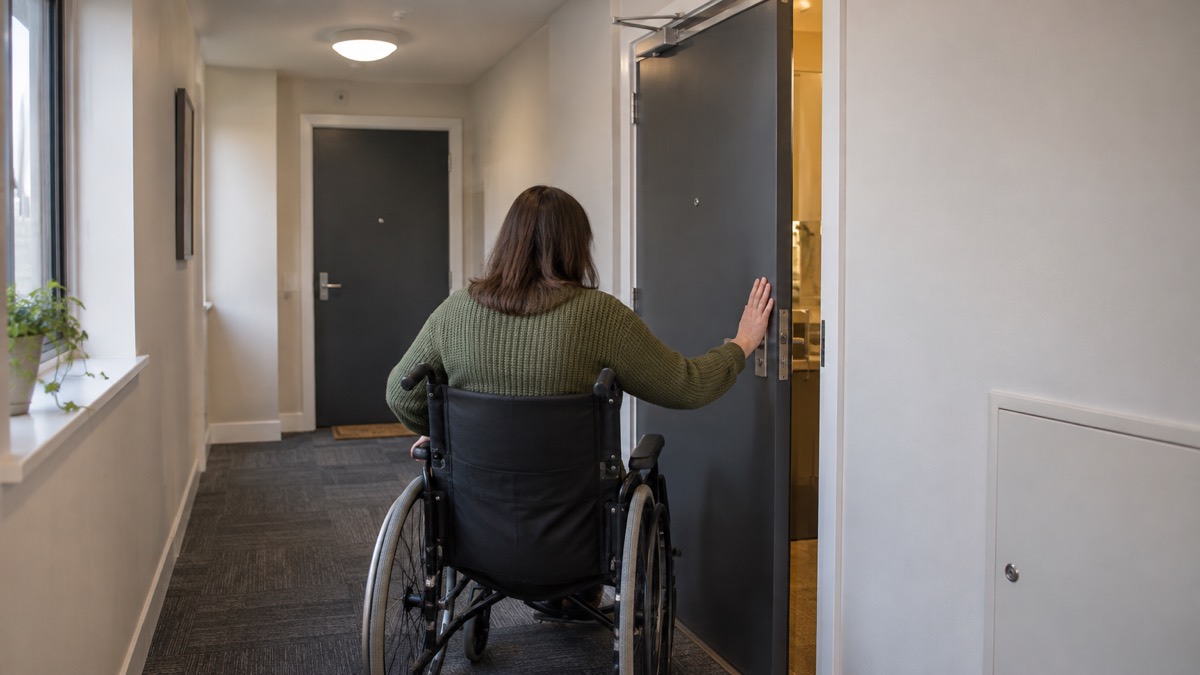
Your flat front door matters more in a fire than almost anything else in your home. Greater Manchester Fire and Rescue Service explains why: your flat front door is a fire door, and is there to make sure that if you do have a fire in your flat, the fire and smoke will not spread into the corridor24. If your front door faces onto a common area in the building, London Fire Brigade advises that it needs to be a fire door, fit for purpose and regularly inspected and maintained25.
The law puts a duty on your building's management. The law says your housing provider or managing agent must check your flat front door once a year26. They will need to inspect the door from both sides and make sure that it closes on its own and there is no damage26. Greater Manchester Fire and Rescue Service's flat fire safety leaflet confirms the annual review of your front door alongside the annual review of your PCFRA and Emergency Evacuation Statement27.
You can check some things yourself between inspections:
- Self-closing: fire doors are fitted with self-closing devices, which can be fitted to the top of the door or within the frame, so the door closes on its own24. If yours does not, report it.
- Gaps: check the gaps around the top and sides of the door are consistently less than 4mm when the door is closed. The gap under the door can be slightly larger, up to 8mm, but it depends on the door, and ideally you should not see light under the door25. The door should not have big gaps between the door and the door frame26.
- Damage: report any damage to the door or frame to your housing provider or managing agent.
Changes you must not make without permission. Do not change your front door without permission: if you rent, check with your landlord, and if you own your flat, your lease will set out what you can do24. More broadly, Cheshire Fire and Rescue Service advises that you should not make any changes to the layout or structure of your flat without permission from the building owner12. A new door that is not a fire door, or an altered layout that blocks an escape route, can put you and your neighbours at risk and may breach your lease or tenancy.
Where to get help
Your first contact for everything on this page is your building's Responsible Person: your landlord, managing agent, housing provider or building owner19. In residential buildings with two or more domestic premises, the responsible person must provide residents with information on the risks from fire within their building and the fire safety measures in place4, so you are entitled to ask what your building's evacuation strategy is and what information is held.
If you are a disabled or older household preparing more broadly, the Priority Services Registers run by energy and water companies offer extra help with utilities, and you can read about signing up to Priority Services Registers and what registered customers get from water companies. For fire risk in the home generally, see our guide to fire risk for older and disabled people, and for carers planning for emergencies. If you use a personal alarm, our page on personal alarms and how to choose one covers the options, and what happens when you press an alarm explains the response. For fire, carbon monoxide and other home emergencies, see the home emergencies guide.
Sources (27)
- Residential Personal Emergency Evacuation Plans (RPEEPs), Cornwall Council
- Residential PEEPs: Guidance for Responsible Persons, GOV.UK
- Residential Personal Emergency Evacuation Plans (RPEEPs), North Yorkshire Fire and Rescue Service
- Fire safety regulations, Suffolk County Council
- Fire safety information for residents living in flats operating an evacuation strategy, Greater Manchester Fire and Rescue Service
- High rise building safety, North Yorkshire Fire and Rescue Service
- Fire safety in flats and high rise buildings, Devon and Somerset Fire and Rescue Service
- Make an escape plan, Fire Kills campaign
- Evacuation strategy, Surrey County Council
- Home fire safety guide, Wirral Community Health and Care NHS Foundation Trust, 2025-01-24
- If you have a fire, Devon and Somerset Fire and Rescue Service
- High rise homes, flats and apartments, Cheshire Fire and Rescue Service
- Living above business premises: fire safety guide, London Fire Brigade
- Fire safety information for residents living in flats operating a Stay Safe policy, Greater Manchester Fire and Rescue Service
- Home fire safety guide for purpose-built flats and maisonettes, London Fire Brigade, 2023-10
- Easy read fire safety booklet, London Fire Brigade
- Prepare your household for emergencies, Westminster City Council, 2014-04
- Residential Personal Emergency Evacuation Plans (RPEEPs), Cheshire Fire and Rescue Service
- Residential Personal Emergency Evacuation Plan: a guide, London Fire Brigade
- Personal Emergency Evacuation Plans consultation: government response, GOV.UK, 2024-12-02
- Escape plan for blocks of flats, London Fire Brigade
- Residential PEEPs factsheet, GOV.UK, 2026-04-06
- Person-centred fire risk assessment guidance and checklist, Lincolnshire Fire and Rescue, 2022
- Fire doors and why they are important, Greater Manchester Fire and Rescue Service
- Fire doors, London Fire Brigade
- Fire doors and why they are important, Greater Manchester Fire and Rescue Service
- Flat fire safety: Stay Safe, Greater Manchester Fire and Rescue Service
 Joining Priority Services
 Water Priority Services
 Carers Planning for Absence