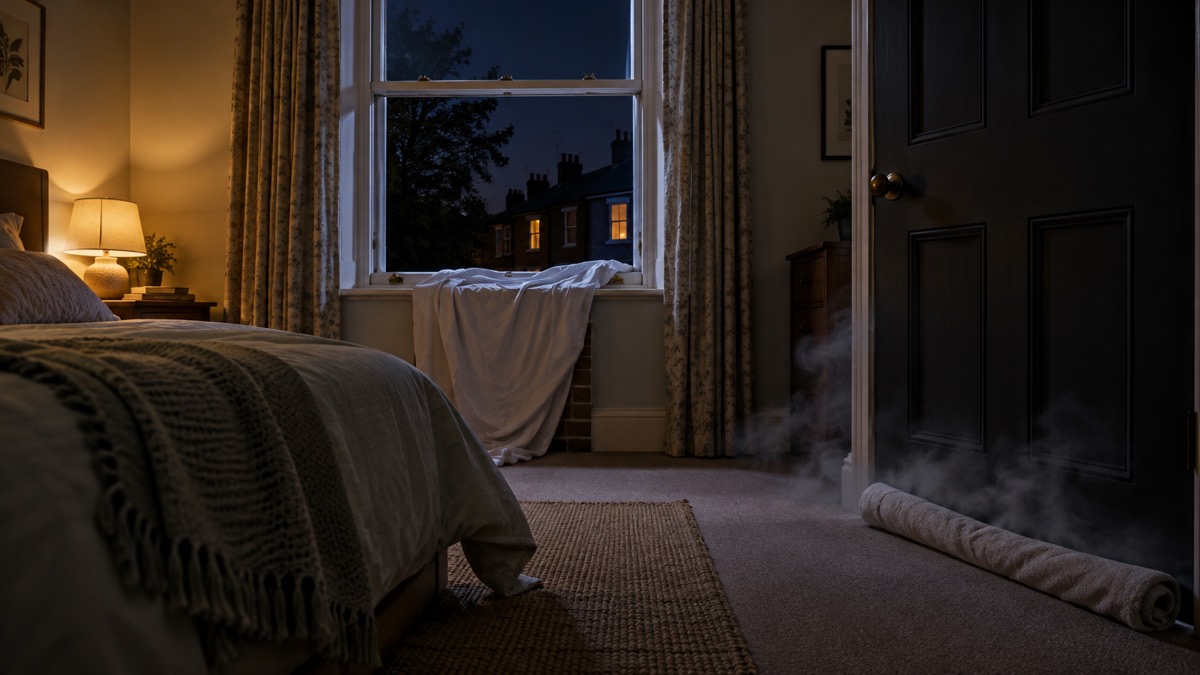
If fire or smoke has cut off your way out, you are not out of options. The advice from fire and rescue services across the UK is consistent: get everyone into one room, ideally one with a window and a phone, close the door, and seal the gap underneath with bedding or towels to keep smoke out. Then open the window, call 999 and make yourself seen and heard1.
Smoke and fumes can kill people quickly, which is why the door and the gap under it matter so much3. Once you are in the room, stay there. If you are on an upper floor, do not jump: wait for rescue1. Firefighters are trained and equipped to reach you, and a person at a window is far easier to find than someone who has fallen.
This page sets out what to do in the order you would need it: the room to get to, sealing the door, using the window, what changes in a high-rise flat, and what to do once you are out. It also covers the preparations that make those minutes easier, such as choosing your room in advance and keeping a phone by the bed.
Get everyone into one room with a window and close the door
The first move is to gather everyone into a single room and shut the door3. Working as one group in one place means you can account for each other, keep children and pets with you, and give the 999 operator one clear location. A room with a window that opens easily is best, and if it has a phone for calling 999, better still8.
Choose the room with care if you have any choice at all. London Fire Brigade advises finding a safe room as far as possible within the flat from any fire or smoke, with a window if possible9. Distance buys time: fire and smoke spread, and every door and every metre between you and the fire slows that spread. If you are in a house, that usually means a room on the side away from the fire, ideally upstairs where smoke may take longer to reach.
Close the door firmly behind you, and close doors between you and the fire as you go if it is safe to do so. Suffolk Fire and Rescue Service advises closing the door to the room where the fire is located and closing all doors behind you as you leave, to delay the spread of fire and smoke10. A closed door is one of the most effective pieces of fire safety equipment in any home, and it costs nothing.
If you live in a flat and the fire is not in your flat, the picture is slightly different. You should leave your flat if you are directly affected by heat, smoke or fire, or if the fire and rescue service or police tells you to get out11. If neither applies, the building's own evacuation strategy applies, and that is explained in what to do if there is a fire in your block of flats.
Block the gap under the door to keep smoke out
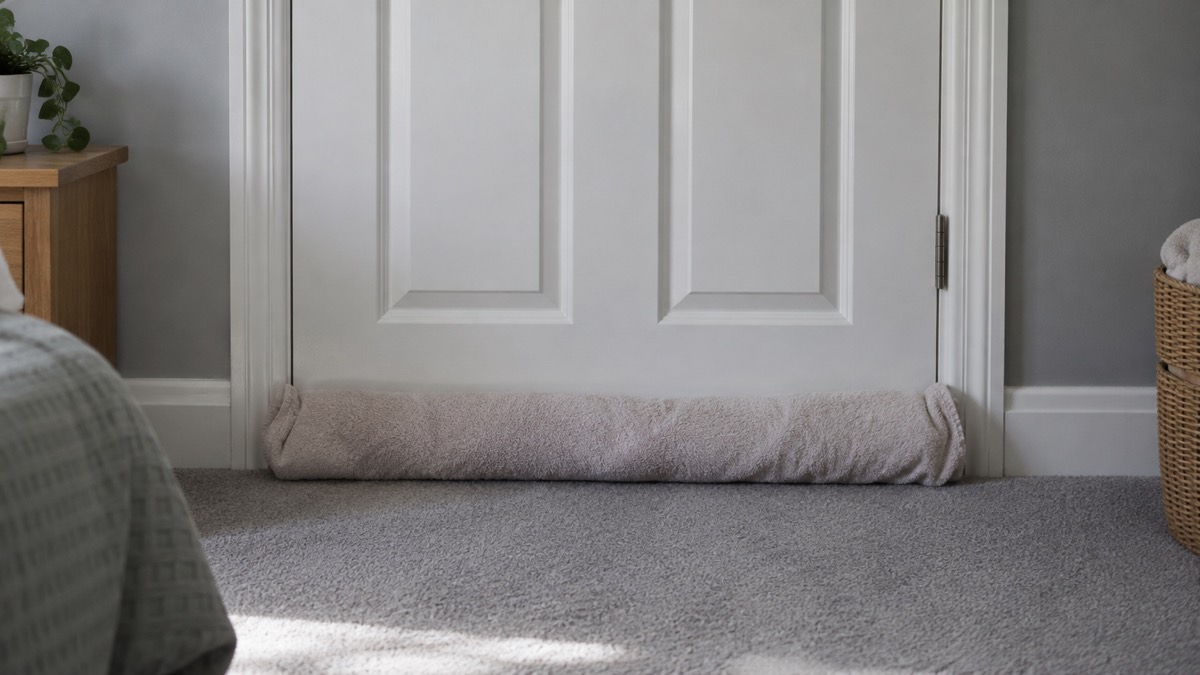
Smoke is the part of a fire that most often traps people, and it does not need an open door to reach you. It seeps through the gap under a door and around the frame. The fix is simple and uses what is already in the room: put bedding or towels along the bottom of the door to seal the gap3. Surrey Fire and Rescue Service suggests cushions, bedding or clothes around the bottom of the door to block smoke12. The NHS home fire safety guide describes using soft materials to block gaps, then calling 999 and going to the window4.
Do this thoroughly rather than quickly. Push the material right into the gap along the full width of the door, and add more if you can see or smell smoke coming through. If there is a keyhole, a letterbox or a vent in the room, consider whether smoke could come through those too, and block what you safely can.
If smoke does start to get into the room despite your efforts, stay calm and stay low. If you can safely reach another room further from the fire, move to it, close the door behind you and seal that door as well. If you cannot, stay at the window with it open, keep the door sealed, and keep shouting and waving for the fire crews. The house fire page covers what to do in the first moments of a fire, before escape is blocked.
At the window: open it, stay low and call for help
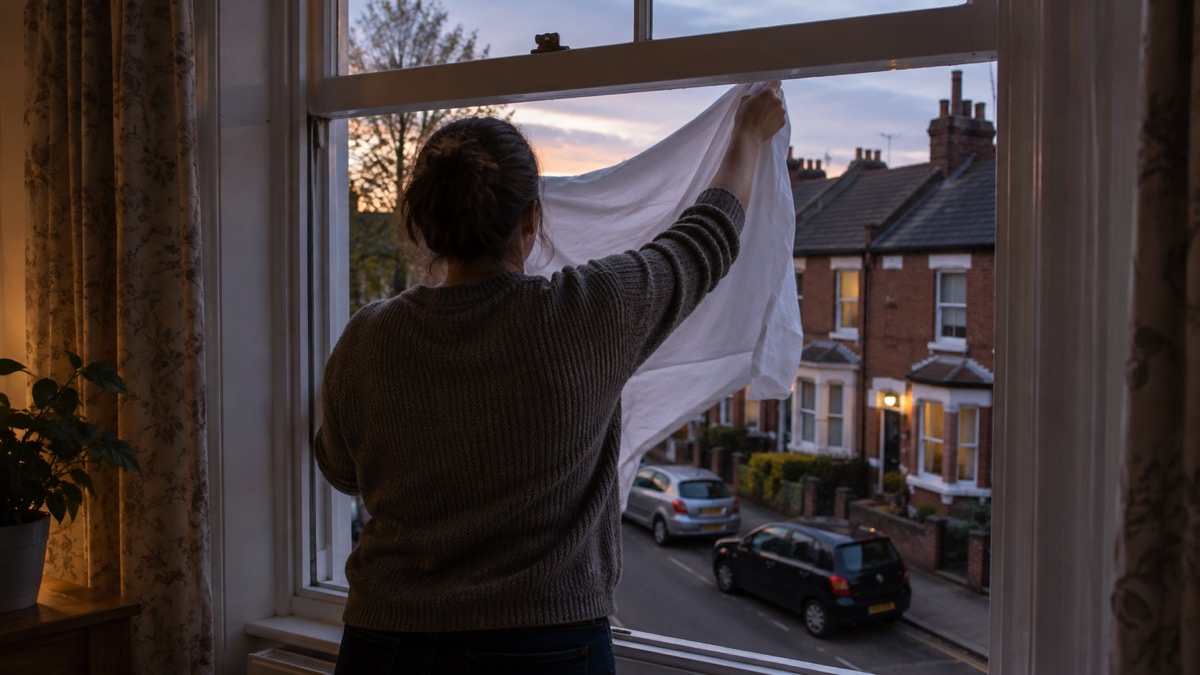
The window is your link to the outside world. Open it, and stay by it13. From there you can breathe fresher air, call for help and be seen. Fire and rescue services advise shouting "HELP FIRE" or "FIRE" from the window to attract attention4. If your voice is weak or the noise is loud, keep a whistle handy, as the government's fire safety guidance for people with sight, hearing or mobility difficulties suggests7.
Calling 999 is the single most important thing you can do from that room. Call if you can, or get someone else to make the call6. When you get through, explain that you are trapped and which room you are in, and give as much information as you can so they can help you5. Tell them how many people are with you, whether anyone is a child, older or has difficulty moving, and the best way into the building. If you are in a flat, say which floor you are on.
Signalling matters as much as speaking. Shout or wave something out of the window to get attention6. If you feel in serious danger, wave a sheet out of the window so the firefighters know you are there, particularly if you live in a high-rise flat and cannot get out12. A brightly coloured cloth or a torch is easier to spot than a hand, especially at night or from a distance.
If you have a phone, keep it with you and keep the line open if the operator asks you to. The page on how fire and rescue services respond to a call explains what happens after you dial 999 and why the information you give matters.
Can't get out of a high-rise flat?
In a high-rise flat, being unable to leave is a situation the fire service plans for, and the advice is clear. If you cannot get out of your flat, move to a room away from the fire and call 999. Keep the door to the room closed and use towels or bedding at the bottom of the door to stop any smoke getting in14. Tell the control operator that you cannot leave your flat and the reason why16.
If you hear the fire alarm and cannot leave your flat, move to a room where you think you will be safe and call 99916. Do not assume that someone else has called, and do not wait to see whether the alarm stops. The operator will stay with you and pass information to the crews on the ground.
The arrangements differ between nations and buildings, and it is worth knowing which one applies to you before anything happens.
| Where you live | What to do if you cannot get out | Source |
|---|---|---|
| England (general) | One room with a window and a phone, door sealed, call 999, wait for rescue | 2 |
| England (high-rise flat) | Room away from the fire, door sealed, call 999 and say you cannot leave | 14 |
| Scotland | Go to a safe room with a window and a phone and gather everyone there | 11 |
| Wales | Stay in a room clear of smoke with a window that opens and call 999 | 17 |
| Northern Ireland | Alert everyone and get out if you can; if you cannot, call 999 and seal the door | 19 |
If you live in a building with a stay-put policy, the advice for the whole building is different from the advice for your flat, and it is worth reading the flat fire safety checklist so you know which applies to you. The fire in flats page explains stay-put and evacuation strategies in full.
Choose your refuge room before you need it
The room you retreat to works far better if you have thought about it in advance. Fire and rescue services recommend developing an escape plan, knowing your accommodation inside out, and having options for escape, including a plan B should conventional escape routes be blocked20. Think about all possible escape routes in case there is a fire21.
When you choose your room, weigh up these points:
- A window that opens easily. You need to be able to open it without tools or a struggle8.
- A phone. Keep a phone with you so you can call for help2.
- Distance from the likely fire. Choose a room as far as possible from the fire itself9.
- A door you can close. Every refuge room depends on a closed, sealed door3.
- Access to the stairs, not the lift. You will not be able to use the lift if there is a fire, so choose an escape route that takes this into account22.
Walk the route with everyone in the household, including children, and practise it. Teach children never to hide from fire or from firefighters, and make the practice feel like a game so they remember it1. Make sure they know to get out and stay out, and never to go back inside for toys or pets1.
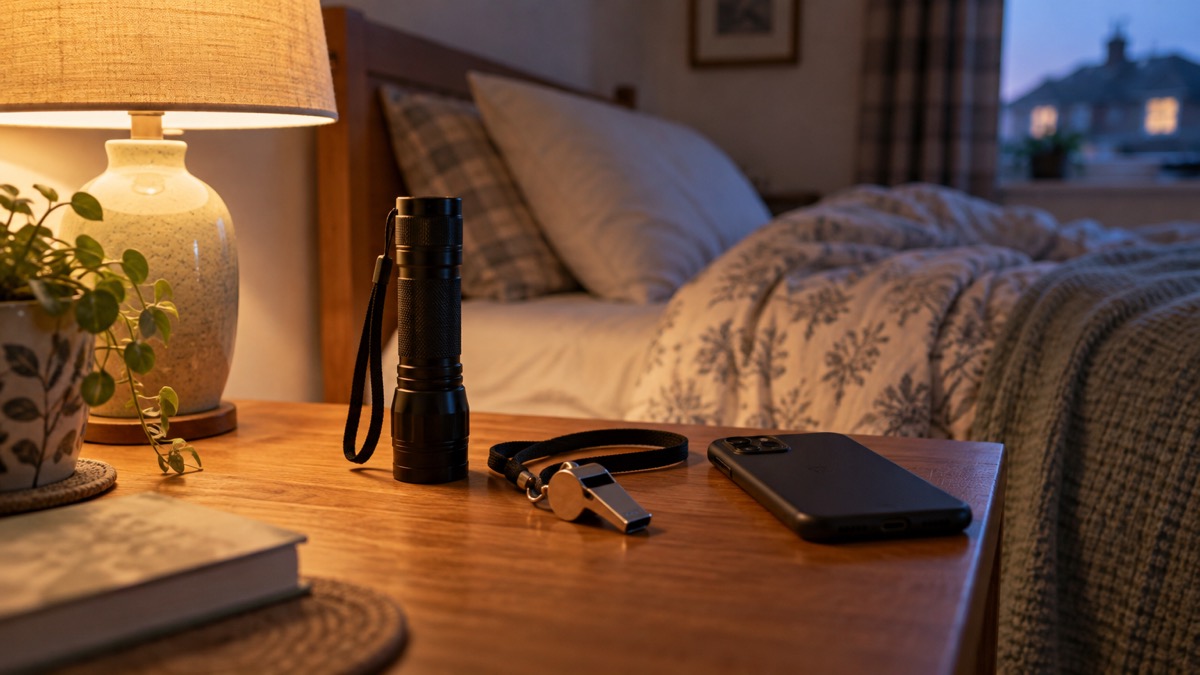
A phone by the bed is part of the same preparation. Take your mobile telephone to your bedroom and know your escape plan in case of a fire23. Fire and rescue services recommend a phone and a torch in the bedroom when you go to bed24. If you are older or have mobility issues, consider keeping a phone by your bed to call 999 if you cannot get out, and speak to your local fire and rescue service for tailored advice1.
The fire escape plan page walks through building and practising a plan for the whole household, and the bedtime fire safety checks list the last things to do before you sleep.
Once you are out, stay out
If you do manage to get out, the rule is absolute: once you are out, stay out25. Do not go back inside, however urgent the reason feels. Never go back for possessions, pets or people, and tell the fire service immediately if anyone is missing1. Firefighters have the equipment and training to search a burning building; you do not, and going back puts you and the crews at risk.
If your escape route is clear, get out, stay out and call 99926. Close doors behind you as you leave where you can, because this reduces the spread of the fire27. Use the stairs rather than the lift, and keep left so firefighters coming up can get past16. Once outside, move to a safe place away from the building and stay there until you are told it is safe to return.
The same rule applies wherever you live. If there is a fire in a caravan or mobile home, get out, stay out and call the fire and rescue service immediately28. If you are a student in shared accommodation, the advice is the same: get out, stay out and call 99920.
"Once you are out, stay out"
What happens after the fire, including who to contact and what to do about your home, is covered in what to do after a fire in your house. If you have not yet made a plan, the fire safety checklist for your home is a practical place to start, and the home emergencies section covers the other household emergencies you may face.
Sources (28)
- Fire escape plan, Fire Kills (Home Office campaign), 2026-03-25
- Home fire action plan, Surrey County Council, 2026-08-24
- Protecting your home, Mid and West Wales Fire and Rescue Service, 2026-10-29
- Information leaflet: home fire safety guide, Wrightington, Wigan and Leigh Teaching Hospitals NHS Foundation Trust, 2025-01-24
- Making a home escape plan, Warwickshire County Council, 2026-10-29
- Be prepared for an emergency, Oxfordshire County Council, 2026
- Fire safety for people with sight, hearing or mobility difficulties, UK Government, 2021-11
- If you have a fire, Devon and Somerset Fire and Rescue Service, 2026
- Escape plan: blocks of flats, London Fire Brigade, 2026-10-25
- In the event of fire in your house, Suffolk County Council, 2026-10-29
- High rise, Scottish Fire and Rescue Service, 2026-10-26
- Fire in the home, Surrey County Council, 2026-08-24
- High rise homes, flats and apartments, Cheshire Fire and Rescue Service, 2026-05-20
- Flat fire safety: stay safe (over 18m), Greater Manchester Fire and Rescue Service, 2026
- Fire safety information for residents living in flats operating a stay safe policy, Greater Manchester Fire and Rescue Service, 2026-10-29
- Fire safety information for residents living in flats operating an evacuation strategy, Greater Manchester Fire and Rescue Service, 2026-10-29
- In the event of a fire, South Wales Fire and Rescue Service, 2026-10-25
- High rise living, South Wales Fire and Rescue Service, 2026-07-29
- Home fire safety, Northern Ireland Fire and Rescue Service, 2026-10-14
- Student fire safety, Mid and West Wales Fire and Rescue Service, 2026-10-29
- Fire safety for people with hearing difficulties, Devon and Somerset Fire and Rescue Service, 2026
- Plan your escape, Staffordshire Fire and Rescue Service, 2026-10-29
- Living alone, Staffordshire Fire and Rescue Service, 2026-10-26
- Escape plan, Devon and Somerset Fire and Rescue Service, 2026
- In an emergency, Scottish Fire and Rescue Service, 2026-10-25
- Evacuation strategy, Surrey County Council, 2026-10-28
- Get out, stay out and call 999, North Wales Fire and Rescue Service, 2026-10-26
- Stay safe this summer: essential tips, Northern Ireland Fire and Rescue Service, 2026-06-22
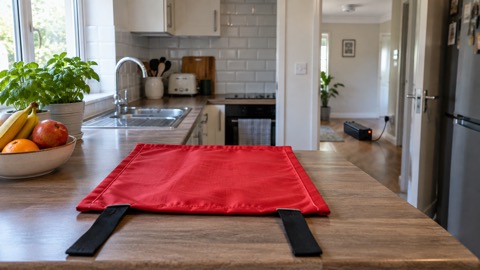 Home Fire Safety Checklist
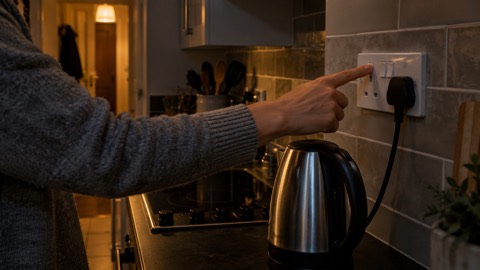 Bedtime Fire Safety Checks
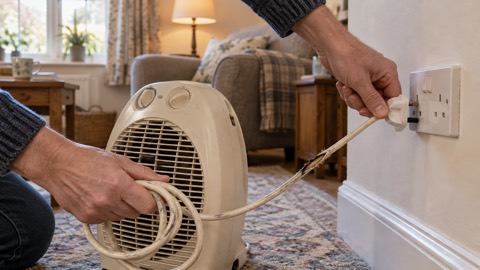 Fire Risk Checks for Carers
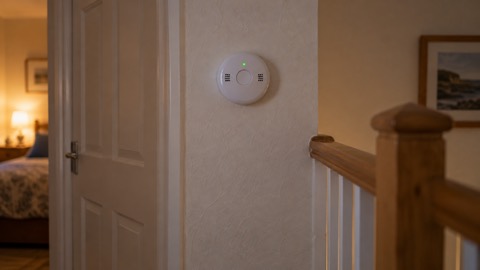 Why a CO Alarm Is Beeping
 Smoke Alarm Keeps Chirping
 Testing Smoke and CO Alarms
 Replacing Smoke and CO Alarms
 Where to Fit Smoke Alarms
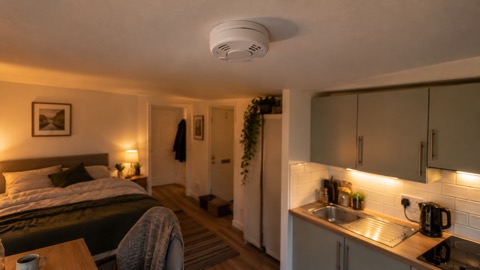 How Many Smoke Alarms
 Where to Put a CO Alarm
 Do I Need a CO Alarm
 Can a CO Alarm Detect a Gas Leak
 Putting Out a Chip Pan Fire
 Electrical Fire Safety
 Appliances Left On Overnight