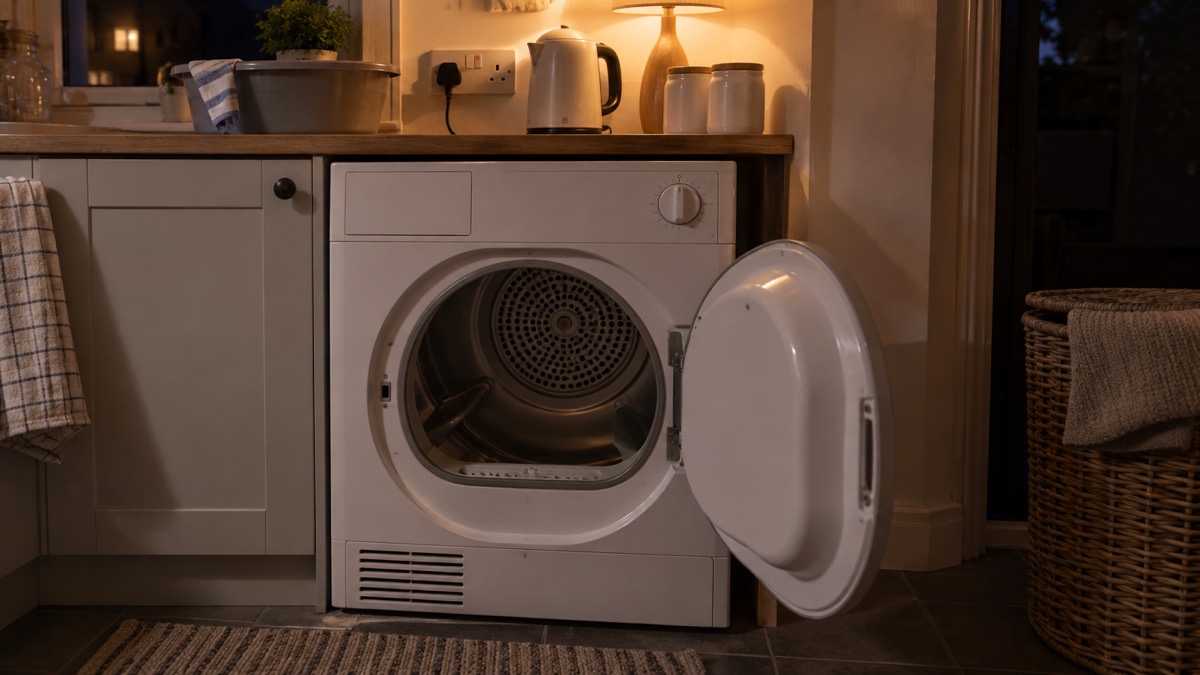
No. Fire and rescue services across the UK are consistent on this: washing machines, tumble dryers and dishwashers should not be left running overnight or when you go out. Manchester Fire and Rescue Service says to avoid using appliances like washing machines, tumble dryers or dishwashers overnight or when you're out1. Mid and West Wales Fire and Rescue Service puts it just as plainly: they are not designed to be left on overnight or whilst out of the house2.
The reason is time. A fire that starts in a machine while you are asleep or away has longer to grow before anyone notices, and the smoke and heat are between you and the way out. That is why the advice is not about a particular model or age of appliance but about the situation: an unattended appliance, in a house where everyone is asleep or nobody is home.
What to do instead is simple. Run the machine while you are at home and awake, switch it off at the wall before bed, and keep the lint trap and the plug and cord in good order. The rest of this page sets out the checks, the warning signs and how to use a cheaper night-time tariff without leaving anything running unattended.
Why these appliances are not designed to run unattended
The phrase the fire services use is "not designed to be left on". A tumble dryer, washing machine or dishwasher is built to be watched over in the ordinary sense: someone in the house who would smell smoke, hear an alarm or notice the machine behaving oddly. Cheshire Fire and Rescue Service tells people not to leave appliances unattended, and specifically not to turn the tumble dryer on before leaving the house or going to bed5. Dorset and Wiltshire Fire and Rescue Service gives the same instruction to carers: make sure the person never puts appliances such as tumble dryers or dishwashers on when they go out of the house or are asleep7.
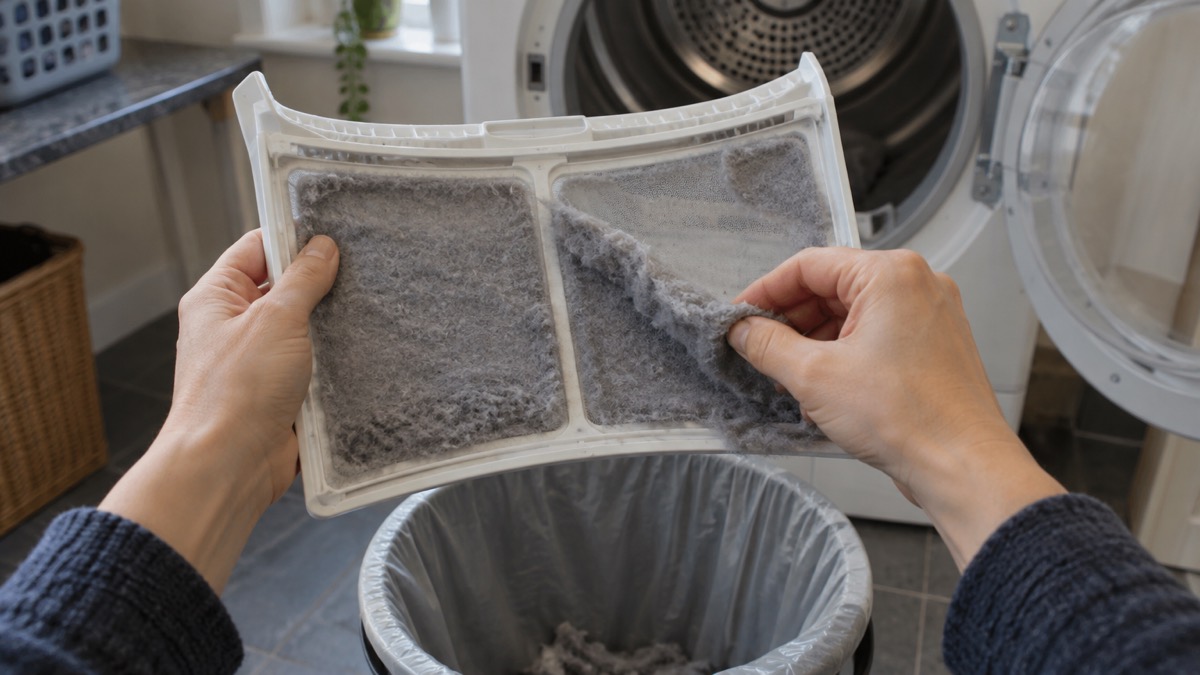
The risk is concentrated in the tumble dryer, because of what it does. Manchester Fire and Rescue Service explains that if fluff is allowed to accumulate in the filter, near blocked vents, and at the rear of your dryer, you increase the risk of the fluff catching fire from the heat the dryer creates8. A dryer running in an empty house at night is the combination the services warn against: a heat source, a fuel source in the lint, and nobody there.
There is a second reason, and it applies to every appliance in the kitchen or utility room. If a fire starts while you are asleep, you have less time to react and escape. Manchester Fire and Rescue Service makes this point directly when discussing time of use tariffs: leaving appliances running unattended overnight means you would have less time to react and escape if a fire started6. The appliance itself may be sound; the problem is the hours between the fire starting and anyone waking.
What to do instead: run appliances while you are up
The practical answer is to move the laundry and the dishes into the hours when the house is occupied and awake. Put a wash on in the evening and take it out before bed. Run the dishwasher after dinner and switch it off at the wall when it has finished. If you are going out, leave the washing until you are back.
Fire and rescue services set this out as a bedtime routine rather than a set of rules for each machine:
- Do not leave the washing machine, tumble dryer or dishwasher on overnight and unattended9.
- Never leave washing machines, dishwashers or tumble dryers on overnight10.
- Do not run washing machines, tumble dryers or dishwashers while you are asleep11.
- Never leave appliances such as dishwashers, washing machines or tumble dryers running when you're out of the house, or asleep12.
The same advice appears in the government's fire safety guidance for people with sight, hearing or mobility difficulties, which tells households not to run appliances such as washing machines, tumble dryers and dishwashers overnight13. It is not a regional rule or a quirk of one service: it is the standard position across England, Scotland and Wales.
If you are leaving the house empty, the same logic applies to the whole property. Our guide to what to check before leaving your house empty covers the wider list, and the bedtime fire safety checks page sets out the full nightly routine.
Bedtime fire safety checks for appliances
The appliance checks take a couple of minutes and are worth doing every night. Fire and rescue services describe them as part of the same routine as closing doors and checking the cooker.
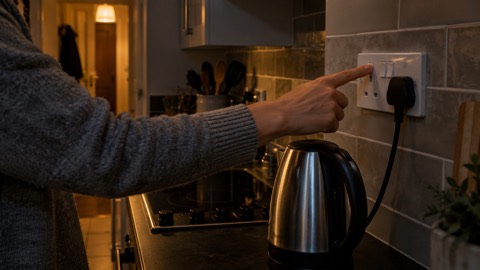
- Switch off and unplug. Turn off and unplug electrical appliances before bed, unless they are designed to be left on, like your freezer4. South Wales Fire and Rescue Service gives the same instruction3.
- Check the cooker. Check the cooker is turned off14, and double-check that your oven, stove, and other kitchen appliances are turned off15.
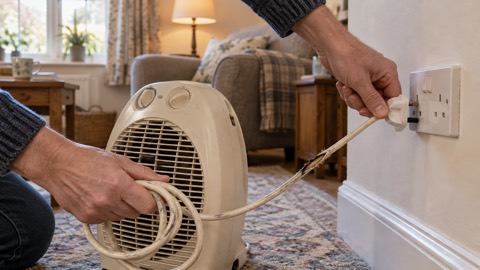
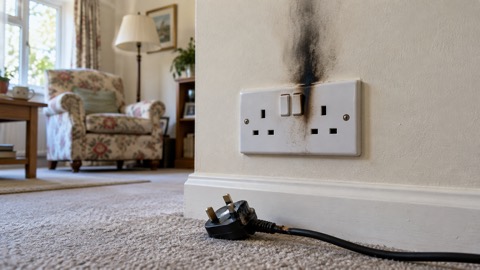
- Look at the plug and cord. Check the plug, power cord, and outlet for any signs of damage16.
- Clean the lint trap. Clean the lint trap after every use, because the build up of lint or fluff can cause fire5.
- Keep the route clear. Make sure your escape route is clear before you go to bed, so a fire alarm in the night leads to a way out you can follow in the dark17.
Two more things belong in the routine. First, avoid using extension cords or adapters for these appliances, as they can overheat and create an electrical fire risk16. A tumble dryer is a heavy load and wants its own socket. Second, if you have pets, the fire services' pet safety campaign repeats the same message: don't leave appliances like washing machines or tumble dryers running overnight or when you are out18.
Cheaper night-time tariffs: running appliances without leaving them unattended
Off-peak electricity is the reason many people run the washing machine or dishwasher at night in the first place. The fire services have an answer for that, and it turns on which tariff you are on.
Manchester Fire and Rescue Service says that if you are not on a time of use tariff, do not run appliances unattended at night, as the electricity will not be cheaper6. In other words, the saving people assume they are making may not exist unless their supplier has put them on a tariff that prices electricity differently at different times. If you are on such a tariff, the service still advises avoiding charging items overnight or leaving appliances running unattended overnight, because you would have less time to react and escape if a fire started6.
The way to have both is to use the delay timer so the cycle runs while you are at home and awake. Set the machine to start in the early evening rather than at midnight, so it finishes before you go to bed and you are there while it runs. That keeps the cheaper window if you have one, and keeps you in the house.
| Appliance | Power drawn | What it means for timing |
|---|---|---|
| Tumble dryer, condenser or vented | 2500 watts, 11.0 amps19 | A heavy load: give it its own socket, never an extension lead16 |
| Tumble dryer, heat pump | 800 watts19 | Lower draw, but the same rule applies: run it while you are up1 |
The advice is to turn off electrical appliances when they are not being used, particularly at night, when a fire can spread unnoticed and cause more damage19. That is why a dryer deserves particular care with its socket and is not the appliance to leave running while the house sleeps.
Tumble dryer safety: recalls, warning signs and the green dot
Tumble dryers get more attention than the other appliances because of a history of safety recalls. London Fire Brigade explains that tumble dryers manufactured between April 2004 and September 2015 have been identified as being at risk20. If you have an older machine, it is worth checking whether it is affected.
The check is straightforward. If your tumble dryer has a green "dot" sticker in the door area or on the back, your machine already has the necessary safety modification and no further action is required. If you do not have a green "dot" sticker, find the model and serial number, which can be found on the back of the dryer door or in the recess of the dryer door, and enter the details on the Hotpoint website20.
Beyond recalls, the everyday signs matter. Burning smells or clothes that come out unusually hot are the two the fire services name5. Fluff building up in the filter, near blocked vents and at the rear of the dryer raises the risk of it catching fire from the heat8. And the machine should not be run through an extension cord or adapter16.
If you want to check any appliance against recall lists, our guide to how to check if an electrical product has been recalled explains where to look. For the wider picture on overloaded sockets and faulty appliances, see electrical fires.
If a fire starts in an appliance
If you wake to smoke or a burning smell, get everyone out and call 999. Do not open the appliance door: a fire inside a tumble dryer or washing machine needs oxygen and water in a way that is not safe to deal with yourself. Our guide to what to do if a fire starts in your house sets out the steps, and what to do if an electrical fire starts covers the specific case of an appliance on fire.
Having a plan made in advance is what makes the difference at night. Our guide to how to make a fire escape plan walks through it, and the fire safety checklist for your home is a printable list for the whole household.
Sources (20)
- Electrical safety, Manchester Fire and Rescue Service, 2026-10-29
- Cooking safely, Mid and West Wales Fire and Rescue Service, 2026-10-29
- Checklists and escape plans, South Wales Fire and Rescue Service, 2026-07-29
- Digital easy read fire safety booklet, London Fire Brigade, 2026
- White goods, Cheshire Fire and Rescue Service, 2026-05-20
- Stay fire safe, Manchester Fire and Rescue Service, 2026-10-29
- Fire safety for carers, Dorset and Wiltshire Fire and Rescue Service, 2026
- Maintain appliances and recalls, Manchester Fire and Rescue Service, 2026-10-29
- Bedtime checks, London Fire Brigade, 2026-10-25
- Bedtime route and escape plan, North Yorkshire Fire and Rescue Service, 2026-03-27
- Escape routes, Cheshire Fire and Rescue Service, 2026-05-20
- Fire safety checklist, Dorset and Wiltshire Fire and Rescue Service, 2026
- Fire safety for people with sight, hearing or mobility issues, GOV.UK, 2022-08-10
- Plan your escape, Staffordshire Fire and Rescue Service, 2026-10-29
- Bedtime fire safety checks, Warwickshire Fire and Rescue Service, 2026-10-29
- Electrical fire safety, Warwickshire Fire and Rescue Service, 2026-10-29
- Escape plan, Dorset and Wiltshire Fire and Rescue Service, 2026
- Pet safety campaign, North Yorkshire Fire and Rescue Service, 2025-03-11
- Ratings of electrical appliances, Electrical Safety First, 2026-10-25
- How to check if your tumble dryer is a fire risk, London Fire Brigade, 2026-10-25
 Home Fire Safety Checklist
 Bedtime Fire Safety Checks
 Fire Risk Checks for Carers
 Why a CO Alarm Is Beeping
 Smoke Alarm Keeps Chirping
 Testing Smoke and CO Alarms
 Replacing Smoke and CO Alarms
 Where to Fit Smoke Alarms
 How Many Smoke Alarms
 Where to Put a CO Alarm
 Do I Need a CO Alarm
 Can a CO Alarm Detect a Gas Leak
 Trapped by Fire What to Do
 Putting Out a Chip Pan Fire
 Electrical Fire Safety