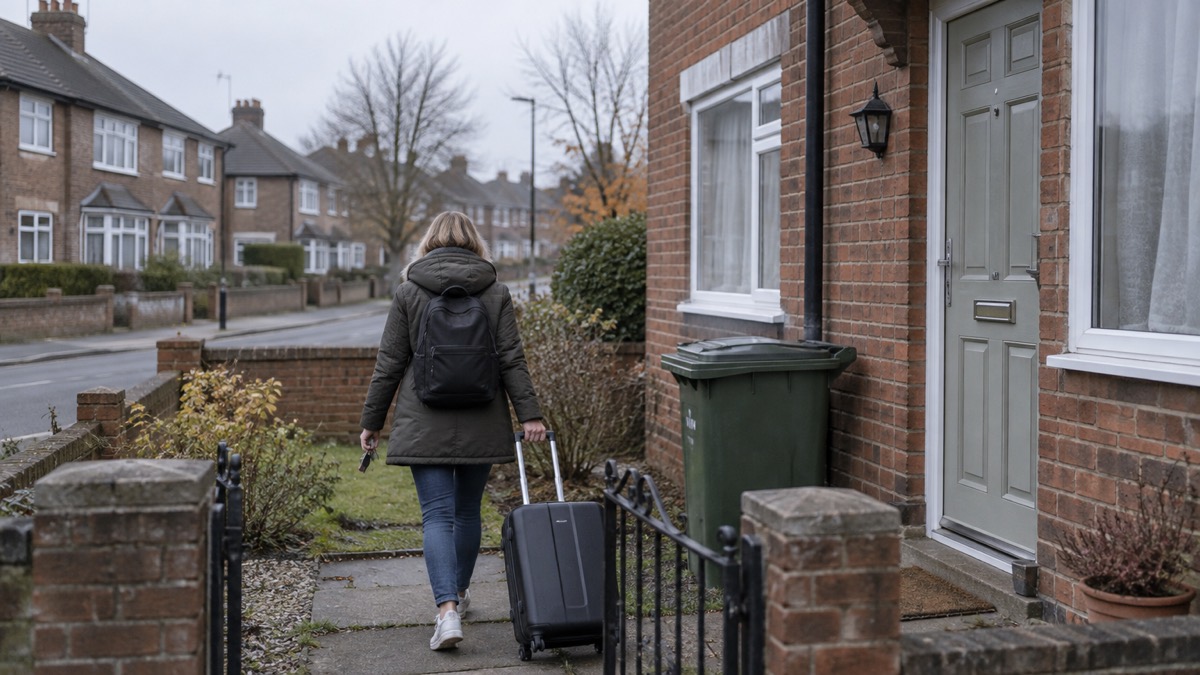
Leaving a house empty for a week or two is ordinary, and the checks that make it safe are ordinary too. The single most useful thing you can do before you lock up is to test every smoke and carbon monoxide alarm and make sure each one works, because a fire that starts while nobody is home is the risk that matters most. Fire and rescue services advise testing alarms weekly, and if an alarm does not sound when tested, buy a new alarm rather than assuming a battery change will fix it1.
Then walk the house in the order you would at bedtime. Switch off and unplug appliances that are not designed to be left on, close the doors behind you as you leave, and make sure nothing is left burning: an open fire or log burner should be out before you go2. If you live in a flat, know your building's evacuation arrangements before you travel, because what you should do in a fire depends on whether the fire is in your flat or elsewhere in the block4.
Finally, tell someone you are away. Leaving a home empty carries a higher risk of burglars targeting it, and a neighbour who knows your plans can raise the alarm if something goes wrong6. The checklist below puts all of this in one place.
Checklist before you leave the house empty
Work through this list in the last hour before you go. Each item takes seconds and each one is backed by fire and rescue service advice.
Smoke and carbon monoxide alarms: test them before you go
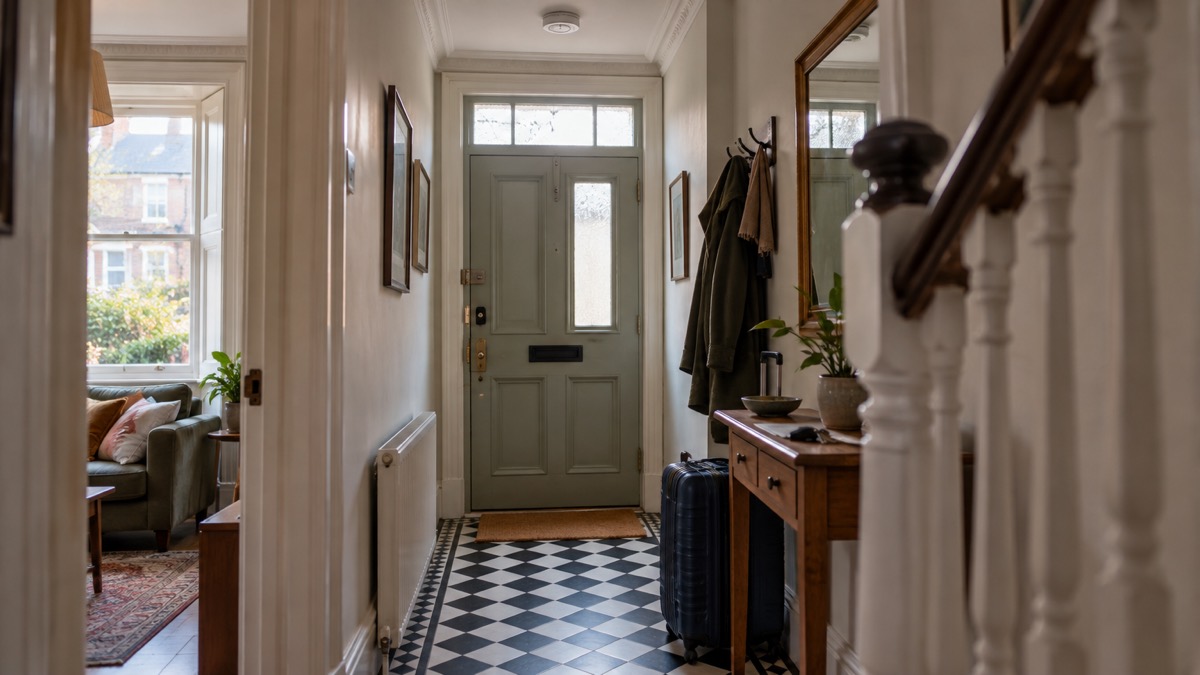
Alarms are the one part of the house that works for you while you are away, which is why they come first. Test your smoke, heat and carbon monoxide alarms weekly, and if an alarm does not sound, the advice is not to change the battery and hope: buy a new alarm1. You are twice as likely to die in a house fire that has no smoke alarm than a house that does, according to fire service guidance2.
Carbon monoxide deserves its own check. As well as smoke alarms, have a working carbon monoxide alarm9. If you have a solid fuel appliance such as a log burner, a working CO alarm is specifically advised8, and chimney fires are best caught early by fitting and testing smoke and carbon monoxide alarms13. If a CO alarm sounds while you are at home, leave the building immediately, call the emergency services if anyone feels unwell, and do not re-enter until it has been declared safe14. Our page on what to do if your CO alarm sounds walks through this step by step.
Batteries are the weak point. Never take the batteries out of your alarm to use in another electrical item, because an alarm without batteries cannot warn you if a fire starts15. If you are buying or replacing alarms, a sealed battery compartment helps prevent tampering or removal of the battery15. For the wider question of which alarm goes where, see our guides to smoke alarms and how often to test them.
Switch off and unplug: what to leave on and what to turn off
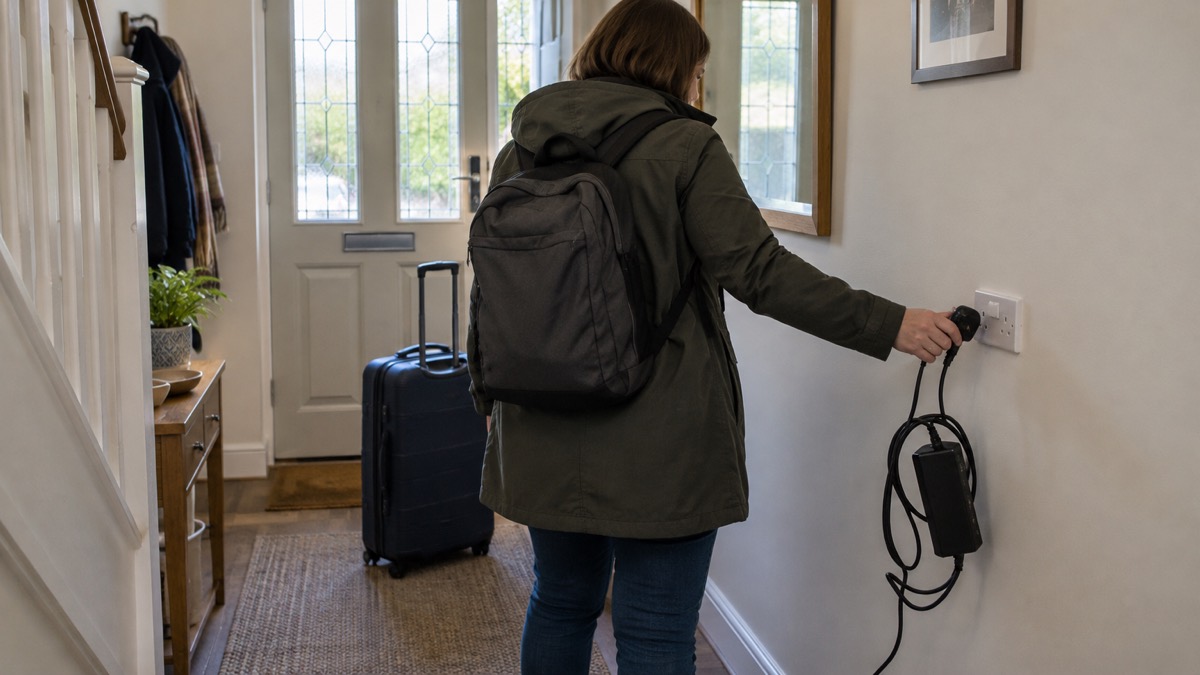
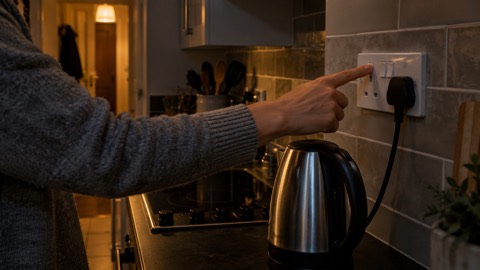
The rule is simple: switch off and unplug electrical appliances before you go, unless they are designed to be left on, like your freezer2. Fire services list TVs, washing machines, dishwashers, computers and chargers among the things to switch off and unplug when not in use, because any electrical appliance left plugged into the mains could cause a fire1. Unplug appliances when you are not using them, when they are fully charged, or when you go to bed17.
| Appliance | Leave it on or turn it off? | Why |
|---|---|---|
| Fridge and freezer | Leave on | Designed to be left on 24 hours a day; keep ventilation clear to stop overheating1 |
| Phone and laptop chargers | Unplug | Any appliance left plugged into the mains could cause a fire1 |
| TVs, computers, washing machines, dishwashers | Switch off and unplug | Listed by fire services as appliances to unplug when not in use1 |
| E-bikes and e-scooters | Unplug, never charge unattended | Main danger is charging unattended in homes or communal areas10 |
| Open fire or log burner | Out | Fires should be out before leaving the property3 |
Two appliances need a word of their own. Fridges and freezers are designed to run continuously, but even these can cause fires if they are defective or not used properly, so always make sure proper ventilation is in place to help stop overheating1. E-bikes and e-scooters are the opposite case: the main danger occurs when they are left on charge and unattended in homes or in communal areas such as hallways and stairwells, and charging indoors increases fire risk, especially overnight when occupants are sleeping10. Unplug them before you leave and store them somewhere that would not block your way out. Our e-bike charging guide covers storage in more detail.
Heating, chimneys and cold weather
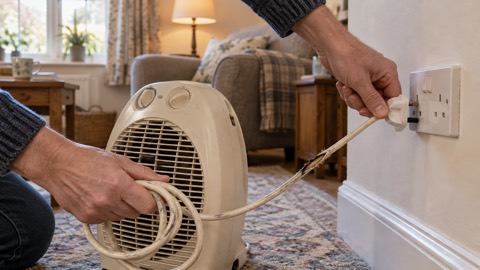
Colder weather can increase the risk of fire as people use heating appliances more frequently, so use heating safely during colder months to keep warm and reduce the risk of fire in your home18. Before you leave in winter, look at anything that has been running hot: give heaters space, keep anything that could catch fire away from them, and do not leave them running in an empty house unless they are designed for it.
If you burn solid fuel, the chimney is the part you cannot see. Make sure fires are out before going to bed or leaving the property3, and fit and test smoke and carbon monoxide alarms to give early warning of danger from chimney fires13. A working carbon monoxide alarm is specifically advised in any home with a solid fuel appliance such as a log burner8.
If you are leaving for a long period in cold weather, the bigger risk to the property may be water rather than fire. Our guides to frozen pipes and what to do if a pipe bursts explain how to find your stop tap and limit the damage, and knowing where the stop tap is before you travel is worth the two minutes.
Flats and high-rise blocks: what to check before you leave
If you live in a flat, the checks above still apply inside your home, but the building around you needs a look too. Keep communal corridors and staircases free from clutter, keep your balcony clear of anything that might cause a fire, and report any damage to firefighting equipment to your housing provider12. Before you travel, know your escape route and what to do if there is a fire inside your home or somewhere else in the building4.
The advice for flats turns on where the fire is. If there is a fire in your building but not in your flat, stay in your home and keep the front door closed unless you are directly affected by heat, smoke or fire, or the Fire and Rescue Service or Police tells you to get out19. If your own flat becomes affected by smoke, leave at once, closing windows and doors behind you4. If there is a fire inside your flat, alert everyone and get out immediately, do not try to extinguish the fire, close all doors behind you, always use the stairs rather than a lift, and call 999, never assuming someone else has20.
Many blocks operate a "Stay Safe" policy, which means that if there is a fire in your flat you should leave the flat and the building, and if there is a fire somewhere else in the building you can remain in your flat and do not need to leave the building5. If you have a fire or smoke in your flat, do not try and fight the fire, stop to collect belongings, go back into your flat, use the lifts, or re-enter the building until told it is safe5. Our page on fire in flats sets this out in full.
Where to get help if something goes wrong while you are away
The first number is 999. If there is a fire, get out, stay out and call 999, and remember that 999 calls are free21. Once you are out, stay out19. If you hear a neighbour's smoke alarm, do not ignore it: alert the resident, and if they do not respond, call 999 and ask for Fire22. That is exactly the role a neighbour can play while you are away, and it is why telling someone your plans is worth doing.
People who live alone are more at risk from fire, but only when combined with other risk and vulnerability factors, and one reason is that there is no one around to alert the occupant to risky behaviours or to a fire, or to help with evacuation4. If you are leaving someone vulnerable on their own, our vulnerable person checks page sets out what to look at.
If there is a gas, chemical or radiation incident while you are away, the advice for anyone at home is to go indoors unless asked to leave by the emergency services, close all doors, windows and vents, put out all naked flames such as pilot lights, switch off gas supplies, and stay indoors until you know more5. Our major incidents guide covers this in full.
For anything else, start with our home emergencies section, which covers fire, carbon monoxide, gas leaks and burst pipes, and our fire safety checklist for the routine checks that keep a house safe whether you are in it or not.
Sources (22)
- Your guide to fire safety, Scottish Fire and Rescue Service, 2023-11-03
- Checklists and escape plans, South Wales Fire and Rescue Service, 2026-07-29
- Chimney, Greater Manchester Fire and Rescue Service, 2026-10-29
- Fire safety in high rise flats, Mid and West Wales Fire and Rescue Service, 2026-10-29
- Fire safety information for residents living in flats operating a stay safe policy, Greater Manchester Fire and Rescue Service, 2026-10-29
- Mynd ar wyliau?, Mid and West Wales Fire and Rescue Service, 2026-10-29
- Protecting your family: fire, Essex Prepared, 2026
- How to prevent fire in your home, Cumberland Council, 2026
- Avoiding accidental fires at home, nidirect, 2025-10-16
- Lithium-ion batteries, Hampshire and Isle of Wight Fire and Rescue Service, 2026-02-26
- Student fire safety, South Wales Fire and Rescue Service, 2026-09-08
- Digital easy read fire safety booklet, London Fire Brigade, 2026
- Chimney fire safety, Cheshire Fire and Rescue Service, 2026-05-20
- Carbon monoxide, North Wales Fire and Rescue Service, 2026
- Smoke and heat alarms, Greater Manchester Fire and Rescue Service, 2026-10-29
- Smoke alarms and carbon monoxide detectors, Surrey County Council, 2026-08-24
- Additional advice for tenants, Greater Manchester Fire and Rescue Service, 2026-10-29
- Staying warm, Cheshire Fire and Rescue Service, 2026-08-06
- In an emergency, Scottish Fire and Rescue Service, 2026-10-25
- Home fire safety, Northern Ireland Fire and Rescue Service, 2026-10-14
- Bedtime route and escape plan, North Yorkshire Fire and Rescue Service, 2026-03-27
- Flat fire safety: stay safe, Greater Manchester Fire and Rescue Service, 2026
 Home Fire Safety Checklist
 Bedtime Fire Safety Checks
 Fire Risk Checks for Carers