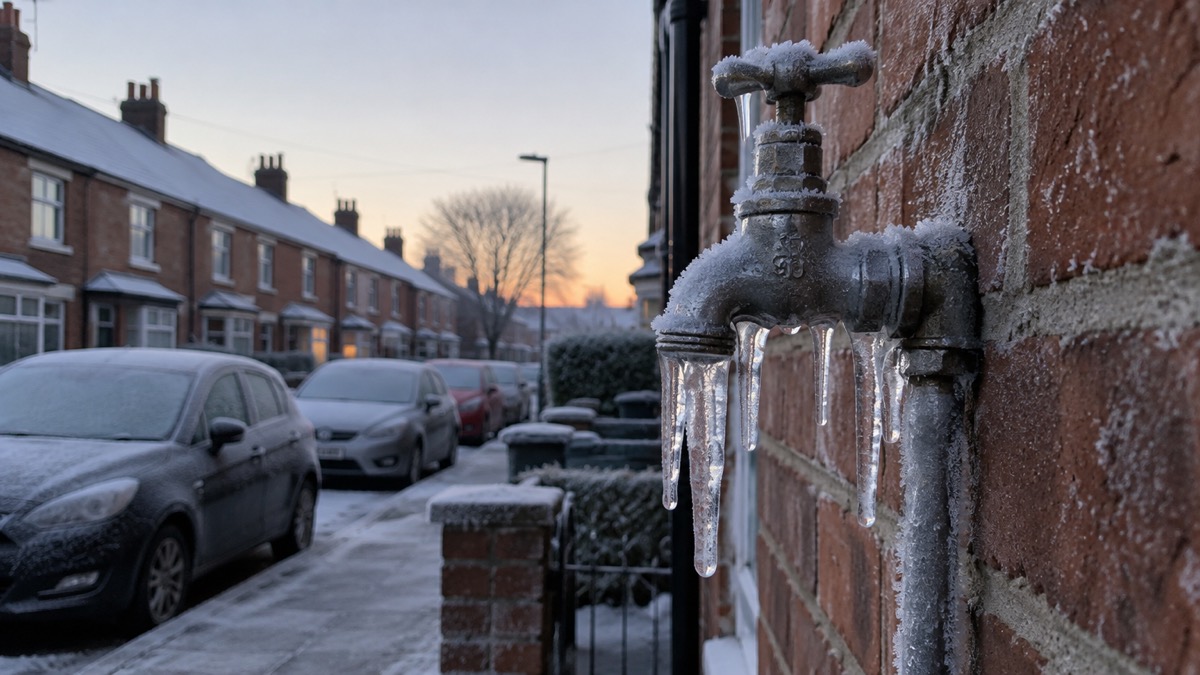
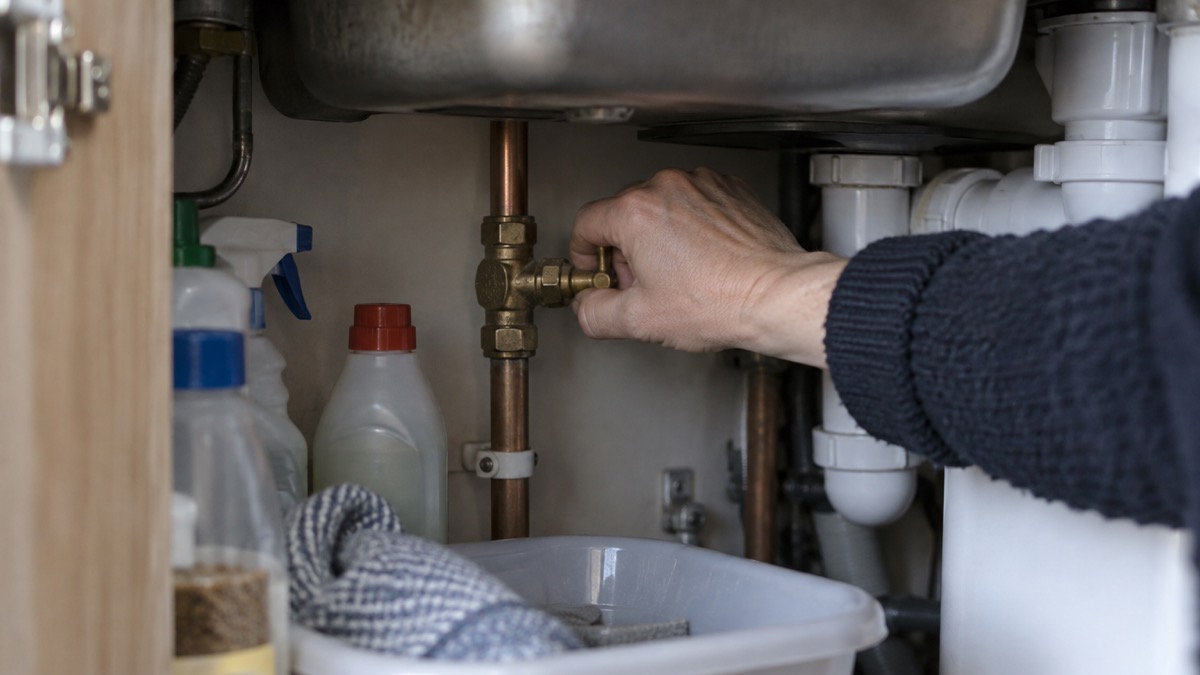
During the winter months, suddenly finding you have no water in the taps, or only a trickle, could signal a frozen pipe1. The pipe itself may show frost or condensation around it, a noticeable bulge, or small cracks2. If you spot that one of your pipes might be frozen, the Met Office's advice is to turn off your inside stop tap immediately3.
Thawing must be done slowly. The safe method is hot water bottles or a towel soaked in hot water, applied starting at the end nearest the tap3. Never use a naked flame or blowtorch to thaw the pipe: direct heat may cause permanent damage to the pipes and could also lead to a fire in the home3.
This page walks through the first steps, the safe thawing method step by step, what to do if a pipe bursts as it thaws, the separate problem of frozen boiler condensate pipes, where pipes are most likely to freeze and how to protect them, and when to call an approved plumber. If a pipe has already burst, see What to Do If a Pipe Bursts for that situation.
First steps: turn off the stop tap and check for a burst
The Met Office's WeatherReady campaign is blunt about priorities: if you have a burst or frozen pipe this winter, the number one step you can take to prevent damage to your home is to know how to find and operate your stop tap7. Find it before you need it, usually where the water supply enters your home, and make sure everyone in the household knows where it is. Our guide to Stop Taps: Finding the Inside and Outside Valve covers this in detail.
Once you suspect a frozen pipe, work through these steps in order:
- Turn off the water supply at the internal stop tap. Wessex Water explains this stops pressure building up inside the pipe as the ice begins to melt2. Dŵr Cymru adds that if a pipe has already burst, you should turn the stop tap clockwise, urgently8.
- Check whether the pipe has burst. Look along the frozen section for splits, cracks or bulges before you do anything else9.
- Open the affected tap. Partly turn on any taps fed by the frozen pipe to relieve the pressure and help prevent a burst2.
- Check your neighbours have water. If they have none either, the problem may be the mains supply rather than your pipes, and you should contact your water company9.
- If a pipe bursts as it thaws, turn off your stop tap and electricity supply immediately and contact a plumber for professional advice10.
If the pipe has already burst as it thaws, Humber Local Resilience Forum's winter guidance says to turn off your stop tap and electricity supply immediately and contact a plumber for professional advice4. Electricity and escaping water are a dangerous combination, so do not touch wet electrical fittings or appliances; if fire follows, follow the advice in What to Do If a Fire Starts in Your House.
How to thaw a frozen pipe safely
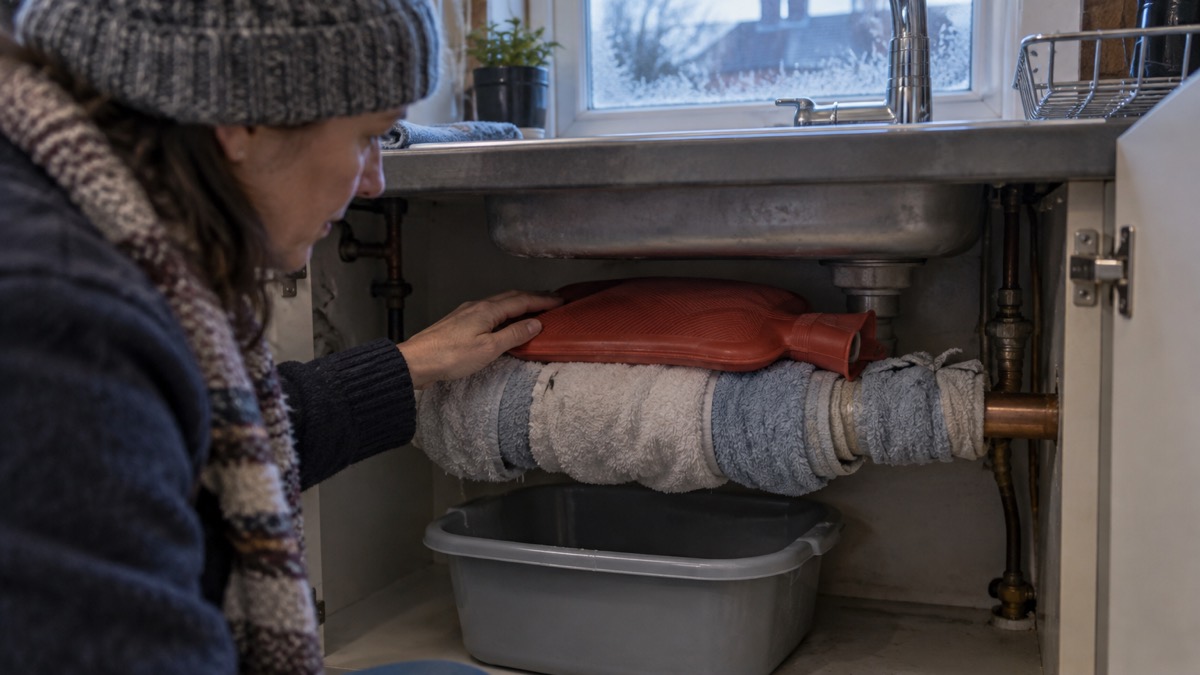
The principle behind every piece of official and water company guidance is the same: thaw gradually. Wessex Water warns that heating a frozen pipe quickly makes it more likely to burst2. WaterSafe, the UK body for approved plumbers, recommends hot water bottles, starting from the tap and working your way back along the pipe11, and Dŵr Cymru says to check pipes for signs of damage first and, if it is safe, slowly thaw with hot water bottles or a towel soaked in hot water, starting at the end of the pipe12.
Wessex Water sets out the method as six steps2:
- Find the frozen pipe. Look in garages, outbuildings, attics and basements, starting with the places that are easy to reach and most likely to freeze.
- Turn off your water supply at the internal stop tap to stop pressure building up.
- Partly turn on any taps affected by the frozen pipe to relieve the pressure.
- Wrap the affected pipe in towels to start warming it and absorb condensation, securing them with cable ties if needed.
- Apply heat: place a hot water bottle on top of the towels, or use a hairdryer, keeping it moving to distribute the heat evenly.
- Once the pipe has thawed, remove the towels and check for cracks or leaks before turning the water supply back on.
You will need towels and a hot water bottle or hairdryer; depending on where the pipe is, you may also want cable ties, a utility knife and a space heater2. Portsmouth Water's winter flyer suggests the same two tools: hot water bottles, or a hairdryer on a warm setting13.
Can you use a hairdryer?
The guidance that mentions hairdryers advises against them. One water company's leak and pipe advice states never to use a naked flame, hair-dryer or blowtorch to thaw the pipe14. Treat that as the safer course: if you have any doubt about using electrical heat near plumbing, use hot water bottles or a warm towel soaked in hot water instead, starting at the end nearest the tap, and call a plumber if you are not comfortable thawing the pipe yourself.
How long thawing takes
Wessex Water says the process should take between 30 minutes and an hour, and if a large section of the pipe is frozen, it may take longer2. United Utilities makes the same point in plainer terms: it could take a while, depending on how frozen and how big your pipes are15. Do not rush it, and do not step up to more aggressive heat sources because it feels slow. Keep the affected tap partly open the whole time so melting water has somewhere to go2.
Never use a naked flame or blowtorch
This is the one point on which every source in this area agrees. Never use a naked flame or blowtorch to thaw the pipe3. The same instruction appears in water company and plumbing industry guidance: never use a naked flame or blowtorch to thaw a pipe11, never use a naked flame or blowtorch to thaw the pipe12, and do not use a naked flame to thaw a frozen pipe13. Direct heat may cause permanent damage to the pipes and could also lead to a fire in the home. If you would not apply an open flame to anything else in your home, do not apply it to a pipe.
The same caution extends to boiling water. British Gas's heating troubleshooting advice says to use hot, but not boiling, water when thawing pipes17, and Worcester Bosch, for its own boilers, is explicit that you must not use boiling water on a frozen condensate pipe18. Boiling water poured onto frozen metal or plastic delivers exactly the sudden temperature shock that makes pipes split.
What happens when a pipe bursts as it thaws
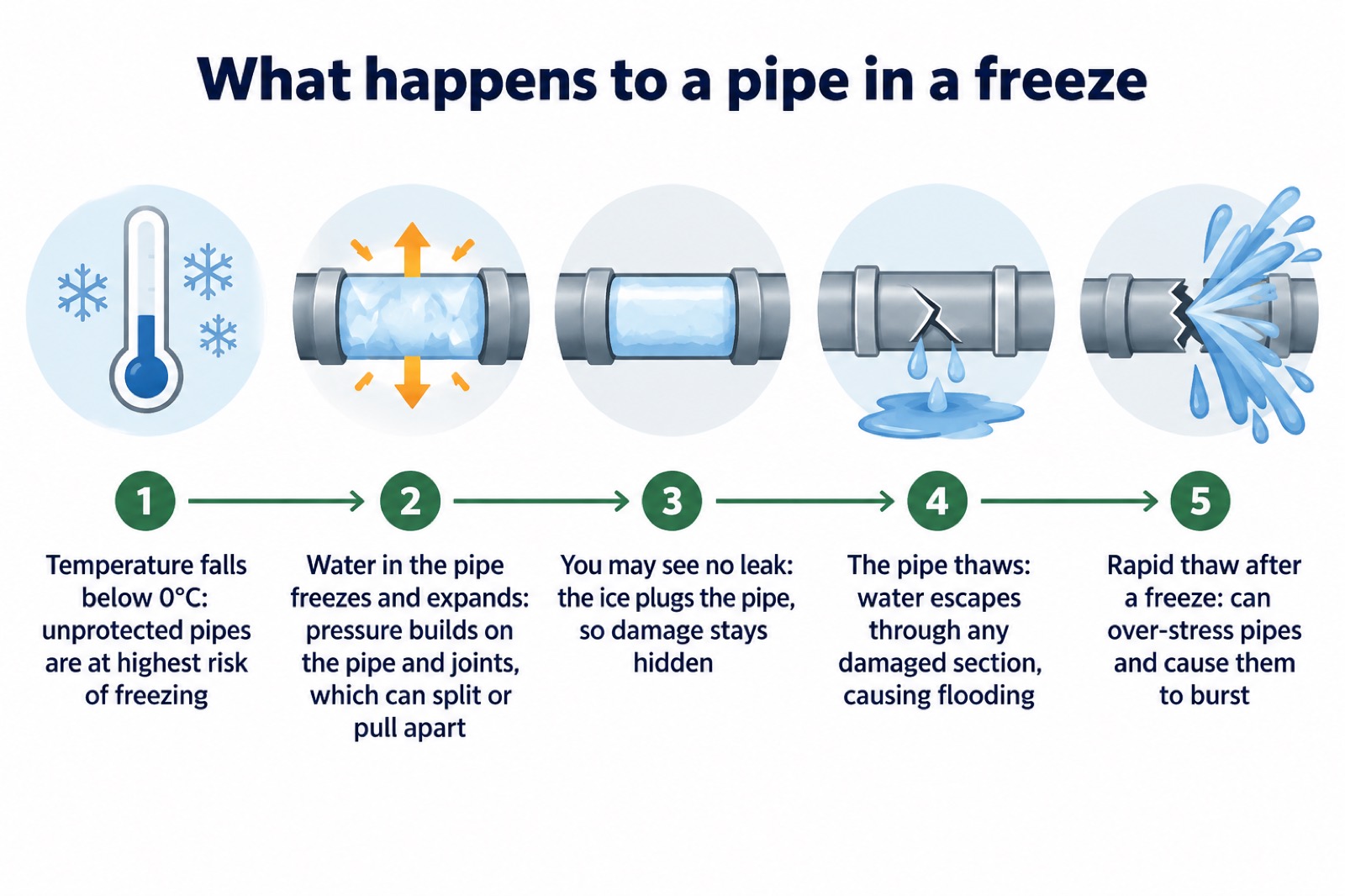
A frozen pipe is not automatically a burst pipe, but freezing can cause the damage that only becomes visible later. WaterSafe explains the mechanism: as ice forms, frozen water expands and can crack even the strongest metal pipes, and this expansion places significant pressure on pipework and joints, often causing pipes to split or joints to pull apart19. The cruel part is that you may not realise at the time. Southern Water warns that you might not notice straight away, but when the ice melts, water will leak from the burst and could damage your home or possessions6.
So the thaw itself is the moment of danger. Once the ice thaws, water can escape through any damaged sections, potentially causing flooding and costly damage19. The Met Office notes that sometimes pipes freezing and thawing can cause them to burst3, and South East Water warns that a freeze followed by a rapid thaw can over-stress pipes, causing them to burst5. Dŵr Cymru describes the same process: the change from freezing to warmer temperatures makes pipes expand and contract, so they can end up leaking, cracking or even bursting8.
This is why the first-steps order matters so much. Turning off the internal stop tap before you thaw stops pressure building up inside the pipe as the ice melts2. Partly turning on the taps fed by the frozen pipe relieves the pressure and helps prevent a burst2. And once you think the pipe has thawed, remove the towels and check the pipe for cracks or leaks before turning the water supply back on2.
There is a counterweight to bear in mind: doing nothing is not safer. Wessex Water warns that if you do not thaw a frozen pipe, it will have a higher risk of bursting due to pressure building up inside the pipe2. A frozen pipe should be thawed, slowly, with the supply off, not left to sit.
If a pipe does burst, act on Humber Local Resilience Forum's instruction: turn off your stop tap and electricity supply immediately and contact a plumber for professional advice4. Our page on What to Do If a Pipe Bursts takes that situation from there, and Water Leaks on Your Property covers finding leaks and who repairs them.
Frozen boiler condensate pipes
If your boiler stops working in cold weather, the cause is often a frozen condensate pipe. SGN, the gas network operator for southern England and Scotland, advises: "If your boiler has stopped working in the cold, check if your boiler's condensate pipe has frozen"22. The condensate pipe carries waste water from the boiler to an outside drain, and because it runs outdoors, usually in thin plastic, it is one of the first pipes to freeze when temperatures drop.
The thawing method is the same gentle approach, with one difference in direction. WaterSafe says to use a hot water bottle to thaw the pipe, starting from the outlet and working back towards the house11, and its boiler breakdown advice says the same: hold a hot water bottle to it, starting from the end nearest the ground23. Northern Gas Networks says to hold a hot water bottle or warm heat pad against the pipe24, and Wales & West Utilities adds the alternative of pouring hot, but not boiling, water over the frozen end of the pipe25.
Worcester Bosch, for its own boilers, gives the clearest maker's instruction: "If safe to do so, pour WARM water along the pipe" and, it stresses, not boiling water18. British Gas similarly suggests hot but not boiling water, or a hot water bottle or warm compress, then trying the heating again17.
Once the pipe has thawed, you may need to reset your boiler before it restarts; if it still will not fire, contact a heating engineer. If your heating is off for longer, our Gas and Heating Failures guide covers staying warm without central heating, and Devon and Somerset Fire and Rescue Service adds a related point for any home with a broken heating system in frosty weather: consider calling a plumber to drain the pipework if there is a risk of frost and the heating is not working26.
Where pipes are most likely to freeze, and how to stop it
Pipes and taps that are outdoors, or in cold places like lofts or garages, are the most likely to freeze27. Wessex Water tells you to start your search in garages, outbuildings, attics and basements2. The trigger temperature is 0°C: WaterSafe says pipes are most at risk of freezing when temperatures fall below 0°C21, and Wessex Water adds that pipes are at the highest risk of freezing or bursting at that point, especially any that are not protected from the cold28.
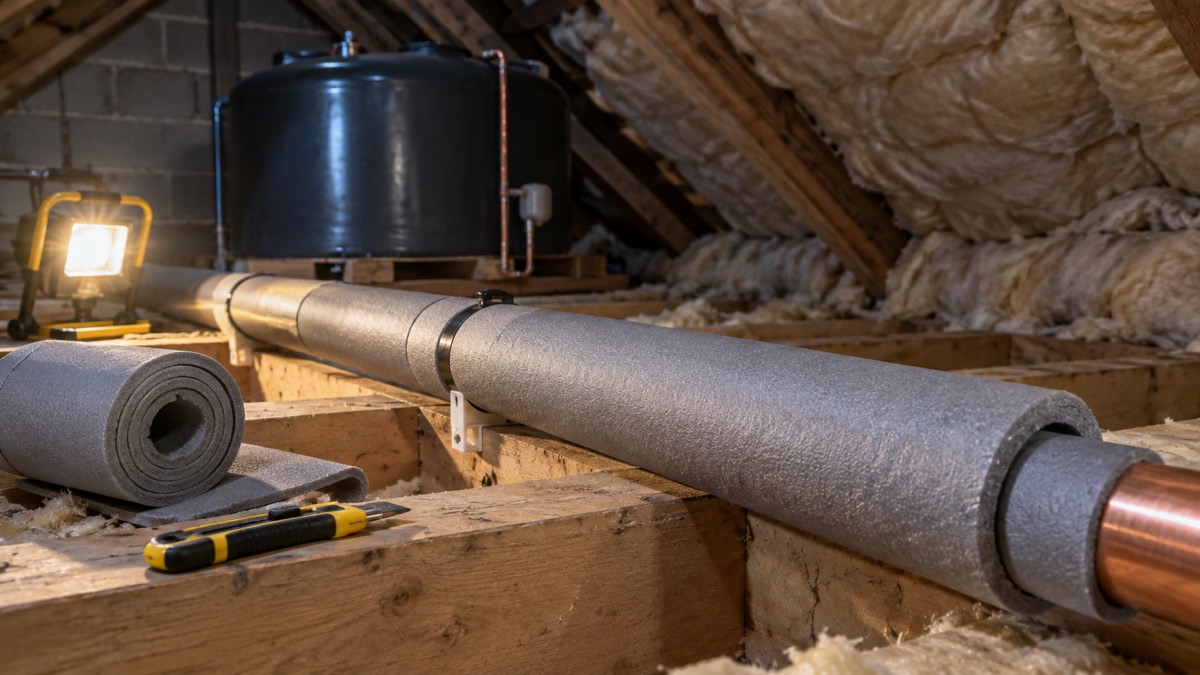
The main preventive measure is lagging, pipe insulation wrapped around exposed pipework. Wessex Water's advice is simple: to reduce the likelihood of your pipes freezing, lag the ones that are exposed to cold29, and its lagging guide repeats that your pipes are at the highest risk of freezing or bursting when temperatures fall below 0°C28. WaterSafe's protection advice makes the same point about insulating exposed pipes20, and Essex Prepared lists insulating pipes among its core winter preparedness steps30.
Where to focus your lagging and checks before cold weather arrives:
- Outdoor taps and the pipes feeding them27
- Pipes in lofts, garages, outbuildings and basements2
- Any pipe you can see is unprotected from the cold28
- The boiler condensate pipe on the outside wall22
Scotland's arrangements are worth noting here: Scottish Water runs a Winter Wrapped Up campaign advising households to locate the stop valve and be ready to turn it off immediately if pipes freeze or burst31, and Ready Scotland lists frozen or burst pipes among the harms of cold, snow and ice32. The physics and the advice are the same across all four nations; the campaigns differ only in name.
When to call an approved plumber
You do not need a plumber for every frozen pipe, but there are clear points at which you should stop and call one. Wessex Water says to contact a qualified plumber if you are not comfortable thawing the frozen pipe yourself, for example where the pipe runs inside a wall or ceiling2. Dŵr Cymru says if you are unsure of anything at any time, call a registered plumber12.
The Consumer Council for Water, the consumer body for water customers in England and Wales, goes further: contact a registered plumber before your pipes burst33. Its winter advice page is the reference point for that guidance33, and its no-water-supply FAQ points households there for tips on avoiding frozen pipes34.
Call an approved plumber if:
- The pipe has burst, or you find cracks or leaks as it thaws2
- The frozen pipe is inside a wall, ceiling or somewhere you cannot safely reach2
- You are not comfortable with the thawing process2
- Your boiler will not restart after thawing the condensate pipe23
- You have no water and your neighbours have none either, in which case contact your water company first9
The Met Office's advice on where to find one is specific: if you need help, contact an approved plumber via watersafe.org.uk3. WaterSafe is the national register of plumbers approved by the water industry, and its winter advice pages underpin much of the guidance on this page11. For the wider picture of home emergencies, see our Home Emergencies section.
Sources (34)
- Frozen pipes, Affinity Water
- Thawing frozen pipes, Wessex Water
- Frozen or burst pipes, Met Office
- Winter resilience guidance, Humber Local Resilience Forum, 2024-08
- Finding and fixing leaks, South East Water
- How to stop your pipes freezing, Southern Water
- Weather hacks, Met Office
- Thawing a frozen pipe, Dŵr Cymru Welsh Water
- Drinking water FAQs, Bournemouth Water
- Steps to reduce the risk of burst pipes, nidirect, 2025-10-23
- Winter advice, WaterSafe
- Frozen pipes at home, Dŵr Cymru Welsh Water
- Wrap up winter flyer, Portsmouth Water, 2015-11
- Help for leaks, pressure and pipes, Portsmouth Water
- Frozen pipes, United Utilities
- Snow and ice in Cornwall, Cornwall Council Fire and Rescue Service, 2025-10-01
- No central heating, British Gas
- Frozen condensate pipe advice, Worcester Bosch
- What happens when pipes freeze, WaterSafe
- How do I protect against frozen pipes, WaterSafe
- At what temperature do pipes freeze, WaterSafe
- Be winter ready, SGN
- Avoid a boiler breakdown, WaterSafe
- Boiler not working, Northern Gas Networks
- Winter safety, Wales & West Utilities
- After an incident: fire, Devon and Somerset Fire and Rescue Service
- Winter ready, Dŵr Cymru Welsh Water
- Lagging and insulating your pipes, Wessex Water
- Dealing with burst pipes, Wessex Water
- Winter preparedness, Essex Prepared
- Winter Wrapped Up, Scottish Water
- Cold, snow and ice, Ready Scotland, 2026-03-25
- Winter advice, Consumer Council for Water, 2023-05-12
- I have no water supply, Consumer Council for Water, 2024-07-26
 Home Fire Safety Checklist
 Bedtime Fire Safety Checks
 Fire Risk Checks for Carers
 What to Do If Fire Starts
 How to Make a Fire Escape Plan
 Fire in a Block of Flats
 Kitchen Fires and Cooking Safety
 Electrical Fires and Sockets
 Smoking, Matches and Lighters
 E-bike Charging Safety
 Hoarding and Fire Risk
 Thatched Properties Fire Risk
 Fireworks and Bonfire Safety
 What to Do After a House Fire
 How Fire Services Respond