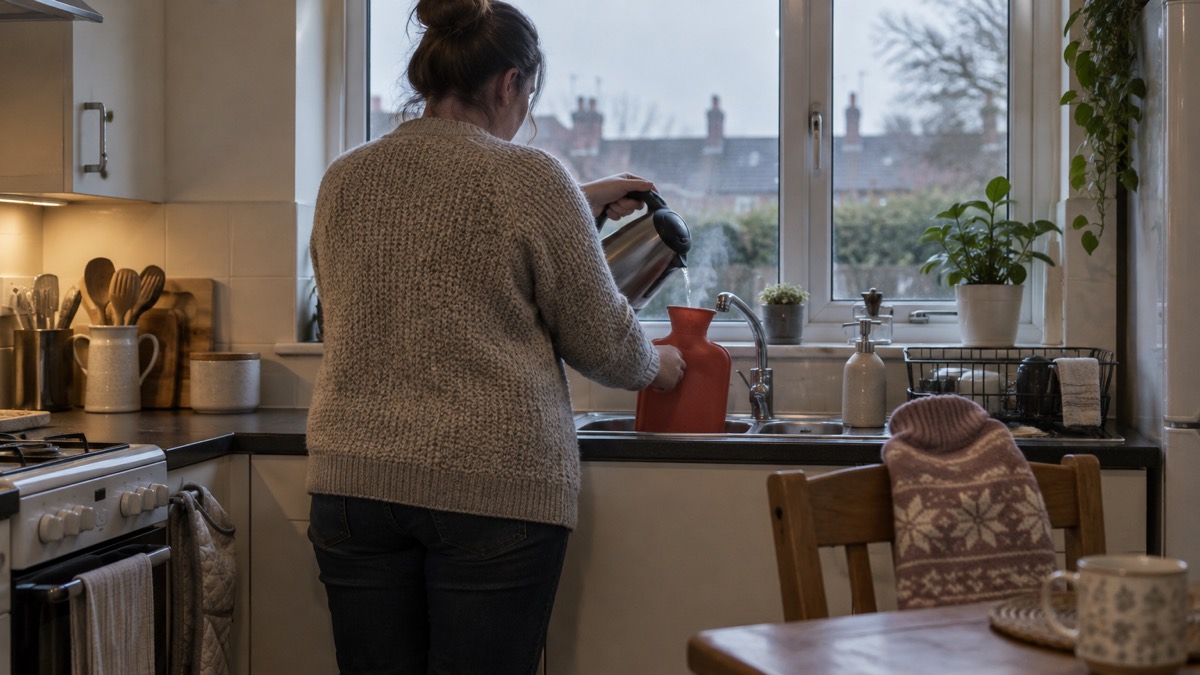
A hot water bottle is a simple and reliable way to keep warm when the heating fails or the bed is cold, but it is also a common cause of serious burns. The rule that matters most is simple: fill it with warm water, never boiling water. nidirect, the Northern Ireland government service, is explicit that to prevent the risk of scalds or burns you should "make sure you fill your hot water bottles with warm water - never use boiling water"1, and the same instruction appears in official keeping-warm guidance from Cumberland Council2 and Ards and North Down Borough Council3.
The second rule is about age. Hot water bottles do not last forever: the Child Accident Prevention Trust (CAPT) says old bottles can break and cause serious burns, and Salisbury NHS Foundation Trust's burns prevention booklet advises not using hot water bottles more than two years old4. Every bottle made to the British Standard carries a small flower-shaped date mark that tells you exactly when it was made, so you can check its age in seconds4.
This page covers how to fill a bottle safely, how to read the date mark, what wears a bottle out, and where a bottle must never go with babies and children. It sits alongside our wider guidance on heating and cooking without mains power or gas, and if you are choosing between a bottle and a microwaveable wheat bag, see our comparison of the hot water bottle or wheat bag.
Why hot water bottle burns are a growing problem
Hot water bottles can cause serious burns, and the numbers are getting worse, not better. The Royal Society for the Prevention of Accidents (RoSPA) reported that burn injuries from hot water bottles rose 11 per cent in 2024 compared with 2023, reaching nearly 1,000 cases in 2024, the highest annual total in more than 20 years, and that injuries have doubled since 2019, showing a sustained five-year increase8.
The injuries come from two main causes. The first is a bottle that fails: an old or degraded bottle splits or bursts, and the water inside, often filled too hot, scalds the person holding or lying on it. CAPT is blunt about this: "Yes, they do. Old water bottles can break and cause serious burns"4. The second is a bottle that is too hot against skin that cannot feel or escape it, which is why the risks are greatest for children and for older people.
Product failures add to the picture. In November 2023 the Office for Product Safety and Standards recalled certain batches of Hunter Price licensed hot water bottles because a weak joint at the top seam "may pose a burns risk", and found the product did not meet the requirements of the General Product Safety Regulations 20059. In March 2025 a Bauer rechargeable electric hot water bottle was reported as presenting "a serious risk of fire as the plug is fitted with an inappropriately rated fuse"10. Check the gov.uk product safety alerts, reports and recalls pages if you own either product.
The good news is that every one of these causes is preventable at home. The rest of this page sets out how.
Fill it safely: warm water, a cooled kettle and no more than two thirds
The filling routine matters more than anything else you do with a bottle, because it controls both the temperature of the water and the strain on the rubber.
- Boil the kettle, then let the water cool for a few minutes before filling your bottle.
- Fill no more than two thirds full. CAPT's instruction is "Don't fill more than two thirds full"6.
- Squeeze the air out before inserting the stopper.
- Fasten the stopper firmly and check it is seated properly.
- Check the bottle for leaks over the sink before carrying it to the bed or chair.
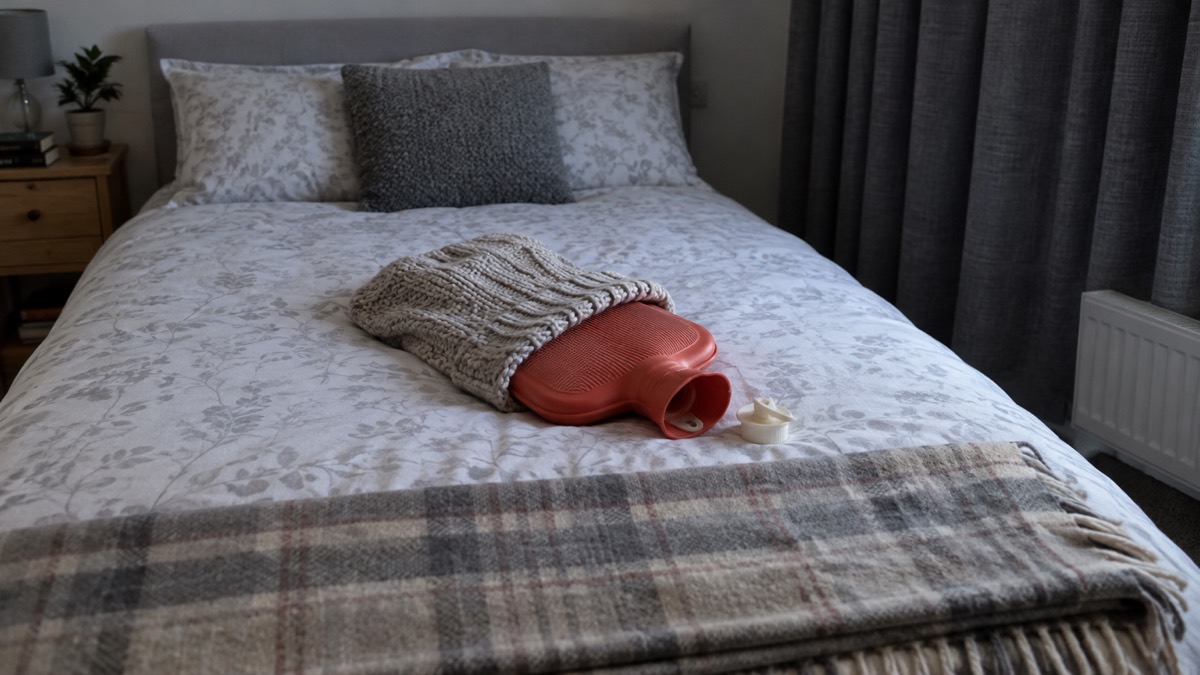
Boiling water does two kinds of damage. It makes the water itself a scalding hazard the moment the bottle fails, and it degrades the bottle from the inside. NHS Western Isles' winter health guide warns never to fill a hot water bottle with boiling water "it will degrade the edges"7. Ards and North Down Borough Council's stay warm, stay safe advice adds: "Do not use boiling water and do not overfill the bottle"3.
Overfilling is the other common mistake. A full bottle is under more pressure at the seams, is harder to squeeze the air out of safely, and puts more hot water in the thing that will be against your body. Two thirds is the limit, and less is fine.
Always use a cover, and never put a bottle straight on skin
Every official and independent source in this area says the same thing: never let a hot water bottle touch bare skin. NHS Western Isles' advice is "always use a cover for your hot water bottle"7. Belfast City Council's advice for older residents says "If using a hot water bottle, make sure it has a protective covering"11. Salisbury NHS Foundation Trust's burns prevention booklet says to "Avoid placing a heating pad or hot water bottle directly against your skin - wrap in a towel or use a cover"5.
A cover does three jobs:
- It puts a layer between the hot rubber and your skin, so a brief contact does not scald.
- It spreads the heat, so the warmth is comfortable rather than concentrated.
- It gives you a second barrier if the bottle itself fails.
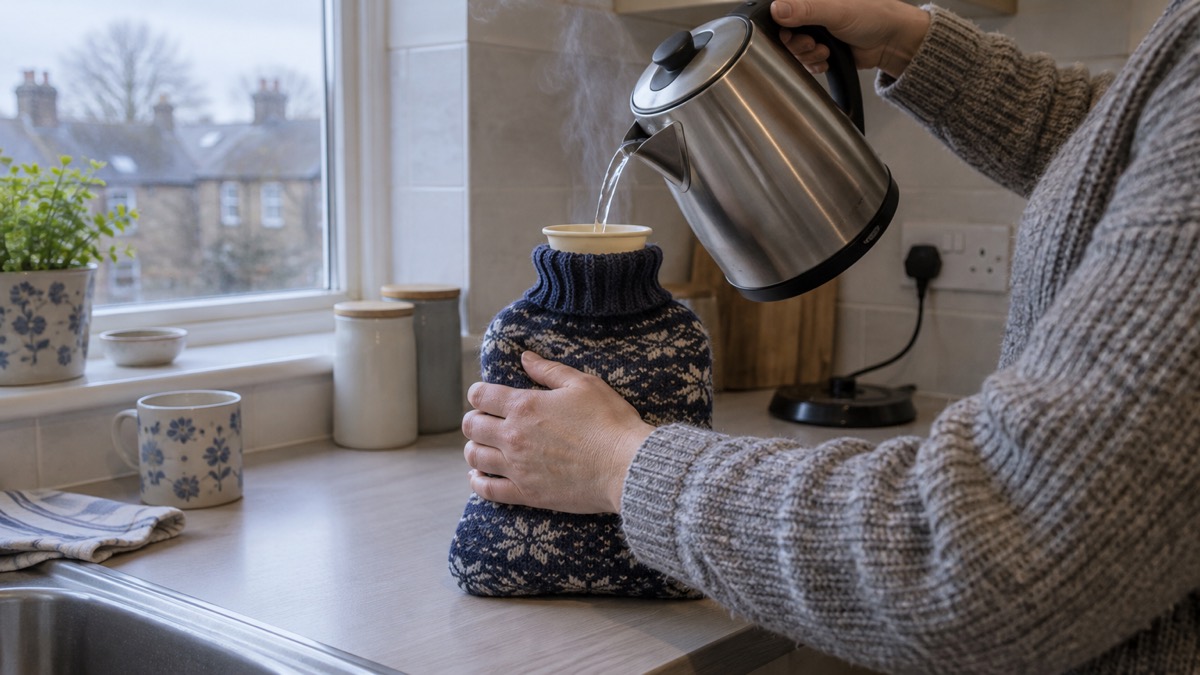
A purpose-made cover, a thick towel or a blanket all work. What does not work is a thin pillowcase, a layer of clothing alone, or nothing at all. If a bottle feels too hot through its cover, the water was too hot: empty some out and refill with cooler water rather than adding more layers and hoping.
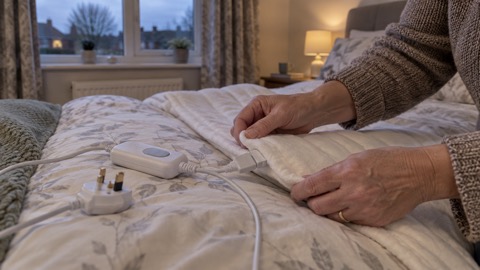
One further rule from Age UK: "Make sure to never use a hot water bottle with an electric blanket"2. The combination of a heavy, water-filled object on top of an electric blanket risks damaging the blanket's wiring and is specifically warned against. If you use both, use them at different times, and see our page on electric blankets for their own checks and replacement rules.
Read the date flower and replace the bottle after two years
Hot water bottles carry a date mark moulded into the neck or body, usually on a raised circle. CAPT explains how to read it: "The number in the middle is the year it was made, the flower segments represent the 12 months of the year and the dots inside those represent the number of weeks"6. So a flower with "24" in the centre, with the fourth segment marked and two dots inside it, was made in the second week of April 2024.
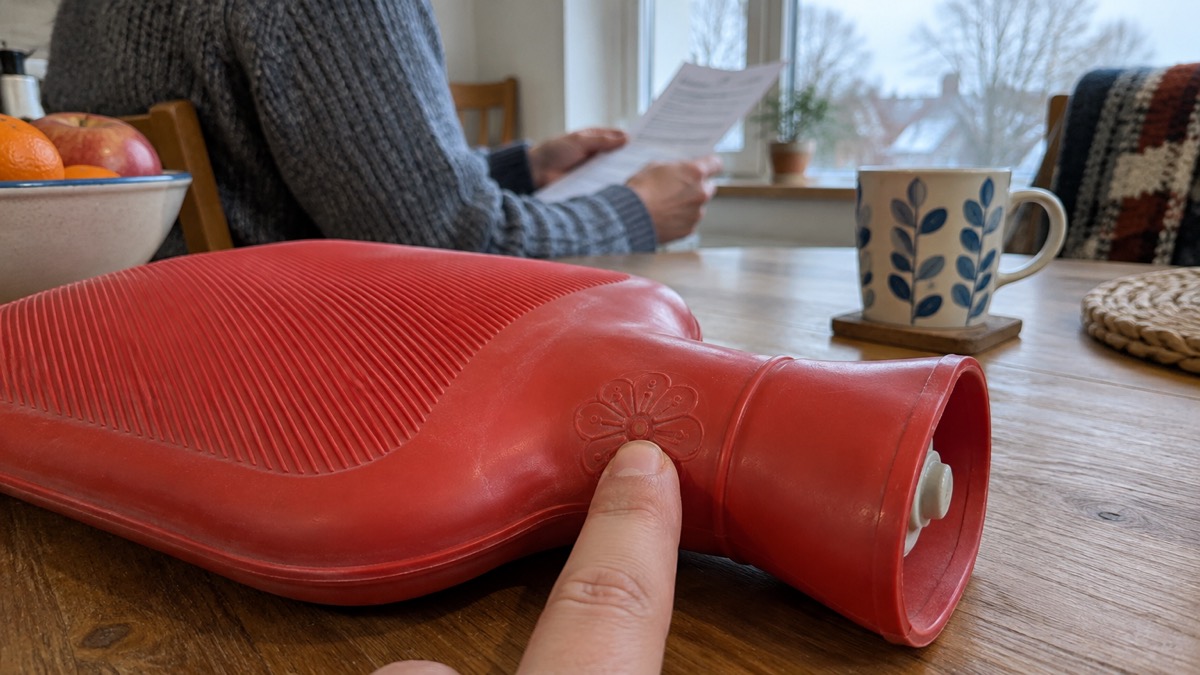
The date matters because the rubber degrades with age even if the bottle looks fine. Salisbury NHS Foundation Trust's burns prevention booklet advises: "Don't use hot water bottles more than two years old"5. NHS Western Isles' winter health guide takes a slightly more generous line, saying "it's best not to use hot water bottles older than 3 years"7.
Alongside the date flower, CAPT advises checking for the British Standard mark starting with BS and a manufacturer's mark when you buy6. RoSPA has reported that the British Standards Institution has now reinstated the British Standards for these products, giving manufacturers clear guidance on product safety8, so a current BS mark is a meaningful sign of a bottle made and tested to a standard rather than an unmarked import.
When you buy a new bottle, check it before the first hot fill. CAPT's routine: "Always check your new bottle for damage before you use it. Fill it with cold water and insert the stopper. Turn it upside down to check the stopper fits and give it a gentle squeeze to check for any leaks"6. A fault found with cold water is an inconvenience; the same fault found with hot water is a burn.
What wears a bottle out: heat, storage, boiling water and freezing
CAPT lists the things that shorten a bottle's life, and most of them are within your control6:
- Regular use, which simply ages the rubber.
- Filling it with boiling water, which degrades the edges and seams.
- Storing it near a heat source, such as an airing cupboard or a radiator.
- Damage from something sharp.
- Storing it full of water, which degrades the rubber.
CAPT's autumn safety advice adds that "The age of your hot water bottle, using boiling water, overfilling it and even storing it incorrectly can all contribute to its deterioration"12. Scottish Borders Council's resilience advice puts the practical habit simply: "Hot water bottles are a good way of staying warm. Check them regularly as they can perish"13.
That points to a storage routine for the months a bottle is not in use:
- Empty it completely and let it dry inside.
- Store it flat with the stopper removed, so air can circulate.
- Keep it somewhere cool and dry, away from radiators, airing cupboards and sunny windowsills.
- Keep it away from anything sharp in the drawer or cupboard.
- Check it for perishing, cracks and seam damage before the first fill each autumn.
One special case: if you froze a bottle during hot weather to keep cool, it is finished. CAPT is explicit that "if you froze your hot water bottle in the hot weather to keep you cool, it is no longer safe to use with hot water"12. Freezing damages the rubber in ways you cannot see, so a bottle that has been an ice pack must not come back as a hot water bottle.
CAPT's Safe from Burns fact sheet gives the everyday check that catches most failing bottles: "Check your hot water bottle for wear and tear. Don't use it if it's worn"14. Look for cracks, perishing that shows as a dull or sticky surface, thinning at the seams, and a stopper that no longer seals firmly. Any of these means the bottle goes in the bin, not the bed.
Babies and children: where a bottle must never go
Children are burned by hot water bottles in ways adults mostly are not, because they cannot always move away from heat, and their skin burns more quickly and more deeply. Official advice is therefore blunt: never put a hot water bottle directly on your child's skin, and never leave one where a child cannot get away from it.
The rules for children are firm:
- Never put a hot water bottle directly on your child's skin, use a cover. CAPT's instruction is exactly that6.
- Never put a hot water bottle in a baby's sleep space. The Lullaby Trust advises never putting a hot water bottle in your baby's sleep space as they can overheat15, and its cold weather guidance spells it out: "Don't use hot water bottles in any baby sleep space (cot, crib, Moses basket or adult bed) as they can make your baby too hot"16. If you want to warm a cot before bedtime, take the bottle out before the baby goes in.
- Do not use heated products, including hot water bottles, with children who cannot move off them if they get too hot or start to burn17.
- Remind older children not to sit or lie on hot water bottles15.
The same thinking applies to anyone with reduced sensation. Diabetes UK advises people with neuropathy in their feet to fill a bottle with hot water, not boiling water, ensure it has a cover, and always remove it from the bed before getting in, because numb feet may not register that the bottle is too hot18. Older people are another group at risk: Mid and South Essex NHS Foundation Trust points to South West Burns Network videos on hot water bottle safety and preventing burns for the over-65s19.
While you are thinking about hot things and children, the wider burns advice from the NHS and fire services applies in the same room: keep hot drinks out of reach of children, never pass hot drinks over children or over the heads of young children and babies, and do not try to hold a hot drink at the same time as holding your baby19.
If someone is burned: what to do first
A hot water bottle burn should be treated like any scald. The Northern Burn Care Network's first aid guidance is the reference to follow: cool the burn under cool running water, and never use ice, creams or butter on it22. Never place a child in a bath full of cold water, as quoted above, because of the risk of shock22.
For the full steps, including how long to cool a burn and when to seek help, see our guide to first aid at home. If the burn is large, deep, white or charred, or the person is a child or baby, seek medical help at once.
A bottle is one part of staying warm safely
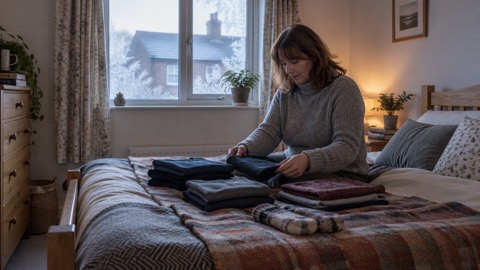
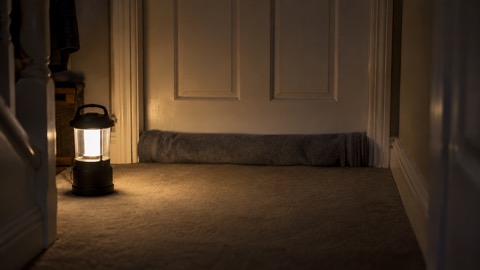
A hot water bottle is best used as part of a plan rather than as the whole plan. On a cold night or during a heating failure, the bottle warms a bed or a lap, while the room itself is kept warm by other means. Our guides on keeping one room warm when the heating fails, clothing and bedding to stay warm in a cold home and stopping draughts to keep heat in during an outage cover those layers, and our before-winter checklist for your heating and stove includes checking bottles and other heat sources before the cold weather arrives.
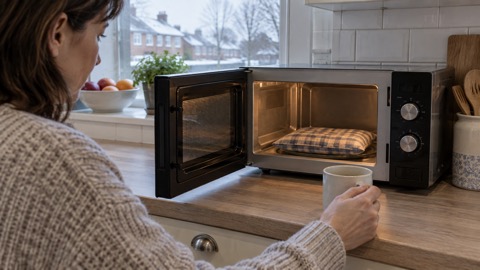
If you use a microwaveable wheat bag as well, or instead, the fire service advice is the same in spirit: always follow the manufacturer's instructions23, and see our page on wheat bags for the specific fire risk of overheating them in a microwave.
Sources (23)
- Staying warm in winter, nidirect
- Keeping warm, Cumberland Council
- Stay Warm, Stay Safe leaflet, Ards and North Down Borough Council
- Do hot water bottles expire?, Child Accident Prevention Trust, 2025-12-17
- Burns prevention booklet 2024, Salisbury NHS Foundation Trust, 2024-12
- Hot water bottle safety, Child Accident Prevention Trust, 2026-07-13
- Your Health Guide, Winter 2025, NHS Western Isles, 2025-12
- Keeping safe as well as warm: how RoSPA is reducing the risk of burns from hot water bottles, Royal Society for the Prevention of Accidents, 2025-10-14
- Product recall: Hunter Price licensed hot water bottles, Office for Product Safety and Standards, 2023-11-24
- Product safety report: Bauer electric hot water bottle, Office for Product Safety and Standards, 2025-03-06
- Stay warm at winter, Belfast City Council
- Autumn safety, Child Accident Prevention Trust, 2026-10-08
- Be more resilient in 30 simple ways in 30 days, Scottish Borders Council
- Safe From Burns fact sheet, Child Accident Prevention Trust, 2023-04
- Burns and scalds, Child Accident Prevention Trust, 2026-09-07
- Cold weather: safer sleep advice, The Lullaby Trust, 2025-02-01
- Parental letter re power shortages, NHS North West Children's OD Network Hub, 2022-11-25
- Cold weather and diabetes, Diabetes UK
- Burns prevention and tips, Mid and South Essex NHS Foundation Trust
- Burn awareness, Cheshire Fire and Rescue Service
- Burns and scalds, Cambridgeshire and Peterborough Children's Health NHS service
- Burn injuries first aid, Northern Burn Care Network
- Heated wheat bags, Cheshire Fire and Rescue Service, 2026-05-20
 Before-Winter Heating Checks
 Backup Stove Kit Checklist
 Wood Burner Lighting Kit
 Keeping One Room Warm
 Clothing and Bedding for Cold
 Stopping Draughts
 Wheat Bags and Fire Risk
 Electric Blanket Safety
 Portable Heater Types
 Portable Heater Safety
 Wood Burners in a Power Cut
 Using a Wood Burner Safely
 Open Fires and Fire Guards
 Firewood and Seasoning Logs
 Smoke Control Areas