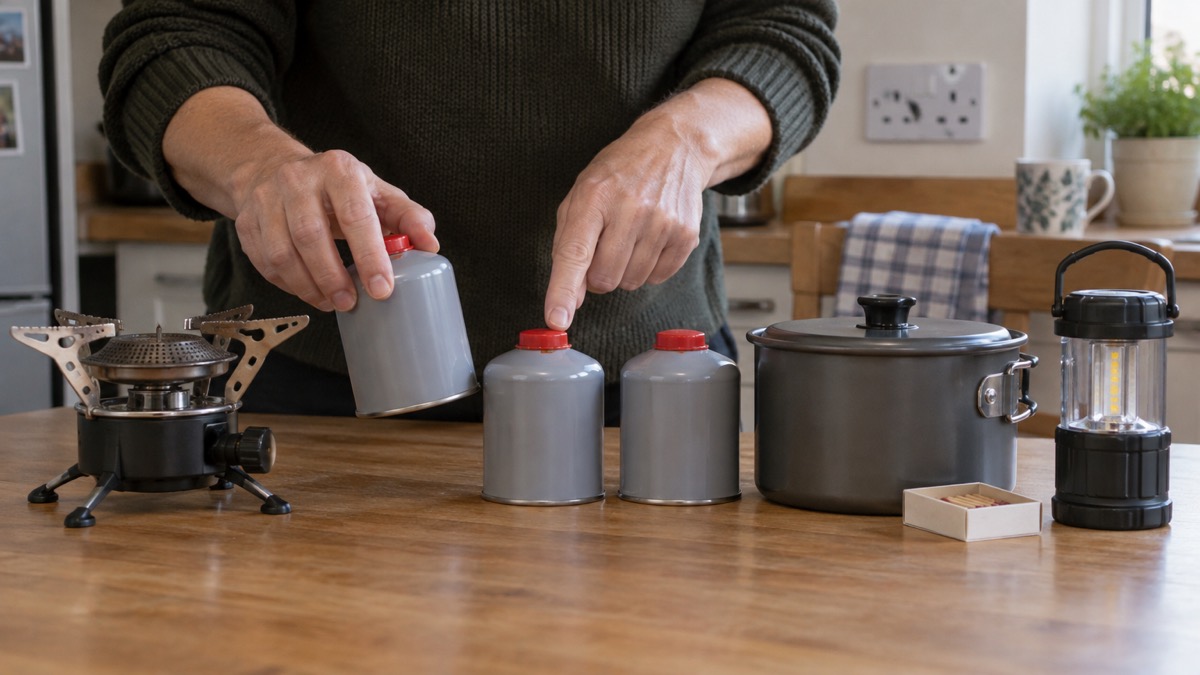
A power cut takes away the kettle, the hob and the microwave at the same moment. A backup stove kit gives you a way to boil water and heat food without mains electricity, and it is one of the simplest pieces of preparation a household can make. Food Standards Scotland advises that you can cook food and heat water using a camping stove, barbecue or bottled gas stove, checking the manufacturer's instructions for safe use1.
The kit itself is small: a stove, fuel, a way to light it, and pans or a pot to cook in. Around that core sit the things that make it usable in the dark and the cold, such as matches, a torch and spare batteries. Households that came through Storm Arwen coped better because they had prepared in advance, with candles, torches and alternative cooking facilities such as gas-powered camping stoves2.
This checklist sets out what to keep, why each item matters, how to store fuel safely and how to check the kit before winter. It is written for an ordinary UK household with no prepping background, and it treats the stove as one part of a wider emergency kit rather than a substitute for one.
Backup stove kit checklist
Work through this list before you need it. Each item earns its place because of what it lets you do when the power is off, not because it is nice to have.
Why each item matters in a power cut
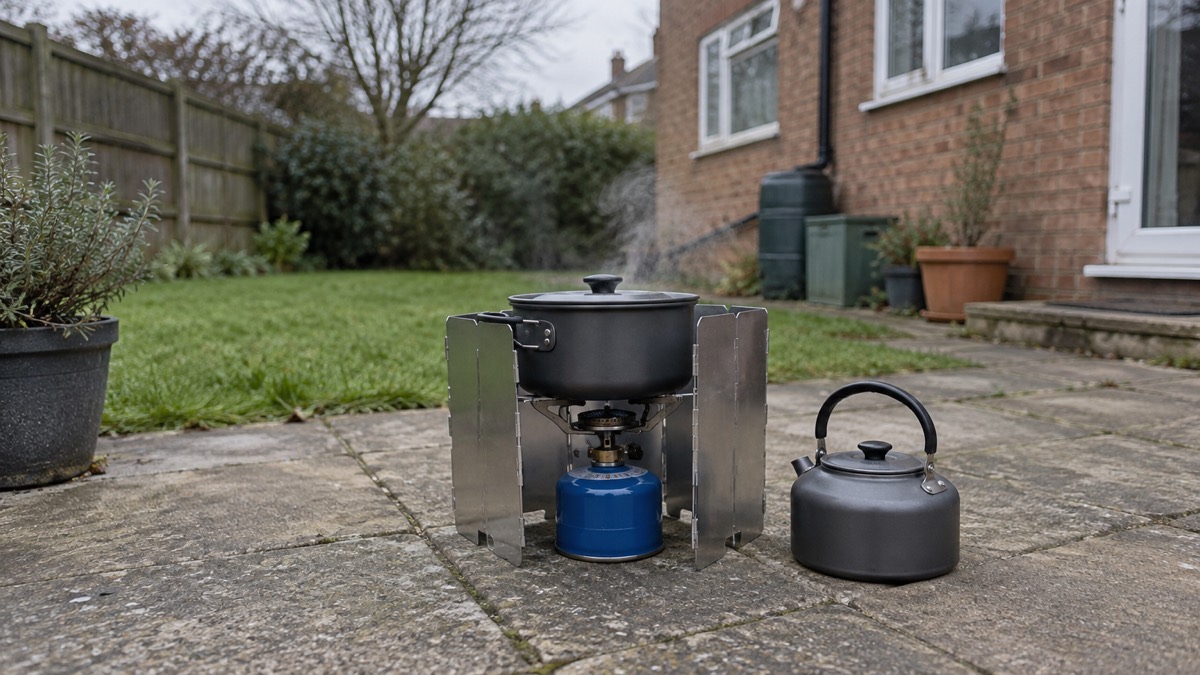
A power cut removes the appliances you normally cook with, and it often arrives with the weather that caused it. The Met Office notes that people cope better with power cuts when they have prepared for them in advance, and lists candles and matches or lighters, torches and batteries, and a mobile phone power pack as the essentials3. The stove is the piece that turns those essentials into a hot meal.
The evidence from real outages is consistent. Ofgem's report on Storm Arwen found that households which had prepared had candles, torches and, in some cases, alternative cooking facilities such as gas-powered camping stoves2. A resident quoted in a North Yorkshire community risk register put it plainly: keep bottled water, easily heated tinned food, candles, matches, torches and batteries in the house, and if possible a camping gas stove12. A Lancashire household describes an emergency kit filled with everything needed for loss of power, including a camping stove13.
Each item in the checklist does a specific job:
- The stove replaces the hob and the kettle. Without it, hot food and hot water depend on whatever else you have.
- Fuel is what makes the stove work. A stove without fuel is a metal object.
- Ignition is easy to forget and impossible to improvise safely. Matches and lighters belong with the stove.
- Torches are a must during a power cut, and a fully charged one is the one to reach for4.
- A power bank keeps the phone alive so you can report the cut and check on others14.
If anyone in the household depends on electrical medical equipment, the planning is different. Official guidance for families of technology-dependent children advises charging fully any equipment with batteries for a planned power cut, and for unplanned cuts making sure items not in use are charging or charged15. Speak to your care team about extra local support and help planning15. Our page on extra help in an emergency covers this in more detail.
Keeping your stove kit ready to use
A stove kit that has sat in a shed for two years is not ready. North Yorkshire Fire and Rescue Service advises that you always make sure your camping light and stove are clean and properly adjusted6. That single instruction covers most of what goes wrong: a dirty burner, a blocked jet, a loose connection or a worn seal.
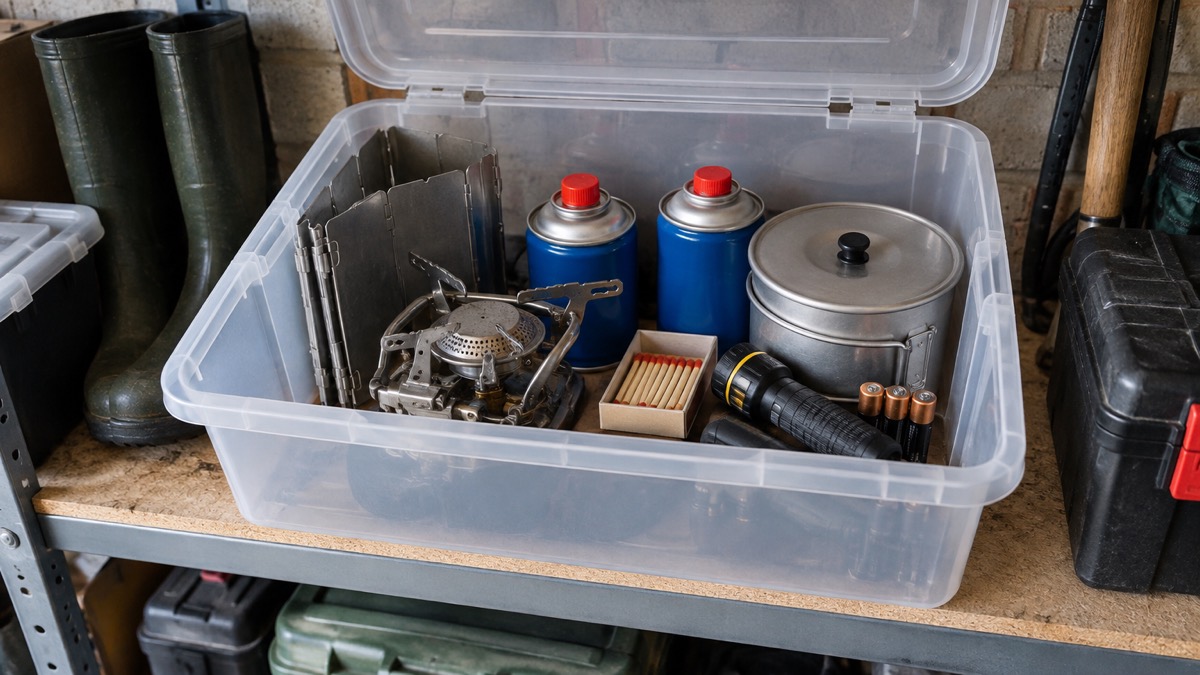
Store the kit as one unit so it can be found in the dark. A box or bag that holds the stove, fuel, matches, a torch and the pot means nobody is searching separate cupboards during an outage. Keep it somewhere dry and away from damp, which corrodes metal parts and degrades fuel.
Fuel storage needs care. Flintshire Council advises having sufficient fuel for emergency heating equipment, such as a portable gas fire or a kerosene heater, in case electricity is cut off5. The same principle applies to stove fuel: enough to see you through a multi-day outage, stored according to the maker's instructions, away from heat and out of reach of children. Our page on gas cartridge storage covers the specifics for gas, and what fuel to use in a spirit burner covers spirit stoves.
Test the stove outdoors before winter. Light it, check the flame, confirm the fuel supply is working and that every part is present. Do this on a calm day, not in a gale. Always make sure your camping light and stove are clean and properly adjusted6. An electric oven and hob probably won't work during a power cut, so a camping stove or portable gas stove used outdoors to boil water or cook food is the fallback2.
Using a camping stove indoors
This is the question most households ask, and the answer depends on the stove and the maker's instructions. Food Standards Scotland's guidance is that you can cook food and heat water using a camping stove, barbecue or bottled gas stove, checking the manufacturer's instructions for safe use1. The instruction to check is not a formality: different stoves have different ventilation requirements, and some are designed for outdoor use only.
The safest pattern is to use the stove outdoors or in a well-ventilated shelter such as a porch with the door open, never in a sealed room. A barbecue is never suitable for indoor use. If you are unsure whether your stove is rated for indoor use, treat it as outdoor equipment.
"You can also cook food and heat water for food preparation and cleaning using a camping stove, barbecue, or bottled gas stove, checking the manufacturer's instructions for safe use."
Our page on camping stove safety goes through the indoor question in full. If you are choosing between a gas cartridge stove and a spirit burner, the comparison of gas or spirit stoves sets out how each behaves.
Trangia: who makes it and where to get support
Trangia is a Swedish maker of outdoor cooking equipment, and its stoves are built around a spirit burner rather than a gas cartridge. The Trangia Micro Stove Hard Anodised is a complete spirit-burning cook set that includes a T-Cup with a lid, a foldable handle, a windshield and the spirit burner9. Packed up, all the parts nest in the T-Cup and the handle snaps over the lid9.
| Specification | Figure |
|---|---|
| Packed length | 39.5cm9 |
| Packed height | 26.0cm9 |
| Packed width | 30.0cm9 |
| Capacity | 0.5 litres9 |
| Fuel type | Spirit burner9 |
Keep the maker's paperwork with the stove so you have the model details to hand if you need to ask about parts or servicing. Before relying on the stove, check that every part is present and undamaged, and replace anything worn rather than improvising. Use only plastic or wooden utensils in non-stick pots and pans9.
For a wider look at how a stove fits into a household's cooking plans, see Heating and Cooking Without Mains Power or Gas. If you are building the kit around the stove, our emergency kit page covers the rest of what a household should keep ready.
Checking the kit before winter
Make sure you have multiple torches along with extra batteries16. The same logic applies to the stove: check it before the cold weather, not during a power cut. Farmers and livestock owners are advised to check and test backup generators and equipment before storm conditions2, and the same habit of testing in advance carries over to any backup cooking equipment. Charging devices and making a plan so you know what to do if you have a power cut is worth doing before winter sets in17.
A simple pre-winter routine:
- Light the stove outdoors and check the flame is steady and the fuel supply works.
- Check the stove is clean and properly adjusted before you pack it away again5.
- Check the matches or lighter are with the stove and ready to use3.
- Check the torch and spare batteries work18.
- Check the carbon monoxide alarm is in date and working.
- Check the pot and lid are clean and fit the stove.
- Check the power bank is charged10.
If the power does go out, call 105 in England, Scotland and Wales to report it or get information7. In Northern Ireland, call the NIE Networks customer helpline on 03457 643 6438. Our power cuts guide covers what to do while you wait.
Sources (18)
- Power cuts and food safety, Food Standards Scotland
- Customer Experiences of Storm Arwen, Ofgem, 2022-06-09
- Further snow and ice forecast following Storm Goretti, Met Office, 2026-01-09
- Power cuts, West Yorkshire Prepared
- Extreme weather, Flintshire Council
- Caravans and camping safety, North Yorkshire Fire and Rescue Service
- Resilience, NHS Western Isles, 2026-10-28
- Ice weather warning information and advice, nidirect, 2026-02-16
- Trangia Micro Stove Hard Anodised, Vango, 2026-10-25
- Be prepared for emergencies, North Devon Council, 2026-10-29
- 5 tips for staying safe in snow - Met Office, Met Office
- Community Risk Register 2025, North Yorkshire Council, 2025-04
- Property flood resilience case studies, Derbyshire County Council, 2024
- Ultimate UK Power Cut Emergency Kit: Stay Prepared & Safe, Olight UK
- Parental letter re power shortages, North West Children's Operational Delivery Network, 2022-11-25
- What to do in a power cut - Met Office, Met Office
- Get winter ready, Energy Networks Association (ENA), Energy Networks Association (ENA)
- Prepare for a power cut - Citizens Advice, Citizens Advice
 Before-Winter Heating Checks
 Wood Burner Lighting Kit
 30-Day Household Checklist