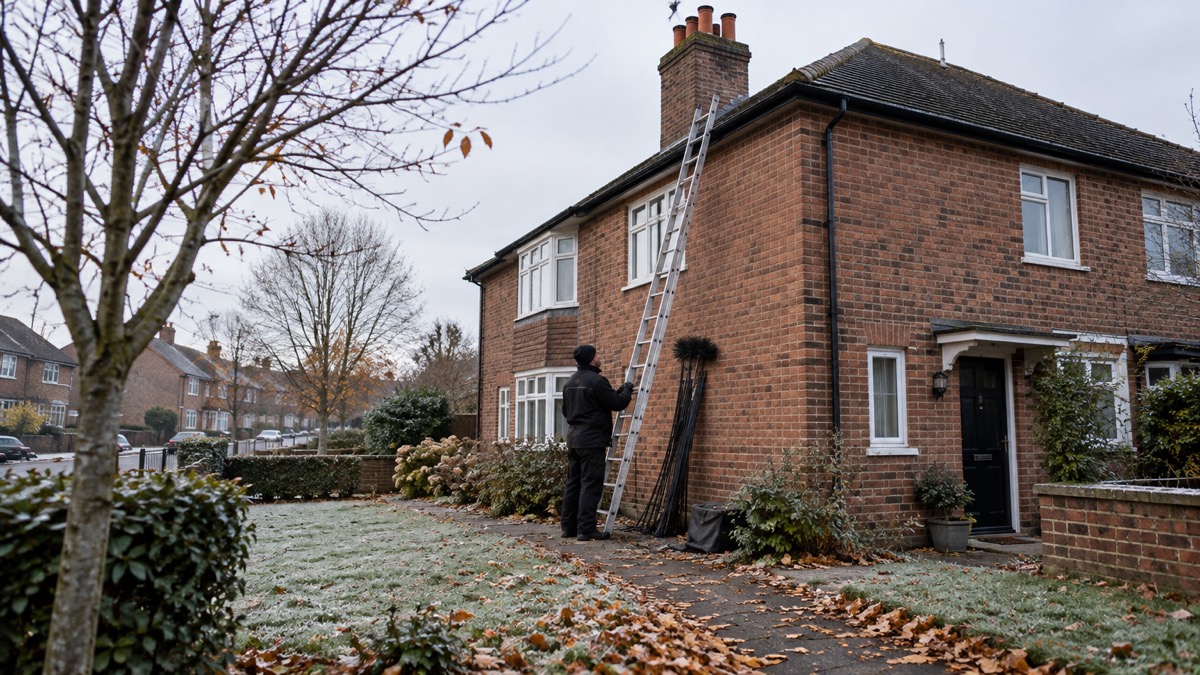
Cold weather puts the heating under strain just when you need it most, and the faults that stop a boiler or a stove working are usually found, not on the night the temperature drops, but in the weeks before. The single most important thing to do now is to get the boiler serviced: boilers and other fuel-burning appliances should be serviced by a qualified professional at least once a year1. Around that, there is a short list of checks you can do yourself, and a few that need a professional.
The Met Office's WeatherReady winter checklist puts "Boiler serviced" near the top of its list2. Local authority winter warmth guidance adds the practical detail: test your central heating, get the boiler serviced, make sure radiators are hot from top to bottom, and if you have a condensing boiler, check that the external pipe is insulated3. If you burn wood or coal, the chimney needs attention before the fire is lit in earnest4.
None of this takes long, and most of it can be done in a single afternoon. The sections below set out the full list, then explain why each item matters, how to book the work before the cold arrives, and what to do if you rent your home or rely on a stove rather than a boiler.
The before-winter checklist
Work through this list in order. The first item is the one that needs booking ahead; the rest you can do yourself this week.
Why the boiler service comes first
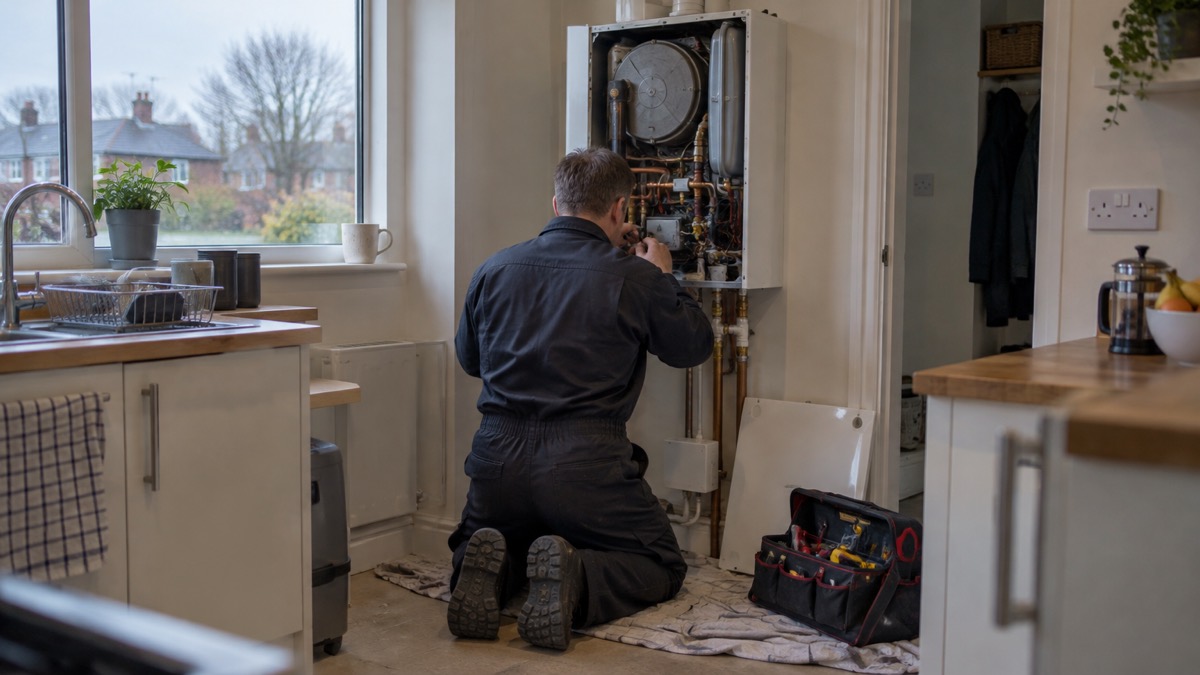
A boiler is a fuel-burning appliance, and every fuel-burning appliance carries a risk that is invisible. The Northern Ireland Fire and Rescue Service puts it plainly: all boilers and fuel-burning appliances have the potential to produce carbon monoxide, which is why it is important they are serviced annually by a qualified engineer1. Carbon monoxide has no smell and no colour, so a fault in the appliance or its flue will not announce itself. The annual service is the check that finds it.
The second reason is simpler: a boiler that fails in November is an inconvenience, and a boiler that fails in a cold snap is a household emergency, with engineers in demand and a wait for parts. A service in autumn is the moment when a worn part or a blocked flue is found while the heating is still working and there is time to fix it.
The third reason is efficiency. A boiler that is running correctly heats the home using less fuel, which matters more in a winter when the heating is on for months. The service is not a luxury add-on to the winter list; it is the item that makes the rest of the list work.
"Have your boiler and other fuel burning appliances serviced by a qualified professional at least once a year."
Booking the service before the cold arrives
The practical question is timing. Book as early as you can, because the weeks before the first cold spell are when heating engineers are busiest and when a fault found in a service can still be repaired before you need the heating.
When you book, ask for a qualified and registered engineer. Guidance from the NHS and from fire and rescue services is consistent that boilers, heaters and cookers should be serviced by a qualified and registered engineer9, and that fuel-burning appliances should be serviced by a properly qualified engineer10. Ask for the registration details when you book, and keep the service record afterwards.
If you rent your home, the arrangement is different. Your landlord should get your gas appliances safety checked at least once a year, and this includes your gas boiler, gas cooker and gas fire5. Ask your landlord or letting agent when the last check was done and for a copy of the record. Fire service guidance for flats lists the same questions tenants should be able to ask: whether there is a regular maintenance programme for gas heaters and appliances, and whether the chimneys and flues are cleaned and checked regularly11.
Chimneys, stoves and open fires
If your home is heated by a stove, an open fire or a solid fuel appliance, the chimney takes the place of the boiler flue and needs the same annual attention. The Scottish Fire and Rescue Service advises giving your chimney a thorough cleaning before winter arrives, because dust, debris or blockages can occur when it is not used regularly during the summer months4. It also advises checking the chimney before the winter months, when fires are likely to be in greater use, and says that taking these steps beforehand will help prevent emergencies4.
Have the chimney swept and the flue inspected by a qualified professional at least once a year4. A blocked or partly blocked flue is a fire risk and a carbon monoxide risk at the same time, and neither is obvious from the room. If the fire has not been lit for a long time, treat the first lighting as a test: check the draw, keep the fire small at first, and stop if smoke comes back into the room.
For the wider picture on solid fuel, see Wood Burners and Multi-Fuel Stoves in a Power Cut and How Often a Chimney Should Be Swept and Checked. If you are lighting a fire in a chimney that has stood unused for years, read Lighting an Open Fire After Years Without Use first.
Radiators, pipes and the rest of the system
The boiler service covers the appliance; the rest of the system is yours to check. Derbyshire County Council's winter warmth guidance sets out the routine: test your central heating, get your boiler serviced, make sure radiators are hot from top to bottom, and if you have a condensing boiler, check that the external pipe is insulated3. Nottinghamshire County Council's guidance is the same in outline: get heating, radiators and boilers serviced12.
A radiator that is hot at the bottom and cold at the top usually needs bleeding, and it is worth doing before the heating is needed every day. The condensate pipe is the one that catches people out: it carries water away from a condensing boiler and runs outside, so in freezing weather it can freeze and shut the boiler down.
Electric heaters need their own check before the season starts. Armagh City, Banbridge and Craigavon Borough Council advises checking the cord and plug for wear, fraying or damage, and cleaning dust and lint from vents and grilles regularly to prevent it building up6. Unplug the heater and let it cool before cleaning6. For more on using heaters safely, see Using a Portable Heater Safely at Home and Electric Blankets: Safe Use, Checks and When to Replace.
Alarms, carbon monoxide and getting help
The annual service protects the appliance; an alarm protects the household if something goes wrong between services. Any fuel-burning appliance can produce carbon monoxide, so a carbon monoxide alarm belongs in the room with the boiler, the fire or the stove, and a smoke alarm belongs on each level of the home1. Test both before winter and replace the batteries if they are not sealed.
Know the signs. The NHS advises that carbon monoxide poisoning can cause symptoms including headache, dizziness, nausea and tiredness, and that you should get fresh air and seek urgent help if you suspect it13. If your alarm sounds, open windows and doors, turn off the appliance if you can do so safely, leave the building and call the gas emergency number. Do not use a fuel-burning appliance you suspect until it has been checked.
If anyone in the household is older, disabled or medically dependent, ask to be added to your energy supplier's Priority Services Register, which gives advance notice of power cuts7. For the wider household picture, see Extra Help in an Emergency and Gas and Heating Failures: A Household Guide. For keeping warm if the heating does fail, see Keeping One Room Warm When the Heating Fails.
Sources (13)
- Home fire safety, Northern Ireland Fire and Rescue Service, 2026
- WeatherReady winter checklist, Met Office, 2026
- Keep warm in winter, Derbyshire County Council, 2026
- Chimneys, Scottish Fire and Rescue Service, 2026
- Gas safety for tenants, London Assembly, 2026
- Safe use of heaters and generators, Armagh City, Banbridge and Craigavon Borough Council, 2026
- Priority Services Register, Derbyshire County Council, 2026
- Carbon monoxide safety, London Fire Brigade, 2026
- Carbon monoxide, Public Health Wales, 2025
- Safe and well booklet, Cheshire Fire and Rescue Service, 2026
- Landlord responsibilities, Greater Manchester Fire and Rescue Service, 2026
- Keeping warm in winter, Nottinghamshire County Council, 2026
- Carbon monoxide poisoning, NHS, 2025
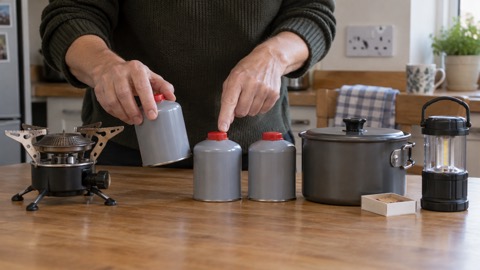 Backup Stove Kit Checklist
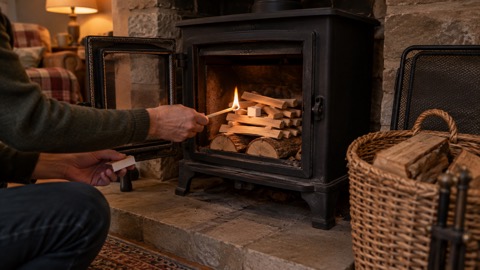 Wood Burner Lighting Kit
 30-Day Household Checklist