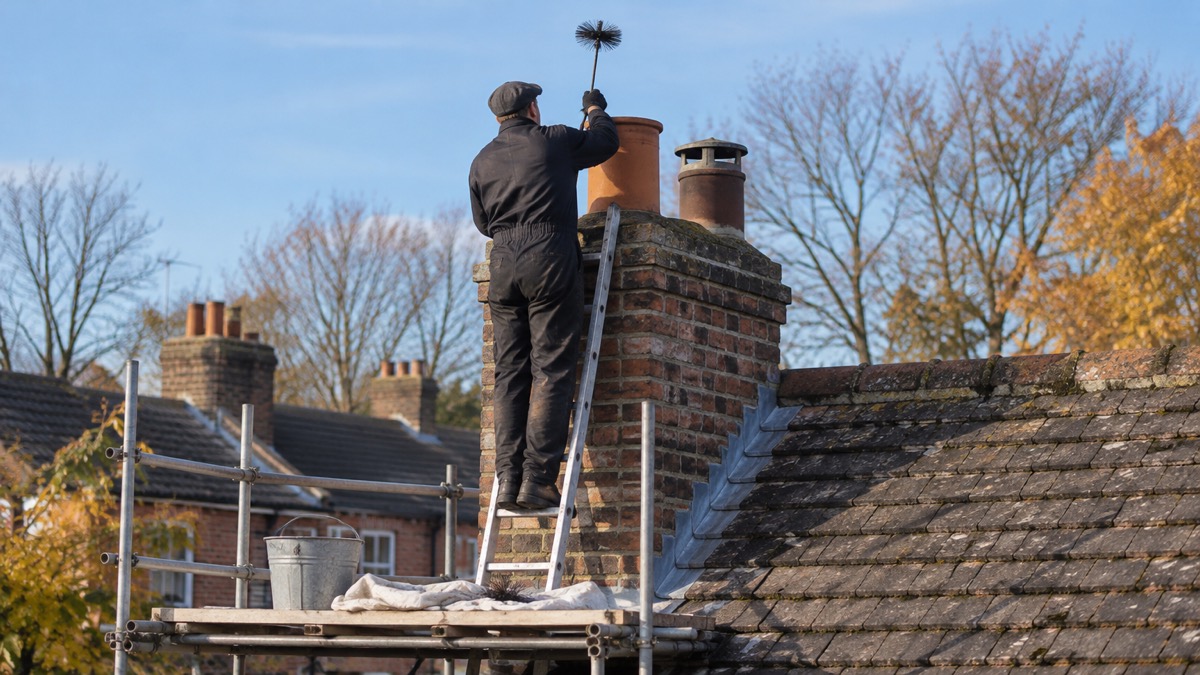
A chimney in regular use should be swept at least once a year, and how often after that depends entirely on what you burn1. That is the baseline every fire and rescue service in the UK repeats: Dorset and Wiltshire Fire and Rescue Service puts it plainly as "A chimney in regular use should be swept at least once a year. The frequency will depend on what you are burning"1, and the government's burn better advice says the same, recommending "getting your chimney swept at least once a year by a chimney sweep"2.
The fuel makes a big difference. If you burn wood, the Scottish Fire and Rescue Service advises that the chimney should be swept quarterly while the fire is in use, so a stove burned all winter needs up to four sweeps a year3. For smokeless fuels, chimneys and flues should be swept by a trained person at least once a year. Use a sweep who is accredited, such as by HETAS or the National Association of Chimney Sweeps, rather than an unregistered operator4.
How often to sweep, by fuel
Fire and rescue services across England, Scotland and Wales publish broadly consistent frequencies, and the table below brings them together. Where you burn more than one fuel, the Scottish Fire and Rescue Service says to sweep at the highest frequency of the fuels you use, which in practice means quarterly if any wood goes on the fire3.
| Fuel | How often to sweep | Who says so |
|---|---|---|
| Wood | Every three months when in use; up to four times a year7 | |
| Bituminous coal | Twice a year9 | |
| Peat | Twice a year3 | |
| Smokeless fuel | At least once a year11 | |
| Oil | Once a year11 | |
| Gas | Once a year if designed for sweeping, by a suitably qualified engineer6 | |
| Mixed fuels | At the highest frequency of the fuels used, which is quarterly3 |
The wood figure is the one most households underestimate. A chimney serving a fire where wood is burned should be swept quarterly when it is in use, which means a stove lit every evening through the cold months needs sweeping far more often than most people expect. Wood produces tar and creosote deposits that build up faster than mineral fuels, which is why the interval is shorter even though the fire may look no dirtier.
One point of disagreement is worth knowing about. Most guidance puts bituminous coal at twice a year, or at least twice a year, but the documents do not all agree: one source lists bituminous coal at "at least once a year". Where guidance differs, treat the more frequent interval as the safer choice and ask your sweep what they found at the last visit.
For gas and oil appliances, the chimney itself is rarely the responsibility of a brush sweep. A gas appliance's flue is normally checked as part of its annual service by a suitably qualified engineer rather than by a chimney sweep, so ask the engineer whether the flue needs separate attention. What matters for every fuel is the same: chimneys and flues should be kept clean and well maintained, and should not be blocked.
Wood burners: every three months while in use
If you run a wood burner or multi-fuel stove through the winter, plan on a sweep each quarter of the burning season. Dorset and Wiltshire's open fires guidance gives wood as every three months13, as does its chimney fire safety advice14, North Yorkshire Fire and Rescue Service10 and the Scottish Fire and Rescue Service's chimney safety leaflet5. North Wales puts the same figure as every 3 months15. If you are choosing or running a stove, our pages on wood burners and multi-fuel stoves and using a wood burner safely cover the rest of the picture.
The timing matters as much as the count. Mid and West Wales Fire Service advises that for wood burning stoves and boilers "The chimney should be cleaned at the end of each heating season and at least once during the heating season", and that it should also be inspected regularly6. That gives you a practical calendar: one sweep partway through winter, and one as the season closes, with more in between if you burn heavily. Cornwall Fire and Rescue Service adds a rule for anyone lighting a fire for the first time in a while: sweep the chimney before use16.
What you burn makes the quarterly figure more or less necessary. Warwickshire's safe home heating guidance is direct about the fuel side: "Avoid burning wet or green wood, treated wood, rubbish, or plastics as these can produce harmful substances and increase the risk of chimney fires"17. Wet wood is the single biggest cause of fast tar build-up, so if your logs are not fully seasoned you should treat the three-month interval as a floor, not a target. Our guide to how dry firewood should be explains seasoning in detail, and what wood and rubbish you should never burn lists the fuels to keep out of the stove.
Bituminous coal and peat: twice a year
Household coal, properly called bituminous coal, and peat both sit between wood and smokeless fuel. The Scottish Fire and Rescue Service states that "Fires burning bituminous coal or peat need to have the chimney swept twice per year"3, and its chimney safety leaflet gives the same pairing5. Manchester Fire and Rescue Service gives bituminous coal as twice a year9, as do North Yorkshire10, Dorset and Wiltshire13, Oxfordshire11, Lincolnshire12 and North Yorkshire's heating guidance18.
The reason for the middle position is how much the fuel deposits. Guidance for chimneys serving bituminous coal notes that "If you regularly burn bituminous coal, more frequent sweeping may be needed". So twice a year is the standard, and a household burning coal every evening through winter should treat it as a minimum and ask the sweep's opinion at each visit.
Peat is grouped with bituminous coal in both the Scottish Fire and Rescue Service's main advice and its leaflet3, so if you burn peat, follow the twice-a-year rule. If you alternate coal with wood on a multi-fuel stove, the mixed-fuel rule applies and you should sweep at the wood frequency, quarterly3.
Sweep more often if you use the fire a lot
Frequency is about hours burned, not just fuel type. Open fires and stoves guidance puts it simply: "Have your chimney swept at least once a year - twice if you use it lots"19. The same point applies across the nations: householders are told to "Ensure you have all chimneys in your property swept at least once per year by a qualified person"19.
So the practical reading is this. Once a year is the floor for every chimney in regular use, whatever the fuel. The fuel then sets the normal interval: quarterly for wood, twice a year for bituminous coal and peat, once a year for smokeless fuel, oil and gas. On top of that, heavy use pushes every fuel upward, with wood-burning chimneys needing up to four sweeps a year when in use. A sweep who knows your chimney can tell you whether the deposits they found last time warrant a shorter interval.
Sweeping, inspection and the sweep's certificate
Sweeping and inspection are two different jobs that usually happen in the same visit. The sweep clears soot and tar; the inspection checks the condition of the flue, the liner if there is one, and the stack. Warwickshire's safe home heating advice says the two belong together: "Schedule annual chimney inspections and cleanings by a qualified professional"17.
A flue liner deserves particular attention. A liner that has cracked or come apart will let smoke and carbon monoxide into the fabric of the house instead of up the chimney, and only an inspection will find it. That is why chimneys and flues should be kept clean by being swept from top to bottom at least once a year by a qualified sweep, and should not be blocked.
Ask your sweep for a certificate or written record at the end of each visit. Registered sweeps issue one as standard, and it records what was swept, what was found and the condition of the flue. Keep it with your household papers: it is your evidence of maintenance if you ever need to show the chimney has been looked after, for example for insurance, and it gives the next sweep a baseline to compare against.
Finding a qualified chimney sweep
Use a registered sweep, not an unregistered one. North Yorkshire Fire and Rescue Service states the national position: "National guidance recommends that chimneys serving open fires or wood-burning stoves are swept at least once a year by a qualified professional, such as those accredited by HETAS or the National Association of Chimney Sweeps"4. Surrey Fire and Rescue Service recommends using a HETAS certified sweep20, and the Scottish Fire and Rescue Service points householders to HETAS to find a certified sweep or for more information on chimney fire safety3.
There are three main places to look:
- HETAS (Heating Equipment Testing and Approval Scheme): the solid fuel and biomass approval body. Its website has a dedicated consumer Advice Hub with simple postcode searches for independently approved chimney sweeps and service technicians21. Contact details published by the Scottish Fire and Rescue Service include www.hetas.co.uk, Tel: 01684 2781705, and Public Health Wales lists HETAS tel. 0845 634 5626 for solid fuel22.
- The National Association of Chimney Sweeps: it "has a network of fully insured members throughout the Country, who work to a Code of Practice"6. Mid and West Wales Fire Service says "For more details telephone free on 0800 833464"6, and the Scottish Fire and Rescue Service leaflet lists www.nacs.org.uk, Tel: 01785 8117325. Lincolnshire's guidance points to it for safety advice and to find an approved sweep12.
- The Association of Professional and Independent Chimney Sweeps: Dorset and Wiltshire lists it among the websites where "You can find a qualified, reputable chimney sweep"13, and Cornwall describes it as a way to find a local chimney sweeper with further technical information on chimney safety16.
Whichever body you use, the postcode search is the quickest route to someone local, and accreditation is what separates a sweep who is insured and works to a code of practice from an unregistered operator.
Carbon monoxide and smoke alarms near open fires and stoves
Every room with an open fire, stove or other carbon-fuelled appliance needs a carbon monoxide alarm. The Scottish Fire and Rescue Service is specific about scope: a carbon monoxide detector should be fitted in any room where there is a carbon-fuelled appliance, "including boilers, fires including open fires, heaters, and stoves or a flue"3. NHS guidance for parents says the same: "Fit a carbon monoxide alarm in every room where there are flame burning appliances or open fires"23, and the equivalent advice in Worcestershire adds that appliances should be serviced regularly24. Warwickshire's chimney fire safety advice is shorter but the same: "fit a carbon monoxide detector"25.
The link back to sweeping is direct. Lincolnshire Fire and Rescue notes that "The risk of having a chimney fire reduces when chimneys are swept regularly. It also reduces the risk of a build-up of carbon monoxide"11. A blocked or restricted flue pushes carbon monoxide back into the room instead of up the chimney, which is why the sweep and the alarm are two halves of the same protection.
Alarms themselves need a little care. The Scottish Fire and Rescue Service's home fire safety guide says to "Gently vacuum the inside and outside casing" of smoke, heat and carbon monoxide alarms every year27. Warwickshire's guidance explains why the alarms earn their place: "In the event of a fire or carbon monoxide leak, these alarms can provide early warning, allowing for a prompt response"17. If a carbon monoxide incident does occur, get out, get medical help, and before the appliance is used again have the flue checked and the chimney swept by a registered professional28. Our guide to home emergencies covers carbon monoxide, gas leaks and fire response in full.
Thatched properties
A thatched roof changes the stakes. Warwickshire's thatched roof fire safety guidance says: "Have your chimney swept at least once a year, or lined as necessary, and the brickwork checked regularly by a professional builder"21. Dorset and Wiltshire Fire and Rescue Service gives the same annual minimum for thatched properties1.
Two things in that advice go beyond the ordinary rules. First, the liner: in a thatched home the chimney may need lining, not just sweeping, because heat transferring through old brickwork into the thatch is a classic route to a roof fire. Second, the brickwork: the stack itself needs checking by a professional builder, since cracked mortar or degraded brick can let heat and embers reach the thatch. If you own a thatched property, book the sweep annually, ask explicitly about the liner's condition, and have the brickwork inspected on a regular basis rather than waiting for a problem21.
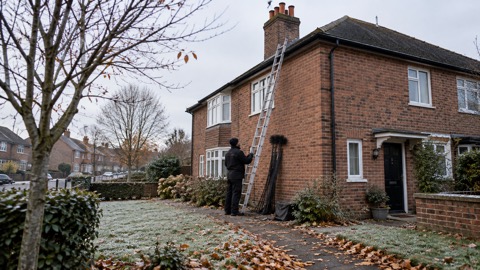
Before winter: the checks to make now
The run-up to winter is when fire and rescue services push chimney safety hardest, because that is when cold weather drives households to light fires that have sat unused since spring. HETAS, the approvals body for solid fuel and wood fuel appliances in the UK, is continuing its support for Chimney Fire Safety Week, and for the 2023 campaign it has made available the official campaign logo and a range of assets for use throughout the Week. The message of the season is the same as the rest of the year: have the chimney swept before you light the first fire of winter, not after.
Your before-winter list, drawn from the services' guidance:
- Book the sweep before the first fire of the season, and sweep the chimney before use if it has not been used for some time16
- Check the frequency against your fuel: quarterly for wood, twice a year for bituminous coal and peat, once a year for smokeless fuel, oil and gas3
- Fit a carbon monoxide alarm in every room with a carbon-fuelled appliance, boiler, fire, heater, stove or flue3
- Vacuum the inside and outside casing of your alarms27
- Have appliances serviced regularly, not just swept23
- If the property is thatched, have the brickwork checked by a professional builder and the chimney lined as necessary21
- Avoid burning wet or green wood, treated wood, rubbish or plastics17
If you are reopening an open fire after years without use, the checks are more extensive still: see our guide to lighting an open fire after years without use. For the wider picture of what a chimney fire looks like and what to do if one starts, see chimney fires: causes, warning signs and what to do, and for the rest of the seasonal routine, our before-winter checklist for your heating and stove.
Sources (28)
- Thatched properties, Devon and Somerset Fire and Rescue Service, 2026
- Burn Better, UK Air (Defra), 2026
- Chimney safety, Scottish Fire and Rescue Service, 2026-10-25
- Chimney Fire Safety Week: residents encouraged to act now, North Yorkshire Fire and Rescue Service, 2026-09-08
- Chimney safety leaflet, Scottish Fire and Rescue Service, 2024-01
- Chimneys, open fires and wood burning stoves, Mid and West Wales Fire and Rescue Service, 2026-10-29
- Open fires and chimneys, Oxfordshire County Council, 2026
- Chimney fires, North Wales Fire and Rescue Service, 2026-10-28
- Heating: chimney safety, Manchester Fire and Rescue Service, 2026-10-29
- Chimney fire safety, North Yorkshire Fire and Rescue Service, 2026-03-10
- Chimney safety, Lincolnshire County Council, 2026-10-29
- Fire safety at home, Surrey Fire and Rescue Service, 2026-10-15
- Chimney safety advice, North Yorkshire Fire and Rescue Service, 2021-11-01
- Chimney fires, Cornwall Fire and Rescue Service, 2026-10-29
- Chimney safety advice, Devon and Somerset Fire and Rescue Service, 2026
- Kitchen safety, Scottish Fire and Rescue Service, 2024-11-11
- Safe home heating, Warwickshire County Council, 2026-10-29
- Heating your home, North Yorkshire Fire and Rescue Service, 2026-03-09
- Other safety, Northern Ireland Fire and Rescue Service, 2026-10-22
- Household fire safety, Somerset Council, 2025-01-30
- Thatched roof fire safety, Warwickshire County Council, 2026-10-29
- Carbon monoxide leaflet, Bedfordshire Fire and Rescue Service / Cadent, 2026
- Poisoning: keeping your child safe, South Yorkshire Healthier Together (NHS), 2026-10-29
- Safety for medicines and poisons, Worcestershire Healthier Together (NHS), 2026-10-29
- Chimney fire safety advice, Warwickshire County Council, 2026-10-29
- Easy-read fire safety booklet, London Fire Brigade, 2026
- Your guide to fire safety, Scottish Fire and Rescue Service, 2023-11-03
- Carbon Monoxide Guidance | HETAS Advice | Protect Yourself from CO, HETAS
 Before-Winter Heating Checks
 Backup Stove Kit Checklist
 Wood Burner Lighting Kit
 Keeping One Room Warm
 Clothing and Bedding for Cold
 Stopping Draughts
 Hot Water Bottle Safety
 Wheat Bags and Fire Risk
 Electric Blanket Safety
 Portable Heater Types
 Portable Heater Safety
 Wood Burners in a Power Cut
 Using a Wood Burner Safely
 Open Fires and Fire Guards
 Firewood and Seasoning Logs