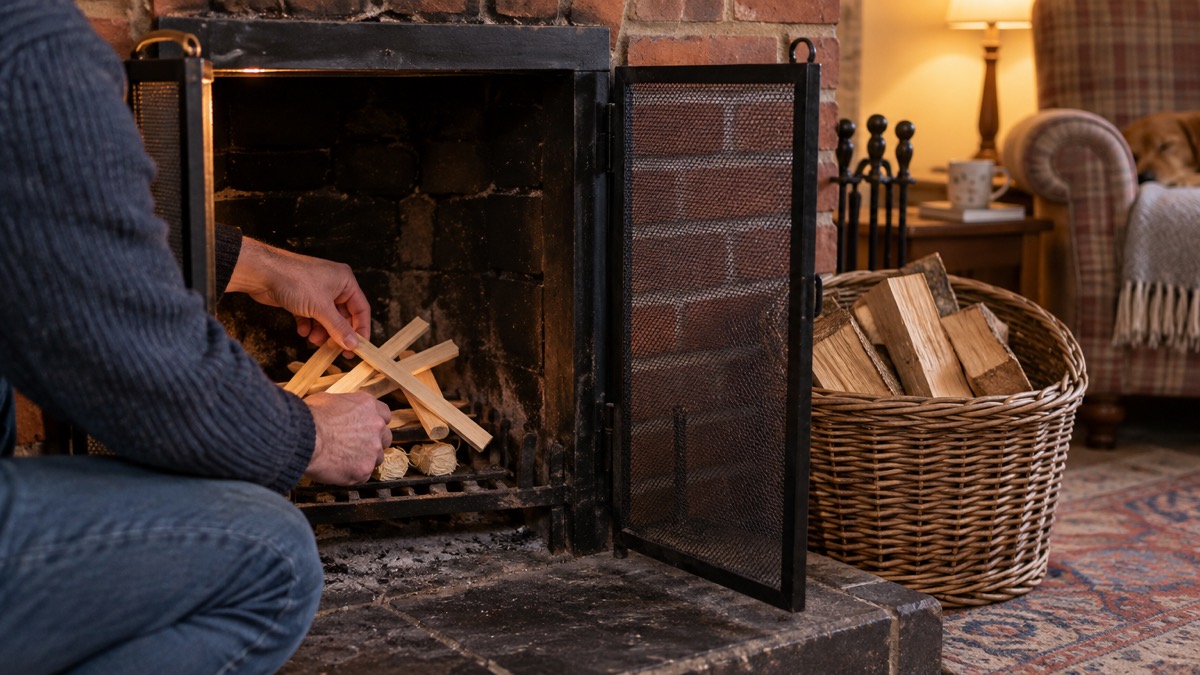
If the open fire in your home has not been lit for years, the first thing to do is not to light it. Fire and rescue services are clear that you should never reopen and use an old fireplace without a professional doing the work, because the chimney is likely to be unsafe1. Before anything goes in the grate, have the chimney checked and swept by a professional, accredited chimney sweep2.
The reason is simple. A dirty or neglected chimney is one of the main routes to a chimney fire, and a chimney fire can spread into the roof space of a house. Sweeping is the most important job before you start using an open fire or wood burner again3. Once the chimney has been checked, the fire itself is straightforward: use kindling rather than flammable liquids, keep a fireguard in front of it, and never leave it burning when you leave the room4.
This page sets out what to do before the first fire, how to light and tend it safely, and what to do if something goes wrong. It applies to a conventional open fire in a house, whether it has been unused for a few winters or for decades.
When this applies to your home
This guidance is for a household with a conventional open fire that has fallen out of use: a fireplace behind a board, a grate that has held nothing but dust for several winters, or a chimney that has not seen a sweep in living memory. It also applies to a fireplace you have used occasionally but not serviced.
The risks are different from those of a fire you use every winter. An unused flue can hold soot, debris, birds' nests and loose mortar, and the fireplace itself may have been altered or blocked. Fire and rescue services warn that the chimney is likely to be unsafe, which is why the work should be done by a professional rather than by the householder1. The same advice applies if you are choosing to reopen and use an old fireplace: ensure you get a professional to carry out the work8.
There is a second, quieter reason to think about the chimney before winter. An open chimney can allow large amounts of cold air into the room when it is not in use, and products are available to close off a chimney when it is not being used9. If the fire is part of your plan for keeping warm when the heating fails, the draught matters as much as the flames. Our guide to stopping draughts covers the wider job of keeping heat in.
If your fire is a wood burner or multi-fuel stove rather than an open grate, the same principles apply but the controls and checks differ. See wood burners and multi-fuel stoves in a power cut and using a wood burner safely.
What to do before the first fire
Work through these steps in order. The first two are the ones that decide whether the fire is safe to use at all.
- Have the chimney checked and swept by a professional, accredited chimney sweep. Fire and rescue guidance says this is the most important thing to do before you start using your fire, because dirty chimneys can lead to chimney fires3. If you have an open fire or wood burner, get the chimney swept at least once a year2.
- Have any reopening work done by a professional. Never reopen and use an old fireplace without a professional doing the work, because the chimney is likely to be unsafe1. If you are choosing to reopen and use an old fireplace, ensure you get a professional to carry out the work8.
- Check the fireplace surround and the room. Ensure the area surrounding the fireplace is free from flammable materials, such as curtains, furniture or decorations10.
- Get a fireguard or spark guard. Use a spark guard when the fire is unattended to prevent embers setting fire to furnishings or carpets5. Never leave a lit fire unattended without a fireguard11.
- Source dry, well-seasoned wood. If burning wood, it must be well-seasoned, meaning it has been left to dry out for a long time so the moisture has evaporated from the wood12. Our guide to firewood explains how to tell dry logs from damp ones.
- Check where you live. If your home is in a smoke control area, different rules apply to what you can burn. See smoke control areas.
How often the chimney needs sweeping
The frequency depends on what you burn. Fire and rescue guidance gives these intervals for solid fuel appliances4:
| Fuel | How often to sweep |
|---|---|
| Smokeless coal | At least once a year4 |
| Coal | Twice a year4 |
| Wood (open fire or wood burner) | At least once a year by a professional, accredited chimney sweep2 |
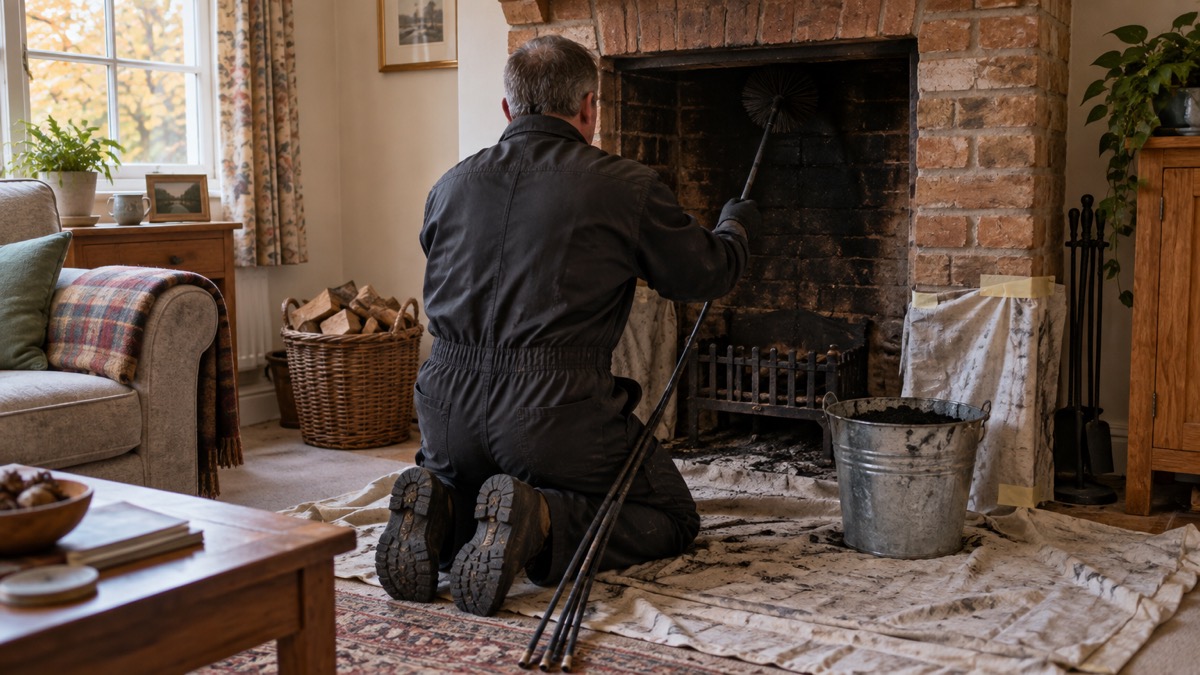
If you have an open fire or wood burning stove in your home, it is important to properly maintain flues and chimneys14. Regular sweeping is not a one-off job for the first winter: it is the routine that keeps the fire safe year after year. Our guide to how often a chimney should be swept and checked goes into more detail.
Lighting and tending the fire safely
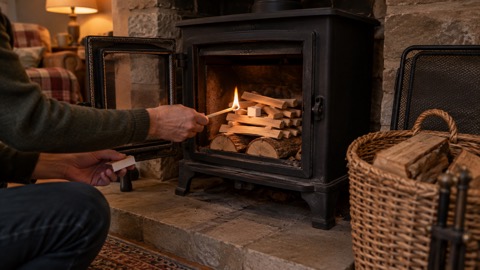
Once the chimney has been swept and the fireplace checked, lighting the fire is a matter of patience rather than force. Fire and rescue services advise using kindling to create a small fire and then adding larger wood slowly, and never using chemicals such as petrol to light the fire15. The same warning appears in chimney fire advice: do not light fires using flammable liquids such as petrol or paraffin5. Cornwall Fire and Rescue Service puts it plainly: never use petrol or paraffin to light your fire5.
A safe routine for an open fire looks like this:
- Start small. Kindling first, then larger pieces added gradually15.
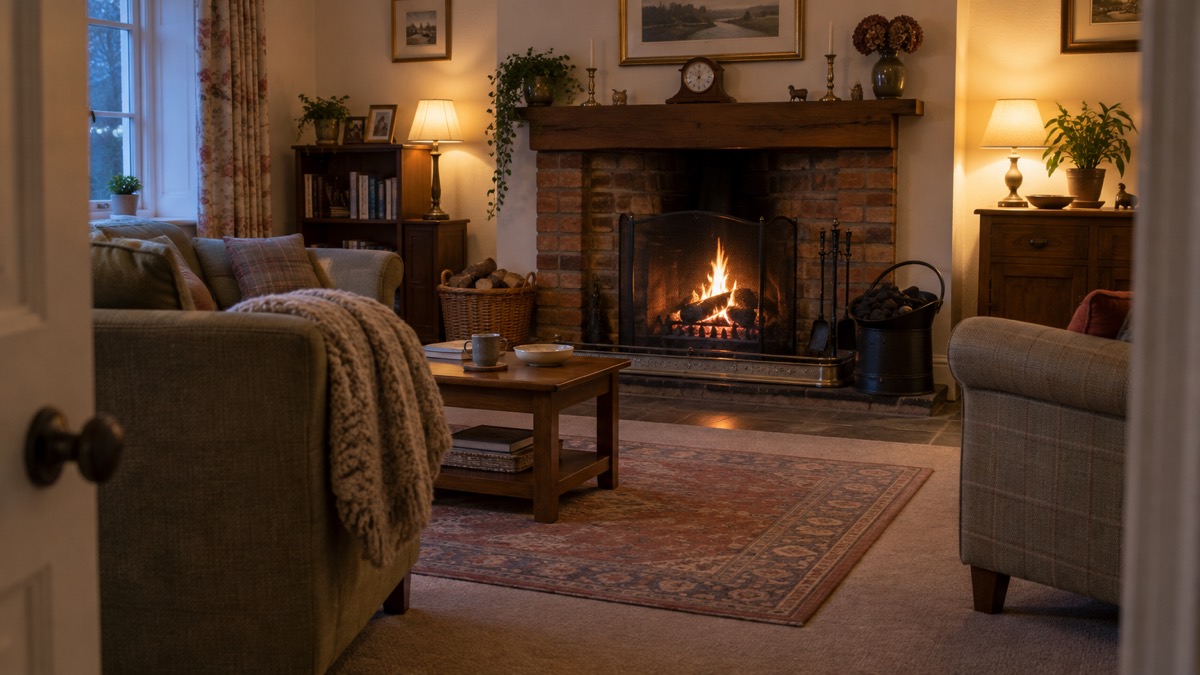
- Keep the fireguard in place. Use a fireguard and make sure your chimney is clean16. Use a spark guard when the fire is unattended to prevent embers setting fire to furnishings or carpets5.
- Never leave it unattended. Never leave an open fire unattended10. You should never leave your fireplace or stove unattended when burning, and always ensure you use a spark guard17.
- Put it out properly before you leave the room. Make sure the fire is put out properly before you leave the room18. Never leave fires unattended and make sure they are fully extinguished after use19.
- Do not let it smoulder. Allowing fires to smoulder for long periods is a known cause of chimney fires4.
If you are lighting the fire because the heating has failed, the fire is one part of a wider plan. Our guide to keeping one room warm when the heating fails explains how to concentrate heat where the household actually sits, and open fires: lighting, fire guards and staying safe covers the day-to-day routine.
Staying safe while the fire is in use
An open fire is a controlled flame in the middle of a room, and most of the safety rules are about keeping it controlled. Fire and rescue services repeat the same short list: sweep your chimney, use a fireguard, and make sure the fire is put out properly before you leave the room18. Take care around open fires, use a fireguard and make sure your chimney is clean16.
The main dangers are these:
- Embers escaping the grate. A spark guard stops embers reaching furnishings or carpets5. Never leave a lit fire unattended without a fireguard6.
- Flammable material too close. Keep curtains, furniture and decorations clear of the fireplace10.
- A smouldering fire. Allowing fires to smoulder for long periods causes chimney fires4. Burn bright and let it die down properly rather than banking it up overnight.
- A chimney fire going unnoticed. Learn the warning signs, covered below.
Warning signs of a chimney fire
A chimney fire is not always obvious from the room. Fire and rescue guidance lists flames visible through tiny cracks in the outlet or connector as one warning sign20. If you suspect a chimney fire, get everyone out of the house and call 999.
If you have a conventional open fire, guidance says you can extinguish the fire by gently splashing water onto the open fire5. After a chimney fire, put a metal bucket half full of water in the fireplace to catch hot debris and place a fireguard in front of the fireplace21. Do not use your fire or wood burner again after you have had a chimney fire until you have had the chimney inspected1.
Our guide to chimney fires: causes, warning signs and what to do covers this in full, and home emergencies: fire, carbon monoxide, gas leaks and burst pipes covers the wider household response.
Where the rules differ across the UK
The fire and rescue service is devolved, so the wording of the advice varies between the four nations, though the substance is the same. The table below shows which service publishes the guidance cited on this page.
| Nation | Service whose guidance is cited here |
|---|---|
| England | Cornwall Fire and Rescue Service5, Derbyshire Fire and Rescue Service22, Manchester Fire and Rescue Service8, Surrey Fire and Rescue Service17, Warwickshire Fire and Rescue Service10 |
| Wales | North Wales Fire and Rescue Service4, Mid and West Wales Fire and Rescue Service6 |
| Scotland | Scottish Fire and Rescue Service6 |
| Northern Ireland | Northern Ireland Executive (nidirect)23 |
The core advice is consistent: sweep before use, use a fireguard, never use flammable liquids, never leave a fire unattended, and have the chimney inspected after a chimney fire1. If you are unsure which rules apply to your home, your local fire and rescue service is the body to ask.
If you need help or the fire has gone wrong
If a fire gets out of control, get out of the house and call 999. Do not go back inside for possessions. Once the fire is out, the fire service's after-the-fire guidance covers what to do next, including putting a metal bucket half full of water in the fireplace to catch hot debris and placing a fireguard in front of the fireplace21.
If you are reopening a fireplace and are not sure who to ask, start with a professional, accredited chimney sweep, who can check and sweep the flue and tell you whether further work is needed2. Fire and rescue services advise that a professional should carry out any reopening work1.
For households that need extra help, for example because of age, disability or a medical condition, our guide to extra help in an emergency explains the support available. If the fire is part of a wider plan for heating without mains power or gas, start with heating and cooking without mains power or gas, and use the before-winter checklist for your heating and stove to get the whole system ready before the cold arrives.
Sources (23)
- Heating your home safely, North Yorkshire Fire and Rescue Service, 2026-03-09
- Fire safety checklist, Devon and Somerset Fire and Rescue Service, 2026
- Stay warm safely in winter, Devon and Somerset Fire and Rescue Service, 2026
- Chimney fires, North Wales Fire and Rescue Service, 2026-10-28
- Chimney fires, Cornwall Fire and Rescue Service, 2026-10-29
- Chimneys, open fires and wood burning stoves, Mid and West Wales Fire and Rescue Service, 2026-10-29
- Chimney fire safety advice, Warwickshire County Council, 2026-10-29
- Stay fire safe, Greater Manchester Fire and Rescue Service, 2026-10-29
- Wood as fuel, Forest Research, 2009-10
- Safe home heating, Warwickshire County Council, 2026-10-29
- Kitchen safety | Scottish Fire and Rescue Service, Scottish Fire and Rescue Service
- Home safety partnerships, Devon and Somerset Fire and Rescue Service, 2026
- Stay safe this winter, North Wales Fire and Rescue Service, 2016
- Autumn safety, Mid and West Wales Fire and Rescue Service, 2026-10-29
- Firepit safety advice, Mid and West Wales Fire and Rescue Service, 2026-10-29
- Winter safety, North Wales Fire and Rescue Service, 2026-10-29
- Fire safety at home, Surrey County Council, 2026-10-15
- Keeping your home warm in winter, Met Office, 2026-10-26
- Heath fires and countryside safety, Dorset and Wiltshire Fire and Rescue Service, 2026-05-05
- Open fires, Devon and Somerset Fire and Rescue Service, 2026
- After the fire, Mid and West Wales Fire and Rescue Service, 2013-03-11
- Snow buddies, Derbyshire County Council, 2026-10-29
- Avoiding accidental fires at home, nidirect, 2025-10-16
 Before-Winter Heating Checks
 Backup Stove Kit Checklist
 Wood Burner Lighting Kit
 Heating a Home with the Oven
 Paraffin Heater Indoors
 Changing an LPG Cylinder Safely
 Storing Gas Cylinders at Home
 Wood You Should Never Burn
 Disposing of Ashes Safely
 Oil Tank Leaks After a Storm
 Trangia Spirit Burner Fuel