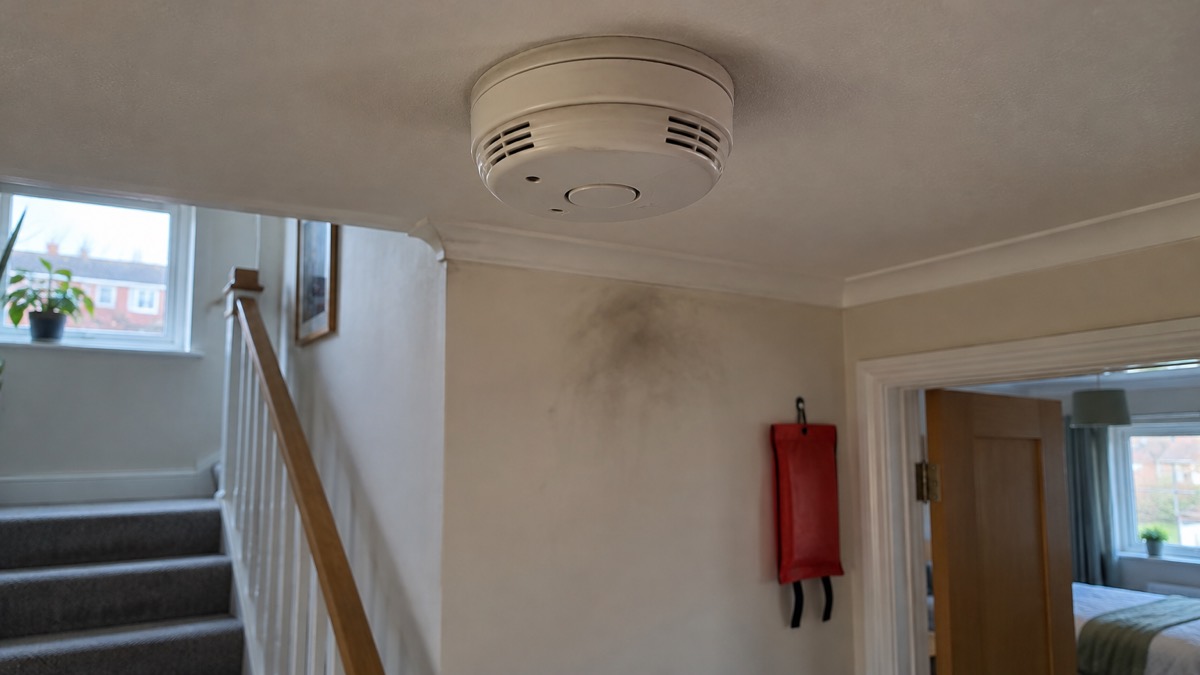
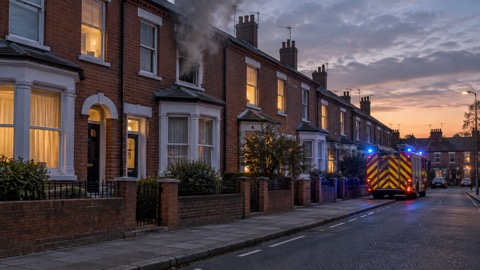
If a fire breaks out in your house, the advice is the same: get out, stay out and call 9991. Once you are outside, stay outside: 999 calls are free, so call as soon as you are clear of the building3.
If you can, close doors behind you as you leave. Even an ordinary door can hold back a fire long enough for firefighters to put it out before it destroys your property1. Do not re-enter your home until the fire service has declared it safe4. This page sets out what to do in the first minutes of a fire, what to tell the 999 operator, what to do if your way out is blocked, and the first steps to take once the fire is out, including when you can go back in and what to do if you cannot stay in the property.
Get out, stay out, call 999
The instruction is deliberately short so that it works when you are frightened. Fire and rescue services across England, Scotland, Wales and their partners all give the same message: get out, stay out and call 9991. Cheshire Fire and Rescue Service adds the part people most want to ignore: do not stop to collect anything7. Essex Prepared puts the reason plainly: do not waste time investigating what has happened or rescuing valuables6.
The order matters. You get out first, then you call. Call 999 and ask for the fire and rescue service5. You can call from a mobile, a neighbour's phone or a phone box11.
Two things you do on the way out can make a real difference to what is left of your home afterwards:
- Close doors behind you as you leave. Even a regular door can stop the spread of fire for long enough to allow firefighters to extinguish it before it destroys your property1.
- If possible, close the door to the room where the fire is, and close all doors behind you as you leave, to delay the spread of fire and smoke12.
Once you are out, stay out. The Scottish Fire and Rescue Service repeats this in its emergency guidance: once you are out, stay out13. Every minute you spend back inside is a minute of smoke inhalation and of a fire growing between you and the exit. Firefighters arrive with breathing apparatus and protective clothing; you do not.
If the fire is a cooking fire, the sequence is the same with one addition. Devon and Somerset Fire and Rescue Service advises: leave the room, close the door, get everyone out of your home and stay out, then call 999. Do not go back inside until the fire service tells you it is safe to do so14.
Making the 999 call: what to tell the operator
Once you are clear of the building, call 999 and ask for the fire and rescue service5. The operator will need certain things from you, and knowing them in advance makes the call quicker and calmer. Suffolk Fire and Rescue Service lists what to give the operator12:
- Your full address.
- If you can, use the What3Words app to describe your location with only three words.
- Details of the building on fire, for example a two-storey house.
- Details of anyone still trapped in the building, and the room they are in.
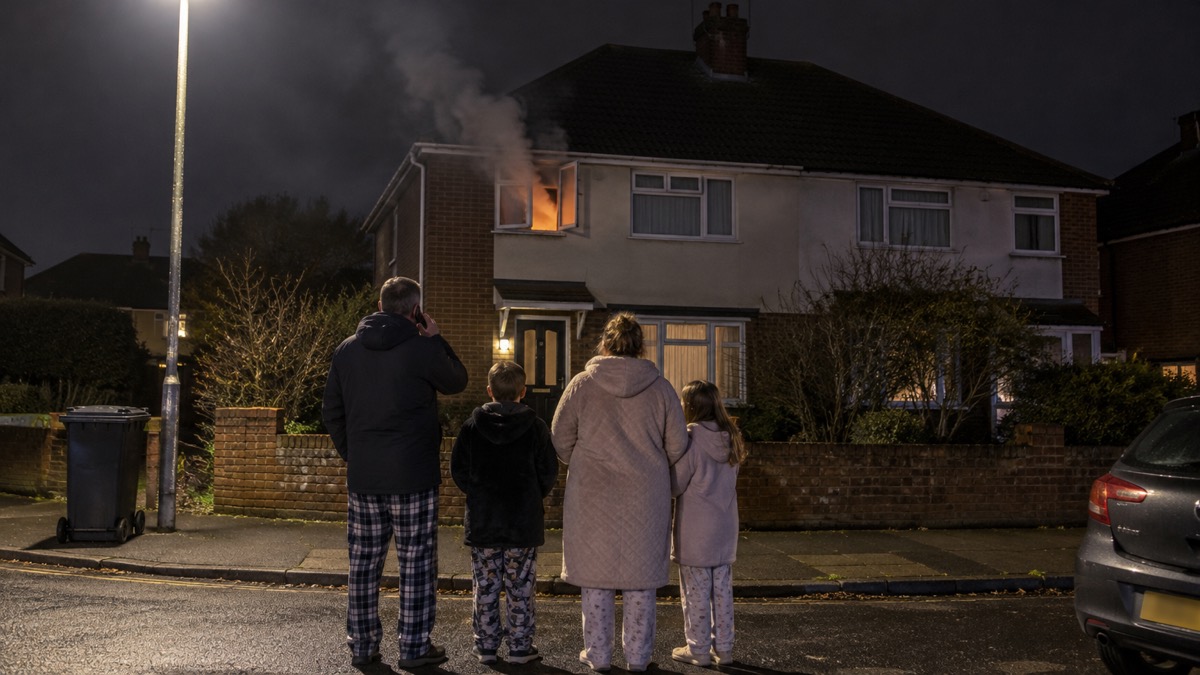
If you are calling from a mobile, a neighbour's phone or a phone box, give the address of the fire11.
If a child needs to make the call, the government's fire safety advice for parents and child carers teaches them to call 999, ask for the fire and rescue service, and tell the operator their address, and to call only in a real emergency15. Practising this with children, without actually dialling, is part of a good escape plan.
If you cannot get out: one room, a window and a phone
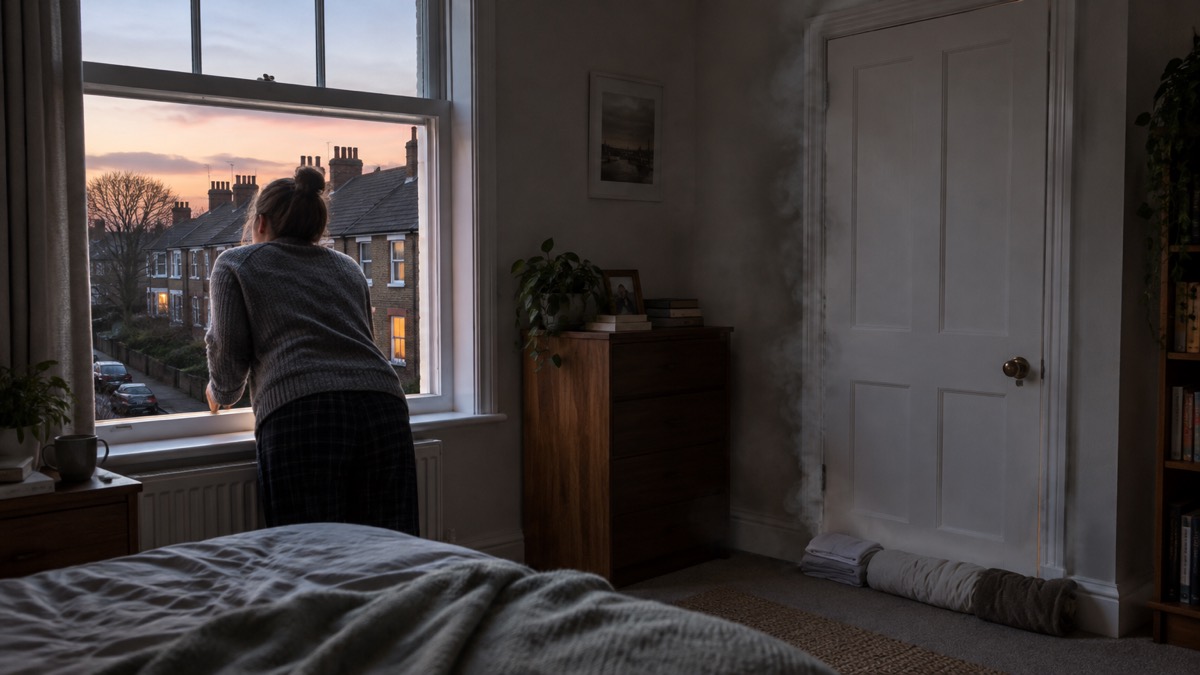
Sometimes the fire is between you and the front door. Every service gives the same fallback plan, and it is worth your whole household knowing it. Devon and Somerset Fire and Rescue Service advises: if you cannot get out, get everyone into one room, ideally with a window. Choose a room whose window opens easily and, if possible, has a phone for calling 9998. Essex Prepared says the same: if you cannot get out, get everyone into one room, ideally with a window and a phone16.
The Scottish Fire and Rescue Service calls this a "safe room": a room with a window and a phone, where you gather everyone9. Once everyone is together, the steps are:
- Get into the room and close the door.
- Pack clothes, cushions, pillows or towels around the door to keep smoke out10.
- Call 999, then open the window and shout "HELP FIRE"18.
- Keep leaning out of the open window for fresh air until the firefighters arrive10.
- If you are on an upper floor, do not jump. Wait for rescue19.
The Fire Kills campaign is blunt about the last point: if you are on an upper floor, do not jump, wait for rescue19. Firefighters reach upper floors with ladders and aerial platforms, and the smoke-filled room you are in is survivable for longer than a fall from a window.
If you have children, elderly or disabled people with you, plan the order you will escape in so that you can help them down16. The same advice appears in the Mid and West Wales Fire and Rescue Service guidance for Welsh speakers11. Our page on what to do if you cannot escape a fire covers this situation in more detail.
Some children may not wake to a smoke alarm
This is the fact that changes how households with children should plan. Official guidance from several sources warns that some children may not be woken by smoke alarms3. Devon and Somerset Fire and Rescue Service goes further, citing research conducted in 2017 which found that a smoke alarm would not wake the large majority of children20. The Scottish Fire and Rescue Service extends the warning to the very young and the elderly, who may not react to or hear a smoke alarm sounding, so you should not rely on smoke alarms alone10.
What this means in practice is that an adult has to be responsible for waking children and getting them out. It also shapes how you prepare:
- Get your children involved in testing your smoke alarm and talk to them about what to do if the smoke alarm sounds20.
- Make sure children know what your smoke alarms sound like when they go off; you can involve them in your monthly tests1.
- When you do your smoke alarm testing, also practise your escape plan with your child. This helps them get used to the sound, stay calm and know exactly what to do20.
The NHS home fire safety guidance for households adds the night-time rule: if any of your smoke alarms go off when you are asleep, follow your escape plan, get out and call 999; shout "FIRE" to warn others and do not stop to pick up valuables21. Closed doors at night will prevent the spread of fire, which is why a bedtime routine of closing doors and checking the cooker matters as much as the alarms themselves.
After the fire is out: going back in and securing your home
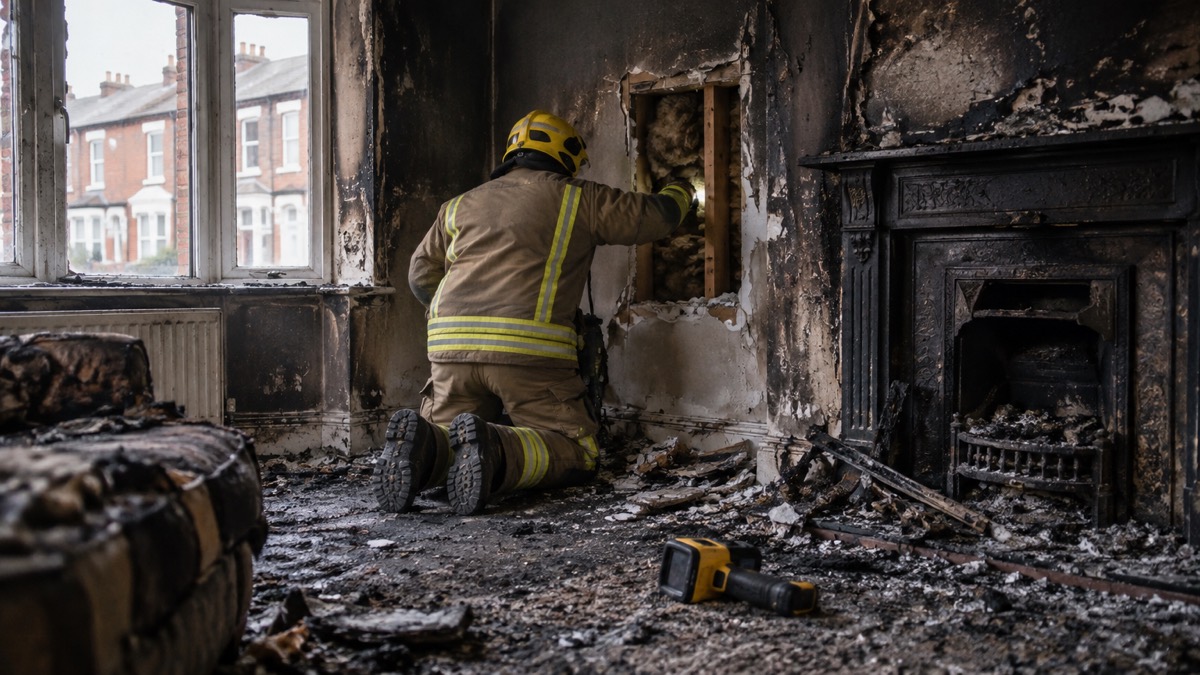
The fire service will tell you when it is safe to return. Warwickshire County Council's guidance on dealing with the aftermath of a fire is unambiguous: do not re-enter your home until it has been declared safe by the fire service4. North Yorkshire Fire and Rescue Service explains one reason why: crews may need to breach walls and ceilings to check for hidden fires, so after the fire the damage may appear excessive, and you may need to wear protective clothing and a hard hat to enter the property22.
Once the fire service has finished and left, there are practical steps to take. Warwickshire advises that if it is safe to do so, you remove essential documents, valuables and sentimental items from the fire-damaged property, and contact your local council for help if needed4. North Yorkshire adds that if you cannot stay in your property, you should remove all valuables and secure all doors, windows and access to your garden22.
The Mid and West Wales Fire and Rescue Service "After the Fire" booklet sets out the full checklist for a property that cannot be secured and must be left unattended23:
- Close and lock all doors and windows.
- Remove valuables and important documents.
- Seek alternative accommodation.
- Contact the local police station to make them aware that the property will be empty.
That last point matters: an unsecured, fire-damaged property is a target, and telling the police the house is empty is a simple step that costs nothing. If you need somewhere to stay, your local council is the first point of contact for help4, and the booklet's advice to seek alternative accommodation applies whether that is family, friends or council support23.
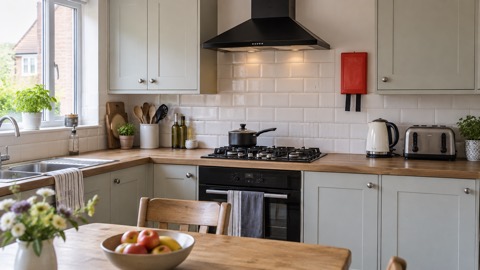
Cooking accidents start most home fires
The reason so much official advice centres on the kitchen is simple: cooking accidents are the main cause of fires in the home24. The figures vary slightly between sources because they cover different areas and years, but they all point the same way. HM Government guidance says around half of home fires are caused by cooking accidents3. Warwickshire's seasonal safety advice says more than half of accidental fires at home are started by cooking26. The West Mercia risk register puts cooking accidents at 59% of fires in the home27. Dorset and Wiltshire Fire and Rescue Service's seasonal advice says almost half of all accidental fires in the home are cooking related24.
Many kitchen fires start when you are not paying attention or if you leave things unattended26. The Fire Kills prevention advice gives the habits that prevent them25:
- Stay in the kitchen when you are cooking and never leave pans unattended, especially when frying or using high heat.
- Keep tea towels, cloths and packaging away from the hob and oven.
- Clean your cooker, grill and oven regularly.
- Check your cooker is off before going to bed or leaving your home.
Devon and Somerset adds two more: turn off the hob if you need to leave the room, and avoid cooking if you are tired or after drinking alcohol. It also suggests considering oven chips instead of a chip pan or deep fat fryer14. Warwickshire's advice to check that the oven or hob are switched off after you have finished cooking is the same habit stated for the end of cooking rather than the start26.
If a fire does start in the kitchen, do not try to fight it yourself. Get out, stay out and call 99924. Our pages on kitchen fires and chip pan fires cover the detail.
Planning an escape route with children
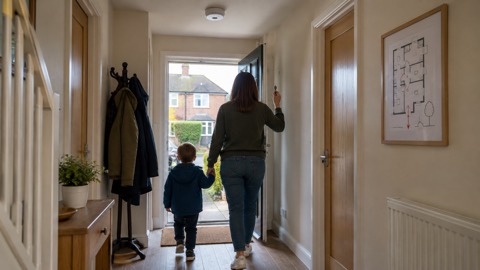
An escape plan is what turns the "get out" instruction into something your household can actually do in the dark. HM Government's fire safety advice for parents and child carers sets out the basics: plan an escape route and make sure that children and childminders or babysitters know it. Practise the escape plan together with children. Keep all exits clear, and keep door and window keys where childminders and babysitters can find them15.
The points that matter most with children in the house:
- Plan the order you will escape in, so that adults can help children, elderly or disabled people down16.
- Practise the plan when you test your smoke alarm, so children link the sound to the action20.
- Make sure anyone who looks after your children, including babysitters and childminders, knows the plan and can find the door and window keys15.
- Remember that some children may not wake to the alarm, so the plan must include an adult reaching them20.
The government's advice for children themselves is worth teaching directly: if you see smoke or flames, tell a grown-up straight away; get out of the building as quickly as you can; do not go back for anything, even toys or pets; find a phone; call 999 and ask for the fire and rescue service and tell them your address15. Our guide to making a fire escape plan walks through the whole process, and the fire safety checklist covers the rest of the home.
Returning to a property after any emergency
Much of what applies after a fire applies after any emergency that forces you out of your home: do not go back until the authority dealing with it says it is safe, remove valuables and essential documents if it is safe to do so, secure the property, and tell the relevant people it will be empty4. The same sequence of "get clear, get help, secure what you leave behind" runs through the getting started guide and the other pages in our home emergencies section, whether the cause is fire, a burst pipe or a gas leak.
The differences between the nations are small on this subject, because the core message is UK-wide. English services, the Scottish Fire and Rescue Service and Mid and West Wales Fire and Rescue Service all give the same instruction: get out, stay out and call 9999.
Frequently asked questions
Should I try to put out a small fire myself?
The strongest official advice is not to. Essex Prepared says: "Don't tackle fires yourself. Leave it to the professionals. Get out, stay out, call 999"6. The West Mercia risk register puts it as "don't tackle the fire yourself, however small it is"27. The Fire Kills escape guidance allows one narrow exception: do not tackle the fire yourself unless it is very small and you have a clear escape route19. Devon and Somerset's cooking advice and Dorset and Wiltshire's seasonal advice both say that if a fire starts, do not try to fight it yourself14. If in any doubt, leave it, close the door and call 999.
Can I go back in for pets or belongings?
No. Suffolk Fire and Rescue Service says do not stop to look for pets12, and the government's advice for children says do not go back for anything, even toys or pets15. Once you are out, stay out13. Do not re-enter your home until it has been declared safe by the fire service4. After the fire, if it is safe to do so, remove essential documents, valuables and sentimental items4, and if you cannot stay in the property, remove all valuables and secure all doors, windows and access to your garden22.
What should I tell the 999 operator?
Give your full address, use the What3Words app if you can to describe your location in three words, say what is on fire (for example a two-storey house), and say whether anyone is still trapped and which room they are in12. Ask for the fire and rescue service5. You can call from a mobile, a neighbour's phone or a phone box, and the call is free2.
How do I plan an escape route with children?
Plan the route, make sure children, childminders and babysitters know it, and practise it together15. Keep exits clear and keep door and window keys where carers can find them15. Plan the order you escape in so you can help children, elderly or disabled people down16. Practise the plan when you test your smoke alarm so children get used to the sound and know what to do20, and remember that some children may not wake to a smoke alarm20.
How can I prevent kitchen fires?
Cooking accidents are the main cause of fires in the home25, accounting for around half of home fires3 and 59% according to the West Mercia risk register27. Stay in the kitchen when cooking, never leave pans unattended, turn off the hob if you need to leave, and avoid cooking if tired or after drinking alcohol14. Keep tea towels and packaging away from the hob, clean the cooker regularly, and check it is off before bed or before leaving home25. Consider oven chips instead of a chip pan or deep fat fryer14.
Sources (27)
- Domestic fire: be informed about hazards, Prepare (UK government campaign), 2026
- Fire Kills campaign, Fire Kills (UK government campaign), 2026
- Fire safety in the home, HM Government, 2022
- Dealing with the aftermath of a fire, Warwickshire County Council, 2026
- Get out, stay out and call 999, North Wales Fire and Rescue Service, 2026
- House fire: what to do, Essex Prepared, 2026
- Be ready for emergencies, Cheshire Fire and Rescue Service, 2026
- If you have a fire, Devon and Somerset Fire and Rescue Service, 2026
- Escape plan at home, Scottish Fire and Rescue Service, 2026
- Your guide to fire safety, Scottish Fire and Rescue Service, 2023
- Diogelu eich cartref (protecting your home), Mid and West Wales Fire and Rescue Service, 2026
- In the event of fire in your house, Suffolk Fire and Rescue Service, 2026
- In an emergency at home, Scottish Fire and Rescue Service, 2026
- Cooking safety at home, Devon and Somerset Fire and Rescue Service, 2026
- Fire safety for parents and child carers, HM Government, 2022
- If you are trapped by fire, Essex Prepared, 2026
- House fire booklet, Suffolk Fire and Rescue Service, 2025
- Fire safety in the home booklet, Suffolk Fire and Rescue Service, 2021
- Escape: Fire Kills, Fire Kills (UK government campaign), 2026
- Talk to your children about fire safety, Devon and Somerset Fire and Rescue Service, 2026
- Home fire safety guide, Wales and West Housing and NHS, 2025
- Steps after a fire, North Yorkshire Fire and Rescue Service, 2026
- After the Fire booklet, Mid and West Wales Fire and Rescue Service, 2019
- Diwali fire safety advice, Dorset and Wiltshire Fire and Rescue Service, 2022
- Fire Kills prevention advice, Fire Kills (UK government campaign), 2026
- Christmas safety tips, Warwickshire County Council, 2026
- West Mercia risk register, West Mercia Area Resilience Forum, 2025
 Home Fire Safety Checklist
 Bedtime Fire Safety Checks
 Fire Risk Checks for Carers
 What to Do If Fire Starts
 How to Make a Fire Escape Plan
 Fire in a Block of Flats
 Kitchen Fires and Cooking Safety
 Electrical Fires and Sockets
 Smoking, Matches and Lighters
 E-bike Charging Safety
 Hoarding and Fire Risk
 Thatched Properties Fire Risk
 Fireworks and Bonfire Safety
 How Fire Services Respond
 Alarms for Deaf People