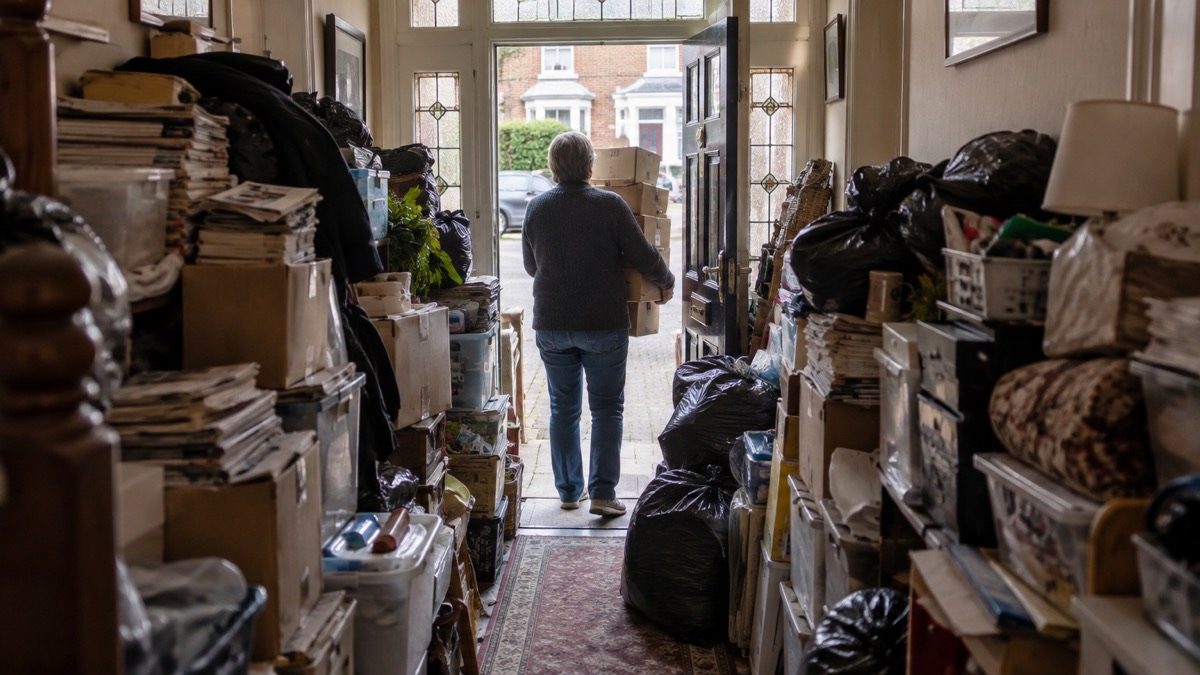
A home with heavy clutter is a serious fire risk, and every fire and rescue service that publishes guidance on hoarding says the same things about why. Hoarded possessions provide fuel, so a fire grows far faster than it would in a clear room. They block exits, so a fast escape becomes difficult or impossible. And they put the people who come to help, firefighters, in danger both in getting to the fire and through increased heat and smoke1.
The practical steps are straightforward and they matter even if the clutter itself cannot be sorted quickly. Keep hallways, doorways and windows clear. Never light candles or tea lights in a cluttered home, and never pile hoarded items near heaters, stoves or electrical outlets. Have working smoke alarms, test them weekly, and consider one in the bedroom and the room where you spend most time. And ask for help: hoarding is a recognised mental health condition, serious hoarding problems affect at least 2% to 5% of the population, and support runs from your GP to free home fire safety visits from your local fire and rescue service4.
Why a hoarded home is a serious fire risk
Fire and rescue services are blunt about this. Devon and Somerset Fire and Rescue Service states that hoarded homes are a fire risk, and that the number of possessions can lead to exit routes becoming blocked, making safe evacuation more difficult1. North Yorkshire Fire and Rescue Service adds that in homes where hoarding is present, fire prevention becomes even more crucial because of the increased risk that someone's possessions pose if a fire breaks out, and how much more quickly it will spread2.
The mechanics are simple, which is why the risk is so serious. Excessive clutter provides fuel for a fire to grow rapidly, and hoarding can block exits to the home, making a fast escape difficult4. The London Fire Brigade, writing for carers and support workers, explains that hoarded materials can easily catch alight if they come into contact with heat sources such as overloaded extension leads, the kitchen hob or naked flames like candles or cigarettes, and that fires can spread much faster where there are flammable items such as newspapers or cardboard3. Devon and Somerset's guidance for carers makes the same point in fire-service terms: hoarding disorders increase fire loading and risk, possessions can block exit routes, and fire spreads faster if doors cannot be closed and flammable items such as newspapers or cardboard are lying around11.
Cheshire Fire and Rescue Service summarises the whole picture: high levels of clutter make it easier for a fire to start and spread quickly, and can block escape routes7. An easy-read fire safety booklet from the London Fire Brigade puts it in the plainest words of all:
"If you keep lots of items in your home, it could make a fire spread quicker and block your escape route. It could stop you getting out safely."
Hoarding also sits on the wider list of factors that raise a person's fire risk. Devon and Somerset lists eight factors shown by research to increase the likelihood of having a fire, including smoking, limited mobility, living alone, mental health concerns, poor housekeeping such as hoarding or blocked escape routes, and not having a working smoke alarm11. Surrey's guidance adds a longer list of risk factors that includes hoarding alongside being over 60, living alone, difficulty escaping, previous fire or scorch marks, and mental health conditions such as dementia or depression13. None of these factors means a fire is inevitable, but together they explain why fire services treat a cluttered home as a priority for a visit rather than a private matter.
If you want to act on this today, the single most useful step is to read our guide to how to make a fire escape plan alongside this page, and to request a home fire safety visit, covered below.
Keep hallways, doorways and windows clear for escape
The clearest, most repeated instruction across every fire and rescue service is to keep the way out clear. North Yorkshire Fire and Rescue Service: keep escape routes, doors and hallways clear of clutter to ensure safe evacuation in case of fire2. Warwickshire Fire and Rescue Service: keep hallways, doorways, and windows clear of clutter to ensure easy evacuation and access for emergency services4. Cheshire Fire and Rescue Service: plan and practise your escape route and keep it clear at all times, noting that a clear route will also help firefighters get to you7.
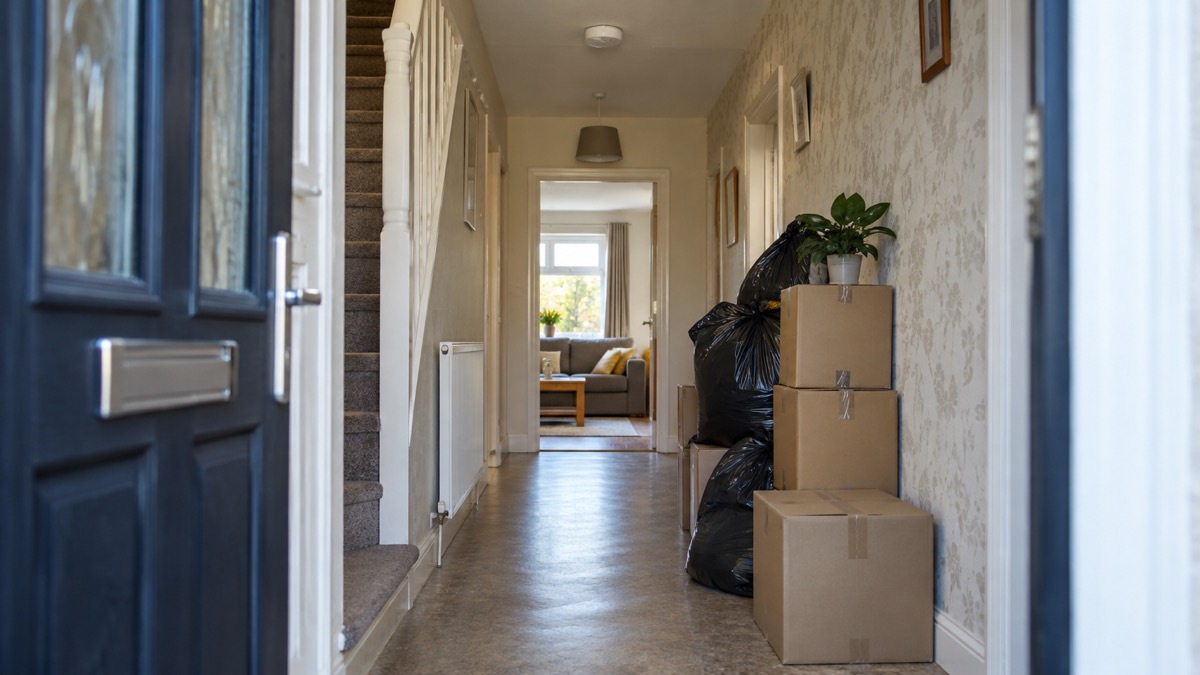
Beyond the front door, the same rule applies to shared spaces. South Wales Fire and Rescue Service tells residents of high-rise buildings to keep hallways and stairs clear of all obstructions14, and North Yorkshire Fire and Rescue Service asks people to check there is nothing in corridors or stairways that could catch fire, like boxes or rubbish15. Warwickshire's advice for high-rise residents is to keep corridors, stairwells, and fire exits clear of flammable materials and clutter16. The London Fire Brigade's guide for people living above business premises warns that it is really dangerous to use shared hallways or emergency exits as extra storage, because it can block escape routes for people upstairs and downstairs, especially if the stored items are flammable17.
Two smaller points from official guidance make a real difference in a fire:
- Keep door and window keys accessible, and avoid keeping them in the kitchen, because this is where most fires in the home start. This advice appears in Greater Manchester Fire and Rescue Service's guidance for flat residents18 and is repeated in its Stay Safe policy information, which also asks residents to keep hallways and doorways free from clutter, including in communal areas, and to report discarded rubbish to their landlord or management agency19.
- Make sure everyone in the home can easily find the keys for doors and windows. North Wales Fire and Rescue Service pairs this with keeping the exits from your home clear so that people can escape if there is a fire20.
Fire and rescue services across the UK make the same point about escapes: keep all exits clear of obstructions, like bicycles, make sure stairways and fire escapes are kept clear of all obstructions, and never lock fire doors21. The same advice extends to the whole route out: keep hallways, doorways and windows clear of clutter so that evacuation is easy and emergency services can get in22, and make sure exits are kept clear as part of a bedtime check23. If clutter has already taken over the hallway, start with a single-width walking path from every bedroom to the outside door: that alone converts a blocked escape into a usable one, and it is the first thing a home fire safety visit will look at.
No candles, tea lights, or clutter near heat sources
A cluttered home and an open flame do not mix, and the fire and rescue service instruction here is absolute. The London Fire Brigade's guidance on hoarding disorder tells carers to encourage the person not to light candles or tea lights of any kind, and offers a safer option: use LED flameless candles3. Devon and Somerset Fire and Rescue Service repeats the same instruction for carers of people who hoard8.
The general candle rules still apply in any home, but in a cluttered one the margin for error disappears. Essex Prepared lists candles among the causes of house fires and advises never leaving them unattended24. Wiltshire and Swindon Prepared advises putting candles in a holder, keeping them away from things that may burn, and never leaving them burning when you are not in the room25. Devon and Somerset Fire and Rescue Service advises students and others to avoid burning candles or incense inside the house as they are a risk of fire26.
The same separation applies between stored items and anything hot. North Yorkshire Fire and Rescue Service states that hoarded items should never be piled near heat sources, such as heaters, stoves, or electrical outlets, as this increases the risk2. Northern Ireland Fire and Rescue Service gives the fullest checklist for a hoarded home, and it is worth setting out in full9:
- Keep the area around the cooker clear.
- Do not have combustible items close to portable heaters or open fires and stoves.
- Do not stack items to a height that they become unstable.
- Do not store gas cylinders in your home.
- Ensure all internal doors can be closed.
- Plan and practise your escape, and keep the escape route clear.
- Have working smoke alarms, and consider one in the bedroom and the room where you spend most time.
The point about internal doors matters more than it looks: fire spreads faster if doors cannot be closed11, and in a heavily cluttered room a door that cannot open fully or close fully removes one of the few barriers available. Cooking deserves its own attention, since Greater Manchester Fire and Rescue Service notes that most fires in the home start when people are cooking27; our guide to kitchen fires covers that in detail, and overloaded extension leads, the other ignition source the London Fire Brigade names alongside candles and cigarettes3, are covered in electrical fires.
Trips, falls, and getting out safely
Clutter hurts people before any fire starts. North Wales Fire and Rescue Service states plainly that in hoarded homes, trips and falls are more common, and the risk of a serious fire is also escalated6. A fall in a cluttered home is not only an injury in itself: it can block the one usable path to the door, and it can leave someone on the floor between the fire and the exit.
This is why the escape advice above comes first, and why the fire service's instruction on what to do once you are out is equally firm. Cheshire Fire and Rescue Service's hoarding guidance ends with a rule that applies in every fire: do not go back inside for belongings7. In a hoarded home the temptation can be strongest, because the possessions inside carry deep personal meaning, but the fire will be spreading faster than in a clear home3, and the route back in may not be the route out.
For a household supporting someone who hoards, the practical checks are the same ones our fire risk checks for a vulnerable person's home walk through: is there a clear path from the bed to the door, can the door open fully, are the keys where they can be found in the dark, and is there a smoke alarm that works. Northern Ireland Fire and Rescue Service recommends contacting your GP or local Health Trust for help or assistance with hoarding9, which is where the next sections lead.
The danger to firefighters getting in and working inside
A hoarded home endangers the people who respond to it. Devon and Somerset Fire and Rescue Service states that the presence of vast amounts of hoarded material creates a risk to firefighters, both in getting to the fire and through increased heat and smoke5. The same guidance notes a related hazard for households that use medical oxygen: the presence of medical oxygen cylinders poses a risk to firefighters and the user in the event of a fire, because the heat can cause the cylinders to explode11. If anyone in the home uses oxygen therapy, tell the fire and rescue service when you request a home fire safety visit, and read our page on fire safety when someone uses oxygen therapy.
This is not background information about how the service works; it changes what a household should do. A clear escape route helps firefighters get to you7. Internal doors that can be closed slow the fire's spread11. And a home fire safety visit, which firefighters carry out precisely so they understand a home before an emergency, lets them identify hazards such as overloaded plug sockets, cooking hazards or heating hazards and help make these safe28. Firefighters cannot safely fight a fire they cannot reach through clutter, so every metre of cleared hallway protects the residents first and the responders second.
At least 2% to 5% of people have a serious hoarding problem
Hoarding is far more common than most people assume. North Wales Fire and Rescue Service states that estimates suggest serious hoarding problems are present in at least 2% to 5% of the population6. Mid and West Wales Fire and Rescue Service gives the same figure in its hoarding booklet29, and Devon and Somerset Fire and Rescue Service puts it in human terms: hoarding is highly prevalent, at approximately 2 to 5% of the population, which is potentially over 1.2 million people5.
It is also a recognised condition, not a lifestyle choice or a failure of tidiness. Estimates suggest that serious hoarding problems are present in at least 2% to 5% of the population5. The pattern is consistent: a person collects and keeps a lot of items, even things that appear useless or of little value to most people; the items clutter living spaces and keep the person from using rooms as intended; and the collection causes distress and affects day-to-day activities6.
Two facts from official guidance help relatives understand what they are seeing. The difficulties with hoarding can start in the early teenage years, but people may not seek help for hoarding for decades afterwards6. And particular life events can contribute: the death of a loved one, divorce, eviction or losing one's possessions in a fire5. This is why hoarding often appears or worsens in later life, often alongside the very factors, living alone, limited mobility, mental health conditions, that raise fire risk11.
Getting help: your GP, mental health support and your fire service
Help comes from two directions, and households need both. For hoarding itself, the route runs through health services rather than through willpower or a clear-out imposed by others. Hoarding is a condition in which a person collects and keeps a lot of items, even things that appear useless or of little value to most people; the items clutter living spaces and keep the person from using rooms as intended; and the collection causes distress and affects day-to-day activities6. Because it causes distress and affects daily life, it is a health matter to raise with your GP, not a character fault, and treatment addresses the collecting behaviour rather than just the clutter it leaves behind.
For the fire risk, the route is your local fire and rescue service, and its core offer is free.
The free home fire safety visit. The Fire Kills campaign explains that during a visit, firefighters will identify fire risks in your home, provide tailored fire safety advice, fit smoke alarms free of charge if needed, and create a fire escape plan with you. Your local fire and rescue service may offer one if you or someone you know may be particularly vulnerable to fire due to age, mobility or mental health10. Greater Manchester Fire and Rescue Service calls its version a Home Fire Safety Assessment, and during the visit staff look around the home to identify hazards such as overloaded plug sockets, cooking hazards or heating hazards and help make these safe; they may fit free smoke and heat alarms depending on the fire risk, and they also help householders access support from other services for issues that underpin fire risk, such as mobility, mental health, memory impairment, substance use and smoking28.
Requesting a visit when you see the warning signs. Devon and Somerset Fire and Rescue Service is specific about when to act: when you see clutter in a home that includes hazardous or highly flammable materials, or where items are stored close to ignition sources such as gas fires or cookers, you should request a home fire safety visit11. North Yorkshire Fire and Rescue Service tells carers directly: book them a home fire safety visit2.
Support groups. From January 2024, Warwickshire Fire and Rescue Service has offered hoarding support groups, which enable people to discuss their hoarding behaviour, in venues across the county, with signposting to additional support4. Ask your own fire and rescue service what exists locally; the pattern of fire services working alongside mental health services is growing.
For carers and relatives. The London Fire Brigade advises carers and support workers to consider training to help them spot signs that may indicate the person they care for is at risk of injury from fire, and to learn what steps they can take to reduce those risks3. Dorset and Wiltshire Fire and Rescue Service advises support workers to make sure fire risk is included in the care plan, including using fire retardant bedding, appropriate management of emollient creams, emptying ashtrays and checking smoke alarms31. During the COVID-19 pandemic, the Northern Ireland Fire and Rescue Service urged people to check in with older neighbours and family members, and those more at risk from fire, to make sure they are aware of the obvious dangers in their home and have a fire escape plan32. That advice holds at any time.
Smoke alarms in a cluttered home
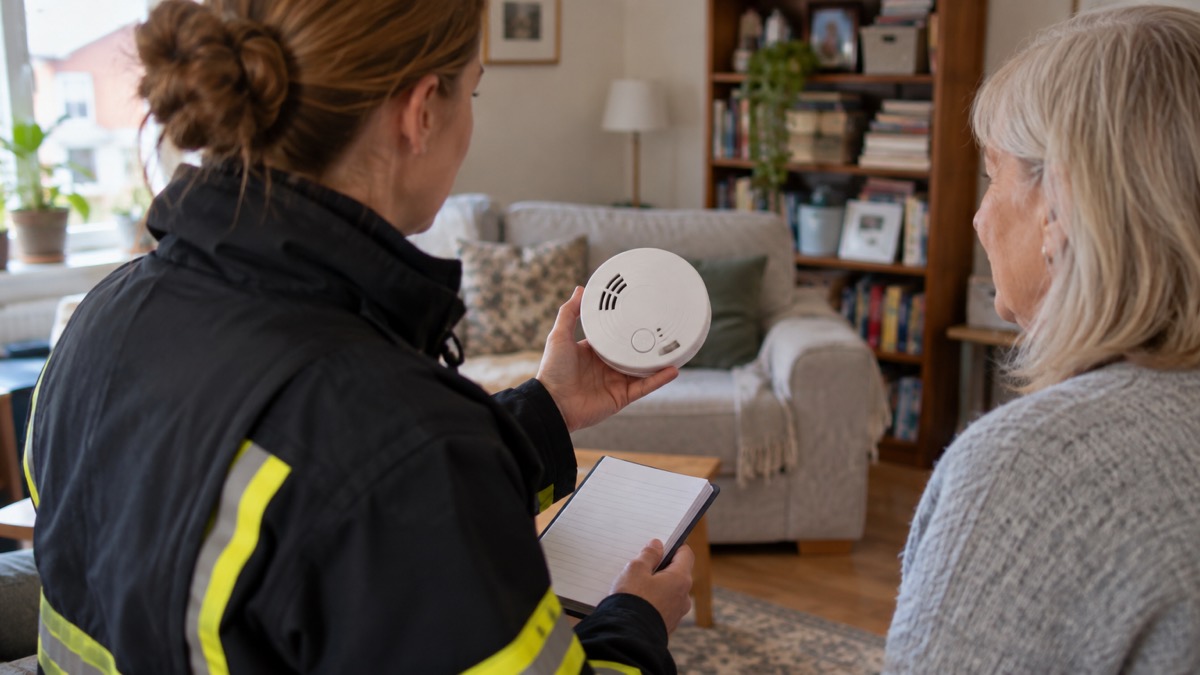
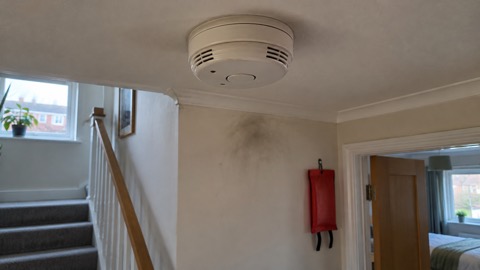
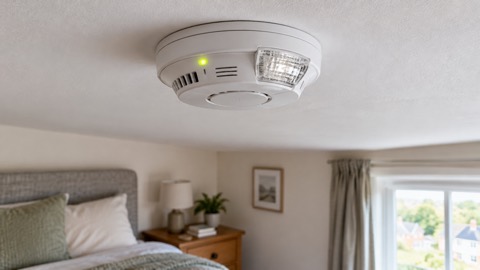
Alarms matter more, not less, when there is more fuel in the home. Northern Ireland Fire and Rescue Service's hoarding guidance is to have working smoke alarms and to consider a smoke alarm in the bedroom and the room where you spend most time9. Greater Manchester Fire and Rescue Service gives the general rule that supports this: fit additional alarms in other rooms that are regularly inhabited and where there could be a risk of a fire starting30. Our pages on smoke alarms, where to fit them and how many a house or flat needs cover the choices in detail.
Testing is the habit that keeps all of this real. The Northern Ireland Fire and Rescue Service's pandemic advice was to make sure people more at risk from fire have a smoke alarm that they test weekly32, and that weekly test is the one action that costs nothing and catches the failure before it matters. If the person cannot reach the alarm to test it, that is exactly what a home fire safety visit is for: firefighters will check alarms and may fit free ones10.
What to do now: a short list
- Request a free home fire safety visit from your local fire and rescue service, for yourself or, with their agreement, for someone you support10.
- Clear a full walking path from every bedroom to the outside door, and keep hallways, doorways and windows clear2.
- Remove candles and tea lights from the home and replace them with LED flameless candles3.
- Move hoarded items away from heaters, stoves, electrical outlets and the cooker, and do not stack them to an unstable height2.
- Make sure internal doors can close, and that door and window keys are accessible and not kept in the kitchen9.
- Fit and test smoke alarms, including in the bedroom and the room where most time is spent9.
- Contact your GP or local Health Trust for help with hoarding itself9.
- Plan and practise the escape route, and never go back inside for belongings7.
For what to do in the moment a fire starts, read what to do if a fire starts in your house, and for the wider set of checks, our fire safety checklist and bedtime fire safety checks.
Sources (32)
- Hoarding, Devon and Somerset Fire and Rescue Service
- Hoarding fire safety advice, North Yorkshire Fire and Rescue Service
- Hoarding disorder: guidance for carers and support workers, London Fire Brigade
- Hoarding fire safety, Warwickshire Fire and Rescue Service
- Hoarding, Dorset and Wiltshire Fire and Rescue Service
- Hoarding, North Wales Fire and Rescue Service
- Clutter and hoarding fire risk, Cheshire Fire and Rescue Service
- Hoarding, Devon and Somerset Fire and Rescue Service
- Home fire safety, Northern Ireland Fire and Rescue Service
- Prevention: home fire safety visits, Fire Kills campaign
- Home safety partnerships, Devon and Somerset Fire and Rescue Service
- Easy-read fire safety booklet, London Fire Brigade
- Smoke alarms, Surrey County Council
- High-rise living, South Wales Fire and Rescue Service
- Bedtime route and escape plan, North Yorkshire Fire and Rescue Service
- Fire safety advice for residents in high rise buildings, Warwickshire Fire and Rescue Service
- Living above business premises fire safety guide, London Fire Brigade
- Fire safety information for residents living in flats, Greater Manchester Fire and Rescue Service
- Stay Safe policy information for flat residents, Greater Manchester Fire and Rescue Service
- Keeping you safe at home, North Wales Fire and Rescue Service
- Escape plan, Cornwall Fire and Rescue Service
- Plan your escape, Staffordshire Fire and Rescue Service
- Escape plan, Devon and Somerset Fire and Rescue Service
- Home safety advice, Essex Prepared
- Cut the risk of fire in your home, Wiltshire and Swindon Prepared
- Student safety, Devon and Somerset Fire and Rescue Service
- Stay fire safe, Greater Manchester Fire and Rescue Service
- Home Fire Safety Assessment, Greater Manchester Fire and Rescue Service
- Hoarding booklet, Mid and West Wales Fire and Rescue Service
- Smoke and heat alarms, Greater Manchester Fire and Rescue Service
- Advice for carers, Dorset and Wiltshire Fire and Rescue Service
- Rise in smoking-related fires in the home during COVID-19, Northern Ireland Fire and Rescue Service, 2020
 Home Fire Safety Checklist
 Bedtime Fire Safety Checks
 Fire Risk Checks for Carers
 What to Do If Fire Starts
 How to Make a Fire Escape Plan
 Fire in a Block of Flats
 Kitchen Fires and Cooking Safety
 Electrical Fires and Sockets
 Smoking, Matches and Lighters
 E-bike Charging Safety
 Thatched Properties Fire Risk
 Fireworks and Bonfire Safety
 What to Do After a House Fire
 How Fire Services Respond
 Alarms for Deaf People