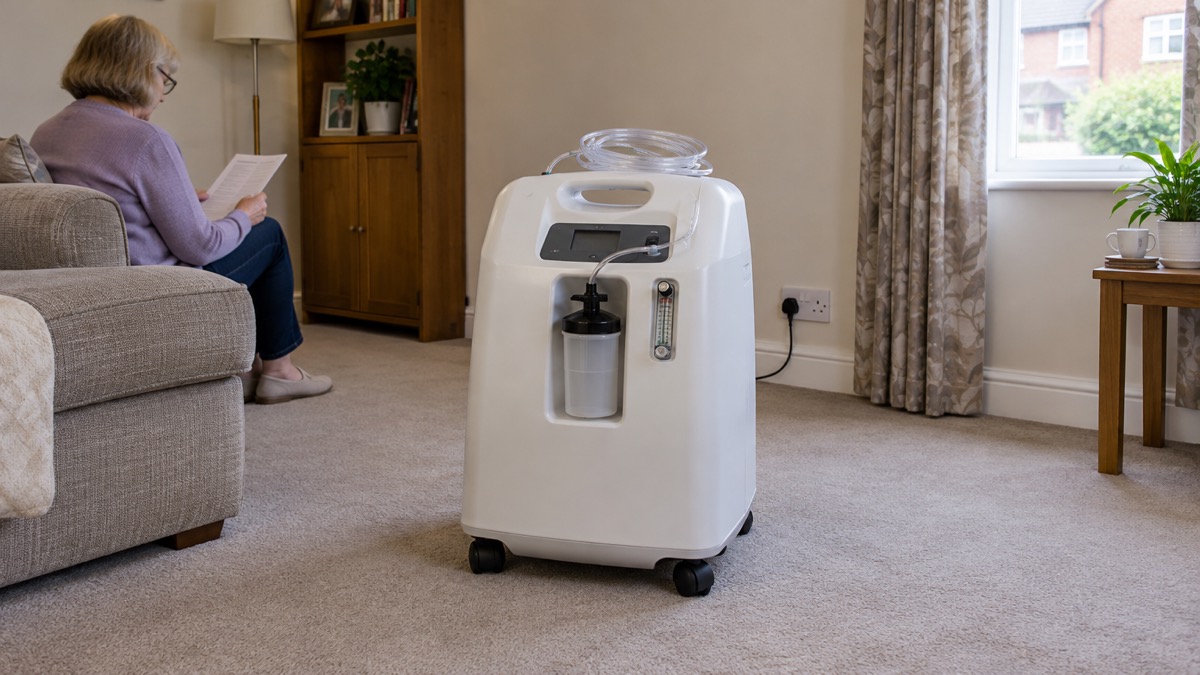
Oxygen therapy keeps people out of hospital and at home, but it changes how fire behaves in that home. Oxygen itself is not flammable, yet it creates an oxygen-enriched environment in which fires start more easily and burn much faster and hotter1. Even at low flows it can saturate clothing, furniture and carpets, so a small flame that would normally smoulder can spread rapidly2.
The practical rules are simple. Never smoke or allow anyone else to smoke near the equipment, and never smoke in bed3. Keep oxygen equipment away from fires, heaters and naked flames, and keep tubing clear of gas fires, cookers and candles4. Turn the supply off when you have finished using it6. After you switch off, oxygen can remain in clothing for up to 20 minutes, so ventilate clothing in the open air for at least 20 minutes before going near a flame or ignition source5.
A free home fire safety visit from your local fire and rescue service can check your home, give advice and fit smoke alarms where needed7. Each floor of your home should have a working smoke alarm, tested at least once a month6. If a fire starts, get out, stay out and call 9998.
Oxygen is not flammable, but it makes fires start more easily and burn faster
This is the fact that makes every other rule on this page make sense. Oxygen is not itself a fuel, but it can create an oxygen-enriched environment, which means fires can start more easily and burn much faster and hotter1. Fire services put it more strongly: oxygen significantly increases flammability, making materials that would not typically catch fire easily much more combustible3. It supports combustion and can accelerate fire incidents10.
The reason is that extra oxygen in the air makes a fire burn more quickly11. Oxygen, even at low flows, can saturate everyday items such as clothing, furniture and carpets, creating an environment where fires can ignite and spread rapidly2. The oxygen-rich atmosphere stays within clothing and furnishings, which creates an increased risk of rapid fire spread and is a particular risk for smokers6.
That last point matters because of who uses home oxygen. It is prescribed for conditions such as COPD, emphysema, cystic fibrosis, chronic asthma, lung cancer and other lung disorders5. Many of those conditions are smoking-related, and fire services note that users often continue to smoke, even though oxygen is a gas that helps things burn and can react explosively when dirt, grease or naked flames are exposed to it12.
The window of danger is wider than the time the machine is running. A fire can start and spread extremely quickly if a heat or ignition source, such as a cigarette, heater, candle or even static electricity, is present while oxygen is in use or within 30 minutes after it is switched off1. Treat the room as an oxygen-rich space for half an hour after the equipment stops.
No smoking near oxygen, and 30 minutes before you use it again
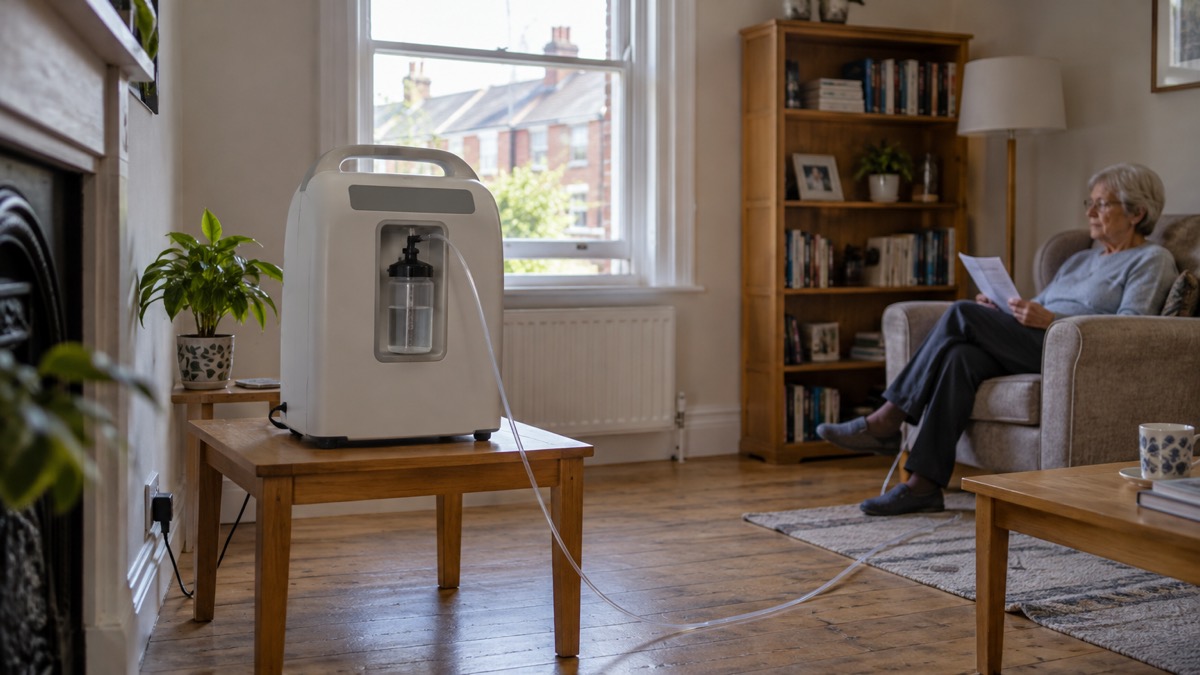
Smoking is the single biggest danger in a home with oxygen. Never smoke or let anyone else smoke while you are using oxygen13. Never smoke, or let anyone else smoke near you, while using your oxygen equipment, and never smoke in bed3. Never smoke while using oxygen or emollients14.
The 30-minute rule runs in both directions. Do not use your oxygen supply for at least 30 minutes after you have finished smoking, to reduce your risk6. And allow at least 30 minutes after you have removed your oxygen before cooking15. If you are a carer, talk to the person you care for about the fire risk of introducing an ignition source close to their oxygen or in an oxygen-enriched environment, especially staying away from smoking materials, naked flames and open fires16.
Northern Ireland Fire and Rescue Service sets out the smoking rules in full, and they are worth reading even if you live elsewhere:
Smoking materials are a leading cause of house fires17. In an oxygen-rich room they are far more dangerous, because bedding, clothing and upholstery that have absorbed oxygen will catch and spread fire much faster than usual2.
Oxygen stays in clothing for up to 20 minutes after you turn it off
Turning the equipment off does not make the room safe straight away. Oxygen can remain in clothing for up to 20 minutes after the oxygen equipment has been turned off, and fire services advise ventilating your clothing in the open air for at least 20 minutes before smoking or going near an open flame or source of ignition3. Greater Manchester Fire and Rescue Service gives the same figure: oxygen will remain in clothing for up to 20 minutes after the home oxygen equipment has been turned off, so always ventilate clothing in the open air for at least 20 minutes before smoking or going near an open flame or ignition source5.
Some fire service guidance says to stay away from smoking for at least 30 minutes after the equipment is switched off, while other guidance gives 20 minutes for clothing. Where the two figures differ, follow the longer one: keep away from flames and cigarettes for at least 30 minutes after switching off, and air clothing outside for at least 20 minutes.
The same logic applies to soft furnishings. Because oxygen saturates furniture and carpets as well as clothing2, a cushion or blanket that has been in an oxygen-rich room should be treated with the same caution. Keep bedding and upholstery away from ignition sources, and never smoke in bed3.
Storing and using oxygen equipment away from heat and flames
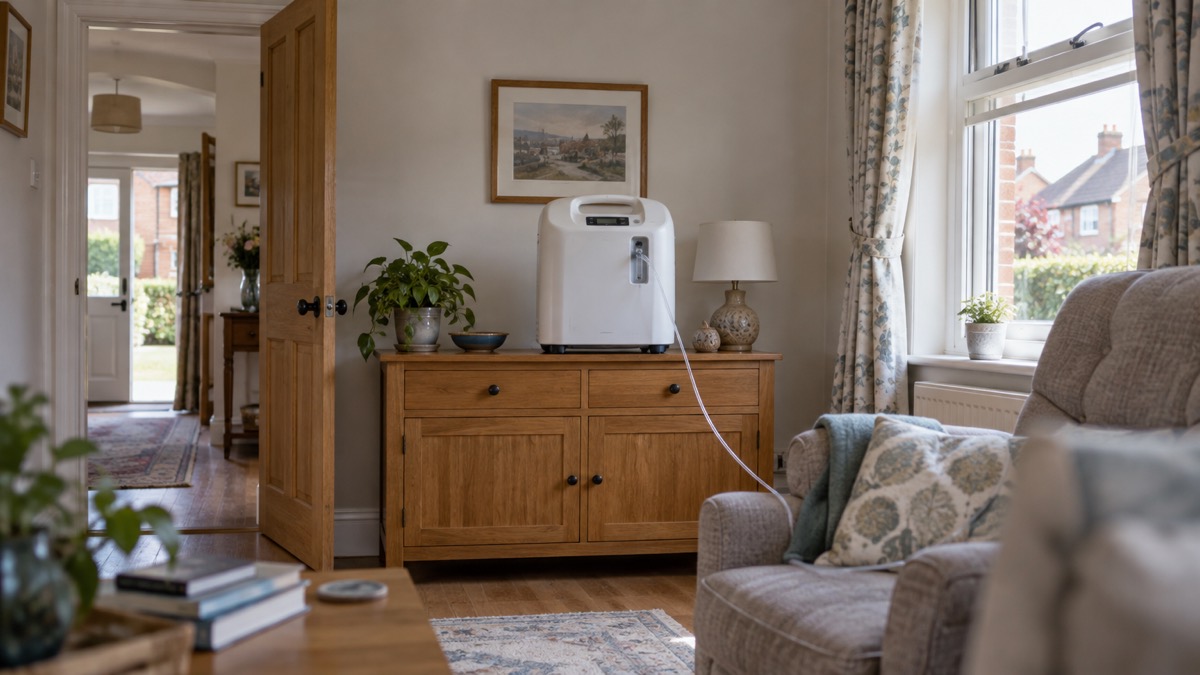
Store oxygen equipment in a well-ventilated area, kept clean, dry and away from heat sources and naked flames, including gas or electric fires and cookers5. Store cylinders away from flammable materials such as oils, greases and aerosol cans, ignition sources, electrical devices, and locations prone to high temperatures10. Keep oxygen equipment away from fires, heaters and naked flames4.
Distance matters. One fire and rescue service recommends that oxygen should be kept a minimum of 3 metres away from any open flame, including gas and electric cookers9. Another advises keeping oxygen at least six feet (two metres) away from flames or heat sources such as gas cookers, paraffin or gas heaters, candles, cigarettes, cigars and fireplaces13. The two figures differ; the 3 metre figure is the more cautious, and it is the one to work to where space allows.
Tubing is easy to overlook. Do not allow the home oxygen tubing to pass close to naked flames including gas fires, gas cookers and candles, or hot items such as electric cookers or electric heaters5. A tube draped across a hob or trailing past a fire is a direct route for a flame to reach the supply.
| What to keep clear | Why | Source |
|---|---|---|
| Cigarettes, cigars, lighters | Ignition source in an oxygen-rich room | 13 |
| Gas fires, gas cookers, candles | Naked flames; tubing can pass close to them | 5 |
| Electric cookers and heaters | Hot items that can ignite tubing or clothing | 5 |
| Oils, greases, aerosol cans | Can react with oxygen | 10 |
| Paraffin or gas heaters, fireplaces | Heat and flame sources | 13 |
Keep the equipment clean and dry, and dry it properly before using it again19. Never attempt to repair or modify the equipment yourself; contact your oxygen supplier for further information or advice about your equipment3.
Keeping air moving: open internal doors and ventilate rooms
Oxygen can build up and concentrate in a closed room or confined space, but disperses easily in a well-ventilated room. Fire services advise keeping internal doors open when using oxygen6. That runs against the usual fire safety advice to close doors, so it needs care: keep the area around internal doors clear so they can be closed, because closing doors in rooms limits the spread of fire and smoke20. The balance is to ventilate while you are using oxygen, and to be able to close doors quickly if a fire starts.
At night, close internal doors. It will help keep your rooms warm and reduce fire and smoke spread if a fire starts21. Closed internal doors can help slow the spread of fire and smoke, and if a fire starts, get out, stay out and call 99922.
When you ventilate, do not compromise other aspects of safety and security, for example by propping open fire doors23. Open a window or an internal door rather than wedging open a door that is there to hold back fire.
Smoke alarms, fire service home visits and who to contact
Each floor of your home should have a working smoke alarm, and they should be tested at least once a month6. If you need alarms or advice, your local fire and rescue service can help. In Wales, a home safety visit includes free home safety advice and equipment, and if needed smoke alarms and carbon monoxide alarms will be provided7. In Dorset, you can call 0800 05 02 999 or complete an online referral form to request a home fire safety visit24. In Cornwall, you can register online for a Free Home Fire Safety Check or by calling 0800 3581 99925. Greater Manchester runs a Home Fire Safety Assessment: complete the online home fire safety check and, if eligible, you will be asked to submit contact details and the service will telephone to arrange the visit26. Warwickshire offers a Safe and Well visit to check the safety of your home10.
You may not need to register at all. One fire and rescue service states that you no longer need to inform the fire service if you use oxygen, unless you wish to request a home visit6. Arrangements vary between services, so check with your local one.
The National Fire Chiefs Council online home fire safety check can be completed by the home occupant directly, by a third party such as a police officer, social worker or paramedic who has concerns about someone's welfare or safety, or by the fire and rescue service itself27. If you care for someone who uses oxygen, include and record fire safety in your assessments and care planning18, and involve the person in decisions about their fire safety and talk to them about what to do if a fire starts or their alarm activates16.
For advice about the oxygen equipment itself, contact your supplier3. For a fire, get out, stay out and call 9998.
If you are building a wider plan for the household, our guide to what to do if a fire starts in your house and our fire safety checklist cover the rest of the home, and Extra Help in an Emergency explains support for medically dependent households.
Sources (27)
- Fire safety: medication and medical devices, West Yorkshire Fire and Rescue Service, 2026-10-29
- Medical oxygen, Scottish Fire and Rescue Service, 2026-10-28
- Specialist health equipment, Mid and West Wales Fire and Rescue Service, 2026-10-29
- Stay warm safely this winter, Greater Manchester Fire and Rescue Service, 2026-10-29
- Home oxygen, Greater Manchester Fire and Rescue Service, 2026-10-29
- Specialist health equipment, Devon and Somerset Fire and Rescue Service, 2026
- Get a free home safety check, Welsh Government, 2026
- Smoke alarms, Devon and Somerset Fire and Rescue Service, 2026
- Home fire safety, Northern Ireland Fire and Rescue Service, 2026-10-14
- Fire safety using medication and medical equipment, Warwickshire County Council, 2026-10-29
- Digital easy read fire safety booklet, London Fire Brigade, 2026
- Home safety partnerships, Devon and Somerset Fire and Rescue Service, 2026
- Oxygen at home, North Wales Fire and Rescue Service, 2026-10-29
- Safe and well booklet, Cheshire Fire and Rescue Service, 2026-04
- Health and safety advice for patients on home oxygen, University Hospitals Dorset NHS Foundation Trust, 2021-11
- Additional advice for carers, Greater Manchester Fire and Rescue Service, 2026-10-29
- Home safety advice, Essex Prepared, 2026-10-29
- Additional advice for carers of home oxygen users, Greater Manchester Fire and Rescue Service, 2026-10-29
- Oxygen, NHS Buckinghamshire, Oxfordshire and Berkshire West, 2026-10-25
- Hoarding, North Yorkshire Fire and Rescue Service, 2026-10-25
- Cost of living leaflet, Greater Manchester Fire and Rescue Service, 2022
- Students reminded to stay fire safe, North Yorkshire Fire and Rescue Service, 2026-09-21
- Ventilation of indoor spaces, UK Government, 2021-03-04
- Home safety visits, Devon and Somerset Fire and Rescue Service, 2026
- Free Home Fire Safety Check, Cornwall Council, 2026-10-29
- Home Fire Safety Assessment, Greater Manchester Fire and Rescue Service, 2026-10-29
- Online home fire safety check, National Fire Chiefs Council, 2026-08-13
 Home Fire Safety Checklist
 Bedtime Fire Safety Checks
 Fire Risk Checks for Carers
 Why a CO Alarm Is Beeping
 Smoke Alarm Keeps Chirping
 Testing Smoke and CO Alarms
 Replacing Smoke and CO Alarms
 Where to Fit Smoke Alarms
 How Many Smoke Alarms
 Where to Put a CO Alarm
 Do I Need a CO Alarm
 Can a CO Alarm Detect a Gas Leak
 Trapped by Fire What to Do
 Putting Out a Chip Pan Fire
 Electrical Fire Safety