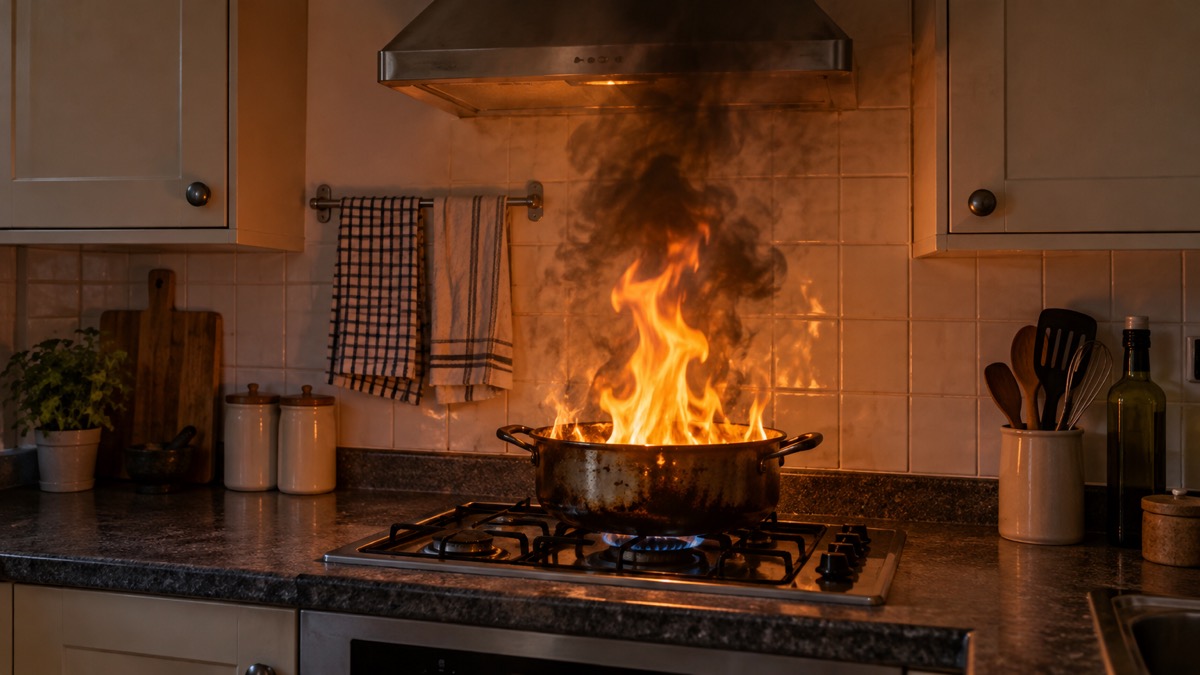
A pan of oil has caught fire on your hob. You have seconds to act, and the right actions are simple. Turn off the heat if you can reach it safely, get everyone out, close the door behind you and call 9991. Do not try to put the fire out yourself, and never throw water on it: fire services warn that water on burning oil will make the fire spread quicker and can turn it into a fireball3.
The reason to leave rather than fight it is that a chip pan fire is one of the most dangerous things that happens in a British kitchen. Deep fat frying with chip pans is named by fire services as the highest fire risk in cooking5. The oil is already at a temperature where it will ignite anything it touches, and the fire can spread from the pan to the cooker hood, the cupboards and the rest of the room in a very short time. Firefighters would far rather arrive at a fire in a closed kitchen than at a burned person.
This page sets out what to do in the first minute, why water is so dangerous, what to do if you cannot reach the heat, what happens when you call 999, and how to stop a chip pan fire starting in the first place. It applies across England, Scotland, Wales and Northern Ireland: the fire and rescue services in all four nations give the same core advice.
Turn off the heat if it is safe, get out and call 999
The order matters. If the pan has just caught and you can reach the hob without putting yourself in danger, turn the heat off. Lincolnshire Fire and Rescue's advice is to "turn off the heat (if it is safe), get out and call 999"1. Warwickshire Fire and Rescue Service gives the same sequence: turn off the heat source and, if safe to do so, leave the room and call 9999. Turning the heat off removes the energy feeding the fire, but it does not put the fire out, and the oil stays hot enough to reignite for some time.
Then leave. London Fire Brigade's four steps are to leave the room, close the door, warn others and call 9992. Closing the door is not a small detail: it starves the fire of air and slows its spread into the hallway and the rest of the house, which buys time for everyone to get out and for firefighters to arrive9. Shout to warn anyone else in the house on your way out10.
Once you are outside, stay outside. The Scottish Fire and Rescue Service's instruction is blunt: "Once you are out, stay out"11. Do not go back in for a phone, a handbag, a pet or anything else. If someone is still inside, tell the 999 operator when you call.
Never use water on a chip pan fire: it will explode
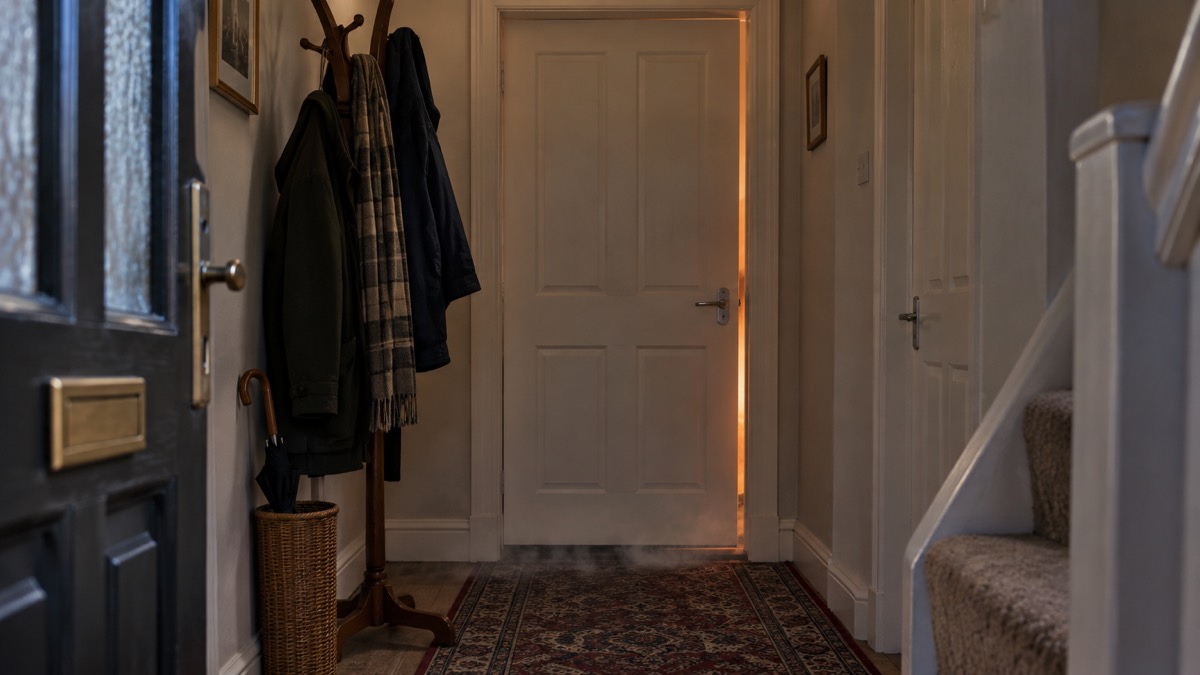
This is the single most important rule on the page, and every fire service in the UK repeats it. Lincolnshire's wording is "Never use water on a chip pan fire, as it will explode"1. Northern Ireland Fire and Rescue Service warns that water on an oil fire or grill pan fire "will turn into a fireball"6. Another fire service warns that you should never throw water on chip pan fires as this can create a fireball3. The message is the same in England, Scotland, Wales and Northern Ireland.
The physics behind the warning explains why it is so violent. Water is denser than oil, so a jug of water thrown on a burning pan sinks straight to the bottom. The heat of the oil turns it to steam almost instantly, and the steam expands with enough force to throw the burning oil up and out of the pan, across the cooker and towards whoever threw it. That is the fireball the fire services describe, and it is why the injury from a chip pan fire is so often to the face, arms and hands of the person trying to help.
The same rule applies to a smoking pan that has not yet caught. If the oil starts to smoke it is too hot: turn off the heat and leave it to cool, and never put food into a pan whose oil is smoking6. Wet chips are a common cause of a pan boiling over and catching, because the water in them makes the hot oil bubble up and spill onto the cooker12.
"Never put water on flames or a smoking pan - it will cause it to explode."
Why you should leave rather than tackle the fire
It is natural to want to deal with a fire in your own kitchen, and many people do. The fire services' advice is to resist that instinct, because a chip pan fire is not a small fire you can smother with a tea towel. South Wales Fire and Rescue Service's guidance is direct: "Don't tackle a pan fire yourself"14. North Yorkshire Fire and Rescue Service says: "Never attempt to extinguish a pan fire. Get to safety and call 999"8.
There are three reasons. First, the oil is extremely hot and can splash or reignite. Second, the fire can spread to the cooker hood, the cupboards and the ceiling faster than you can react. Third, the smoke from burning cooking oil is thick and toxic, and a kitchen fills with it in seconds. Getting out and closing the door protects you and everyone else in the house, and it gives firefighters a contained fire to deal with rather than a house full of smoke.
The fire services also point to how these fires start, because most are preventable. The biggest risks in cooking are deep fat frying with chip pans, distractions, and alcohol4. Never leave a pan unattended, even for a moment: the Scottish Fire and Rescue Service warns that "it only takes a second for a fire to start"15. Never fry food if you have been drinking alcohol or taking drugs, or if you are tired15. And if you can, avoid the traditional chip pan altogether: modern electric deep fat fryers are much safer because they have a safety switch that cuts them off if they overheat15.
| What to do | Why |
|---|---|
| Turn off the heat if you can reach it safely | Removes the energy feeding the fire1 |
| Leave the room and close the door | Slows the fire's spread into the rest of the house2 |
| Shout to warn others | Gets everyone out faster10 |
| Get out and stay out | A burning kitchen is not a place to return to11 |
| Call 999 from outside | Firefighters treat a pan fire as a house fire2 |
What to do if you cannot reach the heat safely
Sometimes the flames or the smoke stop you getting near the hob. In that case, do not try. The guidance from Devon and Somerset Fire and Rescue Service is explicit: "If you cannot turn off the heat, just get out, closing the doors behind you (to stop the spread) and call 999"4. Do not reach across a burning pan, do not try to move it, and do not try to smother it with a cloth or a towel.
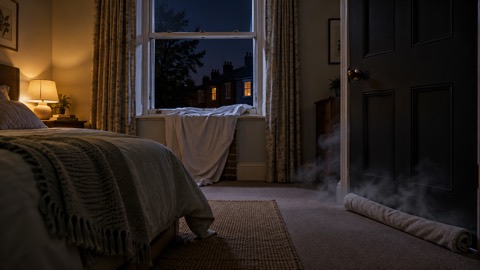
If you are already outside and the fire is growing, stay out and keep everyone well back from the windows and doors. If you are trapped inside and cannot get out, get to a room with a window, close the door, put bedding or towels at the bottom of the door to keep smoke out, and call 999, telling the operator where you are16. The page on what to do if you cannot escape a fire covers that situation in more detail.
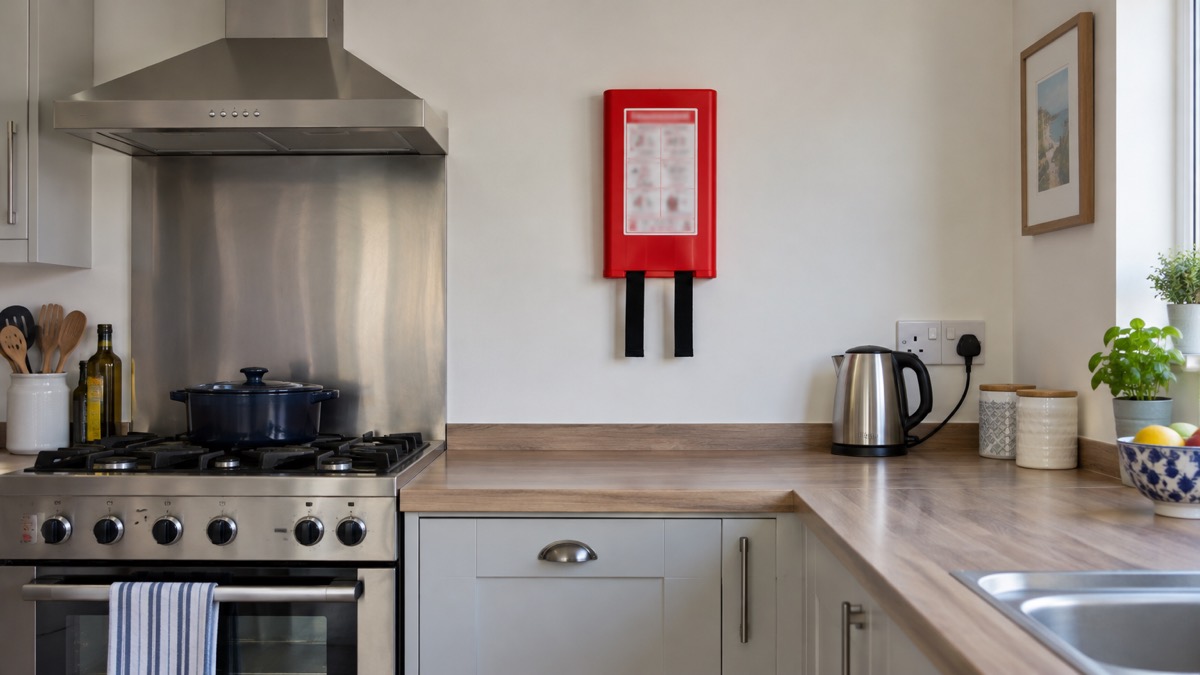
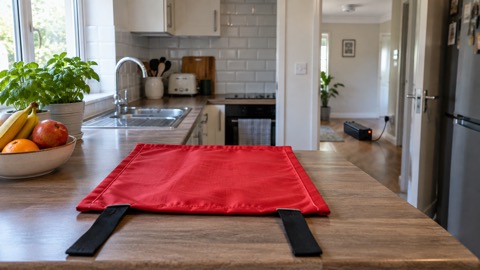
Some guidance recommends keeping a fire blanket in the kitchen, particularly in properties where a fire would spread quickly, such as thatched homes17. A blanket works by cutting off the air to a small fire. But the advice for a pan that has already caught is still to get out and call 999 rather than tackle it yourself8. If you do keep a blanket, store it where you can reach it without leaning over the hob, and read the instructions before you need them. The page on fire extinguishers and fire blankets explains the types and their limits.
Calling 999: what happens next
Call 999 as soon as you are out, or as soon as you are safely away from the kitchen. Ask for the fire and rescue service and give your address clearly, including the flat or house number and the street8. Tell the operator what is on fire, for example "a chip pan fire in the kitchen"16. If anyone is still inside, say so straight away. If you are on a mobile, a neighbour's phone or a phone box, call from there8.
The operator will stay on the line and may ask you to confirm details or give directions. Do not hang up until you are told to. Fire engines are dispatched while you are still on the call, so the sooner you ring, the sooner help is on its way. Do not delay the call to try to put the fire out yourself.
The same number applies across the UK: 999 for fire, police and ambulance. In Northern Ireland, the Northern Ireland Ambulance Service lists severe burns and scalds among the emergencies for which you should call 99918. If a fire occurs in the kitchen, get out, stay out and call 999 immediately15. If someone has been burned, tell the operator when you call, and follow any first aid instructions you are given while you wait.
Stopping a chip pan fire before it starts
Most chip pan fires are preventable, and the fire services' prevention advice is consistent. Never fill the pan more than one third full of fat or oil6. If the oil starts to smoke, it is too hot: turn off the heat and leave it to cool1. Never put food into a pan whose oil is smoking12. Dry wet chips before they go in, because wet chips make the oil bubble up and overflow12. Stay in the kitchen while you cook and never leave a pan unattended, especially when frying or using high heat19.
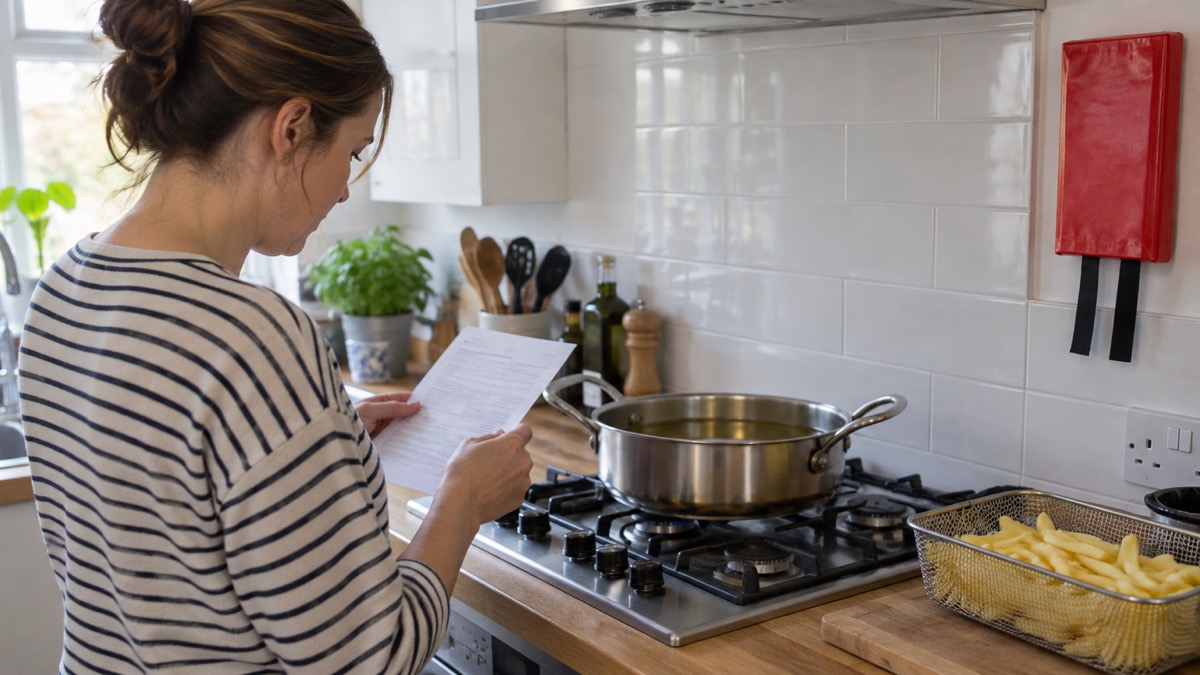
If you use a traditional chip pan, consider replacing it. The Scottish Fire and Rescue Service says modern electric deep fat fryers are much safer than traditional chip pans because they have a safety switch that cuts them off, helping stop them overheating and catching fire, and advises trying not to use a traditional chip pan if you can because there is always a high risk of fire15. The Fire Kills campaign makes the same point: consider switching to oven chips instead of a chip pan or deep fat fryer19.
A working smoke alarm gives you the warning you need to get out. The Fire Kills campaign's advice is to stay in the kitchen while cooking and never leave pans unattended, especially when frying or using high heat19. The page on kitchen fires covers cooking safety and prevention in more depth, and the fire safety checklist is a good place to start if you want to check your whole home.
Sources (19)
- Kitchen safety, Lincolnshire County Council, 2026-10-29
- Pan fires, London Fire Brigade, 2026-10-25
- Cooking safely, Mid and West Wales Fire and Rescue Service, 2026-10-28
- Cooking, Devon and Somerset Fire and Rescue Service, 2026
- Top ways to reduce your risk of having a fire at home, Devon and Somerset Fire and Rescue Service, 2026
- Home fire safety, Northern Ireland Fire and Rescue Service, 2026-10-14
- Fire safety equipment, Devon and Somerset Fire and Rescue Service, 2026
- Kitchen safety, North Yorkshire Fire and Rescue Service, 2026-03-23
- Kitchen fire safety, Warwickshire County Council, 2026-10-29
- Home fire safety guide, Wrightington, Wigan and Leigh Teaching Hospitals NHS Foundation Trust, 2025-01-24
- In an emergency, Scottish Fire and Rescue Service, 2026-10-25
- Kitchen safety, Dorset and Wiltshire Fire and Rescue Service, 2024-08-06
- Fire safety checklist, Devon and Somerset Fire and Rescue Service, 2026
- Cooking safety, South Wales Fire and Rescue Service, 2026-07-29
- Your guide to fire safety, Scottish Fire and Rescue Service, 2023-11-03
- If you are trapped by fire, Essex Prepared, 2026-10-29
- Thatched property safety guide, Suffolk County Council, 2023
- When to call 999, Northern Ireland Ambulance Service, 2026-10-29
- Prevention, Fire Kills campaign, 2026-03-25
 Home Fire Safety Checklist
 Bedtime Fire Safety Checks
 Fire Risk Checks for Carers
 Why a CO Alarm Is Beeping
 Smoke Alarm Keeps Chirping
 Testing Smoke and CO Alarms
 Replacing Smoke and CO Alarms
 Where to Fit Smoke Alarms
 How Many Smoke Alarms
 Where to Put a CO Alarm
 Do I Need a CO Alarm
 Can a CO Alarm Detect a Gas Leak
 Trapped by Fire What to Do
 Electrical Fire Safety
 Appliances Left On Overnight