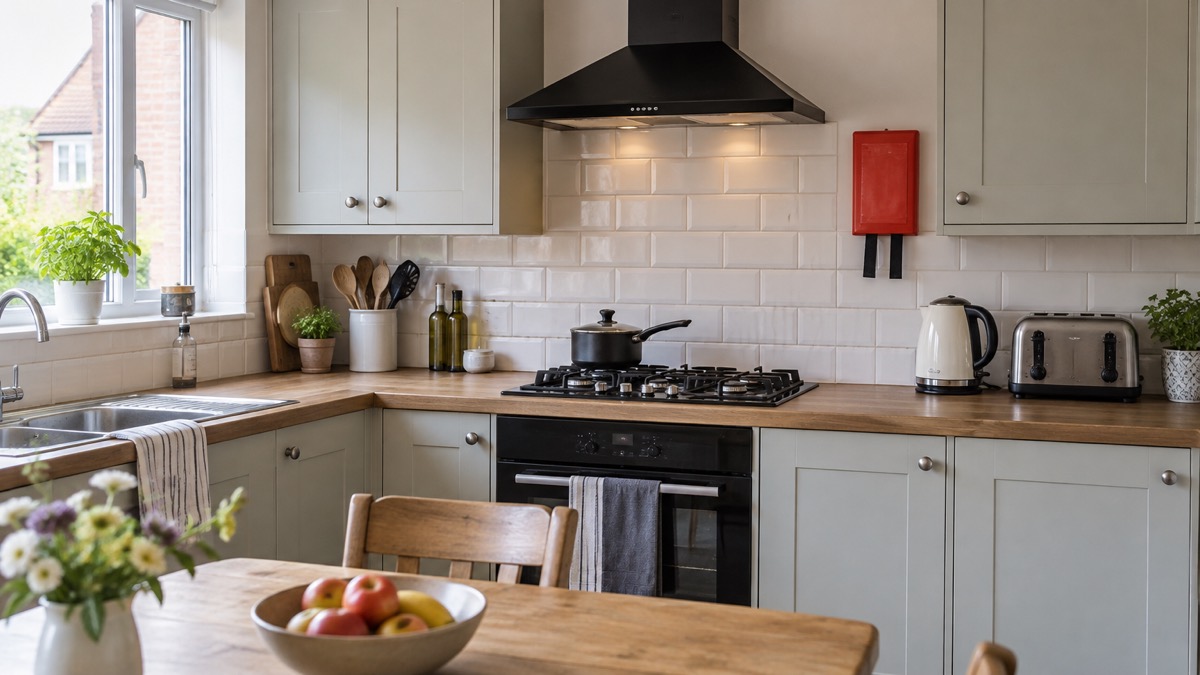
More than half of all accidental fires in the home are started by cooking, and the kitchen is the single most common place for a house fire to begin. Around 60% of fires in the home start in the kitchen according to London Fire Brigade, and nationally the figure is around half of all fires in the home1. Cheshire Fire and Rescue Service puts it plainly: more than half of accidental fires at home are started by cooking3. Cooking accidents are the main cause of fires in the home, and most of them are preventable with a handful of everyday habits4.
If a pan catches fire right now, the advice from every fire and rescue service in the UK is the same: turn off the heat if it is safe to do so, get out, stay out and call 999. Never throw water on burning oil and never use a fire extinguisher on a chip pan fire. This page sets out what to do in those first seconds, and then the prevention habits, from never leaving pans unattended to keeping tea towels off the hob, that stop most kitchen fires from starting at all.
If a pan of oil catches fire
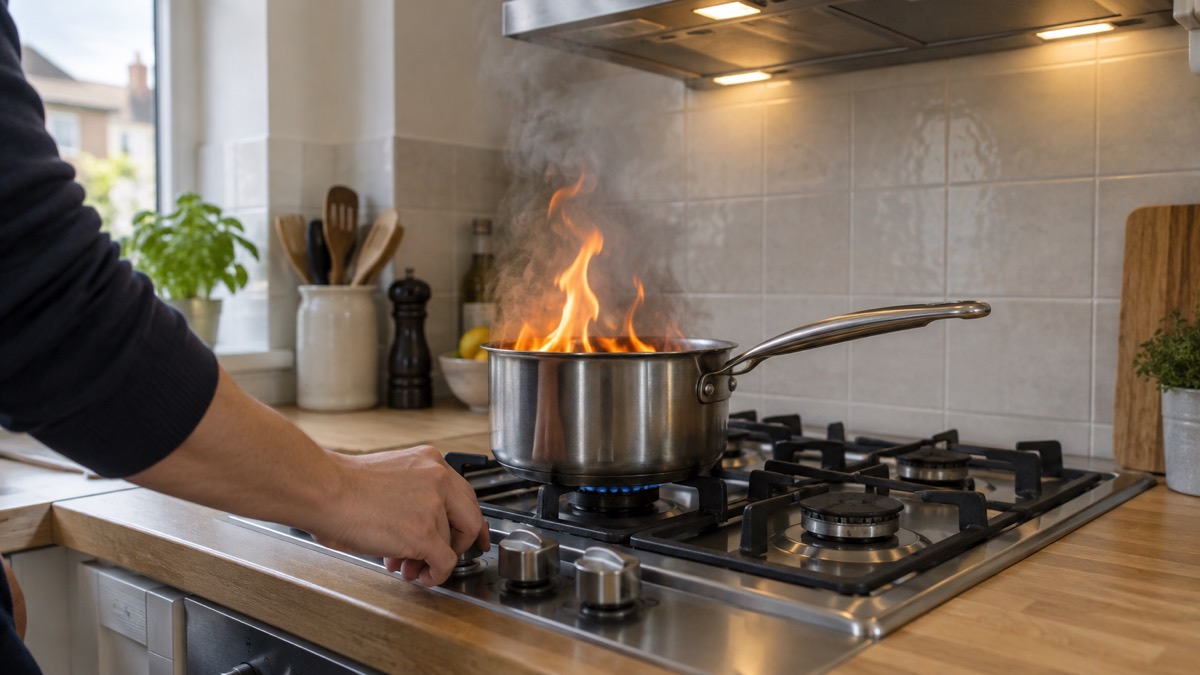
A pan of oil or fat that catches fire is the most dangerous thing that can happen in a kitchen, and your response in the first few seconds matters more than anything else on this page. The fire and rescue services' advice is consistent across the UK: turn off the heat if it is safe to do so, then get out and call 999. Lincolnshire's guidance for a chip pan fire is exactly that: turn off the heat if it is safe, get out and call 9995. Warwickshire says the same for oil or grease fires: turn off the heat source and, if safe to do so, leave the room and call 99910.
If you cannot turn off the heat safely, do not stay to try. Devon and Somerset Fire and Rescue Service advises that if you cannot turn off the heat, you should just get out, closing the doors behind you to stop the spread, and call 99911. London Fire Brigade's pan fire advice adds the same sequence: leave the room, close the door, warn others, and call 999 for emergency services12. Never attempt to extinguish a pan fire yourself; get to safety and call 9992.
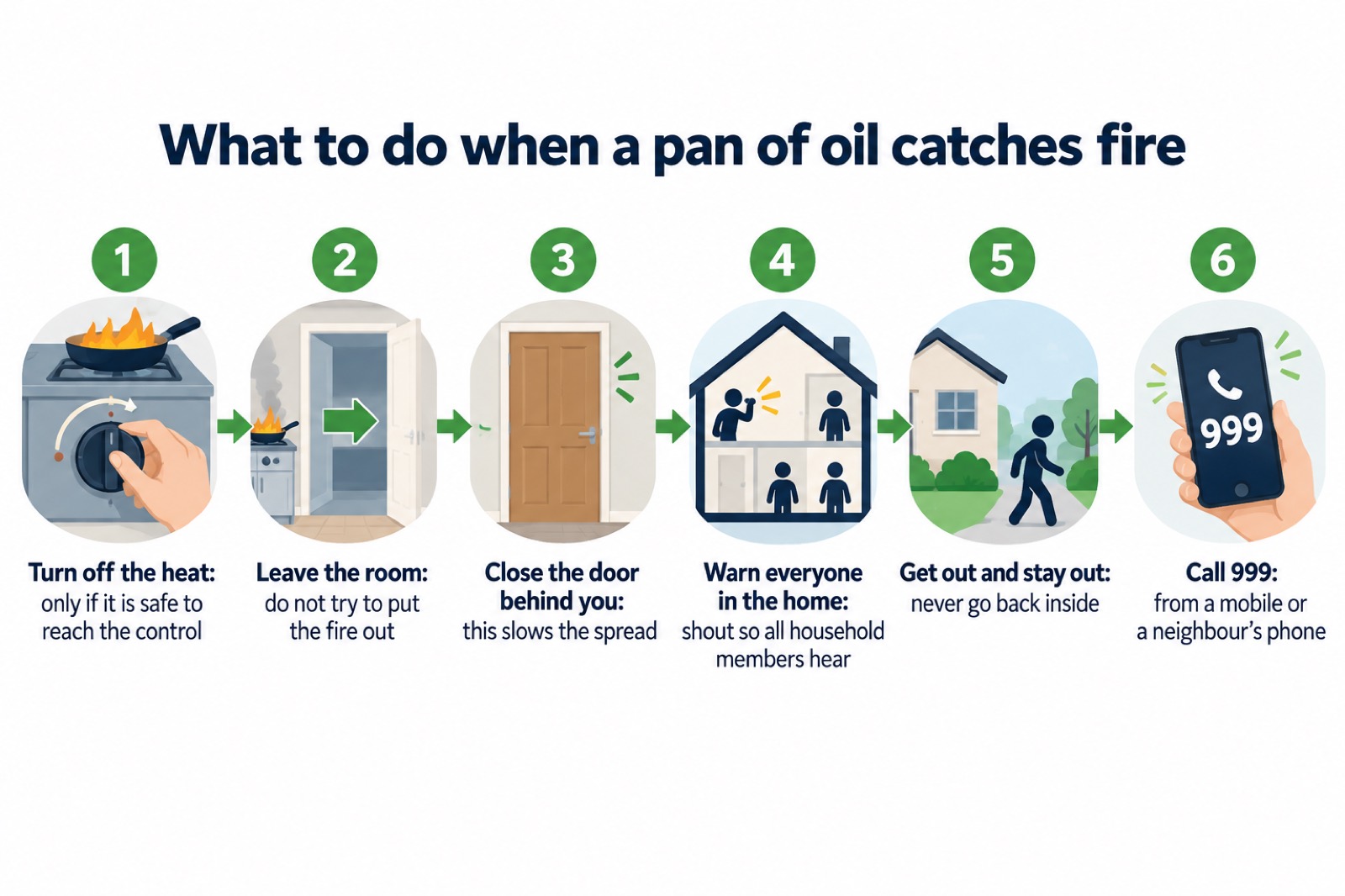
Never use water, and never use an extinguisher
Water and burning oil do not mix. Devon and Somerset explain the mechanism for extinguishers: the jet from the extinguisher can force burning fat out of the pan and spread the fire6. Cheshire's home safety booklet adds that adding water to hot oil causes a reaction that could lead to burn injuries15. The instinct to douse the flames is natural, but every fire service in the UK says the same thing: do not tackle it yourself. Get out, stay out, call 999.
If you use a traditional chip pan at all, there are rules that reduce the risk before a fire ever starts. The Northern Ireland Fire and Rescue Service advises: never fill the chip pan more than one third full of fat or oil, and if the oil starts to smoke it is too hot, so turn off the heat and leave it to cool7. Lincolnshire gives the same one-third rule5. Dorset and Wiltshire Fire and Rescue Service adds one more: never put food into the pan if the oil is smoking16.
Safer ways to cook chips
Fire and rescue services are clear that the traditional chip pan is the riskiest way to cook, and that there are safer alternatives. Devon and Somerset advise avoiding deep fat frying or using a frying pan with a lot of oil, and name air fryers as a safer alternative, along with cooking in the oven with a cooking timer set, and a microwave used according to the instructions11. The Scottish Fire and Rescue Service's guide notes that modern electric deep fat fryers are much safer than traditional chip pans because they have a safety switch that cuts them off, helping stop them overheating and catching fire, and advises trying not to use a traditional chip pan if you can, as there is always a high risk of fire17. The Fire Kills campaign suggests switching to oven chips instead of a chip pan or deep fat fryer9.
| Method | What fire services say |
|---|---|
| Traditional chip pan | High risk of fire; avoid if you can; never fill more than one third full7 |
| Electric deep fat fryer | Much safer than a chip pan, with a safety switch that cuts it off if it overheats17 |
| Oven cooking | Safer, especially with a cooking timer set13 |
| Air fryer | A safer alternative to deep fat frying13 |
| Microwave | May also be safe when used according to the instructions13 |
For people with impaired mobility or health conditions, the Northern Ireland Fire and Rescue Service suggests considering an electric hob or microwave instead of a gas hob, because of the risk from a naked flame7. Our page on how to put out a chip pan or saucepan fire covers this in more depth.
Get out, stay out, call 999
Whatever kind of kitchen fire it is, pan, grill, toaster or appliance, the instruction from every fire and rescue service in the UK is identical: get out, stay out and call 999. South Wales Fire and Rescue Service states it for kitchen fires specifically14.
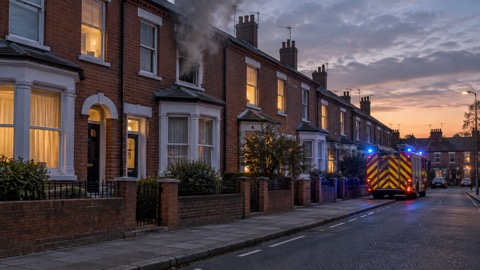
Two parts of that instruction matter as much as the first. "Stay out" means exactly that: do not go back in to check, to rescue belongings or to have another go at putting the fire out. Essex's guidance is blunt: don't tackle fires yourself, leave it to the professionals, and don't waste time investigating what's happened or rescuing valuables4. Firefighters have the protective equipment and training to enter a burning building; you do not. Once you are out, call 999 and give the address clearly, then wait for the fire service to arrive and tell them whether everyone is out.
"In the event of a fire in your kitchen, get out, stay out and call 999."
Closing doors as you leave slows the spread of fire and smoke, which is why several services include it in their advice13. If you live in a flat, the fire safety advice is the same for a fire inside your own flat, and our page on fires in blocks of flats covers the arrangements that differ in purpose-built blocks.
If you cannot get out
Sometimes a fire blocks your way out. The advice then is to put a closed door between you and the fire, and make yourself findable. Essex Prepared's guidance is: if you can't get out, get everyone into one room, ideally with a window and a phone4. The Scottish Fire and Rescue Service says the same: get everyone into one room and grab a mobile phone if you can18. Devon and Somerset's guidance for people with sight difficulties adds the final step: go into a room that has a window and a phone and shut the door19.
Once in that room, call 999, tell the control room where you are in the house, and open the window to signal for help. Blocking the door gap with clothing or bedding slows smoke. Our page on what to do if you cannot escape a fire goes through this in full, and a rehearsed fire escape plan made in advance is what makes these steps come naturally when they are needed.
Never leave cooking unattended
This is the single most repeated piece of kitchen fire safety advice in the UK, and it is repeated because unattended pans are the single biggest cause of cooking fires. North Wales Fire and Rescue Service warns that it only takes a few seconds for a fire to start20. The Northern Ireland Fire and Rescue Service, speaking to students, puts it in proportion: cooking is the number one cause of accidental dwelling fires, so don't leave cooking unattended, not even for a minute8.
"Unattended" does not only mean leaving the house. It means leaving the kitchen while the hob is on: going to answer the door, settling a child, or watching something in another room. Devon and Somerset advise that if you have to leave the kitchen, you turn the cooker off and take the saucepans off the heat7. A cooking timer helps you stay aware of what is on, which is why Devon and Somerset recommend using one11.
- Stay in the kitchen whenever the hob or oven is in use9
- If you must leave the kitchen, turn the cooker off and take the pans off the heat7
- Use a cooking timer to keep track of what is cooking11
- Take particular care when frying or using high temperatures9
- Check the cooker is off before going to bed or leaving the home9
The Fire Kills campaign adds a bedtime habit worth building: check your cooker is off before going to bed or leaving your home9. Our bedtime fire safety checks page builds that into a full routine.
Keep the hob clear of tea towels, oven gloves and clutter
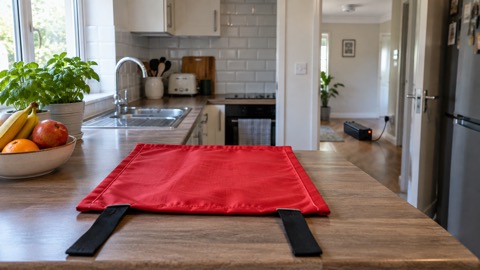
The hob is a heat source, and anything flammable left on or near it is a fire waiting for a moment's inattention. North Yorkshire Fire and Rescue Service's autumn campaign states it directly: keep hobs clear, never use the hob as a storage space, and keep items like tea towels and oven gloves well away from heat sources21. Lincolnshire advises avoiding leaving oven gloves or tea towels on, or near, your hob and oven5. Warwickshire's Christmas safety advice extends the list to clothes and electrical leads22, and Mid and West Wales Fire and Rescue Service says the same for tea towels and cloths23.
Loose clothing is part of the same risk. London Fire Brigade warns that loose clothing can easily catch fire, so avoid leaning over a hot hob and keep tea towels and cloths away from the cooker and hob1. Warwickshire's advice is to take care if you're wearing loose clothing, as it can catch fire easily22. If a sleeve does catch fire, our page on what to do if your clothes catch fire covers the response.
Cleanliness matters as much as tidiness. North Wales Fire and Rescue Service advises regularly cleaning your oven, hobs and other appliances, because a build-up of fat, crumbs or grease can easily catch fire, and this applies to your grill, toaster, air fryer and any other kitchen gadgets you use20. The Fire Kills campaign includes cleaning your cooker, grill and oven regularly in its kitchen fire prevention list9. A dirty grill pan under a hot grill is a common way for a small fire to start.
- Never use the hob as storage space, even when it is off21
- Keep tea towels, oven gloves, cloths and packaging away from the hob and oven5
- Keep electrical leads away from the cooker and hob22
- Avoid leaning over a hot hob in loose clothing1
- Clean the oven, hob, grill, toaster and air fryer regularly9
Do not cook when drowsy or after drinking
Cooking needs your attention, and alcohol, tiredness and some medicines take it away. Manchester Fire and Rescue Service's instruction is the firmest: never cook if you've taken medication, drugs or alcohol that make you tired or drowsy24. The Government's Prepare campaign agrees: if you're very tired, have been drinking alcohol or are taking medication that might make you drowsy, it's safer not to risk cooking25. North Yorkshire gives the reason: you won't be alert to potential dangers2.
The Northern Ireland Fire and Rescue Service warns that alcohol can make you drowsy and forgetful, and advises avoiding cooking after drinking, especially late at night8. North Wales' Christmas safety advice notes that the risk of accidents, especially in the kitchen, is greater after alcohol is consumed26. This is why cooking fires cluster late at night and around celebrations: the combination of a hot pan, a tired person and a drink is the classic recipe for a fire that starts when nobody is watching it.
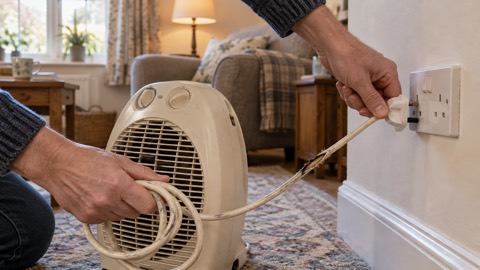
The practical answer is to remove the cooking, not to rely on willpower. The Northern Ireland Fire and Rescue Service advises students and others to avoid the common causes of accidental dwelling fires by avoiding cooking, not lighting candles, avoiding the use of electric heaters and smoking outside after drinking8. A takeaway, a cold snack or oven chips rather than a pan of oil are all lower-risk choices. The Fire Kills campaign specifically suggests switching to oven chips instead of a chip pan or deep fat fryer9.
Appliances, cables and water near the cooker
The area around the cooker is hot enough to damage electrical items as well as to ignite fabric. The Scottish Fire and Rescue Service's home fire safety guide warns that heat from a cooker can easily damage electrical appliances or cables and cause a fire, so keep appliances and cables a safe distance from your cooker17. North Wales Fire and Rescue Service includes electrical leads alongside tea towels and cloths in the flammable materials to keep away from the cooker20. A kettle lead draped across a hob, or a toaster pushed up against the oven door, are both common and both avoidable.
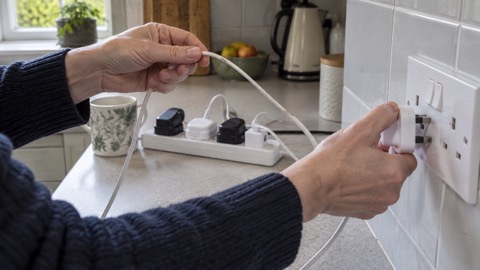
Water and electricity are a separate danger in the kitchen. Warwickshire's electrical fire safety guidance warns that mixing electricity and water can lead to fatal electrical shocks27. The Mid and West Wales student fire safety guidance advises placing toasters away from hazards like curtains and paper, keeping them clean and placed well away from water28. Devon and Somerset add a further electrical point: don't overload extension leads, as this can cause fire11. Our page on electrical fires covers overloaded sockets and faulty appliances in detail.
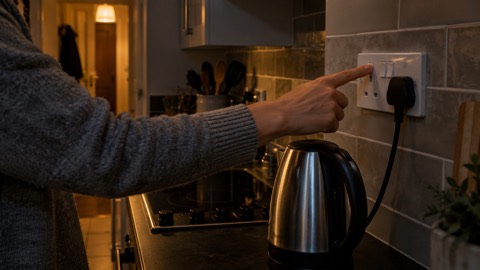
Warwickshire also advises unplugging appliances when you are not using them, instead of leaving them in standby mode27. That is a sensible habit for the toaster, kettle and other countertop items overnight and when the house is empty. If you are planning to run an appliance such as a dishwasher or tumble dryer while you are out or asleep, see our page on leaving appliances on overnight.
Burning smells, servicing and recalls
Kitchen appliances can develop faults that show themselves before they cause a fire, if you notice them. Devon and Somerset Fire and Rescue Service's guidance for people with sight difficulties, but applicable to everyone, is: if any electrical appliances are giving off a burning smell, turn them off and unplug them immediately19. A burning smell from a fridge, a dishwasher or a washing machine is not something to watch and wait on. Switch it off at the wall, unplug it, and do not use it again until it has been checked.
Registration is the other half of this. North Yorkshire Fire and Rescue Service advises always registering your white goods appliances so you can be informed of safety repairs or recalls2. Cheshire Fire and Rescue Service's Safe and Well booklet directs households to register appliances at registermyappliance.org.uk to receive free recall alerts if there is a problem with an appliance15. The Scottish Fire and Rescue Service gives the same address for fridge and freezer registration17. Registration is free and it is the only reliable way for a manufacturer to reach you when a fault is identified in your model.
- Register white goods at registermyappliance.org.uk for free recall alerts15
- Search the Government's list of product safety alerts, reports and recalls9
- Use Electrical Safety First's online product checker to see if any of your appliances have been recalled29
- If an appliance smells of burning, turn it off and unplug it immediately19
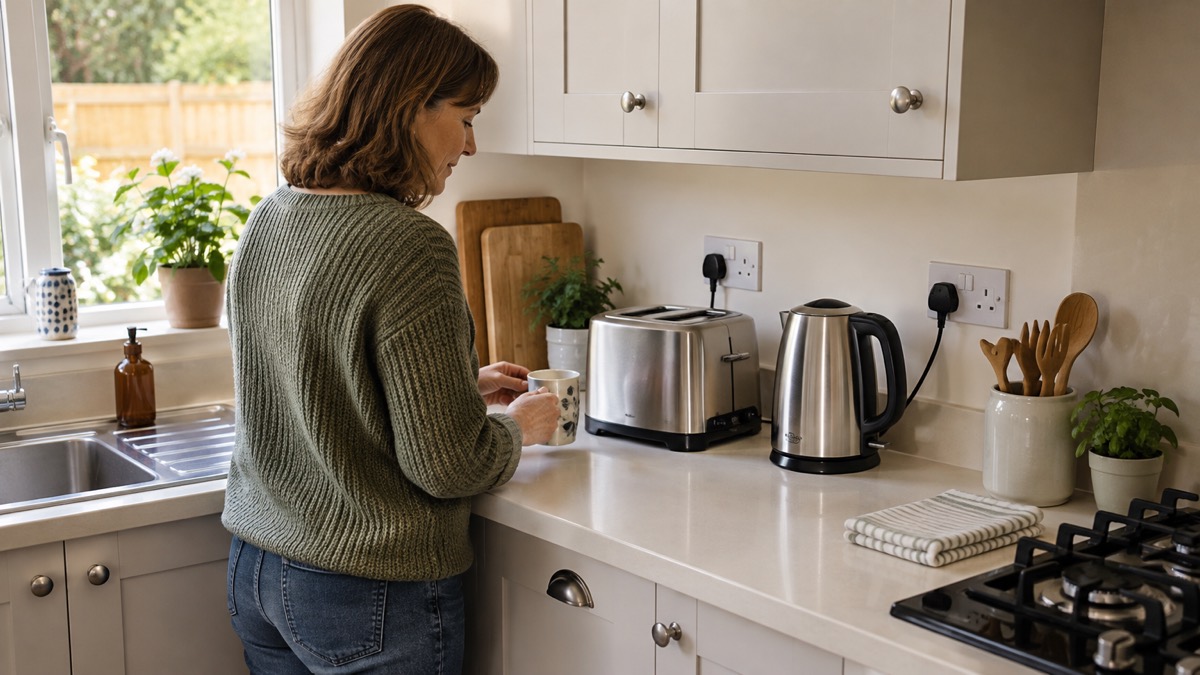
The Fire Kills campaign adds the Government's own list of product safety alerts, reports and recalls as the place to search, and stresses registering appliances so that you can be notified if your product is recalled9. Manchester Fire and Rescue Service points to Electrical Safety First's online product checker for the same purpose29. Our page on how to check if an electrical product has been recalled walks through both.
Finally, consider detection designed for the kitchen. Devon and Somerset's kitchen safety guidance suggests fitting a heat alarm in the kitchen11. Our pages on heat alarms and on choosing between a heat alarm and a smoke alarm explain the choice.
Children in the kitchen
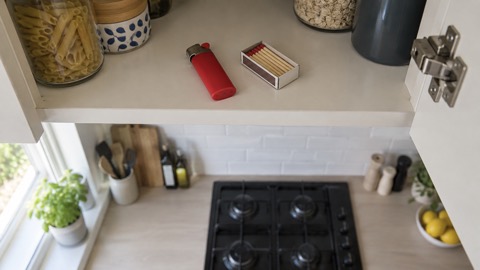
Children and cooking need active supervision. The Government's Prepare campaign advises: do not leave children in the kitchen alone when cooking, and keep matches and saucepan handles turned inwards and out of reach25. Mid and West Wales Fire and Rescue Service says the same for the hob specifically: avoid leaving children in the kitchen alone when cooking on the hob23. A pan handle sticking out over the edge of the hob is an invitation for a small hand to pull it down.
As children get older and start cooking themselves, the teaching changes. Dorset and Wiltshire Fire and Rescue Service's back-to-school guidance for young people cooking sets out the rules: always stay near the cooker when cooking, keep the area around the cooker clear, make sure the grill is clean, always make sure the cooker is turned off when you have finished, and be aware that videos demonstrated on social media may not be safe30. That last point is worth a conversation: cooking hacks and tricks filmed for short videos are not tested for safety, and several fire services have raised them as an emerging risk.
The Prepare campaign also advises teaching children how to prevent a fire and what to do if there is one, and notes that you will probably need to talk about fire safety with children more than once to make sure they have remembered and understood what you have taught them25. One conversation is not enough; make it a returning topic.
Will a smoke alarm wake my children?
This is a question most parents never think to ask, and the answer is unsettling. Alarm maker FireAngel's manual states:
"Experience has shown that children may not be woken by smoke alarm tones. It is important that children are never left alone in a house."
The practical consequences are clear. Never leave children alone in the house, have a rehearsed fire escape plan, and call the fire and rescue service without delay no matter how small the fire31. When you make your fire escape plan, assign an adult to each child's room and practise it, so that in a real fire nobody assumes someone else has woken them. Our page on smoke alarms covers choosing and placing alarms, and testing alarms covers keeping them working.
Where to get help
Every fire and rescue service in the UK offers free home fire safety advice, and many offer a free home fire safety visit, particularly for older people, people who live alone, and people with reduced mobility or health conditions. Contact your local service through its website or the non-emergency number.
Our fire risk checks for a vulnerable person's home page sets out what to look for, and the wider home emergencies section covers what to do once a fire has started, including what to do if a fire starts in your house and what to do after a fire.
Sources (31)
- Cooking safety, London Fire Brigade, 2026-10-25
- Kitchen safety in the home, North Yorkshire Fire and Rescue Service, 2026-03-23
- Kitchen fire safety, Cheshire Fire and Rescue Service, 2026-05-20
- Fire: protecting your family, Essex Prepared, 2026-10-29
- Kitchen safety, Lincolnshire County Council, 2026-10-29
- Fire safety equipment, Devon and Somerset Fire and Rescue Service, 2026
- Home fire safety, Northern Ireland Fire and Rescue Service, 2026-10-14
- Student fire safety, Northern Ireland Fire and Rescue Service, 2026-09-15
- Fire Kills prevention, Fire Kills campaign, 2026-03-25
- Kitchen fire safety tips, Warwickshire County Council, 2026-10-29
- Cooking, Devon and Somerset Fire and Rescue Service, 2026
- Pan fires, London Fire Brigade, 2026-10-25
- Cooking safely, Devon and Somerset Fire and Rescue Service, 2026
- Cooking safety, South Wales Fire and Rescue Service, 2026-07-29
- Safe and Well booklet, Cheshire Fire and Rescue Service, 2026-04
- Kitchen safety, Dorset and Wiltshire Fire and Rescue Service, 2024-08-06
- Your guide to fire safety, Scottish Fire and Rescue Service, 2023-11-03
- Escape plan, Scottish Fire and Rescue Service, 2026-10-26
- Fire safety for people with sight difficulties, Devon and Somerset Fire and Rescue Service, 2026
- Cooking safety at home, North Wales Fire and Rescue Service, 2026-10-28
- Stay safe in the kitchen this autumn, North Yorkshire Fire and Rescue Service, 2025-10-01
- Christmas safety tips, Warwickshire County Council, 2026-10-29
- Cooking safely, Mid and West Wales Fire and Rescue Service, 2026-10-29
- Cookers, microwaves and electrics, Manchester Fire and Rescue Service, 2026-10-29
- Domestic fire, UK Government Prepare campaign, 2026-10-12
- Christmas safety, North Wales Fire and Rescue Service, 2026-10-29
- Electrical fire safety: plugs and appliance wiring, Warwickshire County Council, 2026-10-29
- Student fire safety, Mid and West Wales Fire and Rescue Service, 2026-10-29
- Stay fire safe, Manchester Fire and Rescue Service, 2026-10-29
- Back to school safely, Dorset and Wiltshire Fire and Rescue Service, 2025-08-20
- Smoke, heat and combination alarm manual, FireAngel, 2026-05-08
 Home Fire Safety Checklist
 Bedtime Fire Safety Checks
 Fire Risk Checks for Carers
 What to Do If Fire Starts
 How to Make a Fire Escape Plan
 Fire in a Block of Flats
 Electrical Fires and Sockets
 Smoking, Matches and Lighters
 E-bike Charging Safety
 Hoarding and Fire Risk
 Thatched Properties Fire Risk
 Fireworks and Bonfire Safety
 What to Do After a House Fire
 How Fire Services Respond
 Alarms for Deaf People