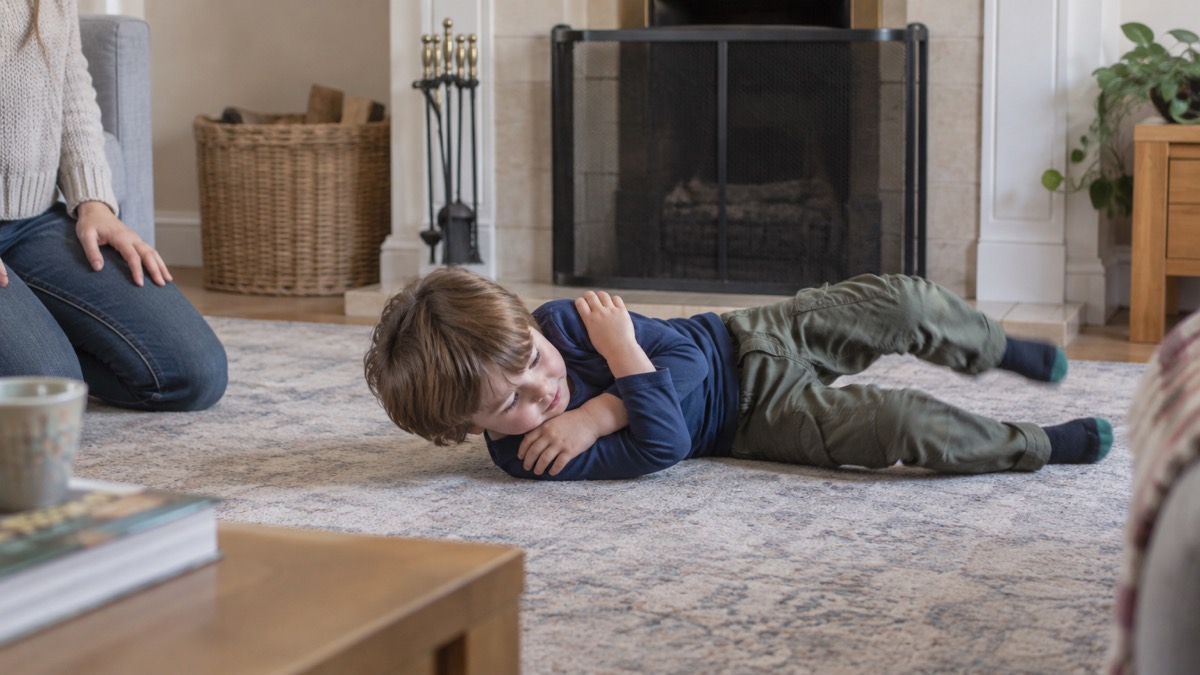
If your clothes catch fire, the single most important thing is not to run. Stop where you are, drop to the floor and roll until the flames go out. Fire and rescue services across the UK give the same instruction, and it works because rolling squashes the fire between your body and the ground, cutting off the oxygen it needs1.
Once the flames are out, treat the burn as a burn. Cool it under cool running water for at least 20 minutes, cover it loosely with cling film or clean non-fluffy material, and get medical advice. If the burn is very large or deep, is on the face, genitals or bottom, or was caused by acid, a chemical or electricity, phone 999 or go to A&E4.
This page covers what to do in the first seconds, how to help someone else whose clothing is alight, how to cool and cover a burn, what not to put on it, when to call for help, and the extra care children need. It applies across England, Scotland, Wales and Northern Ireland, because the fire and rescue services and the NHS give the same core advice in all four nations.
Stop, drop and roll: the first few seconds
The moment clothing catches fire, the instinct to run is strong and it is the wrong one. Running feeds the flames with air and fans them, so they burn faster and spread2. London Fire Brigade puts it plainly: "Stop, don't run, you'll make the flames worse"9. Every fire and rescue service in the UK teaches the same three steps, and they are worth knowing by heart before you ever need them.
- Stop. Do not run. Stay where you are9.
- Drop. Lie down on the ground immediately9.
- Roll. Roll around on the floor to smother the flames, squashing the fire between you and the ground to help remove oxygen10.
Rolling works because fire needs air. Pressing the burning fabric against the floor starves it, and the rolling motion puts out the flames across the whole garment rather than one patch. Keep rolling until the flames are out3.
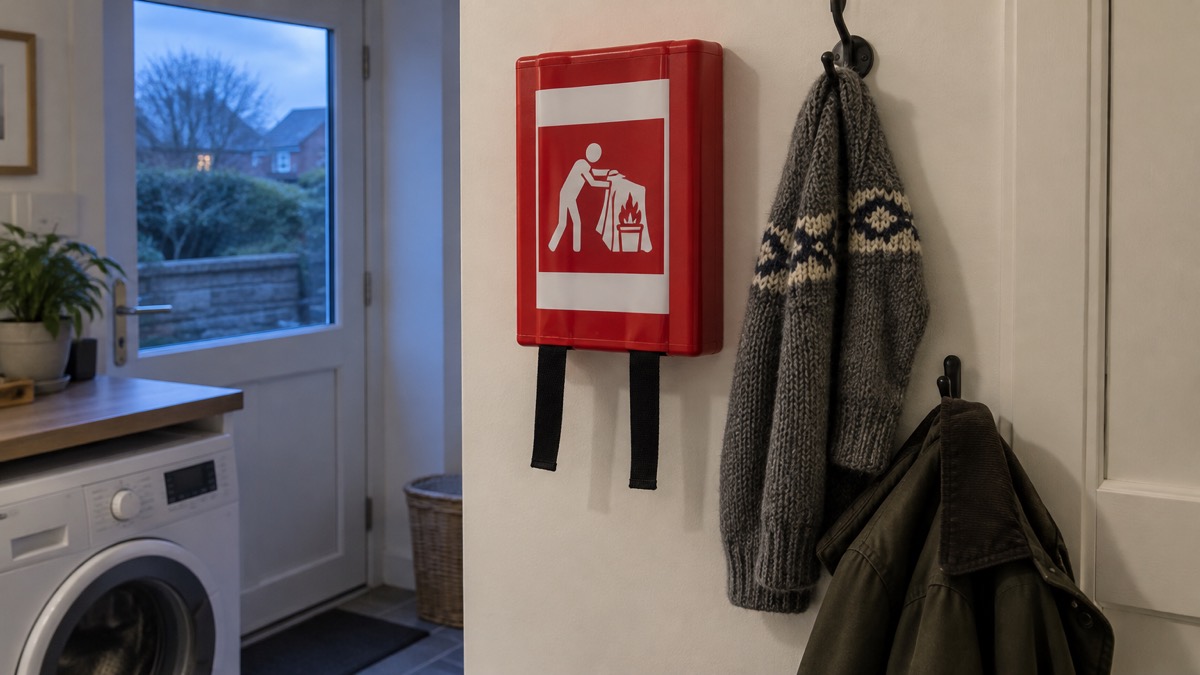
If you have a heavy item within reach, a coat, a blanket or a fire blanket, you can smother the flames with it as well as rolling6. A fire blanket kept in the kitchen is designed for exactly this: wrap it around the person on fire to put out flames on clothing11. It is worth knowing where yours is before you need it, in the same way you know where the smoke alarms are. Our guide to fire extinguishers and fire blankets explains the types and where to keep them.
Helping someone else whose clothes are on fire
If it is someone else's clothing that is alight, you may need to act for them, because people may run. The advice from fire and rescue services is to tell or force them to drop, then smother the flames with a blanket or a large item of clothing, and then get them to roll12. If the person cannot do this themselves, cover the flames with thick material such as a blanket or coat and smother them13.
A fire blanket is the purpose-made option, but a heavy coat, a rug or a curtain will do the same job. The principle is the same as rolling: cut the fire off from air. Do not use a light, synthetic fabric that might melt, and do not fan the flames by wafting at them.
Once the flames are out on someone else, treat their burns the same way you would your own: cool with running water for at least 20 minutes, cover loosely, and call for help if the burn is serious. If they are unconscious, not breathing, or the burn is extensive, phone 999 immediately4.
Cool the burn under cold running water for at least 20 minutes
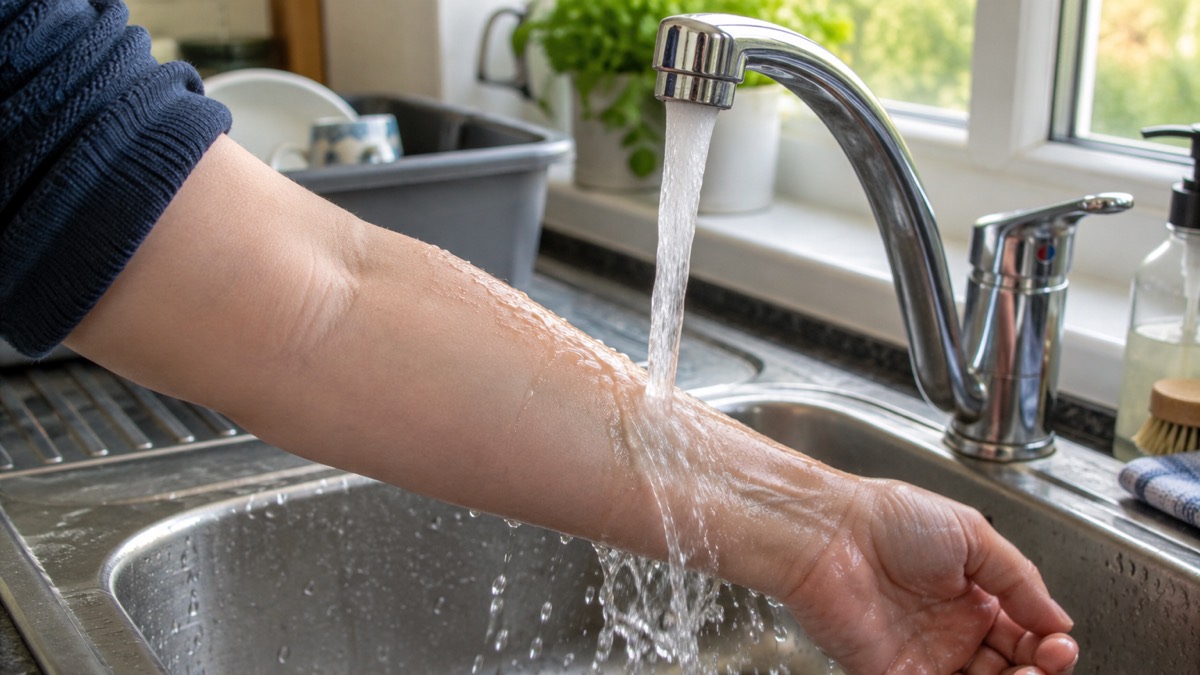
Cooling is the most important first aid step after the flames are out, and it is the one people most often cut short. NHS guidance is to cool the burn under cool running water for 20 minutes4. Other NHS sources put it at 20 to 30 minutes, to reduce the heat in the skin14. Cornwall's public health team says a minimum of 20 minutes, then seek medical attention at your nearest minor injuries unit6. The safe rule is at least 20 minutes, and longer does no harm.
Cooling works by removing heat from the skin so it stops cooking. It also helps with pain. Use cool running water rather than ice or iced water, and keep the burn under it for the full 20 minutes7. If you are cooling a child, keep them warm elsewhere while the burn is under the water, because a small child can get cold quickly.
While the burn is cooling, remove or cut off any clothing covering the area, unless it is stuck to the burn15. Remove nappies and jewellery near the burn before swelling starts. Do not pull away fabric that has melted into the skin; leave that to medical staff.
What not to put on a burn
The list of things people put on burns is long, and almost all of it is wrong. NHS inform is clear: while the skin heals, keep the area clean and do not apply any creams or greasy substances, and do not burst any blisters, as this can lead to infection5. That rules out butter, oil, toothpaste, egg white and the old household remedies.
What you should put on a burn is a loose cover. Cover the burn loosely with cling film7. Warwickshire Fire and Rescue Service says to cover the burn with clean, non-fluffy material, and that clingfilm is ideal, to prevent infection8. Cling film works because it is sterile, does not stick, and keeps air and dirt off the raw skin. Lay it on in sheets rather than wrapping it around a limb, so it does not tighten as the burn swells.
When to call 999 or go to A&E
Most small burns can be dealt with at home or at a minor injuries unit, but some need emergency help. Phone 999 or go to A&E if you have a burn or scald that is very large or deep, is on your face, genitals or bottom, or has been caused by an acid or chemical, or by electricity5. These are the burns that can affect breathing, sight or deeper tissue, and they need to be seen quickly.
For a child, the threshold is lower. If your child gets a burn which is very large or deep, is on their face or bottom, or has been caused by acid or a chemical, get urgent help5. If you are in any doubt about a burn, call NHS 111 for advice rather than waiting to see how it develops.
If the fire is still burning in the room, get everyone out first and call 999 from outside. Our guide to what to do if a fire starts in your house sets out the order of actions, and how fire and rescue services respond to a call explains what happens after you dial.
Children and burns: always get medical advice for under-5s
Children are more likely to be burned than adults, and their skin is thinner, so a burn that would be minor on an adult can be more serious on a child. The rule from NHS guidance is simple: if your child is under 5 and has a burn or scald, always seek advice from a health professional17. Do not rely on your own judgement about whether it looks bad enough.
Teaching children what to do is part of prevention. Teach kids to stop, drop and roll if their costume or clothing catches fire, have a few practise attempts, and remind them to cover their face with their hands19. Practising makes the action automatic, which matters because in a real fire a child may not think clearly. Also teach them that if they see smoke or flames they should tell a grown-up straight away20.
Fancy dress costumes are a particular risk, especially around candles and Halloween or Christmas decorations. Costumes are often made of thin synthetic fabric that can catch light quickly, which is why the stop, drop and roll message is taught alongside costume safety19. Keep children away from candles, open fires and cookers, and never leave a child alone in a kitchen where pans are on the hob21.
After the flames are out: healing and protecting the skin
Once a burn has been cooled and covered, and medical advice has been sought if needed, the job is to let it heal without infection. Minor burns normally heal in around 14 days and leave little scarring5. Keep the area clean, do not apply creams or greasy substances, and do not burst blisters5. If the burn becomes more painful, smells, or weeps pus, get medical advice, as these can be signs of infection.
Pain is not a reliable guide to how serious a burn is. A deep burn can damage the nerves and hurt less than a minor one. Judge a burn by its size, depth and position, and by how it was caused, not by how much it hurts22.
When the skin has healed, protect it from the sun. NHS inform advises keeping the area covered with cotton clothing, wearing a peaked cap or wide-brimmed hat if the burn is on your face, and using sun cream with a high sun protection factor (SPF)5. Healed burn skin is delicate and burns again more easily, so this matters for at least the first year and beyond.
If you need help after a fire, from housing to insurance to replacing essentials, our guide to what to do after a fire in your house sets out the practical steps. And if you have not yet made a plan for getting everyone out safely, how to make a fire escape plan is the place to start, because the best time to know what to do is before you need it.
Sources (22)
- Cooking safely, Mid and West Wales Fire and Rescue Service, 2026-10-29
- If you have a fire, Devon and Somerset Fire and Rescue Service, 2026
- Home fire action plan, Surrey County Council, 2026-08-24
- Burns and scalds prevention, Healthier Together, 2026-10-25
- Burns and scalds, NHS inform, 2026-07-31
- Stay safe this summer, Cornwall Council, 2026-08-07
- Your Health Guide Winter 2025, NHS Western Isles, 2025-12
- Christmas safety tips, Warwickshire County Council, 2026-10-29
- Escape plan houses and converted flats, London Fire Brigade, 2026-10-25
- If your clothes catch fire, Essex Prepared, 2026-10-29
- Fire safety equipment, Devon and Somerset Fire and Rescue Service, 2026
- Camping safety, North Wales Fire and Rescue Service, 2026-10-29
- Home safety other languages, Dorset and Wiltshire Fire and Rescue Service, 2024-06-07
- What to do if your child has an accident, NHS, 2025-12-18
- Preventing and treating burns | Age UK”, Age UK
- Digital easy read fire safety booklet, London Fire Brigade, 2026
- Burns and scalds, Cambridgeshire and Peterborough Children's Health, 2026-06-23
- Burns and scalds, Just One Norfolk, 2026-10-25
- Fancy dress costumes, London Fire Brigade, 2026-10-25
- What children should know about fires, Wiltshire and Swindon Prepared, 2026-10-25
- Burns prevention and tips, Mid and South Essex NHS, 2026
- Burns and scalds - Victoria Road Surgery, Victoria Road Surgery (NHS)
 Home Fire Safety Checklist
 Bedtime Fire Safety Checks
 Fire Risk Checks for Carers
 Why a CO Alarm Is Beeping
 Smoke Alarm Keeps Chirping
 Testing Smoke and CO Alarms
 Replacing Smoke and CO Alarms
 Where to Fit Smoke Alarms
 How Many Smoke Alarms
 Where to Put a CO Alarm
 Do I Need a CO Alarm
 Can a CO Alarm Detect a Gas Leak
 Trapped by Fire What to Do
 Putting Out a Chip Pan Fire
 Electrical Fire Safety