Candles are one of the most common causes of fires in the home, and Christmas is when most of us light them: on the table, in a window, around the tree1. Fire and rescue services across the UK say the same thing every December, and it is worth taking in before the decorations go up. Candles cause over 800 fires in UK homes every year2. In England alone there have been 254,030 accidental dwelling fires over the last ten years, with an average of 180 fatalities each year3.
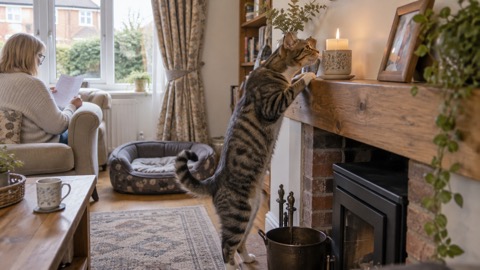
The good news is that candle fires are almost entirely preventable, and the rules are simple. Put every candle in a proper holder on a heat-resistant surface, well away from anything that can burn. Never leave a lit candle unattended, and put it out before you leave the room or go to bed. Keep candles away from the tree, the cards and the escape routes, and keep them out of reach of children and pets. If you want the glow without the risk, battery-powered candles are the safest option and carry almost no fire risk4.
This page sets out where a candle should and should not go at Christmas, what to do about decorations and costumes, and how to choose and store LED candles so that the batteries inside them stay safe. It also covers what to do in a power cut, when candles are often reached for in a hurry.
Candles start about 850 house fires a year in England
The national picture is consistent. Candles cause over 800 fires in UK homes every year, according to North Yorkshire Fire & Rescue Service2. Fire and rescue services also describe candles as one of the most common causes of fires in the home8. The two statements describe the same problem: a small flame, left alone, in a room full of things that burn.
Candle fires are not just frequent, they are disproportionately serious. Mersey Fire says around 30% of fires started by candles and attended by fire and rescue services result in death or injury5. That is a higher share than many other causes, and it reflects how candle fires start: slowly, quietly, often while the household is asleep or in another room.
The risk is not spread evenly through the year. Across the UK there is an average of 102 fires a day during December9. Devon and Somerset Fire and Rescue Service attends over 20 fires every year caused by candles10. The national total is made of many local ones like that.
What makes Christmas different is what is in the room. A real Christmas tree can be extremely flammable7. Cards, wrapping paper, tinsel, curtains and soft furnishings all sit closer together than usual, and candles are often placed among them for effect. The same flame that is harmless on a bare mantelpiece becomes a serious risk beside a dry tree.
The lesson for a household is not to give up candles, but to treat them as a small open fire that needs watching. The rest of this page is about how to do that, and when to choose a battery candle instead.
Where to put a lit candle: holders, surfaces and spacing
Every fire service gives the same core instruction: put candles in a suitable holder, on a safe and secure surface, well away from anything that could catch fire such as curtains, carpets, books and shelves10. The holder should be heat resistant, sturdy and large enough to contain drips or melted wax6. A candle that fits loosely, or that sits directly on a shelf, is a candle waiting to fall.
Tea lights need particular care. Put tea lights in proper holders: the foil outer container gets extremely hot and can melt the surfaces underneath10. Fire services advise burning tea lights in or on a suitable, non-flammable holder on a heat-resistant surface6. The metal cup the tea light arrives in is packaging, not a holder.
Spacing matters as much as the surface. Do not burn several candles close together, as this might cause flaring11. A row of candles along a table or a windowsill looks festive, but the combined heat changes how each one burns. Give each candle its own holder and its own space.
A few practical checks before you light anything:
- Is the holder heat resistant, sturdy and wide enough to catch wax?6
- Is the surface underneath heat resistant, including under tea lights and filled glasses?13
- Is there at least a clear space around the candle, free of cards, paper, fabric and decorations?10
- Is the candle out of reach of children and pets?14
- Is it away from a doorway, a draught or anywhere it could be knocked?10
If any answer is no, move the candle before you light it. It takes a moment and removes most of the risk.
Never leave a candle burning unattended
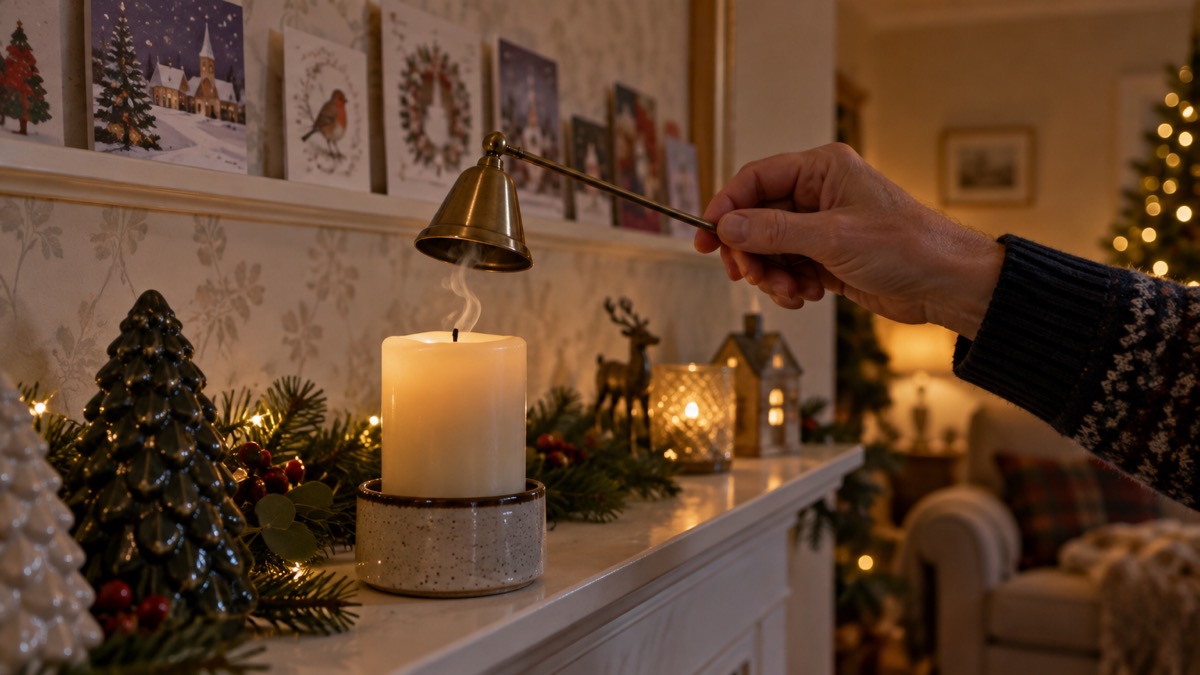
This is the single most important rule, and every fire service states it in the same terms. Never leave burning candles unattended, and always extinguish them before going to sleep, making sure the wick ember is no longer glowing6. Put burning candles out when you leave the room, and make sure they are out completely once you have finished with them15. Northern Ireland Fire & Rescue Service puts it in capitals: "NEVER leave candles unattended."16
The reason is simple. A candle that is left alone is a candle nobody is watching, and candle fires often start in the minutes after a room is emptied. A draught moves a flame towards a card. A pet knocks a holder onto a carpet. A wick flares. None of these needs long, and none is noticed if nobody is there.
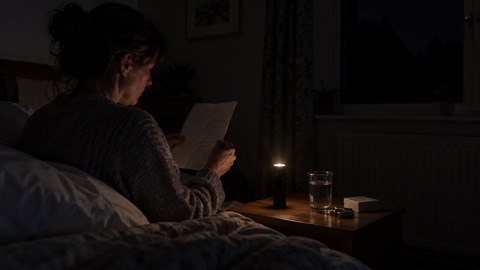
Bedrooms deserve a rule of their own. Do not use candles in bedrooms or anywhere where you might fall asleep5. Tiredness is the enemy of candle safety: the moment you are most likely to drift off is the moment you are least likely to notice a flame. London Fire Brigade's bedtime checks are blunt: put candles, incense sticks and oil burners out, and never leave them unattended or burning when you are asleep17.
A simple routine works well at Christmas. Before you leave a room, blow out or snuff every candle in it. Before bed, do a last walk round the living room and kitchen: candles out, tree lights off, sockets not overloaded. That walk takes a minute and is the difference between a warm evening and a fire.
Candles near the tree, decorations and escape routes
Christmas decorations change the geometry of a room, and not always for the better. A real Christmas tree can be extremely flammable, so it is important to be aware of how to reduce your risks7. Keep candles well away from the tree, and never place a lit candle on or under it.
Decorations also block the way out. Double check that your tree and other decorations do not block escape routes, and that you and your guests know where the exits are7. Do not place Christmas trees or decorations in front of doors or windows used as escape routes, and never in front of fire fighting equipment, including alarms18. The same advice appears in Northern Ireland's festive guidance: never put decorations over your smoke alarms19.
That last point matters more than it sounds. A smoke alarm that is covered or hidden by tinsel cannot wake you. Keep the space around alarms clear, and test them before the decorations go up.
| Check | What to do | Why it matters |
|---|---|---|
| Tree and candles | Keep lit candles well away from the tree | A real tree can be extremely flammable7 |
| Escape routes | Keep doors and windows clear of trees and decorations | You need to get out quickly18 |
| Smoke alarms | Never put decorations over them | A covered alarm cannot warn you19 |
| Guests | Tell them where the exits are | Visitors do not know your home7 |
If you have guests staying over Christmas, a short word about where the doors are is worth having. It costs nothing and it is the kind of thing that matters only once.
LED candles: the safer choice, with batteries out of reach
The safest way to use candles is to buy battery-powered versions4. They have almost no fire risk, last longer and are better for the environment, because you can replace, recycle or recharge the battery and reuse the candle4. Fire services recommend battery-operated candles in pumpkins and lanterns because they are much safer than traditional candles20, and they suggest considering LED candles instead of candles with a naked flame, particularly where someone in the home uses emollient creams21.
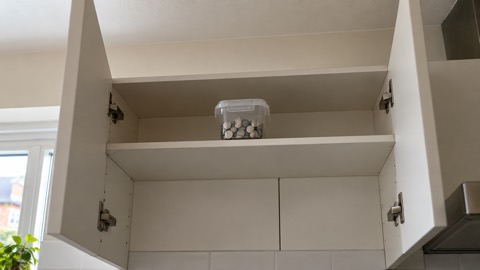
LED candles are not risk-free, though. The button batteries inside them are a serious hazard to small children. If a child swallows one, there may be few symptoms, so trust your instincts22. Keep LED candles and spare batteries out of reach of small children, and store spares somewhere a child cannot get to them. When a battery is flat, replace it promptly and dispose of the old one safely rather than leaving it loose in a drawer.
For households that want to move away from flames altogether, there is more on the choice in our comparison of LED candles and real candles, and on keeping children safe around lights in torches, candles and children.
Candles, costumes and the Christmas party
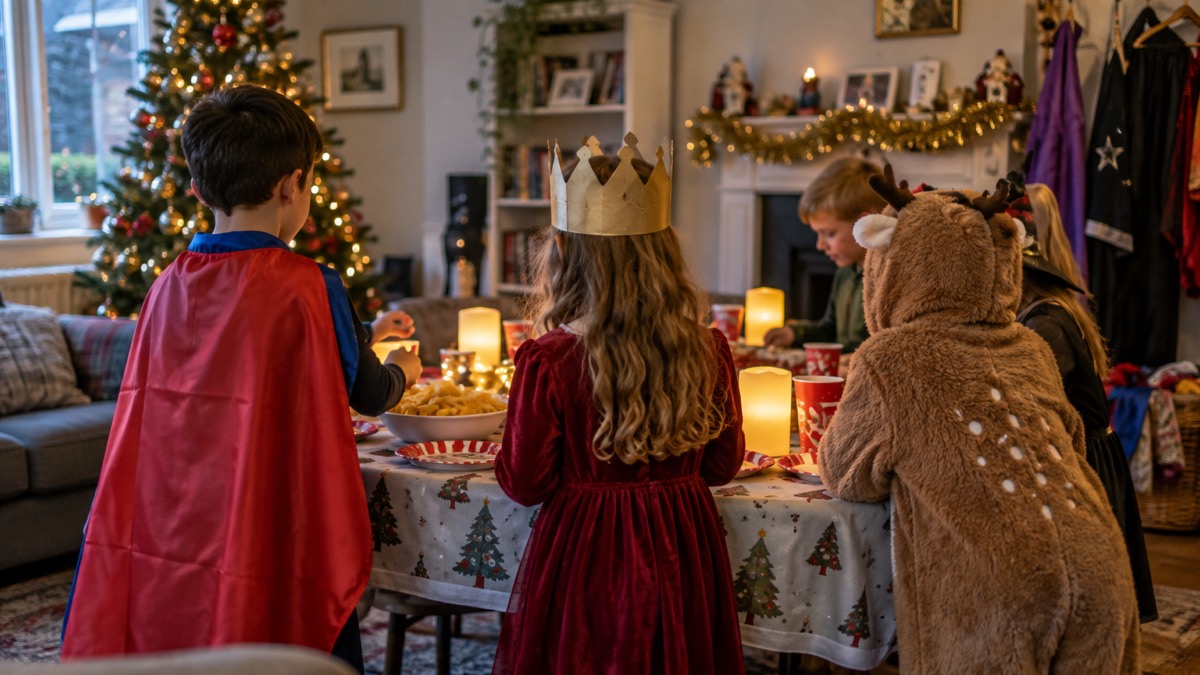
Fancy dress is part of Christmas for many families, and it brings its own candle risk. Fire services warn that fancy dress costumes can very easily catch fire, and advise avoiding wearing them when cooking or near a naked flame or heat source14. Devon and Somerset Fire and Rescue Service is equally direct: costumes are especially likely to catch fire23.
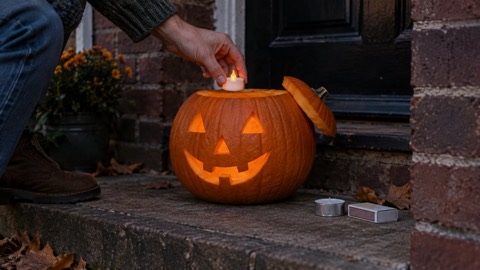
The practical rule is to keep lit candles well away from anyone in costume, and to avoid naked flames altogether at parties where children are dressed up. If you want the glow of candles at a party, battery-operated candles do the job without the risk20. The same advice applies to pumpkins and lanterns at Halloween, where fire services recommend a torch, glow stick or battery-operated candle instead of a naked flame24.
If a costume does catch light, the advice is to stop, drop and roll: stop where you are, drop to the ground and roll to smother the flames23. Knowing that in advance is worth more than a fire extinguisher you have never used.
Lighting the home in a power cut
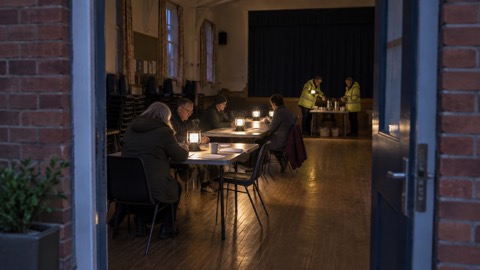
Winter power cuts are when many households reach for candles, and official advice does include keeping a supply25. But a power cut is also when candle safety is hardest: the lights are off, people are moving around with torches, and it is easy to put a candle down somewhere unsafe.
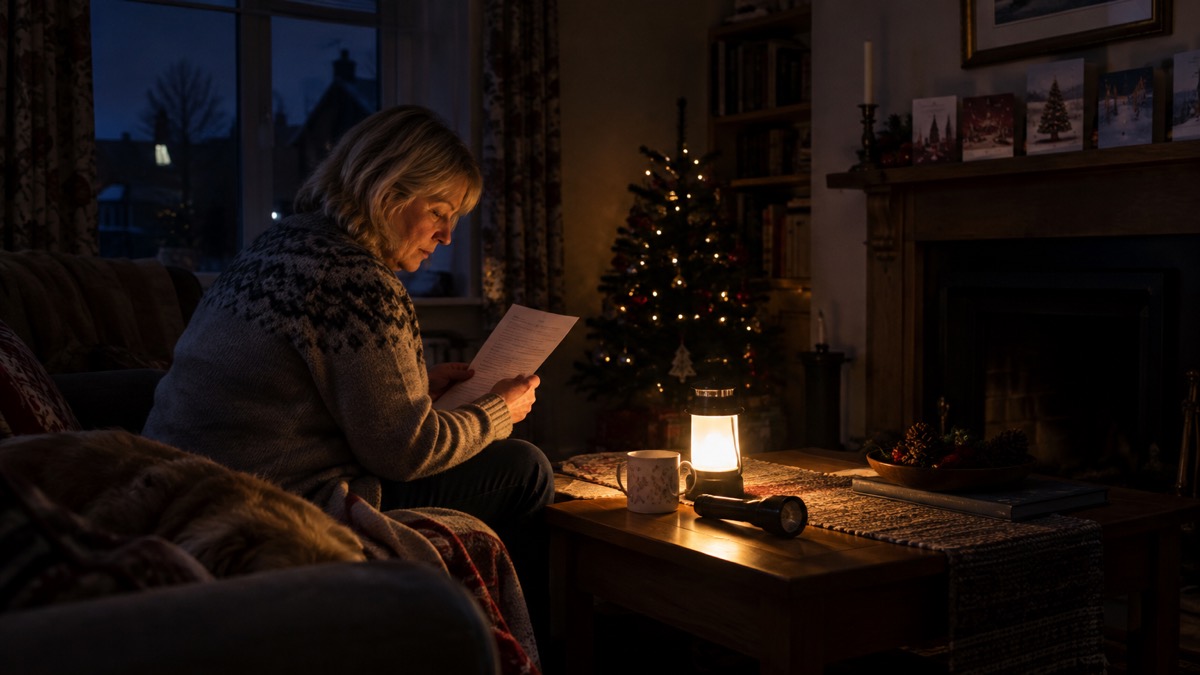
Treat candles as a last resort in a power cut. Battery-powered lights are the safer way to light a room, and a torch or lantern gives more light with no open flame4. If you do use candles, apply every rule on this page: proper holder, heat-resistant surface, away from anything that can burn, and out before you sleep6. Never use a candle as a nightlight in a bedroom6.
Our guide to lighting your home safely when the power goes off sets out the options in order, and the power cut checklist is worth printing and keeping with your torches. For the wider picture, see emergency lighting at home.
If something goes wrong
If a candle sets light to something, do not try to move it. Get everyone out, stay out, and call 999. If clothing catches fire, stop, drop and roll23. If someone is burned, cool the burn with cool running water and seek medical help; the NHS has advice on burns prevention and first aid26.
A free home fire safety visit from your local fire and rescue service can help you spot risks you have stopped seeing, including where candles and decorations sit. Our guide to free home fire safety visits explains how to ask for one.
Sources (26)
- Candle safety, Cumbria Fire & Rescue Service, 2026
- Candle safety, North Yorkshire Fire & Rescue Service, 2026
- Home safety position statement, National Fire Chiefs Council, 2025
- Stay warm safely in winter, Devon and Somerset Fire and Rescue Service, 2026
- Candles, Mersey Fire, 2026
- Home fire safety, Northern Ireland Fire & Rescue Service, 2026
- Staying safe this season, Devon and Somerset Fire and Rescue Service, 2025
- Best lighting for a power cut, MindXP, 2024
- Christmas fire safety tips, North Yorkshire Fire & Rescue Service, 2025
- Candles, Devon and Somerset Fire and Rescue Service, 2026
- Stay safe this Halloween, North Yorkshire Fire & Rescue Service, 2020
- Digital easy read fire safety booklet, London Fire Brigade, 2026
- Candle fire safety, South Wales Fire and Rescue Service, 2026
- Celebrate safely, Humberside Fire and Rescue Service, 2026
- Candle safety, Carmarthenshire County Council, 2026
- NIFRS issues safety plea following two house fire fatalities in one day, Northern Ireland Fire & Rescue Service, 2025
- Bedtime checks, London Fire Brigade, 2026
- Christmas fire safety, North Yorkshire Fire & Rescue Service, 2023
- Stay safe this Christmas, North Yorkshire Fire & Rescue Service, 2024
- Halloween safety tips, North Yorkshire Fire & Rescue Service, 2025
- Know the fire risk, National Fire Chiefs Council, 2026
- Button batteries, NHS South Yorkshire and Bassetlaw, 2026
- Stop, drop and roll, Devon and Somerset Fire and Rescue Service, 2026
- Don't let fire turn your Halloween into a nightmare, Northern Ireland Fire & Rescue Service, 2026
- Strong winds and heavy rain warning information and advice, nidirect, 2026
- Burns prevention and tips, Mid and South Essex NHS Foundation Trust, 2026
 Spare Batteries for Lights
 Candle Safety Checklist
 Lighting Checks Before Winter
 Can Jar Candles Shatter
 Battery Tea Lights in a Pumpkin
 Keeping Pets Away from Candles
 Finding Torches in the Dark
 Red Light Mode on a Head Torch
 SOS and Strobe Modes
 IPX Ratings for Torches
 Torch Battery Runtime
 Camping Lantern Run Time
 Using a Torch While Charging
 Looking Into a Bright Torch
 Storing Spare Coin Cells