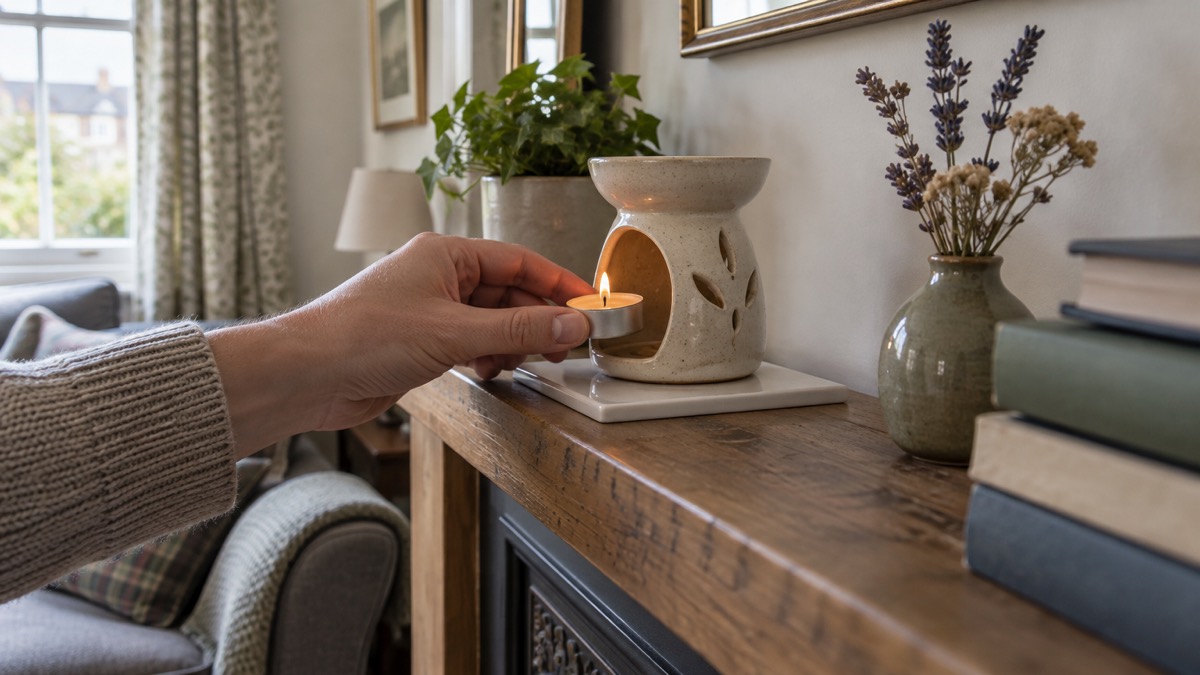
An oil burner is a candle in a different shape. The tealight underneath is a naked flame, and it carries exactly the same fire risk as any other candle in the home. Fire services are consistent on this: put it on a stable, heat-resistant surface, keep it away from anything that can catch fire, and put it out before you leave the room or go to sleep1.
The scale of the risk is worth knowing. Candles cause over 800 fires in UK homes every year1, and one fire service reports that around 30% of fires started by candles and attended by fire and rescue services result in death or injury3. An oil burner adds a second hazard on top of the flame: the hot metal or ceramic dish and the foil cup the tealight sits in, both of which stay hot long after the flame is out.
The good news is that the rules are simple and well tested. Treat the burner as you would a candle, never leave it burning when you are not in the room, and consider a battery or LED alternative for everyday use. This page sets out where to put it, what to keep away from it, when to put it out, and what to use instead.
An oil burner's tealight is a naked flame, so treat it like any candle
The heat source in an oil burner is a tealight, and a tealight is an open flame in a thin aluminium cup. Fire and rescue services advise against using candles or any other naked flames to provide light, as these could pose a fire hazard7, and Cumbria Fire and Rescue Service describes candles as one of the most common causes of fires in the home8.
That matters for an oil burner because the burner concentrates the risk. The flame sits under a dish of oil, which gets hot, and the whole assembly sits on a surface that may be wood, cloth or plastic. North Yorkshire Fire and Rescue Service warns that even the little aluminium container a tealight comes in is not totally heatproof, and advises against putting tealights directly on to baths and TVs because the foil gets hot enough to damage what is underneath1. An oil burner's dish and base get hot in the same way.
The safe pattern is the same one fire services give for candles:
- Stand the burner on a stable, heat-resistant surface, never on something that could tip or scorch4.
- Use a proper, non-flammable holder rather than resting the tealight on the furniture5.
- Keep the flame away from curtains, clothing and furniture10.
- Put it out before you leave the room or go to bed2.
"Always place candles /oil burners on a stable, heat-resistant surface."
If you use an oil burner for the scent rather than the light, the same rules still apply. The flame does not know what it is heating.
Safe placement: a non-flammable holder on a heat-resistant surface
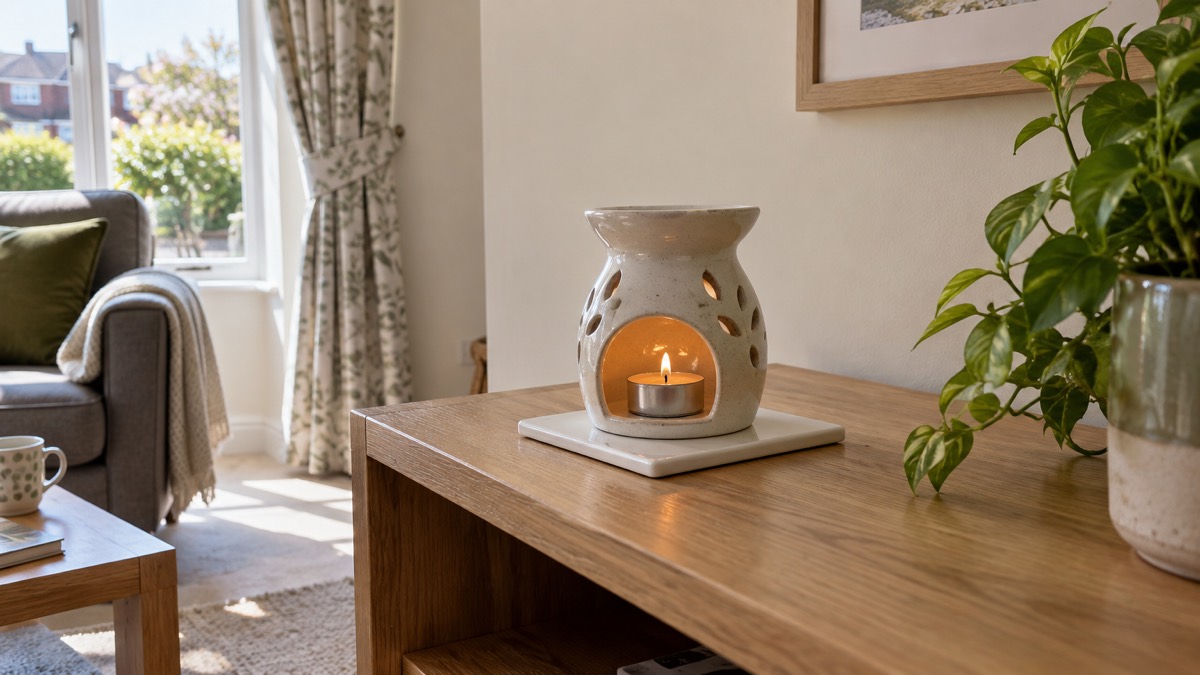
Placement is where most candle accidents are prevented or set up. Fire services ask for two things together: a holder made for the job, and a surface that will not scorch or catch. Merseyside Fire and Rescue Service says to always make sure candles are in a suitable holder and away from anything flammable3, and South Wales Fire and Rescue Service advises putting candles, including container candles such as tealights, on a heat-resistant surface to avoid damage to the surface below9.
For an oil burner, that means a ceramic, metal or stone base, not a wooden shelf, a cloth runner or the edge of a bath. Keep it clear of anything that hangs: curtains, blinds, drying laundry, tea towels. The London Fire Brigade's easy-read fire safety booklet is blunt about it: keep candles, incense sticks and oil burners away from curtains, clothing and furniture, always stay in the room while the flame is lit, and make sure the flame is out before you go to bed10.
A heat-resistant base under the burner protects the surface and keeps the flame clear of anything that can catch.4
A few placement rules that follow from the fire service advice:
- Away from fabrics. Keep clothing and fabric well away from open flames11, and keep costumes and decorations well away from flames12.
- Away from soft furnishings and bedding. Do not use candles in bedrooms or anywhere you might fall asleep3.
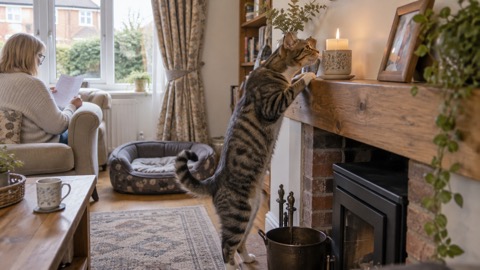
- Away from children and pets. Keep children away from any naked flames, including sparklers13.
- Away from anything that can fall on it. A shelf above a radiator, a windowsill behind a curtain or a bath edge are all poor choices.
Never leave a lit burner unattended or burning while you sleep
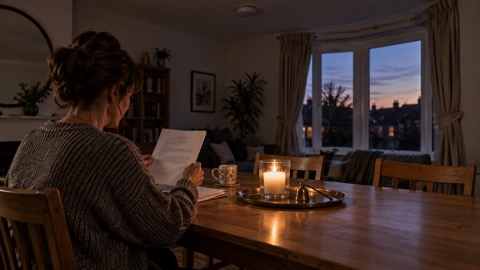
This is the single most important rule, and every fire service in the UK says it. The London Fire Brigade's bedtime check is explicit: put candles, incense sticks and oil burners out, and never leave them unattended or burning when you are asleep2. The Northern Ireland Fire and Rescue Service adds that you should be sure the wick ember is no longer glowing, never burn a candle on or near anything that can catch fire, and never use a candle as a nightlight5.
The reason is simple physics. A flame left alone has time to spread from the wick to the foil cup, the dish, the surface and then the room, and a sleeping household has no chance to react. Carmarthenshire Council's guidance adds a further caution that catches many people out: never light candles, burners or cigarettes when you are tired or sleepy4. If you are drowsy, the burner should already be out.
A practical routine for the end of the evening:
- Put the burner out, ideally with a snuffer or the lid of the burner rather than by blowing.
- Check the wick ember is no longer glowing5.
- Move the burner out of reach of children and pets while it cools.
- Leave the room only when the flame is out and the dish has cooled.
Keep burners apart and away from fabrics, decorations and costumes
Grouping burners, or standing one beside decorations, is how a small flame becomes a large fire. Carmarthenshire Council advises against burning several candles close together because this might cause the flame to flare4. The same applies to several oil burners in a row: each one adds heat and each one is another flame to watch.
Fabrics are the other half of the problem. Fire services ask households to keep clothing and fabric well away from open fires and log burners11, and to keep all costumes and decorations well away from flames12. Humberside Fire and Rescue Service warns that fancy dress costumes and flowing materials can very easily catch fire, and advises against wearing them near a naked flame or heat source15. The National Fire Chiefs Council makes the same point about costumes generally7.
| What to keep clear | Why it matters | Source |
|---|---|---|
| Curtains, blinds, laundry | Fabric catches quickly and hangs over the flame | 10 |
| Fancy dress and flowing clothing | Costumes are especially likely to catch fire | 15 |
| Decorations and paper | Decorations are a growing cause of fires | 15 |
| Emollient-treated clothing and bedding | Emollients make fabric far more flammable | 16 |
| Other burners and candles | Flames close together can flare | 4 |
Emollient creams deserve a special mention because the risk is not obvious. Fire services warn that clothing or bedding contaminated with an emollient cream can catch fire far more easily, and that anyone using emollients should sit a safe distance from fires or heaters and take extra care with candles16. If anyone in the household uses a prescribed emollient, keep the burner well away from them and from anything they have sat on or worn.
Why candle flames cause over 800 home fires a year
The figures explain why fire services are so firm about naked flames. North Yorkshire Fire and Rescue Service states that candles cause over 800 fires in UK homes every year1. Cumbria Fire and Rescue Service calls candles one of the most common causes of fires in the home8, and Merseyside Fire and Rescue Service reports that around 30% of fires started by candles and attended by fire and rescue services result in death or injury3.
Those numbers are not abstract. They are the reason a tealight under an oil burner is treated as a serious fire risk rather than a decorative nicety. The fire does not need to be large to be dangerous: a flame that reaches a curtain or a costume can spread in seconds, and the smoke from a small fire in a closed room is enough to cause harm.
The pattern is consistent across the UK. Fire and rescue services publish candle safety advice that returns to the same points: a proper holder, a heat-resistant surface, nothing flammable nearby, and never unattended1. The advice does not change at the border; only the name of the service does.
Oil burners at Christmas and Halloween
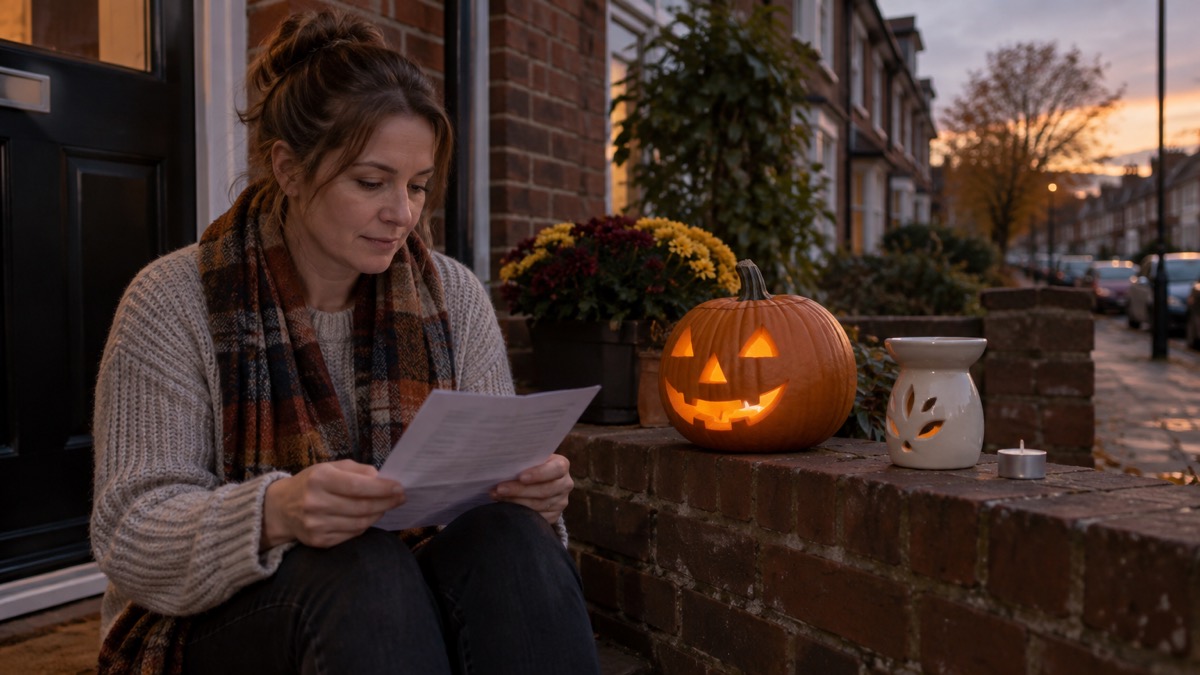
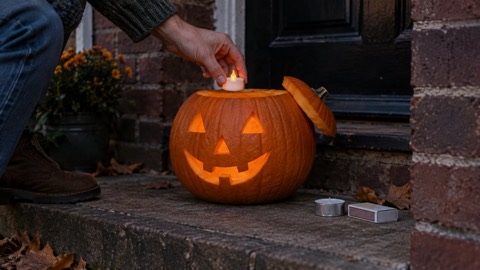
Festive periods raise the risk because decorations, costumes and visitors all arrive at once. Fire services step up their warnings accordingly. North Yorkshire Fire and Rescue Service advises using battery-operated candles in pumpkins and lanterns because they are much safer than traditional candles12, and the Northern Ireland Fire and Rescue Service says to avoid using a candle in pumpkins altogether and use a torch or battery-operated alternative19.
Costumes are the bigger hazard. The Northern Ireland Fire and Rescue Service warns that Halloween costumes can be flammable, and advises checking clothing for a suitable safety marking, avoiding naked flames and knowing how to stop, drop and roll19. It also advises keeping costumes away from candles and other naked flames and avoiding long or trailing fabrics that could easily catch fire19. Humberside Fire and Rescue Service makes the same point for celebrations generally15.
A battery tealight gives the same glow in a pumpkin without a naked flame.12
At Christmas the same logic applies to decorations, table centres and window displays. Keep the burner off the table where people are reaching across it, and never stand it among paper decorations or under a Christmas tree. If the point is atmosphere rather than scent, a battery candle or a string of LED lights does the job with no flame at all12.
LED and electric alternatives that give light without a flame
If you want light or atmosphere rather than scent, there is no reason to use a flame. Fire services recommend battery-powered candles as the safest option: they have almost no fire risk, last longer and are better for the environment because you can replace, recycle or recharge the battery and reuse the candle6. The London Fire Brigade's winter guide calls flameless LED candles a safer alternative to tealights21, and Northern Ireland's power cut advice says to use a torch, oil or gas lamp rather than candles for light22.
| Option | What it gives you | Suits | Source |
|---|---|---|---|
| Battery-powered candle | Flame-free glow, reusable | Pumpkins and lanterns, where a naked flame is best avoided | 6 |
| Flameless LED candle | A safer alternative to tea lights | Where a tealight would otherwise be used | 21 |
| Torch, oil or gas lamp | A source of light rather than candles | When the electricity goes off | 22 |
| Wind-up torch or lantern | Light with no batteries at all | Kept ready for emergencies | 23 |
| LED lighting generally | Cooler and uses far less electricity than halogen | Replacing household bulbs | 24 |
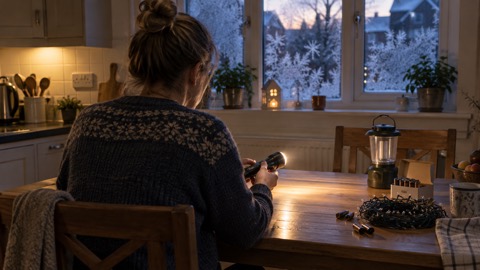
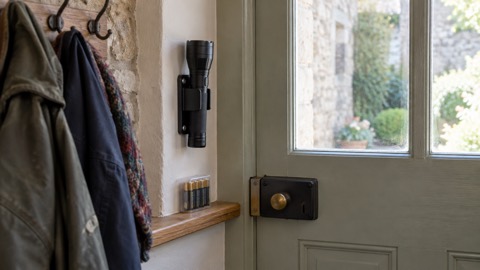
For a power cut, the advice is to reach for a torch or lantern first. Northern Ireland's emergency guidance says to preferably use a torch, oil or gas lamp as a source of light rather than candles22, and Wiltshire and Swindon's preparedness advice points out that wind-up torches or lanterns need no batteries at all23. Our guide to lighting your home safely when the power goes off sets out the options in more detail, and the candle fire safety page covers the flame rules in full.
If you keep an oil burner for the scent, treat it as a candle and follow the same rules. If you keep it for the glow, a battery candle does the same job with none of the risk.
Sources (24)
- Candle safety, North Yorkshire Fire & Rescue Service, 2026
- Bedtime checks, London Fire Brigade, 2026
- Candles, Mersey Fire, 2026
- Candle safety, Carmarthenshire Council, 2026
- Home fire safety, Northern Ireland Fire & Rescue Service, 2026
- Stay warm safely this winter, Devon and Somerset Fire and Rescue Service, 2026
- Know the fire risk, National Fire Chiefs Council, 2026
- Candle safety, Cumbria Fire and Rescue Service, 2026
- Candle fire safety, South Wales Fire and Rescue Service, 2026
- Digital easy read fire safety booklet, London Fire Brigade, 2026
- Open fires, Devon and Somerset Fire and Rescue Service, 2026
- Halloween safety tips, North Yorkshire Fire & Rescue Service, 2025
- Portable heaters, gas fires and open fires | London Fire Brigade, London Fire Brigade
- Wildfires - Risk Advice & Articles - Wiltshire & Swindon Prepared, Wiltshire & Swindon Local Resilience Forum
- Celebrate safely, Humberside Fire and Rescue Service, 2026
- Emollient creams, North Yorkshire Fire & Rescue Service, 2026
- Fire safety for carers, Devon and Somerset Fire and Rescue Service, 2026
- Candle safety, Scottish Fire and Rescue Service, 2026
- Don't let fire turn your Halloween into a nightmare, Northern Ireland Fire & Rescue Service, 2026
- Don't let flames play tricks on your treats this Halloween, Northern Ireland Fire & Rescue Service, 2026
- Extreme weather winter guide, London Fire Brigade, 2025
- Strong winds and heavy rain warning: information and advice, nidirect, 2026
- How to prepare for the loss of electricity, Wiltshire and Swindon Prepared, 2026
- Be summer ready, Electricity North West, 2026
 Spare Batteries for Lights
 Candle Safety Checklist
 Lighting Checks Before Winter
 Can Jar Candles Shatter
 Battery Tea Lights in a Pumpkin
 Keeping Pets Away from Candles
 Finding Torches in the Dark
 Red Light Mode on a Head Torch
 SOS and Strobe Modes
 IPX Ratings for Torches
 Torch Battery Runtime
 Camping Lantern Run Time
 Using a Torch While Charging
 Looking Into a Bright Torch
 Storing Spare Coin Cells