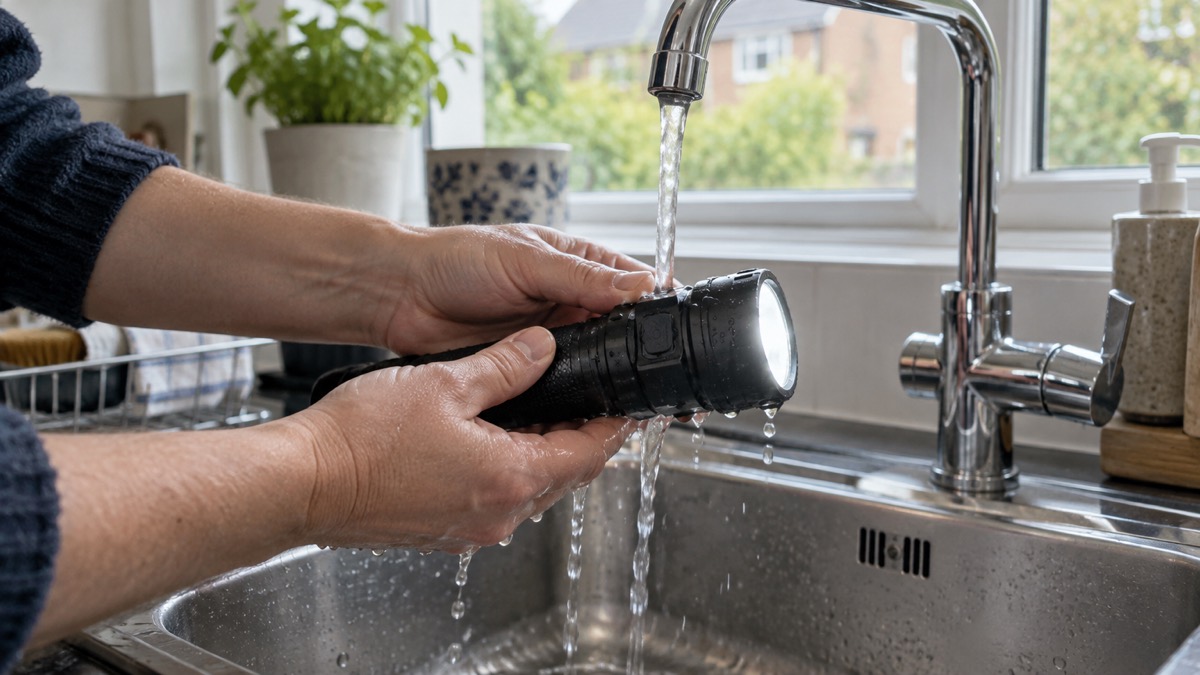
If you are buying a torch for power cuts or flooding, the letters and numbers after the name tell you what it will survive. An IP rating has two digits: the first covers dust, the second covers water. An IPX rating drops the dust digit and tells you about water only. So IPX6 means protection against powerful water jets from any direction, equivalent to high-pressure water spray of 100 litres per minute, but the torch is not submersible1. An IP67 rating confirms full dust protection and water resistance to submersion up to 1 metre2.
For most households the practical answer is simple. Keep a torch with spare batteries somewhere you can find in the dark, and avoid using candles where possible as they increase the risk of fire1. If you want a torch that survives being dropped in a puddle or a flood, look for a water rating in the maker's own specification and read its limits: a high rating is not a promise that any torch can go to any depth for any length of time.
This page explains what each rating means, which ones suit a power cut or a flood, where to keep your torch and batteries, and how battery and wind-up torches compare when the power goes off.
What the numbers after IP actually mean
The rating system is a code, and once you can read it you can judge any torch in a shop or a cupboard. The first digit is about solids, mainly dust. The second is about water. An X in the first position means the maker has not tested or not stated the dust protection, so IPX6 and IPX4 tell you nothing about dust at all4.
The water digits you will meet on household torches run in steps:
| Rating | What it means in practice | Example |
|---|---|---|
| IPX4 | Splash resistant, protected against water splashing from any direction | GP Discovery C33 Task Torch and C32 Outdoor Torch, both listed as IPX43 |
| IPX6 | Protected against powerful water jets, equivalent to 100 litres per minute, but not submersible | NEBO Torchy 2K and Torchy 2K Black Line4 |
| IP67 | Full dust protection and water resistance to submersion up to 1 metre | Ledlenser HF6R, HF4R and HF7R head torches5 |
| IP68 | Full submersion protection, to the depth and time the maker states | Ledlenser P7R Core, P6R, P7R 25th Anniversary and P5R6 |
Two things follow. First, a higher number is not automatically better for your cupboard: an IPX4 torch kept dry indoors is perfectly adequate, and the rating only matters when water is involved. Second, IP68 is not one fixed standard. Makers set their own depth and time within it, and you have to read the small print. The Ledlenser HF6R SIGNATURE is rated IP68 for fresh water to a maximum depth of 1.5 metres for up to 30 minutes13, and the P7R Work UV carries the same 1.5 metre, 30 minute limit14. The NEBO Torchy 600 Flex is rated IPX7 for temporary immersion in up to 1 metre of fresh water for 30 minutes, and the maker states plainly that this does not cover high-pressure water jets or saltwater exposure15.
IPX or IP: which rating tells you more
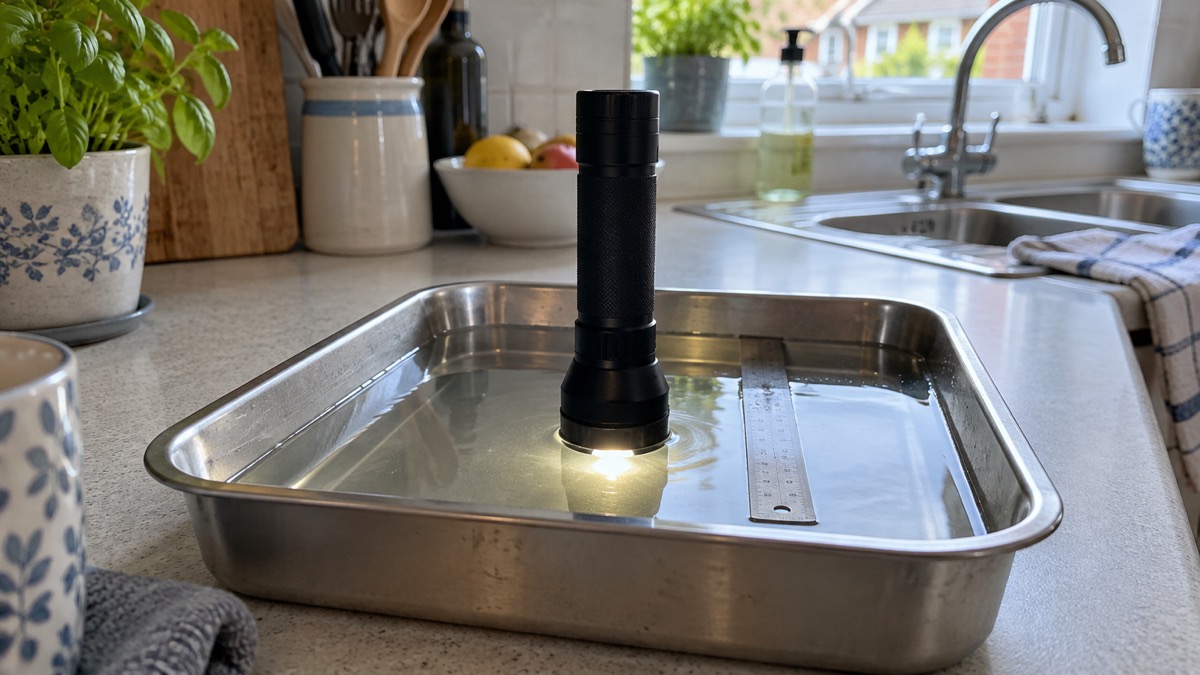
The difference between the two labels is the dust digit, and it matters more than it sounds. A torch rated IPX6 is protected against powerful jets of water but says nothing about dust, so grit and dust can still get into its workings4. A torch rated IP67 or IP68 has been assessed for both: full dust protection as well as water resistance5.
For a household torch kept in a kitchen drawer or a hallway cupboard, dust is rarely the problem. For a torch kept in a shed, a garage, a workshop or a car, or one that will be used during building work or a flood clean-up, the two-digit rating is the more useful one. The NEBO NEWTON 2500, for example, is described by its maker as IP67 waterproof and built from impact-resistant aircraft-grade aluminium, which suits a torch that lives somewhere rough16.
There is a second distinction worth knowing. IPX4 and IPX6 torches are water resistant, not waterproof in the everyday sense: they will survive rain and splashes but not a soaking. The NEBO Torchy 2K is rated IPX6 and the maker is explicit that it is not submersible4. If your reason for buying is flooding, that is the sentence to look for on the box.
IP68 means a torch survives full submersion, within limits
IP68 is the highest water rating you will commonly see on a household torch, and it means the torch is built to be fully submerged. The P5R and P7R Core use sealing systems the maker calls Flex Sealing and Seal-Tight Technology to achieve it6. Below that, IP67 confirms full dust protection and water resistance to submersion up to 1 metre11, and IP67 also means complete dust-tightness and water resistance up to 1 metre depth for 30 minutes, withstanding accidental submersion12.
What IP68 does not mean is unlimited. The rating is always tied to a depth and a duration, and those come from the maker, not from the code itself. The figures to look for are in the specification table or the manual:
- The Ledlenser HF6R SIGNATURE RGB head torch is IP68 rated for fresh water to a maximum depth of 1.5 metres for up to 30 minutes13.
- The Ledlenser P7R Work UV is IP68 for submersion up to 1.5 metres deep for up to 30 minutes14.
- The NEBO Torchy 600 Flex, rated IPX7, survives accidental submersion in up to 1 metre of fresh water for 30 minutes15.
Fresh water is the other limit. The Torchy 600 Flex's rating explicitly does not cover saltwater exposure15, so a torch dropped off a sea wall or used on a beach should be rinsed in fresh water and dried afterwards, whatever its rating says.
Sealed rechargeable torches and what the rating depends on
Rechargeable torches with sealed bodies and covered charging ports are where you most often find IP68, and that makes sense: a torch with no battery hatch has fewer ways in for water. The Ledlenser P7R Core, P6R, P7R 25th Anniversary, P5R, HF6R SIGNATURE and P7R Work UV are all sealed rechargeable designs rated IP686.
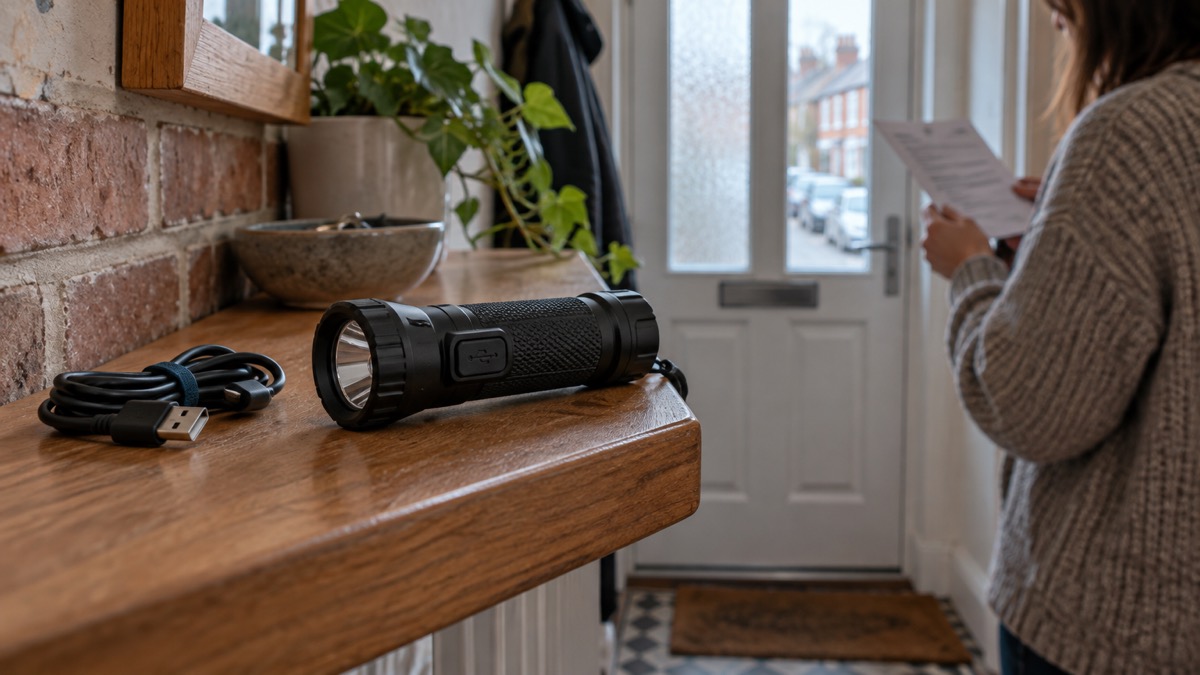
The rating only holds if the seals are intact and closed. A charging port cover left open, a cracked lens or a worn O-ring undoes it, and no maker's rating covers a damaged torch. Treat the cover as part of the kit: close it fully after every charge, and check it before the torch goes into a flood kit or a bag.
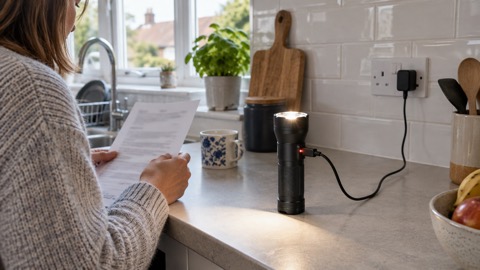
Charging safely matters as much as the water rating. The National Fire Chiefs Council advises storing and charging batteries in a cool, dry place17, and its lithium-ion guidance adds that batteries should be kept away from heat, moisture and combustible materials, and that loose batteries should not come into contact with metal objects18. A sealed torch charged on a kitchen worktop, away from soft furnishings, is the safe pattern. For more on this, see charging and storing rechargeable torches safely.
If you are weighing up a sealed rechargeable torch against a battery model, the trade-off is simple: the rechargeable one can carry the highest water rating and needs no battery drawer, but it depends on being charged. A battery torch with a spare set of cells will always work if the cells are good. Many households keep both, and the rechargeable or battery torches comparison sets the two side by side.
Where to keep a torch and spare batteries
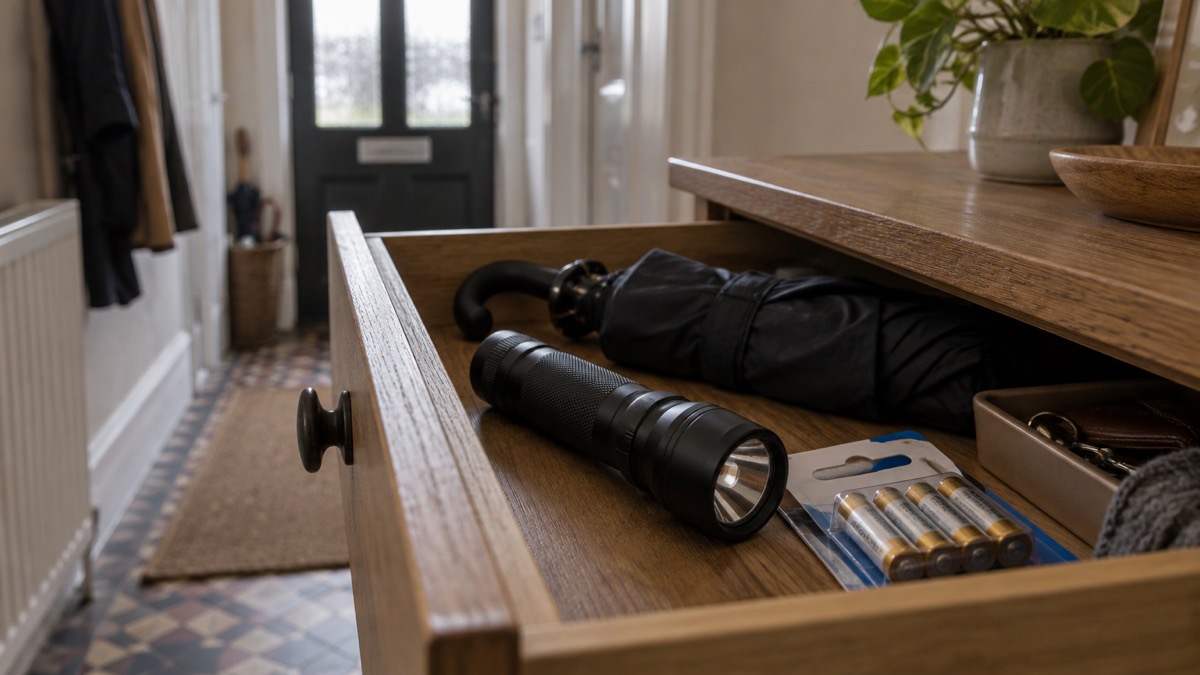
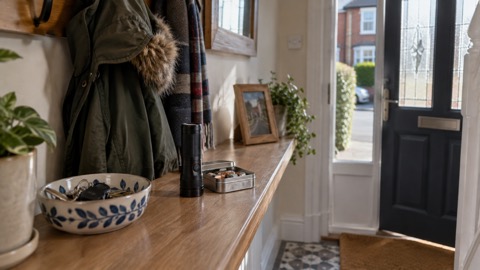
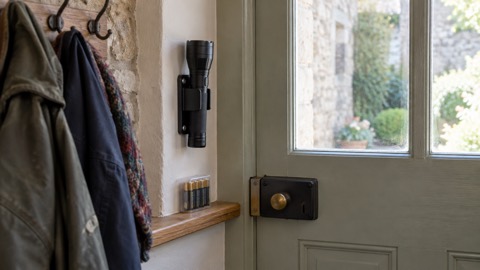
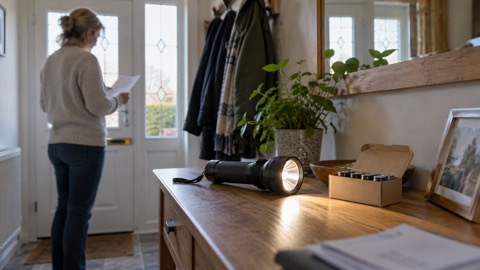
The best-rated torch in the country is no use if you cannot find it in the dark. Official and independent guidance converges on the same advice: keep a torch with spare batteries in an accessible location2, and make sure everyone in the home knows where it is kept so the nearest person can retrieve it and safely help others20.
Practical places to keep one, drawn from official guidance:
- Somewhere you can reach easily, so you can check the fuse box and move around the house safely21.
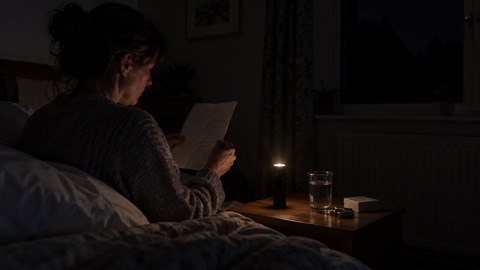
- On every floor of the house if possible, with one next to your bed22.
- In your emergency kit, alongside a battery, solar or wind-up radio23.
- In your flood kit, with spare batteries, if you live somewhere that floods24.
- Make sure everyone in the home knows where the torches are kept, so the nearest person can retrieve them and safely help others25.
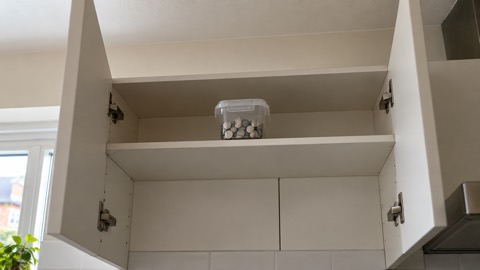
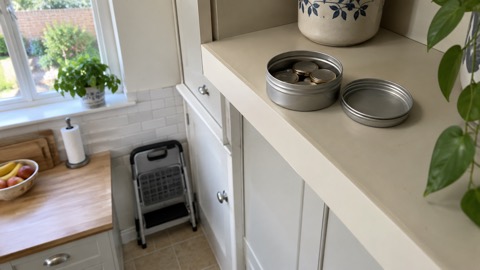
Batteries need looking after too. Keep spare cells with the torch2, store them in a cool, dry place away from heat, moisture and combustible materials, and do not let loose batteries touch metal objects such as keys or coins18. If your torch is battery operated, check the spares are the right size and still in date before winter.
Battery-powered or wind-up: the safest torches in a power cut
Both types are recommended by official guidance, and the choice comes down to how you will use them. The standard advice is a battery-operated torch with spare batteries, or a wind-up torch26. Fire and rescue service guidance in Scotland goes further, noting that wind-up torches are good to have because they are safe, cheap and never run out of power28, and Welsh official guidance points out that wind-up torches or lanterns need no batteries at all29.
| Type | What it does well | What to watch | Who it suits |
|---|---|---|---|
| Battery torch | Bright, simple, works instantly; widely available in AA and AAA models such as the GP Discovery C33 and C323 | Depends on spare cells being good and the right size29 | Most households, as the main torch |
| Wind-up torch | Never runs out of power; safe and cheap28; needs no batteries at all29 | Needs winding when you want light | Households that want a light that cannot be caught flat, and as a backup |
| Sealed rechargeable | Highest water ratings, often IP686; no battery drawer needed | Must be kept charged; charging needs care17 | Households that will charge it regularly and want one torch to do everything |
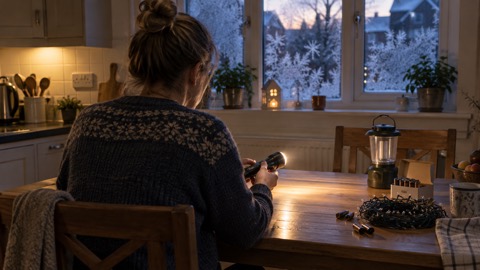
A sensible arrangement for most homes is a battery torch as the everyday light, a wind-up torch as the one that cannot fail, and a sealed rechargeable torch if you want a single model that will survive water as well. The torches section explains the types in more detail, and the solar and wind-up lamps page covers lights that need no batteries at all.
Choosing a torch for flooding
Flood guidance for Northern Ireland is typical of official advice across the UK: include a torch with spare batteries in your flood kit24. That is the baseline. If you want a torch that will survive being dropped in flood water, choose one rated IPX7 or IP68, which cover temporary immersion, and check the maker's depth and time limit before you rely on it15.
A few practical points for a flood kit:
- Keep the torch with its spare batteries in your emergency flood kit24.
- Choose a torch you can operate with cold or wet hands, and test it before the flood season.
- Remember that no torch rating makes flood water safe. Follow official advice on flood water and do not walk or drive through it.
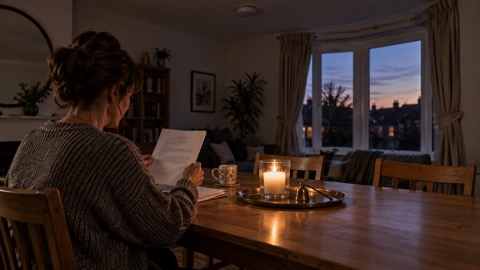
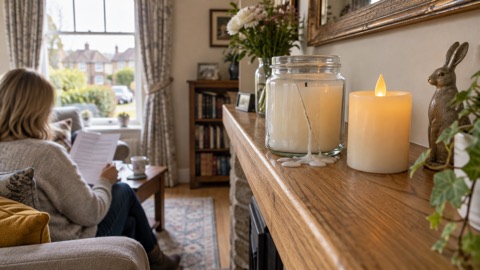
- Avoid using candles where possible, as they increase the risk of fire28.
For the wider picture, the power cut lighting guide covers lighting a home safely when the power goes off, and the power cut checklist lists what to have ready.
Sources (29)
- Be informed about power cuts, GOV.UK Prepare, 2026-10-21
- Being prepared for a power cut, SP Energy Networks, 2026-10-26
- GP Discovery C33 Task Torch, GP Batteries, 2026-10-25
- Torchy 2K, NEBO Tools, 2026-10-25
- HF6R RGB Rechargeable Head Torch 2026, Ledlenser, 2026-10-26
- P6R Rechargeable Torch, Ledlenser, 2026-10-26
- GP Discovery C32 Outdoor Torch, GP Batteries, 2026-10-25
- Torchy 2K Black Line, NEBO Tools, 2026-10-25
- HF4R RGB Rechargeable Head Torch 2026, Ledlenser, 2026-10-26
- HF7R RGB Rechargeable Head Torch 2026, Ledlenser, 2026-10-26
- P7R 25th Anniversary Edition Rechargeable Torch, Ledlenser, 2026-10-26
- P5R Rechargeable Torch, Ledlenser, 2026-10-26
- HF6R SIGNATURE RGB Rechargeable Head Torch, Ledlenser, 2026-10-26
- P7R Work UV Rechargeable Torch, Ledlenser, 2026-10-25
- Torchy 600 Flex, NEBO Tools, 2026-10-25
- NEWTON 2500, NEBO Tools, 2026-10-25
- Charge Safe, National Fire Chiefs Council, 2026-10-09
- Lithium-ion batteries, National Fire Chiefs Council, 2026-10-09
- Be prepared, Northern Powergrid, 2026-10-26
- 12 tips to prepare for a power cut, Horsted Keynes Parish Council, 2026
- Winter ready, Isle of Anglesey County Council, 2026-10-25
- How to prepare for and stay safe during a power cut, -a-power-cut/), NICEIC, 2025-01-24
- Power cut plan, Northern Powergrid, 2026-10-26
- Preparing for a flood, nidirect, 2025-09-11
- Power cut, British Red Cross, 2026-10-25
- Emergency kit, Ready Scotland, 2026-10-22
- Storm damage: how to protect your home from a thunderstorm, Which?, 2026-10-21
- Heating and gas, Scottish Fire and Rescue Service, 2024-11-21
- How to prepare for the loss of electricity, Wiltshire and Swindon Prepared, 2026-10-25
 Spare Batteries for Lights
 Candle Safety Checklist
 Lighting Checks Before Winter
 Can Jar Candles Shatter
 Battery Tea Lights in a Pumpkin
 Keeping Pets Away from Candles
 Finding Torches in the Dark
 Red Light Mode on a Head Torch
 SOS and Strobe Modes
 Torch Battery Runtime
 Camping Lantern Run Time
 Using a Torch While Charging
 Looking Into a Bright Torch
 Storing Spare Coin Cells
 Flat Button Battery Dangers