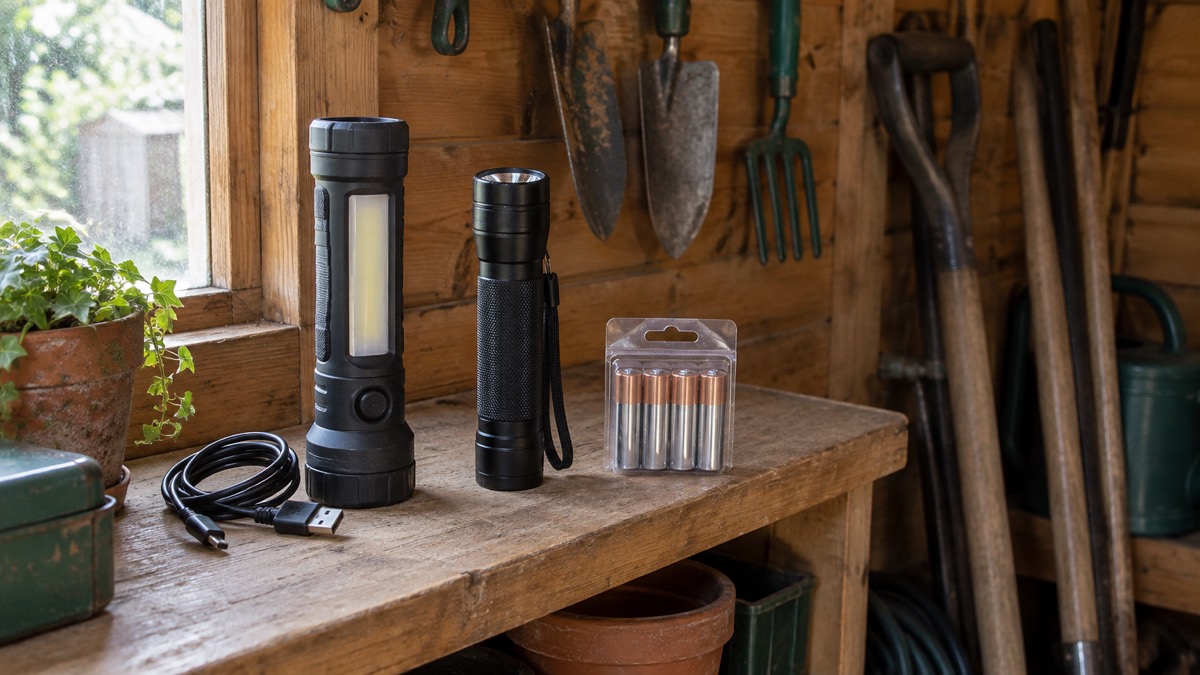
If the power goes off tonight, the light you reach for should already be in the room with you, and it should not be a candle. Official advice is consistent: keep a battery or wind-up torch at home with spare batteries, and treat torches as safer than candles1. The same instruction appears in the Scottish Government's emergency kit list, which asks for a battery-operated torch and spare batteries, or a wind-up torch2.
The choice between rechargeable and battery torches is not really a choice between good and bad. It is a choice about what happens when the power is out for longer than your charge lasts. A rechargeable torch is bright, convenient and cheap to run, but it only works for as long as the charge you put into it before the power went off. A battery torch works until the cells run down, then works again the moment you fit fresh ones. A wind-up torch needs no batteries at all, but you have to keep winding it.
The practical answer for most households is to have both: a rechargeable torch or head torch for everyday use and for the first hours of an outage, and a battery torch with spare batteries as the fallback that cannot be caught flat. Keep them where you can find them in the dark, and know how many spare batteries you have.
What official advice says to keep
The core recommendation is short enough to memorise. Keep a battery or wind-up torch, and spare batteries, at home, and remember that torches are safer than candles1. The Scottish Government's emergency kit page says the same thing in kit-list form: a battery-operated torch and spare batteries, or a wind-up torch2. The National Risk Register, in its public preparedness advice, tells households to keep basic supplies including a torch and batteries, which it describes as safer than candles, along with a wind-up radio for updates during a power cut7.
Energy network operators give the same instruction to their own customers, because they know a supply interruption can happen without warning. Northern Powergrid says a battery-powered or wind-up torch is the safest option3. SP Energy Networks advises keeping a torch with charged batteries or a wind-up dynamo torch within easy reach8. Electricity North West, through NHS community equipment guidance, says to keep a battery-operated or wind-up torch somewhere easy to find9.
| Option | What it does well | What to watch | Who it suits |
|---|---|---|---|
| Battery torch (AA or AAA) | Works until the cells run down, then works again with fresh batteries | Needs a stock of spare batteries and a check that they are not flat | Households wanting a light that cannot be caught out by a flat built-in battery1 |
| Rechargeable torch | Bright, no battery buying, charges from USB | Only lasts as long as the charge you put in before the cut1 | Everyday use, and the first hours of an outage |
| Wind-up torch | Needs no batteries at all | You have to keep winding it | A backup light, and the car10 |
| Head torch | Leaves both hands free | Beam follows your head, not the room | Jobs in the dark, and care tasks11 |
The pattern across official sources is that a torch is not one purchase but a small system: a light, a way to power it, and a spare route if that fails. That is why the same pages that recommend a rechargeable or battery torch also recommend spare batteries or a wind-up alternative1.
Rechargeable torches in a power cut: they only last as long as their charge
A rechargeable torch is a good light with one structural weakness: its run time is fixed by the charge it held when the power went off. If it was on the shelf half charged, that is what you have. If it was left on the charger and the charger is now dead, you cannot top it up. That is not a reason to avoid rechargeable torches, but it is a reason never to make one your only light.
The same logic applies to the torch on your phone. Wiltshire and Swindon Preparedness advises using the mobile torch only in emergencies and for short periods, because it drains the battery heavily12. Your phone is also your contact with the outside world and your source of updates, so spending its battery on lighting is a poor trade when a torch is in the drawer.
There is a safety side to charging as well. London Fire Brigade's fire safety guidance says to charge items and batteries only during the daytime and to unplug once charged13. That matters more in a power cut, when you may be charging from a power bank or a generator, and it matters most for lithium cells. The Scottish Fire and Rescue Service reported in December 2024 a rise in fires involving rechargeable batteries, so treat charging as a task you are present for, not something to leave running overnight14.
A rechargeable head torch can reduce the problem by accepting disposable batteries as well as its built-in pack. Ledlenser states that its HF4R RGB head torch operates with the included rechargeable battery or with standard disposable AAA batteries via a Connect Adapter, charging by USB-C16. That dual arrangement is the maker's description of its own product, and it is the pattern worth looking for: a rechargeable light that has a battery fallback built in.
Keep the torch and spare batteries where you can reach them in the dark
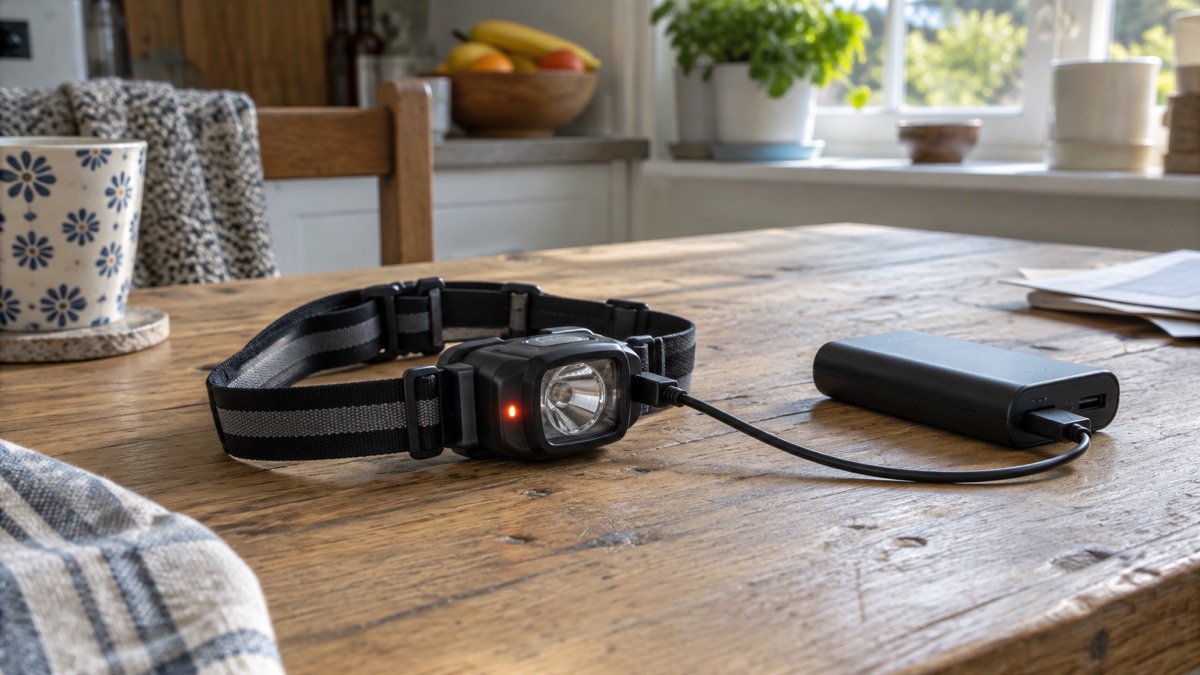
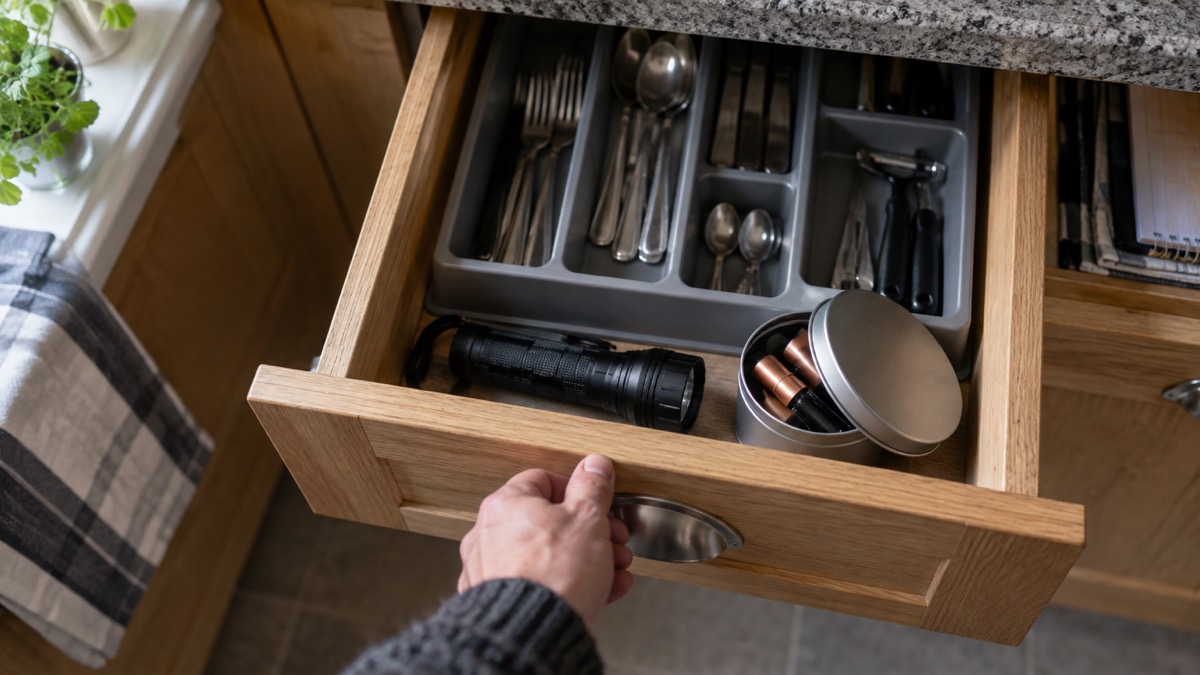
The most common way a good torch fails a household is that nobody can find it. Official guidance is explicit: keep some torches and spare batteries to hand in case the power cut happens when it is dark outside, and make sure everyone in your home knows where they are kept17. Anglesey Council's winter advice adds the reason: store a battery or wind-up torch somewhere you can access easily, so you can use it to check the fuse box and make your way around the house safely4.
That gives you two places to think about. The first is where you sit in the evening, because that is where you will be when the lights go out. The second is near the fuse box or consumer unit, because that is where you will need to look. A small torch kept in the same drawer as the meter cupboard key does more for you than a powerful one in the loft.
- Keep a torch in the room you use most in the evening, not only in a cupboard17.
- Keep a second torch or lantern near the fuse box, so you can check it safely4.
- Tell everyone in the household where the torches and batteries live17.
- Check the torches before winter, and replace any batteries that are flat or leaking.
- Store the power cut helpline number, 105, in your phone so you can report a cut and get information6.
Fire and rescue services in all four nations repeat the same message for winter weather. North Yorkshire Fire and Rescue Service says to keep a torch and spare batteries at home18. North Wales Fire and Rescue Service says to keep a light or torch handy in the event of a power cut or failure19. The Met Office winter checklist lists a torch and spare batteries as standard20. The wording changes; the instruction does not.
How many spare batteries to keep, and how to store them
No official source sets a number of spare batteries, so the sensible approach is to match the stock to the torches you actually rely on. Wiltshire and Swindon Preparedness puts it plainly: make sure you have spare batteries if the torch is battery operated12. If you keep one battery torch in the kitchen and one in the car, keep a spare set for each, plus a set for a radio if you have one.
Storage matters for two reasons. The first is that batteries you cannot find are batteries you do not have, so keep them with the torch. The second is child safety. The Child Accident Prevention Trust notes that some lithium button batteries are individually sealed in the packet and can only be removed with scissors, which is a clue to how seriously swallowed button cells are treated21. Alder Hey Children's NHS Foundation Trust lists swallowed objects including batteries among the things its symptom checker covers, and the advice to keep spare batteries in a locked cabinet or box comes from NHS guidance22.
A few storage habits keep a battery stock usable:
- Keep spare batteries in their packaging until needed, and check the pack for damage.
- Store them somewhere dry and away from heat.
- Keep button cells locked away and out of reach22.
- Keep a note of which torch takes which size, so nobody is guessing in the dark.
- Replace the stock when you replace the torch, rather than keeping cells that no longer fit anything.
The Met Office's summer preparedness advice suggests knowing where your torch is and considering a separate battery charger23. That last point is worth taking seriously if you rely on rechargeable cells: a charger that runs from a power bank or a car socket lets you refill batteries when the mains is off, which turns a box of rechargeable AAs into a renewable light source.
Use a torch or lantern instead of candles
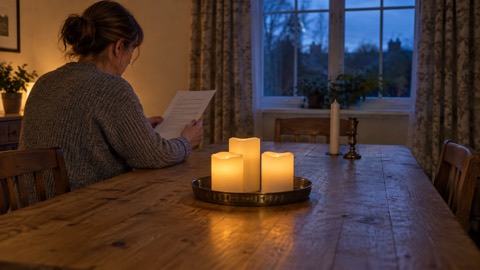
Every fire and rescue service in the UK says the same thing about candles in a power cut, and it is the clearest safety message on this page. Suffolk Fire and Rescue Service advises that in the event of a power failure you use battery operated lights or torches as an alternative light source24. The Scottish Fire and Rescue Service says that during a power cut you should use battery-operated lights or torches as an alternative light source25. Devon and Somerset Fire and Rescue Service asks households to choose torches or battery-powered lights rather than candles if they need to light their home without power5. The Northern Ireland Executive's power cut advice says to use a torch, oil or gas lamp rather than candles26.
The reason is fire risk. The Met Office's severe weather guidance says to use a standing electric torch or battery-powered lights in a power cut, because candles are a fire risk27. The British Red Cross says to avoid using candles where possible as they increase the risk of fire28. A candle that is knocked over, left near a curtain or forgotten when someone falls asleep is a fire in a home with no power, no lights and possibly no working smoke alarm if the mains-powered one has a backup battery that is also flat.
"If you need to light your home when you're without power, if you can, please choose torches or battery-powered lights rather than candles."
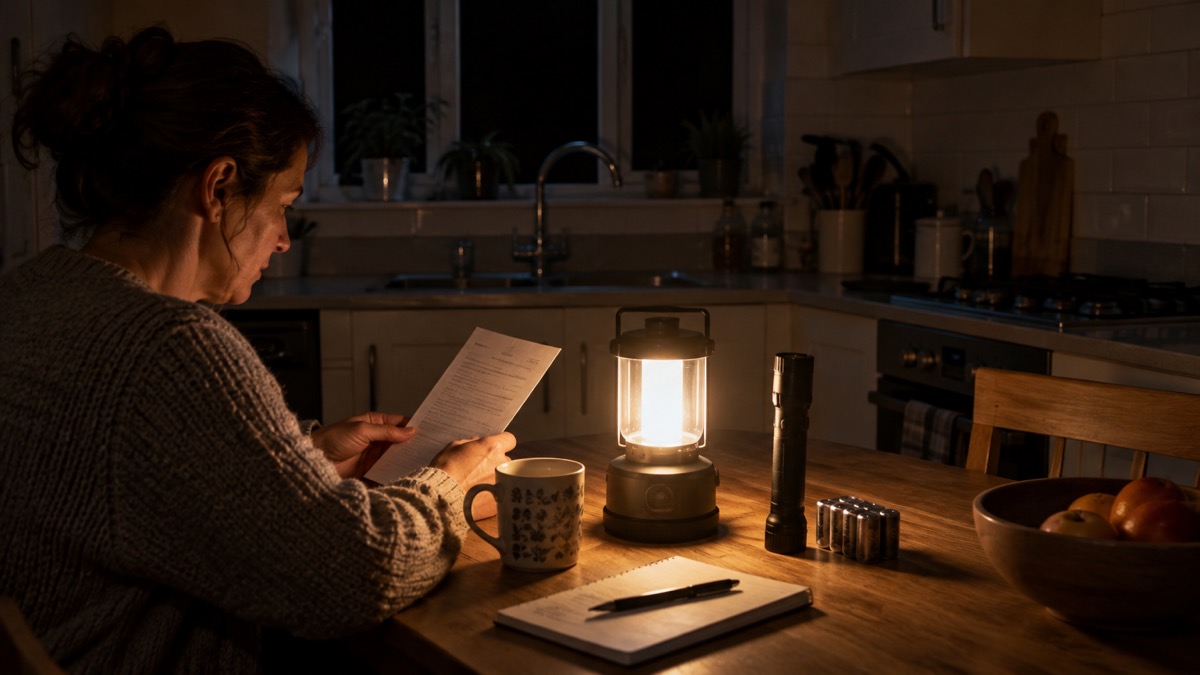
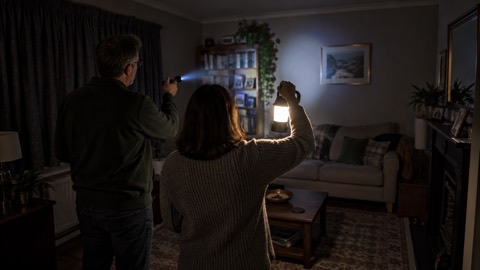
A lantern or standing torch is the practical substitute for a candle in the room where you sit. It lights a space rather than a spot, it does not need holding, and it cannot be knocked over into a flame. A hand torch is better for moving around and checking things. If you want to compare the two, our guide to lanterns and torches sets out which lights a room better, and the candle safety page covers what to do if you do keep candles for other reasons.
Head torch, lantern or hand torch: matching the light to the job
The three main shapes of emergency light do different jobs, and the right answer is usually more than one of them.
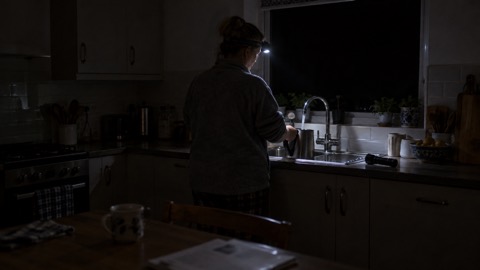
A hand torch is the general purpose light: it goes in a drawer, it is picked up to check the fuse box, and it can be pointed where you need it. A head torch leaves both hands free, which is why NHS guidance for families caring for a technology-dependent child recommends chargeable lamps and head torches so hands are free for care such as suction, and advises getting them in advance because there may be a shortage in the shops if an outage is announced11. A lantern or standing torch lights a room so a household can sit, eat and read without holding anything, and it is the closest safe substitute for a candle27.
| Light | Suits | Limitation |
|---|---|---|
| Hand torch | Checking the fuse box, moving around, looking outside | Needs a hand, so it is awkward for tasks |
| Head torch | Jobs needing both hands, care tasks, reading in bed | Beam follows your head rather than lighting the room11 |
| Lantern or standing torch | Lighting a room for a group | Less useful for directing light into a cupboard or outside27 |
| Phone torch | A few seconds of light in an emergency | Drains the phone battery heavily, so short periods only12 |
For a household starting from nothing, the sequence that official advice supports is: a battery or wind-up torch with spare batteries first1, a lantern or second torch for the main room second, and a head torch if anyone in the house needs their hands free11. Our pages on torches and head torches go into the types in more detail, and the power cut lighting guide covers how to use them through an outage.
Wind-up torches: the backup that cannot be caught flat
A wind-up torch earns its place because it has no battery to be flat and no charger to be without. Official advice treats it as an equal alternative to a battery torch in the home kit1, and the Met Office goes further for the car: a large torch with spare batteries or a wind-up torch which doesn't require battery power is essential for your vehicle10. That is a strong endorsement for a light that works after weeks in a glovebox.
The trade-off is effort. A wind-up torch has to be wound to produce light, and the light it gives is generally for finding your way rather than lighting a room for an evening. It is a backup, not a primary light. The sensible arrangement is a wind-up torch in the car and one in the house as the last line of defence, with a battery or rechargeable torch as the light you actually use.
Wind-up radios follow the same logic and appear in the same lists: the National Risk Register recommends a wind-up radio to get updates during a power cut7, and the British Red Cross grab bag list includes a wind up or battery powered radio29. If you are buying one wind-up device, a radio with a torch function covers both needs.
Torch safety: chargers, recalls and children
A torch is a low-risk item until you add a lithium cell and a cheap charger. Electrical Safety First issued a product recall in June 2022 for an 18650 Lithium Battery Charger for LED Torch Rechargeable Flashlight with UK Plug, a black single slot charger with a supply cord and three pin plug, because creepage and clearance distances were insufficient30. That is the failure mode to watch for: a charger that puts mains voltage too close to the parts you touch.
The practical rules follow from that. Charge only during the daytime and unplug once charged13. Use the charger that came with the torch, or a reputable one, rather than an unbranded unit. Check whether a product you own has been recalled before you rely on it, and report anything that overheats, smells of burning or shows scorch marks. Our page on recalled and unsafe torches and chargers explains how to check and report.
Children need their own thought. A torch is a good thing to give a child in a power cut, because it gives them a job and a sense of control, but button cells and small parts are not. Keep spare batteries locked away22, and keep the torch itself in a place a child can reach without climbing. Our guide to torches, candles and children covers this in more detail.
Where to get help and what to do now
The first thing to do is a five-minute check of what you already have. Find every torch in the house, switch each one on, and put the working ones where you will need them. Note which take batteries and which charge by USB. Then decide what is missing: spare batteries, a lantern for the main room, a wind-up torch for the car, or a head torch for anyone who needs their hands free.
If you need help because of age, disability or a medical condition, ask your energy supplier about the Priority Services Register, which is the route to extra support during a power cut. If the power goes off, call 105, the national power cut helpline, to report it and get information6. In a genuine emergency, call 999.
- Check every torch works, and replace flat batteries.
- Put a torch in the room you use most and one near the fuse box4.
- Keep spare batteries with the torch, and lock button cells away22.
- Add a lantern or standing torch for the main room27.
- Keep a wind-up torch in the car10.
- Store 105 in your phone6.
For a fuller list, our power cut checklist sets out the lighting items to have ready, and the spare batteries checklist covers what to keep in stock. If you are choosing a first torch, the torches guide explains the types, and the charging and storing page covers how to look after rechargeable cells safely.
Sources (30)
- Power cuts, UK Government Prepare, 2026
- Emergency kit, Scottish Government Ready Scotland, 2026
- What to do in a power cut, Northern Powergrid, 2026
- Winter ready, Isle of Anglesey County Council, 2026
- Fire service sees worrying increase in carbon monoxide incidents and fire risks due to power cuts, Devon and Somerset Fire and Rescue Service, 2022
- Top tips to be weatherready, Met Office, 2026
- National Risk Register, Cabinet Office, 2020
- Being prepared for a power cut, SP Energy Networks, 2026
- Equipment services: what to do in a power cut, Mersey Care NHS Foundation Trust, 2026
- Winter car kit, Met Office, 2026
- Parental letter re power shortages, North West Children's Operational Delivery Network, 2022
- How to prepare for the loss of electricity, Wiltshire and Swindon Prepared, 2026
- Digital easy read fire safety booklet, London Fire Brigade, 2026
- Case study: e-bike fire at a home, Scottish Fire and Rescue Service, 2024
- Generators, Wiltshire and Swindon Prepared, 2026
- HF4R RGB Rechargeable Head Torch 2026, Ledlenser, 2026
- 12 tips to prepare for a power cut, Horsted Keynes Parish Council, 2026
- Staying safe in the snow, North Yorkshire Fire and Rescue Service, 2023
- Stay safe this winter, North Wales Fire and Rescue Service, 2016
- WeatherReady poster winter 2026, Met Office, 2026
- All I want this Christmas is for my child to be safe from button batteries, Child Accident Prevention Trust, 2023
- Swallowed something, Alder Hey Children's NHS Foundation Trust, 2025
- 10 things you should do now to prepare for summer, Met Office, 2026
- Lighting factsheet, Suffolk Fire and Rescue Service, 2014
- Power cuts, Scottish Fire and Rescue Service, 2026
- Strong winds and heavy rain warning: information and advice, Northern Ireland Executive, 2026
- Safety in severe weather conditions, Devon and Somerset Fire and Rescue Service, 2026
- Power cut, British Red Cross, 2026
- Are you ready for big coat weather, Northern Powergrid, 2024
- 18650 Lithium Battery Charger for LED Torch Rechargeable Flashlight with UK Plug, Electrical Safety First, 2022
 LED Candles vs Real Candles
 Torch or Head Torch
 Lantern vs Torch