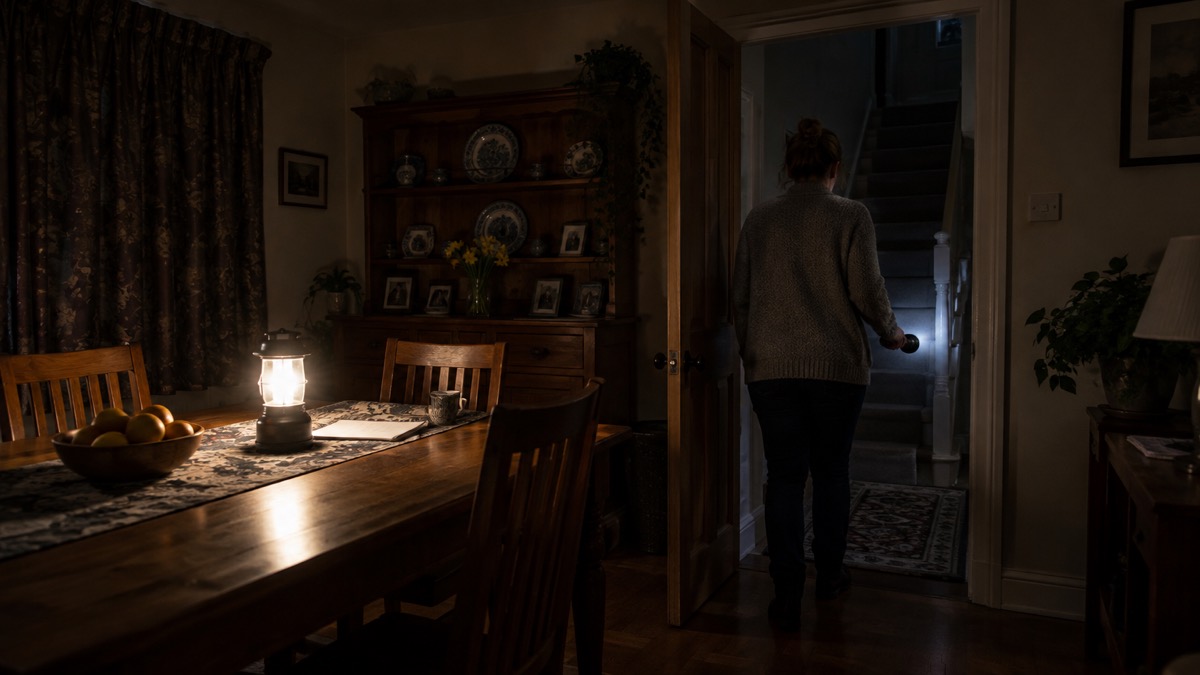
When the power goes off and the house goes dark, the safest thing you can do is reach for a torch or a battery light, not a match. The UK government's Prepare campaign puts it plainly: keep a battery or wind-up torch, with spare batteries, at home, because torches are safer than candles1. Fire and rescue services across all four nations give the same advice, and the reason is a hard number: candles start around 850 accidental fires in the home every year in England2.
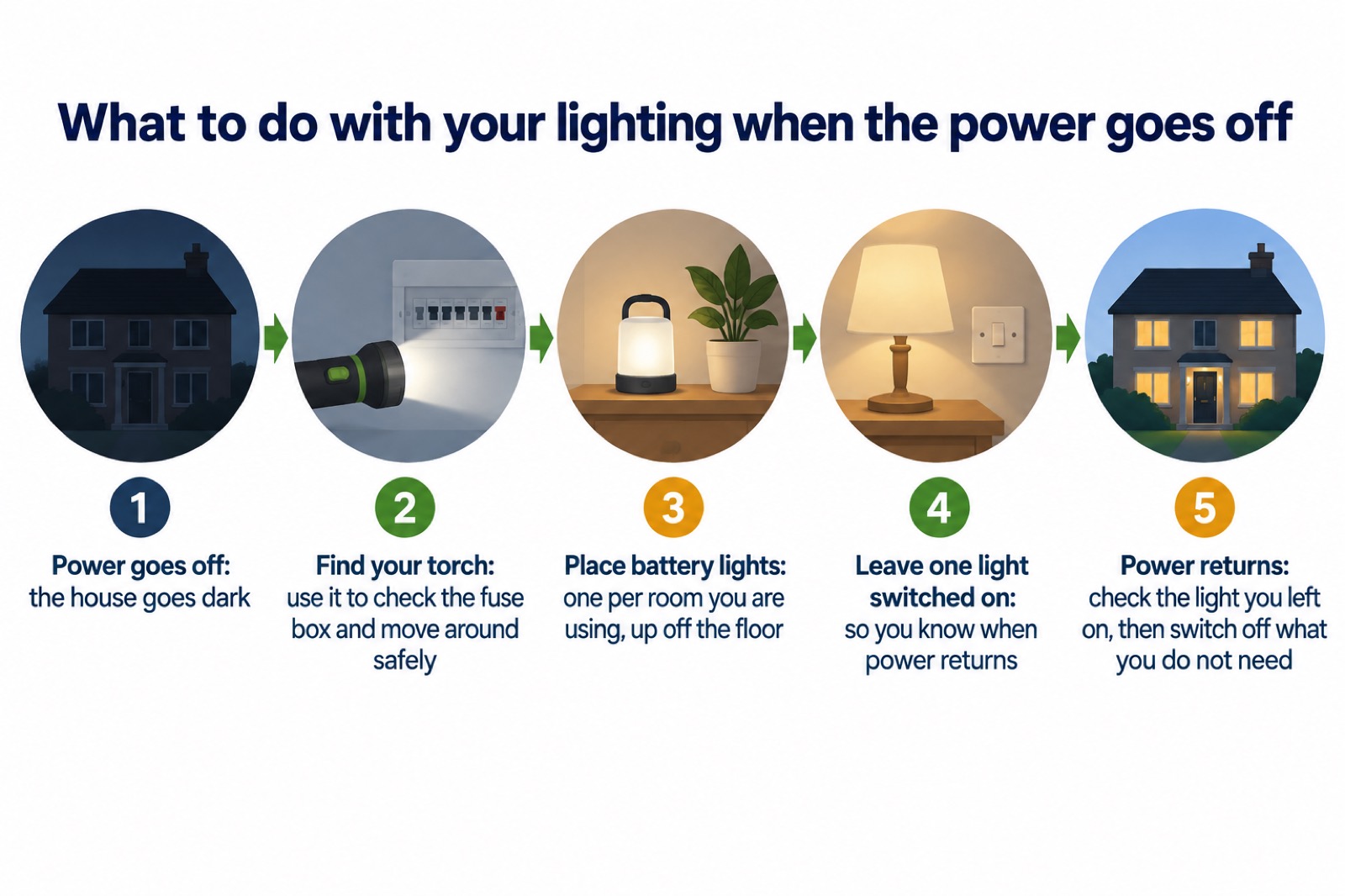
In the first few minutes of a power cut there are only two things to do with your lighting. First, find your torch and use it to check the fuse box and move around the house safely3. Second, leave at least one light switched on somewhere you will notice it, so you know the moment the electricity comes back4. Everything else, the lanterns, the LED candles, the spare batteries, is preparation you do before the cut happens.
This page covers what to reach for first, what to keep ready, why battery lights come before candles, and the rules that apply if you do decide to use a flame. For the wider steps in a power cut, reporting it, food, heating and looking after neighbours, see Power Cuts: A Household Guide.
Reach for a torch or battery light, not a candle
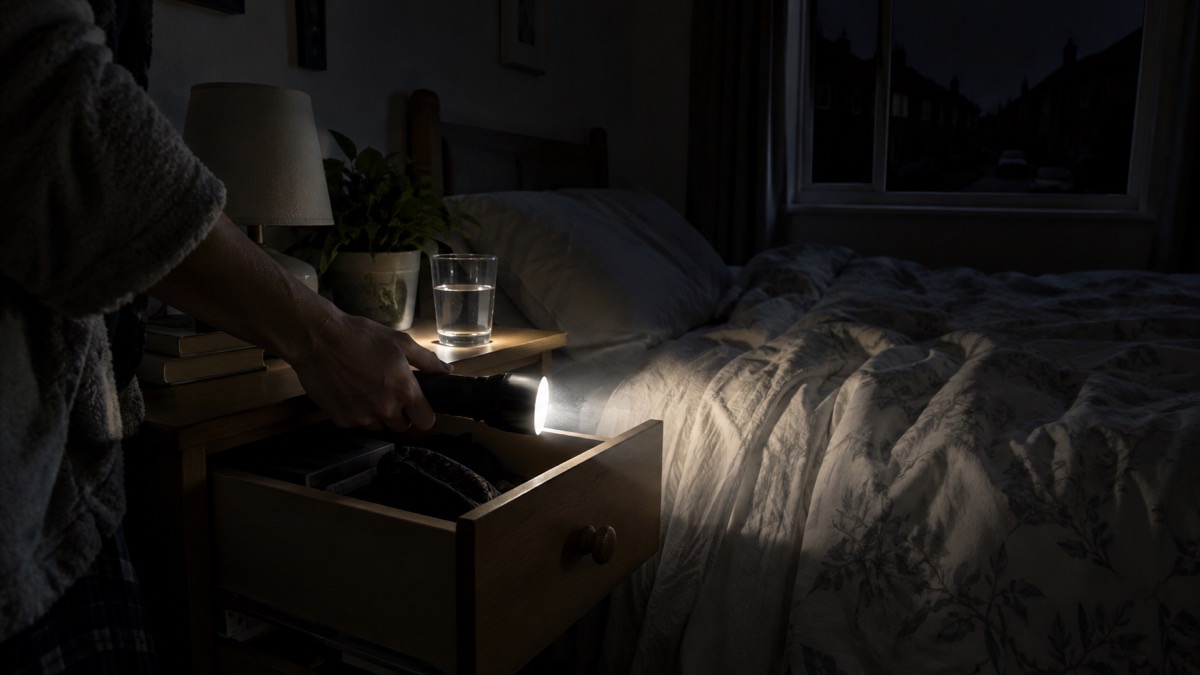
The advice is consistent from every official source in this area: in a power failure, use battery-operated lights or torches as your alternative light source. Suffolk Fire and Rescue Service states this directly in its lighting factsheet7, and a parish council power cut guide adds that it is not advised to use candles or any other naked flames to provide light, as these could pose a fire hazard8.
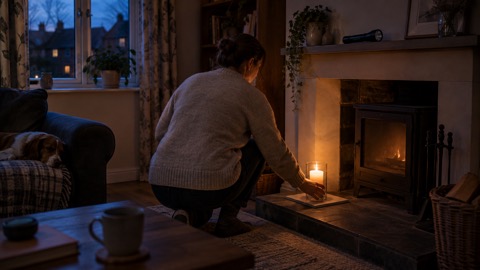
The reason is not that candles are unusable, it is that a power cut is exactly the situation in which candle fires happen. You are moving around an unfamiliar dark room, you may be tired, you may be looking after children or elderly relatives, and an open flame is at its most dangerous precisely then. Devon and Somerset Fire and Rescue Service goes as far as to say it is safest to avoid using candles at all and to choose safer alternatives such as battery-powered lights9.
There is also a practical point about cost. Wiltshire and Swindon Prepared notes that for a household considering a generator, the expense of installing one may not be worth it, because torches and lanterns are a suitable alternative for the few hours you may be without power10. Most power cuts are short, and a few well-placed battery lights will see you through them without any of the risks of a flame.
If you want the cosy atmosphere of candlelight rather than the white beam of a torch, that is what LED candles are for. Devon and Somerset Fire and Rescue Service suggests using battery-powered candles as a safer alternative to make a room cosy11, and London Fire Brigade, advising carers of people who hoard, recommends LED flameless candles in place of candles or tea lights of any kind12. The same advice appears in North Yorkshire Fire and Rescue Service's guidance on hoarding, which suggests LED tealight versions13. You can compare the two options in more detail in LED Candles or Real Candles: Which Is Safer?.
Leave one light switched on
This is the step people most often forget, and it costs nothing. When your electricity goes off, leave one light switched on, so that you know when the power comes back on. NI Direct, the Northern Ireland government information service, includes this in its advice for storms and heavy rain4, and the Met Office repeats it: leave a light on, so you know when the power cut has been fixed14.
A parish council power cut guide gives the fuller version: leave at least one light on in the house, so that you know when your electricity comes back on8. Pick a light you can see from wherever you will be sitting, ideally one that is not on a dimmer or a timer, and leave the switch in the on position.
The point of this is not just convenience. When the power returns, appliances that were running when the cut hit may all come back at once, and knowing the exact moment of return lets you check that everything has come back as it should, and switch off anything you do not want running unattended. It also means you are not sitting in the dark for hours wondering whether the cut is still going, when you could be asleep.
Torches to keep ready, and where to keep them
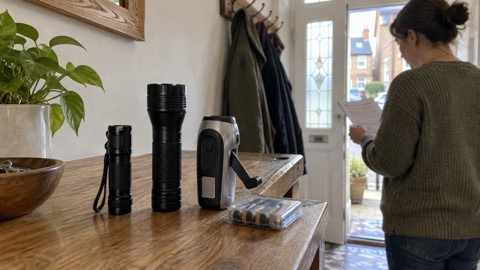
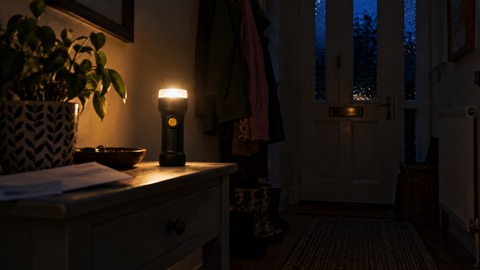
Every emergency kit list in the UK includes a torch, and most include the same two details: spare batteries, or a wind-up torch that needs none. The Scottish Government's Ready Scotland kit list says to include a battery-operated torch and spare batteries, or a wind-up torch15. Anglesey Council in Wales advises storing a battery or wind-up torch somewhere you can access easily, so you can use it to check the fuse box and make your way around the house safely3.
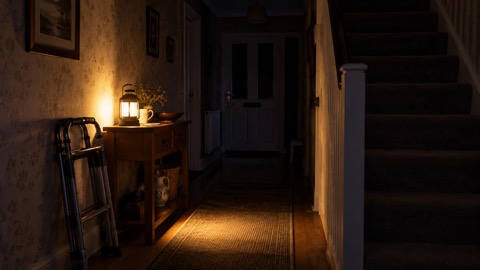
That last detail matters more than the torch itself. A torch in a cupboard you cannot find in the dark is no use at all. Wiltshire and Swindon Prepared adds a useful suggestion for households with elderly relatives: check that they know where they could find their torch or wind-up lantern, so they can move around safely16. For more on this, see Where to Keep Torches So You Can Find Them in the Dark.
What to keep ready:
- A battery-operated torch, with spare batteries1
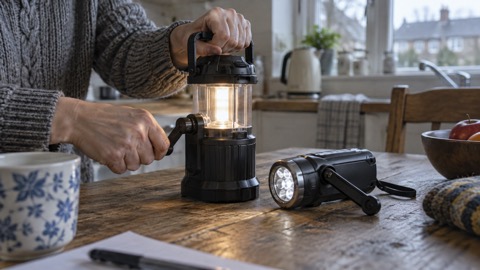
- A wind-up torch or lantern, which requires no batteries at all16
- A torch in the car as well: the Met Office's winter car kit lists a large torch with spare batteries, or a wind-up torch, as essential for your vehicle17
- A handheld wind-up torch for each adult, which Wiltshire and Swindon Prepared describes as inexpensive and giving you confidence to move around your home during a dark winter night18
- A lantern for lighting a whole room rather than a beam, covered in Battery and Rechargeable Lanterns for Lighting a Room
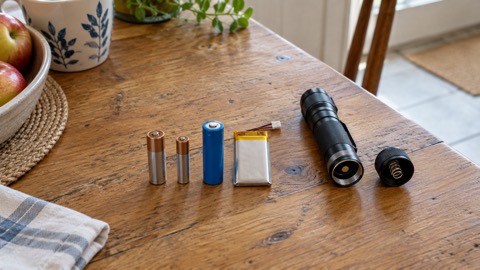
North Wales Fire and Rescue Service keeps its version short: keep a light or torch handy in the event of a power cut or failure19. The choice between battery and wind-up comes down to one trade-off: battery torches are brighter and last longer, but their batteries run down and expire; wind-up torches never run out of power but need constant winding for a weaker light. Many households keep one of each. The comparison is set out in Rechargeable or Battery Torches for Emergencies, and the batteries themselves in Torch Batteries: AA, AAA, 18650 and Built-In Packs and Spare Batteries to Keep for Your Lights.
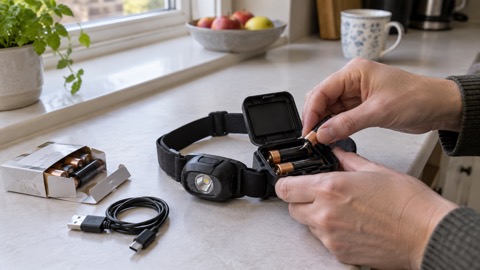
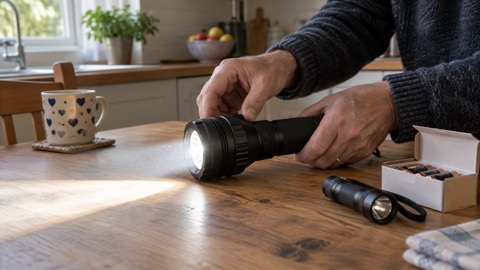
For choosing a torch in the first place, see Torches: Types and How to Choose One for Home, and for keeping your hands free while you work, Head Torches for Power Cuts and Jobs in the Dark.
LED candles and lanterns: safe light without a flame
If you want something gentler than a torch beam for sitting out a long evening, flameless lights are the answer fire services themselves recommend. The London Fire Brigade's winter weather guide states that flameless LED candles can be a safer alternative to tea lights20, and Devon and Somerset Fire and Rescue Service recommends battery-powered lights over candles outright9.
The advantage is not only the absence of a flame. The Scottish Fire and Rescue Service notes that because battery-operated candles do not have a real flame, they are easier and safer to place21. You can put one on a windowsill, on a shelf of books, inside a paper lantern or a pumpkin, in places where a naked flame would be plainly dangerous. North Yorkshire Fire and Rescue Service advises considering battery-operated lights within homemade lanterns and pumpkins, as they are much safer than candles22, and the Northern Ireland Fire and Rescue Service says to avoid using a naked flame or candle in pumpkins and to use a torch, glow stick or battery-operated candle instead23.
Government guidance on fire safety when celebrating puts the general rule in one line: consider using LED lights or battery-operated candles2. Devon and Somerset Fire and Rescue Service has even encouraged households to pop battery-powered tealights into shopping baskets ahead of Halloween, to prevent fires and reduce callouts5. For the specific question of pumpkins, see Should You Use Battery Tea Lights in a Pumpkin?.
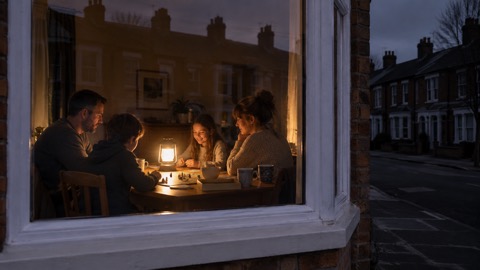
A lantern is the room-lighting version of the same idea: a battery or rechargeable unit that stands on a table and lights the whole space, rather than a beam you point. Wiltshire and Swindon Prepared groups torches and lanterns together as the suitable alternative for the few hours you may be without power10. For how long a lantern will actually run on a charge, see How Long Does a Camping Lantern Run in a Power Cut?, and for the units used to compare brightness, Lumens, Beam Distance and Run Time Explained.
Candles cause around 850 house fires a year in England
The numbers behind the advice are worth knowing, because they explain why fire services are so consistent on this. Government guidance states that 850 accidental fires in the home are started every year in England from candles2. North Yorkshire Fire and Rescue Service gives the UK-wide figure: candles cause over 800 fires in UK homes every year24. Devon and Somerset Fire and Rescue Service reports attending over 20 fires every year caused by candles in its own area alone25.
The wider picture comes from the National Fire Chiefs Council: in England alone there have been 254,030 accidental dwelling fires over the last ten years, with an average of 180 fatalities each year, and 1,804 deaths and 44,806 casualties over that period26. Around one in eight house fires begin with naked flames such as candles, matches or cigarettes5.
| Figure | Value | Who reported it |
|---|---|---|
| Accidental home fires started by candles, per year, England | 8502 | Government fire safety guidance |
| Fires in UK homes caused by candles, per year | over 80024 | North Yorkshire Fire and Rescue Service |
| Candle fires attended per year, Devon and Somerset | over 2025 | Devon and Somerset Fire and Rescue Service |
| House fires beginning with naked flames | around 1 in 85 | Devon and Somerset Fire and Rescue Service |
| Fires started by candles that result in death or injury | around 30%6 | Merseyside Fire and Rescue Service |
| Accidental dwelling fires in England, last ten years | 254,03026 | National Fire Chiefs Council |
That last row of context matters. Merseyside Fire and Rescue Service reports that around 30 per cent of fires started by candles and attended by fire and rescue services result in death or injury6. A candle fire is not a scorched table; it is, nearly a third of the time, a fire that hurts someone in the house. That is the risk you are choosing against when you light a candle instead of a battery light, and it is why every fire service in this list reaches the same conclusion first.
Where a candle must never be left, and the rules if you use one
Fire services do not pretend nobody will ever light a candle. What they do is set out rules that, followed together, remove most of the risk. The rules below come from fire and rescue services in England, Scotland, Wales and Northern Ireland, and they are consistent across all four nations.
The places and situations a candle must never be left:
- Bedrooms, or anywhere you might fall asleep. Merseyside Fire and Rescue Service is direct: do not use candles in bedrooms or anywhere where you might fall asleep6
- On or near anything flammable. Keep lit candles well away from curtains, cards, cushions, TVs and shelves, says the Scottish Fire and Rescue Service28
- In a draft. Carmarthenshire Council advises always burning candles in a well-ventilated room but out of drafts, vents or air currents, which helps prevent rapid or uneven burning, soot and dripping27
- Unattended, even for a few seconds. The Scottish Fire and Rescue Service applies this to tea lights specifically: never leave a lit tea light unattended, even for a few seconds29
Tealights and holders
Tealights deserve their own warning because they look harmless and are not. Devon and Somerset Fire and Rescue Service says to make sure you put tea lights in suitable holders that are non-flammable25, and its home fire safety advice explains why: the foil outer container gets extremely hot and can melt surfaces underneath9. North Yorkshire Fire and Rescue Service warns against putting tealights directly onto baths and TVs, because their aluminium containers are not totally heatproof24.
The Northern Ireland Fire and Rescue Service states the rule in capital letters: always burn tea lights in or on a suitable, non-flammable holder on a heat-resistant surface23. Carmarthenshire Council adds that night lights and tea lights must be placed away from soft furnishings and on a non-flammable surface such as a plate or tile, with a proper candle or incense holder used wherever possible27. The London Fire Brigade's winter guide extends the same principle to candles, tea lights, oil lamps, wax melts and incense: all should be placed in stable, heat-resistant holders20.
The same rules apply to joss sticks, oil and incense burners, says Devon and Somerset Fire and Rescue Service25, and the Scottish Fire and Rescue Service says never to leave burning incense unattended and to fully extinguish it before leaving the room or going to bed29. For oil burners specifically, see How to Use an Oil Burner Safely.
Candles and children
Children's costumes and fancy dress are a particular danger around naked flames, because they catch fire more easily than everyday clothes. The Northern Ireland Fire and Rescue Service advises keeping children away from any naked flames, including sparklers30, and North Yorkshire Fire and Rescue Service says children should not be left alone with lit candles, that candles should be put out when you leave the room, and that they should be put out completely at night22.
The Scottish Fire and Rescue Service suggests making a game of teaching children to stop, drop, cover and roll if their costume does catch light21, and Devon and Somerset Fire and Rescue Service advises adding reflective tape or glow sticks to costumes to make them more visible after dark5. For the full picture, see Torches, Candles and Children: Keeping Them Safe, and for a printable version of these rules, the Candle Safety Checklist. The wider subject is covered in Candle Fire Safety at Home.
Lamps once the power is back
When the electricity returns, your ordinary lamps come back into use, and a few checks from Electrical Safety First apply. All lamps must be fitted with a UK 3-pin plug and fuse31. Never use a light bulb which is over the recommended power rating for your lamp31. Keep lamps away from curtains, paper, bedding and other flammable items31.
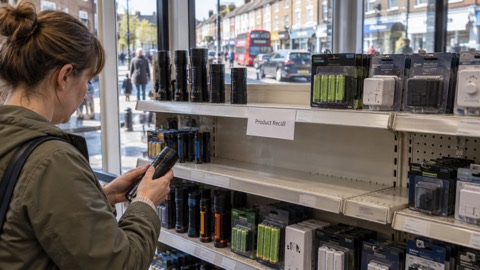
Register your lamp so you can be contacted easily if there is a safety recall, and so it is easier to return a faulty item or order a repair31. The same applies to night lights: register them, and switch them off and unplug them from the socket when not in use32. If you see burn marks, arcing sounds, fuses blowing or circuit-breakers tripping, unplug and contact the retailer, manufacturer, or a qualified repair technician31. For recalled lights and chargers generally, see Recalled and Unsafe Torches and Chargers: Checking and Reporting.
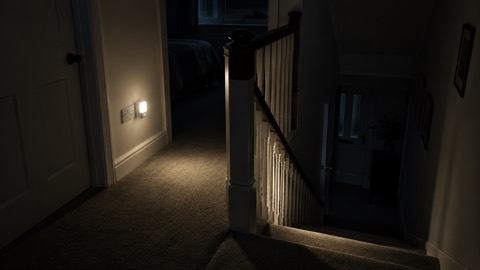
If you want low light through the night after a cut, LED night lights are the efficient option: Electrical Safety First notes that LED night lights generally consume 0.5 to 2 watts of electricity, making them the most energy-efficient option32. For people who need light they can rely on, including older and disabled relatives, see Lights for Older and Disabled People in a Power Cut, and for bulbs that switch themselves on when the power fails, Power Failure Lights and Rechargeable Emergency Bulbs.
Where lighting fits in the wider power cut steps
Lighting is the first need in a power cut, but it is only one of several. The Met Office's seasonal advice adds the lighting-specific step of leaving a light on so you know when the cut has been fixed14, and Ready Scotland's emergency kit list puts the torch alongside the other essentials a household should hold15.
The order of things, in practice, is this: find your torch, check the fuse box, place your battery lights where you need them, leave one light switched on, then turn to everything else. A full walkthrough is in Power Cuts: A Household Guide, and a lighting-specific version in Torches, Lanterns and Candles: Power Cut Checklist. Before winter sets in, the checks worth doing are gathered in Lighting Checks Before Winter.
One last thing worth knowing: many fire and rescue services offer free home fire safety visits, particularly for older or vulnerable people, and a visit is a good moment to ask about candle and lighting safety in your own home. See Free Home Fire Safety Visits From Your Fire Service for how to arrange one.
Sources (32)
- Power cuts: what to do, UK Government Prepare campaign
- Fire safety when celebrating, HM Government, 2021-11
- Winter ready, Isle of Anglesey County Council
- Strong winds and heavy rain warning: information and advice, NI Direct, 2026-01-27
- Firefighters advise using battery tealights this Halloween, Devon and Somerset Fire and Rescue Service, 2025-10-23
- Candle safety, Merseyside Fire and Rescue Service
- Lighting factsheet, Suffolk Fire and Rescue Service, 2014-01-09
- 12 tips to prepare for a power cut, Horsted Keynes Parish Council, 2026
- Top ways to reduce your risk of having a fire in the home, Devon and Somerset Fire and Rescue Service, 2026
- Generators, Wiltshire and Swindon Prepared, 2026-10-25
- Student safety, Devon and Somerset Fire and Rescue Service, 2026
- Hoarding disorder: advice for carers and support workers, London Fire Brigade, 2026-10-25
- Hoarding, North Yorkshire Fire and Rescue Service, 2026-10-25
- Stay safe in lightning, Met Office, 2026-10-25
- Emergency kit, Ready Scotland, 2026-10-22
- How to prepare for the loss of electricity, Wiltshire and Swindon Prepared, 2026-10-25
- Winter car kit, Met Office, 2026-10-25
- Failure of national electricity, Wiltshire and Swindon Prepared, 2026-10-25
- Stay safe this winter, North Wales Fire and Rescue Service, 2016
- Extreme weather winter guide, London Fire Brigade, 2025-01
- Halloween candle safety, Scottish Fire and Rescue Service, 2023-10-17
- Halloween safety tips, North Yorkshire Fire and Rescue Service, 2019-10-24
- Other safety advice, Northern Ireland Fire and Rescue Service, 2026-10-22
- Candle safety, North Yorkshire Fire and Rescue Service, 2026-03-09
- Candles, Devon and Somerset Fire and Rescue Service, 2026
- Home safety position statement, National Fire Chiefs Council, 2025-12
- Candle safety, Carmarthenshire County Council, 2026-06-26
- Your guide to fire safety, Scottish Fire and Rescue Service, 2023-11-03
- Candle safety, Scottish Fire and Rescue Service, 2024-06-12
- Don't let fire turn your Halloween into a nightmare, Northern Ireland Fire and Rescue Service, 2026-10-21
- Lamps, Electrical Safety First, 2026-10-25
- Night lights, Electrical Safety First, 2026-10-25
 Spare Batteries for Lights
 Candle Safety Checklist
 Lighting Checks Before Winter
 Choosing a Torch for Home
 Head Torches for Power Cuts
 Lanterns for Lighting a Room
 Emergency Bulbs
 Solar and Wind-Up Lamps
 Lumens and Beam Distance
 Torch Batteries Explained
 Charging and Storing Torches
 Candle Fire Safety at Home
 Lights for Disabled People
 Torches, Candles and Children
 Recalled Torches and Chargers