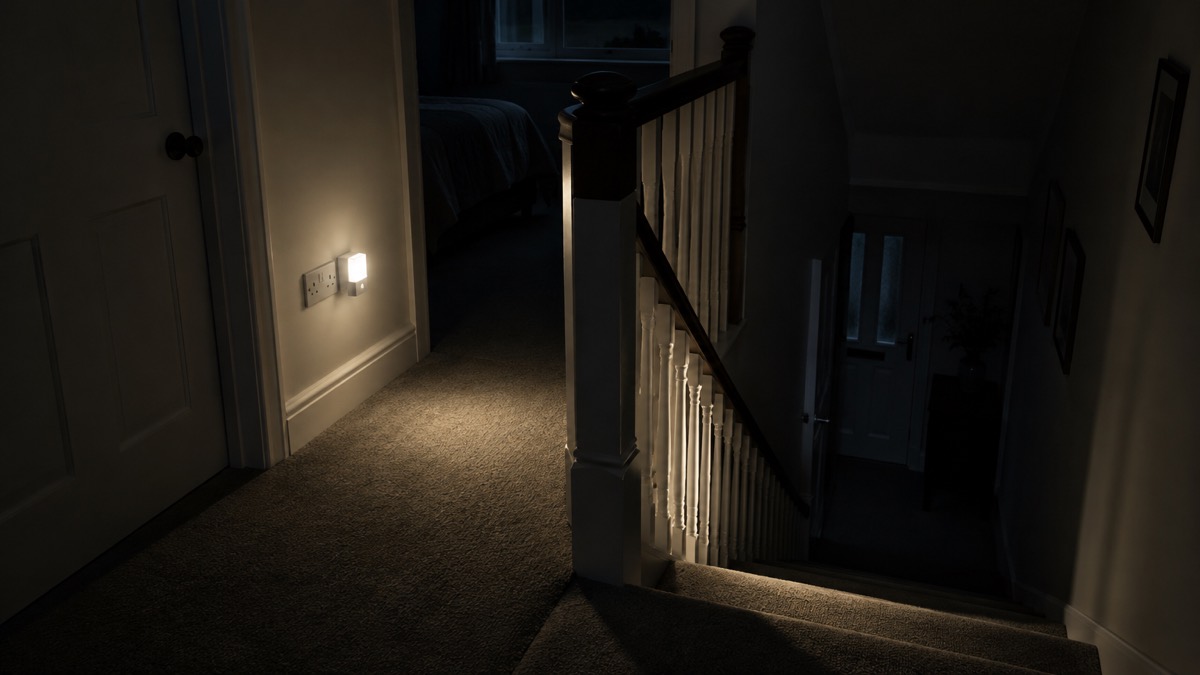
A light that comes on by itself when the mains fails is one of the simplest safety upgrades a household can make. Plug-in power failure lights and rechargeable emergency bulbs sit in a normal lamp holder or socket, charge while the power is on, and switch to their own battery the moment the supply drops. In a dark house, that matters most on stairs, landings and in the bedrooms of older people, children and anyone who would otherwise grope for a torch or reach for a candle.
The fire and rescue services of the UK are clear about the alternative: candles bring a live flame into your home, and a flame that is knocked over or left burning overnight can start a fire. A power failure light gives you lighting without that risk, with no flame at all. If you use lamps rather than emergency lighting and you see burn marks, hear arcing sounds, or find fuses blowing or circuit-breakers tripping, unplug the lamp and contact the retailer, manufacturer, or a qualified repair technician1.
This page covers what to do when the power goes off tonight, what to look for in a plug-in emergency light or rechargeable bulb, the fire safety rules that apply to any light in the home, and where to get help if a power cut stretches into hours or days. For the wider picture, see Emergency Lighting at Home and Power Cuts: A Household Guide.
What to do when the power goes off
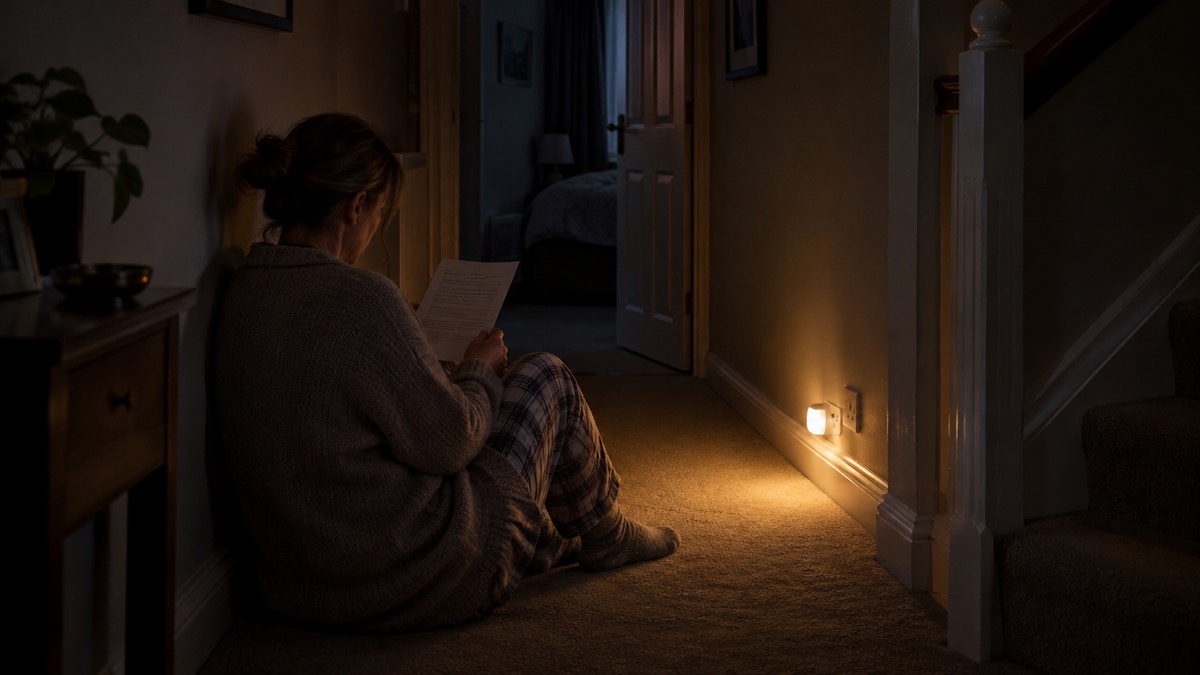
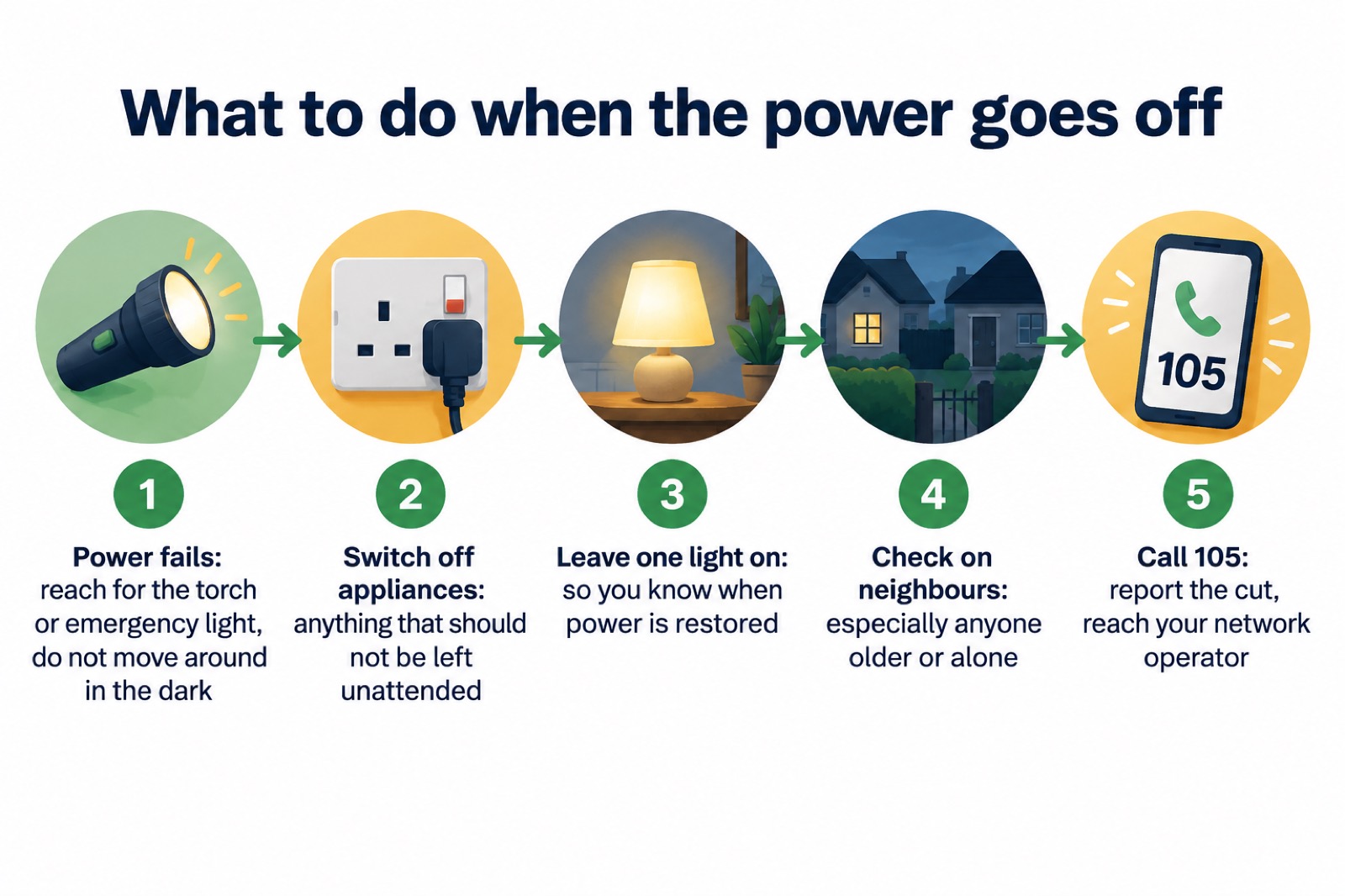
When the supply drops, the first minutes decide how safely the rest of the outage goes. The Met Office's winter and snow advice gives the same core actions each time: switch off all electrical appliances that should not be left unattended, leave a light on so you know when power is restored, and check on neighbours7. nidirect in Northern Ireland gives the same instruction to leave one light on8, and Northern Ireland Electricity Networks adds that leaving a light on tells you when the power is restored without you having to keep checking9.
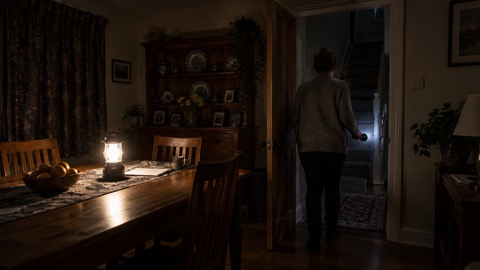
A power failure light earns its place here. Because it switches itself on the moment the mains fails, it gives you the light you need to reach your torch, your phone and your fuse board, and because it stays in the lamp holder, it is exactly the "one light left on" that tells you the supply is back. Follow these steps in order:
- Let the emergency light or torch light the room. Do not move around in the dark, especially on stairs.
- Switch off all electrical appliances that should not be left unattended7.
- Leave one light switched on so you know when the power is restored2.
- Check on neighbours, particularly anyone older, disabled or living alone10.
- Call 105 to report the cut and be directed to the operator for your area6.
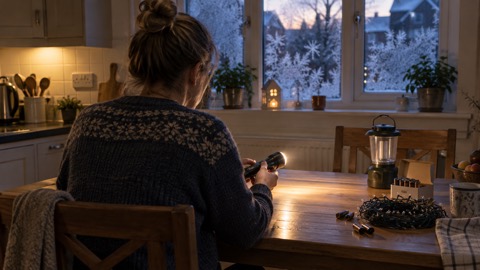
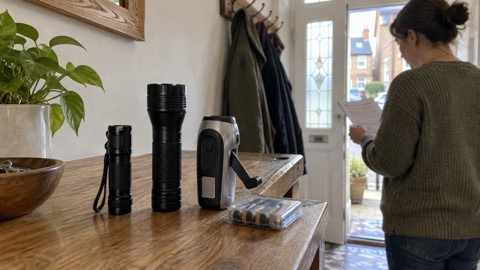
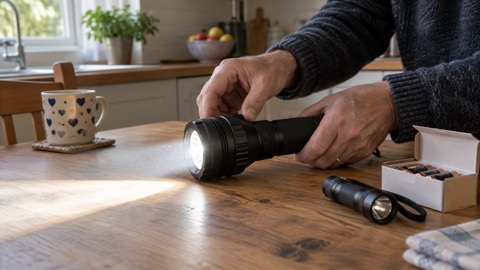
Keep a torch where you can find it without light, and keep spare batteries with it. The Met Office's WeatherReady winter checklist puts "torch and spare batteries" on its list of essentials11, and Wiltshire and Swindon Prepared notes that wind-up torches or lanterns are available which require no batteries at all12. For choosing and storing those, see Torches: Types and How to Choose One for Home and Where to Keep Torches So You Can Find Them in the Dark.
Keep any light away from curtains, paper and bedding
Whatever light you use in a power cut, where you put it matters as much as what it is. Fire and rescue service guidance is consistent across the four nations: keep lights and their heat away from anything that can burn. Merseyside Fire and Rescue Service says to keep candles away from flammable objects like curtains, furniture, bedding and books13. The London Fire Brigade's easy-read fire safety booklet says the same for candles, incense sticks and oil burners: keep them away from curtains, clothing and furniture, and always stay in the room while the flame is lit14. Cleveland Fire and Rescue Service extends the rule to lamps and bulbs themselves: keep lights and bulbs away from fabric such as curtains15.
This applies to plug-in emergency lights and rechargeable bulbs too. A bulb in a lamp holder still gets hot in normal use, and Cleveland's guidance is to check for damage to wires, replace broken bulbs and check the fuse in the plug is the correct size15. Place lamps on a stable, non-flammable surface, not on a bed, a pile of papers or beside a curtain.
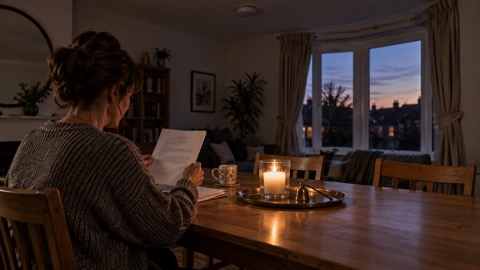
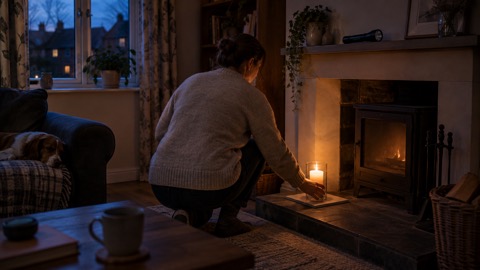
The reason is simple and grim: candles left near flammables are a recurring cause of house fires. The Northern Ireland Fire and Rescue Service's home fire safety advice is to keep candles away from soft furnishings, decorations, Christmas trees and wrapping paper, and to make sure they are out of reach of pets and children10. A power failure light removes the flame from the situation entirely. If you do keep candles in the house, read Candle Fire Safety at Home and work through the Candle Safety Checklist.
Battery tealights and wind-up lights instead of candles
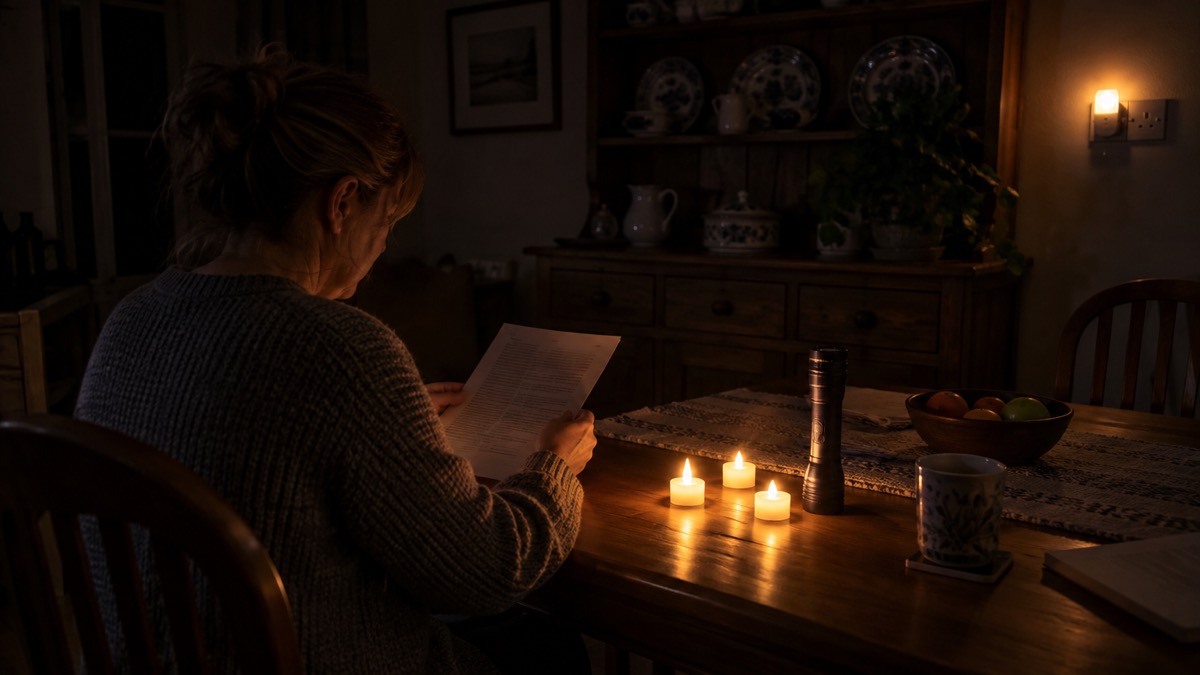
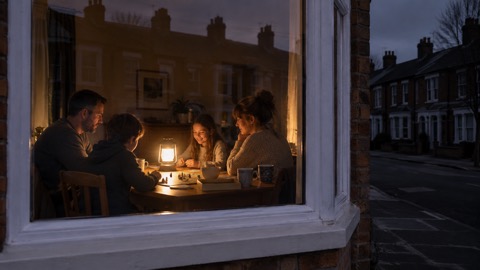
If you are choosing a light for a power cut tonight, the fire and rescue services' advice is to avoid flame altogether. Devon and Somerset Fire and Rescue Service advises using battery-powered tealights: they are cheap, they do not blow out and they are much safer19. Surrey's emergency planning team adds that purpose-made glow sticks are a safer alternative to candles6.
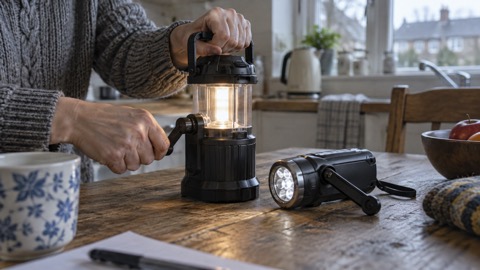
For lighting a room rather than a single spot, Wiltshire and Swindon Prepared points out that wind-up torches or lanterns are available which require no batteries at all12, and that for the few hours you may be without power, torches and lanterns are a suitable alternative to the expense of installing a generator20. That is a useful reality check for an ordinary household: most UK power cuts are short, and a set of battery lights covers them without any wiring or fuel.
| Light source | What it does | Who it suits |
|---|---|---|
| Power failure night light | Plugs in, charges from the mains, switches on by itself when the power fails | Stairs, landings, hallways, children's rooms |
| Rechargeable emergency bulb | Fits a normal lamp holder, works as an everyday bulb, runs on its own battery in a cut | Bedside lamps, especially for older or disabled people |
| Battery tealights | Small flame-free lights for places a candle might go | Table lighting and decorations |
| Wind-up torch or lantern | Needs no batteries at all, powered by hand crank | A backup that always works, even if batteries run flat12 |
| Torch and spare batteries | Simple, familiar lighting you already know how to use | Every household's first line of lighting |
For lights that suit older and disabled household members specifically, see Lights for Older and Disabled People in a Power Cut, and for children, Torches, Candles and Children: Keeping Them Safe. If you are weighing flame against LED, LED Candles or Real Candles: Which Is Safer? sets the two side by side.
Plug-in lamps: the UK 3-pin plug and the right fuse
A plug-in power failure light or a lamp taking a rechargeable emergency bulb must be used with the same electrical care as any other appliance. North Yorkshire Fire and Rescue Service's electrical safety guidance is blunt about why: it is so important to use the right fuse for each electrical appliance to make sure the cable does not overheat, and that the appliance is protected in the event of a fault21. The Scottish Fire and Rescue Service's electrical safety guidance says always use the right fuses4, and its wider fire safety guide adds that if you fit the wrong fuse, it will not blow, and the appliance could overheat and cause a fire5.
For lamps specifically, the guidance tells you which fuse to use. The Scottish Fire and Rescue Service lists the appliances that take a 3 amp fuse, and lamps and bed lights are on that list, alongside televisions and radios, electric blankets, hi-fi and DVD players, docking stations, clocks and computers, and games consoles4. The same list appears in the government's fire safety when celebrating guidance22. So a plug-in emergency lamp takes a 3 amp fuse in its plug.
"It's so important to use the right fuse for each electrical appliance to make sure the cable doesn't overheat, and that the appliance is protected in the event of a fault."
Check the plug and the adaptor too. The Scottish Fire and Rescue Service's guide to fire safety says always make sure your adaptor is fitted with a fuse and has an Intertek BEAB kite mark, and preferably choose one provided with electrical surge overload protection5. And do not overload sockets: nidirect's advice on avoiding accidental fires at home says never overload sockets23, and the Northern Ireland Fire and Rescue Service's seasonal advice says to stick to one plug per socket and switch lights off and unplug them before leaving your home or going to bed24. The government's celebrating guidance adds for fairy lights: make sure the fuse in the plug is the right size, and check the box for advice22.
Never fit a bulb above the lamp's power rating
A rechargeable emergency bulb still has a wattage, and the lamp it goes into still has a limit. The Scottish Fire and Rescue Service's guide is explicit: all lamp shades advise the maximum wattage of light bulb that can be safely fitted, and always check this before fitting, as higher watt bulbs can cause the shade to overheat and catch fire5. The London Fire Brigade's easy-read booklet says the same in plainer words: use bulbs that are the right size and wattage recommended by the appliance, make sure bulbs are fitted correctly because loose bulbs may get too hot, and do not put anything over the bulb as it can get very hot and cause a fire14.
So before you screw an emergency bulb into a bedside lamp, turn the lamp off, let the old bulb cool, and check two things: the maximum wattage marked on the shade or the lamp, and that the new bulb sits correctly in the fitting. A loose bulb may get too hot14.
The same discipline applies to decorative and seasonal lights, which many households bring out in winter, the season of most power cuts. Cleveland Fire and Rescue Service says to check for damage to wires and replace broken bulbs15, and the Northern Ireland Fire and Rescue Service says to check that lights are in good working order and comply with British Standards24. For the seasonal detail, see Using Candles Safely at Christmas and Should You Unplug Fairy Lights at Night?.
Register your lamp so you hear about safety recalls
Electrical products, including lamps and lights, are recalled when a fault creates a fire risk, and households that never registered the product often never hear about it. North Yorkshire Fire and Rescue Service recommends registering your electrical appliances so that you can be made aware if a product is recalled21. Devon and Somerset Fire and Rescue Service says you can use the Register My Appliance service to register your appliances and get a notification if a product gets recalled25, and the Scottish Fire and Rescue Service adds that registering means you will be the first to know of any safety repairs or recalls, and that you can register old appliances as well as new ones4.
North Yorkshire Fire and Rescue Service also advises always registering white goods appliances to enable the receipt of updates about appliance faults and safety recalls26. The same logic covers any plug-in light: a recall notice that reaches you is a fire prevented. Registration is free, takes minutes, and covers products you already own, not just new purchases.
To act on recalls once you know about them, see Recalled and Unsafe Torches and Chargers: Checking and Reporting. If you want a fire service professional to look over your home's fire safety, many services offer Free Home Fire Safety Visits.
Power bank recalls: check yours before a power cut
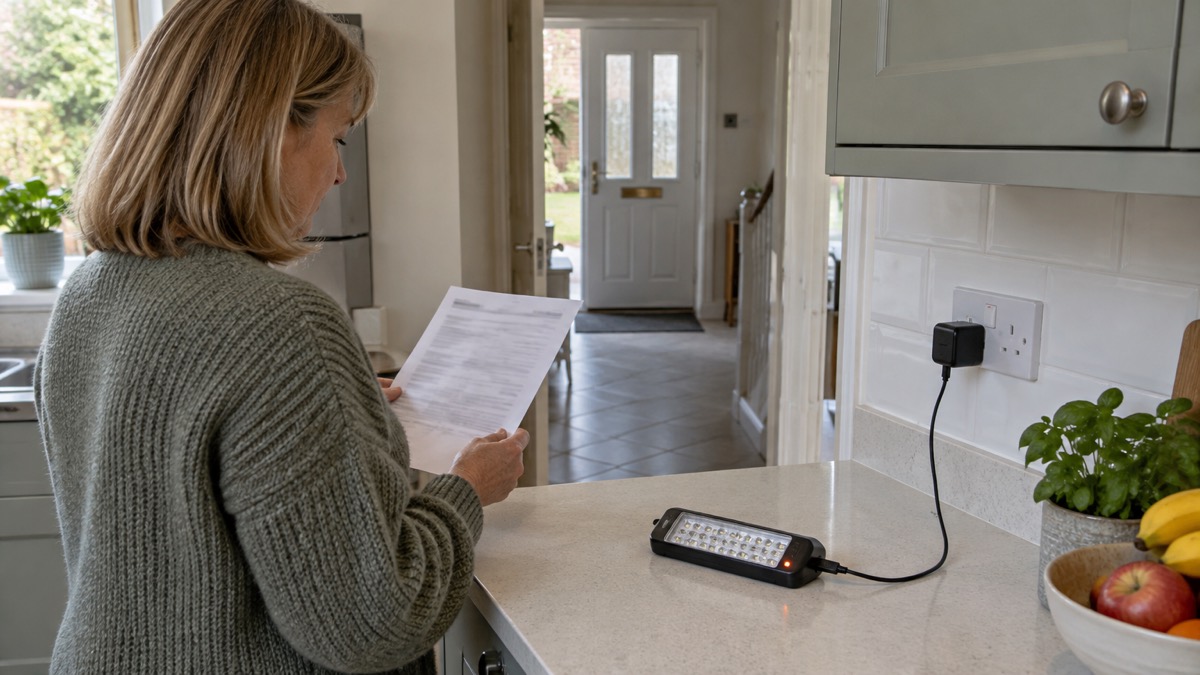
Many rechargeable lights, and the power banks that keep phones alive in an outage, use lithium-ion batteries, and these have their own recall history. The advice for households is to stay up to date with product recalls and safety notices27. A power bank you bought for outages could therefore be the most dangerous thing in the drawer if it is later recalled and you never hear about it, so check for recalls before you rely on it in an emergency.
The fire and rescue services give consistent advice that applies to rechargeable lights and power banks alike: stay up to date with product recalls and safety notices28. A recalled battery can fail without warning, so before a power cut arrives is the time to check that everything you plan to rely on is still safe to use, and to stop using and replace anything that has been recalled.
Before a storm or a forecast power cut, do three things:
- Check that none of your power banks or rechargeable lights has been recalled, using the Register My Appliance notifications you signed up for25.
- Charge everything during the day, away from escape routes, and finish before bed28.
- Stop charging immediately if any battery swells, and do not use it again29.
For the wider rules, see Charging and Storing Rechargeable Torches Safely and Can the Wrong USB Charger Damage a Torch Battery?.
Storm and weather warnings: the warning before the cut
Most power cuts that last more than a few minutes arrive with weather, and the warnings come first. The Met Office's thunderstorm advice says to turn off gas, water and electricity supplies if a storm is severe32, and its snow advice says to leave a light on so you know when the power cut has been fixed2. Its WeatherReady tips for snow and ice add the full routine: switch off appliances that should not be left unattended, leave a light on, and check on neighbours7.
nidirect carries the equivalent advice for Northern Ireland, including leaving one light on if your electricity goes off8, and for farmers and livestock owners, checking and testing backup generators and equipment33. When a storm warning is issued, charge mobile phones and power banks in case there is a power cut, and make sure your emergency plan is up to date34. That is your signal to charge the emergency lights, check the torch batteries and look in on neighbours before the weather arrives.
For the seasonal checks that prevent surprises, see Lighting Checks Before Winter and the Power Cut Checklist.
Where to get help in a long power cut
If the outage stretches on, help exists and it is worth knowing where. Surrey's emergency planning guidance says that if the power goes off you can report this by calling 105 or visiting the Power Cut website to be directed to the operator for your area6. That single number works across the UK and connects you to your local electricity network operator, who can tell you what has happened and when engineers expect to restore supply.
For help in a long power cut, the first number is 105. Call 105 or visit the Power Cut website to be directed to the operator for your area35, because 105 directs people straight to their local electricity network operator for information and advice in a power cut36. Keep the number somewhere accessible before you need it, and in a long cut check your council's website and social media, and ask locally, because help for vulnerable households is usually organised at short notice.
If someone in your household depends on electricity for medical equipment or would struggle in an outage, ask your electricity supplier or network operator about their Priority Services Register, which exists to give advance warning and extra support during power cuts. And if you are weighing bigger backup options, see Backup Power at Home: A Household Guide, remembering that for the few hours you may be without power, torches and lanterns are a suitable alternative to the expense of installing a generator20.
Sources (36)
- Power cuts, Scottish Fire and Rescue Service, 2026
- Stay safe in snow, Met Office, 2026
- Firefighters advise using battery tealights this Halloween, Devon and Somerset Fire and Rescue Service, 2025-10-23
- Electrical safety, Scottish Fire and Rescue Service, 2025-02-27
- Your guide to fire safety, Scottish Fire and Rescue Service, 2023-11-03
- Power, gas and water: what if they fail, Surrey County Council, 2025-12-29
- Met Office Weather Ready tips for snow and ice, Met Office, 2025-11-19
- Strong winds and heavy rain warning: information and advice, nidirect, 2026-01-27
- Is there any action I should take when power is disrupted, Northern Ireland Electricity Networks, 2026
- NIFRS issues safety plea following two house fire fatalities in one day, Northern Ireland Fire and Rescue Service, 2025-12-12
- WeatherReady winter poster, Met Office, 2026
- How to prepare for the loss of electricity, Wiltshire and Swindon Prepared, 2026
- Candle safety, Merseyside Fire and Rescue Service, 2026
- Easy read fire safety booklet, London Fire Brigade, 2026
- Lighting safety tips, Cleveland Fire and Rescue Service, 2022-11-12
- Extreme weather winter guide, London Fire Brigade, 2025-01
- Candle safety, Carmarthenshire County Council, 2026-06-26
- NIFRS statement: home fire safety appeal after four fatalities across weekend, Northern Ireland Fire and Rescue Service, 2025-12-15
- Dorset and Wiltshire Fire and Rescue Service: stay safe this Halloween, Wiltshire and Swindon Prepared, 2026-10-25
- Generators, Wiltshire and Swindon Prepared, 2026-10-25
- Electrical safety, North Yorkshire Fire and Rescue Service, 2026-09-14
- Fire safety when celebrating, HM Government, 2021-11
- Avoiding accidental fires in the home, nidirect, 2025-10-16
- At home for the holidays: safe for the season, Northern Ireland Fire and Rescue Service, 2025-12-01
- Top ways to reduce your risk of having a fire in the home, Devon and Somerset Fire and Rescue Service, 2026
- Kitchen safety, North Yorkshire Fire and Rescue Service, 2026-03-23
- Recall of Belkin BoostCharge BPB002 and Playa PB0003 power banks, Office for Product Safety and Standards, 2025-12-08
- Battery fires, Devon and Somerset Fire and Rescue Service, 2026
- Batteries and chargers, London Fire Brigade, 2026-10-25
- Bedtime routine and escape plan, North Yorkshire Fire and Rescue Service, 2026-03-27
- Home fire safety, Northern Ireland Fire and Rescue Service, 2026-10-14
- Stay safe in a thunderstorm, Met Office, 2026-10-25
- Strong winds and heavy rain warning: information and advice, nidirect, 2026-01-27
- Amber wind warning for Storm Dave, Met Office, 2026-04-04
- Emergency Contact Hub leaflet, Wiltshire and Swindon Prepared, 2025
- Warm spaces during storm power cut, Cornwall, National Grid, 2025-10-25
 Spare Batteries for Lights
 Candle Safety Checklist
 Lighting Checks Before Winter
 Lighting Home in a Power Cut
 Choosing a Torch for Home
 Head Torches for Power Cuts
 Lanterns for Lighting a Room
 Solar and Wind-Up Lamps
 Lumens and Beam Distance
 Torch Batteries Explained
 Charging and Storing Torches
 Candle Fire Safety at Home
 Lights for Disabled People
 Torches, Candles and Children
 Recalled Torches and Chargers