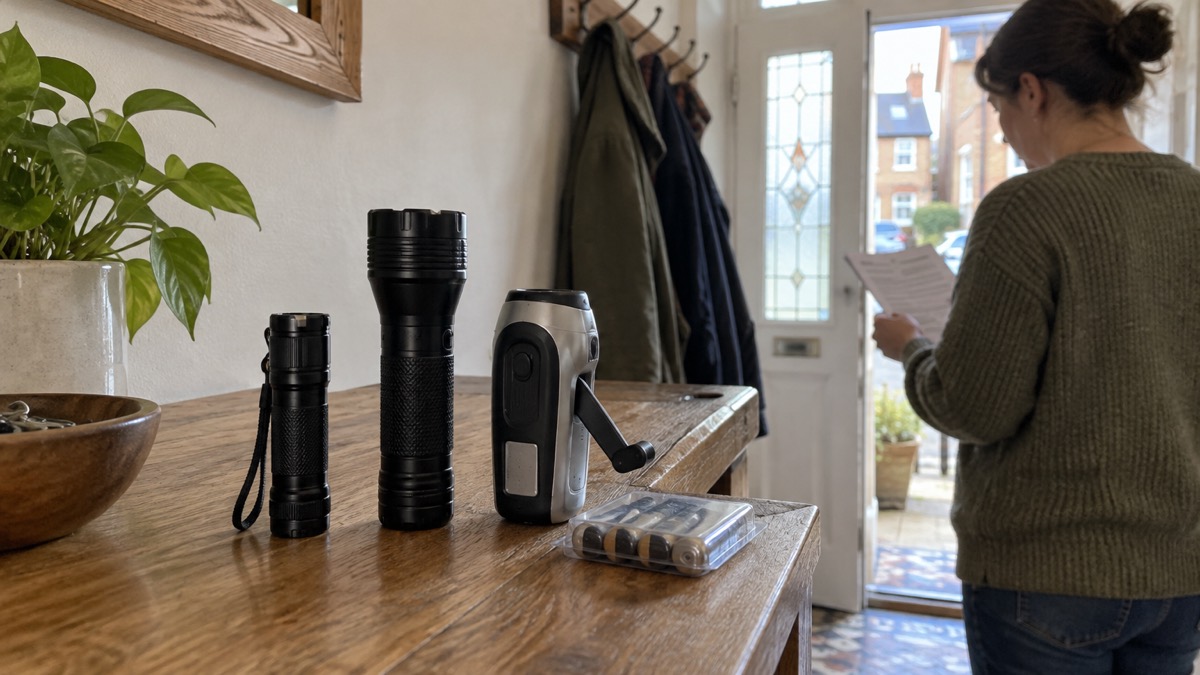
When the lights go out, the safest thing in your hand is a battery-powered or wind-up torch. That is the consistent advice from power networks, fire and rescue services and government emergency planners across the UK: Northern Powergrid states plainly that "a battery-powered or wind-up torch is the safest option"1, and the UK government's Prepare campaign advises keeping "a battery or wind-up torch (and spare batteries) at home. Torches are safer than candles."2
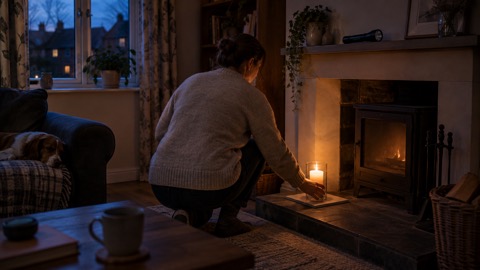
The reason is simple. Candles and paraffin heaters are an open flame in a dark room, and fire services see the consequences. Devon and Somerset Fire and Rescue Service reported a worrying increase in carbon monoxide incidents and fire risks due to power cuts, and asks households to choose torches or battery-powered lights rather than candles when the power goes off3. The National Fire Chiefs Council's cost of living toolkit makes the same point: LED candles and lights, battery or wind-up torches are among the products that are safer for lighting your home4.
This page covers what torch to keep at home, where to keep it so you can find it in the dark, how battery and wind-up torches each keep working, and the safety rules for the plug-in lamps and bulbs in your house. For the wider picture, see our guide to emergency lighting at home and what to do when the power goes off.
Why a torch is the safest light when the power goes off
Every official body that gives power cut advice in the UK lands on the same answer for lighting. Northern Powergrid, the electricity network for the North East and Yorkshire, states that "a battery-powered or wind-up torch is the safest option"1. Devon and Somerset Fire and Rescue Service, in severe weather advice, tells households to "use a standing electric torch or battery-powered lights, because candles are a fire risk"10. The Scottish Fire and Rescue Service says to use battery-operated lights or torches as an alternative light source during a power cut, and never to leave a lit candle alone11.
The government's Prepare campaign puts a torch at the centre of home preparedness: keep a battery or wind-up torch, and spare batteries, at home, because torches are safer than candles2. The National Risk Register, the government's own assessment of risks facing the UK, echoes this, advising households to keep basic supplies at home including "a torch and batteries (which is safer than candles), and a wind-up radio to get updates during a power cut"12.
The fire risk is the reason the fire services ask households to put torches first. The National Fire Chiefs Council's stay fire safe leaflet adds that "using LED candles, torches or battery lights are a brighter and safer alternative" to real candles13. Avoid candles where possible, as they increase the risk of fire, and keep a torch with spare batteries in an accessible location instead3.
Some official sources, including nidirect in Northern Ireland, still suggest keeping a supply of candles as part of storm preparation14. Treat this carefully: the same source's power cut advice says to preferably use a torch, oil or gas lamp as a source of light rather than candles15. If you do keep candles, follow the fire service rules: never leave a lit candle alone11, keep them away from curtains, paper, bedding and other flammable items9, and consider battery-powered versions, which Devon and Somerset Fire and Rescue Service describes as having almost no fire risk, lasting longer, and being better for the environment because you can replace, recycle or recharge the battery and reuse the candle16. Our page on candle fire safety covers this in full.
Where to keep your torch and spare batteries
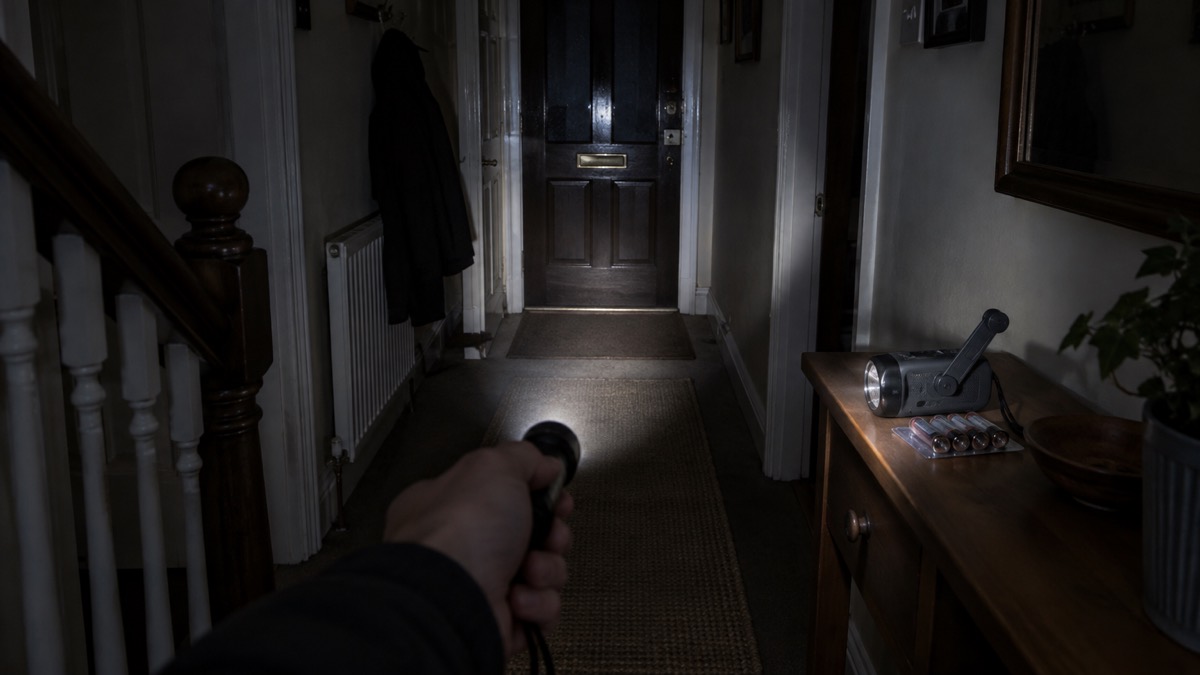
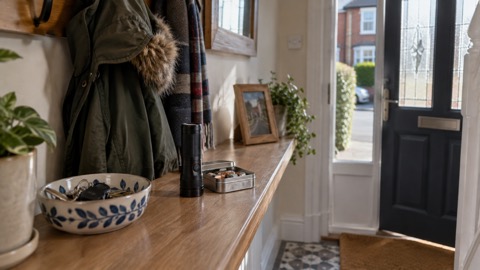
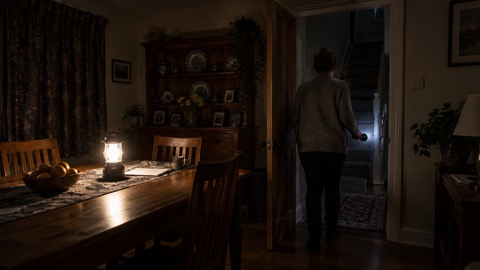
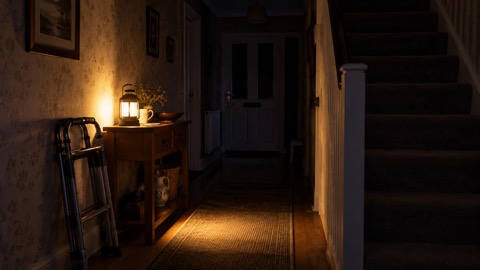
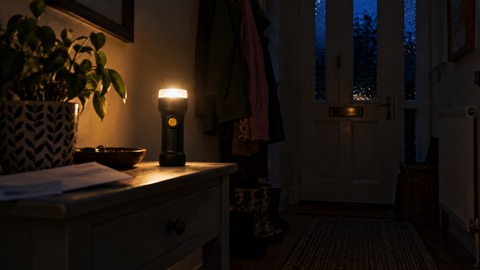
A torch you cannot find in the dark is no use at all. The advice from emergency planners is specific about this. Horsted Keynes Parish Council's power cut tips say to "make sure you keep some torches and spare batteries to hand in case the power cut happens when it's dark outside, and make sure everyone in your home knows where they are kept"5. Isle of Anglesey County Council advises storing a battery or wind-up torch somewhere you can access easily, so you can use it to check the fuse box and make your way around the house safely17.
The same message comes from every nation of the UK:
| Who says it | The advice |
|---|---|
| Llangattock Community Council, Powys | Keep a torch handy7 |
| North Yorkshire Fire and Rescue Service | Keep a torch and spare batteries at home18 |
| North Wales Fire and Rescue Service | Keep a light or torch handy in the event of a power cut or failure19 |
| Electricity North West (NHS equipment advice) | Keep a battery-operated or windup torch somewhere easy to find20 |
| Met Office WeatherReady winter checklist | Torch and spare batteries21 |
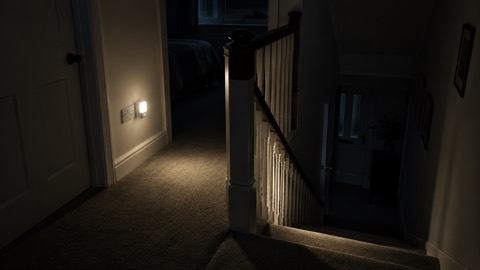
Energy Networks, which represents the UK's electricity network operators, adds a practical reason for the bedside drawer: keep a torch handy in case you are without power during the night22. A power cut that starts at 2am is the one you are least prepared for, and a torch within arm's reach of where you sleep is the single most useful piece of lighting you can own.
What to check, before you need it:
- Everyone in the household, including children old enough to know, can say where the torch is kept5
- The torch is somewhere you can reach without crossing a dark house17
- The torch sits somewhere easy to find, with its spare batteries close by, so a flat torch does not leave you without light23
- The batteries still work: check them before winter, as part of our lighting checks before winter
- If the torch is battery operated, make sure you have spare batteries, as Wiltshire and Swindon Prepared advises23
Our page on where to keep torches so you can find them in the dark goes into more detail on placement around the house.
Battery or wind-up: how each kind keeps working
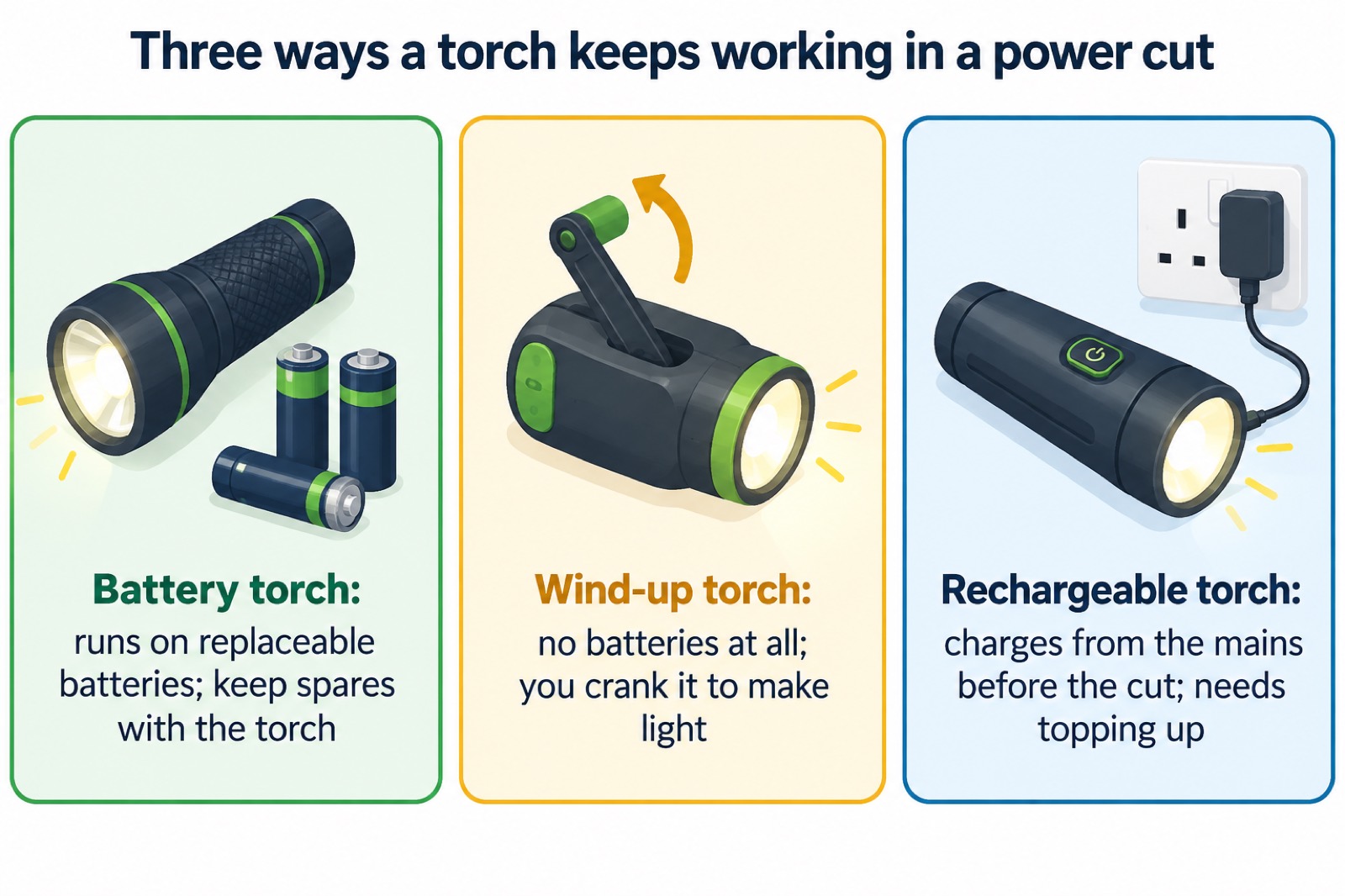
There are two families of torch for home emergencies, and both are officially endorsed. The Scottish Government's emergency kit guidance lists "a battery-operated torch and spare batteries (or a wind-up torch)"24, and Northern Powergrid's power cut plan template lists "Torch & Radio (Battery, solar or wind-up)"25. The choice between them comes down to how each keeps working when the outage lasts longer than you expected.
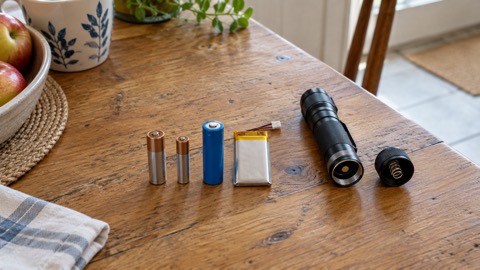
Battery torches are the most common and usually the brightest for their size. Their weakness is the one their name implies: when the batteries run flat, the torch stops. That is why nearly every official source that recommends a battery torch also recommends spare batteries in the same breath. The Met Office's winter car kit advice calls "a large torch with spare batteries" essential for your vehicle26, and its summer preparedness advice says to know where you can find a torch and consider getting a separate battery charger27. For the home, the same rule applies: a battery torch plus a fresh set of spares, stored together, covers most outages. Our page on torch batteries explains the types, and our spare batteries checklist lists which to keep.
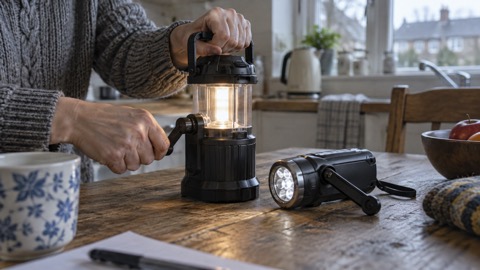
Wind-up torches remove the battery problem entirely. Wiltshire and Swindon Prepared's loss of electricity guidance notes that "wind up torches or lanterns are available which require no batteries at all"23. You turn a crank, a small dynamo charges an internal cell, and the light runs. The trade-off is effort and output: you are the power source, so the light is usually dimmer and you need to rewind periodically. For a short outage, or as a backup to a battery torch, a wind-up torch is a sound choice, and it never fails because the batteries went flat years ago and nobody noticed.
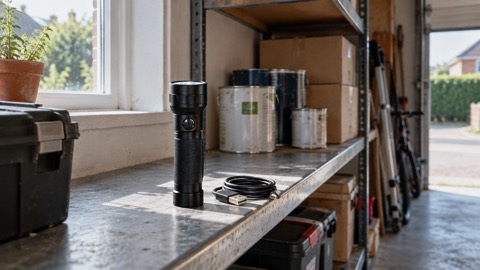
Rechargeable torches sit between the two. They charge from the mains while the power is on, and run on an internal battery when it is off. Modern USB-C rechargeable torches are highly efficient and can be topped up via portable power banks, but the recommended approach is to keep a mix of rechargeable devices and a few standard alkaline battery-powered backup lights, which guarantees redundancy during multi-day outages28. The obvious weakness is that a rechargeable torch is only as ready as its last charge, so build charging into your routine. Our page on charging and storing rechargeable torches safely covers this, and our comparison of rechargeable or battery torches for emergencies sets out the trade-offs.
For longer outages, solar charging is a third option, covered on our page about solar and wind-up lamps that need no batteries.
What kind of torch suits your household
Official advice does not rank torches, and neither does this page: the right torch is the one that fits your household and what you need to do in the dark. But the advice does point to three broad types by what they do.
A small everyday torch is the one by the bed or in the kitchen drawer. Its job is to get you from the bedroom to the fuse box, or to find the bigger light, without stumbling. Electricity North West's advice, to keep a battery-operated or wind-up torch somewhere easy to find23, is really about this torch. It should be light enough to carry in one hand and simple enough that anyone in the house can switch it on.
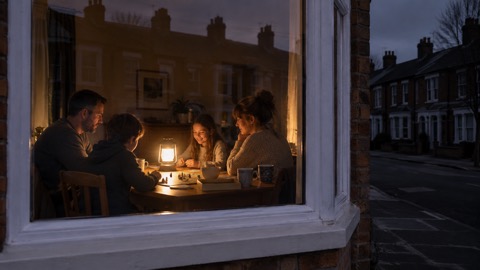
A larger torch or lantern lights a room rather than a path. A large torch with spare batteries, or a wind-up torch which does not require battery power, is recommended as essential for your vehicle26, and the same logic applies at home: when the outage stretches into the evening, a torch that lights enough of a room to eat dinner by, or read to children by, is worth having. Lanterns spread light in all directions where a torch throws a beam; our page on battery and rechargeable lanterns covers them, and our comparison of lantern or torch: which lights a room better sets out the difference.
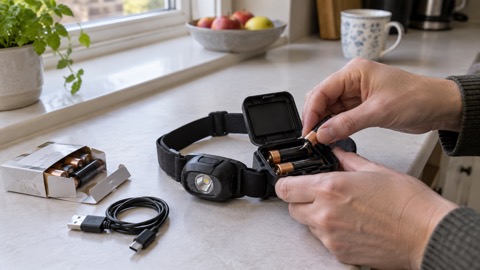
A head torch leaves both hands free. NHS guidance for families caring for children who depend on powered equipment is explicit about why this matters: "chargeable lamps and headtorches are useful to allow your hands to be free for care such as suction"28. Even outside caring roles, hands-free light is what you want for checking the fuse box while holding the torch would be awkward, or for shepherding children and pets in the dark. Our page on head torches for power cuts and jobs in the dark covers the type in detail, and our comparison of torch or head torch for a power cut helps you choose.
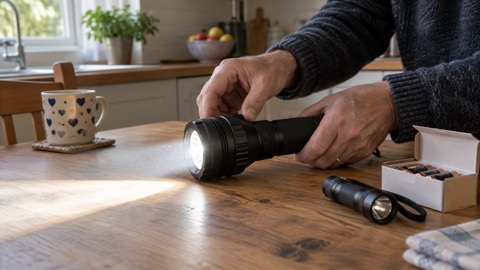
A head torch is a third option worth considering: it leaves both hands free, which matters if you are carrying a child, checking the fuse box or sorting supplies in a dark cupboard. What the numbers on the box mean in practice, and how lumens, beam distance and run time relate to what you can actually see, is explained on our page about lumens, beam distance and run time.
Plug-in lamps: what they need before the power comes back
Torches get you through the outage. Your plug-in lamps are what you return to when the power comes back, and they have safety rules of their own, set out by Electrical Safety First, the UK's electrical safety charity.
The plug and fuse. All lamps must be fitted with a UK 3-pin plug and fuse9. If you buy a lamp online from an overseas seller, check the plug before you use it: a lamp fitted for another country's sockets is not safe to adapt informally.
The bulb rating. Never use a light bulb which is over the recommended power rating for your lamp9. The Scottish Fire and Rescue Service explains why: "All lamp shades advise the maximum wattage of light bulb that can be safely fitted; always check this before fitting as higher watt bulbs can cause the shade to overheat and catch fire"29. The rating is usually printed or stamped on the shade or near the fitting. Check it before you fit any bulb, including LED bulbs, and never exceed it.
Where the lamp sits. Keep lamps away from curtains, paper, bedding and other flammable items9. A lamp on a bedside table with a curtain brushing past it, or a scarf draped over the shade, is a fire waiting for a reason. This is the answer to the question people ask about lamps near bedding: it is not the lamp being near the bed that is the problem, it is bedding, curtains or paper that can touch or fall onto the bulb.
Warning signs. If you see burn marks, arcing sounds, fuses blowing or circuit-breakers tripping, unplug the lamp and contact the retailer, manufacturer, or a qualified repair technician9. Do not keep using it to see whether it gets worse.
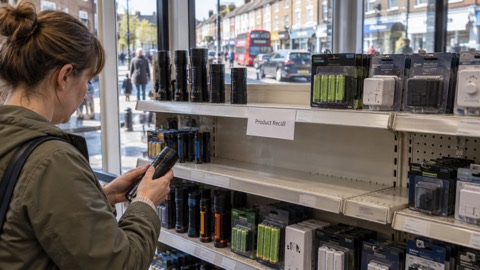
Register it. Register your lamp so you can be contacted easily if there is a safety recall of your product; Electrical Safety First notes it is also much easier to return a faulty item or order a repair if you have registered9. Recalls of torches and chargers do happen, and our page on recalled and unsafe torches and chargers explains how to check and report.
When the power goes off: what to do with your light
The sequence matters less than the preparation, but a few points from official advice are worth holding onto.
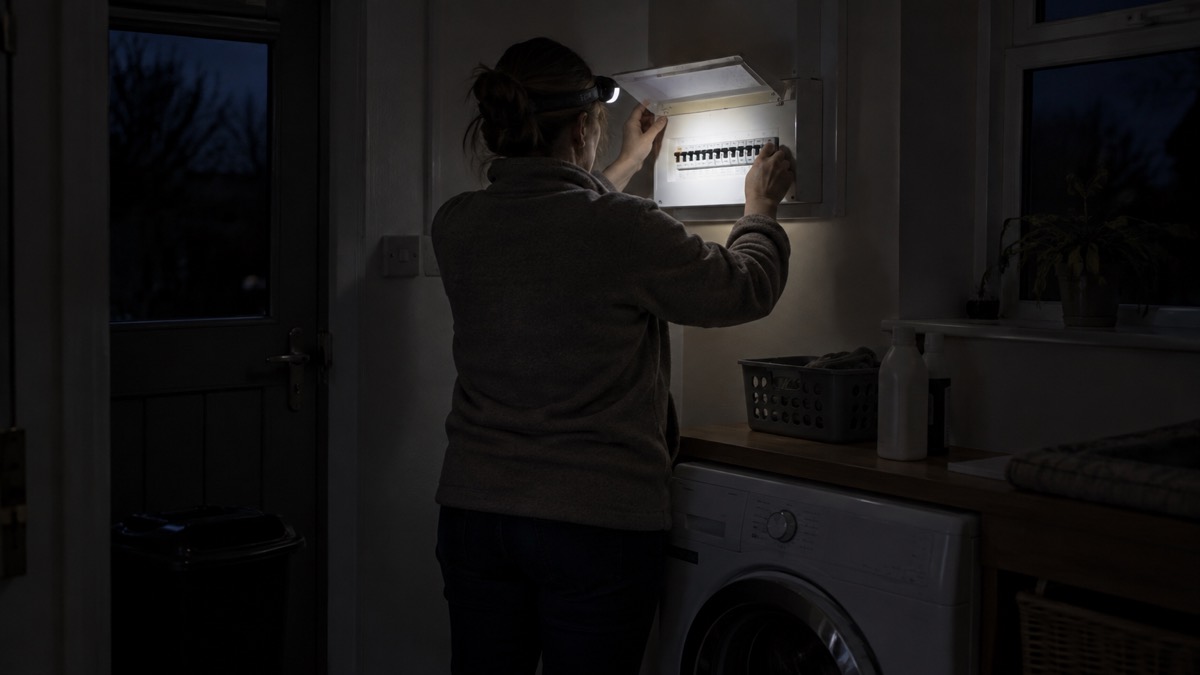
First, find your torch before you do anything else. Anglesey's advice to store the torch somewhere easy to access so you can check the fuse box and make your way around the house safely17 is the working plan: torch first, then the fuse box, then everything else. A power cut affecting only your house is often a tripped switch or a blown fuse, and you need light to see it.
Second, report the cut. In England, Scotland and Wales, call 105, the free power cut reporting line7. Northern Ireland is different: there you contact the NIE Networks Customer Helpline on 03457 643 6438. Keep a wind-up or battery radio as well, as the National Risk Register advises, to get updates during a power cut12.
Third, keep light where the people are. If the outage runs overnight, the torch by the bed is the one that matters22. If you are caring for someone, the head torch that frees your hands is the one that matters28. If children are awake and frightened, a lantern that lights the room softly is worth more than a bright beam; our page on torches, candles and children covers that, and lights for older and disabled people covers the other end of the household.
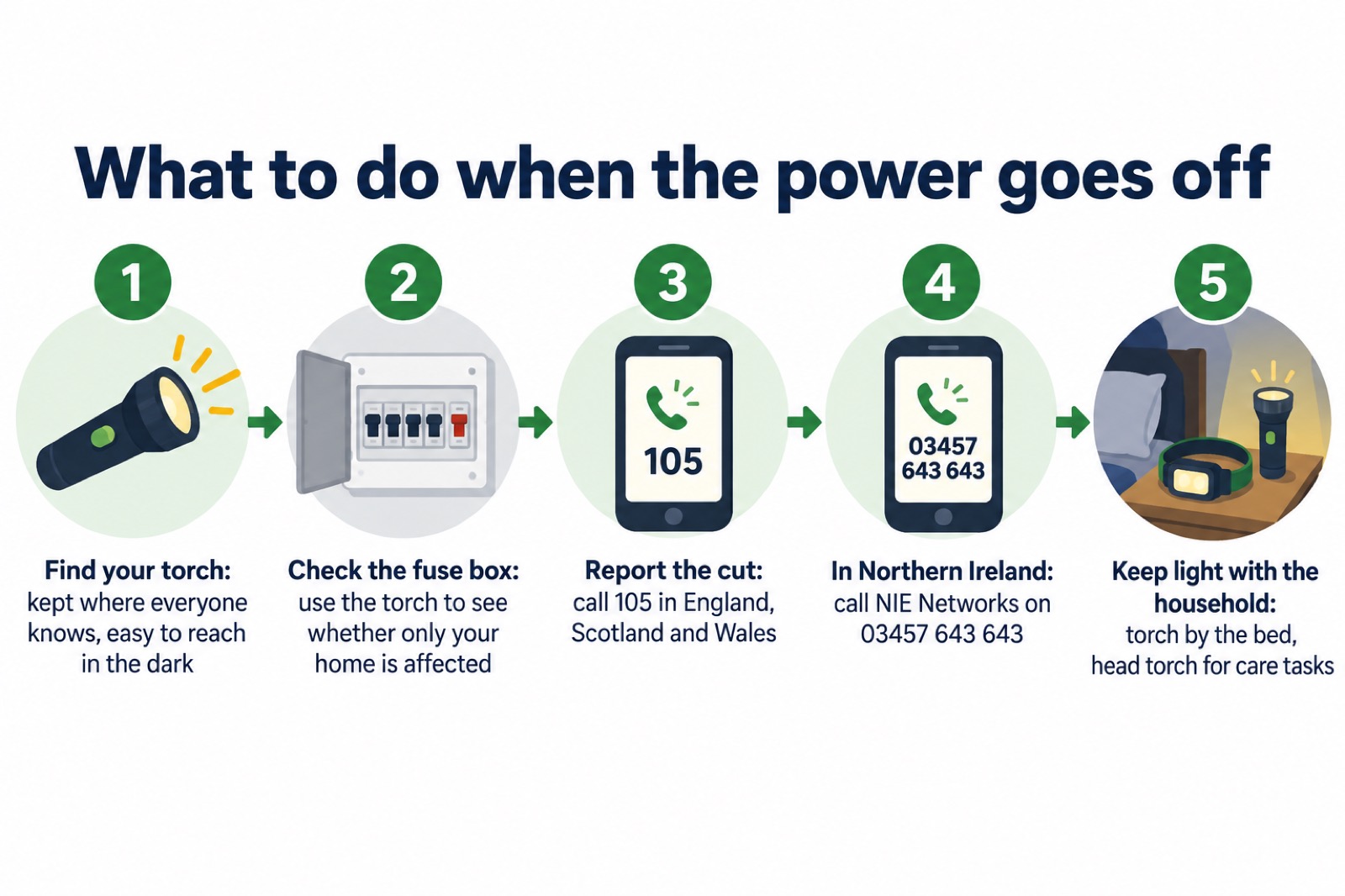
For the full walkthrough, see lighting your home safely when the power goes off and our power cut lighting checklist.
Getting help and extra support
Beyond 105, there is help worth knowing about before an emergency. If you depend on electricity for medical equipment, or someone in your household needs extra support during outages, it is worth contacting your electricity network operator ahead of time to ask what help they can offer. Your fire and rescue service may also offer a free home fire safety visit, which is worth requesting if you have any concerns about candles, lamps or heating during power cuts; our page on free home fire safety visits explains how to arrange one.
If a storm is forecast, the Met Office's seasonal advice, including its WeatherReady winter checklist of torch and spare batteries21, is the place to check what to have ready. And if you are building up your household's readiness more broadly, see our guides to backup power at home and power cuts generally.
Sources (29)
- What to do in a power cut, Northern Powergrid
- Power cuts: be informed about hazards, Prepare Campaign (UK government)
- Fire service sees worrying increase in carbon monoxide incidents and fire risks due to power cuts, Devon and Somerset Fire and Rescue Service, 2022-02-20
- Cost of living toolkit, National Fire Chiefs Council, 2022
- 12 tips to prepare for a power cut, Horsted Keynes Parish Council, 2026
- Adverse weather events: power outages and emergency contact numbers, Llangattock Community Council, 2023-10-12
- Adverse weather events, Llangattock Community Council, 2026-10-25
- Ice weather warning: information and advice, nidirect (Northern Ireland government), 2026-02-16
- Lamps: product safety advice, Electrical Safety First, 2026-10-25
- Safety in severe weather conditions, Devon and Somerset Fire and Rescue Service, 2026
- Power cuts: fire safety at home, Scottish Fire and Rescue Service, 2026-10-25
- National Risk Register, Annex F, UK government (National Risk Register), 2023
- Stay fire safe leaflet, National Fire Chiefs Council, 2023-08
- Strong winds weather warning: information and advice, nidirect (Northern Ireland government), 2026-10-24
- Strong winds and heavy rain warning: information and advice, nidirect (Northern Ireland government), 2026-01-27
- Stay warm safely in winter, Devon and Somerset Fire and Rescue Service, 2026
- Winter ready, Isle of Anglesey County Council, 2026-10-25
- Staying safe in the snow, North Yorkshire Fire and Rescue Service, 2023-03-09
- Stay safe this winter, North Wales Fire and Rescue Service, 2016
- Equipment services: what to do in a power cut, Mersey Care NHS Foundation Trust, 2026-10-25
- WeatherReady winter poster, Met Office, 2026
- How planned power cuts could work, Energy Networks, 2026-10-26
- How to prepare for the loss of electricity, Wiltshire and Swindon Prepared, 2026-10-25
- Emergency kit, Ready Scotland (Scottish Government), 2026-10-22
- Power cut plan, Northern Powergrid, 2026-10-26
- Winter car kit, Met Office, 2026-10-25
- 10 things you should do now to prepare for summer, Met Office, 2026-10-25
- Parental letter re power shortages, NHS North West Children's ODN Hub, 2022-11-25
- Your guide to fire safety, Scottish Fire and Rescue Service, 2023-11-03
 Spare Batteries for Lights
 Candle Safety Checklist
 Lighting Checks Before Winter
 Lighting Home in a Power Cut
 Head Torches for Power Cuts
 Lanterns for Lighting a Room
 Emergency Bulbs
 Solar and Wind-Up Lamps
 Lumens and Beam Distance
 Torch Batteries Explained
 Charging and Storing Torches
 Candle Fire Safety at Home
 Lights for Disabled People
 Torches, Candles and Children
 Recalled Torches and Chargers